Ceramic Grinding Wheel Application Guide: Matching Wheel Types to Your Production Scenario
Ceramic bonded grinding wheels are a bond family, not a single purchasable specification. A vitrified wheel running on a centerless through-feed line and a vitrified wheel sharpening a circular saw tooth share the same bond chemistry but differ in shape, abrasive, grade, structure and speed rating. This guide maps the twelve main production grinding scenarios to the ceramic wheel families built for them, sets out the specification fields each scenario forces the buyer to fix, and explains how to convert that mapping into a supplier evaluation and a trial run.
The wheel families referenced here come from the product range of Shandong Xinfa Abrasives & Grinding Tools Co., Ltd. (brand: xinfa), a manufacturer established in 1989 that specialises in the research, development and manufacture of vitrified bond grinding wheels, operating a 30,000 m² plant in Junan County, Linyi City, Shandong Province, China, with 120 employees and an annual output of 10,000 tons.
Evaluation shortcut: identify the grinding kinematics first (how the wheel contacts the workpiece), then the workpiece material and hardness, then the finish requirement. Only after those three are fixed does the wheel family, grade and structure become discussable. Buyers who start from a product name usually end up comparing wheels that were never meant to do the same job.
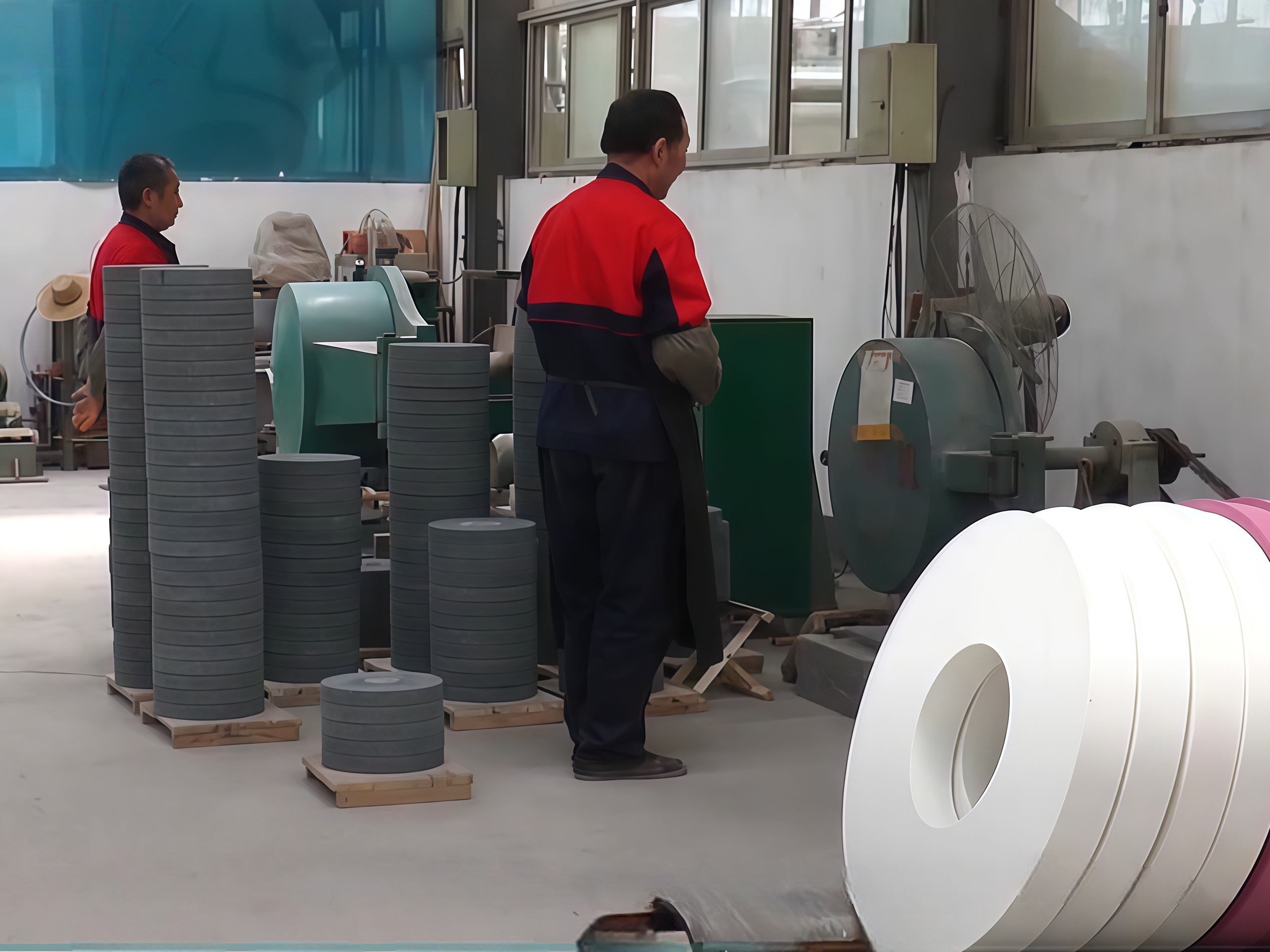
Quality inspection workshop: ceramic bonded wheels are checked before dispatch, which is where specification conformance is either confirmed or lost.
Problem Definition: Why “Ceramic Grinding Wheel” Is Not a Specification
Vitrified bonding describes how abrasive grain is held together after firing. It does not describe what the wheel is expected to do. Within the same vitrified bond family, a production engineer has to resolve four independent variables before a wheel can be quoted:
- Contact geometry — whether grinding happens on the outside diameter, on a bore, on a flat face, on a profile, or on an edge.
- Grain and grade balance — how fast the wheel should shed dulled grain versus how long it must hold form.
- Structure and porosity — how much room exists for chip clearance and coolant at the contact zone.
- Shape, dimensions and speed rating — the physical envelope the machine tool and guarding will accept.
The procurement failure mode is consistent: a buyer issues an enquiry for “ceramic grinding wheels” with a diameter and nothing else, receives offers that are not comparable, then attributes the resulting trial result to the supplier rather than to the missing specification. In evaluation terms, the scenario must be defined before the supplier is ranked.
Industry Background: What Is Driving Scenario-Specific Demand
Grinding sits at the end of the machining chain, so demand for bonded wheels follows precision machining demand rather than general industrial output. One commercial research estimate places the global grinding wheel market at a compound annual growth rate of 6.7% from 2025 to 2032, attributed to precision machining demand (Reliable Market Forecast, 2025). Directionally, this supports the practical point that wheel selection is increasingly treated as a process decision rather than a commodity purchase.
On the abrasive side, Brown Fused Alumina (BFA) held the largest product type share of the fused alumina market at 52.4% in 2025 (Dataintelo, 2026). BFA remains the base abrasive for a large share of general steel grinding, which is why so many of the wheel specifications in this guide carry an A or PA grain designation.
Two further developments shape how buyers write specifications. First, dimensional standardisation: ISO 603-14:2022 specifies common nominal dimensions for shape types 6, 11, 27, 28 and 29 bonded abrasive products intended for deburring and fettling/snagging with hand-held grinding machines. Standard dimensions are therefore a documentable field, not a matter of supplier convention. Second, process control: peer-reviewed research published in 2024 states that the condition of the grinding wheel directly affects the surface quality of the workpiece, and examines online monitoring of wheel wear — a reminder that wheel condition, not only wheel grade, determines the result on the shop floor.
On the manufacturing side, Xinfa's vitrified bond wheel range covers diameters from 100 mm to 1100 mm, which spans bench-scale tool room work through to roll grinding sizes.
Detailed Solution: Mapping Ceramic Wheel Types to Production Scenarios
The groups below follow the logic of the machine tool, not the logic of a catalogue. Each group names the wheel family, the specification pressure point that decides success, and the typical workpieces that drive the choice.
Group 1 — Diameter Grinding: Cylindrical, Centerless and Internal
Cylindrical grinding. The Cylindrical Grinding Wheel handles outside-diameter work on shafts, spindles, hydraulic rods and pins. The decisive variables are wheel width relative to the ground length, and grade balance between form retention and self-sharpening under the coolant supply actually available on the machine.
Centerless grinding. A centerless line runs two wheels together: the Centerless Grinding Wheel as the grinding wheel and a control wheel — supplied in the range as Rubber Control & Centerless — that regulates workpiece rotation. Both must be specified, because a change in the control wheel alters the grinding result even when the grinding wheel is unchanged. Through-feed work (pins, rollers, tube) puts a premium on consistent structure across the wheel width.
Internal (bore) grinding. The Internal (Bore) Grinding Wheel runs on a slender spindle inside the workpiece, so the wheel diameter is constrained by the bore and the contact arc is concentrated. Bearing seats, bushings, hydraulic cylinder bores and die guide bores are typical work. Because the same wheel body must survive repeated small-increment dressing, diameter and grade have to be chosen together rather than sequentially.
Group 2 — Flat Face Grinding
Surface grinding. The Flat Surface Grinding Wheel covers reciprocating and rotary table work on mould plates, blades, guide rails and plate stock. On thin sections the constraint is heat: grade, structure and coolant delivery have to be balanced so the wheel keeps cutting instead of rubbing. This is the scenario where buyers most often discover that a wheel which performs on a heavy plate burns a thin one.
Group 3 — Profile and Form Grinding: Gear, Worm and Roll
Gear grinding. The Gear Grinding Wheel is a form-holding application; the profile has to survive the cycle, so grade and structure are selected for profile retention rather than maximum removal. Transmission gears and reducer gears are the typical demand.
Worm grinding. The Worm Grinding Wheel serves worm and thread-type profiles where the contact is continuous along a helical path. Dressing strategy and wheel form are usually specified together.
Roll grinding. The Roll Grinding Wheel V&B targets mill rolls and calender rolls. This is the large-diameter end of the range — Xinfa's vitrified wheels are produced from 100 mm to 1100 mm in diameter — so machine capacity, wheel mass and balancing practice all enter the specification alongside grade.
Group 4 — Workpiece-Specific Lines: Bearing, Crankshaft and Camshaft
Bearing grinding. The Bearing Grinding Wheel addresses raceways and shoulders, where surface integrity requirements are strict and the wheel must hold form across high-volume runs.
Crankshaft and camshaft grinding. The Crankshaft & Cam Shaft Grinding Wheel works on eccentric journals and cam profiles, so the wheel sees interrupted and varying contact per revolution. Width, grade and structure must be matched to the machine's oscillation and coolant behaviour.
Group 5 — Small Diameter and Edge Work: Tool, Needle and Saw Tooth
Tool grinding. The Tool Grinding Wheel covers cutter and tool edge preparation where edge quality and profile accuracy dominate. It is a different application from bench work: the Bench Grinder Wheel is a general workshop wheel for manual off-hand operations, where operator control and wheel durability matter more than edge geometry.
Needle grinding. The Needle Grinding Wheel is used for slim, small-diameter work where wheel stiffness and diameter are tightly constrained.
Saw tooth grinding. The Saw Tooth Grinding Wheel sharpens tooth forms, a narrow-contact application where the wheel edge geometry and grade determine how long the tooth profile stays accurate.
Group 6 — General Purpose, Deburring and Finishing
General workshop use. The General Purpose Grinding Wheel is the entry family for conventional bench, pedestal and general maintenance grinding where the workpiece mix is varied.
Deburring and edge blending. The wider product set covers Oilstone, Segments, Mounted Points, Flap Disc and Resin Bonded Snagging Grinding Wheel. These are not ceramic bond products in every case; they sit in the same procurement basket because a maintenance or deburring cell usually needs them alongside vitrified wheels. Specifying them in the same RFQ reduces the number of uncoordinated suppliers a buyer has to qualify.
Raw abrasive. Brown Fused Alumina Abrasive is the grain input behind a large part of the A- and PA-designated wheel range, and is itself a purchasable line for buyers who source grain separately.
Scenario-to-Wheel Mapping Table
| Production scenario | Ceramic wheel family | Decisive specification focus | What the buyer must confirm |
|---|---|---|---|
| Cylindrical (OD) grinding | Cylindrical Grinding Wheel | Width vs. ground length; grade balance under available coolant | Diameter × width × bore, grain, grit, grade, structure, max. speed |
| Centerless grinding | Centerless Grinding Wheel + Rubber Control & Centerless | Structure consistency across width; control wheel matching | Both wheels specified; through-feed or plunge; rest blade geometry |
| Internal (bore) grinding | Internal (Bore) Grinding Wheel | Small diameter on long spindle; repeated dressing allowance | Bore diameter clearance, spindle speed, dressing increment |
| Flat surface grinding | Flat Surface Grinding Wheel | Heat control on thin sections; chip clearance | Workpiece thickness, table type, coolant delivery |
| Gear grinding | Gear Grinding Wheel | Profile retention over the cycle | Module, profile tolerance, dressing method |
| Worm grinding | Worm Grinding Wheel | Helical contact; form and dressing strategy | Lead, profile, machine oscillation |
| Roll grinding | Roll Grinding Wheel V&B | Large diameter handling, balancing, grade | Wheel diameter within 100–1100 mm range, roll hardness, machine capacity |
| Bearing grinding | Bearing Grinding Wheel | Surface integrity and form retention in high volume | Raceway type, volume per shift, finish target |
| Crankshaft / camshaft | Crankshaft & Cam Shaft Grinding Wheel | Interrupted eccentric contact | Journal width, oscillation, coolant pressure |
| Tool grinding | Tool Grinding Wheel | Edge quality and profile accuracy | Tool material, edge radius target, machine type |
| Needle grinding | Needle Grinding Wheel | Slender workpiece, diameter constraint | Workpiece diameter, support method |
| Saw tooth grinding | Saw Tooth Grinding Wheel | Edge geometry and tooth profile life | Tooth pitch, saw material, sharpening angle |
| General / maintenance | General Purpose Grinding Wheel, Bench Grinder Wheel | Mixed workpiece tolerance | Workpiece mix, operator skill, machine arbor |
| Deburring & finishing | Oilstone, Segments, Mounted Points, Flap Disc, Resin Bonded Snagging | Access and finish, not form holding | Access geometry, finish grade, consumable life |
Step-by-Step Breakdown: Turning a Scenario Into an Orderable Specification
The mapping above only becomes a purchase when it is converted into fields a supplier can quote against. The sequence below is the one that keeps specifications comparable across suppliers.
- Name the kinematics. Decide whether the wheel grinds an outside diameter, a bore, a flat face, a profile or an edge. This single step eliminates most of the range.
- State the workpiece material and condition. Carbon and alloy steel, hardened steel, cast iron and non-ferrous work do not resolve to the same abrasive choice. BFA-based specifications carry most general steel work; other grain families are used where the material demands it.
- Fix the finish and tolerance target. Grit size and structure follow from the required surface finish and dimensional tolerance, not from the wheel's appearance.
- Balance grade against dressing practice. A harder grade holds form longer but needs a machine and a dressing routine that can keep it open. A softer grade self-sharpens more readily but changes size faster. The right answer depends on the dressing interval the line can actually sustain.
- Lock the physical envelope. Diameter × thickness × bore, wheel shape, and the maximum operating speed marked on the wheel. Where the wheel shape is a standardised hand-held type, the nominal dimensions can be tied to the relevant part of the ISO 603 series.
- Attach the conformity and quality documentation. Certificates, marking and inspection records belong in the RFQ, not in a follow-up email after the order.
- Run a measured trial. Compare wheel life, dressing interval, surface result and scrap rate against the current reference wheel — not against a catalogue claim.
Worked Example: Decoding a Wheel Marking in the Range
350 × 100 × 127 A 60 N 5 V 35 m/s
This is a vitrified bond wheel specification as it appears in the Xinfa ceramic bonded grinding wheel range, and it shows exactly why “ceramic wheel” is not a specification:
| Field | Value in example | What it controls |
|---|---|---|
| Dimensions (D × T × H) | 350 × 100 × 127 mm | Machine fit, contact width, arbor mounting |
| Abrasive type | A (Brown Fused Alumina) | Grain family for the workpiece material |
| Grit size | 60 | Finish and removal balance |
| Grade / hardness | N | Form retention vs. self-sharpening |
| Structure | 5 | Chip clearance and coolant space |
| Bond | V (vitrified) | Bond family and strength after firing |
| Maximum speed | 35 m/s | Safe operating envelope of the wheel |
Two wheels with identical dimensions but different grade, structure or grit are different products with different failure modes on the line. That is the practical reason a scenario-based RFQ outperforms a generic enquiry.
Use Cases: What Scenario Matching Looks Like in Practice
A grinding wheel OEM customer in Pakistan used ceramic bonded grinding wheels (product code 2155) for grinding workpieces. The project scale was 20 tons of grinding wheels, delivered and used over a two-year period, with stable operation results and long-lasting performance recorded as the key outcome. The relevant point for evaluation is not the tonnage itself but the pattern: a repeat-supply relationship built on a wheel specification that held its behaviour across a long production window rather than on a single low-cost shipment.
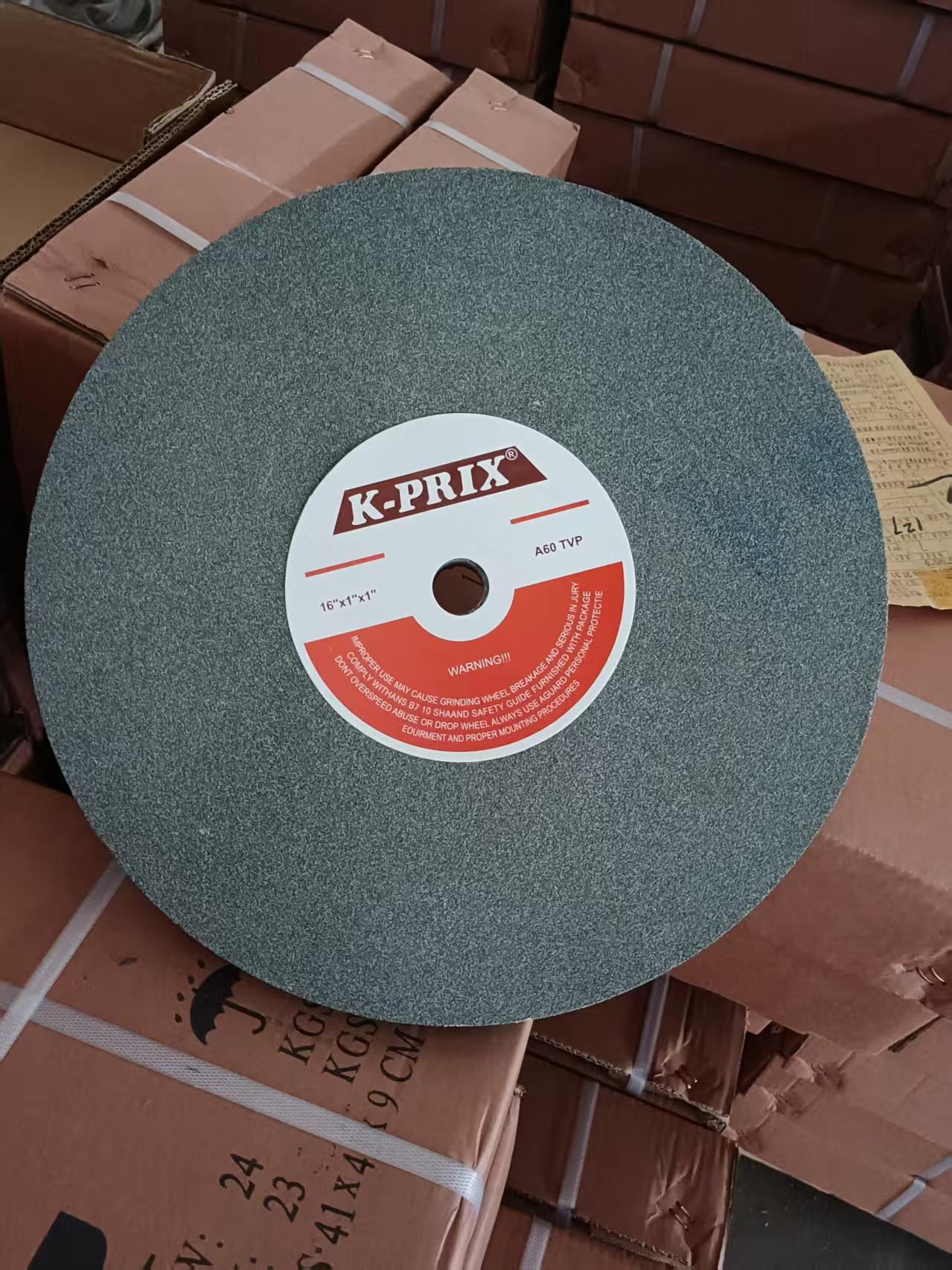
Case reference: 20 tons of ceramic bonded grinding wheels supplied to a grinding wheel OEM customer in Pakistan, in stable operation across a two-year project.
In evaluation terms, three scenario patterns recur across buyers assessing ceramic wheel suppliers:
- Single-scenario specialists (for example, a shop that only runs centerless through-feed) need depth in one wheel family and a stable grade, not breadth.
- Mixed-scenario plants (automotive or general machining job shops) need several families — cylindrical, surface, internal, tool — specified consistently so that one quality system covers all of them.
- OEM and private-label buyers need the wheel specification to be reproducible under their own marking, which makes customisation scope a shortlisting criterion before price is discussed.
Supplier Capability Check: What Should Be Verifiable Before Shortlisting
Once the scenario is fixed, supplier evaluation becomes a documentary exercise rather than an impression. The points below are the ones that can be checked against records rather than assurances.
- Bond specialisation. Xinfa was established in 1989 and focuses on vitrified bond grinding wheel research and development and manufacturing — a narrow bond focus rather than a broad abrasives catalogue.
- Product breadth against the scenario list. The range covers cylindrical, centerless, internal (bore), flat surface, gear, worm, bearing, crankshaft and camshaft, roll (V&B), needle, saw tooth, tool and bench wheels, plus oilstone, segments, mounted points, flap discs, resin bonded snagging wheels, rubber control and centerless wheels, and Brown Fused Alumina abrasive.
- Capacity and scale. 30,000 m² plant, 120 employees, annual output of 10,000 tons and a monthly capacity of 900 tons, supported by a research and development team of 6 engineers.
- Quality system. ISO 9001:2015 quality management system certification, certificate number 60624Q0262R1M, issued by Zonyun International Certification Co., Ltd, scope: manufacture of abrasives and grinding wheels, valid from 2021-08-12 to 2027-08-11.
- Inspection regime. 100% testing as the stated quality control method, with remote after-sales support.
- Customisation scope for OEM/ODM work. Specification, size, logo, bond type and abrasive material can all be customised.
- Commercial parameters. MOQ of 2 tons and production lead time of 30–45 days.
- Export experience. Products exported to more than 20 countries and regions, with a 35% export ratio and markets including Southeast Asia, India, South Korea, Japan, the Middle East, Europe, the United States and Brazil.
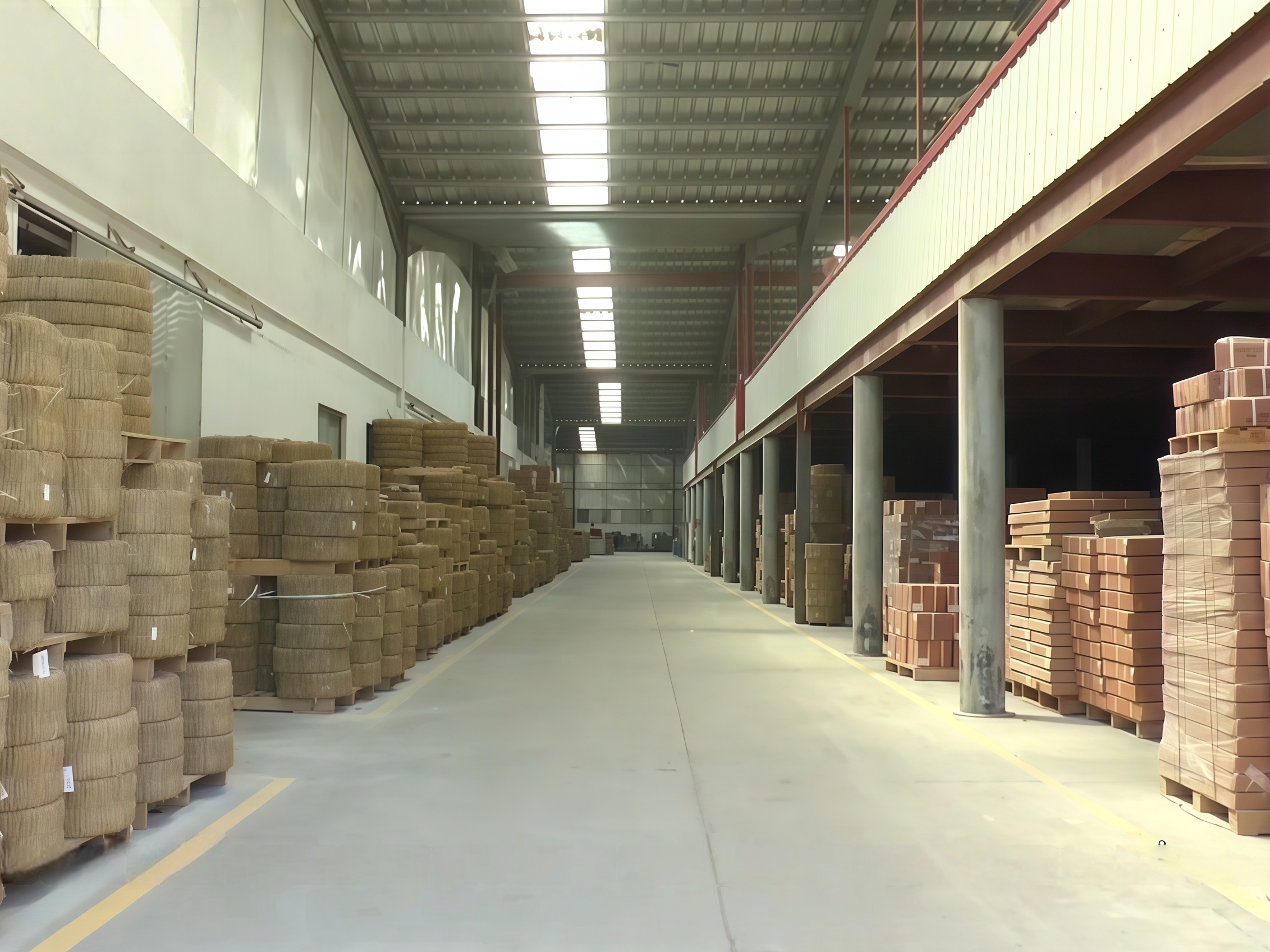
Finished goods warehouse: wheel families are held as distinct product lines, so a multi-scenario order can be consolidated against one delivery schedule.
Frequently Asked Questions
1. What compliance documentation should I request for ceramic bonded grinding wheels?
Request four sets of documents. First, the supplier's quality management system certificate with the certificate number, issuing body, scope and validity dates — Xinfa's is ISO 9001:2015, certificate 60624Q0262R1M, issued by Zonyun International Certification Co., Ltd, covering manufacture of abrasives and grinding wheels, valid to 2027-08-11. Second, the dimensional basis for the wheel shape: ISO 603-14:2022 specifies common nominal dimensions for shape types 6, 11, 27, 28 and 29 bonded abrasive products used for deburring and fettling with hand-held machines. Third, the maximum operating speed marking and guarding requirements applicable in your market. Fourth, any conformity references the product is documented against — manufacturer technical data sheets in the market, for example, cite references such as EN 12413 and ANSI B7.1 alongside an ISO type designation, so it is reasonable to ask which references apply to the specific wheel you are buying rather than to the supplier's range in general.
2. Can one ceramic wheel manufacturer cover all of my grinding scenarios?
Coverage depends on how wide the manufacturer's range is, and it is checkable rather than assumed. Xinfa's product list spans cylindrical, centerless, internal (bore), flat surface, gear, worm, bearing, crankshaft and camshaft, roll (V&B), needle, saw tooth, tool and bench grinder wheels, plus general purpose wheels, oilstone, segments, mounted points, flap discs, resin bonded snagging wheels, rubber control and centerless wheels, and Brown Fused Alumina abrasive. Vitrified wheels are produced from 100 mm to 1100 mm in diameter. For a mixed-scenario plant, that breadth matters less for its own sake and more because one quality system and one inspection regime then cover every wheel family on the line.
3. What drives the cost of a ceramic grinding wheel across different scenarios?
Published price bands are not a reliable basis for comparison, because the cost of a wheel on a production line is set by how many acceptable parts it produces, not by its unit price. The controlling variables are wheel life between changes, dressing interval and dressing consumption, scrap and rework rate caused by burn or profile loss, and the order quantity needed to justify a scenario-specific specification. Xinfa quotes against an MOQ of 2 tons with a 30–45 day lead time, and customisation of specification, size, logo, bond type and abrasive material is available — both of which affect how a scenario-specific order should be structured. The practical evaluation rule is to compare cost per accepted workpiece against the incumbent wheel over a measured trial.
4. How should I validate a wheel before committing to volume?
Validate against your own process, not against a catalogue. Define the trial in the same terms as your RFQ: wheel family, dimensions, grain, grit, grade, structure, maximum speed and the machine it runs on. Then measure wheel life, dressing interval, surface result and scrap rate over a defined number of cycles and compare them with the reference wheel currently on the line. Because Xinfa applies 100% testing as its quality control method, the trial unit and the production unit should behave consistently — but that consistency is exactly what the trial is there to confirm. Buyers with a mixed scenario list should request trial units for the two most critical families first rather than for the entire range.
5. What lead time should be planned for a scenario-specific ceramic wheel order?
Xinfa's stated production lead time is 30–45 days, with a monthly capacity of 900 tons and an annual output of 10,000 tons. Two factors should be planned around that window. First, a new scenario-specific specification usually needs a trial unit before the volume order, so the total timeline runs from specification agreement through trial to production. Second, customised items — non-standard dimensions, specific bond type or abrasive, or private-label marking — should be scheduled against the 30–45 day production window from the point the specification is confirmed, not from the point of first enquiry. Buyers running multi-family orders may also want the delivery split by wheel family so that the highest-consumption family arrives first.
Next Step: Match Your Scenario to a Wheel Specification
Send your grinding scenario — kinematics, workpiece material and hardness, finish target, machine type and required wheel dimensions — and the team will respond with a matching wheel family, a specification proposal and the documentation set for evaluation.
Email: sales@xinfaabrasives.com | Tel / WhatsApp: +86 13562923298 | Website: www.xinfa-abrasives.com
Product catalogue (PDF, open access): Download the Xinfa Abrasives catalogue
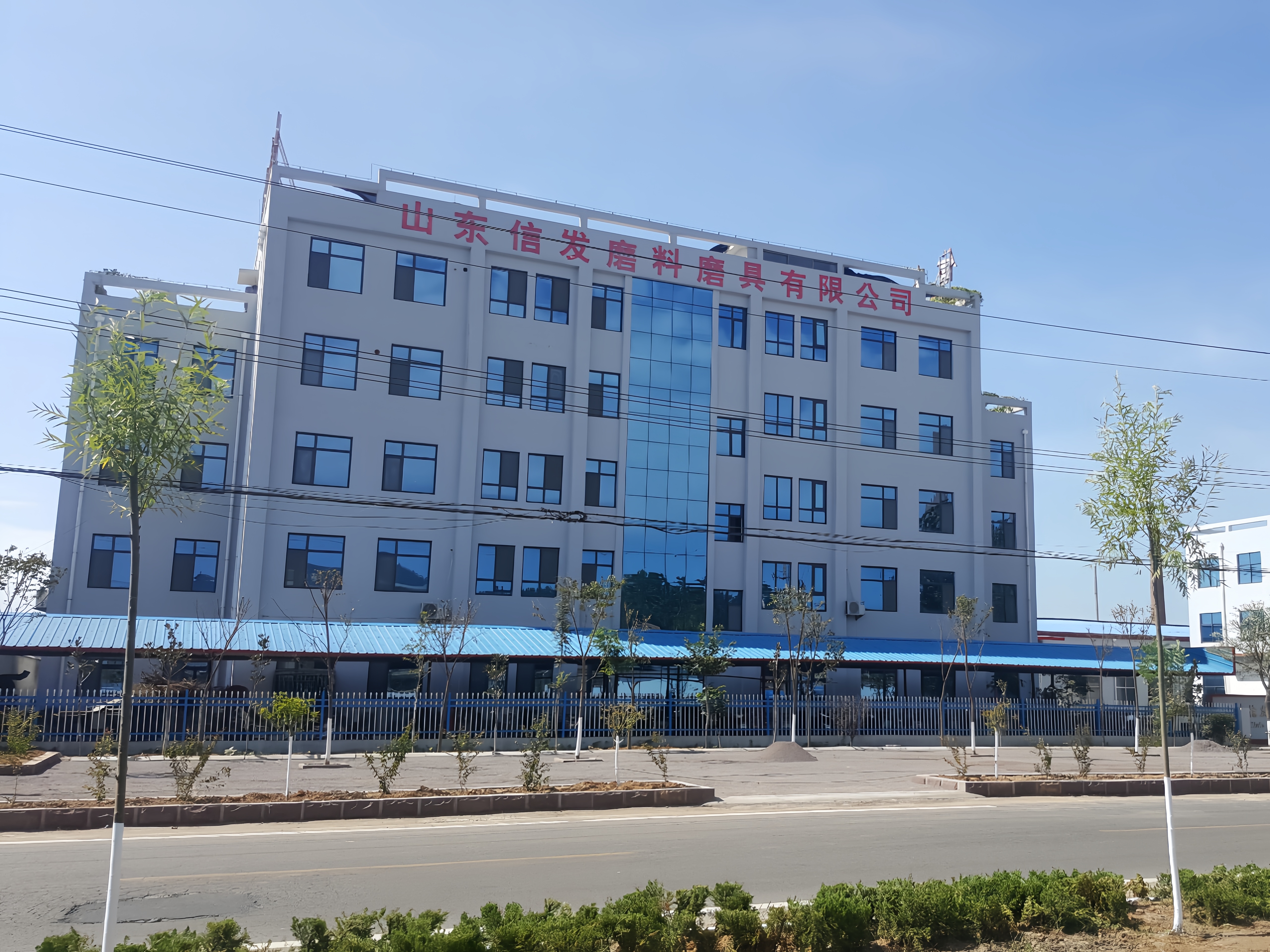
Xinfa Abrasives, Junan County, Linyi City, Shandong — vitrified bond research, development and manufacturing since 1989.
Conclusion
Matching ceramic grinding wheels to production scenarios is a specification exercise, not a catalogue exercise. The twelve scenarios covered here — cylindrical, centerless, internal, flat surface, gear, worm, roll, bearing, crankshaft and camshaft, tool, needle and saw tooth grinding, plus general purpose and deburring work — each impose a different combination of shape, grain, grit, grade, structure and speed rating. Fixing those fields before approaching a supplier is what makes quotations comparable and trials meaningful.
For buyers in the evaluation stage, the sequence is short: define the kinematics, fix the workpiece and finish requirement, lock the physical envelope and speed rating, attach the conformity documents, and then trial the specification against the incumbent. A manufacturer with vitrified bond focus since 1989, a range spanning 100 mm to 1100 mm in diameter, ISO 9001:2015 certification under certificate 60624Q0262R1M, 100% testing and a 900-ton monthly capacity gives that evaluation a verifiable baseline — and gives the production scenario a wheel that was specified for it rather than adapted to it afterwards.
Have Questions or Need More Details?
Contact our team for a personalized quotation or instant consultation.
Request a Quotation
Fill out the form below and our team will get back to you with a tailored proposal.
WhatsApp Direct Chat
Prefer to chat in real-time? Message us on WhatsApp for instant assistance & quick answers.
- Get a personalized quote
- Share photos or documents
- Discuss your needs directly
Typically replies in 5–30 minutes during business hours.