Ceramic Grinding Wheel Application Guide for Bearing, Gear, and Crankshaft Projects
A ceramic grinding wheel is matched to a bearing, gear, or crankshaft project by four constraints applied in a fixed order: the dimensional envelope of the grinding operation, the abrasive grain, the grit–hardness–structure combination, and the safety and quality documentation the wheel must carry. A wheel that satisfies only the first constraint is a wheel that will be re-specified within weeks.
This application guide maps vitrified (ceramic) bonded grinding wheel families to three demanding production grinding environments — bearing components, gears and worms, and crankshaft and camshaft journals — and explains where Brown Fused Alumina, White Fused Alumina, Pink Fused Alumina, Green Silicon Carbide, single crystal and microcrystalline alumina, and SG ceramic alumina sit inside each project. It is written for importers, OEM buyers, procurement managers, and process engineers at the Research and Evaluation stage, where the objective is not to place an order but to build a specification that survives internal review and a supplier audit.
Shandong Xinfa Abrasives & Grinding Tools Co., Ltd. is a vitrified bond grinding wheel manufacturer established in 1989 and located in the National Logistics Center of Linyi City, Shandong Province, China. The wheel families referenced throughout this guide — including bearing, gear, worm, crankshaft and camshaft, internal (bore), centerless, cylindrical, roll, and flat surface grinding wheels — are the categories the company manufactures and exports to more than 20 countries and regions.
Problem Definition: Wheel Dimensions Do Not Select a Wheel — Constraints Do
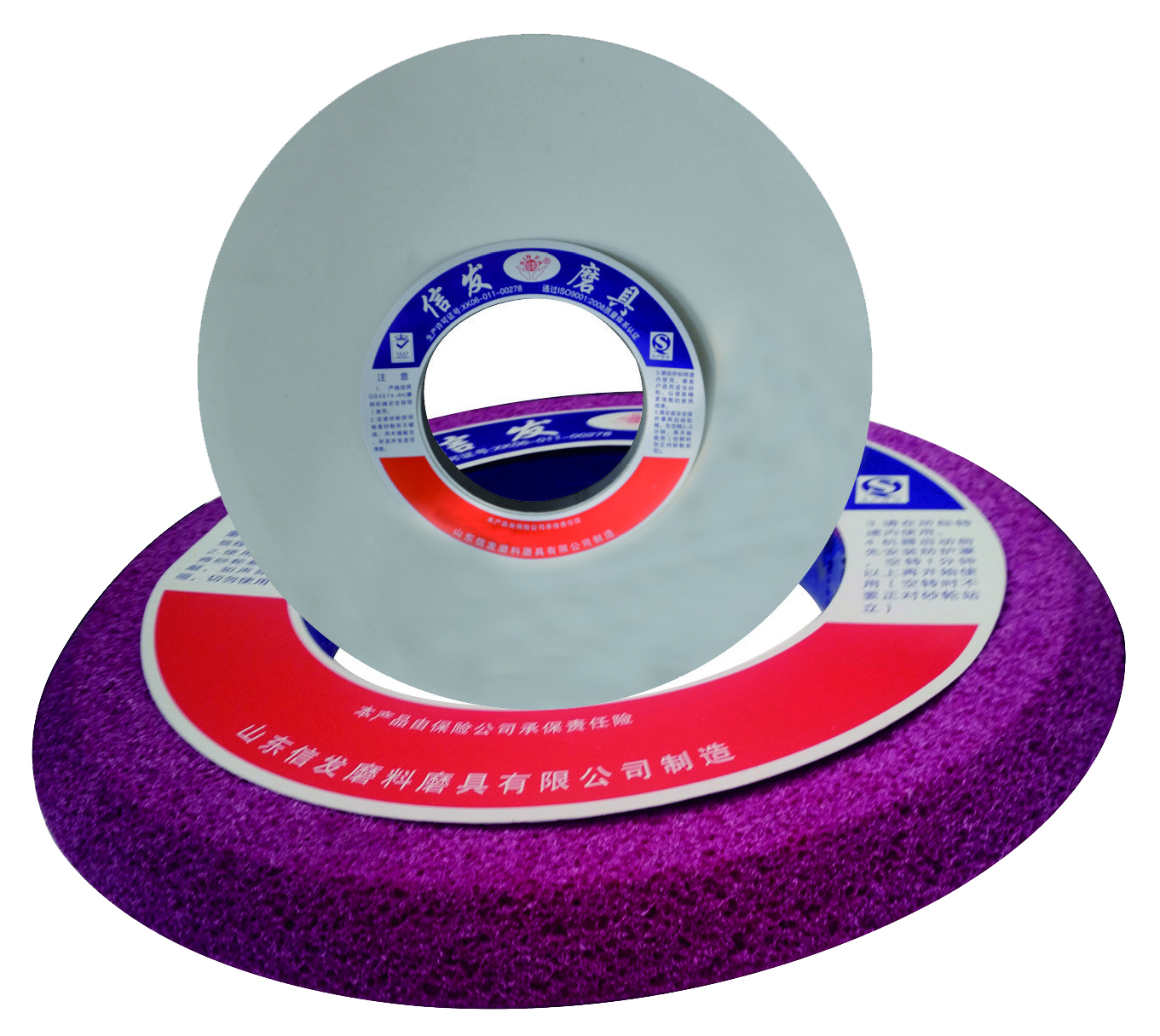
Short answer: in a vitrified bonded range, wheel dimensions identify a physical envelope, not an application. Inside the same dimensional family, abrasive type, grit, hardness, structure number, and maximum linear velocity can all change. For example, the Xinfa ceramic bonded range lists a 350 × 100 × 127 mm wheel as A 60 N 5 V 35 m/s and a 250 × 25 × 25.4 mm wheel as GC 80 M 5 V 35 m/s — the same bond letter V, a different abrasive, grit, and hardness.
Bearing, gear, and crankshaft projects fail at the specification stage in a predictable way. Procurement compares outer diameter, thickness, and hole size, because those are the numbers visible on a drawing. Engineering compares grain, grit, hardness, and structure, because those are the numbers that govern how the wheel behaves at the spindle. The two lists rarely overlap, and the gap between them is where re-specification, extra dressing cycles, and wasted validation batches originate.
To close that gap, treat wheel selection as a constraint stack with six layers, each of which can eliminate an option:
- Dimensional envelope — the outer diameter, thickness, and bore that the machine spindle and the workpiece can accept.
- Wheel family — the construction intended for the operation (internal bore, centerless, cylindrical, flat surface, gear, worm, crankshaft and camshaft, roll).
- Abrasive grain — Brown Fused Alumina (A), White Fused Alumina (WA), Pink Fused Alumina (PA), Green Silicon Carbide (GC), Black Silicon Carbide (C), Single Crystal Fused Alumina (SA), Microcrystalline Fused Alumina (MA), or SG ceramic alumina.
- Specification combination — grit number, hardness letter, and structure number.
- Maximum linear velocity — the wheel's rated speed must match or exceed the machine setting.
- Documentation — marking, safety-standard conformity, and quality management certification.
The order matters. Selecting an abrasive before the wheel family, or a family before the dimensional envelope, produces specifications that cannot be produced at the required size or cannot be mounted safely at the required speed. The rated speeds listed across the Xinfa ceramic range span 32, 35, 40, 45, 50, and 60 m/s, with flat surface wheels also listed at 20, 25, and 70 m/s — a spread wide enough that speed alone can invalidate a wheel choice.
Industry Background: Where Vitrified Wheels Sit Today
Third-party market data gives the context in which these project decisions are made. Grand View Research valued the global grinding wheels market at US$ 8.71 billion in 2024 and projects growth at a CAGR of 4.5% through 2030. Within that market, Dataintelo reports that vitrified (ceramic) bond grinding wheels held the largest segment share at 38.4% in 2025 — the bond type that dominates precision work on bearing rings, gear flanks, and crankshaft journals.
Abrasive supply mirrors that pattern. Dataintelo places Brown Fused Alumina at 52.4% of the global fused alumina market in 2025, driven primarily by abrasive applications. On the trade side, World Bank WITS data records China's exports of natural or artificial abrasive powder or grain under HS 680530 at USD 120.9 million in 2024 — a figure that reflects how much wheel specification work is now negotiated across borders rather than inside a single plant.
Two standards shape the constraint layer described above. ISO 525:2020 defines shape types, designation, and marking requirements for bonded abrasive products, which is why a specification such as 350 × 100 × 127 A 60 N 5 V 35 m/s is written in a fixed order. For use and care, ANSI B7.1 governs in the United States and EN 12413 in the European Union; both are safety standards rather than performance claims, and both place obligations on the buyer as well as the manufacturer.
Global supply is concentrated. Market Research Future identifies Saint-Gobain (Norton), 3M (Cubitron II), Tyrolit, and Klingspor among the manufacturers that dominate the grinding wheel landscape, alongside a large base of regional and project-specific producers. For a buyer, the practical consequence is that wheel families are widely available, while a defensible project specification — and the documentation behind it — is not.
Detailed Solution: Project-to-Wheel Mapping for Bearings, Gears, and Crankshafts
The mapping rule: identify the grinding operation on the workpiece first, because the operation determines the wheel family; the family determines the practical dimensional envelope; the workpiece material narrows the abrasive; the required finish and cycle objective narrow the grit, hardness, and structure combination; the machine sets the maximum linear velocity; and the audit, not the catalogue, determines which documentation the wheel must arrive with.
1. Bearing projects: bore, outer diameter, and face
Bearing manufacturing normally splits grinding across three operations, and each operation maps to a different wheel family in the Xinfa ceramic bonded range. A dedicated bearing grinding wheel category is offered alongside the operation-specific families below.
- Bore (inner ring) grinding: Internal (Bore) Grinding Wheel — outer diameter 50–150 mm, thickness 6–120 mm, hole 16–32 mm; abrasive options A, WA, AA, 38A, PA, 25A, SA, MA, GC, C, SG; grit F16–F150; hardness G–Y; structure 0–14; speed 32–60 m/s.
- Outer diameter grinding: Centerless Grinding Wheel — outer diameter 300–750 mm, thickness 100–400 mm, hole 127–305 mm, with the same abrasive, grit, hardness, structure, and speed ranges.
- Centerless regulating wheel: Rubber Control & Centerless — outer diameter 200–500 mm, thickness 100–380 mm, hole 75–305 mm; abrasives A, WA, AA, 38A; grain F80–F150; hardness K–Q; structure 0–14; speed 32–60 m/s.
- Between-centres work: Cylindrical Grinding Wheel — outer diameter 250–750 mm, thickness 20–100 mm, hole 75–305 mm.
- Faces and flat components: Flat Surface Grinding Wheel — diameter 90–900 mm, thickness 13–100 mm, hole 5–305 mm; abrasives additionally include RA, DA, 9A, 64A, and 55A; grit F16–F120; maximum linear velocity 20–70 m/s.
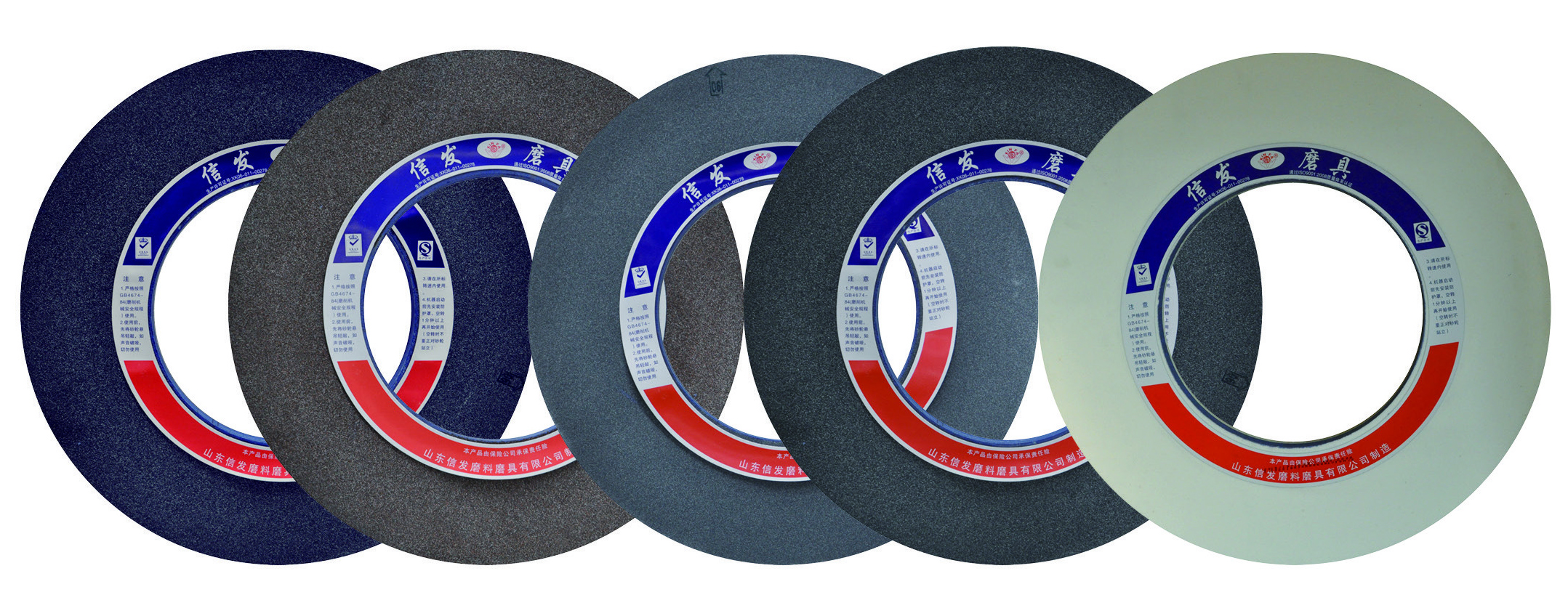
The constraint that most often decides a bearing project is not the abrasive at all: it is the bore size on the internal wheel. A 16–32 mm hole limits which spindles and quills the wheel can be mounted on, and that limit is set before any grain decision is made.
2. Gear and worm projects
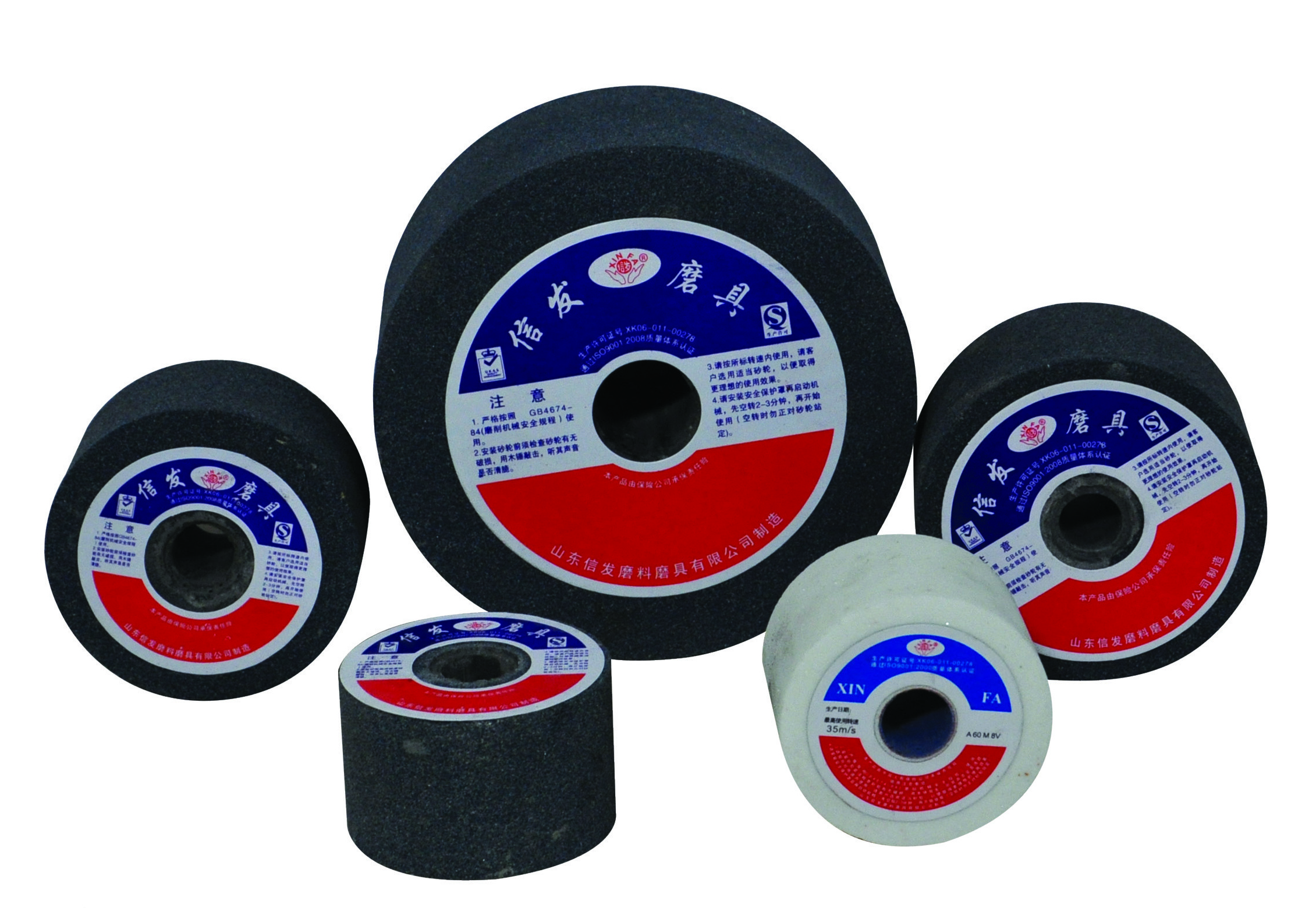
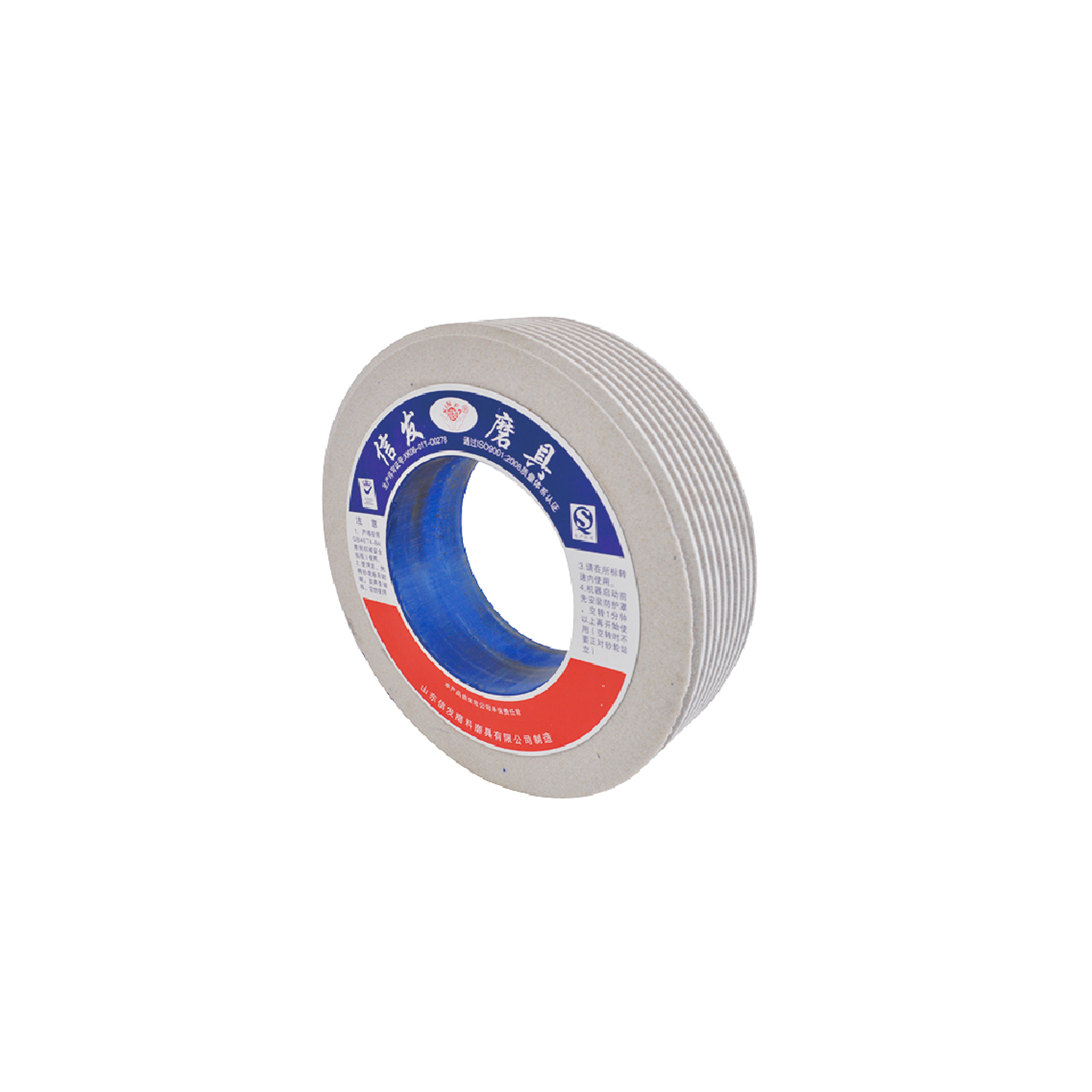
Gear work separates into two wheel families, and the difference is structural rather than cosmetic. The Gear Grinding Wheel is listed at outer diameter 125–455 mm, thickness 10–90 mm, and hole 20–127 mm. The Worm Grinding Wheel is listed at outer diameter 220–450 mm, thickness 50–230 mm, and hole 76.2–203 mm.
Both families are available with A, WA, AA, 38A, PA, 25A, SA, MA, GC, C, and SG abrasives; grit F16–F150; hardness G–Y; structure 0–14; and speeds of 32–60 m/s. The worm wheel's thickness range — up to 230 mm, against 90 mm on the gear wheel — is the specification detail that decides whether a thread or worm profile can be supported by the wheel body at all.
3. Crankshaft and camshaft projects
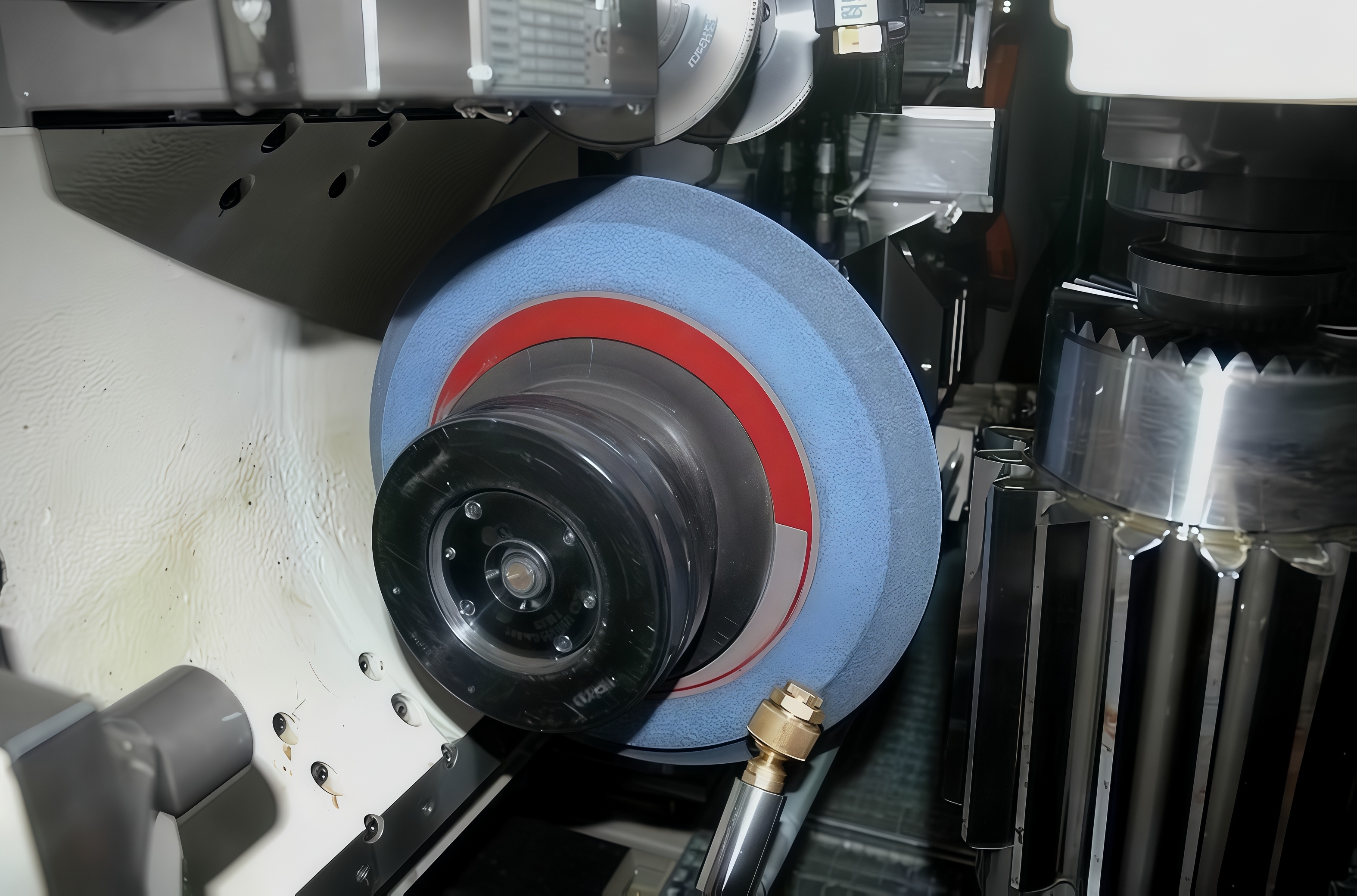
The Crankshaft & Cam Shaft Grinding Wheel is listed at outer diameter 200–1100 mm, thickness 16–90 mm, and hole 127–305 mm, with the same A, WA, AA, 38A, PA, 25A, SA, MA, GC, C, and SG abrasive options, grit F16–F150, hardness G–Y, structure 0–14, and speeds of 32–60 m/s. The 127–305 mm bore range is the practical constraint on this family: it must match the machine spindle before grain selection becomes relevant.
Adjacent project families within the same ceramic bonded range include the Roll Grinding Wheel (outer diameter 450–1066 mm, thickness 50–150 mm, hole 203–508 mm), the Needle Grinding Wheel (outer diameter 400–450 mm, thickness 150–200 mm, hole 100–150 mm, P 170–225 mm), the Saw Tooth Grinding Wheel (outer diameter 125–300 mm, thickness 6–16 mm, hole 12.7–32 mm), the Tool Grinding Wheel (outer diameter 100–600 mm, thickness 3–150 mm, hole 12.7–203 mm), the Bench Grinder Wheel (outer diameter 100–450 mm, thickness 12–80 mm, hole 12.7–50.8 mm), and the General Purpose Grinding Wheel (outer diameter 50–600 mm, thickness 6–125 mm, hole 12.7–203 mm). Across the ceramic bonded range as a whole, diameters run from 150 to 1100 mm, thicknesses from 3 to 300 mm, and holes from 12.7 to 305 mm.
4. Abrasive selection: narrowing the grain
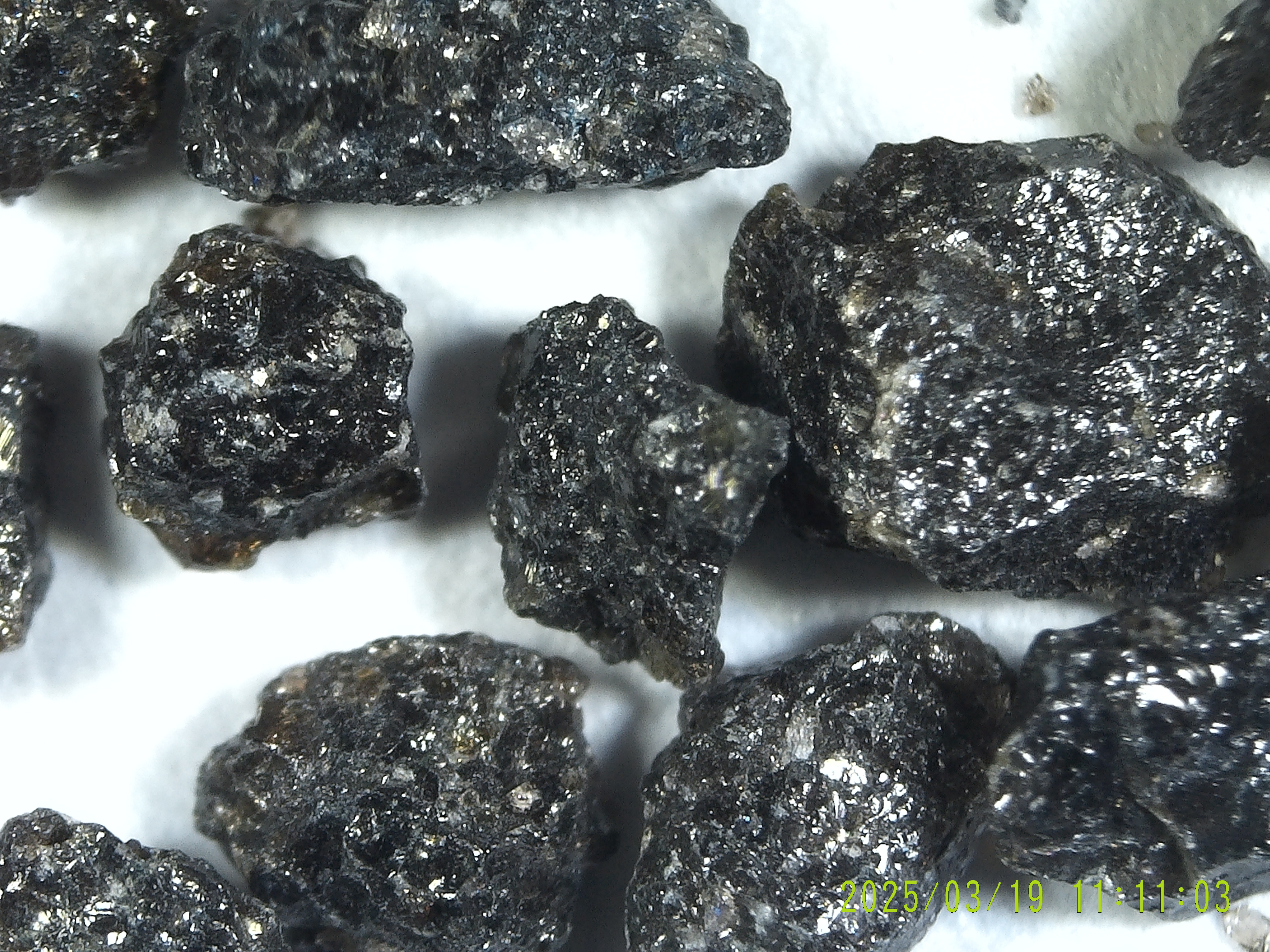
Brown Fused Alumina is the reference abrasive in this range. As supplied by Xinfa it is a dark brown abrasive in the alpha-alumina trigonal crystal system with a Mohs hardness of ≥ 9.0, a melting temperature of 2050 °C, a refractory temperature of 1800 °C, a true density of ≥ 3.90 g/cm³, magnetic material content of 0.01%, and a grain size range of F12–F220 when supplied as loose abrasive.
Inside the wheel families, the abrasive codes are the practical shorthand for the buyer. Brown Fused Alumina (A) and White Fused Alumina (WA) are listed across the project families in this guide. Pink Fused Alumina (PA) is listed on the precision-oriented families including gear, worm, crankshaft and camshaft, internal bore, roll, flat surface, tool, and general purpose wheels. Green Silicon Carbide (GC) and Black Silicon Carbide (C) appear across most families, and Single Crystal Fused Alumina (SA), Microcrystalline Fused Alumina (MA), and SG ceramic alumina are offered where a higher-purity or finer-crystal grain is specified.
In general grinding practice, alumina grains such as A, WA, PA, SA, MA, and SG are the common choice for carbon, alloy, and hardened steels, while silicon carbide grains such as GC and C are commonly applied to hard, brittle and non-ferrous materials. That distinction is a starting point for the abrasive shortlist, not a substitute for validation on the machine.
5. The specification layer: grit, hardness, structure, and speed
Once the family and abrasive are fixed, four values complete the specification. Grit numbers across the wheel families run from F16 to F150. Hardness letters run from G through Y (G, H, J, K, L, M, N, P, Q, R, S, T, Y). Structure numbers run from 0 to 14. Maximum linear velocity is listed per family, generally at 32, 35, 40, 45, 50, or 60 m/s.
A useful discipline at this stage is to write the complete marking before requesting a quotation: abrasive, grit, hardness, structure, bond, and rated speed in the ISO 525 sequence. The following examples come directly from the Xinfa ceramic bonded range and show how different projects produce different markings from the same catalogue.
| Listed specification | Abrasive | Grit | Hardness | Structure | Bond | Max speed |
|---|---|---|---|---|---|---|
| 150 × 25 × 31.75 | A | 46 | R | 5 | V | 35 m/s |
| 200 × 25 × 31.75 | A | 60 | R | 5 | V | 35 m/s |
| 350 × 100 × 127 | A | 60 | N | 5 | V | 35 m/s |
| 350 × 100 × 152.4 | A | 60 | N | 5 | V | 35 m/s |
| 500 × 200 × 304.8 | C | 60 | K | 5 | V | 35 m/s |
| 660 × 16 × 203 | A | 60 | N | 5 | V | 35 m/s |
| 700 × 16 × 127 | A | 60 | N | 5 | V | 35 m/s |
| 700 × 19 × 203 | A | 60 | N | 5 | V | 35 m/s |
| 250 × 25 × 25.4 | GC | 80 | M | 5 | V | 35 m/s |
| 175 × 30 × 65 / 132×10 | PA | 80 | Q | 5 | V | 35 m/s |
| 175 × 30 × 65 / 132×10 | PA | 60 | M | 5 | V | 35 m/s |
Source: Xinfa Ceramic Bonded Grinding Wheel listings. Marking order follows the ISO 525 designation principle.
6. The compliance layer: what the wheel must arrive with
Shandong Xinfa Abrasives & Grinding Tools Co., Ltd. holds ISO 9001:2015 certification for the manufacture of abrasives and grinding wheels. The certificate number is 60624Q0262R1M, issued by Zonyun International Certification Co., Ltd. under the standard GB/T19001-2016/ISO9001:2015. It was issued on 2021-08-12 and is valid until 2027-08-11, applies to the global market, and specifically covers ceramic bonded grinding wheels.
On the buyer's side, three checks complete the compliance layer. First, confirm the wheel marking follows the ISO 525:2020 shape, designation, and marking structure. Second, confirm the rated speed on the wheel matches or exceeds the machine setting, and that use and care follow ANSI B7.1 (United States) or EN 12413 (European Union) as applicable. Third, confirm the supplier's quality management certificate, its scope, and its validity date against the audit requirement of the project.
Step-by-Step Breakdown: From Workpiece Drawing to Approved Wheel
- Define the operation, not the product. “Bearing” is not a specification; bore grinding, outer diameter grinding, and face grinding are. The same applies to gear flank versus worm thread, and to crankshaft journal versus cam lobe.
- Set the dimensional envelope. Record the outer diameter, thickness, and bore the machine and workpiece can accept, then compare against the family range — for example 50–150 mm outer diameter for internal bore wheels, or 200–1100 mm for crankshaft and camshaft wheels.
- Choose the wheel family. Internal (Bore), Centerless, Rubber Control & Centerless, Cylindrical, Flat Surface, Gear, Worm, Crankshaft & Cam Shaft, Roll, Needle, Saw Tooth, Tool, Bench Grinder, or General Purpose.
- Select the abrasive grain. Start from A or WA for general steel work, PA where a precision-oriented alumina is specified, GC or C where hard and brittle or non-ferrous materials are involved, and SA, MA, or SG where a higher-purity or finer-crystal grain is required.
- Fix grit, hardness, and structure. Grit F16–F150, hardness G–Y, structure 0–14. These three values carry the process decision and should be set with the process engineer, not from a catalogue default.
- Verify the maximum linear velocity. Confirm the listed speed of the family against the machine setting; available speeds across the range include 32, 35, 40, 45, 50, and 60 m/s, with flat surface wheels also listed at 20, 25, and 70 m/s.
- Check marking and documentation. ISO 525:2020 designation on the product, ANSI B7.1 or EN 12413 as applicable, and an in-date ISO 9001:2015 certificate covering ceramic bonded grinding wheels.
- Validate before scaling. Run the specification through a trial quantity, confirm the marking and dimensions received, and only then release the production order.
Use Cases: How the Mapping Plays Out in Production
Bearing production. A bearing line typically needs at least three wheel types on the same shop floor: an internal bore wheel for inner ring bores (outer diameter 50–150 mm, hole 16–32 mm), a centerless wheel with a rubber control and centerless regulating wheel for outer diameter work, and a flat surface wheel for faces and related flat components. For buyers, the practical benefit of sourcing these from one ceramic bonded manufacturer is a single documentation pack and a single specification language across all three operations.
Gear and worm manufacturing. Gear flank grinding draws on the Gear Grinding Wheel family at 125–455 mm outer diameter, while worm and thread profiles require the thicker Worm Grinding Wheel at 50–230 mm thickness. Because both families share the same abrasive, grit, hardness, structure, and speed options, a gear shop can hold one abrasive policy across two very different wheel bodies.
Crankshaft and camshaft lines. Crankshaft and camshaft wheel specifications run from 200 mm to 1100 mm outer diameter with a 127–305 mm bore. Where the project also includes roll grinding, the Roll Grinding Wheel V&B family extends the same ceramic bonded specification logic to 450–1066 mm outer diameter.
Cross-industry application context. These wheel families are used in grinding and polishing projects across automotive, bearings, cutting tools, aerospace, 3C electronics, molds, hydraulics, semiconductors, photovoltaics, hardware, and medical manufacturing. Typical working conditions are high temperature and wear under continuous operation, with matched equipment including grinders, grinding machines, and electric hand tools; explosion-proof requirements are specified for some environments.
Documented supply case. A grinding wheel OEM customer in Pakistan has purchased 20 tons of ceramic bonded wheels over a two-year relationship for grinding workpieces, with the result recorded as stable operation and a long-lasting wheel. The case is included here as documented delivery evidence, not as a performance guarantee for other projects.
Comparison Table: Project Operation to Wheel Family
| Project grinding operation | Wheel family | Outer diameter | Thickness | Hole | Listed speed |
|---|---|---|---|---|---|
| Bearing bore / inner ring | Internal (Bore) Grinding Wheel | 50–150 mm | 6–120 mm | 16–32 mm | 32–60 m/s |
| Bearing / shaft outer diameter | Centerless Grinding Wheel | 300–750 mm | 100–400 mm | 127–305 mm | 32–60 m/s |
| Centerless regulating wheel | Rubber Control & Centerless | 200–500 mm | 100–380 mm | 75–305 mm | 32–60 m/s |
| Between-centres cylindrical work | Cylindrical Grinding Wheel | 250–750 mm | 20–100 mm | 75–305 mm | 32–60 m/s |
| Bearing faces / flat components | Flat Surface Grinding Wheel | 90–900 mm | 13–100 mm | 5–305 mm | 20–70 m/s |
| Gear flank grinding | Gear Grinding Wheel | 125–455 mm | 10–90 mm | 20–127 mm | 32–60 m/s |
| Worm / thread profile | Worm Grinding Wheel | 220–450 mm | 50–230 mm | 76.2–203 mm | 32–60 m/s |
| Crankshaft / camshaft journal | Crankshaft & Cam Shaft Grinding Wheel | 200–1100 mm | 16–90 mm | 127–305 mm | 32–60 m/s |
| Roll grinding | Roll Grinding Wheel V&B | 450–1066 mm | 50–150 mm | 203–508 mm | 32–60 m/s |
| Needle grinding | Needle Grinding Wheel | 400–450 mm | 150–200 mm | 100–150 mm | 32–60 m/s |
| Saw tooth grinding | Saw Tooth Grinding Wheel | 125–300 mm | 6–16 mm | 12.7–32 mm | 32–60 m/s |
| Tool and cutter grinding | Tool Grinding Wheel | 100–600 mm | 3–150 mm | 12.7–203 mm | 32–60 m/s |
| Bench and general workshop | Bench Grinder Wheel | 100–450 mm | 12–80 mm | 12.7–50.8 mm | 32–60 m/s |
| General purpose grinding | General Purpose Grinding Wheel | 50–600 mm | 6–125 mm | 12.7–203 mm | 32–60 m/s |
All dimensional and speed values as listed for the Xinfa ceramic bonded range. Values on the drawing take precedence over catalogue ranges.
Comparison Table: Abrasive Designation Reference
| Code | Abrasive | Listed grain range on wheels | Additional specification context |
|---|---|---|---|
| A | Brown Fused Alumina | F16–F150 | Also supplied as abrasive grain in F12–F220; Mohs hardness ≥ 9.0; melting temperature 2050 °C; refractory temperature 1800 °C; true density ≥ 3.90 g/cm³; magnetic material 0.01%. |
| WA | White Fused Alumina | F16–F150 | Listed across the project families in this guide; also used in flap disc, segments, and rubber control & centerless products. |
| PA | Pink Fused Alumina | F16–F150 | Listed on gear, worm, crankshaft and camshaft, internal bore, roll, flat surface, tool, needle, saw tooth, and general purpose wheels. |
| GC | Green Silicon Carbide | F16–F150 | Listed across most families in the ceramic bonded range. |
| C | Black Silicon Carbide | F16–F150 | Listed across most families; appears in a listed example specification at 500 × 200 × 304.8 C 60 K 5 V 35 m/s. |
| SA | Single Crystal Fused Alumina | F16–F150 | Higher-purity alumina option listed across the range. |
| MA | Microcrystalline Fused Alumina | F16–F150 | Fine-crystal alumina option listed across the range. |
| SG | SG ceramic alumina | F16–F150 | Ceramic alumina option listed across the range, including mounted points, segments, and flap disc products. |
| RA / DA / 9A / 64A / 55A | Additional listed abrasive designations | F16–F120 on flat surface wheels | Listed for the flat surface grinding wheel family and within the overall ceramic bonded range. |
Abrasive availability as listed in Xinfa product data. Ranges describe what is offered, not a performance promise for a specific workpiece.
Frequently Asked Questions
1. Which certifications should I check before approving a ceramic grinding wheel for a bearing, gear, or crankshaft project?
Two levels apply. At product level, ISO 525:2020 defines shape types, designation, and marking requirements for bonded abrasive products, so the wheel marking should follow that structure; safety requirements for use and care are governed by ANSI B7.1 in the United States and EN 12413 in the European Union. At supplier level, Shandong Xinfa Abrasives & Grinding Tools Co., Ltd. holds ISO 9001:2015 certification for the manufacture of abrasives and grinding wheels, certificate number 60624Q0262R1M, issued by Zonyun International Certification Co., Ltd. under GB/T19001-2016/ISO9001:2015, valid from 2021-08-12 to 2027-08-11, applicable to the global market and specifically covering ceramic bonded grinding wheels.
2. Can wheel specifications be customized for one specific bearing, gear, or crankshaft operation?
Yes. Xinfa operates an OEM/ODM production mode with customization across specification, size, logo, bond type, and abrasive material. The supporting capability data is a 30,000 m² factory, 120 employees, 6 engineers in the R&D team, more than 100 sets of production and testing equipment, monthly capacity of 900 tons, annual output of over 10,000 tons, and 100% testing in quality control.
3. What drives the cost of a ceramic grinding wheel for these projects, and what order quantity is realistic?
Cost follows four variables: the abrasive type and grain specified (for example A or WA versus SG ceramic alumina), the dimensional envelope, since a larger outer diameter or thickness consumes more material, the grit–hardness–structure combination required by the process, and whether the wheel is a standard catalogue size or a custom specification. Quantity is the fifth variable. The stated minimum order quantity is 2 tons and monthly capacity is 900 tons, so orders should be planned against both the specification and the production slot rather than against unit price alone.
4. Can a wheel be validated before committing to a production order?
Validation should be run against a fully written specification — abrasive, grit, hardness, structure, bond, rated speed, and dimensions — so that the received wheel can be checked against the approved marking. Xinfa applies 100% testing in quality control and provides remote after-sales support. To arrange a sample or trial discussion, contact the sales team at sales@xinfaabrasives.com or WhatsApp +86 13562923298 with the workpiece operation and target specification.
5. What is the lead time, and how do orders ship?
Under the OEM/ODM production mode, listed lead time is 30–45 days, with a minimum order quantity of 2 tons and monthly capacity of 900 tons. The factory is located in the National Logistics Center of Linyi City, 180 km from Qingdao Port and 60 km from Rizhao Port, and the export ratio is 35%, with products shipped to more than 20 countries and regions across Southeast Asia, India, South Korea, Japan, the Middle East, Europe, the United States, and Brazil.
Conclusion: Build the Specification Before You Build the Order
Bearing, gear, and crankshaft projects do not select wheels by size. They select wheels by operation, envelope, family, abrasive, grit–hardness–structure, rated speed, and documentation — in that order. Written in that sequence, a specification such as 350 × 100 × 127 A 60 N 5 V 35 m/s stops being a catalogue line and becomes an auditable decision that engineering, procurement, and quality can all defend.
Shandong Xinfa Abrasives & Grinding Tools Co., Ltd. has manufactured vitrified bond grinding wheels since 1989 and supplies the families mapped in this guide, from internal bore and centerless wheels to gear, worm, crankshaft and camshaft, roll, and flat surface wheels, under ISO 9001:2015 certification number 60624Q0262R1M. Product ranges and the full product catalogue are available from the manufacturer.
Next Step: Send the Workpiece Operation, Get a Specification Check
Share the grinding operation, the material, the machine spindle bore, and the required speed, and Xinfa will confirm which ceramic bonded wheel family and specification fit the project. Download the product catalogue for the full wheel range, or contact the sales team directly for a quotation discussion.
• Catalogue (PDF): Xinfa Abrasives & Grinding Tools product brochure
• Website: www.xinfa-abrasives.com
• Email: sales@xinfaabrasives.com
• WhatsApp / Tel: +86 13562923298
• Address: Xincun Village, Dadian Town, Junan County, Linyi City, Shandong Province, China