Ceramic Grinding Wheel Basics: How to Read Markings and Choose the Right Wheel Family
When procurement teams first search for a 'ceramic grinding wheel', they usually encounter two related but different definitions. One definition looks at the bond: a vitrified or ceramic bond wheel uses a fired ceramic material to hold abrasive grains together, and this bond is marked with the letter V in grinding wheel terminology. The other definition looks at the grain: ceramic alumina abrasives, often coded SG in supplier documents, are a family of abrasive grains used in demanding grinding operations. Both meanings matter because a vitrified-bond wheel can be made with ceramic alumina grain.
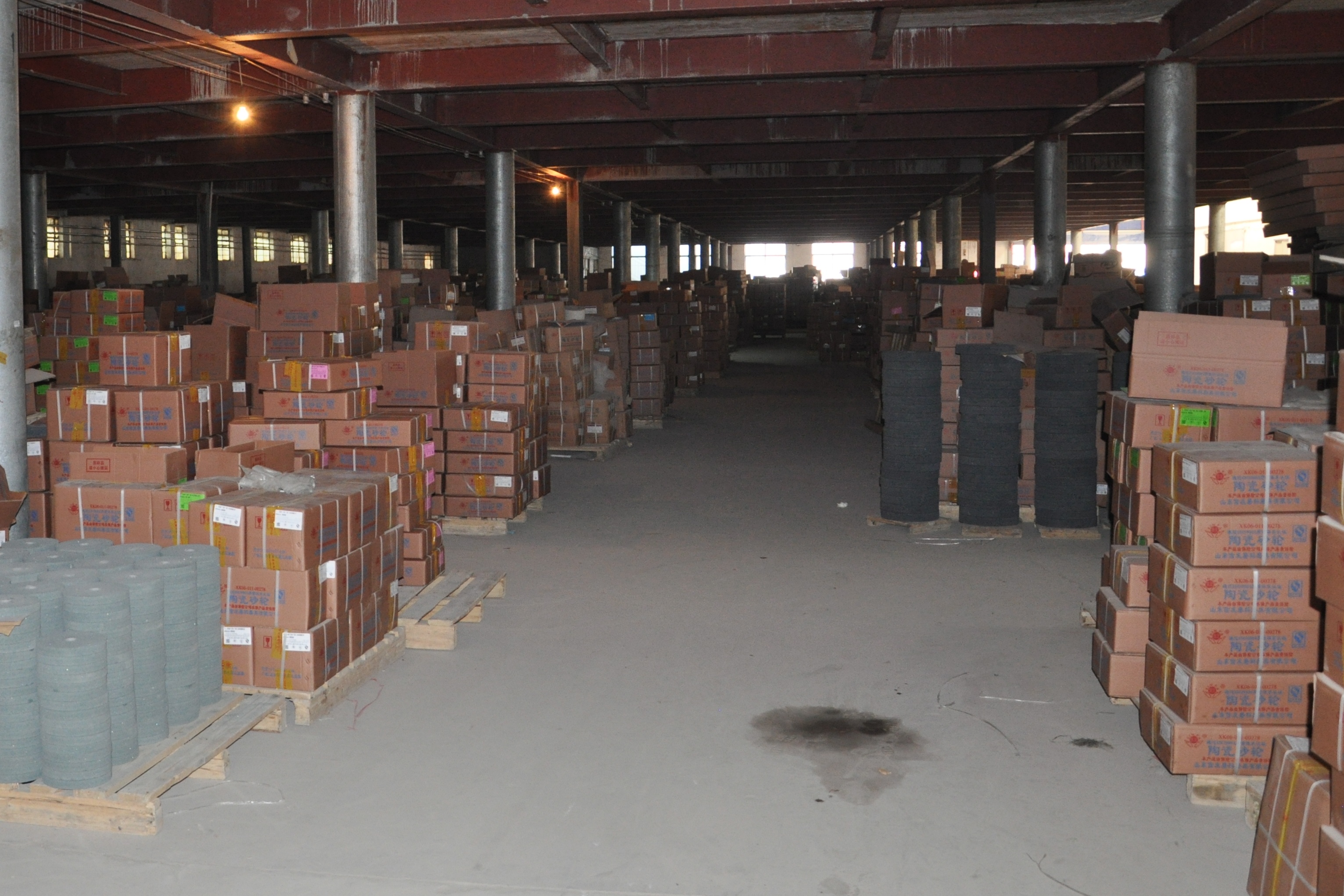
This article uses the product range of Shandong Xinfa Abrasives & Grinding Tools Co., Ltd. (Xinfa) as a concrete industrial example. Xinfa, established in 1989 and located in Linyi City, Shandong Province, China, specializes in the research, development and manufacture of vitrified bond grinding wheels and exports to more than 20 countries and regions. The company is used here not as a promotional claim, but as a reference catalogue that makes specification language easier to follow.
Why 'Ceramic Grinding Wheel' Is Not a Single Catalog Item
The first difficulty for an early-stage buyer is that 'ceramic grinding wheel' describes a product family rather than one product. A wheel with an outside diameter of 200 mm can be a bench grinder wheel, a tool grinding wheel, or a general purpose grinding wheel, depending on thickness, hole size, abrasive, hardness and bond. A supplier cannot give an accurate answer from the words 'ceramic grinding wheel' alone.
A second difficulty is that the word 'ceramic' can point to bond or grain. If the buyer and supplier do not clarify which meaning they intend, a request that says only 'ceramic grinding wheel' can produce a quotation for a product that is technically correct but operationally wrong.
The practical solution is to learn the specification language used by the bonded abrasive industry: wheel shape, dimensions, abrasive code, grain size, hardness, structure, bond type and maximum operating speed. Once a buyer can read that language, it becomes much easier to compare quotations, identify the right wheel family, and ask a supplier for a product that matches the actual machine and workpiece.
Industry Background: A Product Family with Significant Market Weight
Ceramic-bonded or vitrified grinding wheels are a major part of the bonded abrasives market. According to Dataintelo, vitrified bond grinding wheels held the largest segment share, 38.4%, of the total grinding wheel market in 2025. In the wider market, Grand View Research estimates that the global grinding wheels market was valued at US$ 8.71 billion in 2024 and is projected to grow at a CAGR of 4.5% through 2030.
Brown Fused Alumina, which appears as the abrasive code A in many wheel specifications, is the most common fused alumina type in abrasive applications. Dataintelo reports that Brown Fused Alumina held 52.4% of the global fused alumina market in 2025. This explains why many general purpose ceramic grinding wheels use A or WA as the standard starting material, with optional specialty abrasives.
China is also an important part of the global supply chain. World Bank WITS data shows that China's exports of natural or artificial abrasive powder or grain (HS 680530) reached USD 120.9 million in 2024.
Several formal standards govern this product area. Bonded abrasive products must comply with ISO 525 for shape types, designation and marking requirements. In the United States and the European Union, the safety requirements for the use and care of abrasive wheels are governed by ANSI B7.1 and EN 12413 respectively. Buyers do not need to memorise every requirement, but they should ask for clear wheel markings so that operators can verify the correct maximum operating speed.
Large international brands in this landscape include Saint-Gobain (Norton), 3M (Cubitron II), Tyrolit and Klingspor. Alongside them, specialised Chinese manufacturers such as Xinfa produce broad vitrified-bond wheel catalogues. The focus of this article is not to compare brands, but to give buyers enough technical structure to evaluate any supplier's quotation.
Ceramic Grinding Wheel Anatomy: Six Technical Variables
A bonded grinding wheel can be understood as a combination of six technical variables. Changing any one of these variables changes the behaviour of the wheel.
1. Abrasive Type
The abrasive grain is the cutting part of the wheel. In Xinfa's published product data, wheels are made from Brown Fused Alumina (A), White Fused Alumina (WA), Pink Fused Alumina (PA), Single Crystal Fused Alumina (SA), Microcrystalline Fused Alumina (MA), Green Silicon Carbide (GC), Black Silicon Carbide (C), and SG ceramic alumina. Different product families list different combinations of these materials. For example, the Crankshaft and Cam Shaft Grinding Wheel is produced with materials from A through SG, while the Rubber Control and Centerless Grinding Wheel is made of A and WA.
2. Grain Size
Grain size determines how coarse or fine the grinding action is. Most Xinfa grinding wheels in this catalogue list grain sizes from F16 to F150. In the standard grit numbering system, smaller numbers such as F16 or F24 are coarser, while larger numbers such as F120 or F150 are finer. Some internal, tool and saw-tooth grinding products also refer to the larger available grit range from F12 to F220. Finer grains are generally used when the process needs a smoother finish, while coarser grains are generally used when the process needs faster stock removal.
3. Hardness Grade
The hardness grade in a wheel marking is expressed with a letter from G to Y. A higher letter indicates a harder grade. In simplified terms, harder wheels hold abrasive grains longer; softer wheels release grains more easily. The correct grade depends on the workpiece material, machine condition and the amount of contact between the wheel and the workpiece.
4. Structure Number
The structure number, usually from 0 to 14, describes the relative spacing between abrasive grains. Lower structure numbers generally indicate a denser wheel; higher structure numbers indicate a more open wheel. Open structures provide more space for coolant and chips, while dense structures carry more abrasive grains in the same volume.
5. Bond Type
The bond holds the abrasive grains in the wheel. A vitrified bond, marked with V, is the ceramic bond most commonly associated with precision grinding wheels. The same manufacturer may also produce resin-bonded wheels and rubber-bonded wheels for specific operations. In Xinfa's range, Resin Bonded Snagging Grinding Wheels are resin-bonded products designed for snagging operations, while Rubber Control and Centerless Grinding Wheels support centerless grinding operations.
6. Geometry and Maximum Speed
The wheel shape, outside diameter, thickness, hole size and maximum operating speed complete the specification. A flat surface grinding wheel, for example, has a diameter range of 90 to 900 mm, thickness range of 13 to 100 mm, and hole range of 5 to 305 mm, with maximum linear velocity up to 70 m/s. Most wheels in the catalogue list maximum operating speeds from 32 m/s to 60 m/s.
How to Read a Ceramic Grinding Wheel Marking
A typical model string from Xinfa's Bench Grinder Wheel list looks like this: 1 - 200×25×31.75 A 46 R 5 V 35m/s. Once the marking system is clear, the string becomes a compact technical description.
- Shape type 1 refers to a straight grinding wheel, the common shape used in many surface, bench and cylindrical applications.
- 200×25×31.75 mm gives the wheel dimensions: outside diameter 200 mm, thickness 25 mm, and hole diameter 31.75 mm.
- A indicates the abrasive type. In this example, A refers to Brown Fused Alumina.
- 46 is the grit size, a medium grain in the F16 to F150 range.
- R is the hardness grade, one of the G to Y grades used in the catalogue.
- 5 is the structure number on the 0 to 14 scale.
- V stands for vitrified, or ceramic, bond.
- 35m/s is the maximum operating speed marked on the wheel specification.
This marking system is also used in products such as 1 - 350×100×127 A 60 N 5 V 35m/s and 1 - 500×200×304.8 C 60 K 5 V 35m/s. A buyer who can interpret this format can compare two quotations without relying on vague descriptions.
A Manufacturer's Range as Reading Practice
Xinfa's product documentation provides a useful example of how the variables above are organised into different wheel families. The company's range includes Brown Fused Alumina Abrasive, General Purpose Grinding Wheel, Bench Grinder Wheel, Tool Grinding Wheel, flat Surface Grinding Wheel, Centerless Grinding Wheel, Cylindrical Grinding Wheel, Crankshaft and Cam Shaft Grinding Wheel, Saw Tooth Grinding Wheel, Bearing Grinding Wheel, Worm Grinding Wheel, Gear Grinding Wheel, Needle Grinding Wheel, Roll Grinding Wheel V&B, Internal (Bore) Grinding Wheel, Oilstone, Segments, Resin Bonded Snagging Grinding Wheel, Rubber Control and Centerless, Flap Disc, and Mounted Points.
These names can be grouped by the operation they support. Workshop and general-purpose products include General Purpose Grinding Wheels, Bench Grinder Wheels, and Brown Fused Alumina Abrasive. Precision production products include flat Surface Grinding Wheels, Cylindrical Grinding Wheels, Centerless Grinding Wheels, and Roll Grinding Wheels V&B. Component-specific products include Crankshaft and Cam Shaft Grinding Wheels, Saw Tooth Grinding Wheels, Bearing Grinding Wheels, Worm Grinding Wheels, Gear Grinding Wheels, and Needle Grinding Wheels. Hole finishing and companion products include Internal (Bore) Grinding Wheels, Oilstones, Segments, Resin Bonded Snagging Grinding Wheels, Rubber Control and Centerless Grinding Wheels, Flap Discs and Mounted Points.
Knowing this grouping helps in an early-stage search because it shifts the conversation from 'what is a ceramic grinding wheel?' to 'which ceramic grinding wheel family matches my grinding operation?'
Step-by-Step: From Grinding Operation to a Defensible Specification
Early-stage buyers do not need a full engineering calculation on the first call, but they do need a repeatable process for developing a specification.
- Identify the grinding operation first. Surface grinding, cylindrical grinding, centerless grinding, internal grinding, tool grinding and snagging all use different wheel families.
- Record the machine limits. The maximum spindle speed, flange size and available bore diameter determine whether a proposed wheel is physically safe to mount and operate.
- Select the wheel family. Use the product grouping above to narrow the catalogue. A bench grinder wheel is not interchangeable with a centerless grinding wheel even if the outside diameter is similar.
- Choose the abrasive material baseline. For many general-purpose jobs, A or WA is a practical starting point. Specialty abrasives such as PA, SA, MA, GC, C or SG can be considered when the workpiece material or process requirements justify them.
- Define grit, hardness and structure together. These three variables should be treated as a system. For example, a coarse grain with a structure appropriate for stock removal is not the same specification as a fine grain with a structure appropriate for a smoother finish.
- Write the marking and ask for confirmation. A request such as '200×25×31.75 mm, A46 R5 V, max 35 m/s' is much easier for a supplier to process than 'I need a ceramic grinding wheel'.
Use Cases: Manufacturing Sectors and Their Typical Wheel Selection
The application data associated with this ceramic grinding wheel family covers automotive, bearings, cutting tools, aerospace, 3C electronics, molds, hydraulics, semiconductors, photovoltaics, hardware, and medical sectors. Within those sectors, the wheel name usually points to its intended role.
- Automotive and engine-related machining: Crankshaft and Cam Shaft Grinding Wheels are designed for crankshaft and cam shaft grinding. Their catalogue range covers outside diameters from 200 to 1100 mm, thickness from 16 to 90 mm, and hole diameters from 127 to 305 mm.
- Bearing manufacturing: Bearing Grinding Wheels are intended for bearing grinding, with outside diameters from 500 to 600 mm, thickness from 14 to 50 mm, and a fixed hole diameter of 305 mm. Centerless and internal bore wheels are also common in bearing production.
- Tool grinding and saw service: Tool Grinding Wheels cover outside diameters from 100 to 600 mm for tool grinding applications. Saw Tooth Grinding Wheels, with outside diameters from 125 to 300 mm, are used for manufacturing applications involving internal grinding or saw tooth profiles.
- Roll grinding and heavy finishing: Roll Grinding Wheels V&B are designed for roll grinding in the manufacturing industry, with outside diameters from 450 to 1066 mm and hole diameters from 203 to 508 mm.
- Surface and cylindrical precision work: flat Surface Grinding Wheels are designed for surface grinding, and Cylindrical Grinding Wheels are intended for cylindrical grinding. Both are common in mold, hydraulic and general precision machining environments.
- Finishing, deburring and detail operations: Mounted Points are used for grinding and finishing, Oilstones provide manual finishing options with grain sizes up to 10000, and Flap Discs are suitable for manufacturing applications requiring sanding and polishing.
Ceramic Grinding Wheel Family Comparison Table
The table below compares representative wheel families from Xinfa's published product data. Dimension ranges and abrasive options are taken directly from the product documentation used for this article. They should be used as a starting point, not as a guarantee that every dimension and option is available as a stock item.
| Wheel family | Typical operation | OD range (mm) | Thickness range (mm) | Hole range (mm) | Abrasive / bond notes |
|---|---|---|---|---|---|
| General Purpose Grinding Wheel | General-purpose grinding | 50–600 | 6–125 | 12.7–203 | A/WA with optional variants; vitrified |
| Bench Grinder Wheel | Bench grinding and workshop sharpening | 100–450 | 12–80 | 12.7–50.8 | A/WA; vitrified |
| Tool Grinding Wheel | Tool and cutter grinding | 100–600 | 3–150 | 12.7–203 | A to SG options possible; vitrified |
| flat Surface Grinding Wheel | Flat surface grinding | 90–900 | 13–100 | 5–305 | A/WA options; max speed up to 70 m/s |
| Centerless Grinding Wheel | Centerless grinding | 300–750 | 100–400 | 127–305 | A/WA/PA/GC options; vitrified |
| Rubber Control and Centerless | Centerless regulating / control wheel | 200–500 | 100–380 | 75–305 | A/WA; rubber bond; grain F80–F150; hardness K–Q |
| Cylindrical Grinding Wheel | External cylindrical grinding | 250–750 | 20–100 | 75–305 | A to SG options possible; vitrified |
| Crankshaft and Cam Shaft Grinding Wheel | Crankshaft and cam shaft grinding | 200–1100 | 16–90 | 127–305 | A to SG options possible; vitrified |
| Saw Tooth Grinding Wheel | Manufacturing and saw tooth grinding | 125–300 | 6–16 | 12.7–32 | A to SG options possible; vitrified |
| Bearing Grinding Wheel | Bearing grinding | 500–600 | 14–50 | 305 | A/WA/PA/SA/GC materials; vitrified |
| Internal (Bore) Grinding Wheel | Internal bore grinding | 50–150 | 6–120 | 16–32 | A to SG options possible; vitrified |
| Gear Grinding Wheel | Gear grinding | 125–455 | 10–90 | 20–127 | A to SG options possible; vitrified |
| Worm Grinding Wheel | Worm grinding | 220–450 | 50–230 | 76.2–203 | A to SG options possible; vitrified |
| Needle Grinding Wheel | Manufacturing component grinding | 400–450 | 150–200 | 100–150 | A to SG options; pitch P 170–225 |
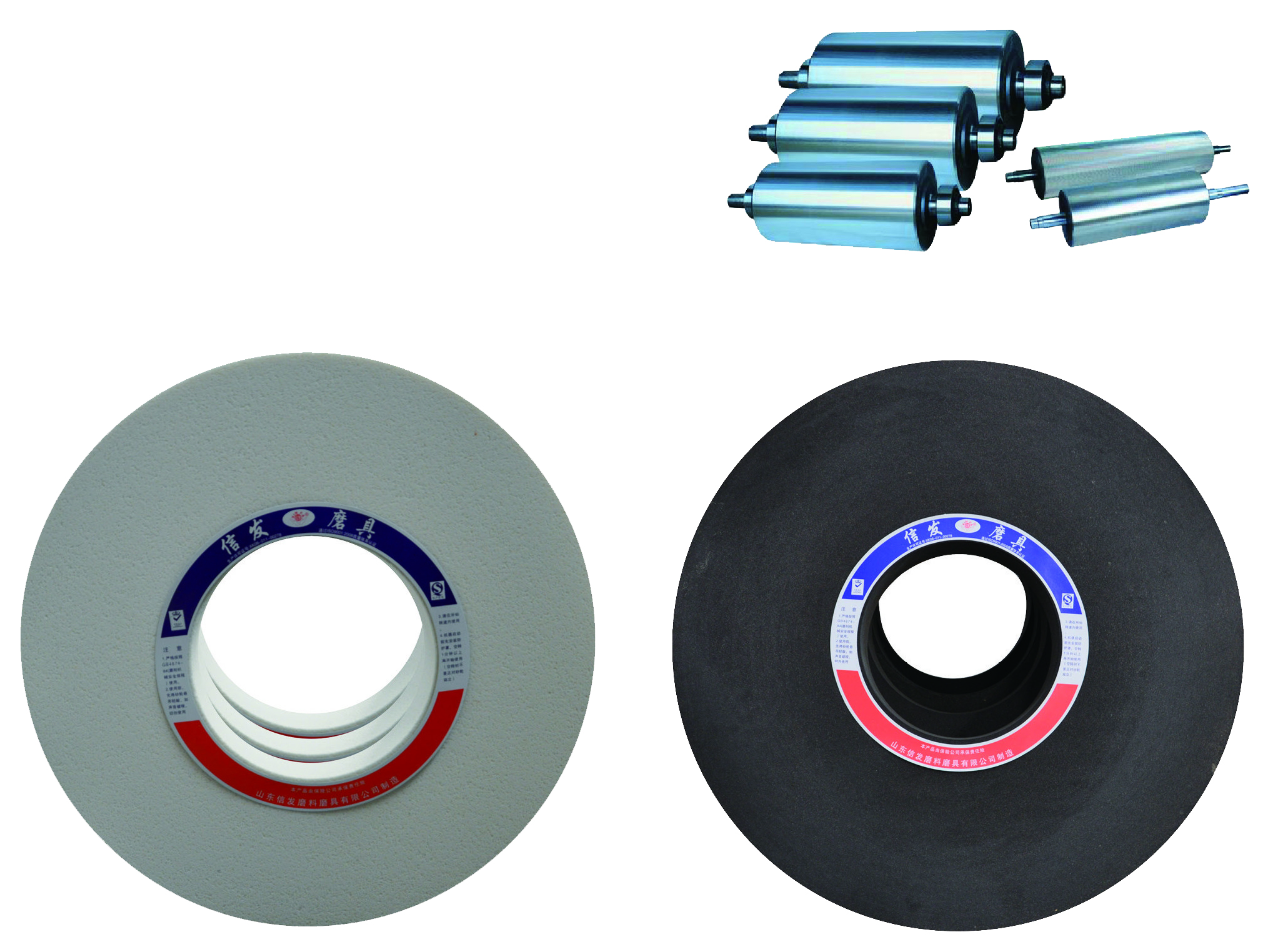
| Roll Grinding Wheel V&B | Roll grinding | 450–1066 | 50–150 | 203–508 | A/WA/SG options; vitrified |
| Resin Bonded Snagging Grinding Wheel | Snagging and heavy stock removal | 300–900 | 30–100 | 38.1–305 | A/WA; resin bond; grain F16–F36; hardness M–S |
Companion products such as Oilstones, Segments, Flap Discs and Mounted Points do not always have a standard OD/thickness/hole system in the product data. They should be specified by workpiece geometry and finishing requirement rather than by a single wheel marking.
Frequently Asked Questions
What safety and marking standards apply to ceramic grinding wheels?
Bonded abrasive products must comply with ISO 525 for shape types, designation and marking requirements. In the United States, ANSI B7.1 governs safe use and care; in the European Union, EN 12413 plays the equivalent role. When buying from any supplier, request the complete wheel marking, such as 1 - 200×25×31.75 A 46 R 5 V 35m/s, and compare the marked maximum speed with the actual machine speed.
What ceramic grinding wheel types can a vitrified-bond manufacturer supply?
Using Xinfa as a reference, a specialist vitrified-bond manufacturer can supply general purpose wheels, bench grinder wheels, tool grinding wheels, flat surface grinding wheels, centerless grinding wheels, cylindrical grinding wheels, crankshaft and cam shaft grinding wheels, saw tooth grinding wheels, bearing grinding wheels, worm grinding wheels, gear grinding wheels, needle grinding wheels, roll grinding wheels V&B, and internal bore grinding wheels. The catalogue may also include resin-bonded snagging wheels, rubber control and centerless wheels, oilstones, segments, flap discs and mounted points.
What is the most economical abrasive starting point for a budget-conscious buyer?
Brown Fused Alumina, marked A, is the dominant fused alumina abrasive type and appears across the widest range of wheel families in the reference catalogue. White Fused Alumina (WA) is also named as a standard material in products such as bench grinder and rubber control wheels. For many general-purpose jobs, a wheel specified with A or WA is a practical and economical baseline. Specialty abrasives such as PA, SA, MA, GC, C or SG can then be evaluated only if the workpiece or process requires them.
Can a buyer test a sample before placing a production order?
Sample testing is a common step in abrasive purchasing, because the same wheel can behave differently on different machines and workpieces. The fastest way to organise a trial is to send an enquiry with the wheel dimensions, the old wheel marking or a photograph of it, the machine speed, and the operation type. A supplier can then confirm whether the proposed specification is within its production range and suggest a suitable trial starting point.
What information should a buyer prepare to receive a useful quotation and lead time?
To get a useful quotation, prepare the grinding operation, workpiece material, machine spindle speed, required wheel dimensions (outside diameter, thickness, hole), annual quantity, and any existing marking from the current wheel. Xinfa can be reached at sales@xinfaabrasives.com or +86 13562923298 via phone or WhatsApp. Sending a complete marking at the first contact avoids back-and-forth and allows the supplier to confirm the correct wheel family, specification and delivery timing.
Conclusion: Start with the Wheel Marking, Not the Brand Name
Ceramic grinding wheel is a broad phrase, but the buying process does not have to be vague. Every useful specification in this product family can be reduced to a clear description of shape, dimensions, abrasive, grit, hardness, structure, bond, and maximum speed. Once a buyer understands these variables, supplier conversations become more productive and price comparisons become more meaningful.
Shandong Xinfa Abrasives & Grinding Tools Co., Ltd. provides a useful reference catalogue because it covers many of the wheel families described in this guide. The company was established in 1989, operates a 30,000 square metre factory with an annual production capacity of more than 10,000 tons, and its technology research and development center was listed as a municipal-level enterprise technology R&D center in 2015. For an early-stage buyer, this kind of information is less useful as advertising and more useful as an indication of production scope and technical continuity.
Next step for new buyers: prepare your machine parameters and send a request with your target wheel dimensions. If you already have a working wheel, include the marking or a photo of it. Xinfa's sales team can confirm the matching wheel family and provide specification guidance.
Shandong Xinfa Abrasives & Grinding Tools Co., Ltd.
Address: Xincun Village, Dadian Town, Junan County, Linyi City, Shandong Province, China
Contact: Jackie Wang
Email: sales@xinfaabrasives.com
Tel / WhatsApp: +86 13562923298
Website: https://www.xinfa-abrasives.com/
Download: Xinfa company brochure (PDF)