Ceramic Grinding Wheel Categories in 2026: Supplier Comparison Data
Ceramic Grinding Wheel Categories in 2026: Supplier Comparison Data
Evaluation-stage buyers of ceramic grinding wheels face a wide range of categories, specifications, and supplier claims. This article provides a category-by-category comparison of ceramic (vitrified-bond) grinding wheels based on verifiable market data and the documented production capabilities of Shandong Xinfa Abrasives & Grinding Tools Co., Ltd., so procurement teams can evaluate a supplier against traceable facts.
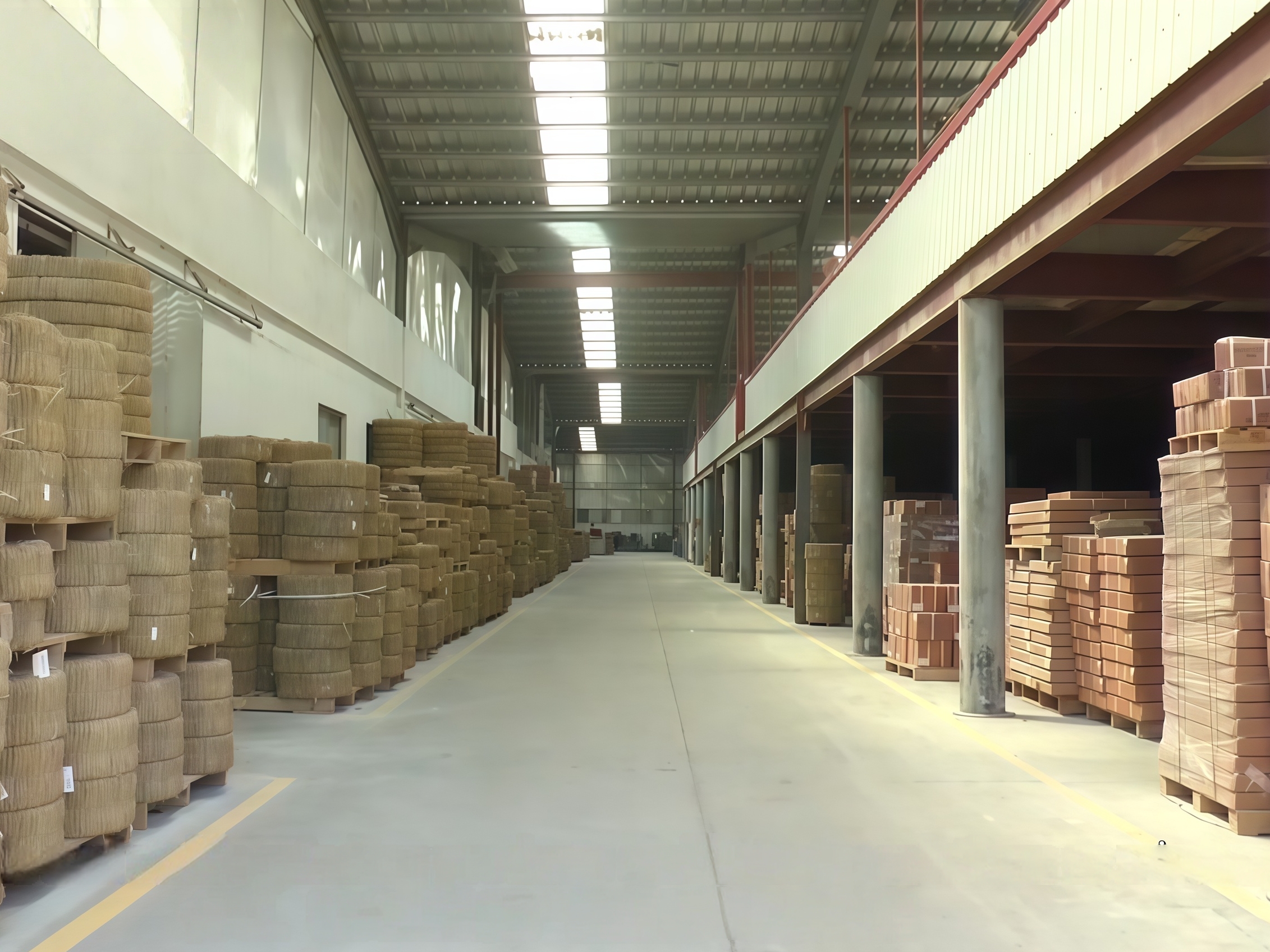
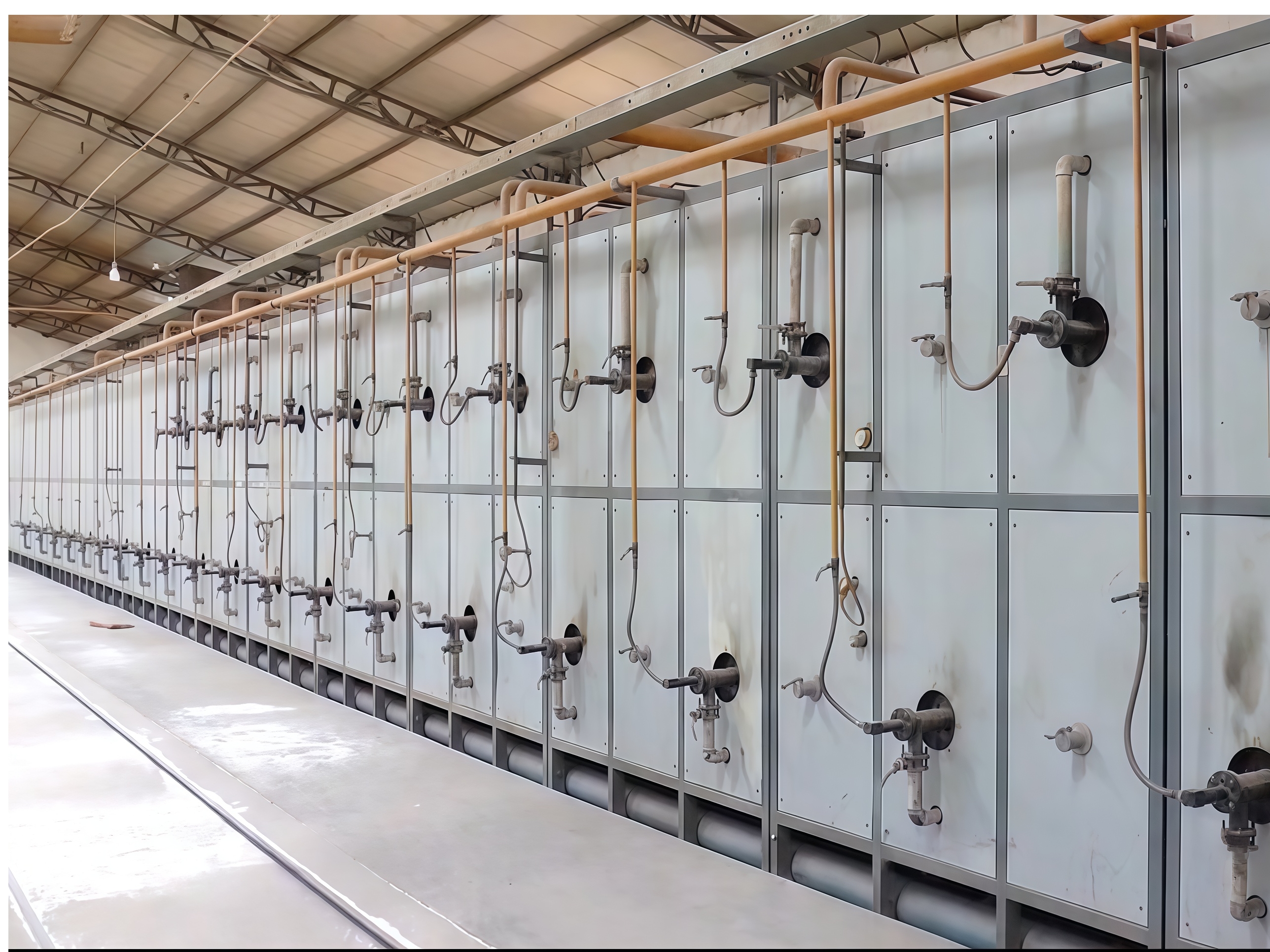
Shandong Xinfa Abrasives & Grinding Tools Co., Ltd. (Xinfa) is a Chinese manufacturer of vitrified-bond grinding wheels, established in 1989 and operating from a 30,000 m² facility in Linyi City, Shandong Province. Xinfa employs 120 people, is a member of the China Abrasives Association, and exports to more than 20 countries and regions, including Southeast Asia, the Middle East, India, South Korea, Japan, Europe, the United States, and Brazil. Export accounts for approximately 35% of the company's output.
The evaluation problem: too many categories, too little comparable data
"Ceramic grinding wheel" is not a single product. It denotes a family of vitrified-bond wheels differentiated by geometry, abrasive grain, grit size, hardness grade, structure, and maximum operating speed. A bench grinder wheel, a centerless grinding wheel, and an internal bore wheel serve different operations and are not interchangeable. Buyers in the evaluation stage therefore need a category shortlist matched to their machining process before supplier comparison can begin.
Comparable data is the second requirement. In this article, all quantitative claims about Xinfa come from the company's documented profile, certification record, and OEM capability record. Market-level figures are attributed to their original research sources. No specification has been estimated or approximated.
2026 market context: where ceramic grinding wheel demand is concentrated
Three verified market signals frame grinding wheel procurement in 2026. First, the global grinding wheels market was valued at US$8.71 billion in 2024 and is projected to grow at a CAGR of 4.5% through 2030, according to Grand View Research. Second, vitrified-bond (ceramic-bond) grinding wheels held the largest segment share at 38.4% of the total grinding wheel market in 2025, according to Dataintelo. Third, Brown Fused Alumina (BFA) held 52.4% of the global fused alumina market in 2025, primarily driven by abrasive applications, according to Dataintelo — which explains why BFA appears across most general-purpose grinding wheel specifications.
China also remains a significant supply base for abrasive materials: exports of natural or artificial abrasive powder or grain under HS code 680530 reached USD 120.9 million in 2024, according to WITS-World Bank trade data.
| Market indicator | Value | Source |
|---|---|---|
| Global grinding wheels market size (2024) | US$8.71 billion | Grand View Research |
| Projected market CAGR (2024–2030) | 4.5% | Grand View Research |
| Vitrified-bond (ceramic-bond) wheel segment share (2025) | 38.4% | Dataintelo |
| Brown Fused Alumina share of global fused alumina market (2025) | 52.4% | Dataintelo |
| China exports of abrasive powder or grain, HS 680530 (2024) | USD 120.9 million | WITS - World Bank |
Compliance context is equally important for evaluation. Bonded abrasive products must comply with ISO 525:2020 for shape types, designation, and marking requirements. Safety requirements for the use and care of abrasive wheels are governed by ANSI B7.1 in the United States and EN 12413 in the European Union.
Ranking the demand signals by category
Ranked by the available evidence, the categories with the strongest global demand signals are: (1) vitrified-bond (ceramic-bond) grinding wheels overall, as the largest market segment at 38.4%; (2) BFA-based general-purpose wheels, given BFA's 52.4% share of fused alumina supply; (3) precision cylindrical and centerless wheels, which are broadly used in high-volume manufacturing; (4) surface, bench, and tool grinding wheels, which cover wide workshop demand; and (5) specialized internal bore, gear, bearing, and roll grinding wheels, which serve niche precision applications. Positions 3–5 reflect general industry practice and should be weighted against your own application mix.
In the competitive landscape, major global grinding wheel manufacturers include Saint-Gobain (Norton), 3M (Cubitron II), Tyrolit, and Klingspor, according to Market Research Future. Chinese vitrified-bond manufacturers such as Xinfa compete primarily through OEM/ODM flexibility, production capacity, and export logistics.
Xinfa's ceramic grinding wheel scope: documented categories and parameters
Xinfa's documented main product scope covers Brown Fused Alumina Abrasive, General Purpose Grinding Wheel, Bench Grinder Wheel, Tool Grinding Wheel, Flat Surface Grinding Wheel, Centerless Grinding Wheel, Cylindrical Grinding Wheel, Crankshaft & Cam Shaft Grinding Wheel, Saw Tooth Grinding Wheel, Bearing Grinding Wheel, Worm Grinding Wheel, Gear Grinding Wheel, Needle Grinding Wheel, Roll Grinding Wheel V&B, Internal (Bore) Grinding Wheel, Oilstone, Segments, Resin Bonded Snagging Grinding Wheel, Rubber Control & Centerless, Flap Disc, and Mounted Points.
For the Ceramic Bonded Grinding Wheel product line (product code 2155), the documented parameter range is:
| Parameter | Documented range (product code 2155) |
|---|---|
| Diameter | 150–1100 mm |
| Thickness | 3–300 mm |
| Hole (bore) | 12.7–305 mm |
| Abrasive grain | A, WA, AA, 38A, PA, 25A, SA, MA, GC, C, RA, DA, 9A, 64A, 55A |
| Grit number | F16, F24, F30, F36, F46, F60, F80, F100, F120 |
| Hardness grade | G, H, J, K, L, M, N, P, Q, R, S, T, Y |
| Structure number | 0–14 |
| Maximum linear velocity | 20 / 25 / 32 / 35 / 40 / 45 / 50 / 60 / 70 m/s |
Representative model designations from the product record include:
- 1 - 150×25×31.75 A 46 R 5 V 35m/s
- 1 - 350×100×127 A 60 N 5 V 35m/s
- 1 - 500×200×304.8 C 60 K 5 V 35m/s
- 1 - 660×16×203 A 60 N 5 V 35m/s
- 1 - 250×25×25.4 GC 80 M 5 V 35m/s
- 5 - 175×30×65 132×10 PA80Q5V 35m/s
These designations follow the conventional format of shape, diameter × thickness × hole, abrasive type, grit, hardness, structure, bond, and maximum linear velocity. In ISO 525 marking convention, the leading shape number 1 indicates a straight wheel and 5 indicates a wheel recessed on one side.
Quality system and certification evidence
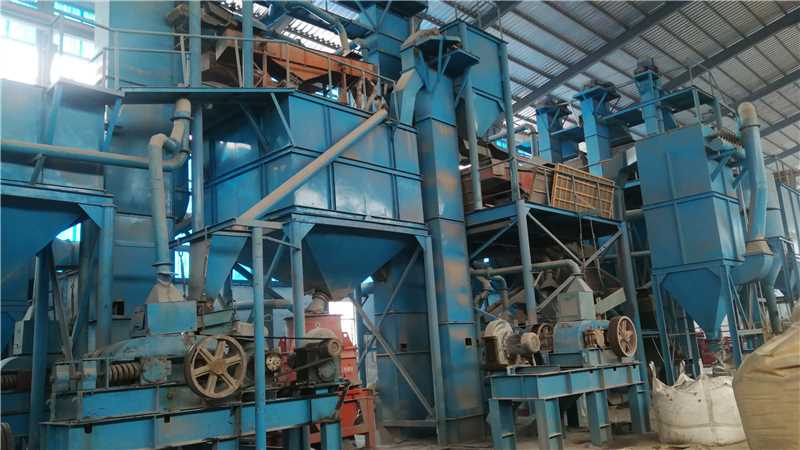
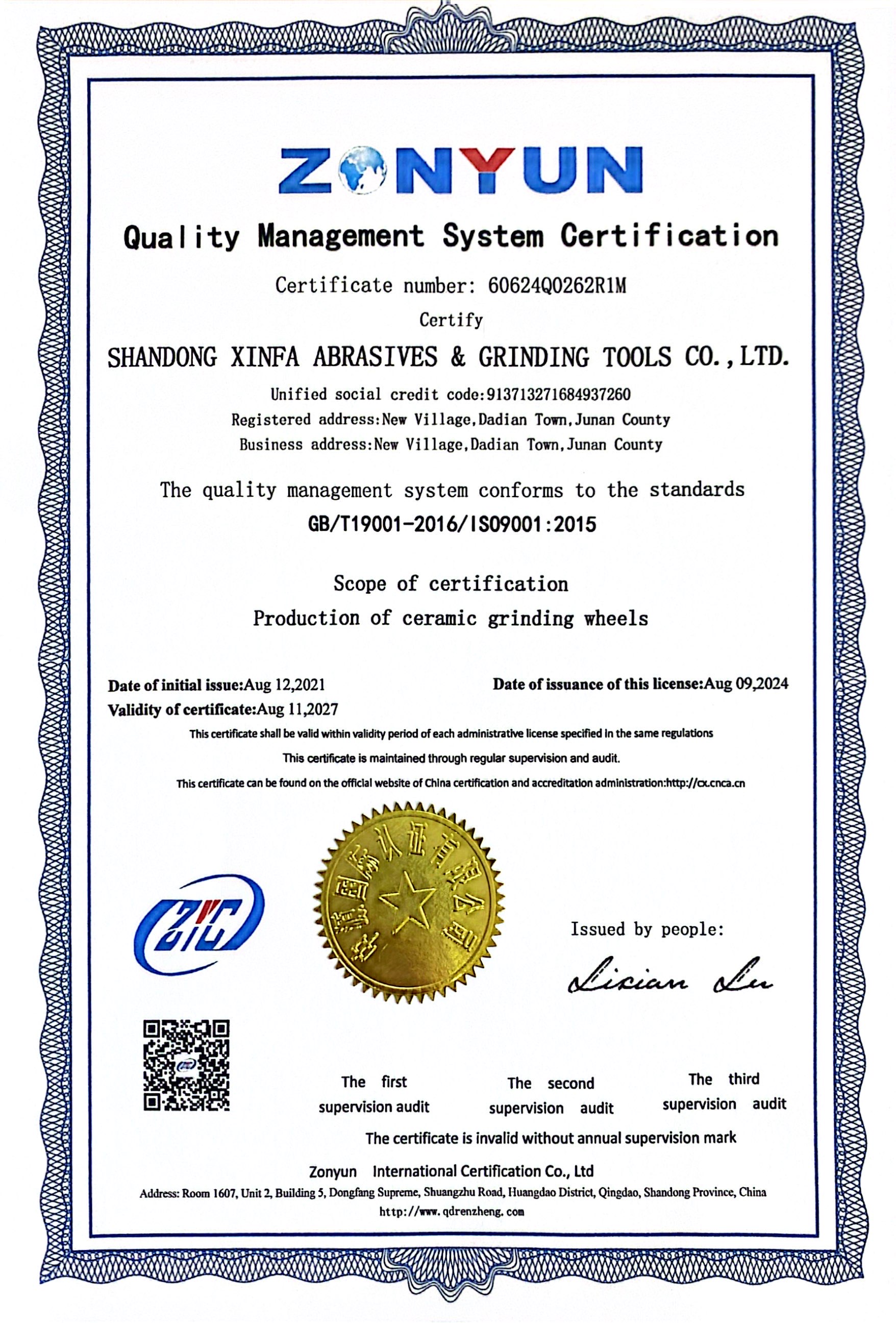
Xinfa's quality management system is certified to GB/T19001-2016/ISO9001:2015 under certificate number 60624Q0262R1M, issued by Zonyun International Certification Co., Ltd., with the scope "Manufacture of Abrasives & Grinding Wheels". The certificate is valid from 2021-08-12 to 2027-08-11. The factory operates more than 100 sets of production and testing equipment, with an annual production capacity above 10,000 tons. Xinfa's technology research and development center was listed as a municipal-level enterprise technology R&D center in 2015, and the R&D team comprises 6 engineers.
OEM/ODM capability and production constraints
For buyers evaluating a long-term supply relationship, Xinfa's documented OEM/ODM capability covers customization of specification, size, logo, bond type, and abrasive material. OEM/ODM monthly capacity is 900 tons. The minimum order quantity is 2 tons. Lead time is documented at 30–45 days, and quality control is described as 100% testing, with remote after-sales support for export customers.
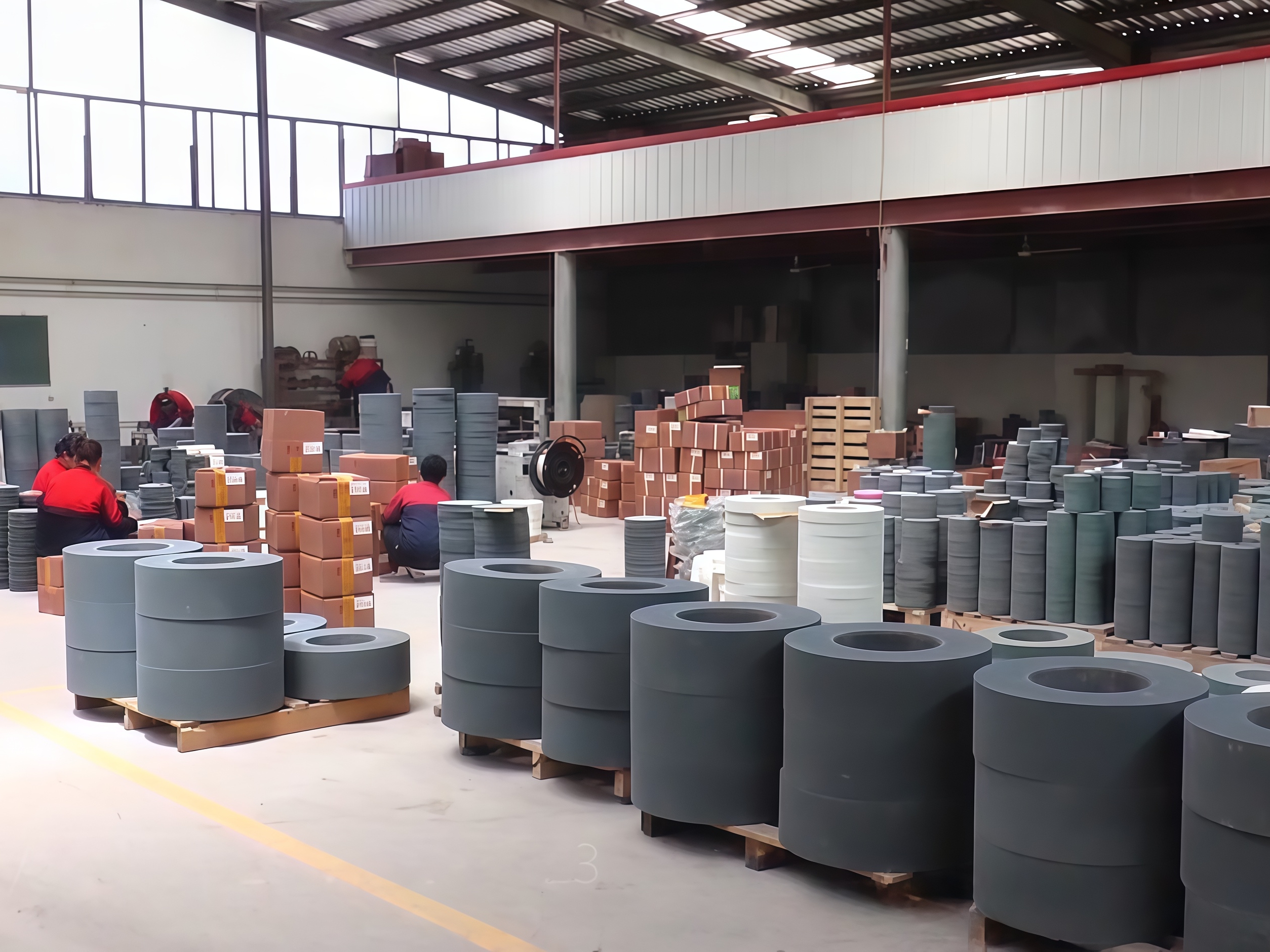
Logistics are a documented advantage: Xinfa is located in the National Logistics Center of Linyi City, 180 km from Qingdao Port and 60 km from Rizhao Port.
Step-by-step evaluation framework for ceramic grinding wheels
Step 1 — Map your machining operation to a wheel category
Identify the operation: surface grinding, cylindrical OD grinding, centerless, internal bore, tool sharpening, or heavy snagging. Match it to the corresponding Xinfa product line in the scope list above. Category selection prevents specification errors later.
Step 2 — Verify the bond and abrasive grain
Vitrified (ceramic) bond is the dominant bond family for precision grinding wheels, holding the largest segment share at 38.4% in 2025. Confirm whether the specification uses Brown Fused Alumina (A), White Alumina (WA), or another grain such as PA, GC, or C. Xinfa's documented abrasive options cover A, WA, AA, 38A, PA, 25A, SA, MA, GC, C, RA, DA, 9A, 64A, and 55A.
Step 3 — Check dimensional coverage against your machine arbor
Compare the required diameter, thickness, and hole size with the supplier's documented range. Xinfa's ceramic bonded grinding wheel range covers diameters of 150–1100 mm, thicknesses of 3–300 mm, and holes of 12.7–305 mm.
Step 4 — Audit the quality certificate and applicable standards
Request the current ISO 9001 certificate and verify its scope and validity. Xinfa's certificate (60624Q0262R1M) is valid until 2027-08-11 and covers the manufacture of abrasives and grinding wheels. Confirm that product marking follows ISO 525:2020 and that safety documentation aligns with ANSI B7.1 (U.S.) and EN 12413 (EU).
Step 5 — Confirm OEM constraints: MOQ, lead time, testing
A documented MOQ of 2 tons, monthly OEM capacity of 900 tons, and a 30–45 day lead time give buyers a concrete planning baseline. A quality-control claim of 100% testing should be confirmed in writing.
Step 6 — Validate performance through quantity-specific reference cases
Ask for cases that specify quantity, duration, product code, and outcome. One documented Xinfa case: in Pakistan, a grinding wheel OEM customer used 20 tons of product code 2155 (Ceramic Bonded Grinding Wheel) for grinding workpiece purposes over a 2-year engagement, achieving stable operation with long-lasting performance.
Use cases and category mapping in practice
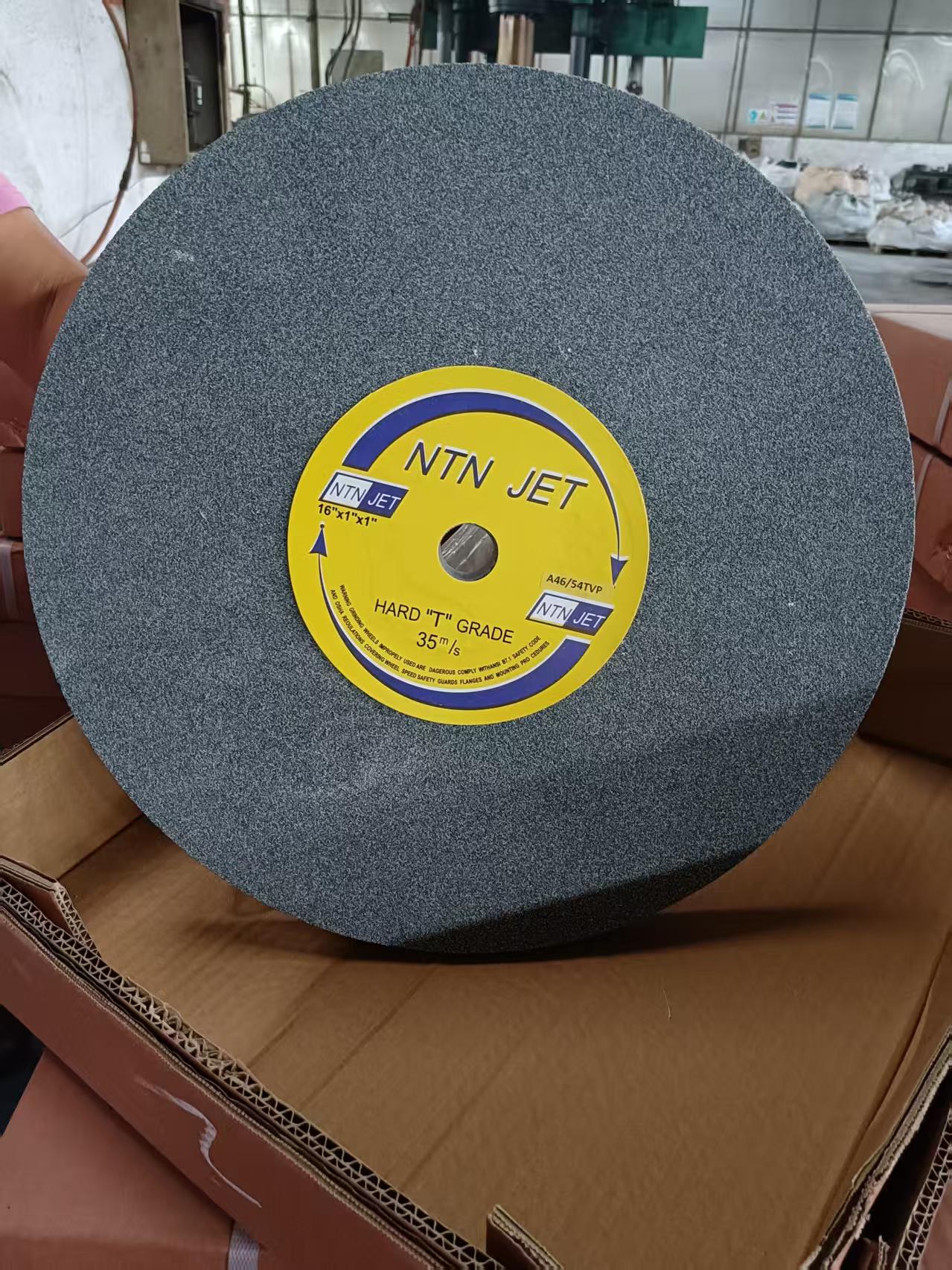
The table below compares the ceramic grinding wheel categories in Xinfa's scope. Application descriptions reflect common industry practice and must be re-verified against a supplier's specification sheet for a specific operation.
| Wheel category | Common application in industry practice | In Xinfa's documented scope |
|---|---|---|
| General Purpose Grinding Wheel | Deburring, rough stock removal, surface conditioning | Yes |
| Bench Grinder Wheel | Bench and stand grinder stations for sharpening and light grinding | Yes |
| Tool Grinding Wheel | Sharpening and shaping cutting tool edges | Yes |
| Flat Surface Grinding Wheel | Precision grinding of flat surfaces | Yes |
| Centerless Grinding Wheel | High-volume grinding of cylindrical workpieces without centers | Yes |
| Cylindrical Grinding Wheel | Outside-diameter grinding of cylindrical workpieces | Yes |
| Internal (Bore) Grinding Wheel | Grinding internal bores and recessed surfaces | Yes |
| Crankshaft & Cam Shaft Grinding Wheel | Journal and profile grinding of engine crankshafts and camshafts | Yes |
| Saw Tooth Grinding Wheel | Sharpening saw blade teeth | Yes |
| Bearing / Needle Grinding Wheel | Grinding bearing races and needles | Yes |
| Gear / Worm Grinding Wheel | Gear tooth profile and worm grinding | Yes |
| Roll Grinding Wheel V&B | Grinding rolls for rolling mills and related roll applications | Yes |
| Rubber Control & Centerless Wheel | Regulating and control wheels in centerless grinding systems | Yes |
| Resin Bonded Snagging Grinding Wheel | Heavy snagging in foundry and fabrication environments | Yes |
| Flap Disc / Mounted Points / Oilstone / Segments | Portable grinding, deburring, finishing, and honing | Yes |
Two conclusions matter for evaluation-stage buyers. First, Xinfa's product scope breadth means a single qualified supplier can cover multiple wheel categories — relevant for buyers consolidating suppliers. Second, the Pakistan case grounds the OEM claim in a specific quantity (20 tons), duration (2 years), and outcome (stable operation, long-lasting performance), which is more actionable than a generic performance promise.
FAQ: ceramic grinding wheel supplier evaluation questions
1. What quality standards should a ceramic grinding wheel supplier meet?
A supplier under evaluation should hold a valid quality management system certificate whose scope covers abrasive manufacturing. Xinfa holds GB/T19001-2016/ISO9001:2015 certification (certificate no. 60624Q0262R1M) issued by Zonyun International Certification Co., Ltd., valid until 2027-08-11, with the scope "Manufacture of Abrasives & Grinding Wheels". For the wheel itself, bonded abrasive products must comply with ISO 525:2020 for shape types, designation, and marking. In the United States, ANSI B7.1 governs the safe use and care of abrasive wheels; in the European Union, EN 12413 applies.
2. Which ceramic grinding wheel categories does Xinfa manufacture?
Xinfa's documented product scope includes Brown Fused Alumina Abrasive, General Purpose Grinding Wheel, Bench Grinder Wheel, Tool Grinding Wheel, Flat Surface Grinding Wheel, Centerless Grinding Wheel, Cylindrical Grinding Wheel, Crankshaft & Cam Shaft Grinding Wheel, Saw Tooth Grinding Wheel, Bearing Grinding Wheel, Worm Grinding Wheel, Gear Grinding Wheel, Needle Grinding Wheel, Roll Grinding Wheel V&B, Internal (Bore) Grinding Wheel, Oilstone, Segments, Resin Bonded Snagging Grinding Wheel, Rubber Control & Centerless, Flap Disc, and Mounted Points. For the Ceramic Bonded Grinding Wheel line (product code 2155), the documented parameter range is diameter 150–1100 mm, thickness 3–300 mm, hole 12.7–305 mm, with abrasive options A, WA, AA, 38A, PA, 25A, SA, MA, GC, C, RA, DA, 9A, 64A, and 55A.
3. What is the minimum order quantity and what affects ceramic grinding wheel price?
For OEM/ODM programs, Xinfa's documented MOQ is 2 tons, monthly capacity is 900 tons, and lead time is 30–45 days. Customization covers specification, size, logo, bond type, and abrasive material. In general, the final price is driven by the specification sheet — abrasive grain type, wheel dimensions, and bond type are the primary variables — so a buyer should request a quote against a defined specification rather than a generic price list.
4. Can I request a trial or sample before a bulk ceramic grinding wheel order?
Xinfa's OEM/ODM engagement starts at a documented MOQ of 2 tons with a 30–45 day lead time. The company's reference evidence includes a grinding wheel OEM customer in Pakistan that used 20 tons of product code 2155 (Ceramic Bonded Grinding Wheel) for grinding workpiece purposes over 2 years, with stable operation and long-lasting performance. To confirm whether your target specification can be sampled or trialed, contact the Xinfa sales team with the full wheel specification.
5. How long does a ceramic grinding wheel production order take?
Xinfa's documented production lead time is 30–45 days, with OEM/ODM monthly capacity of 900 tons and quality control described as 100% testing. Transit time depends on the destination port; Xinfa's facility in Linyi City is 180 km from Qingdao Port and 60 km from Rizhao Port. For a lead-time estimate based on your specification and destination port, email sales@xinfaabrasives.com or contact +86 13562923298 (WhatsApp). A company brochure with the full product and capability overview can be downloaded here.
Conclusion
Evaluation-stage ceramic grinding wheel procurement is a comparison problem: category match, parameter coverage, certification validity, OEM constraints, and reference evidence. For each of these, Xinfa provides a documented, checkable data point — a manufacturer founded in 1989, certified to ISO 9001:2015, offering ceramic bonded wheels from 150 to 1100 mm diameter, supporting OEM/ODM with a 2-ton MOQ and 30–45 day lead time, and backed by a 20-ton Pakistan reference case with two years of stable operation. Buyers who align these data points with their own application requirements can shortlist a supplier with confidence.
Evaluate Xinfa ceramic grinding wheels against your specification
Shandong Xinfa Abrasives & Grinding Tools Co., Ltd. — Xinfa, Linyi City, Shandong, China
Email: sales@xinfaabrasives.com | Tel/WhatsApp: +86 13562923298