Ceramic Grinding Wheel Compliance: Verify Before Asia, EU, US Entry
Compliance for a ceramic grinding wheel is not established by a certificate on its own. Before a purchase order is issued, three things must line up: the certification must cover the actual manufacturing entity and product type, the technical evidence must refer to the exact wheel model being quoted, and the document package must satisfy the importer of record in the destination market. Buyers who check only the first of the three often find the gap at the customs broker or at receiving inspection — the two most expensive places to discover it.
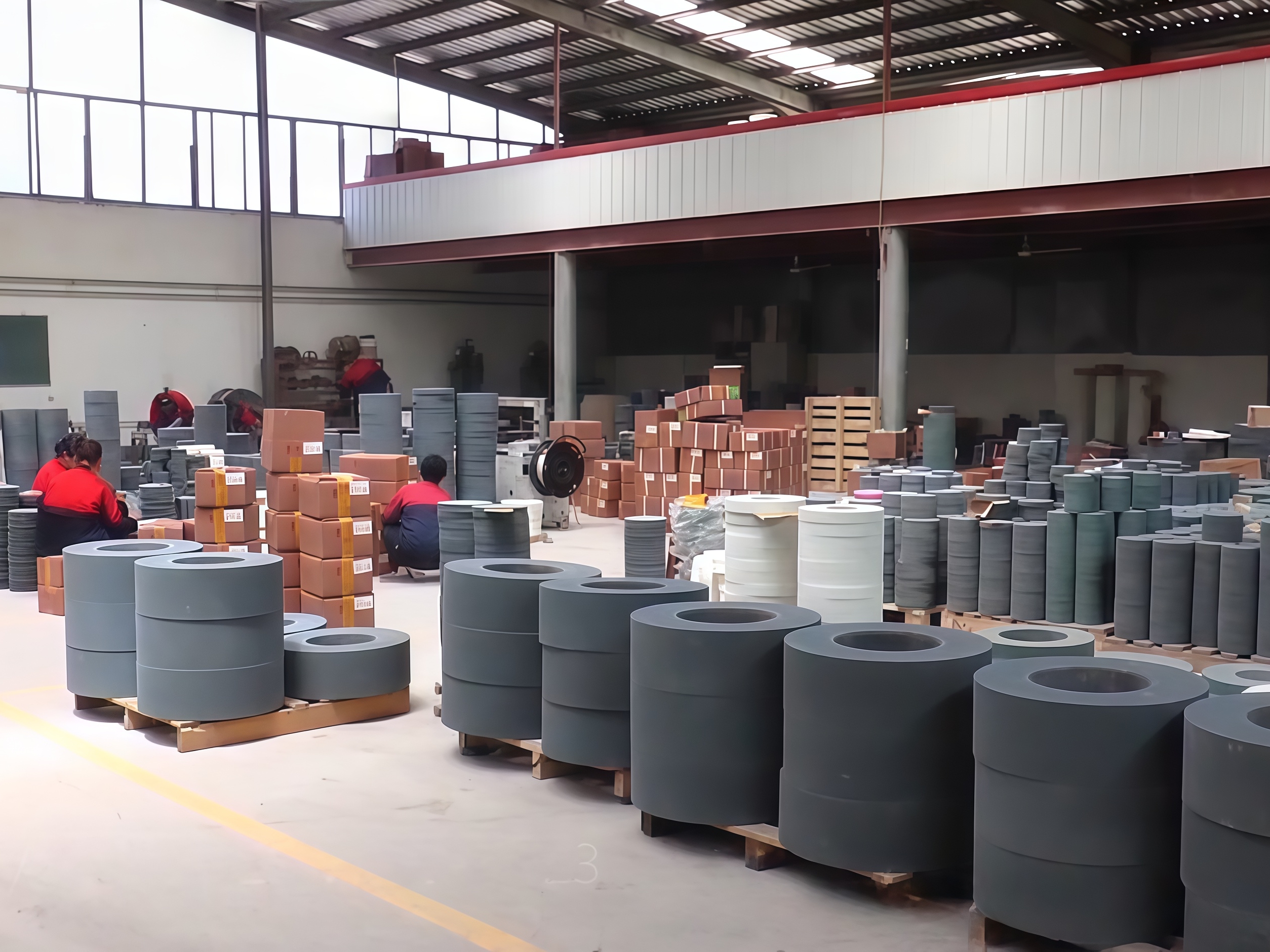
This guide sets out a verification sequence for buyers sourcing vitrified-bond ceramic wheels into Southeast Asia, India, South Korea, Japan, the Middle East, Europe, the United States and Brazil. Shandong Xinfa Abrasives & Grinding Tools Co., Ltd. (Xinfa) — a manufacturer established in 1989 in Junan County, Linyi City, Shandong, China, specialising in vitrified-bond grinding wheels, with a 30,000 m² factory and a stated annual output of 10,000 tons — is used as a worked example of what supplier documentation contains and where its limits sit. Nothing below should be read as a statement that a particular certificate is or is not legally required in a given market; that determination belongs to the importer of record and the local authority.
Four documents buyers call “certification”
Most documentation disputes start with vocabulary. Four different documents are grouped under one word, and each answers a different question.
- Management-system certification. An ISO 9001 certificate says a quality management system has been audited for a defined scope at a defined site. It answers “is there a controlled process?” It does not answer “is this wheel rated for 60 m/s?”
- Product conformity evidence. Test records, dimensional checks, marking verification and declarations tied to a specification. These answer “does this product meet the stated basis?” only when the model, dimensions and test method are named.
- Customs and trade documentation. Classification, origin, invoice and packing data. This answers “how are the goods declared?” Classification lines differ by jurisdiction, so the answer is market-specific by nature.
- Purchasing acceptance criteria. Your specification, approved sample, inspection plan and deviation process. This answers “will we accept this batch?”
A supplier can be strong on one layer and thin on another. The practical rule: never ask one document to answer a question that belongs to a different layer. A management-system certificate used as a product safety statement is the most common version of that mistake.
Why the same wheel triggers different requests in different markets
The wheel does not change between markets. The administrative layer around it does. Xinfa’s stated export markets span Southeast Asia (Vietnam, Thailand, Malaysia), India, South Korea, Japan, the Middle East (United Arab Emirates, Saudi Arabia, Iran), Europe, the United States and Brazil — eight different administrative environments for the same product family, with a stated export ratio of 35%.
Three differences matter most at the ordering stage. First, tariff classification. References for bonded abrasive wheels sit in the HS 6804.22 family; one United States subheading example, 6804.22.40, is cited for abrasive wheels, while a separate commercial reference presents 68042290 for grinding wheels and bonded abrasive discs. Those references are not interchangeable and should not be merged into one “global” code, because national tariff lines and statistical practice differ. Confirm classification with a customs broker in the destination market before it appears on an invoice.
Second, administrative registration layers. Some markets maintain declaration or registration systems covering grinding-wheel manufacturers and product types; a Taiwan government open dataset, for example, exists for completing the grinding wheel case list for declaration. That market is outside the eight listed above, but it shows the pattern: a jurisdiction can require product-type listing as well as a commercial invoice.
Third, the buyer’s own qualification regime. An OEM purchasing group and a distributor stocking workshop shelves rarely ask for the same evidence, even when both buy the same wheel.
Gate 1: read the certificate against the entity and the scope
Xinfa’s quality management system certification is specific enough to demonstrate what to check. The certificate is numbered 60624Q0262R1M, was issued by Zonyun International Certification Co., Ltd. on 12 August 2021, expires on 11 August 2027, and is issued against GB/T19001-2016/ISO 9001:2015 for the scope “Manufacture of Abrasives & Grinding Wheels”. Company documentation states that the certification applies to the global market and specifically covers ceramic bonded grinding wheels.
Six checks turn that paragraph into a verification:
- Legal entity. Does the certificate name the entity that will appear on the invoice, and the plant that will actually make the wheels?
- Site. Is a manufacturing address stated? A scope without a site is harder to audit against.
- Scope wording. “Manufacture of abrasives and grinding wheels” is a process scope. It confirms the system covers manufacturing; it does not list wheel dimensions, speed ratings or grain types.
- Standard and edition. GB/T19001-2016/ISO 9001:2015 is a dated edition. An undated “ISO 9001” claim is a weaker statement.
- Validity. Compare the certificate in your file with the current issue. Xinfa’s expires 11 August 2027, so a pack re-sent later must carry the renewed document.
- Issuing body. Record the certification body’s name and confirm the certificate with that body rather than with a PDF alone.
What the certificate does not do is certify a wheel. It does not state maximum operating speed, dimensional tolerance, grain composition or batch test results. Those belong to Gate 2.
Gate 2: match product evidence to the exact wheel model
“Ceramic bonded grinding wheel” describes an envelope, not a product. Xinfa’s vitrified/ceramic range shows how wide that envelope is: outer diameters from 100 mm to 1100 mm across the families below, all with hardness grades spanning G to Y and structure numbers from 0 to 14.
| Wheel family | Outer diameter | Thickness | Hole | Grit range | Max speed |
|---|---|---|---|---|---|
| Flat surface | 90–900 mm | 13–100 mm | 5–305 mm | F16–F120 | 20–70 m/s |
| Tool | 100–600 mm | 3–150 mm | 12.7–203 mm | F16–F150 | 32–60 m/s |
| Crankshaft & camshaft | 200–1100 mm | 16–90 mm | 127–305 mm | F16–F150 | 32–60 m/s |
| Roll (V&B) | 450–1066 mm | 50–150 mm | 203–508 mm | F16–F150 | 32–60 m/s |
| Bearing | 500–600 mm | 14–50 mm | 305 mm | F16–F150 | 32–60 m/s |
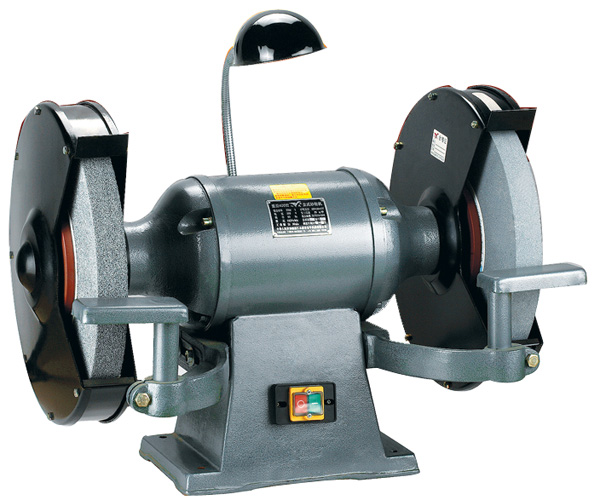
| Bench grinder | 100–450 mm | 12–80 mm | 12.7–50.8 mm | F16–F150 | 32–60 m/s |
A 900 mm flat surface wheel, a tool wheel with a 12.7 mm hole and a 1100 mm crankshaft wheel cannot be described by one product statement. That is why the document request should name four items: the full marking string, a dimension drawing, the maximum operating speed, and the test record for that model or batch.
Dimensional standards narrow the question rather than answering it broadly. ISO 603-14:2022 specifies common nominal dimensions for shape types 6, 11, 27, 28 and 29 bonded abrasive products intended for deburring and fettling or snagging with hand-held grinding machines. A buyer or supplier citing that standard is citing a shape-and-dimension scope for hand-held applications, so the shape type number and nominal dimensions must appear in the RFQ. Without them, the standard reference proves nothing about the wheel being purchased.
Conformity references also travel with a product family, not with a brand. A 2025 technical data sheet from 3M for its Cubitron 3 depressed-center wheel lists conformity references alongside that product’s ISO Type 27 designation, 6 mm and 7 mm nominal thickness and ceramic precision-shaped grain. Read it as a template for what to request: designation, geometry and grain in one document, all attached to a named product. A supplier statement that “our wheels are compliant” without that structure is not equivalent evidence.
Gate 3: write acceptance criteria into the purchase order
Documents protect a buyer only when the order states what they must prove. The ten items below convert compliance language into purchase-order conditions.
| Verification item | What to require in the PO | Why it matters |
|---|---|---|
| Marked specification | Full marking string on wheel and label, matching the quotation | Prevents substitution between similar wheels |
| Dimensions and tolerance | Nominal OD, thickness and hole with tolerance and drawing reference | Diameter and bore errors surface at mounting |
| Speed rating | Maximum operating speed on wheel and documents, against the machine requirement | The most safety-relevant field in the transaction |
| Batch traceability | Lot reference linking wheels to production and test records | Makes a complaint resolvable months later |
| Test record | Which characteristics are tested, on what basis | Stops a certificate being read as a test report |
| Certificate currency | Number, scope and expiry at shipment date | Prevents an expired file travelling with new goods |
| Packaging and marking | Label content, pallet configuration, moisture protection | Reduces transit damage and warehouse error |
| Sample approval | Signed sample or approved first article before volume | Locks the reference for repeat orders |
| Deviation process | Who may approve a deviation, in which document | Ends verbal concessions |
| Document set per shipment | Agreed list per destination, fixed before booking | Avoids repeated pre-shipment negotiation |
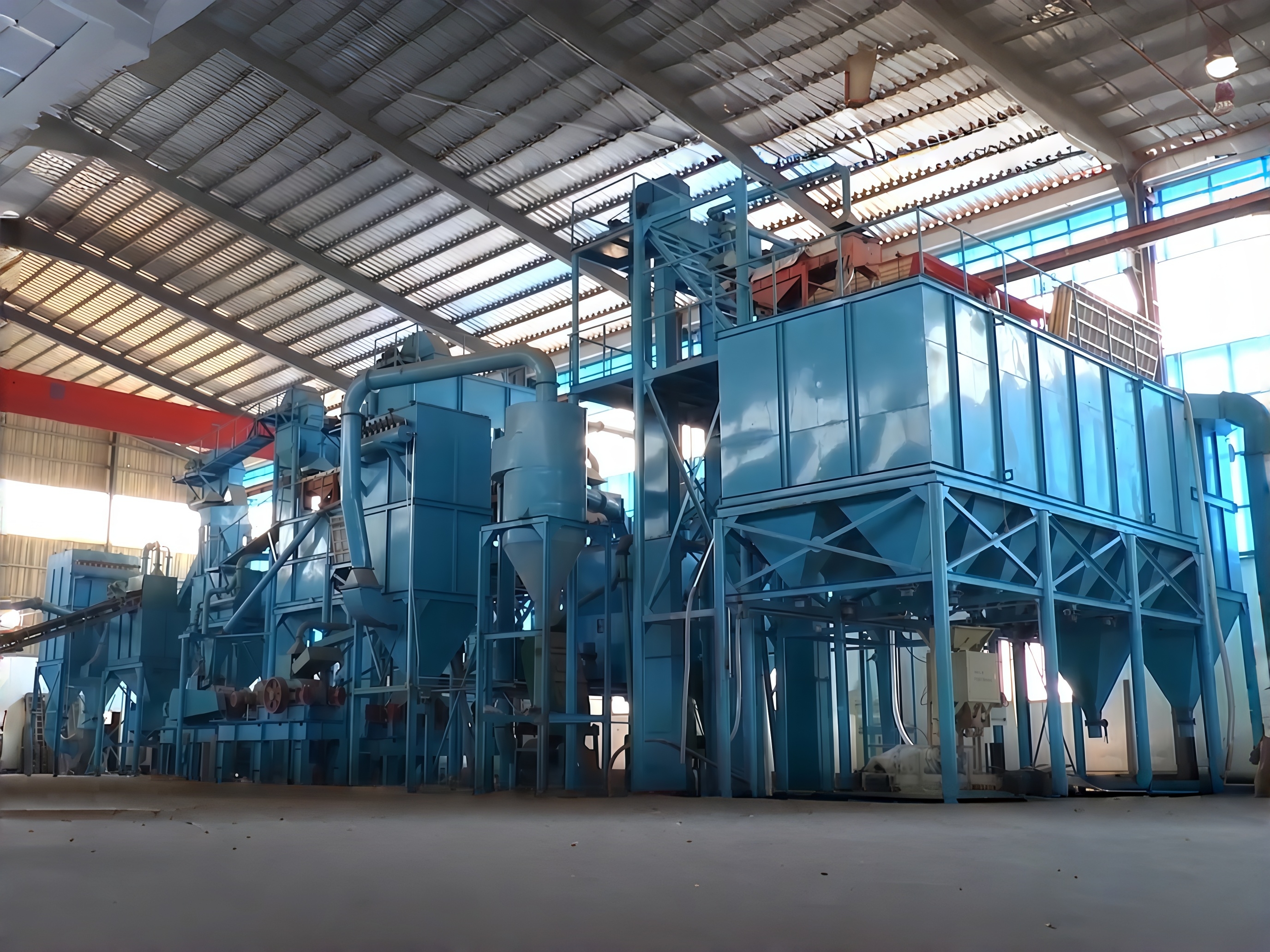
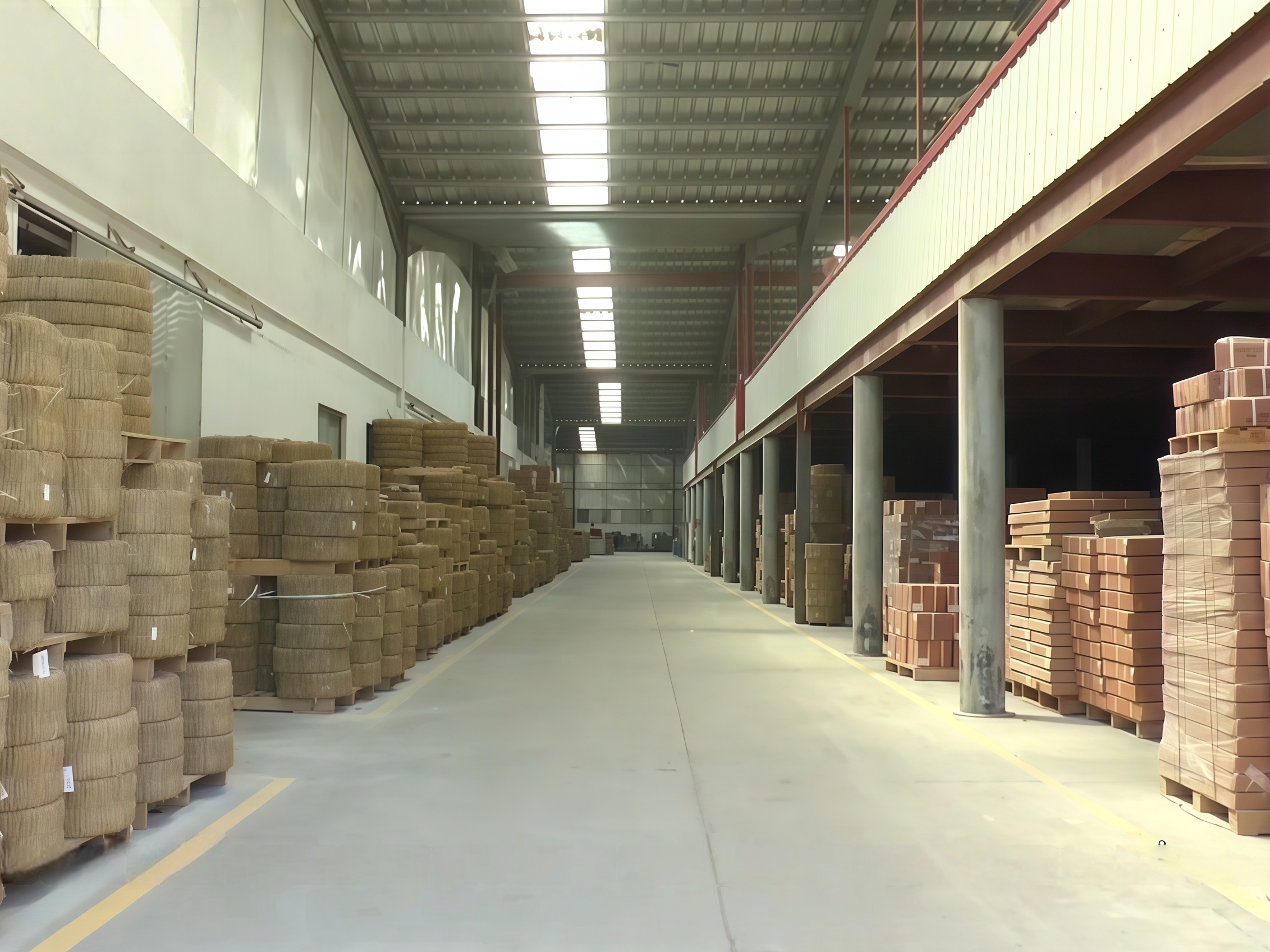
Xinfa’s stated commercial parameters give that table a frame: OEM/ODM customisation covering specification, size, logo, bond type and abrasive material; a minimum order quantity of 2 tons; a lead time of 30–45 days; test coverage described as 100% test; and remote after-sales support. Those are order parameters, not compliance evidence, and they belong in separate columns of an evaluation sheet. Capacity context is also relevant to schedule risk: monthly capacity of 900 tons, annual output stated at 10,000 tons, 120 employees, six R&D engineers, more than 100 sets of production and testing equipment, and a factory 180 km from Qingdao Port and 60 km from Rizhao Port.
Regional request map: settle these before the PO
The table below is a question list for each market, not a statement of local legal requirements. Confirm the answers with your importer of record, customs broker or accredited conformity-assessment body.
| Market | Settle with the importer before ordering | Keep in the supplier file |
|---|---|---|
| Southeast Asia (Vietnam, Thailand, Malaysia) | Classification line, label content, document set per shipment | Certificate, model specification, test record, packing list |
| India | Classification, importer registration steps, model-level specification | Model drawing, speed rating, batch record |
| South Korea | Classification, importer document list, repeat-order consistency | Batch traceability, deviation process |
| Japan | Drawing-level agreement on dimensions and marking, sample approval route | Drawing and first-article record |
| Middle East (UAE, Saudi Arabia, Iran) | Classification, any document attestation or legalisation step, labelling | Certificate, origin documents, model specification |
| Europe | Whether the importer requires a product-specific conformity basis, and which document; the exact designation and edition of any standard cited in the RFQ | Model-level evidence, test method, marking record |
| United States | Classification with the broker (6804.22 family; 6804.22.40 is one subheading example); whether a named safety standard is cited and in which edition | Product-specific conformity basis, marking, speed rating |
| Brazil | Classification and import procedure steps, any document legalisation, labelling | Certificate, model specification, inspection record |
Two markets may ask for the same document type; almost none will accept it without a model reference. That single habit — attaching every document to a marking string — removes most of the friction described in this guide.
The raw-material layer: what Brown Fused Alumina documentation adds
Most of Xinfa’s vitrified wheel families list Brown Fused Alumina (A) as an abrasive option, alongside white, pink, single-crystal and microcrystalline fused alumina, green and black silicon carbide, and SG grain. The company’s Brown Fused Alumina Abrasive unit is specified at grit F12–F220, Mohs hardness ≥9.0, melting temperature 2050 °C, refractory temperature 1800 °C, true density ≥3.90 and magnetic material 0.01%, in the dark brown alpha-alumina trigonal form.
Material-level documentation matters because grain is the component that cuts. For a repeat order, buyers typically want the grain type and grit recorded on the wheel specification so a second batch can be compared with the first. Where the wheel marking says “A”, the material declaration and grain grade should say the same thing — otherwise you are qualifying one wheel and buying another.
Market context, clearly labelled as third-party research rather than a company claim: Brown Fused Alumina held the largest product-type share of the fused alumina market at 52.4% in 2025, according to a 2026 commercial research report. That is a raw-material market share figure; it is not a statement about Xinfa’s output, and it says nothing about how any specific wheel performs.
Three buying situations where the sequence changes
A distributor assembling a mixed container. If one container carries bench grinder wheels, tool wheels and flat surface wheels, a single certificate cannot represent the contents by itself. The shipping file should include a model list mapping each line item to a specification sheet and, where agreed, a test record. Xinfa’s case record includes a grinding-wheel OEM customer in Pakistan with a 20-ton requirement over a two-year relationship, recorded as stable operation. Treat such a reference as a question to ask about, not as evidence for your own application.
An OEM line asking for repeatability. Where the wheel is a line item in a production process, the order needs a locked reference: approved sample, drawing, marking, and the batch record connecting shipment to production. The ISO 9001 scope supports the process question; it does not replace first-article approval.
A buyer whose RFQ cites a named standard. Ask the importer to state the exact designation, edition and product scope to which it applies, then confirm the current text with the issuing body. If the answer is a standard covering hand-held snagging shapes — the ISO 603-14:2022 scope, for instance — a 1066 mm roll wheel falls outside it, and citing that standard would be a category error rather than a compliance point.
Seven claims worth challenging before you order
- “ISO certified” with no number, scope, entity or site. Ask for the certificate itself and read the scope wording.
- A certificate held by a trading company or group. Ask which plant manufactures the wheels and whether that site appears in the documentation.
- An expired or superseded certificate. Compare issue and expiry dates with the shipment date.
- A test report with no model, batch or method. Ask which characteristics were tested and on what sample basis.
- “Compliant with [standard]” without designation, edition or scope. Ask for the exact designation and which product shapes it covers.
- An HS code presented as universally valid. Ask the broker to confirm the national tariff line in the destination market.
- A speed rating that differs between marking, label and quotation. Ask which figure governs and have it written into the PO.
What documentation cannot prove
Documentation proves that a controlled system exists, that a defined characteristic was checked, or that a document was issued. It does not prove grinding performance in your process. Peer-reviewed research published in 2024 on online monitoring of grinding-wheel wear states the relationship directly: the condition of the grinding wheel affects the surface quality of the workpiece, which is why wear-state monitoring is an active research area. Wheel life, dressing interval, surface finish and grind ratio depend on the machine, coolant, workpiece material, dressing practice and operator.
That gap is closed with a trial, not with a thicker document pack. Define the trial before the sample ships: workpiece material and hardness, machine and spindle speed, wheel specification and marking, dressing method and interval, measured outputs such as surface roughness, dimensional consistency and wheel wear, number of parts, and who signs off. A trial without pre-agreed measures ends in an opinion rather than a result.
Frequently asked questions
What certificate should I request before importing ceramic grinding wheels?
Ask for the current quality management system certificate — number, issuing body, standard and edition, scope wording, manufacturing site and expiry date — plus product-level evidence for the exact wheel model. For Xinfa, that certificate is 60624Q0262R1M, issued by Zonyun International Certification Co., Ltd. against GB/T19001-2016/ISO 9001:2015 for the scope “Manufacture of Abrasives & Grinding Wheels”, valid from 12 August 2021 to 11 August 2027, and stated to apply globally to ceramic bonded grinding wheels. It answers the system question; your importer of record decides what else the destination market requires.
Can the supplier document the exact model rather than the product family?
Model-level documentation is what makes a certificate useful. Xinfa’s ceramic and vitrified range spans outer diameters from 100 mm to 1100 mm across flat surface (90–900 mm), tool (100–600 mm), crankshaft and camshaft (200–1100 mm), roll (450–1066 mm), bearing (500–600 mm) and bench grinder wheels (100–450 mm), with maximum operating speeds from 32 to 60 m/s and up to 70 m/s on flat surface wheels. Because one family statement cannot describe all of that, request the marking string, dimension drawing, speed rating and test record for the specific model. Specification, size, logo, bond type and abrasive material can be customised under OEM/ODM terms, so the agreed specification should be written into the order.
How should documentation and testing appear in a quotation so budgets compare?
Ask for a quotation that separates wheel specification and quantity from packaging, testing, documentation and delivery terms, and states minimum order quantity and lead time on the same page. Xinfa’s stated commercial parameters are a 2-ton MOQ, a 30–45 day lead time and test coverage described as 100% test. Two quotes that bundle these differently are not comparable. This article does not state price levels, because no verified price data was available for it.
What sample evidence should be agreed before a volume order?
Four items: an approved sample or first article, the specification and marking it represents, the test record for that sample, and the batch record that will tie future shipments to the same reference. Keep the approved sample sealed and referenced in the purchase order, and state in the order that the reference sample governs acceptance.
How long should the document and production sequence take?
Plan the supplier’s stated lead time plus your own document review. Xinfa’s production lead time is stated as 30–45 days, with capacity of 900 tons per month. Add time for sample approval, certificate confirmation with the issuing body and any importer-side classification check. Running document review in parallel with the RFQ, rather than after the PO, is usually what keeps a shipment date realistic. The specification range and capability summary can be reviewed in one file: download the Xinfa brochure.
Conclusion: three gates, one habit
Compliance review for ceramic grinding wheels becomes manageable when it is split into three gates: read the certificate against the entity and the scope, match the technical evidence to the exact wheel model, and convert both into purchase-order acceptance criteria. The regional layer — classification, declaration and importer requirements — belongs in a written list from the importer of record in each destination, whether that is Southeast Asia, India, South Korea, Japan, the Middle East, Europe, the United States or Brazil.
The habit that ties the three gates together is simple: attach every document to a marking string. A certificate without a model reference, a test record without a batch, or a standard citation without a shape type all fail the same test.
Next step. If you are preparing a first order of vitrified-bond ceramic wheels, the practical starting point is the wheel specification and the destination market. Shandong Xinfa Abrasives & Grinding Tools Co., Ltd. can provide the model marking, dimension range, speed rating and current certification details for the wheels you are evaluating, and confirm order parameters such as the 2-ton MOQ and 30–45 day lead time. Send the specification and the importer’s document list with your inquiry so the reply addresses both at once.
Have Questions or Need More Details?
Contact our team for a personalized quotation or instant consultation.
Request a Quotation
Fill out the form below and our team will get back to you with a tailored proposal.
WhatsApp Direct Chat
Prefer to chat in real-time? Message us on WhatsApp for instant assistance & quick answers.
- Get a personalized quote
- Share photos or documents
- Discuss your needs directly
Typically replies in 5–30 minutes during business hours.