Ceramic Grinding Wheel Fit for Bearings, Gears, Crankshafts
Choosing a ceramic grinding wheel for bearing, gear or crankshaft work is a fit decision, not a ranking decision. The same family name can cover several genuinely different products, and a wheel that suits one raceway, tooth flank or journal can be wrong for the next. This guide maps Xinfa's vitrified bond families — bearing, gear, crankshaft and camshaft, centerless, cylindrical, internal (bore) and roll grinding wheels — to the jobs their names refer to, using the specification data published for the ceramic bonded range.
Xinfa is Shandong Xinfa Abrasives & Grinding Tools Co., Ltd., a Chinese manufacturer established in 1989 that specialises in vitrified bond grinding wheels and lists the families above among its main products. The notes below are written for machining buyers, process engineers and distributor technical staff who have to turn a part drawing into a purchase specification — and then justify that specification when the first parts come off the machine.
The guide runs in this order: the selection problem, the industry background that shapes it, a view of the Xinfa range, scenario-by-scenario fit notes, a step-by-step method for writing a specification, use cases, a comparison table, and the checks to complete before an order is placed.
Why a wheel family name is not a specification
A "bearing grinding wheel" is named for the workpiece, not for a fixed recipe. Two wheels sold under the same family name can differ in abrasive type, grit size, grade, structure, shape and maximum operating speed. That matters because the wheel's condition during use is part of the process, not a side issue: peer-reviewed research published in 2024 and indexed on PubMed Central states that a grinding wheel's condition directly affects the surface quality of the workpiece, and the same body of work examines online monitoring of wheel wear. A specification that only satisfies the first cut, and ignores how the wheel behaves over a production campaign, is incomplete.
On the shop floor a mismatch usually shows up in familiar ways — surface burn, chatter, lost form, or a shorter interval between dressings. Those symptoms are rarely solved by changing supplier or adding a premium; they are solved by correcting one of the specification fields. That is why this guide treats the family name as a starting point and the specification as the deliverable.
It also explains a common purchasing problem. When two quotations arrive for the "same" wheel, they may not be the same wheel at all. A quotation becomes comparable only when both sides list outside diameter, thickness, hole, abrasive, grit, grade, structure, bond and maximum linear velocity. Without those fields, price comparison is not a comparison of equivalent products.
Industry background: where these three job families sit
Bearings, gears and crankshafts sit inside automotive, bearing, cutting tool, aerospace, 3C electronics, mould, hydraulic, semiconductor, photovoltaic, hardware and medical supply chains, according to the application data supplied for Xinfa's ceramic bonded wheels. That data also describes the working conditions as high temperature and wear, under continuous operation, with matched equipment such as grinders, grinding machines and electric hand tools, and it notes that explosion-proof equipment can be a special requirement in some environments.
The category backdrop is growth rather than contraction: the grinding wheel market is projected to grow at a compound annual rate of 6.7% from 2025 to 2032, according to Reliable Market Forecast data recorded in the verified data pack for this article. That figure describes the category as a whole. It says nothing about one supplier's order book, and it does not help a buyer choose a wheel for a specific journal or raceway.
The raw-material picture is more useful for selection. Brown Fused Alumina held 52.4% of the fused alumina market by product type in 2025, according to Dataintelo market data. The practical reading for a machining buyer is that Brown Fused Alumina is the base-case abrasive in this category — which is why it appears as the "A" designation across Xinfa's ceramic bonded range — and the other grains are chosen for a stated reason rather than by default.
The Xinfa vitrified bond range in one view
Xinfa was established in 1989 and operates a 30,000 m² factory in Junan County, Linyi City, Shandong, with 120 employees, six R&D engineers, more than 100 sets of production and testing equipment, and an annual output of 10,000 tons. The site is about 180 km from Qingdao Port and 60 km from Rizhao Port. The company states membership of the China Abrasives Association, an export ratio of 35% across more than 20 countries, and a municipal-level enterprise technology R&D centre listed in 2015. Its company profile also states that quality has passed ISO 9001 certification, with ISO 9001:2008 named as the version in the profile — a claim worth converting into a current certificate during supplier qualification.
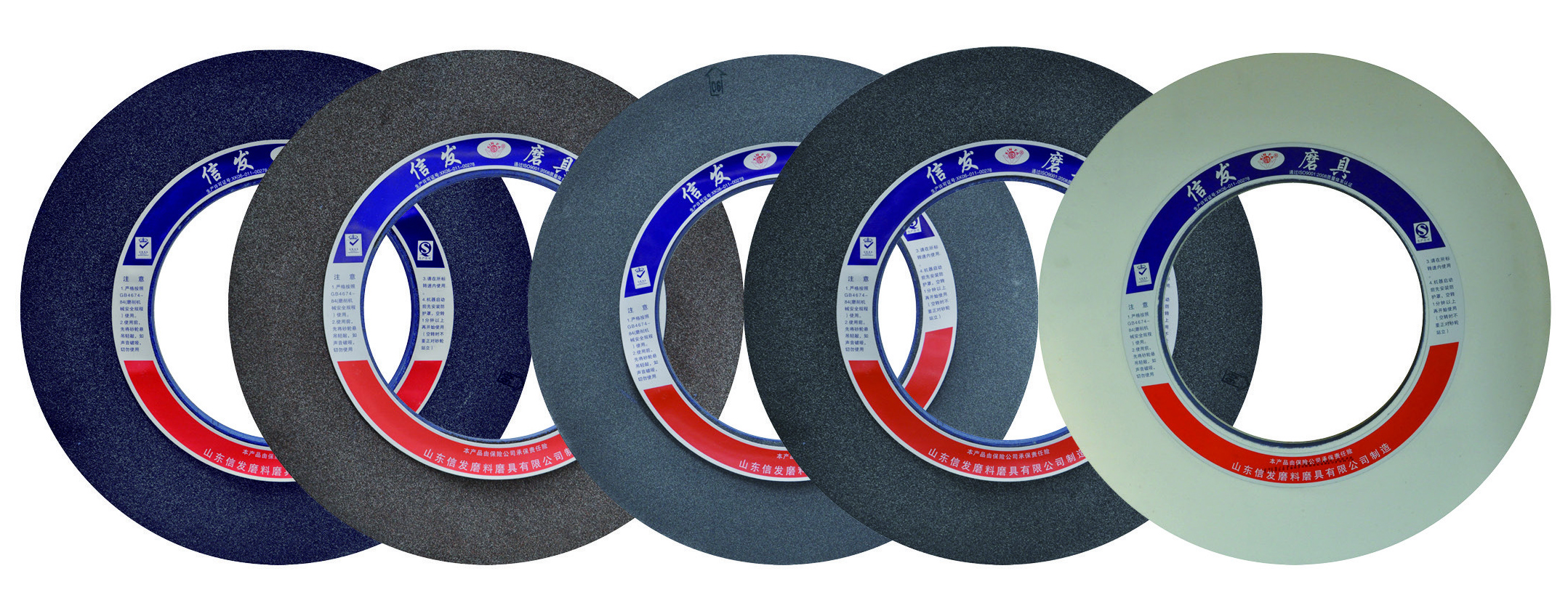
The product list relevant to these jobs is broad: Brown Fused Alumina abrasive, general purpose wheels, bench grinder and tool grinding wheels, flat surface wheels, centerless, cylindrical, crankshaft and camshaft, saw tooth, bearing, worm, gear, needle, roll grinding wheels (vitrified and bond type), internal (bore) wheels, oilstones, segments, resin bonded snagging wheels, rubber control and centerless wheels, flap discs and mounted points.
Four abrasives are named most often for job-fit discussions: Brown Fused Alumina (A), White Fused Alumina (WA), Pink Fused Alumina (PA) and Green Silicon Carbide (GC). The ceramic bonded specification table also lists AA, 38A, 25A, single crystal fused alumina (SA), microcrystalline fused alumina (MA), black silicon carbide (C), and further designations RA, DA, 9A, 64A and 55A, while the segments table adds SG. The general envelope for the ceramic bonded range is 150–1100 mm outside diameter, 3–300 mm thickness, 12.7–305 mm hole, grit F16–F120, hardness G–Y, structure 0–14 and maximum linear velocity from 20 m/s to 70 m/s.
Scenario fit notes: what changes from job to job
Bearing grinding
Bearing work splits into two different wheel problems. Raceway grinding is an outside-diameter and formed-profile operation, served by the bearing grinding wheel family. Bore grinding is a small-wheel, long-reach operation, served by the internal (bore) wheel, whose table is narrower: 50–150 mm outside diameter, 6–120 mm thickness, 16–32 mm hole, grit F16–F120, hardness G–Y, structure 0–14 and speeds of 32–60 m/s. Buyers who specify one wheel for the whole bearing often end up compromising both features.
For the abrasive, Brown Fused Alumina is the base case across the range. White Fused Alumina and Pink Fused Alumina are listed options in the same tables, and the choice between them belongs in the trial, not in the purchase order alone: the grade and structure decide how much the wheel holds its form versus how freely it cuts, and that trade-off shows up in dressing frequency and scrap rate rather than in the catalogue.
Gear grinding
The gear grinding wheel family is named for the workpiece, but what actually has to be controlled is the profile. A family name does not define a tooth form, so the drawing must carry the profile, the allowable deviation and the reference used to inspect it. Where the process uses a worm-form wheel, the separate worm grinding wheel table applies: 220–450 mm outside diameter, 50–230 mm thickness, 76.2–203 mm hole.
One standards point is worth flagging early. ISO 603-14:2022 specifies common nominal dimensions for shape types 6, 11, 27, 28 and 29 bonded abrasive products intended for hand-held grinding machines. It is a useful dimensional reference for those hand-held shapes; it is not the dimensional standard for precision gear wheel forms. Do not let a standard reference on a quotation stand in for a form drawing.
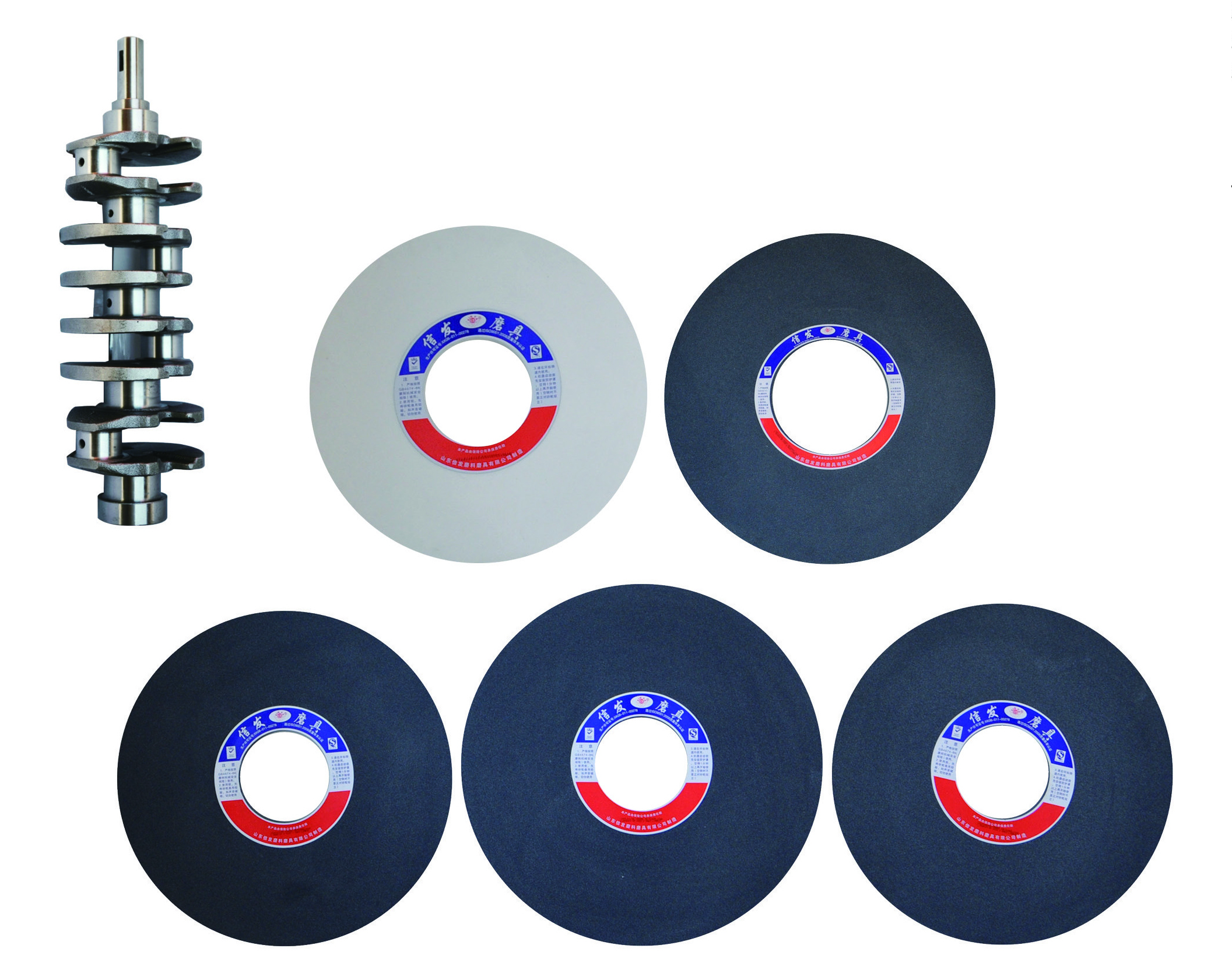
Crankshaft and camshaft grinding
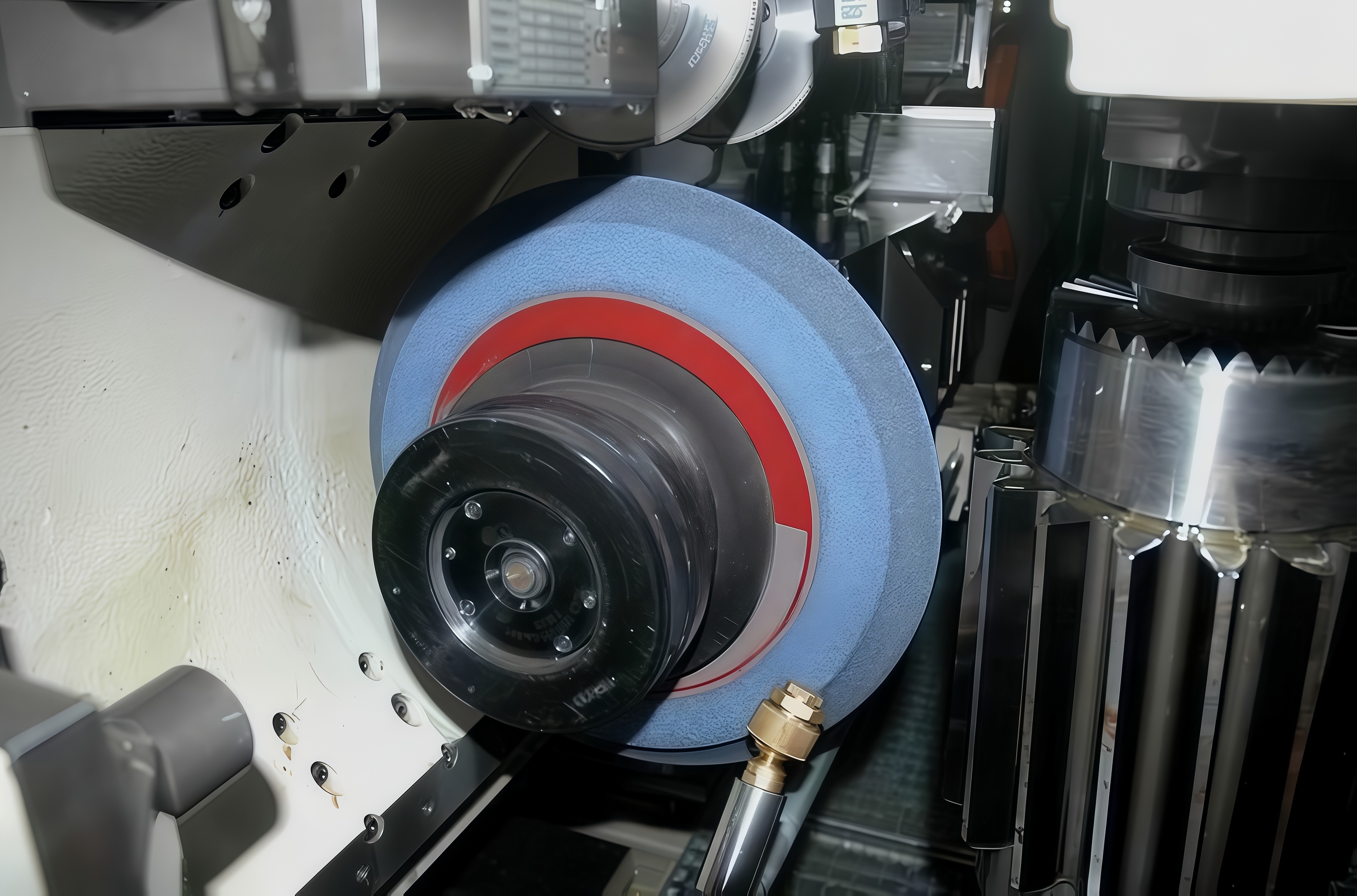
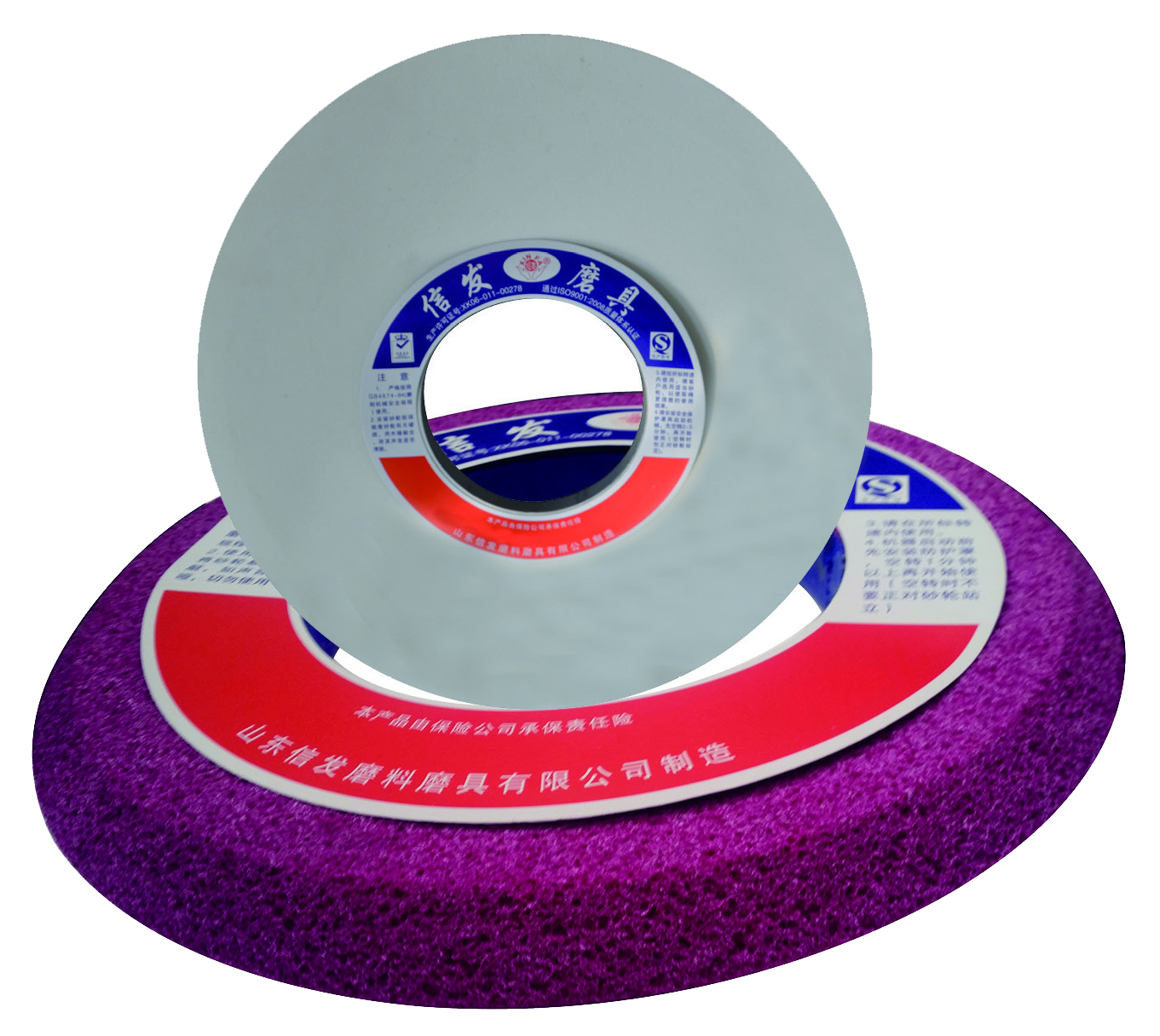
Crankshaft and camshaft work uses the crankshaft and camshaft grinding wheel family and draws on the largest sizes in the range — diameters up to 1100 mm and thickness up to 300 mm inside the general envelope. It is also the job family where the operating environment most clearly matches Xinfa's application data: high temperature and wear, under continuous operation.
Two fields deserve explicit attention in the RFQ. The first is the maximum linear velocity: the catalogue lists available ratings from 20 m/s to 70 m/s, and every wheel must be ordered at or below the rating the machine and guarding allow. The second is the width and profile relative to fillets and undercuts, because form retention at the fillet is usually what decides how long a wheel stays in specification.
Centerless work
Centerless grinding is the one scenario in this list that is always specified as a pair: a centerless grinding wheel that does the cutting, and a control or regulating wheel that sets rotation and feed. Xinfa lists the control side as Rubber Control&Centerless, with its own table — 200–500 mm outside diameter, 100–380 mm thickness, 75–305 mm hole, grain F80–F150, hardness K–Q, structure 0–14, speeds of 32–60 m/s, in Brown Fused Alumina and White Fused Alumina.
That narrower hardness band (K–Q) and finer grain band (F80–F150) are the reason the two wheels should never share a specification sheet. Numbers copied from the grinding wheel across to the control wheel — or the reverse — produce a pair that does not work together, even though each wheel is individually within tolerance.
Cylindrical grinding
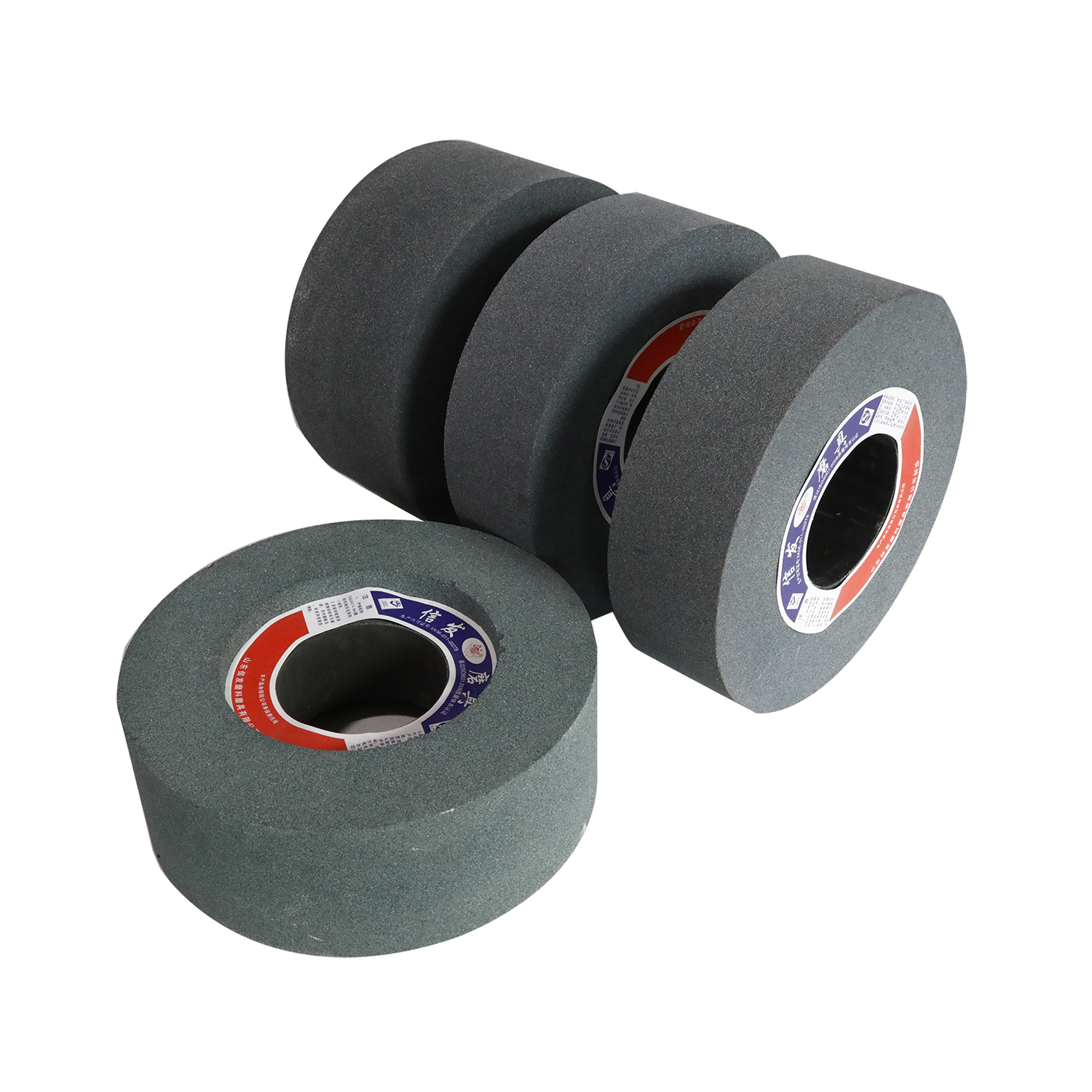
The cylindrical grinding wheel family covers outside-diameter work on shafts, spindles and journals inside the general ceramic bonded envelope. Crankshaft grinding is technically cylindrical work with eccentric features, but the two should be ordered under separate specifications, because the crankshaft family carries its own form and width requirements. Treating the crankshaft wheel as "a cylindrical wheel with a bigger diameter" is a common way to lose fillet form.
Internal (bore) grinding
Bore work is constrained by geometry before it is constrained by abrasive choice. Xinfa's internal (bore) table starts at 50 mm outside diameter against bores that may be several times the wheel's diameter in length, so overhang, spindle clearance and coolant reach all belong in the specification. The family has the widest abrasive list in the range — A, WA, AA, 38A, PA, 25A, SA, MA, GC, C and SG — with grit F16–F120, hardness G–Y, structure 0–14 and speeds of 32–60 m/s.
Roll grinding
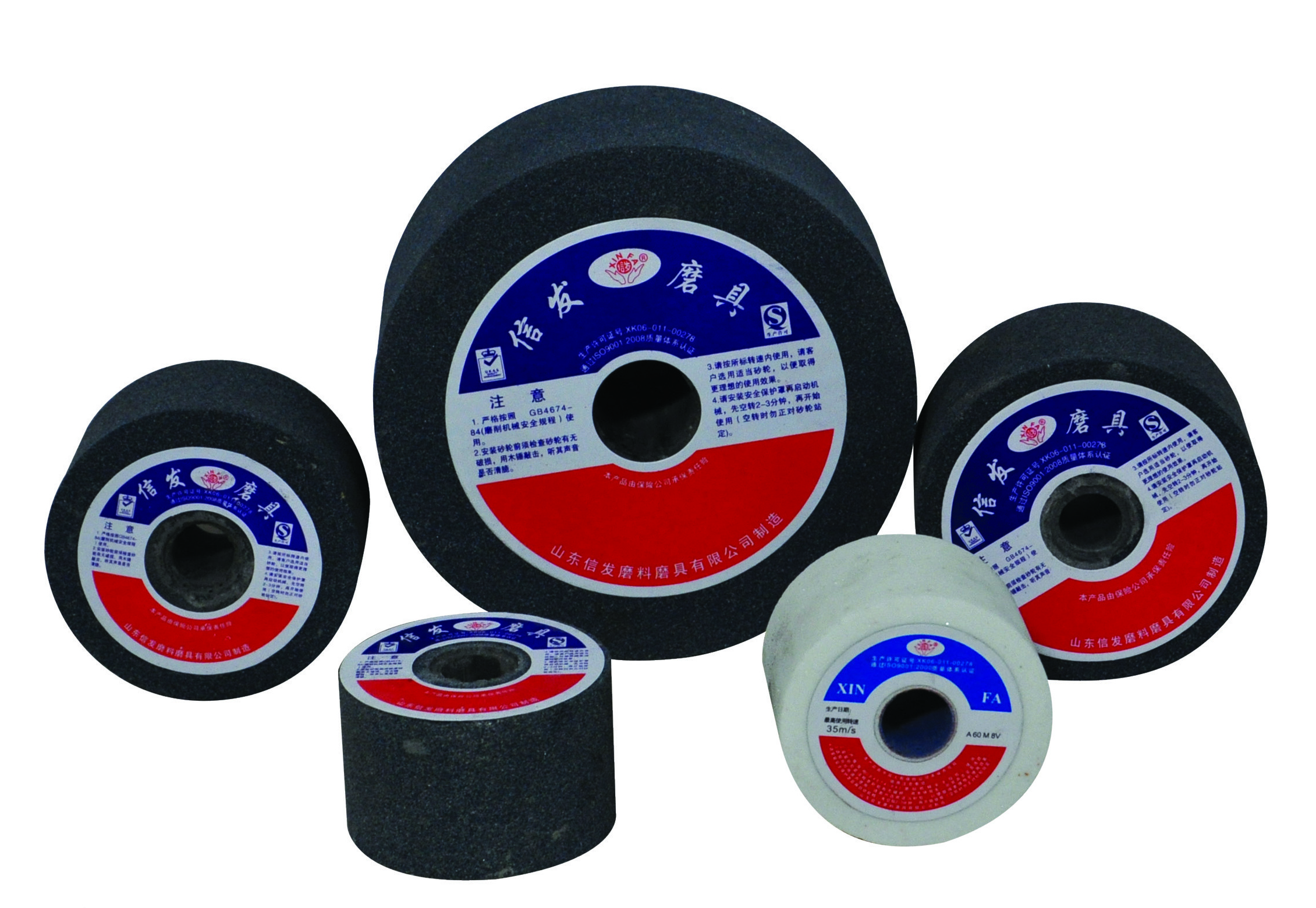
Roll grinding wheels (vitrified and bond type) appear in the same vitrified range and are specified against roll diameter and required finish. They are mentioned here mainly to keep them out of the bearing, gear and crankshaft discussion: a roll wheel ordered on a crankshaft specification will meet the diameter requirement and miss everything else.
From drawing to purchase order: a six-step method
- Fix the job definition before the wheel. Collect the part drawing, workpiece material and hardness, stock allowance, required surface finish and tolerance, machine and spindle speed, coolant type and pressure, dressing method, and the batch size and repeat rate. A wheel selected without these eight items is a guess with a part number.
- Select the family by part geometry. Bearing races, gear profiles, journals and lobes, bar work, outside diameters, bores and rolls each map to a different family. Use the family that matches the feature being ground, and split the order when a part has two features that need two wheels.
- Size the wheel inside the envelope. Check diameter, thickness and hole against the general ceramic bonded envelope (150–1100 mm / 3–300 mm / 12.7–305 mm) or against the narrower bore and control wheel tables where they apply. Confirm the wheel fits the machine, the guarding and the fixture before discussing grain.
- Choose the abrasive for a reason. Brown Fused Alumina is the base case for this range. White Fused Alumina and Pink Fused Alumina are the other named options for general steel work, and Green Silicon Carbide is listed where a sharper, more friable grain suits the job — for example on hard or carbide work. The correct choice is confirmed in a trial on your parts, not from a table alone.
- Set grit, grade, structure and speed. Grit F16–F120, hardness G–Y and structure 0–14 are available across the range, which means the supplier can meet almost any reasonable request — and also that the buyer must state the request. Speed is the one field with a hard ceiling: the marked maximum linear velocity of the delivered wheel is the limit.
- Write the specification in marking order. Xinfa's catalogue lines follow the standard sequence; for example, a line written as 350×100×127 A 60 N 5 V 35 m/s describes a 350 mm wheel, 100 mm thick, 127 mm hole, Brown Fused Alumina, grit 60, grade N, structure 5, vitrified bond, 35 m/s maximum. Anyone who can read that line can quote, inspect and reorder without renegotiating the requirement.
Then run the trial. Fix the machine conditions, keep a reference wheel as baseline, and measure surface finish, form or size holding, wheel life and dressing interval on the same parts. Because wheel condition drives surface quality, a trial that records only the first article misses the variable that matters most in production.
Use cases in practice
A bearing cell grinding races and bores will typically run two specifications: a bearing wheel for the raceway and an internal (bore) wheel for the bore, each with its own grade and structure decision. A gear shop grinding profiles will spend more of its specification effort on the form drawing and dressing method than on the family name. A crankshaft line will fix the speed rating and fillet geometry first, because those two fields decide whether the wheel can stay in tolerance across a continuous run.
A centerless cell grinding bar will treat the grinding wheel and the Rubber Control&Centerless wheel as one purchase, with the control wheel's hardness inside K–Q and grain inside F80–F150. A hydraulic or sleeve producer boring small components will be limited by wheel diameter and overhang before abrasive choice becomes the deciding factor.
Xinfa's own case record lists a grinding wheel OEM customer in Pakistan, 20 tons supplied over two years, with the application described as grinding workpieces and the reported result as stable operation with long wheel life. Read it for what it is — a company case record rather than an independently measured benchmark. Its value for a new buyer is that it shows the order type (OEM volumes, multi-year) rather than proving performance on your part.
Wheel families compared on the supplied data
| Wheel family | Job it is named for | Supplied specification data | Buyer note |
|---|---|---|---|
| Bearing Grinding Wheel | Bearing races and bearing features | Set to drawing within the ceramic bonded envelope: 150–1100 mm OD, 3–300 mm thick, 12.7–305 mm hole, grit F16–F120, hardness G–Y, structure 0–14, 20–70 m/s | Pair with an internal (bore) wheel when the bore is also a ground feature |
| Gear Grinding Wheel | Gear tooth profiles | Same envelope; profile must be defined on the drawing | The family does not define the form — supply the profile and inspection reference |
| Crankshaft&Cam Shaft Grinding Wheel | Journals, pins and cam lobes | Same envelope, including diameters up to 1100 mm and thickness up to 300 mm | Fix the speed rating and fillet geometry first; continuous operation is the stated condition |
| Worm Grinding Wheel | Worm and thread-type forms | 220–450 mm OD, 50–230 mm thick, 76.2–203 mm hole | Use only where the machine and process call for a worm-form wheel |
| Centerless Grinding Wheel | Through-feed and infeed centerless work | Same envelope as the ceramic bonded range | Always ordered as a pair with the control wheel |
| Rubber Control&Centerless | Control / regulating wheel in a centerless pair | 200–500 mm OD, 100–380 mm thick, 75–305 mm hole, grain F80–F150, hardness K–Q, structure 0–14, 32–60 m/s; Brown Fused Alumina and White Fused Alumina | Narrower hardness and grain bands — never copy numbers across from the grinding wheel |
| Cylindrical Grinding Wheel | Shafts, spindles and journals | Same envelope as the ceramic bonded range | Crankshaft work is specified separately, not as a large cylindrical wheel |
| Internal (Bore) Grinding Wheel | Bores, sleeves and hydraulic bodies | 50–150 mm OD, 6–120 mm thick, 16–32 mm hole, grit F16–F120, hardness G–Y, structure 0–14, 32–60 m/s; A, WA, AA, 38A, PA, 25A, SA, MA, GC, C, SG | Geometry, overhang and spindle clearance decide before abrasive does |
| Roll Grinding Wheel V&B | Roll bodies | Listed in the vitrified bond range | Specify against roll diameter and required finish |
Values are catalogue ranges for the named families, not guarantees for an individual wheel. The marking on the delivered wheel governs its limits.
What to verify before you commit
Four checks separate a specification from a hope. First, documentation: the company profile's ISO 9001 statement should be replaced by the current certificate, its scope and its validity. Second, market conformity: safety references such as EN 12413 and ANSI B7.1 commonly appear on product-level technical data sheets — 3M's Cubitron 3 depressed-centre data sheet is a published example — but a reference on one product sheet does not establish conformity across a supplier's range, so ask for the documents that apply to your order and your market.
Third, comparability. Do not compare wheels with different geometry, grain, bond, dimensions or speed rating; the difference you measure may be the specification rather than the supplier. Fourth, operating requirements. Xinfa's application data flags explosion-proof equipment as a possible special requirement in some environments; confirm whether it applies to your plant with your own safety assessment, and ask the supplier for the specific documents rather than assuming a general certificate covers it.
Frequently asked questions
What documentation should come with a ceramic wheel for bearing or gear work?
A wheel should arrive with a marking that states dimensions, abrasive, grit, grade, structure, bond and maximum operating speed, together with the conformity documents that apply to the order. Ask for the current quality-management certificate and its scope rather than a profile statement: Xinfa's company profile states ISO 9001 certification, and the buyer's job is to convert that statement into a valid document for the qualification file. If your market imposes its own safety requirements, request the specific references for that market — a dimensional standard such as ISO 603-14 covers nominal dimensions for hand-held shapes only and does not substitute for them.
Can Xinfa produce bearing, gear and crankshaft wheels to a drawing?
Xinfa offers OEM/ODM production with customization of specification, size, logo, bond type and abrasive material, supported by a stated monthly capacity of 900 tons, 100% testing and remote after-sales support. In practice that means the drawing you send — dimensions, profile, abrasive, grit, grade, structure and speed rating — is the specification that gets quoted. Vague requests such as "a bearing wheel" return a standard item, which is rarely the best fit for a specific raceway or fillet.
What order size applies, and how is the price set?
The stated minimum order quantity is 2 tons. No price list is published in the supplied material, and none should be assumed: the order is quoted against the specification, so the quotation request needs dimensions, abrasive, grit, grade, structure, speed rating and quantity. Requests that omit these fields tend to come back with either a range or a standard item, and neither is a firm basis for a production order.
How should a sample trial be structured?
Run the trial on your own parts under fixed machine conditions, with the current wheel kept as a baseline. Record surface finish, size or form holding, wheel life and dressing interval, and compare only wheels of matched specification. Because published research links wheel condition directly to workpiece surface quality, the trial should run long enough to show how the wheel behaves between dressings, not just on the first component.
What is the lead time, and what support follows delivery?
The stated lead time is 30–45 days, with remote after-sales support and export experience across Asia, Europe, the Americas and the Middle East, covering more than 20 countries. For a first order, send the part drawing and the intended machine conditions for a fit check before the specification is fixed; the technical brochure is available for download here: Xinfa product brochure (PDF).
Conclusion
The useful question is never "which ceramic grinding wheel is best" but "which family, abrasive, grit, grade, structure and speed rating fits this feature on this machine". Bearings split into raceway and bore work; gears are a profile problem before they are a wheel problem; crankshafts are decided by speed rating and fillet geometry; centerless work is bought as a pair; and bore work is limited by geometry first. Xinfa's vitrified bond range covers those families inside a stated envelope of 150–1100 mm diameter, grit F16–F120, hardness G–Y, structure 0–14 and 20–70 m/s, with Brown Fused Alumina, White Fused Alumina, Pink Fused Alumina and Green Silicon Carbide among the abrasive options.
Write the specification in marking order, trial it on your parts, measure wheel life and surface quality, and keep the documentation in the qualification file. Everything else is a preference.
Next step: send the part drawing, machine conditions and required surface finish for a fit check against the bearing, gear, crankshaft, centerless, cylindrical or bore family, and request a sample specification for trial.
Technical brochure: download the Xinfa catalogue (PDF).
Have Questions or Need More Details?
Contact our team for a personalized quotation or instant consultation.
Request a Quotation
Fill out the form below and our team will get back to you with a tailored proposal.
WhatsApp Direct Chat
Prefer to chat in real-time? Message us on WhatsApp for instant assistance & quick answers.
- Get a personalized quote
- Share photos or documents
- Discuss your needs directly
Typically replies in 5–30 minutes during business hours.