Ceramic Grinding Wheel Partnership Playbook: From Supplier Audit to Repeat Orders
Buyer stage: Decision → Execution
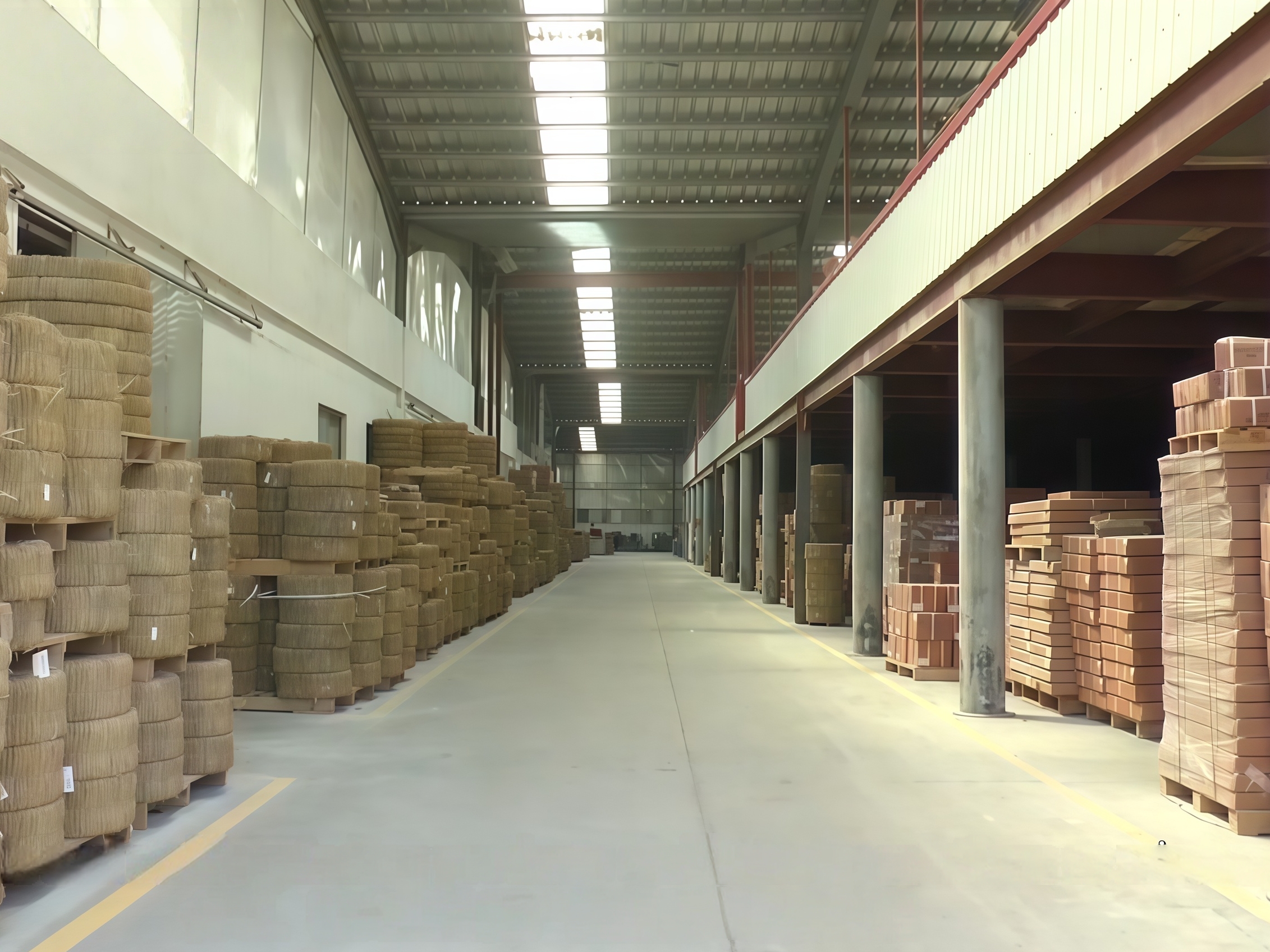 Finished goods warehouse at Xinfa before ceramic grinding wheel export dispatch.
When a ceramic grinding wheel order moves from evaluation to execution, the critical question changes from “can this wheel meet my specification?” to “can this supplier deliver that specification consistently over multiple shipments?” For distributors, machining plants, and OEMs, the long-term value of a ceramic grinding wheel supplier is determined by production capacity, quality control, export execution, and commercial stability. This guide explains how to evaluate those factors and how Shandong Xinfa Abrasives & Grinding Tools Co., Ltd. (Xinfa) addresses them in practice.
Why short-term ceramic grinding wheel sourcing fails
Most ceramic grinding wheel sourcing problems appear after the first order. A wheel may be approved as a sample, but production batches can drift in hardness, grain composition, or balance. Lead times slip when a factory is running near capacity. Fragile wheel bodies arrive chipped because packaging was not designed for ocean freight. Communication becomes slow when payment terms, inspection, and shipping documents are not aligned. These problems are not solved by finding a lower quote. They are solved by selecting a supplier that is built for repeat orders and long-term distribution.
Industry background: why ceramic grinding wheels need a longer view
Ceramic grinding wheels — wheels with a vitrified (ceramic) bond — are a core category in industrial abrasives. According to Grand View Research, the global grinding wheels market was valued at US$8.71 billion in 2024 and is projected to grow at a CAGR of 4.5% through 2030. Dataintelo estimates that vitrified bond wheels held the largest segment share at 38.4% of the global grinding wheel market in 2025. Brown fused alumina (BFA), the abrasive grain used in many general-purpose ceramic-bonded wheels, held a 52.4% share of the global fused alumina market in 2025. For buyers, these numbers indicate a large and stable category. The same category also carries regulatory expectations: bonded abrasive products should follow ISO 525 for shape types, designation, and marking, while safety requirements for wheel use and care are covered by ANSI B7.1 in the United States and EN 12413 in the European Union. A long-term supplier should be able to operate within this environment and provide wheels that are traceable and correctly marked.
China is also a major supply source for abrasive materials. According to WITS-World Bank data, China’s exports of natural or artificial abrasive powder or grain (HS 680530) reached USD 120.9 million in 2024. For a buyer building a long-term ceramic grinding wheel program, this means Chinese suppliers can offer scale, but only those with stable quality systems and export experience should be considered.
Detailed solution: what a long-term ceramic grinding wheel partner should provide
A long-term ceramic grinding wheel partner should provide five things: production capacity, product breadth, quality control, export execution, and commercial predictability. Xinfa is used here as a working example because its corporate facts and procurement terms are publicly documented.
Production capacity and order absorption
Xinfa was established in 1989 and operates a 30,000 m² factory in Linyi City, Shandong Province, about 180 km from Qingdao Port and 60 km from Rizhao Port. The company employs around 120 people and has an annual production capacity of over 10,000 tons. Current monthly production capacity is 900 tons, with a typical production lead time of 30–45 days and a minimum order quantity of 2 tons for export orders. For distributors planning regular container shipments, these numbers mean the factory can absorb repeat demand without forcing buyers into long raw-material commitments.
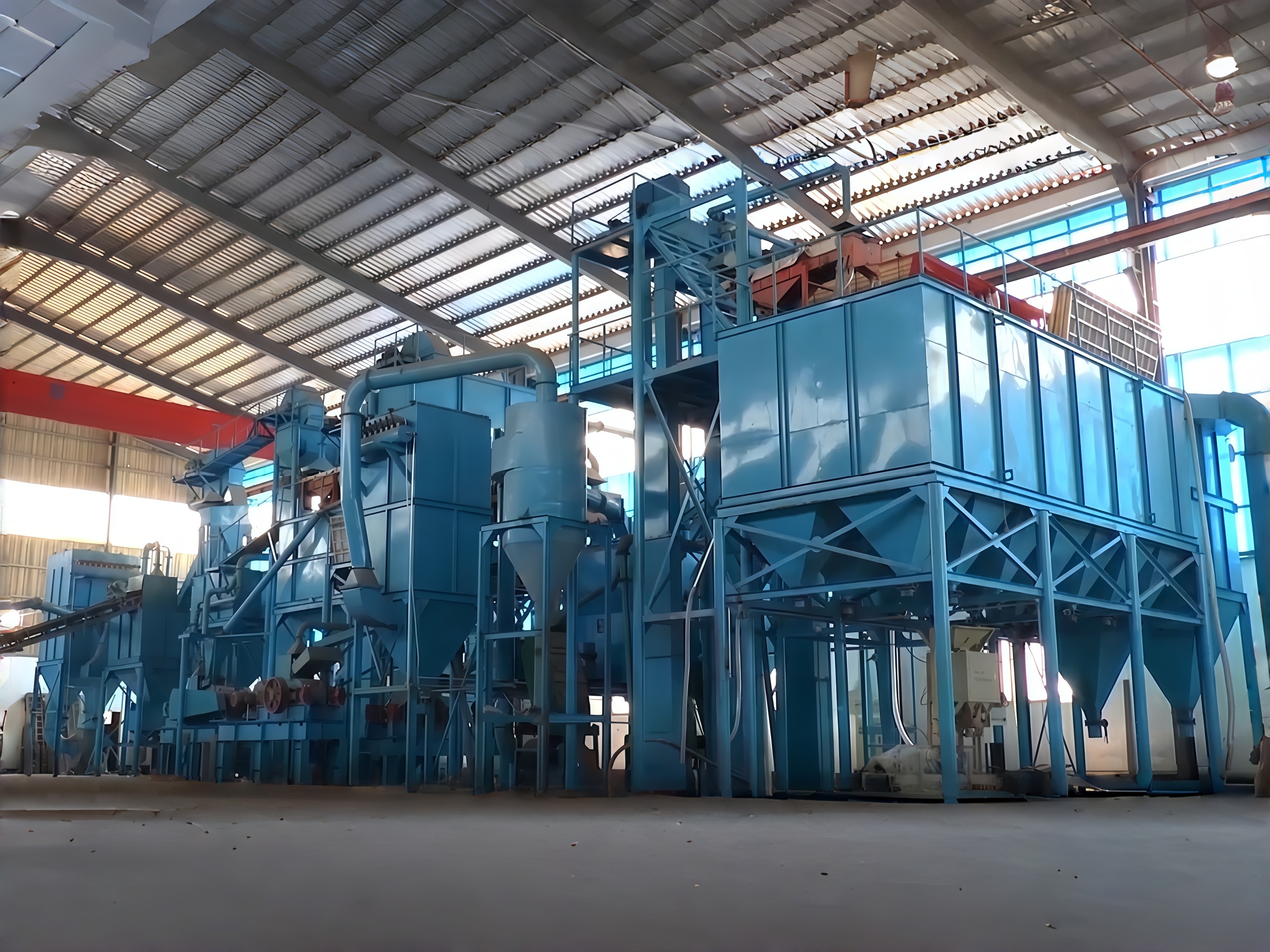 Raw material workshop: consistency begins with abrasive grain and bond formulation.
Product range and application coverage
A long-term partner should let distributors consolidate SKUs instead of sourcing each wheel type from a different factory. Xinfa’s product list includes Brown Fused Alumina Abrasive, General Purpose Grinding Wheel, Bench Grinder Wheel, Tool Grinding Wheel, Flat Surface Grinding Wheel, Centerless Grinding Wheel, Cylindrical Grinding Wheel, Crankshaft & Cam Shaft Grinding Wheel, Saw Tooth Grinding Wheel, Bearing Grinding Wheel, Worm Grinding Wheel, Gear Grinding Wheel, Needle Grinding Wheel, Roll Grinding Wheel V&B, Internal (Bore) Grinding Wheel, Oilstone, Segments, Resin Bonded Snagging Grinding Wheel, Rubber Control & Centerless, Flap Disc, and Mounted Points. For a distributor, this range also reduces supplier management risk.
Quality management and traceability
Quality decides whether a one-time order becomes a repeat relationship. Xinfa’s quality management system is certified under ISO9001:2008, and the company is a member of the China Abrasives Association. Its technology research and development center was recognized as a municipal-level enterprise technology R&D center in 2015, and the R&D team includes 6 engineers. The factory uses more than 100 sets of production and testing equipment. Xinfa states that quality control follows 100% testing standards. Buyers can also request pre-shipment inspection before dispatch, which gives sourcing teams an independent verification point.
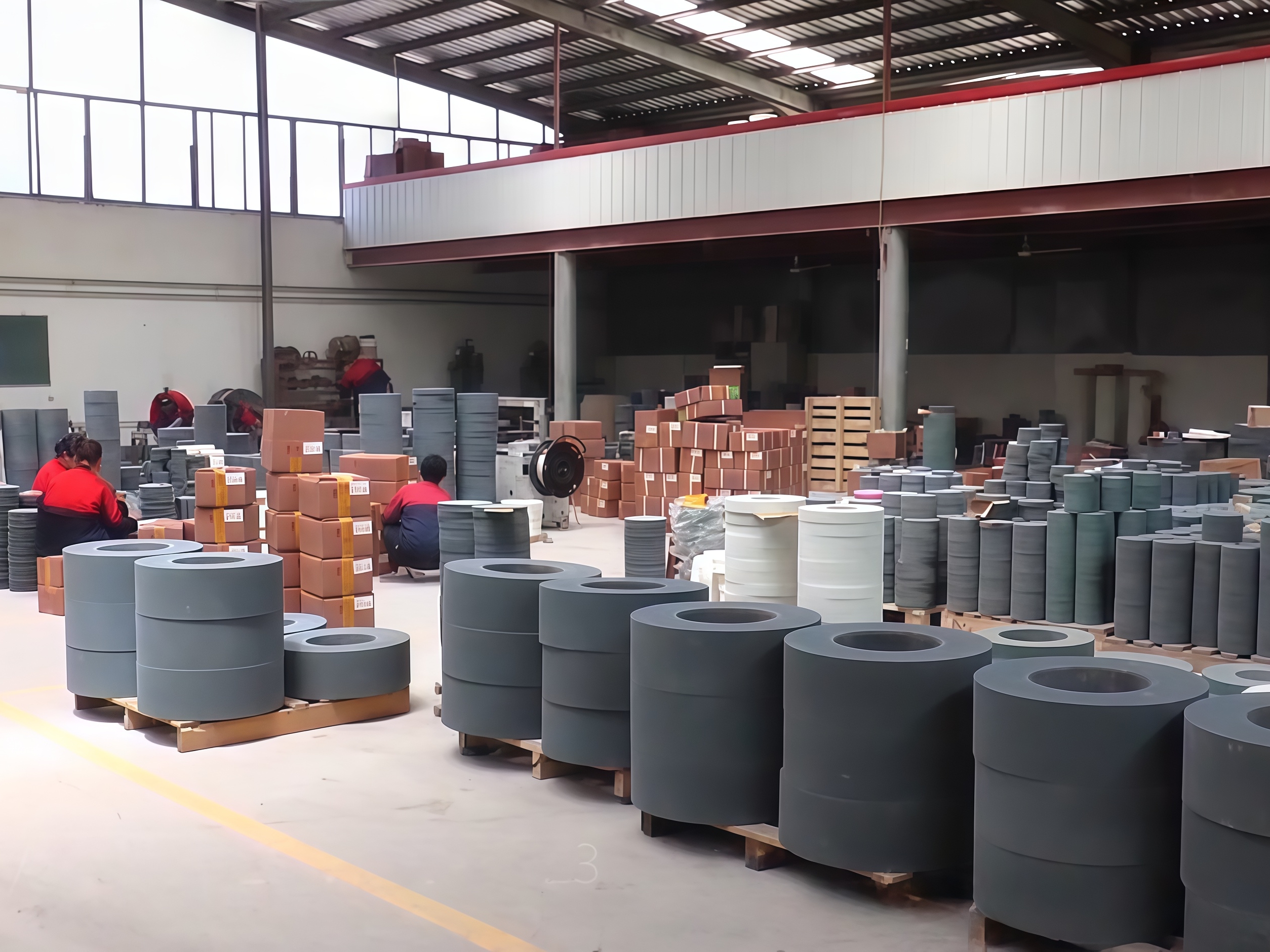 Quality inspection workshop: 100% testing standards are part of Xinfa’s stated quality control process.
Export execution and logistics
Xinfa is positioned for export: 35% of output is exported to more than 20 countries and regions, including Southeast Asia, the Middle East, India, South Korea, Japan, Europe, the United States, and Brazil. The factory’s location near Qingdao and Rizhao ports shortens overland transport time. Xinfa supports FOB, CIF, and CNF delivery terms. Fragile wheels are protected using pallet reinforcement and shockproof cushioning, reducing the risk of edge damage during ocean freight.
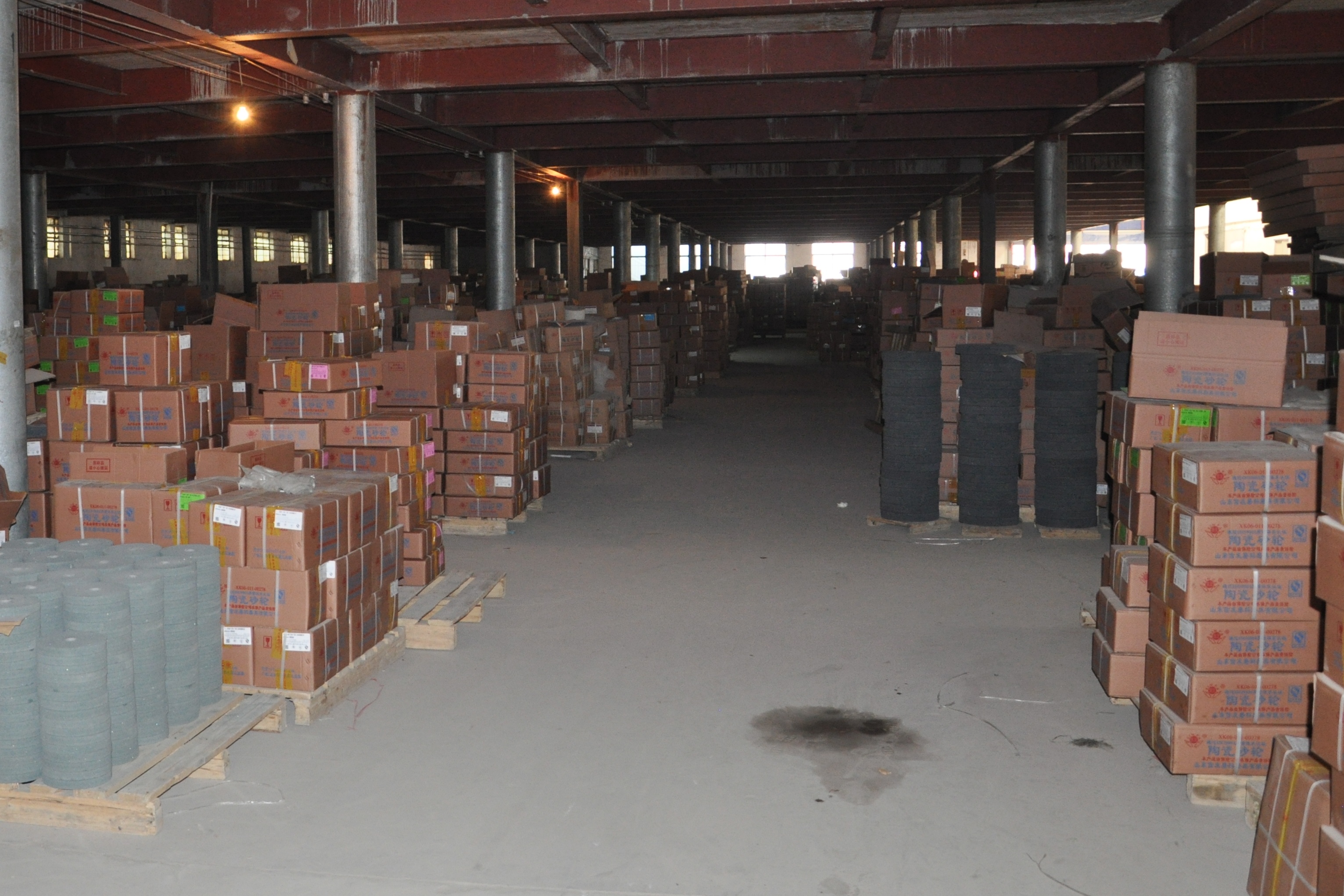 Finished goods storage and dispatch area for ceramic grinding wheel export orders.
Commercial terms that reduce friction
Payment terms are commonly 30% deposit / 70% balance before shipment. Delivery terms are FOB, CIF, or CNF. Pre-shipment inspection is accepted. With a monthly capacity of 900 tons and a 2-ton minimum order quantity, the ordering system is designed for both container programs and incremental replenishment. Buyers can use the product specification range — diameter 150–1100 mm, thickness 3–300 mm, hole diameter 12.7–305 mm, abrasive types from A to 55A, grit sizes F16–F120, hardness grades G–Y, structure numbers 0–14, and maximum linear velocity 20–70 m/s — to align orders with actual grinding applications.
Step-by-step: moving from supplier evaluation to execution
The following workflow helps a buyer move from a qualified supplier list to a working order schedule.
1. Confirm quality system and market compliance. Check quality certifications, association memberships, and testing procedures. For Xinfa, that means ISO9001:2008 certification, membership in the China Abrasives Association, and 100% testing standards.
2. Match the wheel specification to the application. Use the wheel parameters above to shortlist the correct abrasive type, grit, hardness, structure, and speed rating. Example ceramic bonded wheel formats offered by Xinfa include sizes such as 350×100×127 A 60 N 5 V 35m/s and 500×200×304.8 C 60 K 5 V 35m/s.
3. Validate commercial and logistics terms. Confirm MOQ, lead time, payment terms, and delivery terms. Xinfa’s typical export terms are FOB, CIF, or CNF; payment is 30/70; pre-shipment inspection is accepted.
4. Run a pilot order or an initial container order. Use the first order to verify actual quality, packaging, documentation, and on-time dispatch. With a 2-ton MOQ and 30–45 day lead time, a pilot lot can be scheduled without excessive inventory risk.
5. Review performance metrics. Track grinding efficiency, wheel life, dressing frequency, and batch-to-batch consistency. Xinfa’s internal comparison data indicates 30% higher grinding efficiency and less frequent dressing than conventional wheels, but actual results depend on the machine and workpiece.
6. Scale to framework orders or annual agreements. Once the pilot order is verified, distributors can move to scheduled monthly quantities supported by 900 tons of monthly production capacity.
Use cases: where a long-term ceramic grinding wheel relationship matters
Industrial plant maintenance teams. Plants that use bench, tool, surface, and cylindrical wheels for continuous maintenance benefit from a supplier that can provide long-lasting wheels and consistent stock availability. The lower dressing frequency in Xinfa’s comparison data is relevant for plants with limited maintenance time.
Abrasive distributors and importers. Distributors serving Southeast Asia, the Middle East, South Korea, Japan, Europe, or the Americas can consolidate many categories — from BFA abrasive to mounted points — under one export partner. This reduces supplier audits, documentation work, and lead-time risk.
Machining and tooling workshops. Workpieces such as saw teeth, bearings, gears, crankshafts, camshafts, rolls, and bores require dedicated wheel geometries. Xinfa’s product range includes saw tooth, bearing, gear, needle, roll (V&B), and internal (bore) grinding wheels, allowing workshops to source precision tooling from the same supplier that supplies their general-purpose wheels.
Comparison: ceramic grinding wheel vs conventional wheel for plant operations
The table below is based on Xinfa’s internal comparison data and is provided as a decision reference, not a guarantee for every application.
| Criterion | Ceramic grinding wheel (Xinfa data) | Conventional grinding wheel |
|---|---|---|
| Grinding efficiency | Approximately 30% higher | Baseline |
| Wheel life | Long-lasting | Shorter replacement cycle |
| Total cost | About 20% lower overall cost | Higher in suitable applications |
| Dressing frequency | Less frequent dressing | More frequent dressing |
| Best fit | Industrial plants with continuous grinding operations | General-purpose, lower-volume work |
FAQ
1. Does Xinfa comply with abrasive wheel safety standards and certifications?
Xinfa’s quality management system is certified under ISO9001:2008, and the company is a member of the China Abrasives Association. Its stated quality control follows 100% testing standards. For international markets, bonded abrasive wheels should also meet applicable standards such as ISO 525, ANSI B7.1, or EN 12413; buyers should confirm wheel markings for their region.
2. What ceramic grinding wheel categories can Xinfa support for distributors and manufacturers?
Xinfa produces Brown Fused Alumina Abrasive and a broad range of vitrified bonded wheels, including bench grinder, tool grinding, flat surface, centerless, cylindrical, crankshaft and camshaft, saw tooth, bearing, worm, gear, needle, roll (V&B), internal (bore), oilstone, segments, resin bonded snagging, rubber control and centerless, flap disc, and mounted points. This allows buyers to consolidate multiple abrasive SKUs with one long-term supplier.
3. Is a ceramic grinding wheel more expensive than a conventional wheel over total operating cost?
According to Xinfa’s internal comparison data, its ceramic grinding wheels deliver approximately 30% higher grinding efficiency and around 20% lower overall cost compared with conventional grinding wheels for suitable industrial applications. They also require less frequent dressing. Actual results depend on workpiece material, machine condition, and operating parameters.
4. Can buyers start with a pilot order before scaling to annual volumes?
Yes. Buyers can use standard export terms such as FOB, CIF, or CNF, and Xinfa accepts pre-shipment inspection before dispatch. Typical production minimums are 2 tons, with monthly production capacity of 900 tons and a typical lead time of 30–45 days. For pilot or project-specific requirements, contact the sales team to align the order plan.
5. What lead time and capacity should a distributor expect from Xinfa?
Xinfa’s typical production lead time is 30–45 days, monthly production capacity is about 900 tons, and the minimum order quantity for export orders is 2 tons. Payment terms are commonly 30% deposit / 70% balance. For a current delivery schedule or distributor inquiry, email sales@xinfaabrasives.com or download the company brochure below.
Conclusion: moving from decision to execution
Selecting a ceramic grinding wheel supplier for the long term is a supply-chain decision, not a single-purchase decision. Xinfa offers production capacity, product breadth, quality control, export execution, and commercial terms designed for repeat orders and distribution programs. The next step is to validate these facts against your own order profile: request a brochure, confirm a production slot, and use pre-shipment inspection to protect your first container.
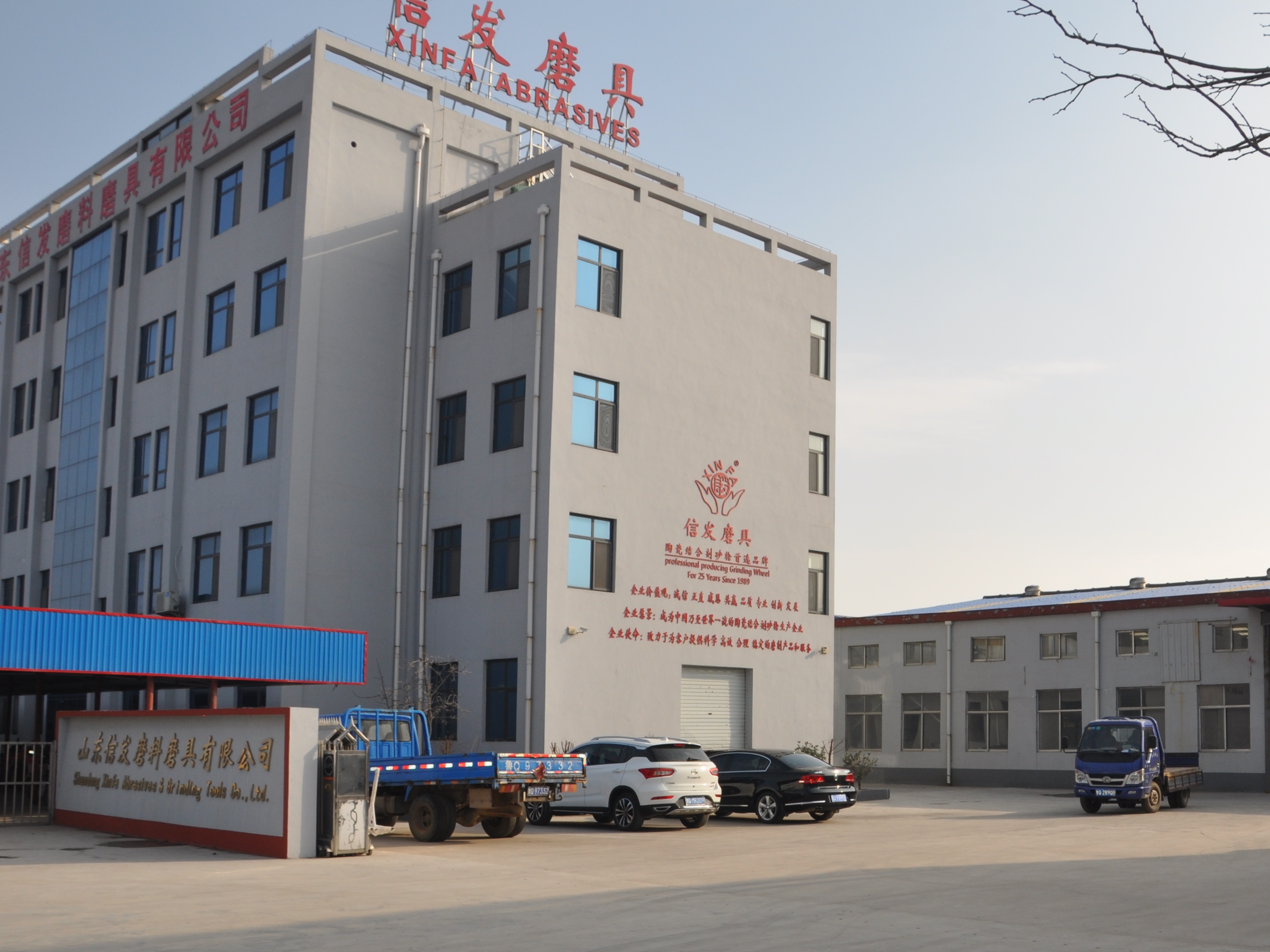 Contact Xinfa for ceramic grinding wheel catalog, pricing, and distributor support.
Next step: Download the Xinfa company brochure, or contact Jackie Wang at sales@xinfaabrasives.com / WhatsApp +86 13562923298 to discuss your order schedule.