Ceramic Grinding Wheel Terms: From Brown Fused Alumina to Vitrified Bonds
A beginner's map of the vocabulary that appears in vitrified bond wheel catalogues, quotations and inspection sheets.
A ceramic grinding wheel is a bonded abrasive wheel built on a vitrified bond — the glass-like ceramic bond that appears as the letter V in a wheel marking. Everything else in a catalogue line describes the grain that does the cutting, the geometry that fits the machine, and the family name that identifies the operation. Read as four separate layers, a page of codes becomes a specification a buyer can compare. Read as a single block of letters and numbers, it stays a puzzle.
The whole map fits into one line taken from the Xinfa product range: 350×100×127 A 60 N 5 V 35m/s. The first three numbers are outer diameter, thickness and bore in millimetres. The letter A identifies the abrasive. The number 60 is the grit size, N is the hardness grade, 5 is the structure number, V is the vitrified bond, and 35m/s is the maximum linear velocity. Nothing in that line is decoration; each element narrows what the wheel is allowed to do.
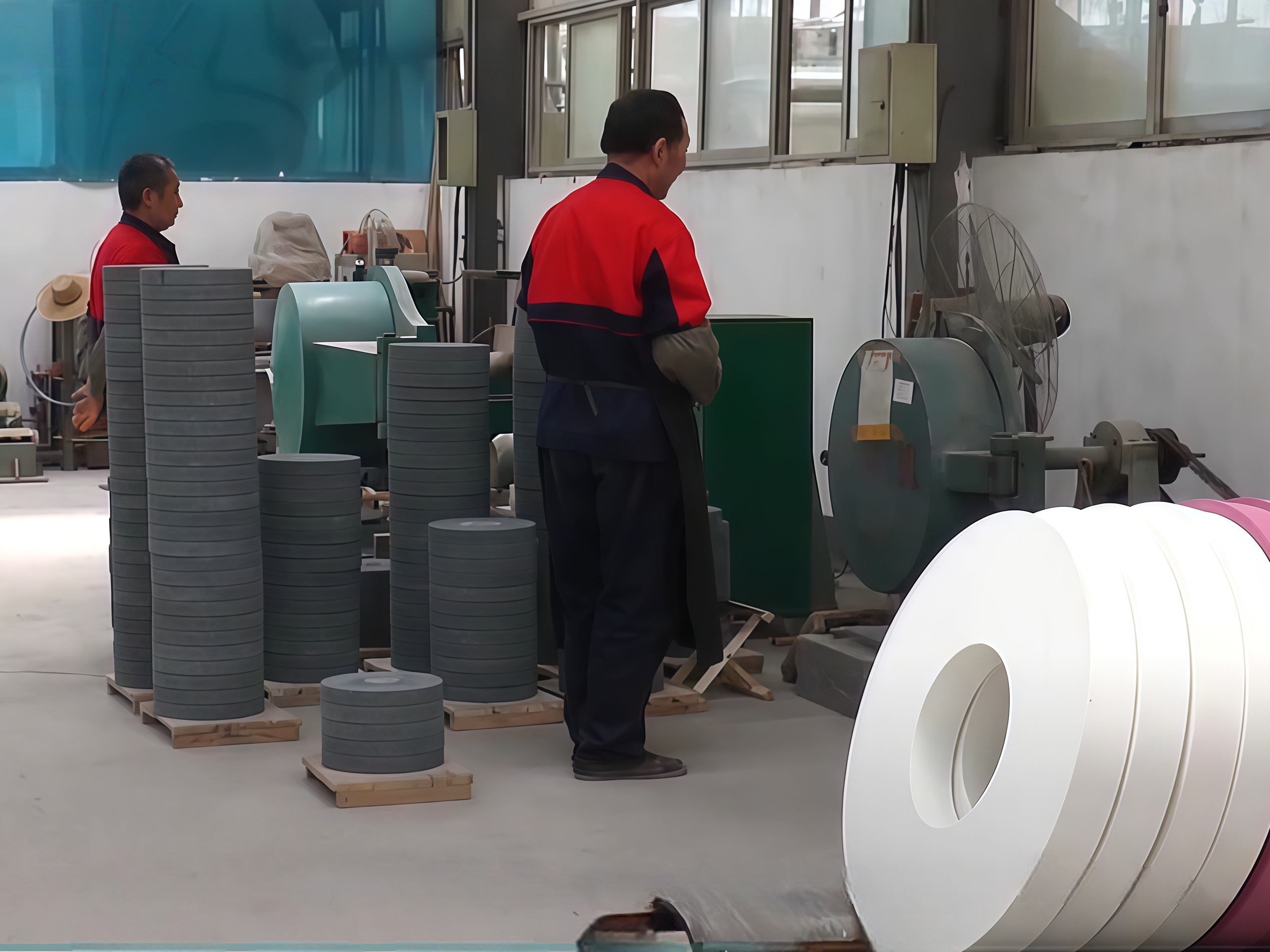
Shandong Xinfa Abrasives & Grinding Tools Co., Ltd. is a manufacturer located in Junan County, Linyi City, Shandong Province, China, established in 1989 and specialised in the research, development and manufacture of vitrified bond grinding wheels. Its published product range is used throughout this article as a factual example of how the terminology is organised in practice.
Why ceramic grinding wheel terminology blocks first-time buyers
The difficulty is not that the words are technical. It is that the same word carries different meanings in different positions, and that family names describe operations rather than dimensions.
Three specific points of confusion appear repeatedly:
- “Ceramic” refers to two different things. In one sentence it describes the bond — a vitrified, ceramic-type bond. In another it describes a grain type. A wheel can be ceramic-bonded with a Brown Fused Alumina grain, or it can carry a differently named grain in the same vitrified bond. Unless the sentence says which layer it is talking about, the word alone does not define the product.
- Family names are not specifications. A “general purpose grinding wheel” and a “cylindrical grinding wheel” name an operation and a machine relationship. They do not state diameter, grit, grade or speed. Two wheels quoted under the same family name can differ across every measurable field.
- Quotations are compared on the wrong basis. Where geometry, grit and grade are not normalised first, a price-per-piece comparison measures the difference between two unrelated products rather than the difference between two suppliers.
The practical consequence is a purchase decision made on a label. The remedy is not more vocabulary — it is a structure that puts each term in its correct layer before the comparison starts.
How the vocabulary is organised in the abrasives industry
A bonded grinding wheel is conventionally described as abrasive grain held together by a bond, with porosity between the two. That three-part construction is the reason the vocabulary has layers at all: the grain is one decision, the bond is a second, and the open space that the structure number describes is a third. The wheel shape and geometry sit on top of those, and the family name sits on top of everything.
Brown Fused Alumina remains the reference abrasive for general bonded wheel production. In the fused alumina market, Brown Fused Alumina held the largest product-type share at 52.4% in 2025, according to the Fused Alumina Market report published by Dataintelo covering 2025 to 2034. Demand for precision machining is also reflected in the wider category: the global grinding wheel market is projected to grow at a compound annual growth rate of 6.7% from 2025 to 2032, according to Reliable Market Forecast (2025).
A standards layer sits above the product vocabulary. ISO 603-14:2022 specifies common nominal dimensions for shape types 6, 11, 27, 28 and 29 of bonded abrasive products intended for deburring, fettling and snagging with hand-held grinding machines. Safety-related conformity references such as EN 12413 in Europe and ANSI B7.1 in the United States appear in supplier documentation alongside those dimensional standards. For cross-border movement, bonded abrasive wheels of agglomerated abrasives or ceramics fall under HS heading 6804.22 in tariff references, with national subheadings varying by jurisdiction.
The four-layer map of ceramic grinding wheel terms
The map works from the smallest unit to the largest: grain, bond, specification string, family name. Each layer answers a different question, and mixing them is what produces most specification errors.
Layer 1 — Abrasive grain: Brown Fused Alumina and the designation letters
The abrasive layer answers the question what cuts the workpiece. Brown Fused Alumina is a fused aluminium oxide abrasive, and it is the abrasive Xinfa lists first in its product range. In a wheel marking the abrasive appears as a letter or letter-number group immediately after the dimensions.
Xinfa's vitrified bond specification range lists the abrasive designations A, WA, AA, 38A, PA, 25A, SA, MA, GC, C, RA, DA, 9A, 64A and 55A. The base designation A corresponds to the Brown Fused Alumina line used in the sample marking above. Buyers do not need to memorise the full series at the start; they need to know that the letter block is a separate decision from the bond letter, and that changing it changes the product even when every dimension stays the same.
Layer 2 — Bond: what the letter V means
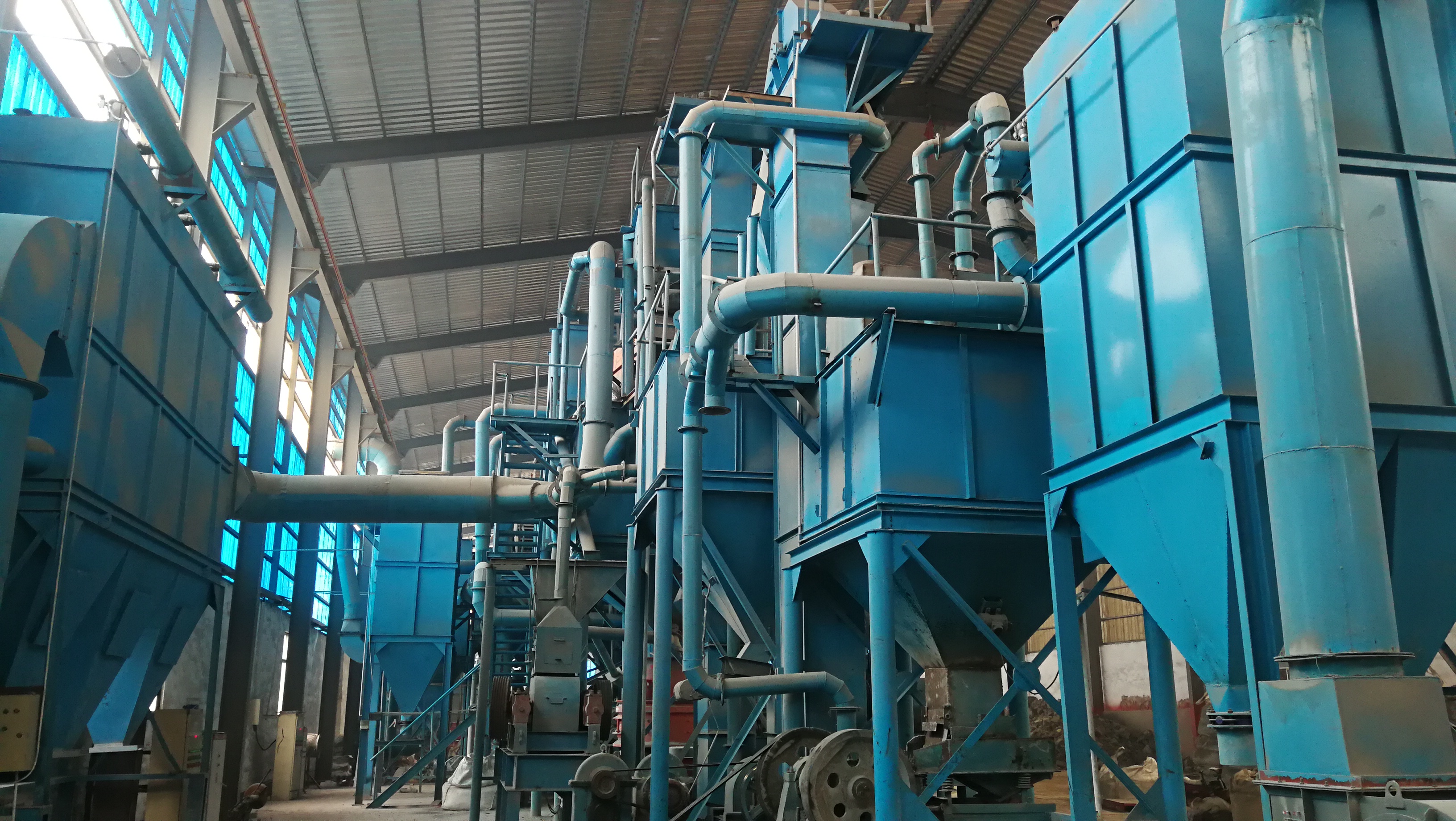
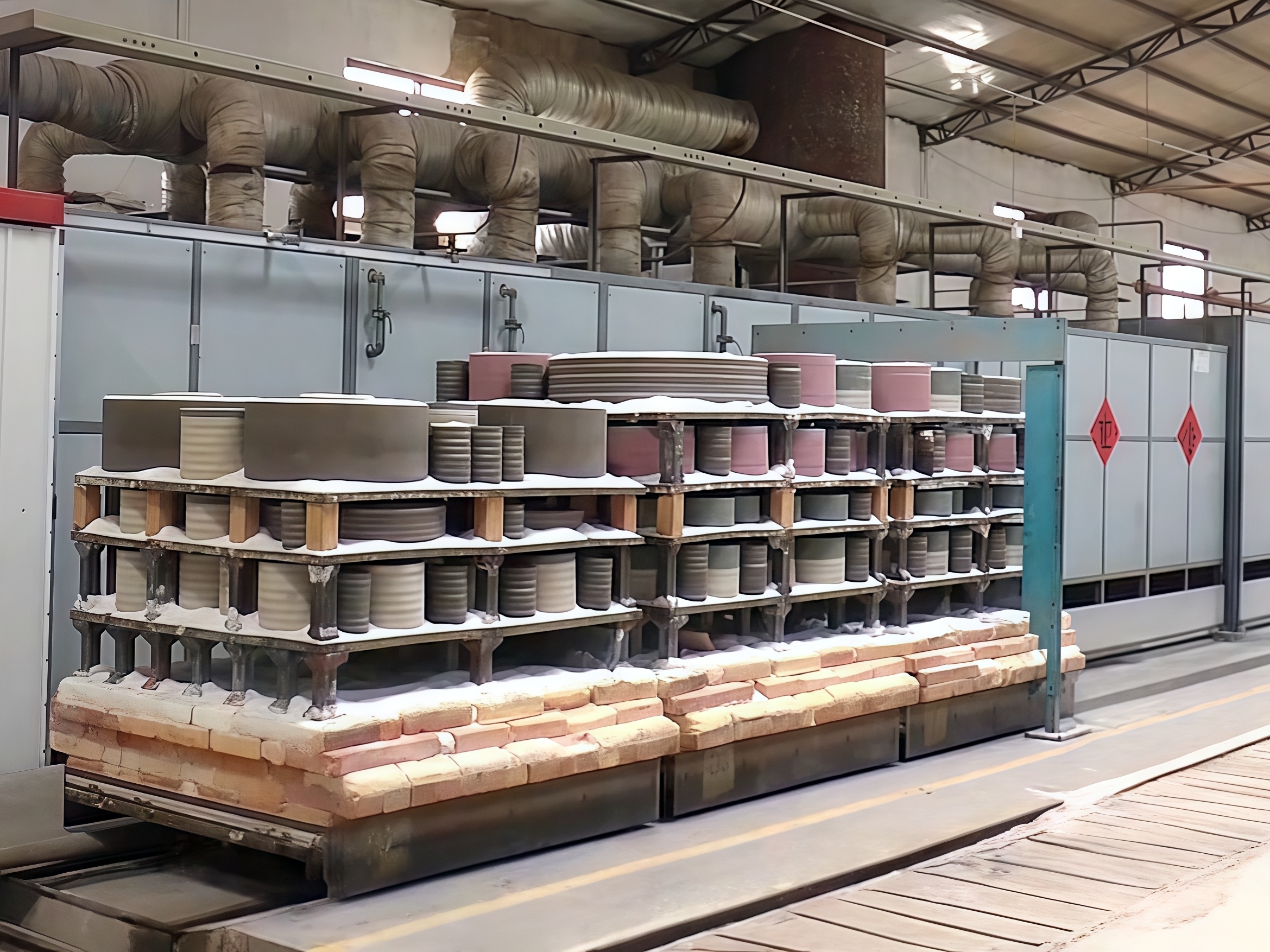
The bond layer answers what holds the grain in place and how it releases as it wears. The letter V marks a vitrified bond: the wheel is formed from abrasive grain mixed with a glass-forming bond and then fired, which is why kiln capacity is a defining feature of a vitrified bond plant.
Bond family is an axis of its own. The Xinfa range also includes a Resin Bonded Snagging Grinding Wheel and Rubber Control & Centerless products, which shows the same manufacturer working across more than one bond chemistry. For a buyer reading a catalogue, the rule is simple: a change of bond letter is a change of product family, not a variant of the same wheel.
Bond type is also one of the fields Xinfa lists as customizable within its OEM and ODM service, together with specification, size, logo and abrasive material.
Layer 3 — The specification string: geometry, grit, grade, structure and speed
The specification layer answers which exact wheel, at which dimensions and which limits. This is where most beginner reading stops, because the string looks dense but is actually a fixed sequence of fields. Xinfa's vitrified bond range covers the following fields and values:
| Specification field | What it fixes | Range listed in the Xinfa vitrified bond product data |
|---|---|---|
| Diameter | Outer wheel size and machine fit | 150–1100 mm |
| Thickness | Wheel width and grinding contact | 3–300 mm |
| Hole (bore) | Arbor or spindle fit | 12.7–305 mm |
| Abrasive designation | Grain family | A, WA, AA, 38A, PA, 25A, SA, MA, GC, C, RA, DA, 9A, 64A, 55A |
| Grit number | Grain coarseness | F16, F24, F30, F36, F46, F60, F80, F100, F120 |
| Hardness grade | Grade letter in the marking | G, H, J, K, L, M, N, P, Q, R, S, T, Y |
| Structure number | Porosity level in the marking | 0–14 |
| Bond | Bond family letter | V (vitrified) |
| Maximum linear velocity | Speed limit for safe operation | 20, 25, 32, 35, 40, 45, 50, 60, 70 m/s |
With that table in hand, the sample marking becomes readable field by field. 350×100×127 is a 350 mm diameter, 100 mm thick wheel with a 127 mm bore. A is the abrasive designation. 60 is the grit. N is the hardness grade. 5 is the structure number. V is the vitrified bond. 35m/s is the maximum linear velocity. Every element is a separate line in a quotation, which is why a supplier who returns a price without those fields has not yet quoted a comparable product.
Layer 4 — Wheel family names
The family layer answers which operation the wheel belongs to. Family names are the most readable and the least precise part of the vocabulary, which is why they belong at the top of the map rather than at the start of the specification. The Xinfa range covers the families below; the descriptions explain what the name points to, not what any individual wheel measures.
Wheel family terms compared
| Family name | What the name points to | Why buyers reach for it |
|---|---|---|
| General Purpose Grinding Wheel | Broad workshop use where no single operation is fixed | Everyday maintenance and mixed shop tasks |
| Bench Grinder Wheel | Off-hand work on a bench or pedestal grinder | Tool room and maintenance stations |
| Tool Grinding Wheel | Sharpening and regrinding cutting tools | Cutting-edge geometry and tool life |
| Flat Surface Grinding Wheel | Face grinding of flat workpieces | Flatness and surface finish on plane surfaces |
| Centerless Grinding Wheel | Grinding where the workpiece is supported by a rest blade rather than centres | Through-feed and in-feed production of shafts and pins |
| Cylindrical Grinding Wheel | External diameter grinding between centres | Diameter and roundness on cylindrical parts |
| Crankshaft & Cam Shaft Grinding Wheel | Journals, pins and cam lobe profiles | Engine and powertrain component grinding |
| Saw Tooth Grinding Wheel | Sharpening of saw teeth | Cutting tool maintenance |
| Bearing Grinding Wheel | Bearing raceways and rolling elements | Bearing production and rework |
| Gear Grinding Wheel | Gear tooth flank and profile work | Gear finishing after heat treatment |
| Worm Grinding Wheel | Worm and thread form grinding | Threaded and worm-type components |
| Needle Grinding Wheel | Small-diameter work such as needles and rollers | Fine, small-part grinding |
| Roll Grinding Wheel V&B | Roll grinding in a vitrified bond; the V&B suffix marks the bond | Roll maintenance in mills and process lines |
| Internal (Bore) Grinding Wheel | Internal diameters and bores | Hole grinding where the wheel works inside the part |
Alongside the wheel families, the same range lists other bonded product forms: Oilstone, Segments, Mounted Points and Flap Disc, plus the Resin Bonded Snagging Grinding Wheel and Rubber Control & Centerless products mentioned earlier. These are different product types rather than sub-variants of a wheel, and they appear in catalogues for the same reason — because the operation, not the shape, decides which name applies.
Building a specification from the vocabulary, step by step
The map is only useful if it converts into an order. The sequence below moves from the operation down to the marking, which is the direction most buyers actually work in.
- Name the operation, not the product. Start with the family term that matches the machine and the work — bench grinder, tool, flat surface, centerless, cylindrical, internal, bearing, gear, crankshaft and camshaft, saw tooth, needle, roll, worm or general purpose. This fixes the context; it does not yet fix a wheel.
- Fix the geometry. Outer diameter, thickness and bore come from the machine and the workpiece, not from habit. Xinfa's range covers 150–1100 mm diameter, 3–300 mm thickness and 12.7–305 mm bore, so the geometry step is a real constraint before any price discussion begins.
- Choose the abrasive designation. Brown Fused Alumina, written as A, is the base designation in the range. The other listed designations (WA, AA, 38A, PA, 25A, SA, MA, GC, C, RA, DA, 9A, 64A, 55A) exist for applications where the base grain is not the right starting point.
- Set the grit. Grit runs from F16 to F120 in the listed range. Coarse and fine grits are different products with different removal and finish behaviour, and grit is a marking field, not a note in the order text.
- Set the hardness grade and structure number. Grade letters run G to Y and structure numbers run 0 to 14. These two letters and numbers sit next to each other in the marking and are the fields most often copied incorrectly from an old drawing.
- Close with the bond and the speed limit. V confirms the vitrified bond, and the maximum linear velocity (20 to 70 m/s in the listed range) sets the operating limit that the machine must respect. Once all fields are present, the line can be read back as a full marking and compared with a quotation.
Where these terms are used in practice
Three settings show how the same vocabulary behaves differently depending on who is reading it.
A workshop maintaining its own tools. The buyer reads the family layer first — bench grinder or tool grinding wheel — and then needs a diameter, thickness and bore that fit the machine guard, plus a grit and grade that suit the steel. There is usually no specification document, so the marking on the old wheel is the specification. Reading it field by field is the fastest way to reorder correctly.
A production cell grinding cylindrical or centerless parts. Here the family name is settled by the process, and the negotiation is entirely inside the specification layer: abrasive designation, grit, grade, structure, bond and speed limit, held together with a geometry that fits the spindle and the coolant setup. Wheel condition matters at this level because it directly affects workpiece surface quality, which is why grinding-wheel wear monitoring is an active research area in process quality control.
An OEM customer building its own branded range. The terminology becomes a supply-agreement language. Xinfa reports a grinding wheel OEM customer in Pakistan who has ordered 20 tons over a two-year relationship, with the wheels used for grinding workpieces and reported as delivering stable operation and long-lasting performance. In that kind of arrangement, the fields listed in the specification table above become the reference document both sides work from.
FAQ
What certification should a ceramic grinding wheel supplier provide?
A quality management system certificate is the first document to request, followed by the dimensional and safety references that apply in the destination market. Xinfa's quality management system is certified to GB/T19001-2016/ISO9001:2015 by Zonyun International Certification Co., Ltd., certificate number 60624Q0262R1M, with the certified scope “Manufacture of Abrasives & Grinding Wheels”, issued on 12 August 2021 and valid until 11 August 2027. The company is also a member of the China Abrasives Association. For wheel shapes and dimensions, ISO 603-14:2022 is the reference standard for the nominal dimensions of shape types 6, 11, 27, 28 and 29 of bonded abrasive products used with hand-held grinding machines; regional safety requirements such as EN 12413 and ANSI B7.1 should be confirmed separately for the target market.
Can the abrasive type, bond type and dimensions be customized?
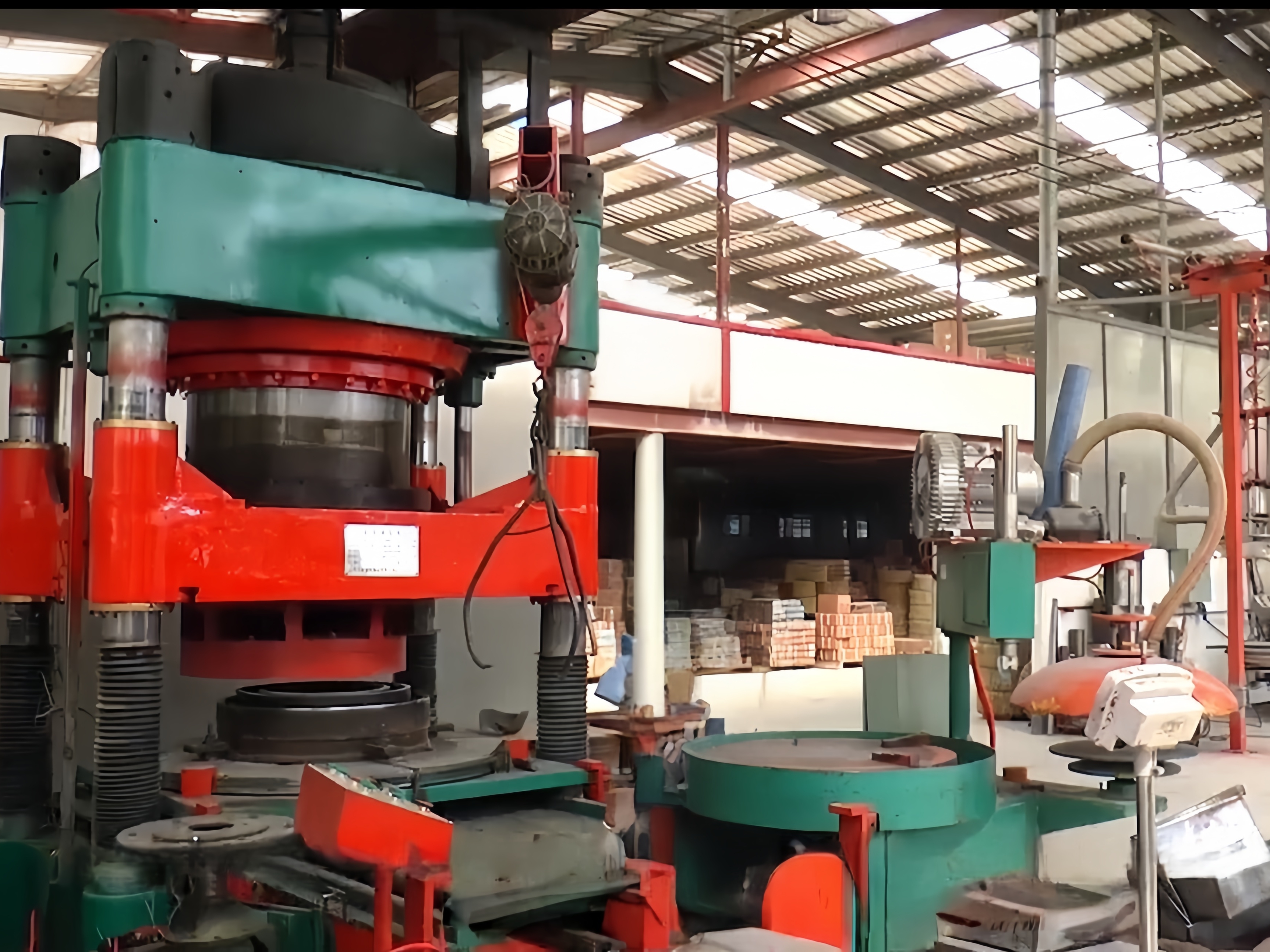
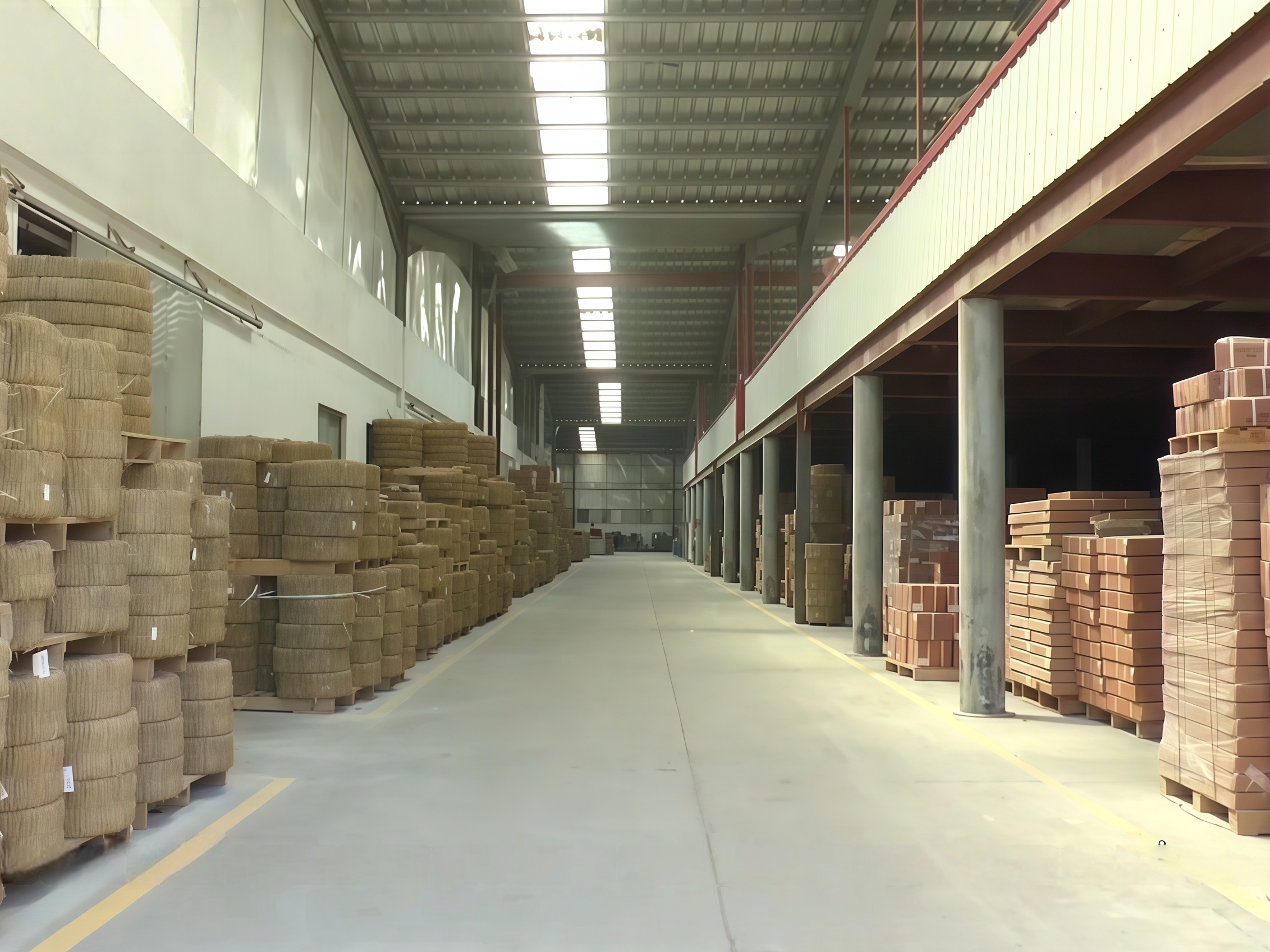
Yes. Xinfa provides OEM and ODM production services together with technical support covering customization of specification, size, logo, bond type and abrasive material. Quality control follows 100% testing standards, and remote after-sales support is available. The production base operates more than 100 sets of advanced production and testing equipment with an annual output of 10,000 tons, and the technology research and development centre was listed as a municipal-level enterprise technology R&D centre in 2015. The R&D team consists of 6 engineers.
How are price and order terms structured for a ceramic grinding wheel?
Price follows the specification, not the product name. Diameter, thickness, hole, abrasive designation, grit, hardness grade, structure number, bond and maximum linear velocity each change the material and process content of the order, so quotations are only comparable once those fields match. Xinfa's listed commercial terms for purchases include FOB, CIF or CNF delivery, 30/70 payment terms, and pre-shipment inspection as the acceptance criterion. Minimum order quantity is expressed in tons rather than in pieces and is confirmed on the quotation.
What lead time applies to a vitrified bond grinding wheel order?
The stated production lead time is 30–45 days, supported by a monthly capacity of 900 tons and an annual production capacity of 10,000 tons. The factory is located in Junan County, Linyi City, Shandong Province, about 180 km from Qingdao Port and 60 km from Rizhao Port, and products are exported to more than 20 countries and regions across Southeast Asia, India, South Korea, Japan, the Middle East, Europe, the United States and Brazil. You can review the full product range in the Xinfa product catalogue and send your specification, dimensions and grit for a quotation.
Conclusion
Ceramic grinding wheel terminology becomes manageable once the terms are sorted into four layers. The abrasive layer names the grain, and Brown Fused Alumina — written as A — is the reference designation in the Xinfa range. The bond layer names what holds the grain, and V marks the vitrified bond that makes a wheel a ceramic bonded wheel. The specification layer holds the numbers that make a wheel comparable: diameter 150–1100 mm, thickness 3–300 mm, hole 12.7–305 mm, grit F16–F120, hardness G–Y, structure 0–14 and maximum linear velocity 20–70 m/s. The family layer names the operation, from general purpose and bench grinder wheels through to centerless, cylindrical and internal grinding wheels.
A beginner who can read 350×100×127 A 60 N 5 V 35m/s field by field can already compare two quotations honestly, because the comparison is no longer about labels. That is the whole point of the map: the vocabulary is not there to be memorised, it is there to be sorted.
Next step
Send the operation, the machine fit and the marking you need — diameter, thickness, hole, abrasive designation, grit, hardness grade, structure and speed limit — and Xinfa will confirm the closest vitrified bond specification. Customization of specification, size, logo, bond type and abrasive material is available under OEM and ODM production.
Download: Xinfa product catalogue (PDF)
Website: www.xinfa-abrasives.com
Contact: Jackie Wang · sales@xinfaabrasives.com · +86 13562923298 (WhatsApp available)
Address: Xincun Village, Dadian Town, Junan County, Linyi City, Shandong Province, China
Have Questions or Need More Details?
Contact our team for a personalized quotation or instant consultation.
Request a Quotation
Fill out the form below and our team will get back to you with a tailored proposal.
WhatsApp Direct Chat
Prefer to chat in real-time? Message us on WhatsApp for instant assistance & quick answers.
- Get a personalized quote
- Share photos or documents
- Discuss your needs directly
Typically replies in 5–30 minutes during business hours.