Delivery Assurance in Ceramic Grinding Wheel Sourcing: A Supplier Capability Check
Delivery assurance in ceramic grinding wheel sourcing is the probability that the wheel your process approved is the wheel that arrives, on the date your production needs it, with documentation your market accepts. That probability is not set by the lead-time figure printed on a quotation. It is set by capabilities you can inspect before the first purchase order: bond specialization, schedulable capacity, product-range depth, customization control, fulfilment geography and quality documentation.
This check is written for buyers in the evaluation and execution stages — importers, distributors, OEM programme managers and plant purchasers — who have already narrowed the wheel family and now must decide whether one manufacturer can repeat that supply. Shandong Xinfa Abrasives & Grinding Tools Co., Ltd. (brand xinfa) is used as the worked example: a manufacturer established in 1989 and specialized in the research, development and manufacture of vitrified bond grinding wheels, located in the National Logistics Center of Linyi City, Shandong. Its published capability data covers all six signals in enough detail to show how each one is tested.
Supplier statements are identified as supplier statements throughout. Where a figure needs independent confirmation — certificate scope, tariff classification, per-family performance — the article says so, because a delivery assurance review that treats a brochure as evidence is not a review.
Why a lead time is not a delivery assurance
A quoted lead time answers exactly one question: how many days pass between order confirmation and dispatch. A supplier can satisfy that number and still fail the buyer. Three failure routes account for most of the damage.
- Specification drift. The delivered wheel differs from the approved one in grit, grade, structure, bond, dimension or maximum operating speed. The wheel may look correct and still change cycle time, dressing frequency or surface finish.
- Capacity contention. A 30–45 day promise is only durable if the factory can actually reserve production time for your order. A monthly capacity of 900 tons means nothing to a buyer if that capacity is already committed to other programmes in the same window.
- Documentation and freight. Missing inspection records, a disputed tariff line, or a port booking made too late can add more delay than the production run itself.
These failures have different symptoms and one common root: the buyer verified a quotation rather than a capability. Verification has to move upstream, to the conditions that make a repeat delivery possible.
There is also a quality dimension that makes substitution expensive. Grinding is often the final machining stage, and the condition of the wheel directly affects the surface quality of the workpiece; a 2024 peer-reviewed study indexed in PubMed Central, which examines online monitoring of grinding wheel wear, treats wheel state as a process variable that governs output quality. In delivery terms, an unapproved substitution is a quality event, not a harmless variance.
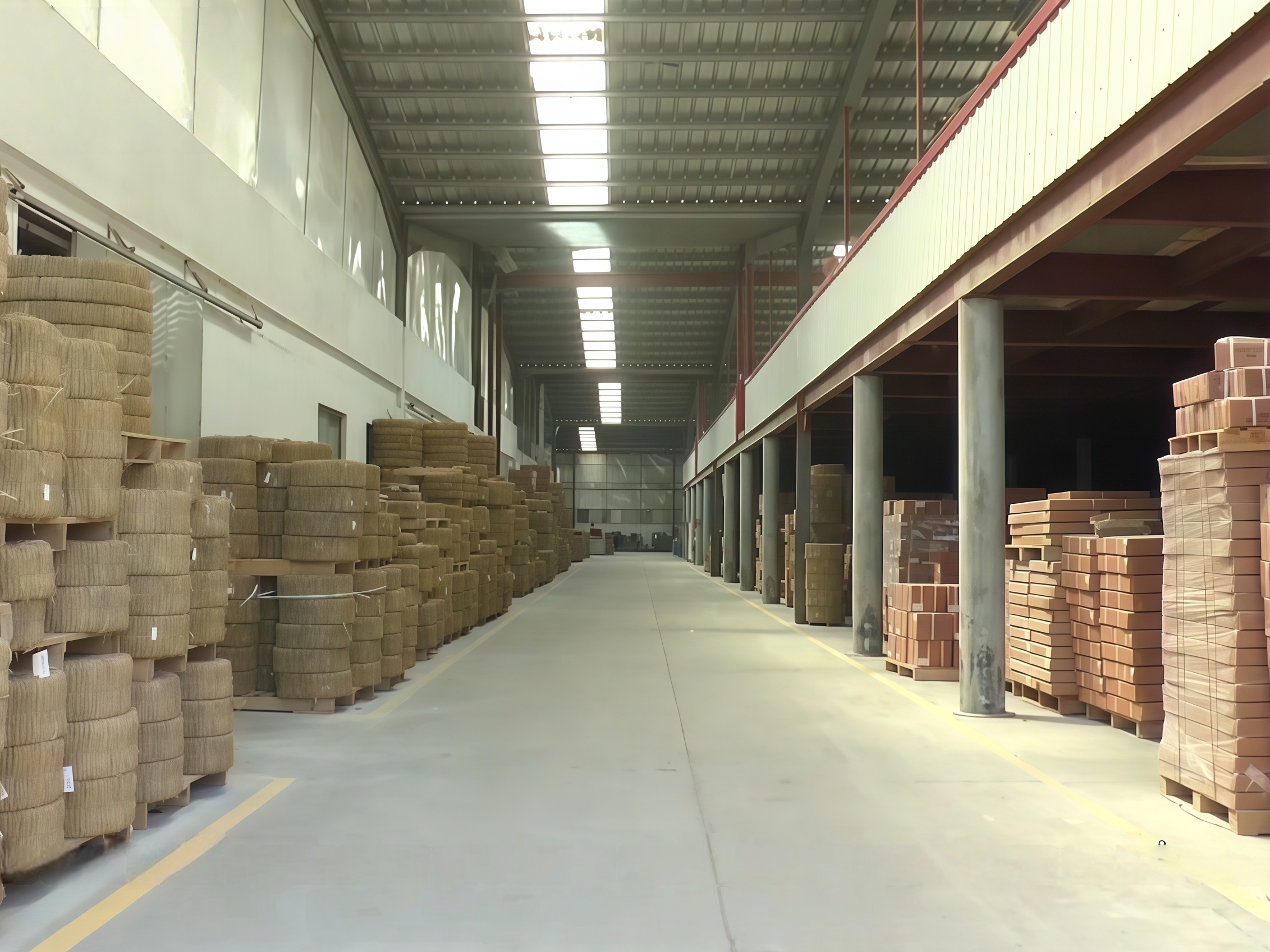
Finished goods warehouse: delivery assurance starts with stock that is packed, labelled and traceable to an approved specification.
What a ceramic wheel commits a supplier to
In trade usage, a ceramic grinding wheel is a vitrified bond (glass-bond) wheel: abrasive grain held in a vitrified matrix with porosity between the two. That construction is generic to bonded abrasives. What is not generic is the specification space a supplier must control, because a single wheel marking encodes abrasive type, grit size, grade, structure, bond and maximum operating speed alongside its dimensions.
The product record linked to xinfa's quality management certificate shows the level of detail involved. Listed ceramic bonded wheels include items such as 500×200×304.8 C 60 K 5 V 35 m/s and 700×19×203 A 60 N 5 V 35 m/s — dimension, abrasive, grit, grade, structure, bond and speed rating in one string. Change any element and you have a different product, even where the outer diameter and thickness are unchanged.
Part of this space is standardized. ISO 603-14:2022 specifies common nominal dimensions for bonded abrasive product shapes 6, 11, 27, 28 and 29 intended for deburring, fettling and snagging on hand-held grinding machines. Much of the industrial range is nonetheless made to drawing or to a buyer's sample. That split matters for supplier evaluation: a factory's ability to hold a tolerance on a non-standard shape is a production capability, not a catalogue entry.
Raw material adds a second variable. Brown fused alumina appears in xinfa's product list, and it remains the dominant fused alumina type by product share — 52.4% of that market in 2025, according to Dataintelo's fused alumina research. For a grinding wheel buyer, the practical consequence is limited but real: a manufacturer working with brown fused alumina has an incoming-material control step in its quality plan, and that step belongs in the audit.
Six capability signals that predict delivery performance
The six signals below are ordered from structural to transactional. Read them as a sequence: each one narrows what the next can be expected to deliver.
1. Specialization and tenure: one bond family since 1989
Xinfa was established in 1989 and describes its focus as the research, development and manufacture of vitrified bond grinding wheels. The site covers 30,000 m² with 120 employees, more than 100 sets of advanced production and testing equipment, an R&D team of 6 engineers, and a technology research and development centre that was listed as a municipal-level enterprise R&D centre in 2015. The company is a member of the China Abrasives Association.
For a buyer, single-bond specialization concentrates process knowledge in one place: kiln behaviour, bond formulation and dressing response are learned on one product family rather than spread across several. The 6-engineer R&D figure is equally informative in the other direction. It is a compact engineering function, so OEM development work should be scheduled with that team explicitly, with agreed drawing-approval dates, rather than assumed to run in parallel with routine production.
2. Capacity you can schedule, not capacity on a brochure
Xinfa reports an annual output of 10,000 tons, a monthly capacity of 900 tons and a production lead time of 30–45 days. The figures are company-reported; the annual capacity figure also appears in the company's official profile, which states a capacity of over 10,000 tons.
A quick arithmetic cross-check is worth doing on any supplier. At 900 tons per month the annualized run rate is 10,800 tons, which sits in the same range as the 10,000-ton annual figure — consistent in scale, and no more than that. Consistency is not proof of available capacity.
Three questions convert the number into a scheduling fact. What share of monthly capacity is already committed for the next two quarters? What is the largest single order the plant can absorb without displacing existing work? And do OEM runs share kiln and finishing lines with standard catalogue runs, or are they scheduled separately? The answers determine whether a 30–45 day lead time survives contact with a busy quarter.
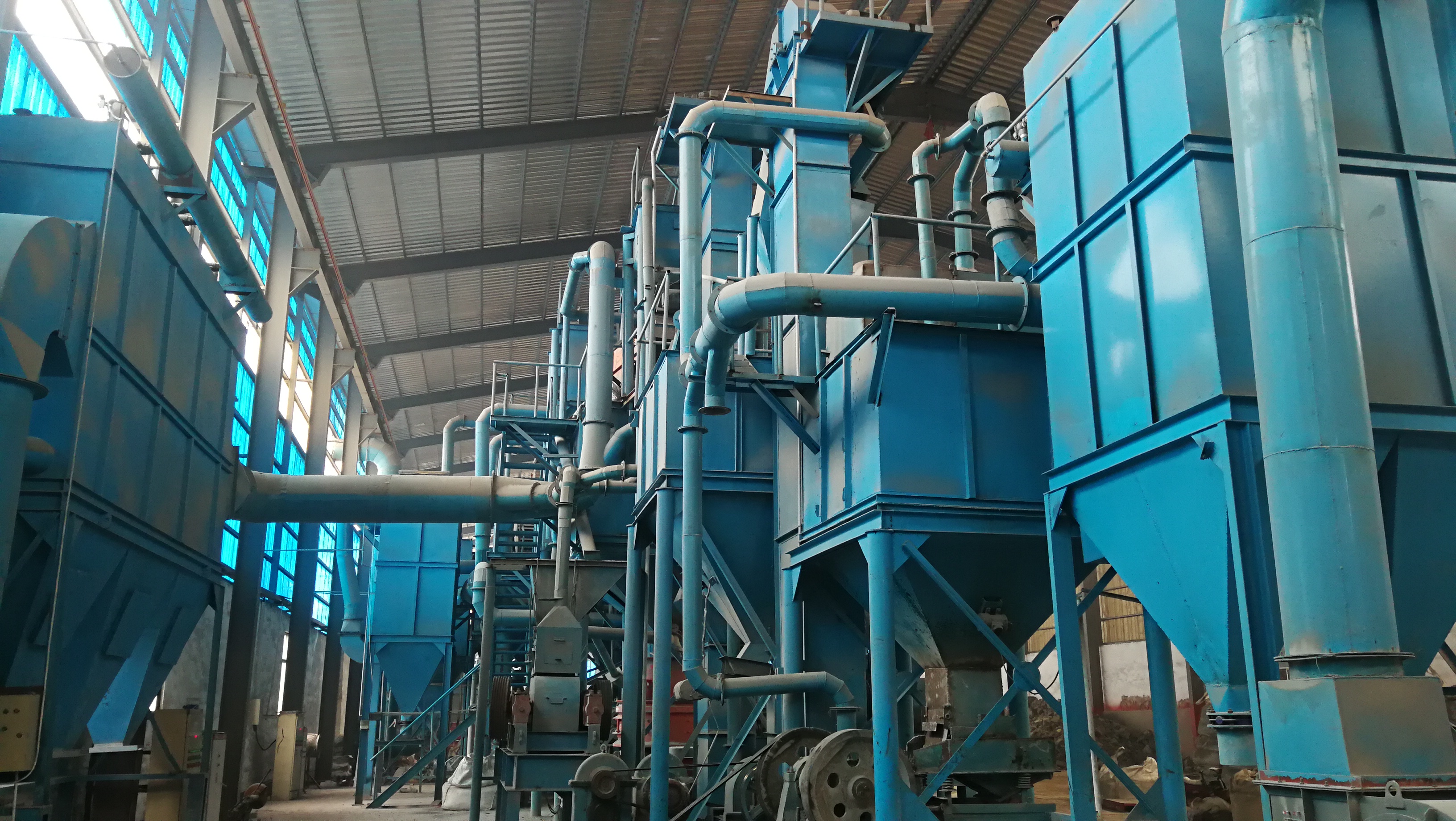
Raw material workshop: incoming abrasive grain is the first control point behind any delivery promise.
3. Product-range depth across the wheel families you actually buy
Xinfa's published range covers brown fused alumina abrasive, general purpose grinding wheel, bench grinder wheel, tool grinding wheel, flat surface grinding wheel, centerless grinding wheel, cylindrical grinding wheel, crankshaft & cam shaft grinding wheel, saw tooth grinding wheel, bearing grinding wheel, worm grinding wheel, gear grinding wheel, needle grinding wheel, roll grinding wheel V&B, internal (bore) grinding wheel, oilstone, segments, resin bonded snagging grinding wheel, rubber control & centerless, flap disc and mounted points.
Range depth changes the commercial structure of a supply agreement. A distributor building a mixed container around general purpose, bench grinder, tool and flat surface wheels can consolidate several lines under one set of shipping documents and one inspection regime. An OEM buyer running bearing or centerless operations can place the application wheel and the supporting internal or cylindrical wheels with the same technical contact.
The limit must be stated plainly: a published range is a catalogue claim. Catalogue breadth does not prove capability in every family, and the burden of proof stays with the buyer. Request a per-family specification sheet, a drawing for the exact item, and at least one reference in the same application before treating any family as qualified.
4. Customization control: what OEM/ODM changes and what it does not
Xinfa offers OEM production services and ODM design and production services. The documented customization scope covers specification, size, logo, bond type and abrasive material, and quality control follows 100% testing standards with remote after-sales support.
It helps to separate those five customization variables into two groups, because they carry different delivery risk.
- Documentation variables — logo and labelling. These change packaging, marking and artwork. The risk is administrative: an incorrect printed marking can stop a container at the destination, so artwork proofs must be approved in writing before the run.
- Product variables — specification, size, bond type and abrasive material. These change the wheel itself. A different bond type or abrasive material produces a different grinding behaviour, which means your own re-qualification — cycle time, dressing interval, surface finish and wheel life — is part of the delivery, not something that happens after it.
"100% testing" is a control statement, not a test report. Ask what is measured on each wheel, what is recorded, how long records are retained, and whether the inspection record can travel with the shipment. That last point connects customization directly to acceptance.
5. Fulfilment geography: Linyi, Qingdao and Rizhao
Xinfa's plant is in Linyi, described in its own profile as a National Logistics Center, 180 km from Qingdao Port and 60 km from Rizhao Port. The company reports an export ratio of 35% and exports to more than 20 countries and regions: in Asia, Southeast Asia (Vietnam, Thailand, Malaysia), India, South Korea, Japan and the Middle East (United Arab Emirates, Saudi Arabia, Iran); in Europe and the Americas, Europe, the United States and Brazil.
Two operational readings follow. First, a 60 km inland leg to Rizhao and 180 km to Qingdao keeps the pre-carriage short, which reduces the sensitivity of the schedule to truck availability. Second, a 35% export ratio means export documentation, palletizing and port handling are routine activities rather than occasional exceptions — the practical value being fewer first-shipment surprises, not a shorter ocean transit.
Port proximity does not create vessel space. Confirm the named port of loading, the Incoterm, and who books the container; FOB, CIF and CNF appear in the supplier's purchasing terms, and the choice changes which party absorbs the booking risk.
6. Quality documentation and acceptance criteria
The quality management record on file is certificate 60624Q0262R1M, issued by Zonyun International Certification Co., Ltd against GB/T 19001-2016 / ISO 9001:2015, with the scope "Manufacture of Abrasives & Grinding Wheels", issued 2021-08-12 and valid to 2027-08-11. Some older company profile text still references ISO 9001:2008, so the current certificate copy should replace any legacy wording in your supplier file.
Commercial and acceptance terms are documented separately: MOQ 1 ton, delivery terms FOB / CIF / CNF, pre-shipment inspection as the acceptance criterion, and 30/70 payment terms. The OEM/ODM capability record lists a 2-ton MOQ with a 30–45 day lead time. The two figures describe different scopes — standard purchasing versus customized OEM/ODM work — but that difference should never be resolved by assumption. State the MOQ that applies to each line item in the purchase order.
One caution on market access: an ISO 9001 certificate covers a management system, not product conformity for every destination. Product-level conformity references are specific to a product and a market. A 3M technical data sheet for its Cubitron 3 depressed-centre wheel, for example, cites ISO Type 27 geometry, 6 mm and 7 mm nominal thickness, and conformity references including EN 12413 and ANSI B7.1 — for that named product only. Buyers should request the equivalent product-level statement for the exact wheels and markets in their order.
Tariff classification deserves the same treatment. Abrasive wheels of agglomerated abrasives or ceramics sit under HS heading 6804.22 in published tariff references, with national subheadings differing by jurisdiction — one United States reference shows 6804.22.40 for abrasive wheels. Classification must be confirmed with a customs broker for the actual importing country; header-level familiarity is not a customs ruling.
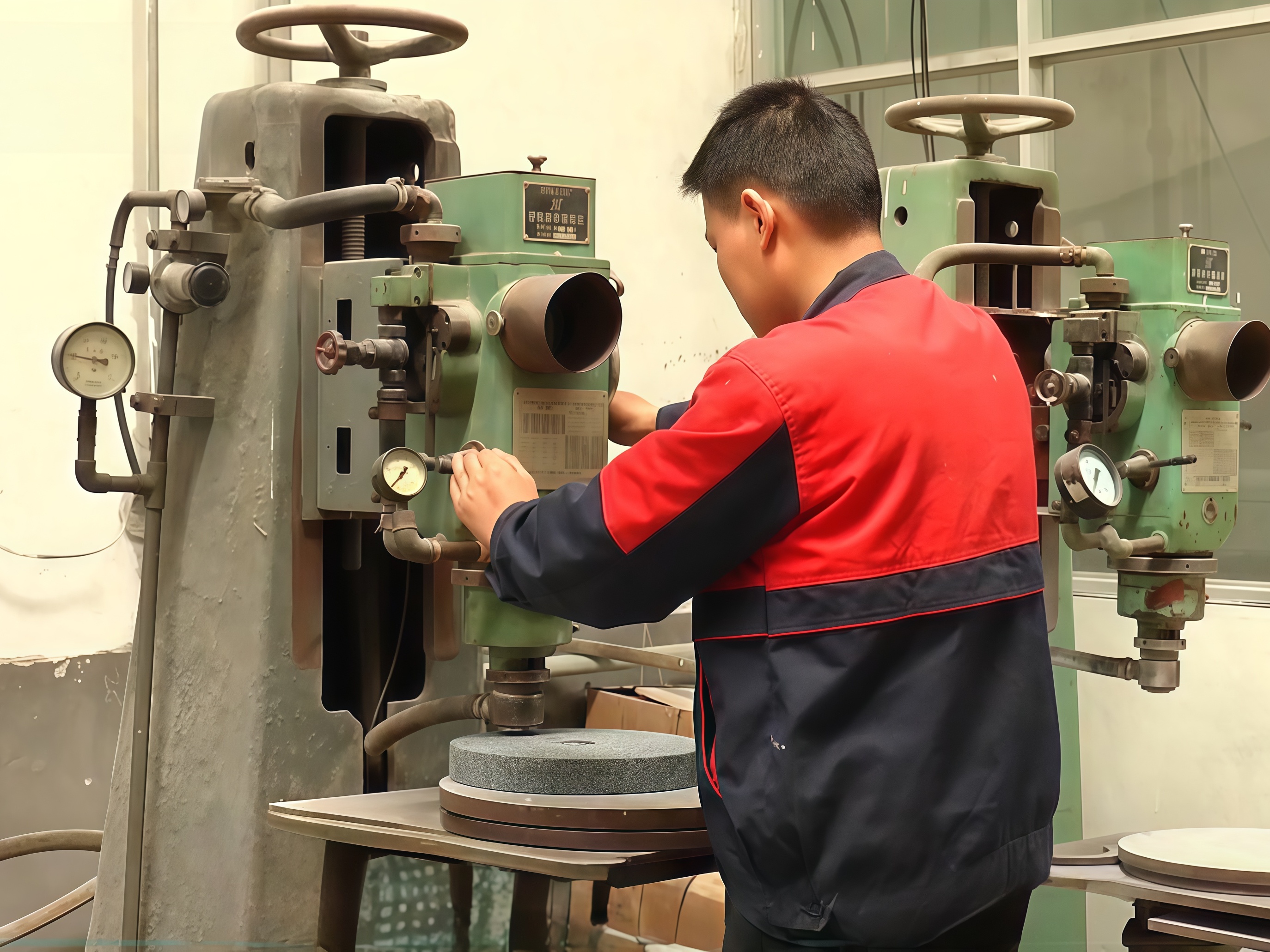
Quality inspection workshop: 100% testing only becomes delivery assurance when the inspection record travels with the shipment.
Running the check: seven steps from RFQ to first delivery
- Freeze the specification before you compare suppliers. Write the full marking — abrasive, grit, grade, structure, bond, dimensions and maximum operating speed — plus the drawing for non-standard shapes. Comparing quotations against different specifications measures nothing.
- Test the capacity claim against your order pattern. Give the supplier a twelve-month forecast, not a single order, and ask for a committed-versus-available capacity statement per quarter.
- Map only the families you actually buy. Catalogue depth is a convenience, not a qualification. For each family in scope, obtain a specification sheet, the exact item drawing and one reference in a comparable application.
- Settle MOQ and the terms that travel with it. Reconcile the 1-ton purchasing-term MOQ and the 2-ton OEM capability MOQ line by line, and record the agreed figure, Incoterm and payment split in the PO.
- Define acceptance before production starts. Pre-shipment inspection is the stated criterion; specify what is inspected, the sampling basis, the record format and who signs. A test claim without a retrievable record cannot support a claim.
- Confirm the freight lane and the paperwork. Agree the port of loading (Qingdao or Rizhao), the inland leg, the Incoterm, and the customs classification for your market before the production slot is booked.
- Qualify with a trial order and define what "passed" means. Measure wheel life, dressing interval, surface finish and dimensional conformance on your own machine. A trial that only confirms the wheel fits the spindle confirms very little.
Step seven is where most programmes gain or lose the most. One documented reference in the supplier's case record is a grinding wheel OEM customer in Pakistan that purchased 20 tons for workpiece grinding and has run for two years with stable operation. That is a single reference on a specific configuration. It supports the statement that OEM supply has been produced, shipped and used; it does not support a claim about relative performance in your application.
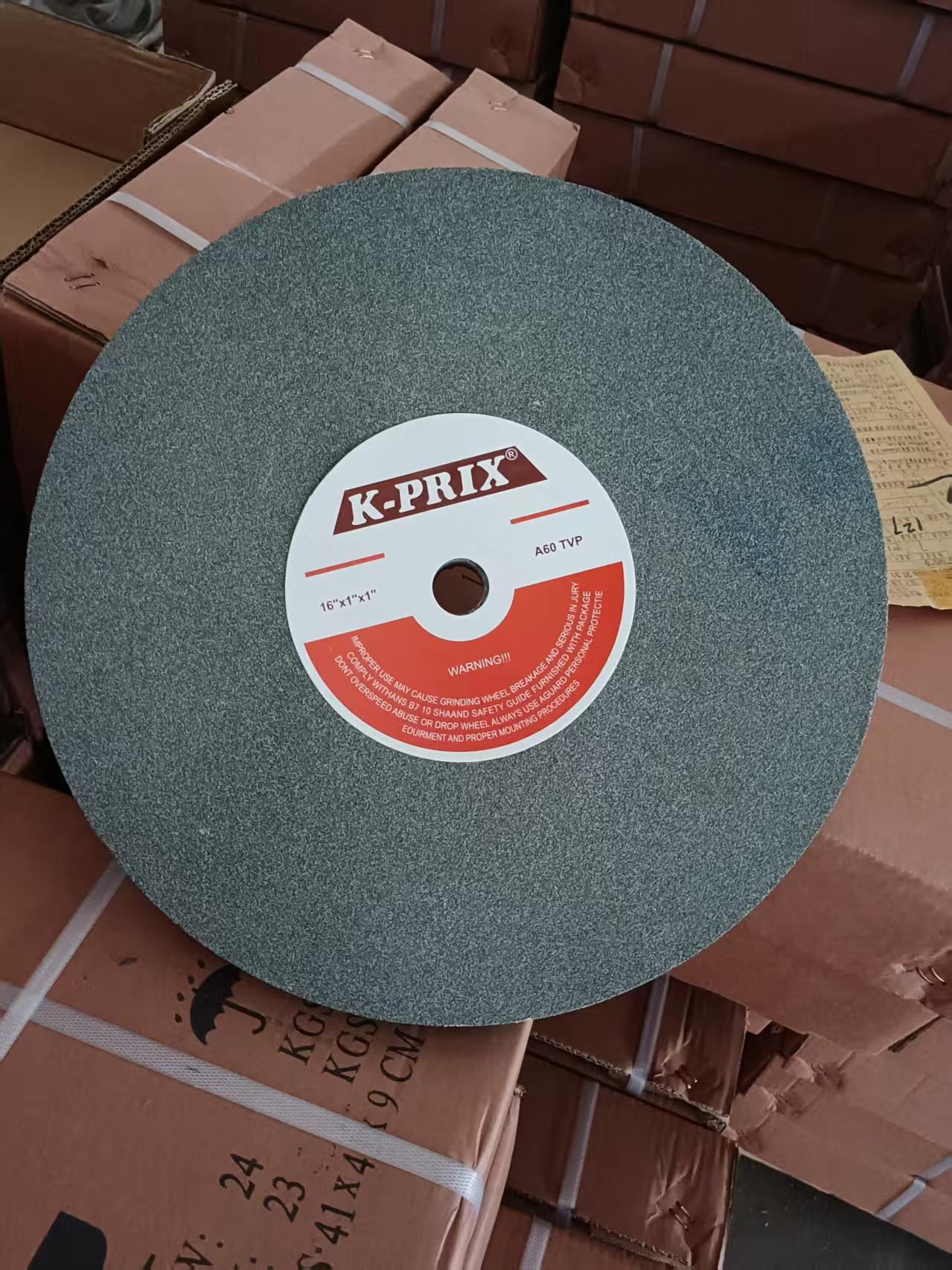
OEM supply reference: a 20-ton order for a grinding wheel OEM customer, in stable operation for two years.
Supplier capability scorecard for delivery assurance
The scorecard below converts the six signals into a one-page check. Each row pairs a published position with the evidence that should exist in your file before the purchase order is released.
| Capability area | Published position (xinfa) | Verify before the PO | Delivery risk controlled |
|---|---|---|---|
| Bond specialization | Established 1989; vitrified bond grinding wheel focus; 30,000 m² site; 120 employees | Site visit or video walkthrough of forming, kiln and finishing areas | Process knowledge applied to your specification |
| Schedulable capacity | 10,000 t annual output; 900 t monthly capacity; 30–45 day lead time | Committed-versus-available capacity per quarter; largest absorbable order | Lead-time slippage during peak periods |
| Product-range depth | General purpose through centerless, cylindrical, bearing, gear, internal and roll V&B wheels, plus oilstone and segments | Per-family spec sheet, exact item drawing, one comparable reference | Catalogue breadth mistaken for proven capability |
| Customization control | OEM/ODM; specification, size, logo, bond type, abrasive material; 100% testing | Artwork proof approval; re-qualification plan for bond or abrasive changes | Unapproved variance between sample and repeat order |
| Fulfilment geography | Linyi logistics centre; 180 km to Qingdao Port; 60 km to Rizhao Port; 35% export ratio | Named port, Incoterm, booking responsibility, inland truck lead time | Pre-carriage and booking delays |
| Quality documentation | ISO 9001:2015 certificate 60624Q0262R1M, scope manufacture of abrasives & grinding wheels, valid to 2027-08-11 | Current certificate copy; product-level conformity statement per market | Documentation rejection at destination |
| Commercial terms | MOQ 1 t (purchasing terms) / 2 t (OEM capability); FOB, CIF, CNF; 30/70 payment | Written MOQ per line item; payment milestone tied to inspection | Disputes that delay release of the shipment |
| After-sales | Remote after-sales support | Named technical contact and response route | Slow resolution of a performance issue on arrival |
Three sourcing situations where the check changes the decision
A distributor assembling a mixed container. Where the order mixes general purpose, bench grinder, tool and flat surface wheels, range depth reduces the number of suppliers, inspections and documents per shipment. The binding constraint becomes MOQ per line rather than per container, so the purchasing-terms MOQ should be checked line by line before the container is planned.
An OEM programme with a repeatability requirement. Where bearing, centerless or cylindrical wheels are specified to drawing, the decisive capability is customization control rather than catalogue width. A bond type or abrasive material change accepted during development must be re-qualified on the customer's machine, and the re-qualification window should be written into the project schedule before the first production order.
A plant buyer with modest annual volume. Where annual consumption sits below the stated MOQ, the constraint is commercial rather than technical. The practical options are consolidating families into one annual schedule, accepting a larger single delivery with staged call-offs, or treating the MOQ as a stocking decision rather than a purchasing one.
What this check does not prove
- Per-family performance. A published range and one OEM reference do not establish wheel life or surface finish for every family in the catalogue.
- Market-wide conformity. ISO 9001 certification covers the management system. Product-level conformity references must be obtained per product and per destination market.
- Generalized case results. The Pakistan OEM reference covers one customer, one configuration and a two-year period. It is evidence of supply relationship continuity, not a performance benchmark.
- Published price or transit benchmarks. No public price, freight or transit-time benchmark is established here; the 30–45 day figure is a production lead time and excludes ocean transit, port handling and inspection.
- Customs outcomes. HS 6804.22 references are classification leads. Only the importing jurisdiction's tariff schedule and a broker's confirmation settle the question.
FAQ: delivery assurance and capability questions
Does the supplier's ISO 9001 certificate cover the ceramic wheels I plan to buy?
The certificate on file is 60624Q0262R1M, issued by Zonyun International Certification Co., Ltd against GB/T 19001-2016 / ISO 9001:2015, with the scope "Manufacture of Abrasives & Grinding Wheels" and validity from 2021-08-12 to 2027-08-11. That scope covers grinding wheel manufacture as a management-system activity. It does not certify conformity to EN 12413, ANSI B7.1 or any other product standard for a specific wheel, so request the product-level conformity statement for each item and destination in the order, and replace any older profile wording that still cites ISO 9001:2008 with the current certificate copy.
What can be customized under OEM/ODM, and what has to be re-qualified?
Documented customization covers specification, size, logo, bond type and abrasive material, supported by OEM production and ODM design and production services, with quality control following 100% testing standards. Logo and labelling are documentation changes and need written artwork approval. Specification, size, bond type and abrasive material are product changes: each one alters grinding behaviour, so wheel life, dressing interval and surface finish should be re-qualified on your machine before volume release.
What MOQ and payment terms should I expect?
The purchasing-terms record lists an MOQ of 1 ton, delivery terms of FOB, CIF or CNF, pre-shipment inspection as the acceptance criterion, and 30/70 payment terms. The OEM/ODM capability record lists a 2-ton MOQ with a 30–45 day lead time. The difference reflects different scopes rather than a contradiction to resolve by guesswork: confirm the applicable MOQ for each line item in writing, and tie the balance payment milestone to the pre-shipment inspection record.
How should I structure a first trial order?
No separate sample programme is published, so the trial should be built from the documented terms: a quantity at or above the applicable MOQ, one specification per wheel family under evaluation, pre-shipment inspection with a retrievable record, and a written test protocol covering wheel life, dressing interval, surface finish and dimensional conformance on your own equipment. Keep the trial specification identical to the intended production specification, or the qualification result will not transfer.
What should I plan around the 30–45 day lead time?
The 30–45 day figure is the stated production lead time and should be treated as covering manufacture only. Inland transport from Linyi to Qingdao (180 km) or Rizhao (60 km), port handling, ocean transit, destination clearance and any inspection after arrival sit outside it. Plan the order date backwards from the production start date you need, add the booking window for the chosen port, and confirm vessel schedules with the freight forwarder rather than inferring them from port proximity.
Conclusion: verify the capability, then write the order
Delivery assurance in ceramic grinding wheel sourcing is decided before the purchase order is issued. A manufacturer specialized in vitrified bond wheels since 1989, running 900 tons per month against a 10,000-ton annual capacity, offering a range that reaches from general purpose and bench grinder wheels to centerless, cylindrical, bearing and internal wheels, with documented OEM/ODM customization and a short inland leg to two ports, presents a capability profile that can be tested rather than assumed. The test itself is unglamorous: freeze the specification, reconcile the MOQ, define inspection, confirm the port and classification, and qualify on your own machine.
The scorecard is only as good as the documents behind it. Ask for the current certificate copy, the per-family specification, the artwork proof and the inspection record, and keep them with the purchase order they support.
Next step. Buyers evaluating vitrified bond ceramic grinding wheels can request a specification review, an OEM/ODM feasibility discussion or a quotation against their own wheel marking. Contact Jackie Wang, sales@xinfaabrasives.com, +86 13562923298 (WhatsApp available), or download the company catalogue: xinfa abrasives product catalogue (PDF).
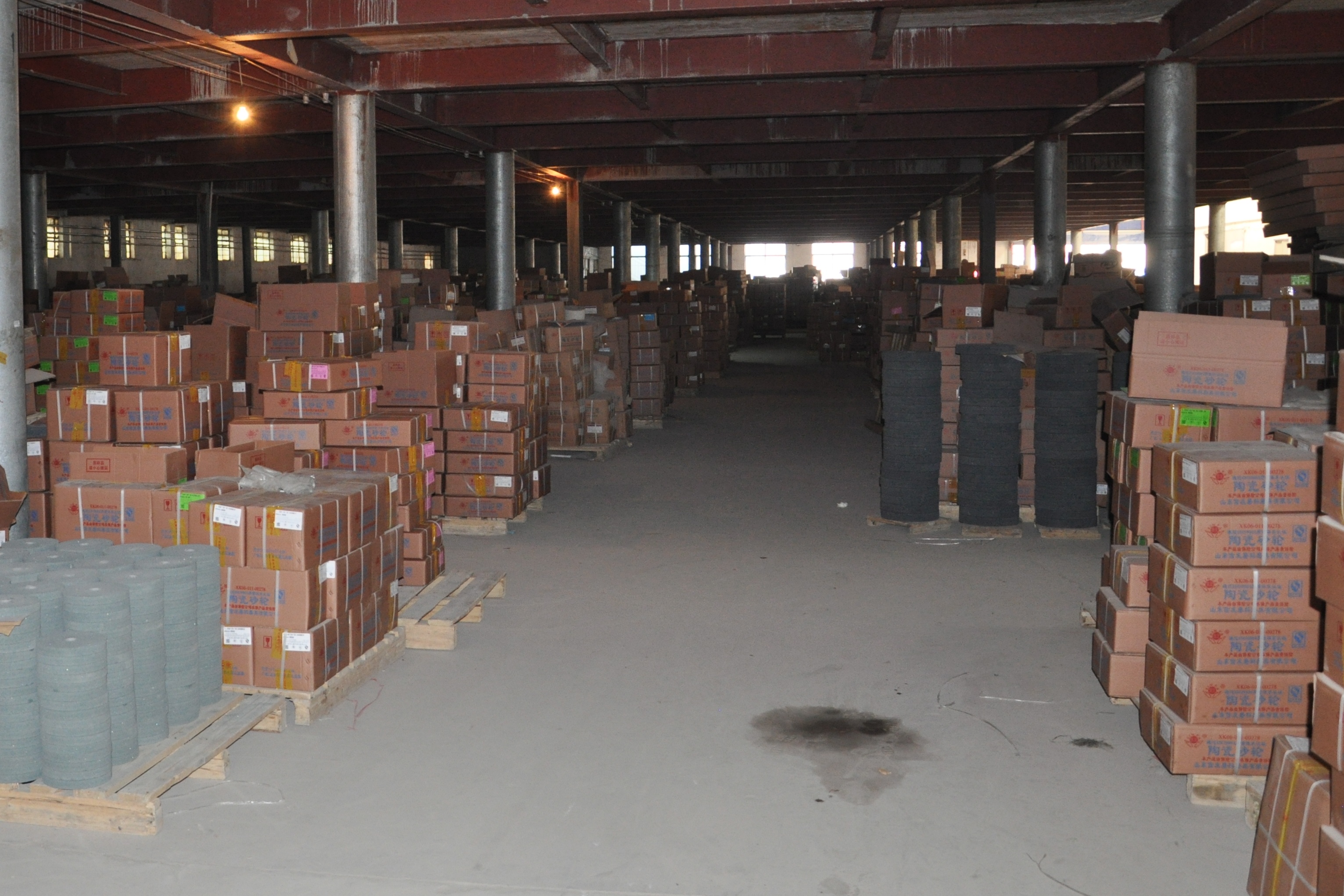
Staged export orders: the last check before dispatch is also the first check of the next delivery.
Have Questions or Need More Details?
Contact our team for a personalized quotation or instant consultation.
Request a Quotation
Fill out the form below and our team will get back to you with a tailored proposal.
WhatsApp Direct Chat
Prefer to chat in real-time? Message us on WhatsApp for instant assistance & quick answers.
- Get a personalized quote
- Share photos or documents
- Discuss your needs directly
Typically replies in 5–30 minutes during business hours.