How to Select Ceramic Grinding Wheels for Automotive Crankshaft and Camshaft Manufacturing
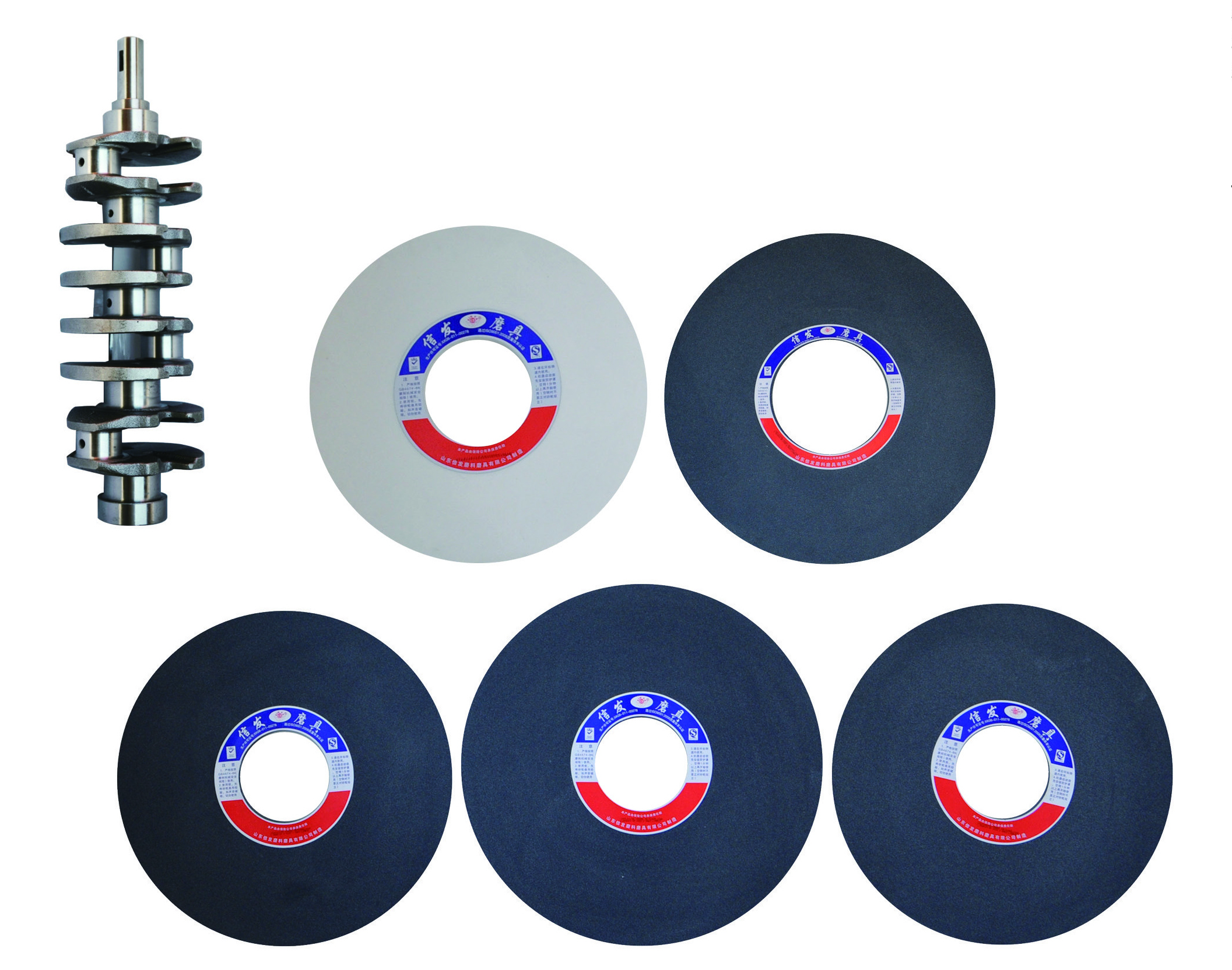
Selecting a ceramic grinding wheel for automotive crankshaft and camshaft manufacturing is a specification-matching exercise, not a brand exercise. Six documented parameters decide whether a wheel will hold journal size, cam profile and surface finish across a continuous production run: abrasive grain, grain size, grade, structure, wheel geometry and maximum operating speed. Supplier, origin and price are evaluated after those six are fixed.
This guide is written for production engineers, process planners and procurement teams specifying vitrified bond (ceramic bond) wheels for crankshaft and camshaft grinding, and for distributors who need to understand what their automotive customers are actually asking for. It covers why the application is demanding, how the market and standards landscape looks, the documented specification of Xinfa's Crankshaft & Cam Shaft Grinding Wheel, a step-by-step selection sequence, application profiles, a comparison of the wheel families used in the same shop, and the questions buyers ask most often.
Problem Definition: Why Crankshaft and Camshaft Grinding Is Hard on Wheel Specification
Crankshaft and camshaft grinding sits at the end of the powertrain machining chain. The workpiece arrives already hardened, and the grinding operation usually sets the final dimension, the roundness of the journals and the profile of the lobes. That leaves very little room for a wheel that is merely close enough.
Five conditions make this application unusually sensitive to wheel choice:
- Non-uniform geometry. A single crankshaft presents main journals, pin journals, fillets and radii, each ground under different contact conditions, while a camshaft presents lobes and bearing journals. A specification that suits a large journal is not automatically correct for a lobe.
- Continuous operation. Crankshaft and camshaft grinding is a continuous process, so the wheel has to hold its form for the whole run. Wheel wear typically shows up as gradual size drift rather than as an obvious failure, and every re-dressing stop interrupts the cycle.
- Thermal exposure. The application runs in high-temperature and high-wear conditions. Grinding heat is the classic cause of burn and metallurgical change on hardened surfaces.
- Precision expectations. The same grinding and polishing application family is used for ultra-precision machining, which means surface finish and form tolerance are acceptance criteria rather than afterthoughts.
- Cost of a mismatch. The visible symptoms — burn, chatter, taper, poor finish, size drift, short wheel life — usually cost more in scrap and downtime than the wheel itself.
The practical problem is therefore not “which wheel is best” but “which documented specification fits this operation, on this machine, with this coolant and this cycle”. The rest of this guide addresses that question directly.
Industry Background: Where Ceramic Wheels Sit in the Grinding Market
Ceramic (vitrified bond) wheels are the largest single bond category in the global grinding wheel market. The global grinding wheels market was valued at US$ 8.71 billion in 2024 and is projected to grow at a CAGR of 4.5% through 2030 (Grand View Research). Published estimates of this market vary with the scope used — some analysts size the bonded abrasives category differently — so the figure is best treated as a scale reference rather than a precise addressable target.
Within that market, vitrified bond (ceramic bond) grinding wheels held the largest segment share at 38.4% of the total grinding wheel market in 2025 (Dataintelo). On the abrasive side, Brown Fused Alumina held 52.4% of the global fused alumina market in 2025, driven primarily by its dominance in abrasive applications (Dataintelo) — directly relevant here, because Brown Fused Alumina is one of the grain options specified for crankshaft and camshaft wheels. Trade data reinforces the supply picture: China’s exports of natural or artificial abrasive powder or grain under HS 680530 reached USD 120.9 million in 2024 (WITS – World Bank).
Two standards frame the purchasing conversation. ISO 525 specifies the shape types, designation and marking requirements for bonded abrasive products, which is what makes a wheel’s printed marking comparable between suppliers. ANSI B7.1 in the United States and EN 12413 in the European Union govern the safety requirements for the use and care of abrasive wheels. For an automotive plant, these are not paperwork: the marking on the wheel is the only reliable link between the physical product, the specification that was ordered, and the maximum speed the machine is permitted to run it at.
At manufacturer level, the global landscape includes established producers such as Saint-Gobain (Norton), 3M (Cubitron II), Tyrolit and Klingspor, alongside Chinese manufacturers serving both domestic and export markets. The selection sequence below is deliberately manufacturer-neutral — it applies whether the wheel comes from a global brand or from a specialist vitrified bond producer.
Detailed Solution: Xinfa’s Crankshaft & Cam Shaft Grinding Wheel
Shandong Xinfa Abrasives & Grinding Tools Co., Ltd. is a Chinese abrasive manufacturer established in 1989 and located in the National Logistics Center of Linyi City, Shandong Province, about 180 km from Qingdao Port and 60 km from Rizhao Port. The company specializes in the research, development and manufacture of vitrified bond grinding wheels. Its factory covers 30,000 m² and employs approximately 120 staff; the plant operates more than 100 sets of advanced production and testing equipment with an annual production capacity of over 10,000 tons. Xinfa is a member of the China Abrasives Association, holds ISO9001:2008 quality management system authentication, and its technology R&D center was listed as a municipal-level enterprise technology R&D center in 2015 with a team of 6 engineers.
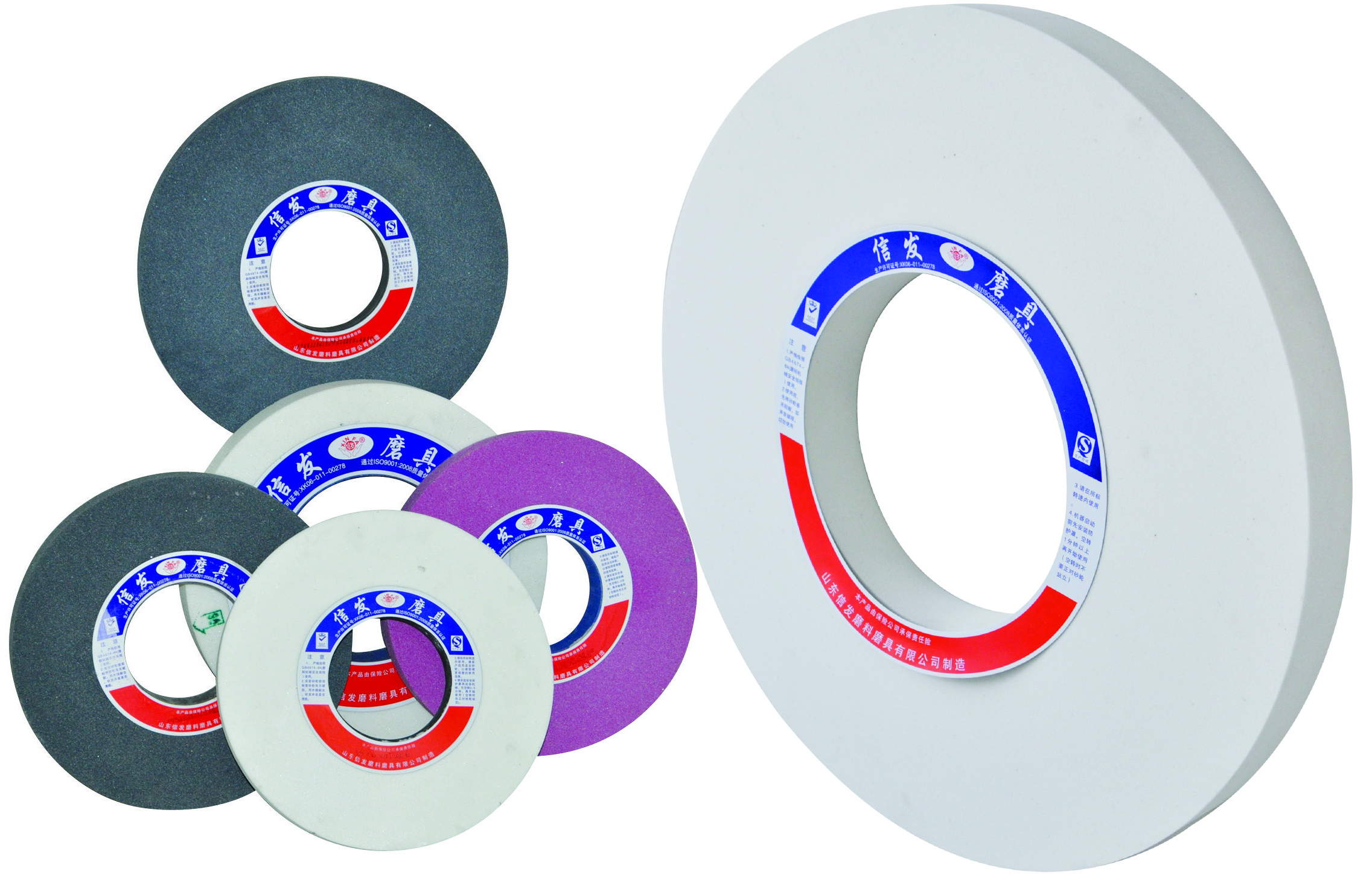
Within that product programme, the Crankshaft & Cam Shaft Grinding Wheel is defined by the application rather than by a general-purpose description: it is a vitrified bond wheel designed for crankshaft and camshaft grinding scenarios in the manufacturing industry. Its documented specification is the natural starting point for matching a wheel to an automotive line.
Documented Specification Range
| Parameter | Documented range |
|---|---|
| Outer diameter (OD) | 200–1100 mm |
| Thickness (T) | 16–90 mm |
| Hole diameter (H) | 127–305 mm |
| Abrasive materials | Brown Fused Alumina, White Fused Alumina, Pink Fused Alumina, Single Crystal Fused Alumina, Microcrystalline Fused Alumina, Green Silicon Carbide, Black Silicon Carbide, SG |
| Grit types | A, WA, AA, 38A, PA, 25A, SA, MA, GC, C, SG |
| Grain sizes | F16, F24, F30, F36, F46, F60, F80, F100, F120, F150 |
| Hardness grades | G, H, J, K, L, M, N, P, Q, R, S, T, Y |
| Structure number | 0–14 |
| Operating speeds | 32, 35, 40, 45, 50, 60 m/s |
| Application | Crankshaft and camshaft grinding, manufacturing industry |
A wheel from this range is identified by a designation such as 150×25×31.75 A46R5V35m/s, which encodes outer diameter × thickness × hole diameter, grit size, hardness grade, structure number, bond type and maximum operating speed. Reading that designation correctly is the single most useful skill a buyer can develop, because it is also what ISO 525 marking requires to be visible on the wheel.
Brown and White Fused Alumina: Matching the Grain to Continuous Production
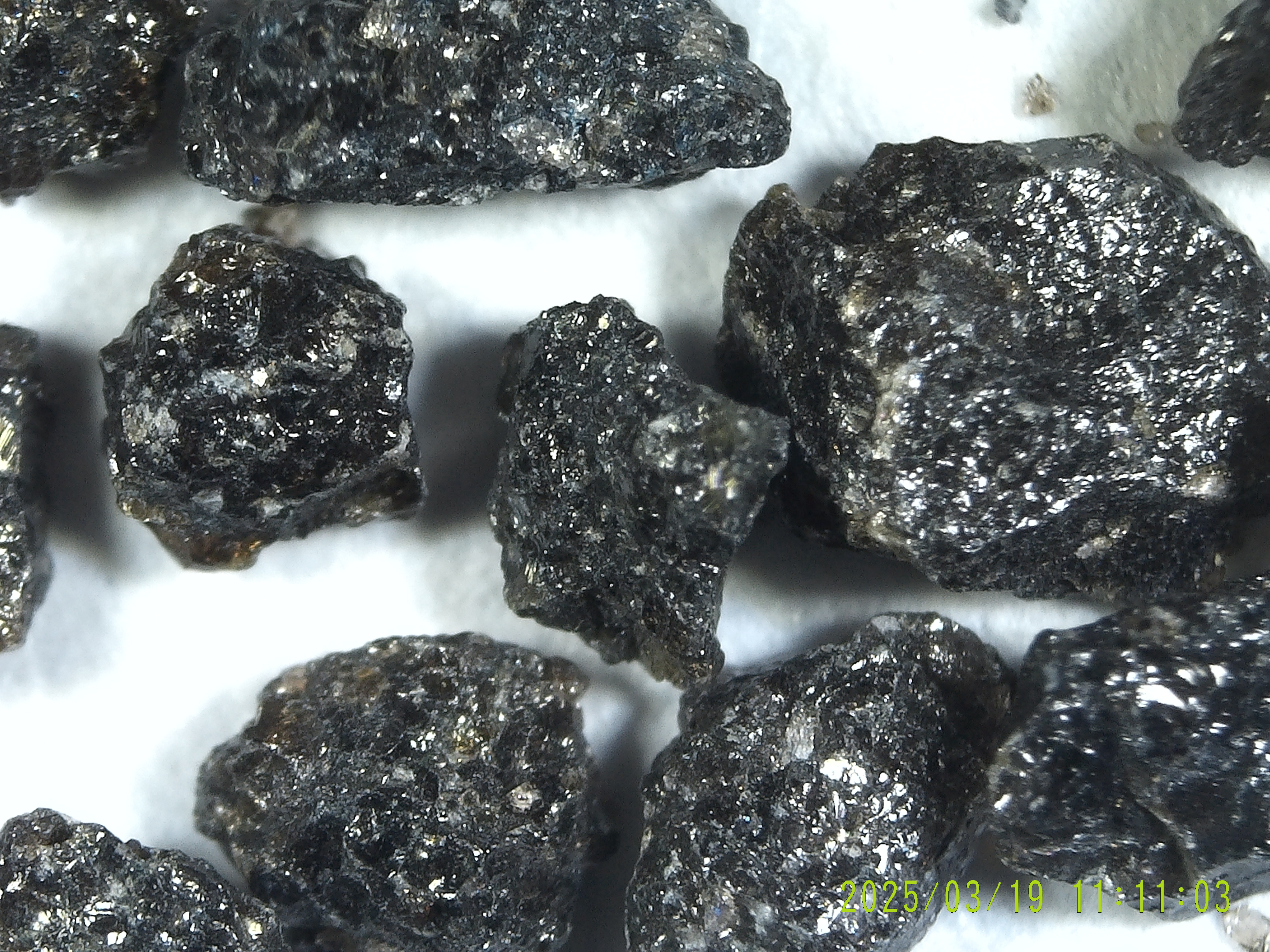
Brown Fused Alumina Abrasive (A) is a dark brown abrasive with an alpha-alumina trigonal crystal system, a Mohs hardness of ≥9.0, a melting temperature of 2050 °C, a refractory temperature of 1800 °C, a true density of ≥3.90 g/cm², and a magnetic material content of 0.01%. Xinfa supplies it in grit numbers from F12 to F220.
In general terms, Brown Fused Alumina is a tough, durable grain widely used for general-purpose and rough-to-medium grinding of steel, which is why it is a common default in high-volume production environments. White Fused Alumina (WA) is generally described as a higher-purity alumina grain and is commonly selected where the operation favours cooler cutting and reduced risk of thermal damage on heat-sensitive workpieces.
Both are available as abrasive options in the Crankshaft & Cam Shaft Grinding Wheel range, alongside AA, 38A, PA, 25A, SA, MA, GC, C and SG. That matters in continuous production: it means the grain choice can be resolved by trial on the actual machine and workpiece rather than assumed from a catalogue. Where a line runs hardened steel at high removal rates, the tougher brown grain is the usual starting point; where burn risk or finish is the binding constraint, testing a white grain variant against the same cycle is the logical next step.
Step-by-Step Breakdown: Matching a Wheel to a Crankshaft or Camshaft Operation
Step 1 — Define the operation and the feature being ground
Separate the work into features: crankshaft main journal, pin journal, fillet or radius; camshaft lobe, camshaft bearing journal. Each feature has its own contact length, feed behaviour and finish requirement, and each may end up with a different specification from the same wheel family. Recording this first prevents the common mistake of specifying one wheel for an entire crank line.
Step 2 — Record the workpiece and machine facts
Material and hardness, stock to be removed, machine type and maximum spindle speed, coolant type and pressure, dressing method and interval, and the measurement method used for acceptance. The maximum operating speed of the wheel must be checked against the machine setting before anything else is decided.
Step 3 — Narrow the abrasive grain
Start from the grain options documented for the wheel — A, WA, AA, 38A, PA, 25A, SA, MA, GC, C and SG — and shortlist two candidates rather than one. For most hardened-steel crankshaft and camshaft work, the shortlist begins with Brown Fused Alumina and White Fused Alumina.
Step 4 — Select the grain size
The Crankshaft & Cam Shaft Grinding Wheel range covers grain sizes F16 to F150. Coarser sizes are used where removal rate and form holding dominate; finer sizes are used where surface finish and reduced subsurface damage dominate. Because the same wheel range spans F16 to F150, the grit decision can be tuned to the individual feature rather than to the whole shaft.
Step 5 — Select grade and structure
Hardness grades from G to Y and structure numbers from 0 to 14 are available. Grade controls how strongly the bond holds the grain; structure controls how open the wheel is. These two parameters are usually the difference between a wheel that glazes and burns and a wheel that cuts freely and holds size.
Step 6 — Confirm geometry, mounting and speed
Fix outer diameter within 200–1100 mm, thickness within 16–90 mm and hole diameter within 127–305 mm, so the wheel fits the machine spindle, the guard and the space available in the grinding zone. Confirm the maximum operating speed against the available 32, 35, 40, 45, 50 and 60 m/s options.
Step 7 — Validate on the machine before committing to volume
Run the candidate specification through a normal cycle with production coolant and dressing practice, then compare measured size, roundness or taper, and surface finish against the current wheel. Only after that comparison should the specification be frozen and volume ordered.
Use Cases: Where These Wheels Run
Crankshaft journal grinding
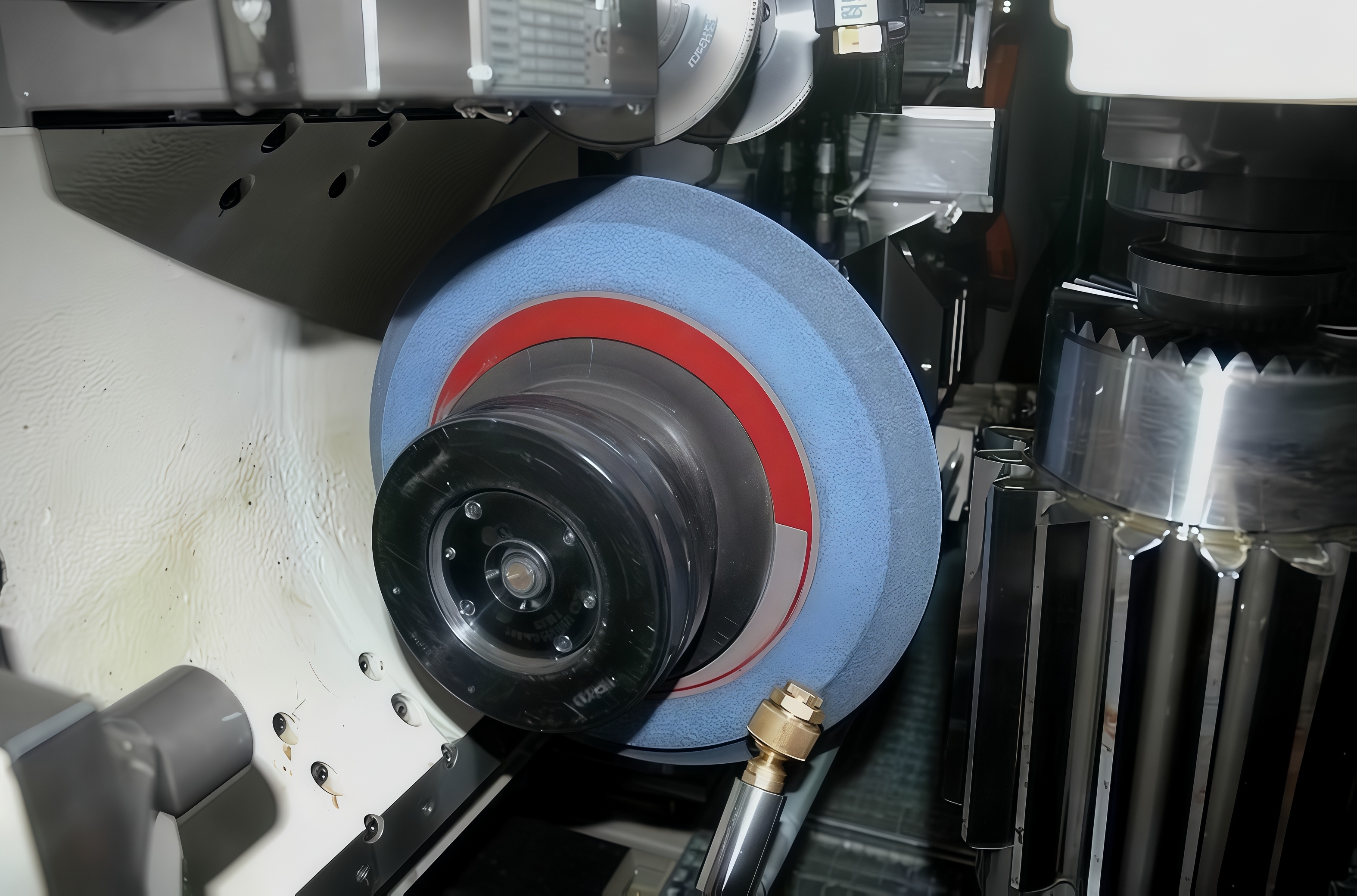
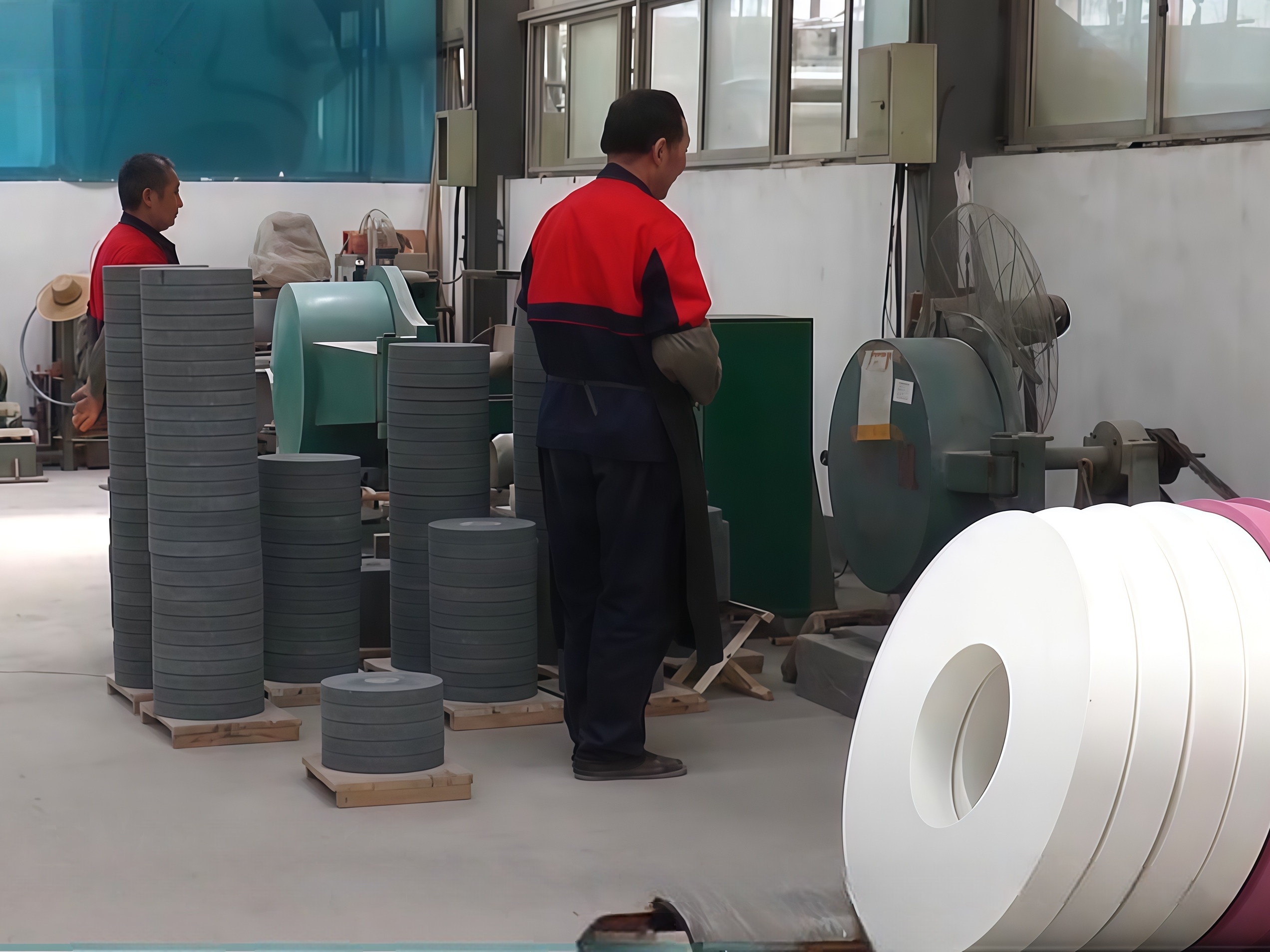
Crankshaft work combines large-diameter journals with fillets and radii, often on the same machine. The documented OD range up to 1100 mm matters here, because it allows a wheel sized for the journal rather than a wheel sized around a shortage of options. The main risks on this feature are size drift across a continuous run and thermal damage on the fillet.
Camshaft lobe and journal grinding
Lobe grinding is the more demanding half of the pair. Contact conditions change continuously through the lift profile, and the wheel has to reproduce that profile rather than approximate it. Camshaft bearing journals are ground under conditions closer to conventional external cylindrical grinding, which is why camshaft specifications often differ from lobe specifications on the same line.
The wheel families around the same shop
Crankshaft and camshaft wheels rarely exist in isolation. The surrounding operations — external cylindrical grinding of shafts, centerless work, and internal bore grinding — use their own families from the same vitrified bond programme, which is relevant to distributors and to plants that prefer to consolidate abrasive purchasing.
Xinfa’s crankshaft and camshaft wheels, together with the rest of the range, serve applications in the automotive, bearings, cutting tools, aerospace, 3C electronics, moulds, hydraulics, semiconductors, photovoltaics, hardware and medical sectors. The crankshaft and camshaft grinding scenario itself is common in markets including China, India, Japan, South Korea, Thailand, Vietnam, Pakistan, Iran, Saudi Arabia, Egypt, Russia, Brazil, Mexico and the United States. Xinfa’s own exports go to more than 20 countries and regions, including Southeast Asia, the Middle East, India, South Korea, Japan, Europe, the United States and Brazil, with export business accounting for 35% of sales.
Comparison Table: Wheel Families Used in Powertrain Grinding
The table below compares the documented dimension ranges of the vitrified bond wheel families most often used alongside crankshaft and camshaft grinding. All dimension figures are as documented for Xinfa’s product range; the “role in the shop” column is application guidance, not a limitation of the wheel.
| Wheel family | OD (mm) | T (mm) | H (mm) | Role in the shop |
|---|---|---|---|---|
| Crankshaft & Cam Shaft Grinding Wheel | 200–1100 | 16–90 | 127–305 | Dedicated crankshaft and camshaft grinding |
| Cylindrical Grinding Wheel | 250–750 | 20–100 | 75–305 | External cylindrical grinding of shafts and journals |
| Centerless Grinding Wheel | 300–750 | 100–400 | 127–305 | Centerless in-feed and through-feed work |
| Internal (Bore) Grinding Wheel | 50–150 | 6–120 | 16–32 | Internal bore and hole grinding |
How to read this table. Dimension ranges show what is documented as available, not what is recommended for a specific machine. Match the wheel to your spindle, guard and grinding zone first, then use the role column to identify which family your operation actually belongs to.
FAQ
Which standards apply to ceramic grinding wheels used for crankshaft and camshaft grinding?
ISO 525 specifies shape types, designation and marking requirements for bonded abrasive products, which is what makes the marking on a wheel comparable between suppliers. Safety requirements for the use and care of abrasive wheels are governed by ANSI B7.1 in the United States and EN 12413 in the European Union. Shandong Xinfa Abrasives & Grinding Tools Co., Ltd. holds ISO9001:2008 quality management system authentication and is a member of the China Abrasives Association. Before mounting any wheel, a buyer should confirm that the marking matches the ordered specification, that the maximum operating speed marked on the wheel is not below the machine setting, and that the wheel is inspected and stored according to the safety standard applicable in the destination market.
What specification range can Xinfa supply for crankshaft and camshaft grinding?
For the Crankshaft & Cam Shaft Grinding Wheel, the documented range is outer diameter 200–1100 mm, thickness 16–90 mm, hole diameter 127–305 mm, grain sizes F16 to F150, hardness grades G to Y, structure numbers 0 to 14, and operating speeds of 32, 35, 40, 45, 50 or 60 m/s. Abrasive options include Brown Fused Alumina, White Fused Alumina, Pink Fused Alumina, Single Crystal Fused Alumina, Microcrystalline Fused Alumina, Green Silicon Carbide, Black Silicon Carbide and SG. Specifications outside these documented ranges should be confirmed in writing before ordering, since the published range is the boundary of what is verified. Xinfa’s technology R&D center, listed as a municipal-level enterprise technology R&D center in 2015, employs a team of 6 engineers.
What drives the cost of a ceramic crankshaft or camshaft grinding wheel?
Cost in this category is driven mainly by the specification rather than by the brand: the abrasive grain selected, the grain size, the wheel dimensions (diameter and thickness determine the volume of abrasive consumed), the hardness and structure, the quantity ordered for a production campaign, and packaging and freight requirements for export delivery. Because these variables interact, a like-for-like comparison is only possible when two quotations carry the same designation. Published price lists are not a reliable basis for budgeting in this category; the practical approach is to request a quotation against a fully written specification, including dimensions, grain type, grit size, hardness grade, structure number, maximum operating speed, quantity and destination.
How should a trial or sample wheel be validated before volume production?
Validation follows a fixed sequence: check that the wheel marking matches the ordered designation and that the maximum operating speed is compatible with the machine; inspect the wheel for damage before mounting; mount and handle it according to the applicable safety standard (ANSI B7.1 or EN 12413); then run a normal cycle using production coolant and standard dressing practice. Measure the results against the wheel currently in use — size, roundness or taper, surface finish, and how the wheel behaves as it wears through the run. Only freeze the specification after that comparison. Trial wheels for crankshaft and camshaft applications can be requested directly from Xinfa at sales@xinfaabrasives.com or via WhatsApp on +86 13562923298.
How do I get the full catalogue or ask about a specific crankshaft or camshaft application?
Xinfa’s product brochure, which covers the complete vitrified bond programme including the Crankshaft & Cam Shaft Grinding Wheel, is available for download at Xinfa abrasives product brochure (PDF). For an application-specific question — a journal diameter, a cam profile, a machine model, a target cycle time — describe the operation and the current specification and send it to the contact below.
Conclusion
Ceramic wheel selection for crankshaft and camshaft manufacturing resolves into a sequence: define the feature, record the workpiece and machine facts, narrow the abrasive grain, choose the grain size, set grade and structure, confirm geometry and speed, then validate on the machine before committing to volume. Every step uses documented parameters rather than impressions, which is what makes the result reproducible from one production campaign to the next.
For buyers working on this application, Xinfa’s Crankshaft & Cam Shaft Grinding Wheel offers a defined specification envelope — OD 200–1100 mm, T 16–90 mm, H 127–305 mm, grain sizes F16 to F150, hardness G to Y, structure 0 to 14, and speeds up to 60 m/s — with Brown and White Fused Alumina among the available grain options. That combination is what allows a specification to be tuned to a hardened-steel crankshaft or camshaft line instead of being accepted as a compromise.
Next Step: Specification Sheet, Sample or Quotation
Send the operation details — component, material and hardness, machine, current wheel designation, target finish and annual volume — and Xinfa will respond with the matching specification from the crankshaft and camshaft grinding range.
Contact: Jackie Wang | Email: sales@xinfaabrasives.com | Tel / WhatsApp: +86 13562923298
Address: Xincun Village, Dadian Town, Junan County, Linyi City, Shandong Province, China
Website: www.xinfa-abrasives.com | Catalogue: Download the product brochure (PDF)