How to Vet a Ceramic Grinding Wheel Supplier: A 10-Point Capability Audit
Vetting a ceramic grinding wheel supplier means verifying ten capability areas before price is discussed: vitrified bond specialization, production scale, in-house R&D, product range coverage, quality management, standards compliance, substantiation of performance claims, export experience, logistics and packaging, and commercial transparency. Each one can be confirmed with a document, a specification-matched sample, or a direct observation of the production process — which makes the audit repeatable across every manufacturer on your shortlist.
At the decision stage, the technical question is usually already answered. The buyer knows which wheel family fits the machine. What remains is risk: will batch five match the sample, will the marking satisfy the destination market, will the pallets arrive intact, and will the supplier still be able to make the same wheel next year?
Shandong Xinfa Abrasive and Grinding Tools Co., Ltd. (Xinfa), a vitrified bond grinding wheel manufacturer founded in 1989 in Linyi, Shandong Province, China, is used below as a worked example, because its published operating data covers most of the ten checks. The framework itself is supplier-neutral: the same ten questions can be put to any manufacturer.
Why Supplier Vetting Fails at the Decision Stage
Four failure patterns appear repeatedly in ceramic grinding wheel procurement, and all four are avoidable with a structured audit.
- Identical markings, different wheels. A wheel marking describes shape, dimension, abrasive type, grit size, grade, structure and bond type. It does not describe grain quality, bond formulation, mixing tolerance or firing curve. Two suppliers can quote the same designation and still deliver wheels with different hardness repeatability and different wheel life.
- A reseller presented as a manufacturer. If the supplier neither formulates the bond nor fires the wheel, application-specific corrections — hardness adjustment, grade change, structure modification — cannot be executed. The buyer inherits a fixed catalogue instead of a process partner.
- Documentation gaps discovered at the port. Marking and safety requirements differ by destination market. Paperwork problems surface after the order is produced, when the schedule is already committed.
- Sample validation done on the wrong specification. A sample that was hand-finished outside the normal process, or produced to a different grade, proves very little about series production.
Decision rule: audit capability first, negotiate price second. A wheel that is cheaper per piece but demands more frequent dressing, produces more scrap and arrives with broken edges is not the cheaper wheel. Cost per finished part, not cost per unit, is the comparison that survives contact with production.
Industry Background: What Decision-Stage Buyers Are Choosing Between
Ceramic — vitrified bond — wheels are the largest single bond category in bonded abrasives. Vitrified bond grinding wheels held the largest segment share at 38.4% of the total grinding wheel market in 2025 (Dataintelo). The global grinding wheels market was valued at US$8.71B in 2024 and is projected to grow at a CAGR of 4.5% through 2030 (Grand View Research).
Published market-size estimates should be read with care, because they depend on scope. Some analyses place the 2024 grinding wheel market closer to US$6.29B (Intel Market Research). The difference reflects whether the scope includes all bonded abrasives or specifically grinding wheels — which is itself a reminder that numbers in supplier presentations deserve a defined boundary.
China remains a major supply base. Exports of natural or artificial abrasive powder or grain under HS 680530 reached USD 120.9M in 2024 (WITS — World Bank). Brown Fused Alumina, the base grain in many general-purpose and heavy-duty wheels, held 52.4% of the global fused alumina market in 2025, driven primarily by abrasive applications (Dataintelo).
The supplier landscape mixes global brands and regional specialists. Major global manufacturers include Saint-Gobain (Norton), 3M (Cubitron II), Tyrolit and Klingspor (Market Research Future). Regional manufacturers typically compete on bond specialization, specification flexibility, tolerance to custom orders and logistics proximity. Because both groups can quote visually comparable products, buyers need a common evaluation standard — which is what the audit below provides.
Two standards define the compliance baseline. ISO 525:2020 sets shape types, designation and marking requirements for bonded abrasive products, while safety requirements for the use and care of abrasive wheels are governed by ANSI B7.1 in the United States and EN 12413 in the European Union (FEPA / ANSI).
The 10-Point Capability Audit
The audit is organised into three groups: manufacturing capability (points 1–4), quality and compliance (points 5–7), and commercial supply reliability (points 8–10). Each point states what to verify and what evidence to request.
1. Vitrified Bond Specialization
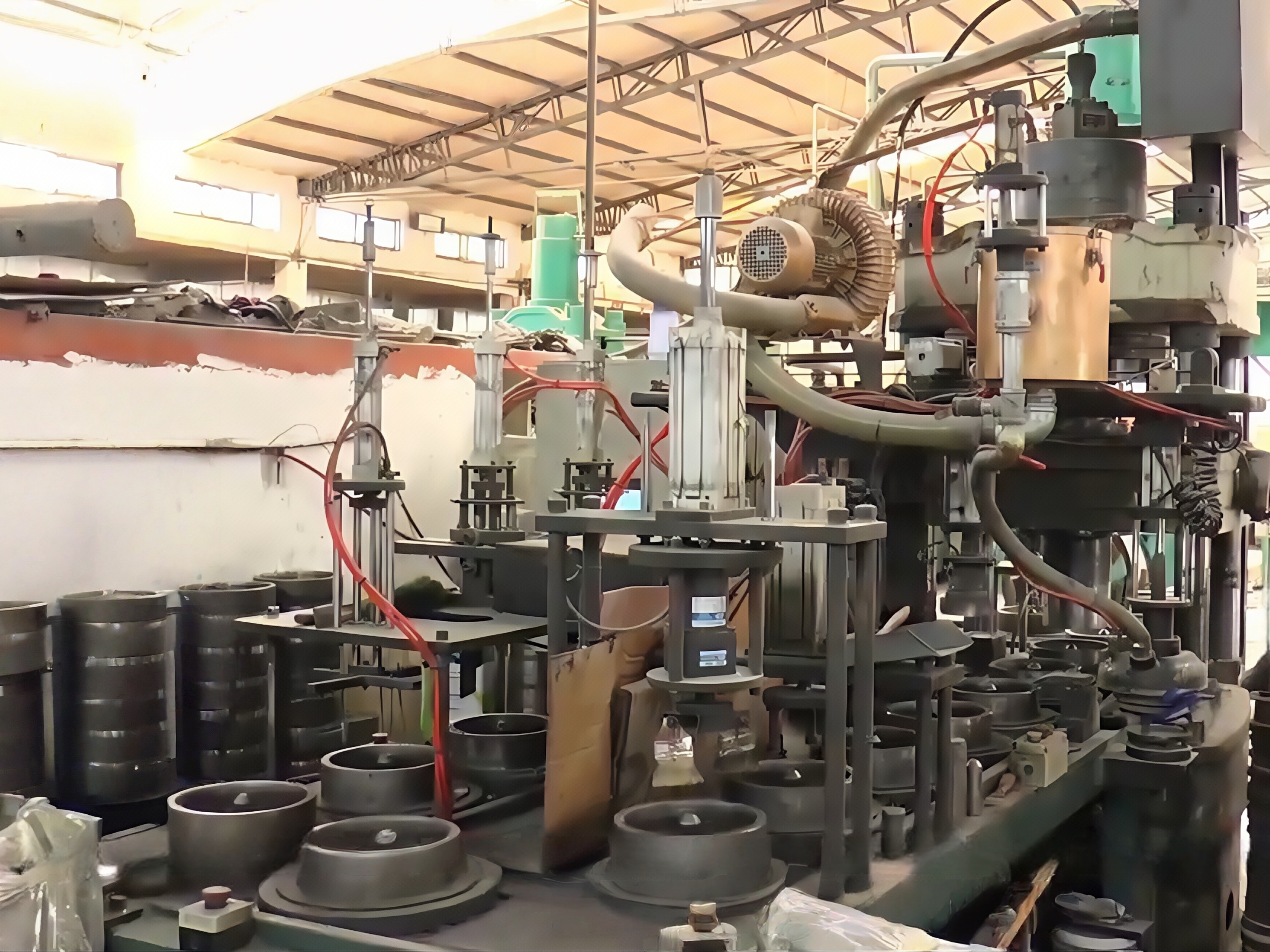
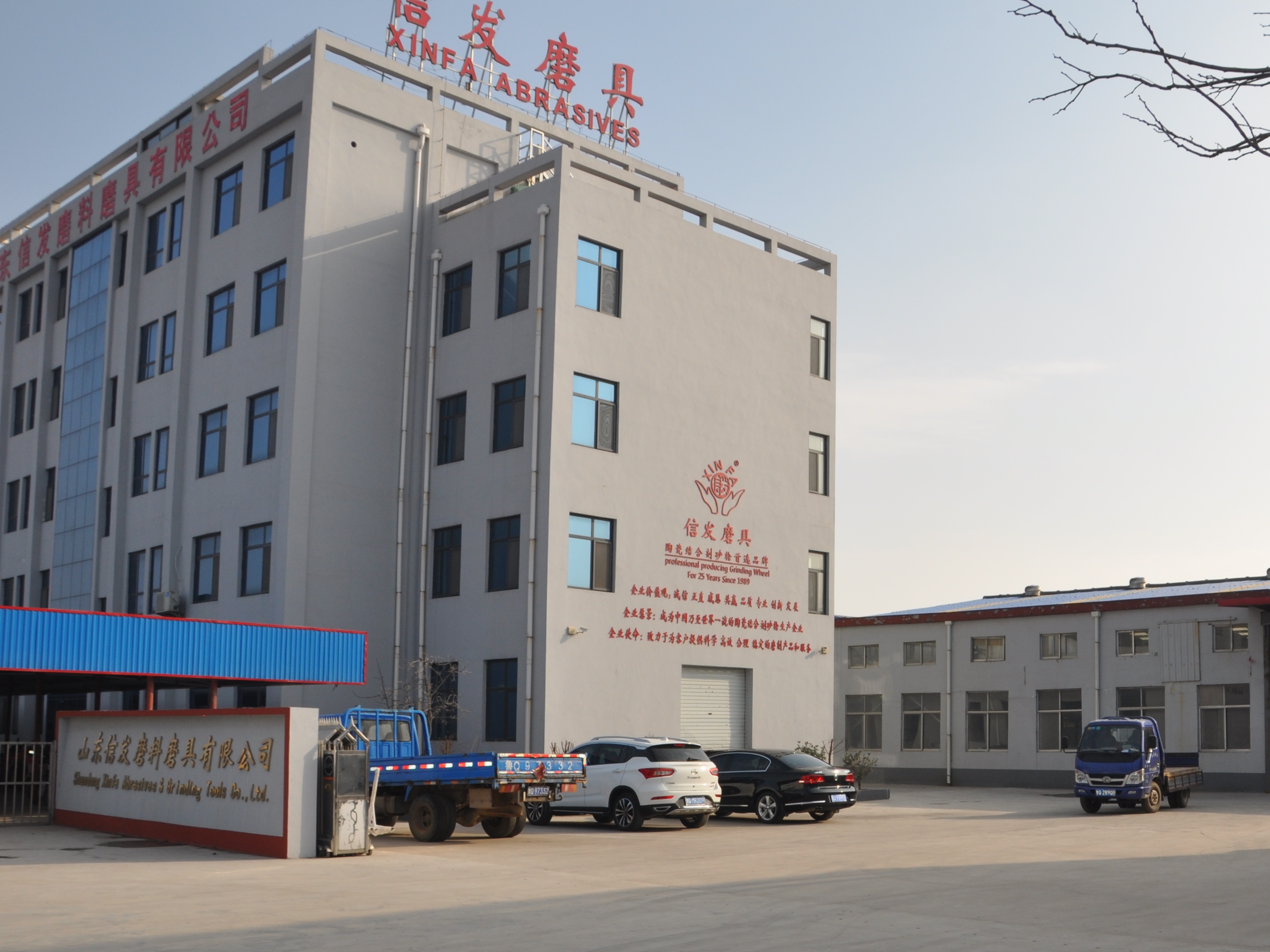
A ceramic grinding wheel is a vitrified bond product: abrasive grain is held by a glass-like bond that is formed and matured in a kiln. A supplier that does not control mixing, pressing and firing cannot control hardness repeatability. Ask whether the supplier formulates its own bond, operates its own kilns, and treats the firing profile as a controlled process parameter rather than an outsourced step. Xinfa, for example, has been specialized in the research and development and manufacture of vitrified bond grinding wheels since 1989, and its plant includes dedicated forming workshop, kiln and quality inspection areas alongside raw material workshops.
2. Production Scale and Equipment Base
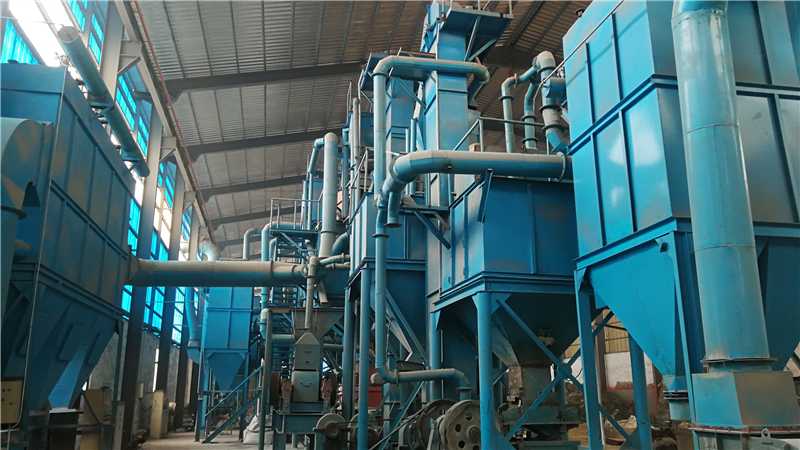
Scale determines whether a specification can be held across repeat orders and whether a large order can be absorbed without displacing existing customers. Ask for factory area, workforce, installed equipment count and annual tonnage — then check that the tonnage figure is described as capacity rather than as current sales. Xinfa reports a 30,000 m² factory, 120 employees, more than 100 sets of advanced production and testing equipment, and an annual production capacity of over 10,000 tons.
3. In-House R&D and Technical Response
Vitrified wheels are usually specified against a machining problem, not against a catalogue page. A supplier without engineers cannot answer a burn question, a wheel-loading problem or a cycle-time target. Ask how many engineers work on wheel development, whether the company holds recognised technical status, and how quickly it can respond with a revised specification. Xinfa's technology research and development center was listed as a municipal-level enterprise technology R&D center in 2015, and the company's R&D team numbers six engineers.
4. Product Range Coverage Against Your Application List
Range coverage decides how much of your abrasive spend a single supplier can carry. Write down the wheel families your machines actually use, then match them line by line against the supplier's list. Xinfa's production range covers Brown Fused Alumina abrasive, general purpose grinding wheel, bench grinder wheel, tool grinding wheel, flat surface grinding wheel, centerless grinding wheel, cylindrical grinding wheel, crankshaft & cam shaft grinding wheel, saw tooth grinding wheel, bearing grinding wheel, worm grinding wheel, gear grinding wheel, needle grinding wheel, roll grinding wheel V&B, internal (bore) grinding wheel, oilstone, segments, resin bonded snagging grinding wheel, rubber control & centerless wheel, flap disc and mounted points. A range this broad matters commercially: it lets a distributor consolidate freight and lets a plant keep one specification language across departments. Identify the gaps before the audit visit, not after the purchase order.
5. Quality Management System and Inspection Capability
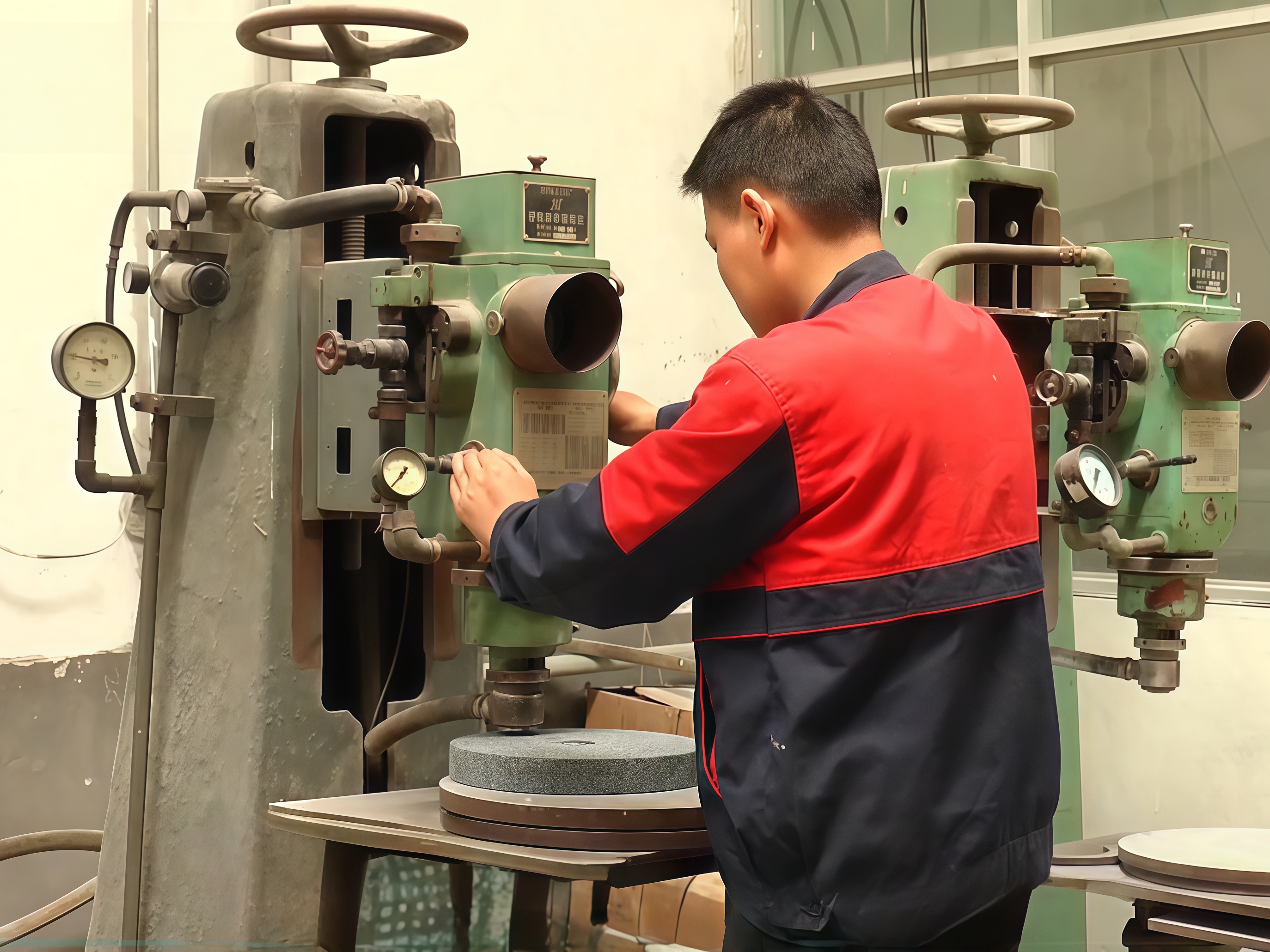
A certificate is a starting point, not a conclusion. Verify the scope of the quality management system, the issuing body and the validity period, then ask how incoming grain, mixed batches and finished wheels are inspected, and who signs the release. Xinfa's quality has passed the authentication of the ISO9001:2008 quality management system, and the enterprise is a member of the China Abrasives Association.
6. Standards and Market Compliance Readiness
Compliance requirements follow the destination market, not the factory. ISO 525:2020 defines shape types, designation and marking for bonded abrasive products. For safety in use, ANSI B7.1 applies in the United States and EN 12413 in the European Union. Ask the supplier to show how its product markings correspond to ISO 525:2020, what safety documentation accompanies each shipment, and whether it has previously supplied your market. This point is often the difference between a smooth customs clearance and a stopped container.
7. Substantiation of Performance Claims
Comparative claims are common in this category and should always be treated as questions rather than conclusions. Xinfa's product comparison data for its ceramic wheel states 30% higher grinding efficiency and less frequent dressing than conventional grinding wheels, 20% lower cost, long-lasting performance as the core difference, and best fit in industrial plant scenarios. The audit question is not whether the claim sounds plausible, but whether the supplier can describe the test conditions: which machine, which workpiece material, which parameters, and how the comparison wheel was selected. A supplier that cannot explain the basis of its own number is telling you something about how the next number will be produced.
8. Export Experience and Market Fit
Export experience is measured in documentation and repeat markets, not in shipping volume alone. Ask which countries the supplier ships to regularly and whether those markets resemble your own in standards and documentation requirements. Xinfa's export ratio is 35%, with products exported to more than 20 countries and regions, including Southeast Asia (Vietnam, Thailand, Malaysia and others), India, South Korea, Japan, the Middle East (United Arab Emirates, Saudi Arabia, Iran and others), Europe, the United States and Brazil.
9. Logistics and Packaging for Fragile Goods
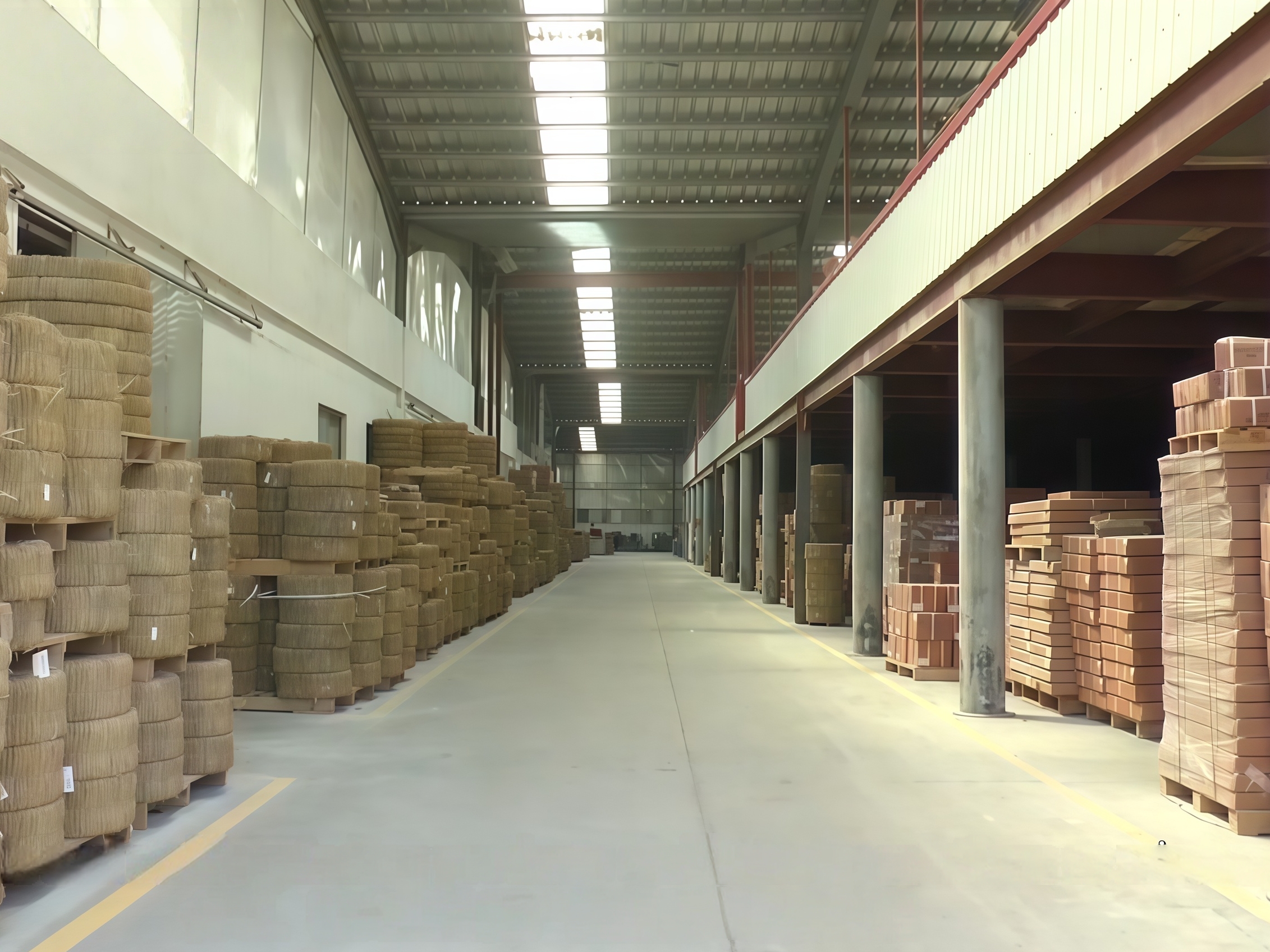
Abrasive wheels are heavy and fragile at the same time, so transport distance and packaging discipline both enter the risk calculation. Port proximity shortens inland haulage and reduces the number of handling events. Xinfa is located in the National Logistics Center of Linyi City, 180 km from Qingdao Port and 60 km from Rizhao Port. The packaging approach for fragile goods combines pallet reinforcement with shockproof cushioning — ask any supplier for the packaging specification, the pallet configuration and the loading plan, and confirm who carries breakage risk between factory gate and destination port.
10. Commercial Transparency and Long-Term Reliability
The final check is behavioural: does the supplier answer questions directly, provide a verifiable company address and named contact, and hold a record of honouring contracts? Xinfa has won the municipal "Honoring Unit" title for good credit in contract performance, and its contact details — address, email and phone — are published and verifiable, which is the minimum expected of a long-term partner. Ask for two references in your region and one in your application area, and check how the supplier handles a complaint: that process, more than any certificate, predicts how the next three years will go.
How to Run the Audit: Step-by-Step
The audit is executed in six steps, and each step produces a written record that can be compared across suppliers.
- Build the requirement sheet. List wheel type, dimensions, marking, machine, workpiece material, operating speed and target cycle time for each item you buy. Without this sheet, no quotation is comparable.
- Desk screen the candidates. Reduce a long list to five to eight manufacturers using points 1–4: bond specialization, scale, R&D and range coverage.
- Request the evidence pack. Business licence, quality management certificate with scope, product catalogue with designations, marking samples, conformity statement against ISO 525:2020, and export references.
- Validate with a production-specification sample. Order the exact grade and dimension used in series production. Measure dimensions, check the marking, run the wheel on your machine and record cycle time, dressing interval, surface finish and dimensional wear.
- Verify the plant. On-site or by live video walkthrough of forming, kiln and inspection areas. Confirm that the equipment in the certificate and catalogue is the equipment in the building.
- Score and decide. Use a weighted scorecard — manufacturing capability 30, quality and compliance 25, claim substantiation 15, export and logistics 15, commercial transparency 15 — and set a pass threshold in advance so the decision does not drift toward the cheapest line item.
Audit Priorities by Buyer Scenario
The ten points do not carry equal weight in every purchase. Three common scenarios show how to prioritise.
- Importer or distributor building a ceramic wheel line. Points 4, 8 and 9 dominate. Range coverage determines how many SKUs one container can carry, export experience determines documentation reliability, and packaging plus port proximity determine landed condition. A distributor should also confirm that the supplier can ship mixed pallets.
- OEM brand owner placing private-label orders. Points 1, 5 and 10 dominate. Bond control protects the brand's reputation on the machine, the quality system protects traceability, and commercial transparency protects continuity if a specification must be revised mid-contract.
- Plant replacing a wheel inside a fixed process. Points 3, 6 and 7 dominate. The requirement is a wheel that reproduces the existing cycle time and finish, in a plant whose safety documentation is audited. The supplier's engineering response and its ability to explain the basis of a performance claim matter more than catalogue breadth.
Comparison Table: Audit Points, Evidence and Reference Data
The table below converts the ten audit points into a comparable matrix. The right-hand column shows the kind of first-party data a supplier should be able to produce; Xinfa's published figures are used as the worked example.
| Audit point | What to verify | Evidence to request | Reference data (Xinfa example) |
|---|---|---|---|
| 1. Bond specialization | In-house bond formulation and kiln firing | Process description, plant walkthrough | Specialized in R&D and manufacture of vitrified bond grinding wheels since 1989; forming, kiln and inspection areas within the plant |
| 2. Production scale | Installed equipment, tonnage, workforce | Factory data sheet | 30,000 m² factory, 120 employees, more than 100 sets of advanced production and testing equipment, annual capacity over 10,000 tons |
| 3. In-house R&D | Engineer headcount, technical status, response time | R&D team profile | 6 engineers; technology R&D center listed as a municipal-level enterprise technology R&D center in 2015 |
| 4. Range coverage | Wheel families matched to your machine list | Catalogue with designations and dimensions | Broad vitrified range: flat surface, cylindrical, centerless, internal (bore), crankshaft & cam shaft, gear, bearing, needle, roll V&B, saw tooth, tool, bench grinder and general purpose wheels, plus oilstone, segments, resin bonded snagging wheels, rubber control & centerless wheels, flap discs and mounted points |
| 5. Quality system | Certificate scope, inspection and release process | Quality certificate, inspection records | Quality passed the authentication of the ISO9001:2008 quality management system; member of the China Abrasives Association |
| 6. Standards compliance | Marking and safety conformity for the destination market | Marking samples, conformity statement | Global baseline: ISO 525:2020 for shape types, designation and marking; ANSI B7.1 (US) and EN 12413 (EU) for safety in use |
| 7. Claim substantiation | Basis of comparative performance claims | Test conditions and data | Product comparison data states 30% higher grinding efficiency, 20% lower cost and less frequent dressing versus conventional grinding wheels, best fit in industrial plant scenarios |
| 8. Export experience | Repeat markets and documentation record | Export references by region | 35% export ratio; products exported to more than 20 countries and regions, including Southeast Asia, India, South Korea, Japan, the Middle East, Europe, the United States and Brazil |
| 9. Logistics and packaging | Port access and fragile-goods protection | Packaging specification, loading plan | Located in the National Logistics Center of Linyi City, 180 km from Qingdao Port and 60 km from Rizhao Port; pallet reinforcement with shockproof cushioning for fragile goods |
| 10. Commercial transparency | Contract performance record and verifiable contacts | References, company address, named contact | Municipal "Honoring Unit" title for good credit in contract performance; verifiable office address, email and telephone contact |
Performance claims deserve a second, narrower table. The comparison below sets out what a supplier states and what a buyer should ask for before accepting it.
| Comparison metric | Supplier comparison data (Xinfa ceramic wheel vs conventional grinding wheel) | What the buyer should verify |
|---|---|---|
| Grinding efficiency | 30% higher grinding efficiency | Machine, workpiece material and parameters used in the test |
| Dressing frequency | Less frequent dressing | Measured dressing interval on a controlled production run |
| Cost | 20% lower cost | Whether the figure is cost per wheel or cost per finished part |
| Wheel difference | Long-lasting performance as the core difference | Cycle count and dimensional wear recorded on your own machine |
| Best-fit scenario | Industrial plant scenarios | Whether your operation matches the scenario actually tested |
FAQ
Which standards should a ceramic grinding wheel supplier be able to document for EU and US shipments?
ISO 525:2020 defines shape types, designation and marking requirements for bonded abrasive products, and it applies regardless of origin. For safety in use, ANSI B7.1 governs abrasive wheels in the United States and EN 12413 in the European Union. A supplier should be able to show how its markings correspond to ISO 525:2020 and to provide the safety documentation that accompanies each shipment. As a reference point, Xinfa's quality has passed the authentication of the ISO9001:2008 quality management system, and the company is a member of the China Abrasives Association.
How can I confirm that a supplier actually manufactures vitrified bond wheels rather than reselling them?
Look for three things: in-house forming and kiln firing, an installed base of production and testing equipment, and a technical team that can change a specification on request. Consistency between the catalogue and the plant is the strongest signal. Xinfa, for example, has specialized in the research, development and manufacture of vitrified bond grinding wheels since 1989, operates a 30,000 m² factory with 120 employees and more than 100 sets of advanced production and testing equipment, and reports an annual production capacity of over 10,000 tons supported by six R&D engineers.
Why is the lowest quotation usually not the lowest total cost?
Purchase price is only one cost line. Dressing frequency, wheel life, dimensional consistency and scrap rate determine the real cost per finished part, and those variables are set by bond control rather than by the invoice. Xinfa's product comparison data for its ceramic wheel states 30% higher grinding efficiency, 20% lower cost and less frequent dressing compared with conventional grinding wheels, with best fit in industrial plant scenarios. Any supplier making a claim of this type should be able to describe the conditions behind it — that is exactly what audit point 7 is designed to test.
Should I validate a supplier with a sample before placing a bulk order?
Yes, but the sample must be produced to the exact production specification: same bond, same grade, same dimensions, same marking. Record cycle time, dressing interval, surface finish and dimensional wear on your own machine before scaling up. A sample that was hand-finished outside the normal process, or produced at a different grade, tells you very little about series production, and it is one of the most common reasons a supplier passes a trial and then fails a delivery.
How does the supplier's location affect lead time and damage risk?
Port proximity shortens inland transport and reduces the number of times a pallet is handled, which matters for a product that is both heavy and fragile. Xinfa is located in the National Logistics Center of Linyi City, 180 km from Qingdao Port and 60 km from Rizhao Port, and 35% of its output is exported to more than 20 countries and regions. Packaging deserves equal attention: the approach used for these goods combines pallet reinforcement with shockproof cushioning. Buyers who want to move from audit to comparison can request a specification-matched sample, a quotation, or the downloadable product brochure using the details below.
Conclusion
Vetting a ceramic grinding wheel supplier is a filtering exercise, not a negotiation tactic. Ten checks — bond specialization, production scale, in-house R&D, range coverage, quality management, standards compliance, claim substantiation, export experience, logistics and packaging, and commercial transparency — separate manufacturers that can hold a specification from suppliers that can only quote one. The evidence for each check is concrete: a certificate, a catalogue designation, a packaging specification, a scorecard, and a sample measured on your own machine.
Run the audit before price is discussed, weight the points for your own scenario, and set the pass threshold in advance. A supplier that answers all ten points with verifiable data is the lower-risk choice — and the audit gives the procurement team a defensible basis for that decision, whatever the final price difference turns out to be.
Next Step: Start the Audit with Real Data
Request a specification-matched ceramic grinding wheel sample, a quotation for your wheel list, or the full product brochure.
Brochure download: Xinfa Abrasives & Grinding Tools product brochure (PDF)
Contact: Jackie Wang · Email: sales@xinfaabrasives.com · Tel / WhatsApp: +86 13562923298
Address: Xincun Village, Dadian Town, Junan County, Linyi City, Shandong Province, China
Website: www.xinfa-abrasives.com