Internal vs. Cylindrical vs. Centerless Ceramic Grinding Wheels: A Buyer's Comparison Guide
Buyer comparison guide · vitrified bonded wheels
A ceramic grinding wheel is a product family, not a single specification. Internal (bore), cylindrical and centerless wheels share the same vitrified bond construction, are offered in the same abrasive grain families, and are quoted with the same hardness and structure ranges — which is precisely why buyers compare them as if they were interchangeable. They are not. Each family is defined by the grinding scenario it serves, and the scenario fixes outside diameter, thickness, hole size, workholding and the way the wheel is fed into the part.
This guide sets out a side-by-side selection framework for the three families, using published product data from Shandong Xinfa Abrasives & Grinding Tools Co., Ltd. — a vitrified bond grinding wheel manufacturer established in 1989 — together with the market context and commercial checkpoints a buyer needs before issuing an RFQ.
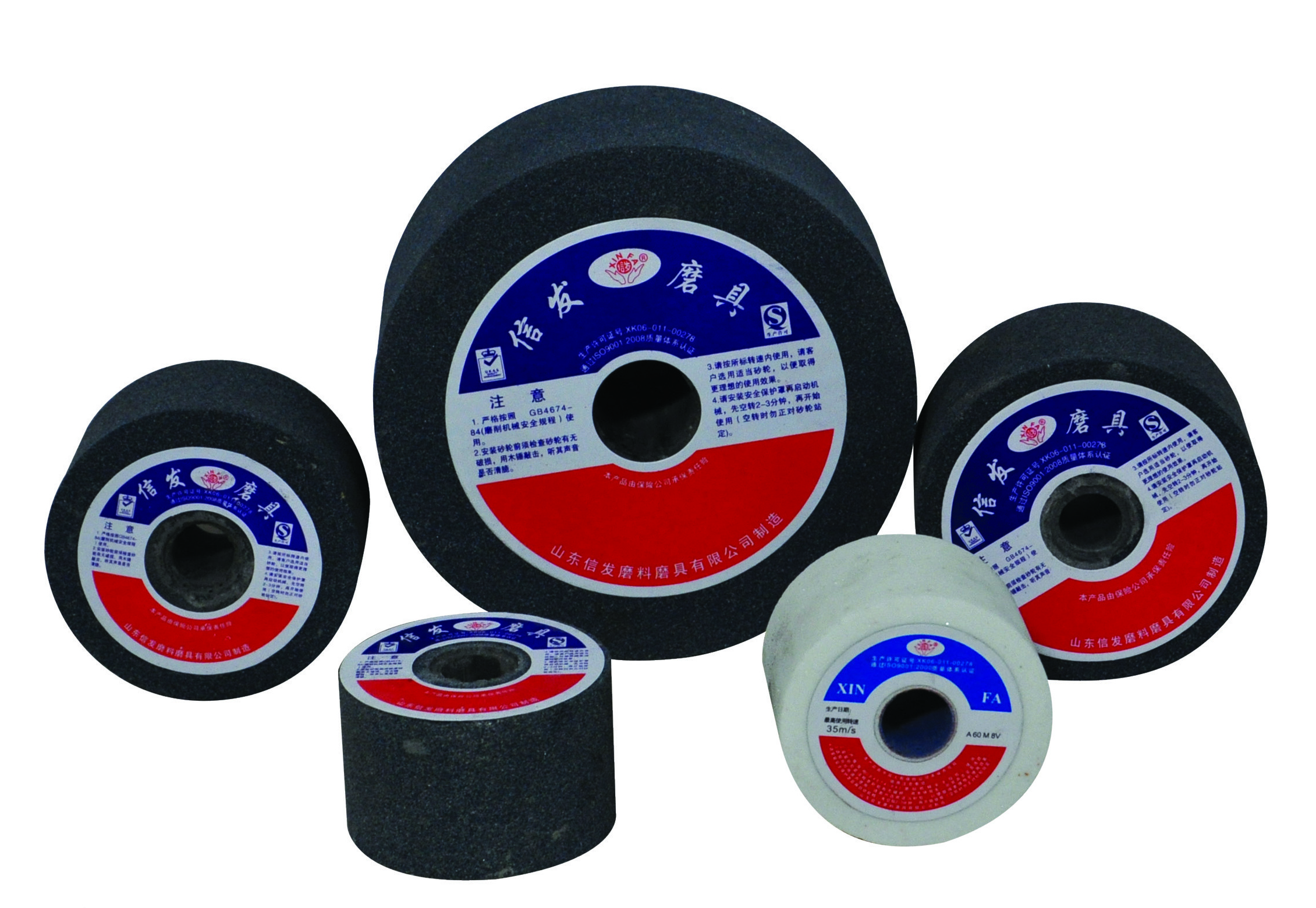
Internal (Bore) Grinding Wheel from the Xinfa vitrified bond range — the smallest-format family in this comparison.
Quick answer: which wheel family fits which grinding scenario
Choose by scenario and machine interface first, then by grain, grit, hardness and structure.
- Internal (Bore) grinding wheel: outside diameter 50–150 mm, thickness 6–120 mm, hole 16–32 mm. Grinds the inside diameter of a bore.
- Cylindrical grinding wheel: outside diameter 250–750 mm, thickness 20–100 mm, hole 75–305 mm. Grinds an outside diameter held between centres, in a chuck or against a steady rest.
- Centerless grinding wheel: outside diameter 300–750 mm, thickness 100–400 mm, hole 127–305 mm. Grinds an outside diameter on a workrest blade, driven by a separate regulating wheel.
All three are published with abrasives A, WA, AA, 38A, PA, 25A, SA, MA, GC, C and SG, grain sizes F16–F150, hardness grades G–Y, structure numbers 0–14 and maximum operating speeds of 32–60 m/s.
Problem definition: why these three wheels get quoted against each other
Because the three families are quoted from overlapping catalogues, three specific errors recur in procurement.
- A family error. A bore wheel is requested with cylindrical wheel dimensions because the part is cylindrical in shape. The surface being ground is the inside diameter, so the wheel must enter the bore: the internal (bore) range starts at 50 mm outside diameter, while a cylindrical wheel in the same catalogue starts at 250 mm.
- A dimension-window error. Thickness and hole are treated as free variables. They are not. Centerless wheels in this range run from 100 mm to 400 mm thick; cylindrical wheels run from 20 mm to 100 mm. A quotation outside the window is not a cheaper alternative — it is a different process.
- An evidence error. Quotations are compared per wheel without normalising abrasive, grain size, hardness, structure and speed rating. Two wheels with identical dimensions but different grain families are not the same product, and a failed trial on the cheaper wheel is usually a specification failure, not a quality failure.
The real cost of these errors is not the wheel. It is the trial, the re-qualification and the delayed first shipment.
Industry background: where ceramic grinding wheels sit
Grinding is usually the last operation before a part is accepted, which makes wheel selection a quality decision rather than a consumable decision. Peer-reviewed research published in 2024 states the relationship plainly: the grinding process is typically the final stage of machining, and the condition of the grinding wheel directly affects the quality of a workpiece's surface. The same research treats on-line monitoring of wheel wear as an active area of work — a reminder that wheel condition changes through its life, so dressing practice belongs in the selection decision.
On demand context, Reliable Market Forecast projects the grinding wheel market to grow at a compound annual rate of 6.7% between 2025 and 2032, driven by precision machining demand. Upstream of wheel making, Dataintelo reports that Brown Fused Alumina held the largest product-type share of the fused alumina market at 52.4% in 2025 — consistent with A grain being the default starting point in most general-purpose quotations, including these three families.
On supply context, Shandong Xinfa Abrasives & Grinding Tools Co., Ltd. is a manufacturer established in 1989 and located in the National Logistics Center of Linyi City, 180 km from Qingdao Port and 60 km from Rizhao Port. The facility covers 30,000 m² with about 120 staff, lists annual output above 10,000 tons and a six-engineer R&D team, and states that its quality has passed ISO 9001 certification; products are exported to more than 20 countries.
Detailed solution: the three families, side by side
All three families share a basic construction — abrasive grain held in a vitrified bond with porosity between the two — and share specification ranges. What separates them is the grinding scenario, and the scenario dictates geometry.
Internal (Bore) grinding wheels
An internal wheel grinds the inside diameter of a bore. The Xinfa range is sized for that entry: outside diameter 50–150 mm, thickness 6–120 mm, hole 16–32 mm, with abrasives A, WA, AA, 38A, PA, 25A, SA, MA, GC, C and SG, grain sizes F16–F150, hardness G–Y, structure numbers 0–14 and maximum operating speeds of 32, 35, 40, 45, 50 or 60 m/s.
The outside diameter is the defining constraint. The wheel has to pass into the bore and clear the spindle head, so usable diameter is set by bore size rather than by available machine power. A small wheel means a short contact arc, less abrasive in the cut and less heat capacity — which is why bore grinding is normally specified with a finer grit and a softer grade than an outside-diameter operation on the same material, and why dressing discipline matters more, not less.
Family naming and grinding scenario are not the same thing. In the same catalogue, the Saw Tooth Grinding Wheel — outside diameter 125–300 mm, thickness 6–16 mm, hole 12.7–32 mm — is described as intended for internal grinding scenarios. Specify by scenario and geometry rather than by product label: a wheel listed under one application name can still be the correct geometry for a bore.
Cylindrical grinding wheels
A cylindrical wheel grinds an outside diameter while the workpiece is held between centres, in a chuck or against a steady rest. Published dimensions for the Xinfa cylindrical wheel are outside diameter 250–750 mm, thickness 20–100 mm and hole 75–305 mm, with the same envelope as the bore family: A, WA, AA, 38A, PA, 25A, SA, MA, GC, C, SG; F16–F150; G–Y; structure 0–14; 32–60 m/s.
Larger diameter and wider face change the economics. A bigger wheel carries more abrasive and presents a longer contact arc, so more material is removed per pass — but face width also sets what the wheel can do in traverse grinding. A 20 mm face and a 100 mm face are different tools even at identical diameter.
The family also scales with the workpiece. Where the cylindrical scenario grows heavier, the catalogue grows with it: the Roll Grinding Wheel runs from 450 mm to 1066 mm outside diameter with hole diameters of 203–508 mm, and the Crankshaft & Cam Shaft Grinding Wheel spans 200–1100 mm outside diameter at 16–90 mm thickness. Both remain cylindrical grinding in process terms; they exist as separate product lines because the machine interface and the form requirements differ.
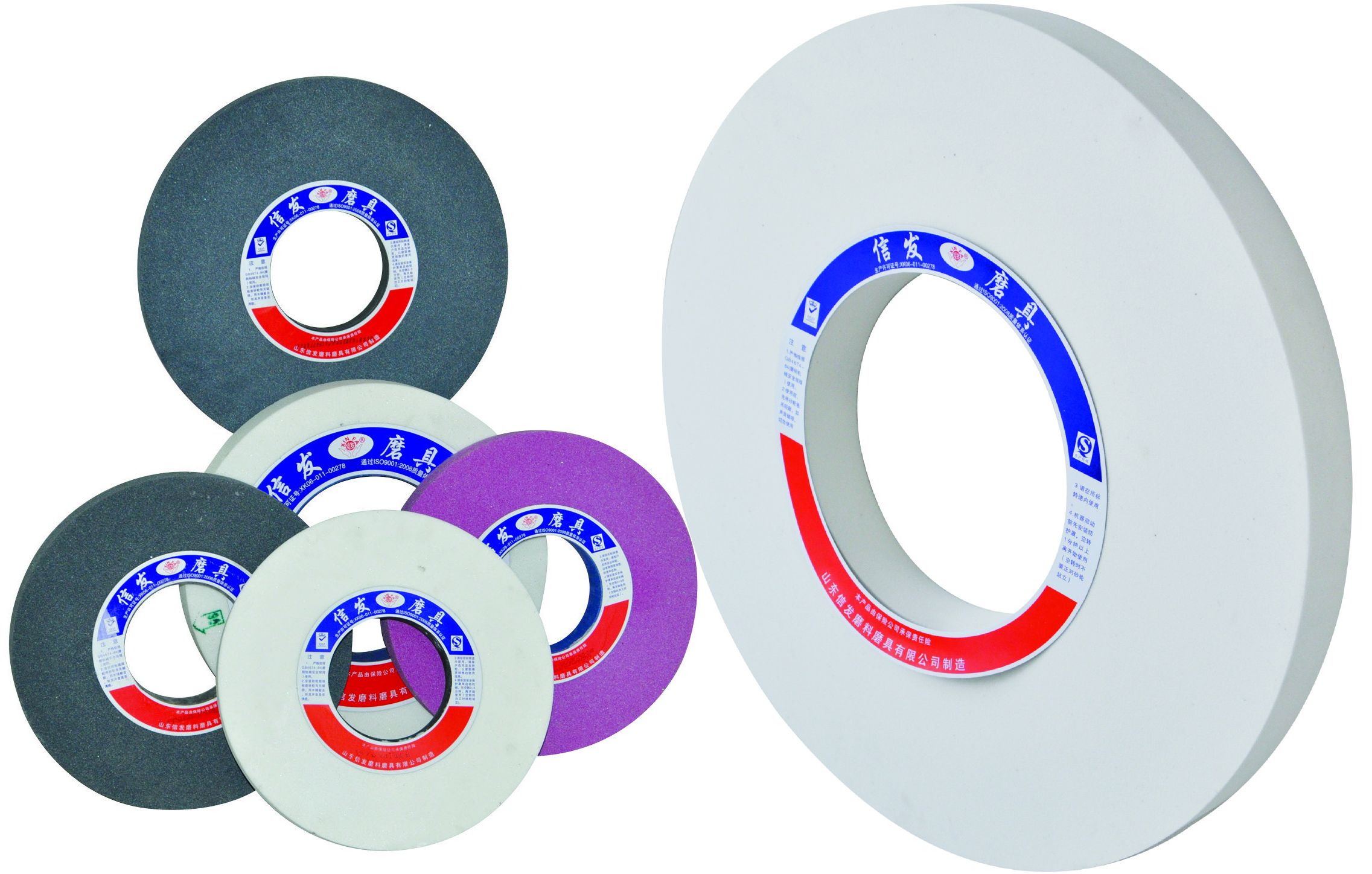
Cylindrical grinding wheel: outside diameter 250–750 mm, thickness 20–100 mm, hole 75–305 mm.
Centerless grinding wheels
A centerless wheel grinds an outside diameter without holding the part between centres. The workpiece rests on a workrest blade, is driven by a regulating wheel, and the grinding wheel removes stock while the part is supported along its length. Xinfa publishes the centerless family at outside diameter 300–750 mm, thickness 100–400 mm and hole 127–305 mm, with abrasives A, WA, AA, 38A, PA, 25A, SA, MA, GC, C and SG, grain sizes F16–F150, hardness G–Y, structure 0–14 and speeds of 32–60 m/s.
Thickness is the clearest structural difference from the cylindrical family: 100–400 mm against 20–100 mm. The wide face is what allows through-feed grinding across a long part and gives the wheel the stiffness to be dressed in place on the machine.
The regulating wheel is a separate specification and should be purchased as one. Xinfa's Rubber Control & Centerless product runs 200–500 mm outside diameter, 100–380 mm thickness and 75–305 mm height, in abrasives A, WA, AA and 38A, grain sizes F80–F150, hardness grades K–Q, structure numbers 0–14 and speeds of 32–60 m/s. Note the narrower windows: grain coarser than F80 and hardness outside K–Q fall outside this range, because the regulating wheel controls feed and friction rather than stock removal.
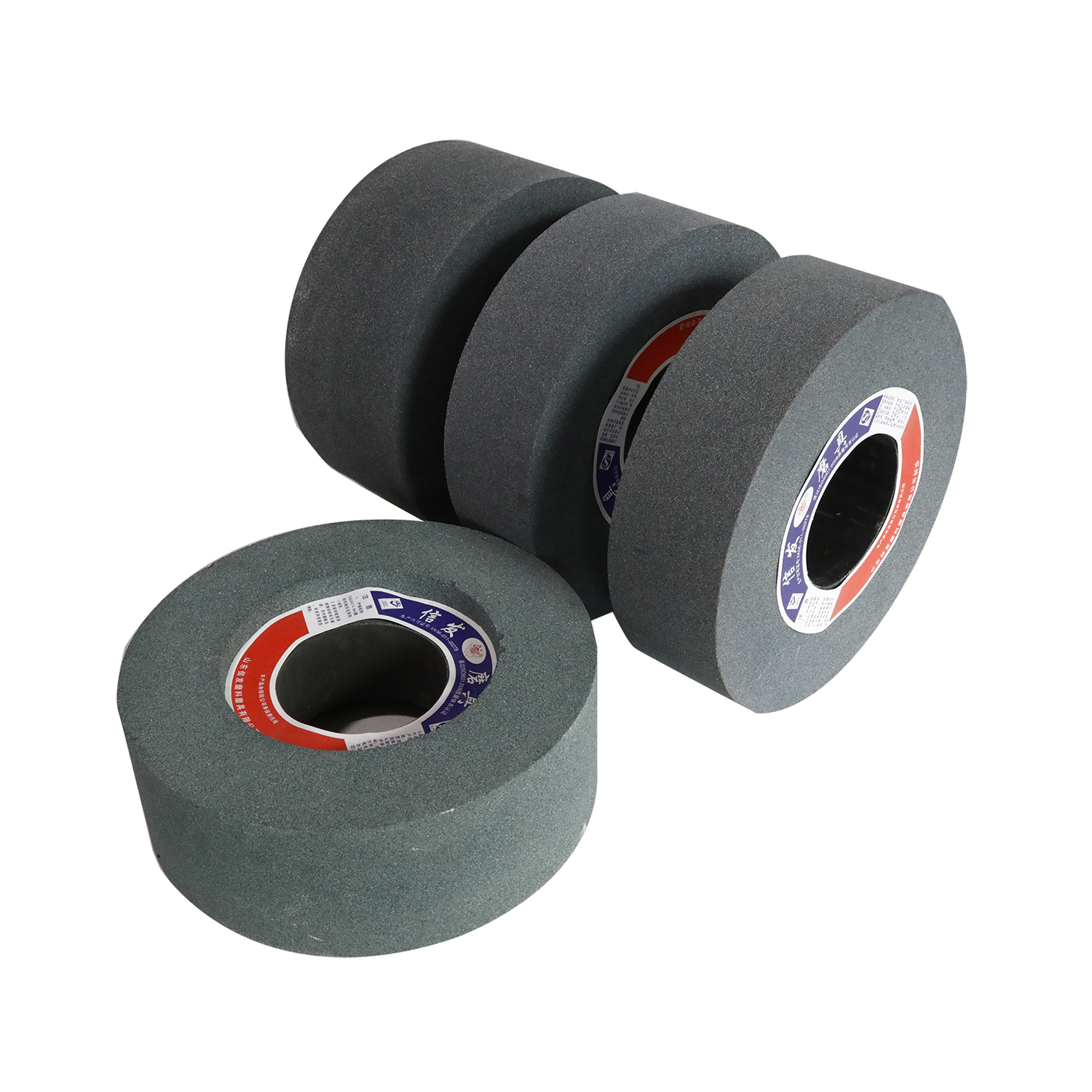
Centerless grinding wheel: outside diameter 300–750 mm, thickness 100–400 mm, hole 127–305 mm.
Abrasive options across all three families
The three families are offered in the same grain families, which simplifies procurement: one abrasive decision can be applied consistently across a bore, cylindrical and centerless line item on the same RFQ.
| Designation | Abrasive | What buyers should note |
|---|---|---|
| A | Brown Fused Alumina | Dark brown grain, Mohs hardness ≥9.0, melting point 2050 °C, true density ≥3.90 g/cm³, magnetic material 0.01%, supplied in grits F12–F220. The usual starting point for general-purpose quotation. |
| WA | White Fused Alumina | Typically specified where a cooler, freer-cutting action is wanted than A grain provides. |
| PA | Pink Fused Alumina | Commonly selected for precision work on harder workpiece materials; confirm grade by trial. |
| SA | Single Crystal Fused Alumina | Chosen where grain toughness and edge retention matter more than initial cut rate. |
| MA | Microcrystalline Fused Alumina | A finer crystalline grain structure, specified where a balance of life and finish is required. |
| GC | Green Silicon Carbide | Selected for hard, brittle and low-tensile materials rather than for steels generally. |
| C | Black Silicon Carbide | Used where a sharp silicon carbide grain is appropriate; also listed for the Internal (Bore) range alongside SG. |
| SG | Ceramic (seeded gel) alumina | Listed across all three families, including the Roll Grinding Wheel range, where longer wheel life is the objective. |
| AA, 38A, 25A | Additional alumina designations | Appear inside the published grain ranges; confirm the exact designation against the manufacturer's marking before approval. |
Grain families are not interchangeable on price or on performance. A quotation that does not state the grain designation is not a comparable quotation.
Step-by-step breakdown: a six-step selection framework
- Fix the scenario before the specification. State whether the surface being ground is an internal diameter, an external diameter between centres, or an external diameter on a workrest. This one line decides the family and removes the most expensive quoting error before it happens.
- Convert the part drawing into a dimension window. Record bore or outside diameter, grind length and required finish, then test the wheel against the published window: bore 50–150 mm OD / 6–120 mm T / 16–32 mm H; cylindrical 250–750 / 20–100 / 75–305; centerless 300–750 / 100–400 / 127–305.
- Choose the abrasive family. Start from A unless workpiece material or heat budget argues otherwise. If SG, SA, MA or a silicon carbide is required, write the reason into the RFQ so the supplier quotes the same grain, not an assumed substitute.
- Set grit, hardness and structure inside the window. All three families run F16–F150, hardness G–Y and structure 0–14. The choice is a balance between form holding and free cutting, and it belongs on the drawing rather than in a verbal instruction.
- Confirm the speed rating. All three families are published at maximum operating speeds of 32–60 m/s. The wheel's rated speed must meet or exceed the machine spindle speed, and the marking on the delivered wheel must match the quotation and the machine.
- Close the commercial and acceptance loop. Before a production order, agree in writing on specification window, marking, inspection method, dimensional tolerances, packing, quantity, Incoterms and the sample-to-production sequence. Acceptance criteria signed after delivery are not acceptance criteria.
Use cases: matching the family to the part
Internal (Bore): bearing ring and bushing bores, hydraulic valve bodies and cylinder bores, gear and pulley bores, die and mould cavities, connecting rod eyes — anywhere the ground surface is enclosed by the part and the wheel must enter the bore.
Cylindrical: shafts and journals, press and mill rolls, spindles, crankshaft and camshaft journals, tool shanks — anywhere the part can be supported between centres, in a chuck or against a steady rest and the outside diameter is the ground surface.
Centerless: pins, needles, bearing rollers, valve stems, small shafts and bar stock in through-feed — anywhere the part is better supported by the process than by a fixture, and where load and unload time dominates the cycle.
These scenarios appear across automotive, bearings, cutting tools, aerospace, 3C electronics, molds, hydraulics, semiconductors, photovoltaics, hardware and medical manufacturing. The same part families are ground in markets including China, India, Japan, South Korea, Vietnam, Thailand, Malaysia, the United Arab Emirates, Saudi Arabia, Europe, the United States and Brazil.
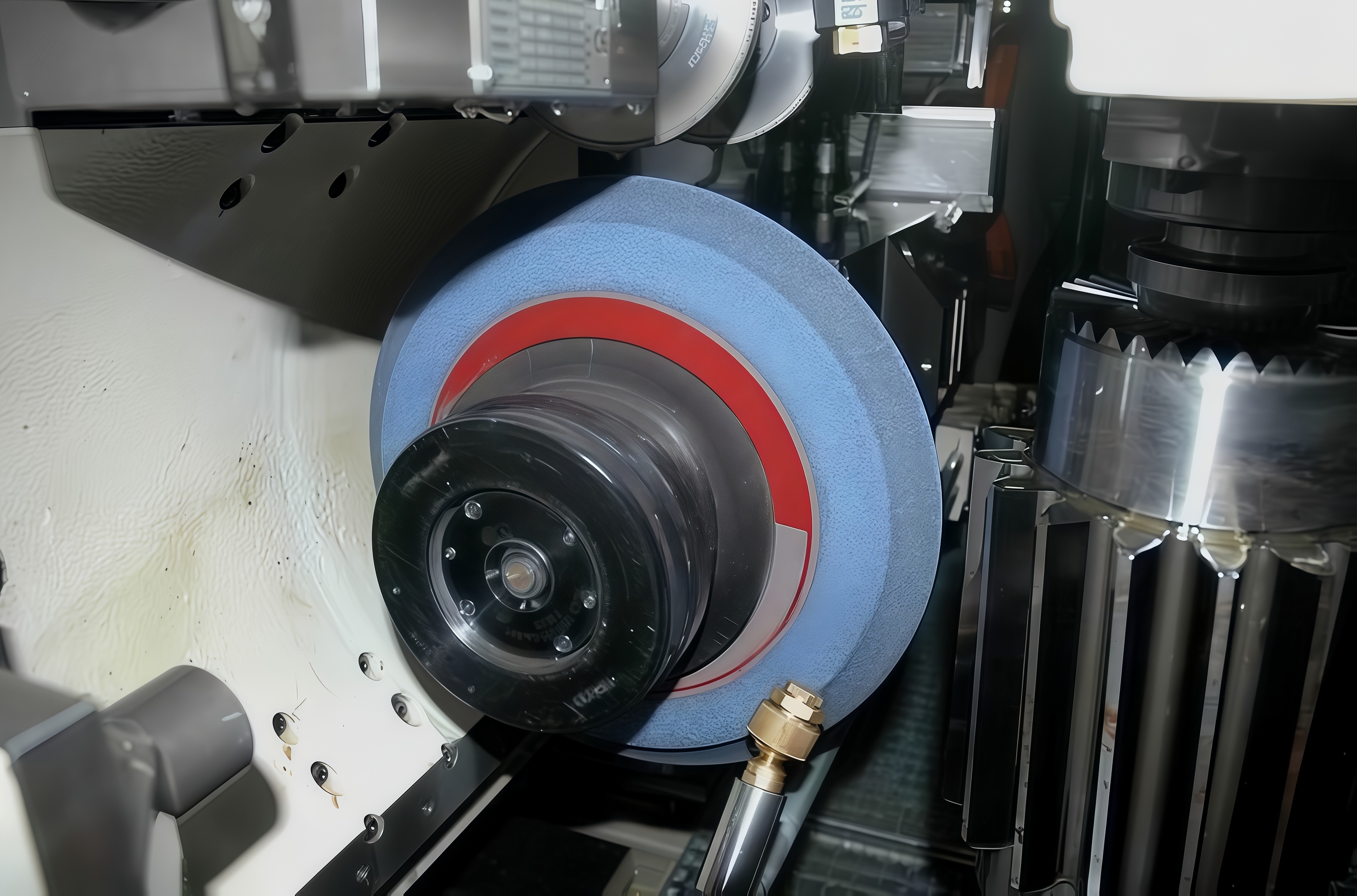
Machine interface decides the family: bore, cylindrical and centerless wheels are not interchangeable on the same spindle.
Comparison table: internal vs. cylindrical vs. centerless
| Selection factor | Internal (Bore) | Cylindrical | Centerless |
|---|---|---|---|
| Grinding scenario | Internal / bore grinding | Outside diameter between centres, chuck or steady rest | Through-feed or in-feed on a workrest blade |
| Wheel outside diameter | 50–150 mm | 250–750 mm | 300–750 mm |
| Wheel thickness | 6–120 mm | 20–100 mm | 100–400 mm |
| Hole diameter | 16–32 mm | 75–305 mm | 127–305 mm |
| Abrasive options | A, WA, AA, 38A, PA, 25A, SA, MA, GC, C, SG | A, WA, AA, 38A, PA, 25A, SA, MA, GC, C, SG | A, WA, AA, 38A, PA, 25A, SA, MA, GC, C, SG |
| Grain size | F16–F150 | F16–F150 | F16–F150 |
| Hardness grade | G–Y | G–Y | G–Y |
| Structure number | 0–14 | 0–14 | 0–14 |
| Maximum operating speed | 32–60 m/s | 32–60 m/s | 32–60 m/s |
| Companion product | None required | None required | Regulating wheel: Rubber Control & Centerless, OD 200–500 mm, T 100–380 mm, H 75–305 mm, A/WA/AA/38A, F80–F150, K–Q |
| Typical part | Bores, bushings, valve bodies, cavities | Shafts, journals, rolls, spindles | Pins, rollers, needles, small shafts, bar stock |
| Main risk if mis-specified | Wheel cannot enter the bore, or lacks rigidity | Wrong face width: form loss, burn or wasted cycle time | Wrong regulating wheel or setup: roundness and feed instability |
FAQ
What documentation should come with a ceramic grinding wheel order?
Product documentation should let you match the delivered wheel to the ordered specification. That means the marking on the wheel — type, dimensions, abrasive, grit, hardness, structure, bond and maximum operating speed — an inspection record, and the manufacturer's current quality-management certificate. Xinfa states that its quality has passed ISO 9001 certification; ask for the current certificate and its scope rather than a reference to a past edition. Manufacturer technical data sheets in this category also cite safety conformity references such as EN 12413 and ANSI B7.1. Agree dimensional tolerances, balance and hardness verification, and rejection handling in writing before the first order.
Can one manufacturer actually supply internal, cylindrical and centerless wheels?
Yes, in the sense that the range covers all three. Xinfa lists Internal (Bore), Cylindrical and Centerless wheels alongside general purpose, bench grinder, tool, flat surface, crankshaft and camshaft, roll, gear, worm, bearing, needle and saw tooth wheels, plus segments, oilstones, mounted points and flap discs. The company was established in 1989, operates a 30,000 m² facility with about 120 staff, lists annual output of 10,000 tons and a six-engineer R&D team whose centre was listed as a municipal-level enterprise technology R&D centre in 2015. Range breadth is not qualification, so confirm each family as a separate line item with its own dimensions and grade.
How should I budget across the three wheel types?
No verified public price data covers these specifications, so a cross-family budget can only be built from quotations. The real cost drivers are outside diameter and thickness (abrasive volume), grain family — SG, SA, MA and silicon carbide grains are not priced like standard A — hardness and structure, bore and hole geometry, speed rating, order quantity, packing, non-standard tooling and freight terms. Xinfa sits 180 km from Qingdao Port and 60 km from Rizhao Port, which affects freight planning. Request quotations with an identical field list for each wheel so the numbers are genuinely comparable.
How should a sample trial be structured?
A trial should isolate the wheel rather than the operator. Record marking and dimensional check, mounting and fit, first-part geometry, surface roughness, any burn or chatter, dressing interval, wheel life up to the dressing limit, cycle time and spindle load, and the final failure mode. Because wheel condition directly affects workpiece surface quality — a point emphasised in peer-reviewed 2024 research on wheel wear monitoring — log wear against parts produced. Run each family in its own scenario: a bore wheel in a bore, a centerless wheel with its own regulating wheel and workrest setup.
What lead-time and commercial terms should be confirmed before ordering?
Published sources do not provide verified lead times for these product families, so lead time must come from a written quotation. Confirm the specification window (OD, thickness, hole), abrasive and grade, speed rating and marking, quantity and minimum order, any tooling charge for non-standard dimensions, packing, Incoterms and port of loading, inspection and acceptance criteria, and the sample-to-production sequence. Send the part drawing with the required bore or outside diameter, the machine interface and target output to sales@xinfaabrasives.com, and ask for a specification-matched sample before committing to a production quantity.
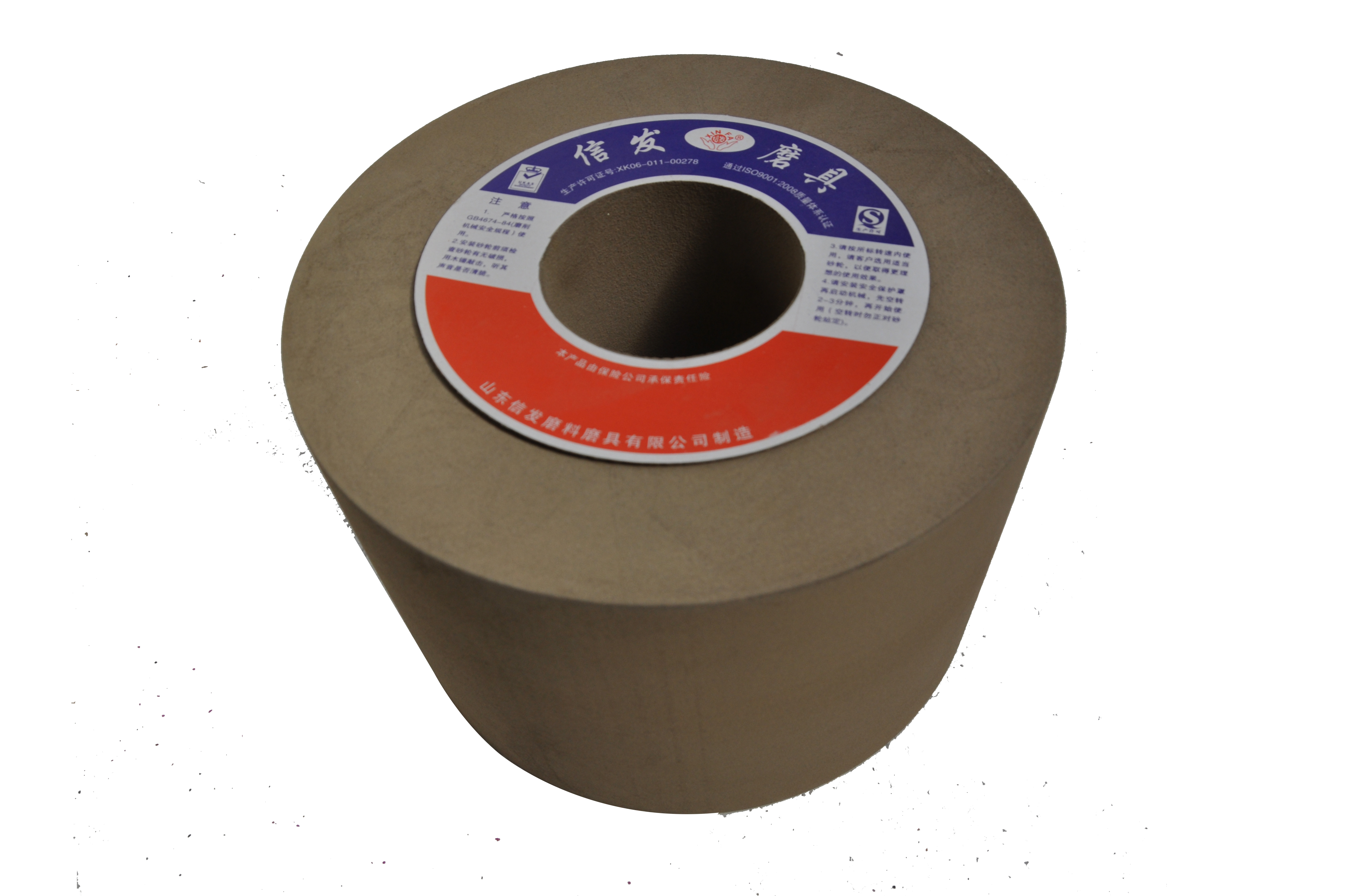
Rubber Control & Centerless regulating wheel: OD 200–500 mm, thickness 100–380 mm, hardness K–Q, grain F80–F150.
Conclusion
The difference between an internal, a cylindrical and a centerless ceramic grinding wheel is not the bond and not the grain. It is the grinding scenario, and the scenario fixes the geometry: 50–150 mm outside diameter to enter a bore, 250–750 mm to run against an outside diameter held on centres, 300–750 mm at 100–400 mm thickness to work on a workrest with a regulating wheel. Get that order of decisions right — scenario, then dimension window, then abrasive, then grit, hardness and structure, then speed rating, then commercial and acceptance terms — and the shared specification ranges stop being a source of confusion and become a source of negotiating consistency across three line items.
Buyers who reverse the order, starting from price per wheel or from a grain they used before, usually end up re-qualifying a sample. Buyers who start from the scenario usually end up with a repeatable wheel.
Next step: a specification-matched sample
Send the part drawing with the bore or outside diameter, the machine interface, the required surface finish and target output. Xinfa will map it to the correct family — Internal (Bore), Cylindrical or Centerless — and confirm dimensions, abrasive and grade, speed rating and commercial terms in writing before a sample is produced.
Email sales@xinfaabrasives.com · Tel / WhatsApp +86 13562923298 (Jackie Wang) · www.xinfa-abrasives.com
Download the full product catalogue: Xinfa Abrasives catalogue (PDF)
Shandong Xinfa Abrasives & Grinding Tools Co., Ltd. — Xincun Village, Dadian Town, Junan County, Linyi City, Shandong Province, China. Established 1989. Vitrified bond grinding wheels, 30,000 m² facility, annual output above 10,000 tons.
Have Questions or Need More Details?
Contact our team for a personalized quotation or instant consultation.
Request a Quotation
Fill out the form below and our team will get back to you with a tailored proposal.
WhatsApp Direct Chat
Prefer to chat in real-time? Message us on WhatsApp for instant assistance & quick answers.
- Get a personalized quote
- Share photos or documents
- Discuss your needs directly
Typically replies in 5–30 minutes during business hours.