Mapping Machining Conditions to Ceramic Grinding Wheel Specifications
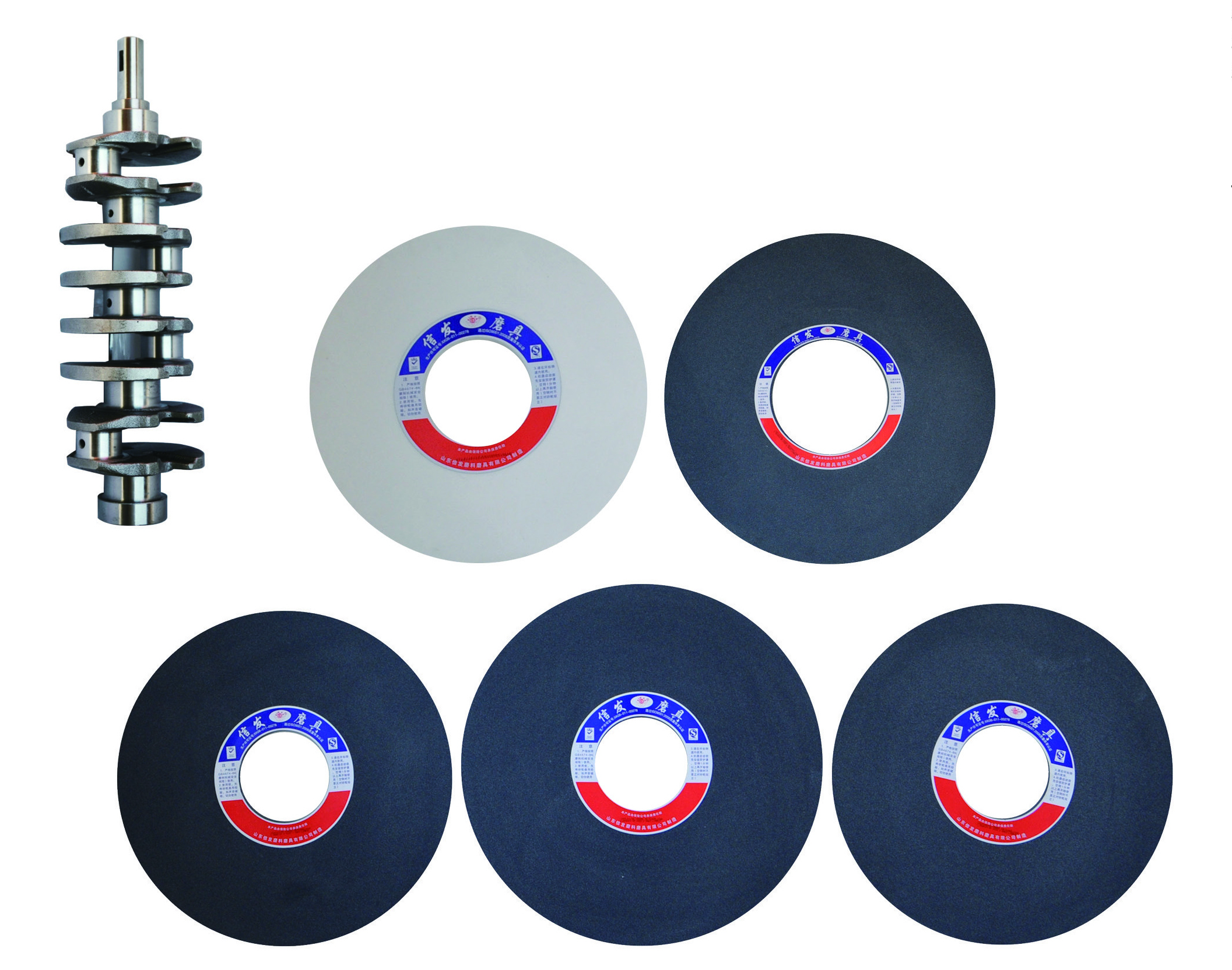
Crankshaft and camshaft grinding wheel from Xinfa's vitrified bond line.
Ceramic grinding wheel selection becomes a project specification exercise when operating conditions include high temperature, wear, continuous duty, or explosion-proof requirements. The wheel must deliver grinding, sanding, polishing, tool sharpening, deburring, and ultra-precision machining without premature failure. This article provides a project-to-wheel mapping framework, supported by the product data of Shandong Xinfa Abrasives & Grinding Tools Co., Ltd., a Chinese manufacturer specialized in vitrified bond grinding wheels since 1989.
The Industry Background: Why Ceramic Grinding Wheels Are a Procurement-Critical Category
The global grinding wheels market was valued at US$ 8.71B in 2024 and is projected to grow at a CAGR of 4.5% through 2030 (Grand View Research). Vitrified bond, also called ceramic bond, held the largest segment share at 38.4% of the total grinding wheel market in 2025 (Dataintelo). Brown Fused Alumina, the most widely used abrasive in many grinding wheels, accounted for 52.4% of the global fused alumina market in 2025 (Dataintelo).
On the trade side, China exported USD 120.9M of natural or artificial abrasive powder or grain under HS 680530 in 2024 (WITS – World Bank). Bonded abrasive products must comply with ISO 525:2020 for shape types, designation, and marking. The safety requirements for use and care of abrasive wheels are governed by ANSI B7.1 in the United States and EN 12413 in the European Union. Major global manufacturers include Saint-Gobain, 3M, Tyrolit, and Klingspor (Market Research Future).
The Core Problem: Project Conditions vs. Wheel Parameters
Many procurement failures come from matching a wheel to a machine rather than to a machining project. The workpiece material, required surface finish, coolant type, operating temperature, wear rate, duty cycle, and safety environment all influence the correct specification. When a wheel is chosen by brand or price alone, the mismatch often appears as excessive redressing, burn marks, poor geometry, or short wheel life.
A ceramic grinding wheel specification is defined by at least six variables: abrasive family, grit number, hardness grade, structure number, wheel geometry (outer diameter, thickness, hole), and maximum linear speed. A project-fit approach maps each variable to a measurable condition.
A Detailed Solution: Mapping Project Conditions to Xinfa Wheel Data
Shandong Xinfa Abrasives & Grinding Tools Co., Ltd. was founded in 1989 and has specialized in vitrified bond grinding wheel research, development, and manufacturing. The factory is located in Linyi City, Shandong Province, 180 km from Qingdao Port and 60 km from Rizhao Port. It operates 30,000 m² of facilities, employs 120 people, and has an annual production capacity of over 10,000 tons. The company is a member of the China Abrasives Association and is ISO 9001:2008 certified. Its technology R&D center was recognized as a municipal-level enterprise technology R&D center in 2015.
Xinfa's main product range includes Brown Fused Alumina Abrasive, General Purpose Grinding Wheel, Bench Grinder Wheel, Tool Grinding Wheel, flat Surface Grinding Wheel, Centerless Grinding Wheel, Cylindrical Grinding Wheel, Crankshaft&Cam Shaft Grinding Wheel, Saw Tooth Grinding Wheel, Bearing Grinding Wheel, Worm Grinding Wheel, Gear Grinding Wheel, Needle Grinding Wheel, Roll Grinding Wheel V&B, Internal(Bore)Grinding Wheel, Oilstone, Segments, Resin Bonded Snagging Grinding Wheel, Rubber Control&Centerless, Flap Disc, and Mounted Points.
From a project standpoint, the product is designed for high-temperature and wear environments, operating in continuous operation mode. It performs grinding, sanding, polishing, tool sharpening, deburring, and ultra-precision machining. The application may require explosion-proof certification, and supporting equipment can include grinders, grinding machines, and electric hand tools. Common industries include automotive, bearings, cutting tools, aerospace, 3C electronics, molds, hydraulics, semiconductors, photovoltaics, hardware, and medical sectors.
Xinfa also offers OEM/ODM production. Customization covers specification, size, logo, bond type, and abrasive material. Monthly capacity is 900 tons, lead time is 30–45 days, MOQ is 2 tons, and all products receive 100% testing.
Step-by-Step Breakdown: How to Map a Project to a Ceramic Grinding Wheel Specification
Step 1: Define the operation and required function
Classify the job as grinding, sanding, polishing, tool sharpening, deburring, or ultra-precision machining. This determines the abrasive type and grit range.
Step 2: Identify operating conditions
Check whether the project runs at high temperature, heavy wear, continuous operation, or requires explosion-proof certification. Xinfa's ceramic bonded wheel line is designed for these environments.
Step 3: Select the abrasive family
Choose between Brown Fused Alumina (A), White Fused Alumina (WA), Pink Fused Alumina (PA), Single Crystal Fused Alumina (SA), Microcrystalline Fused Alumina (MA), Green Silicon Carbide (GC), Black Silicon Carbide (C), or SG, based on the workpiece material and finish.
Step 4: Define grit, hardness, and structure
Xinfa's vitrified wheel line covers grit numbers from F16 to F150, hardness grades from G to Y, and structure numbers from 0 to 14. The correct combination depends on the material removal rate, finish requirement, and machine stiffness, and should be validated in trials.
Step 5: Define wheel geometry and speed
Use the machine spindle, arbor size, and operating speed to select outer diameter, thickness, hole, and maximum linear speed. Xinfa product data covers diameters from 50 mm for internal bore wheels up to 1,100 mm for crankshaft/camshaft and roll wheels, with maximum linear speed options from 20 m/s to 70 m/s.
Step 6: Validate with supplier data
Review certifications, request 100% test documentation, confirm customization options, and check lead time against your project schedule.
Use Cases for Common Machining Projects
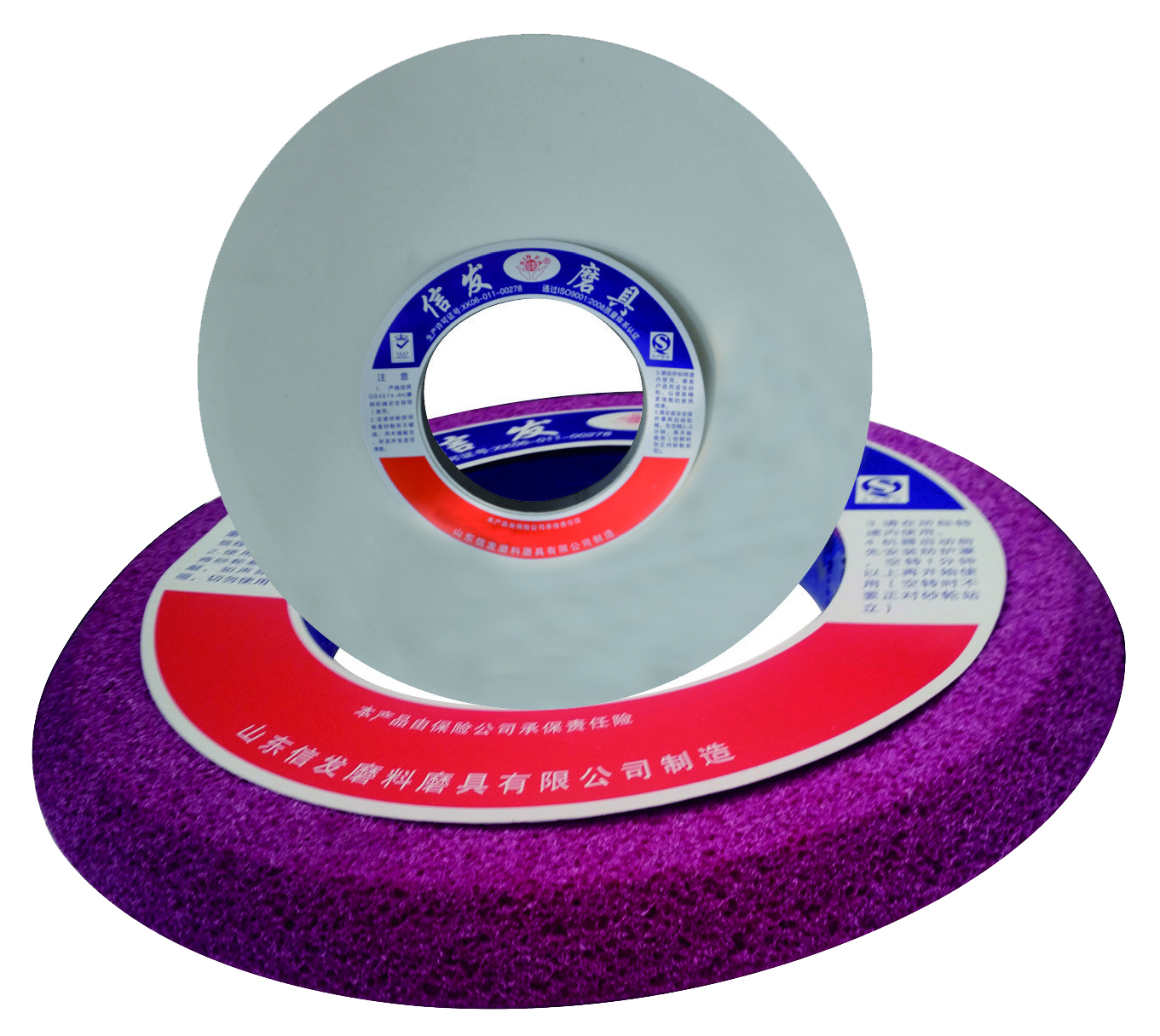
Gear grinding wheel used in precision gear manufacturing.
- Crankshaft and camshaft grinding: Crankshaft&Cam Shaft Grinding Wheel covers OD 200–1100 mm, T 16–90 mm, H 127–305 mm. These wheels are often evaluated for continuous, high-temperature use in engine and compressor lines.
- Centerless grinding: Centerless Grinding Wheel covers OD 300–750 mm, T 100–400 mm, H 127–305 mm for bar stock or mass-produced cylindrical parts.
- Bearing grinding: Bearing Grinding Wheel covers OD 500–600 mm, T 14–50 mm, H 305 mm for raceway and internal surfaces.
- Gear grinding: Gear Grinding Wheel covers OD 125–455 mm, T 10–90 mm, H 20–127 mm for gear profile or worm grinding.
- Internal bore grinding: Internal(Bore)Grinding Wheel covers OD 50–150 mm, T 6–120 mm, H 16–32 mm for mold, hydraulic, and precision bore operations.
- Roll grinding: Roll Grinding Wheel V&B covers OD 450–1066 mm, T 50–150 mm, H 203–508 mm for roll surfacing.
- Tool room grinding: Tool Grinding Wheel covers OD 100–600 mm, T 3–150 mm, H 12.7–203 mm for tool sharpening and resharpening.
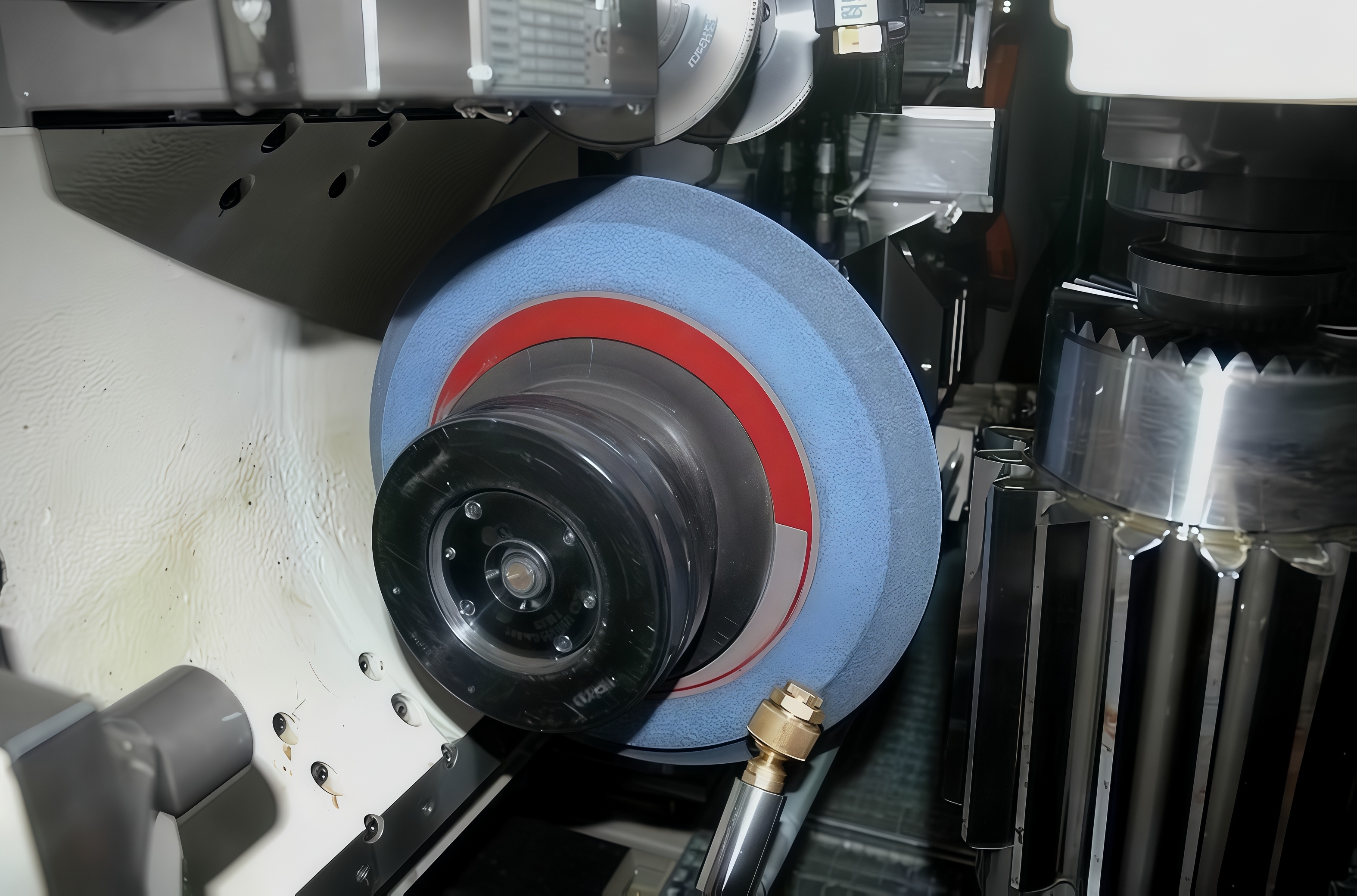
Grinding machine in a continuous-operation machining environment.
A Pakistan-based grinding wheel OEM customer has purchased 20 tons of Xinfa ceramic bonded grinding wheels for workpiece grinding over a two-year relationship. The reported result was stable operation with long-lasting wheel performance.
Comparison Table: Project-to-Wheel Reference
| Project / Application | Relevant Wheel Type | Diameter (OD) | Thickness (T) | Hole (H) | Grit / Hardness Range |
|---|---|---|---|---|---|
| Crankshaft & camshaft grinding | Crankshaft&Cam Shaft Grinding Wheel | 200–1100 mm | 16–90 mm | 127–305 mm | F16–F150 / G–Y |
| Centerless grinding | Centerless Grinding Wheel | 300–750 mm | 100–400 mm | 127–305 mm | F16–F150 / G–Y |
| Cylindrical grinding | Cylindrical Grinding Wheel | 250–750 mm | 20–100 mm | 75–305 mm | F16–F150 / G–Y |
| Bearing grinding | Bearing Grinding Wheel | 500–600 mm | 14–50 mm | 305 mm | F16–F150 / G–Y |
| Gear grinding | Gear Grinding Wheel | 125–455 mm | 10–90 mm | 20–127 mm | F16–F150 / G–Y |
| Internal bore grinding | Internal(Bore)Grinding Wheel | 50–150 mm | 6–120 mm | 16–32 mm | F16–F150 / G–Y |
| Roll grinding | Roll Grinding Wheel V&B | 450–1066 mm | 50–150 mm | 203–508 mm | F16–F150 / G–Y |
| Tool grinding | Tool Grinding Wheel | 100–600 mm | 3–150 mm | 12.7–203 mm | F16–F150 / G–Y |
| Flat surface grinding | flat Surface Grinding Wheel | 90–900 mm | 13–100 mm | 5–305 mm | F16–F120 / G–Y |
| Bench grinding | Bench Grinder Wheel | 100–450 mm | 12–80 mm | 12.7–50.8 mm | F16–F150 / G–Y |
| Snagging / heavy stock removal | Resin Bonded Snagging Grinding Wheel | 300–900 mm | 30–100 mm | 38.1–305 mm | F16–F36 / M–S |
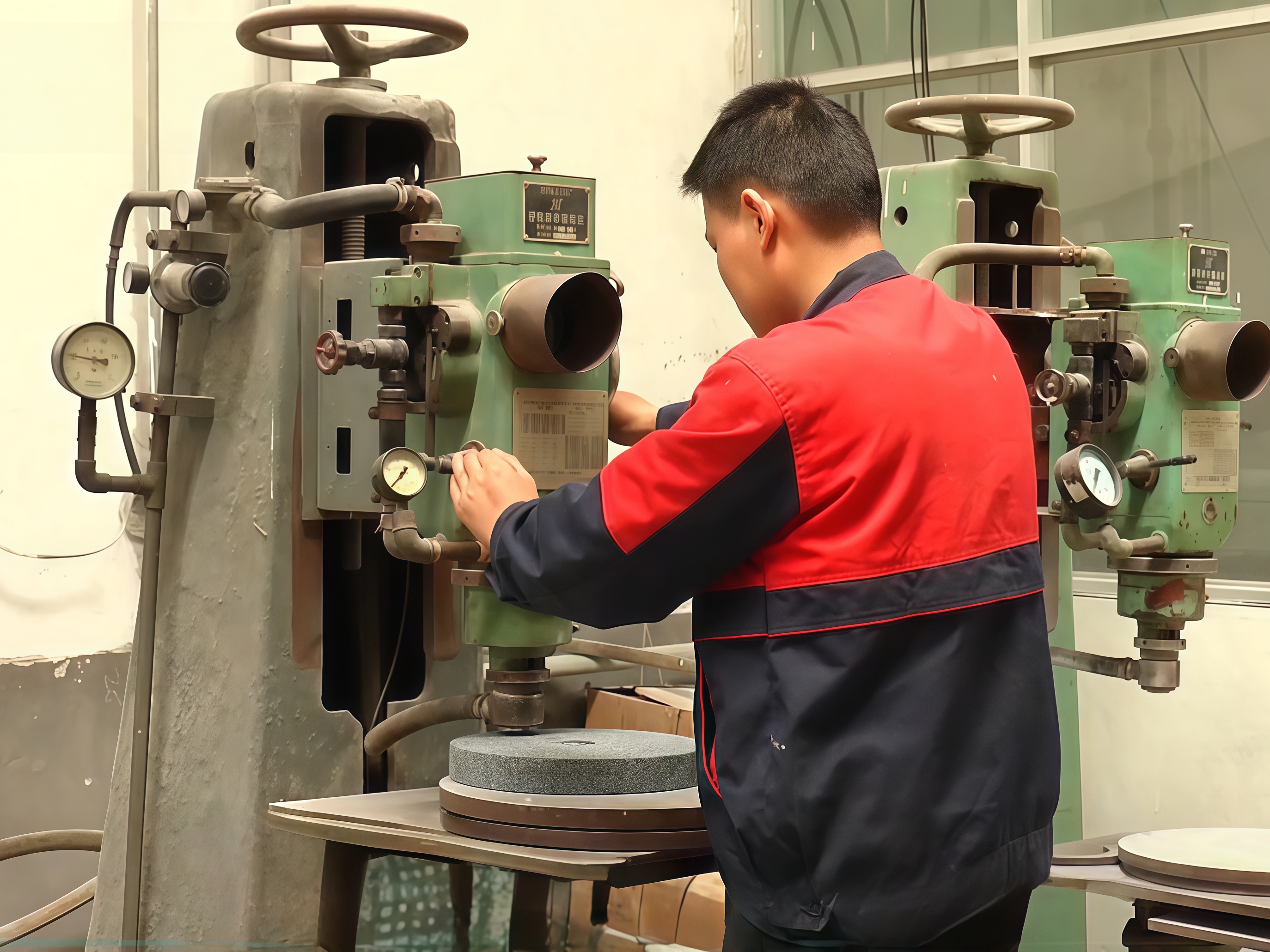
Quality inspection workshop at Xinfa.
Frequently Asked Questions
Which safety and quality standards apply to ceramic grinding wheels used in high-temperature and continuous-operation environments?
Bonded abrasive products must comply with ISO 525:2020 for shape types, designation, and marking. ANSI B7.1 covers safety requirements in the United States, and EN 12413 applies in the European Union. Xinfa operates under an ISO 9001:2008 quality management system and performs 100% testing of its wheels.
Can a ceramic grinding wheel supplier customize wheels to match a specific project specification?
Yes. Xinfa offers OEM/ODM production with customization of specification, size, logo, bond type, and abrasive material. The factory has a monthly capacity of 900 tons and exports globally.
What should a buyer evaluate when estimating the cost-effectiveness of ceramic grinding wheels for a project?
Cost-effectiveness depends on matching wheel specification to the actual workpiece material, operation mode, and required finish. Buyers should compare abrasive family, grit size, hardness grade, structure number, and maximum operating speed against their project profile. Xinfa's MOQ is 2 tons.
How can a buyer verify ceramic grinding wheel performance before placing a full order?
A practical next step is to contact Xinfa's sales team for product documentation and a technical discussion. Performance verification should include a small-scale run on the actual grinding machine and workpiece before scaling up.
What is the typical lead time for custom ceramic grinding wheel orders?
For OEM/ODM orders, Xinfa's standard lead time is 30–45 days, with a minimum order quantity of 2 tons. High-volume orders can be coordinated with the 900-ton monthly capacity.
Conclusion and Next Step
Project-fit buying for ceramic grinding wheels means translating operating conditions into abrasive type, grit, hardness, structure, geometry, and speed. This approach reduces the risk of premature wheel failure, inconsistent finish, and unnecessary cost.
If you need support mapping your workpiece and machine requirements to a ceramic grinding wheel specification, contact Xinfa's sales team at sales@xinfaabrasives.com or via WhatsApp at +86 13562923298.
For a detailed product overview, download the Xinfa product brochure (PDF) or visit www.xinfa-abrasives.com.