The Technical Guide to Specifying Ceramic Grinding Wheels for Optimal Grind Ratios
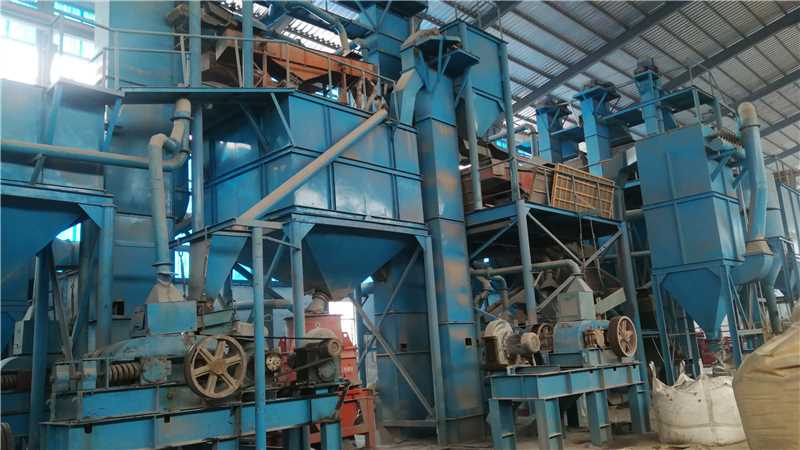
Abrasive grain handling in Xinfa's raw material workshop - the starting point of every ceramic (vitrified bond) grinding wheel specification.
Grind ratio is the number that decides whether a ceramic grinding wheel is economical: it is the volume of workpiece material removed divided by the volume of wheel material lost over the same grinding period. Every specification decision an engineer makes - grit size, bond and grade, abrasive type, grain density - is a lever on that ratio. Two vitrified bond wheels can carry identical dimensions and still deliver very different wheel life, dressing intervals and cycle times, because the specification behind the drawing, not the drawing itself, sets the wear rate.
This guide is written for manufacturing engineers, process planners and technical buyers who already know they need a ceramic grinding wheel and now have to write a specification that performs on the machine. It covers the three decisions that dominate grind ratio, converts them into a step-by-step specifying workflow, adds parameter trade-off and comparison tables, and closes with the compliance, capability, budget, sampling and supply questions buyers ask most often.
What a Grind Ratio Actually Measures - and What It Does Not
In grinding practice, the grind ratio (often written as G-ratio) answers a commercial question: how much metal does one wheel give you before it must be replaced or dressed back into form?
- Definition: grind ratio = volume of workpiece material removed ÷ volume of wheel wear.
- Shop-floor translation: many plants track the same idea as parts per dress or parts per wheel, because that is what determines machine availability.
- A high ratio means: the wheel holds form and size, dressing intervals stretch, and spindle time goes to cutting rather than to wheel maintenance.
Two boundaries matter. First, grind ratio is a system result, not a catalogue property - the same wheel behaves differently on a rigid CNC machine and on a machine with worn spindle bearings or weak coolant delivery. Second, a wheel pushed toward maximum wheel life can lose cutting efficiency: a specification optimised only on wear can load, burn or chatter, so the ratio has to be balanced against finish, burn limits and cycle time.
Problem Definition: Most Specification Errors Happen Before the First Test Cut
Three recurring failure patterns explain why a wheel that should work does not.
1. Dimension-only specification
Buyers often state diameter, thickness and bore, then leave the rest to the supplier. Dimensions determine whether the wheel fits; they say nothing about how it wears, whether it burns the workpiece, or how often it must be dressed.
2. Copying a marking without copying the context
The marking on an existing wheel is a compressed record of abrasive type, grit size, grade and structure. Copying it onto a machine with different rigidity, coolant, spindle speed or stock allowance transfers the wear behaviour without transferring the conditions that produced it.
3. Optimising one parameter in isolation
Harder grade for longer life, one step finer grit for finish - each change moves the grind ratio in one direction and another performance characteristic in the opposite direction. Without a structured sequence, the trial becomes guesswork.
Safety sits underneath all three. Bonded abrasive products must comply with ISO 525:2020 for shape types, designation and marking requirements, and the safety requirements for the use and care of abrasive wheels are governed by ANSI B7.1 in the United States and EN 12413 in the European Union. Operating a wheel above its rated speed is therefore not a tuning problem; it is a compliance problem.
Industry Background: Where Vitrified Bond Wheels Sit in the Market
Ceramic - vitrified - bond wheels are the largest single bond segment in the bonded abrasive market, and demand is stable rather than speculative. The global grinding wheels market was valued at US$ 8.71 billion in 2024 and is projected to grow at a CAGR of 4.5% through 2030, according to Grand View Research. Within that market, vitrified bond (ceramic bond) grinding wheels held the largest segment share at 38.4% in 2025, according to Dataintelo.
The grain side of the equation is equally concentrated. Brown Fused Alumina held 52.4% of the global fused alumina market in 2025, driven primarily by its dominance in abrasive applications, according to Dataintelo. China remains a major supply source: exports of natural or artificial abrasive powder or grain under HS 680530 reached USD 120.9 million in 2024, according to WITS - World Bank trade data.
The competitive landscape includes both multinational groups and regional specialists. Publicly identified major manufacturers in the grinding wheel landscape include Saint-Gobain (Norton), 3M (Cubitron II), Tyrolit and Klingspor, as listed by Market Research Future. For engineers, the practical implication is that specification fit - not brand scale - is what decides grind ratio on a given machine.
One manufacturer with a long record in this segment is Shandong Xinfa Abrasive and Grinding Tools Co., Ltd. (Xinfa), a vitrified bond grinding wheel manufacturer established in 1989 and located in Linyi City, Shandong Province, China. Xinfa operates a 30,000 m² factory with 120 employees, an R&D team of 6 engineers, more than 100 sets of advanced production and testing equipment, and an annual production capacity of over 10,000 tons. The company is a member of the China Abrasives Association, its quality management system passed ISO 9001:2008 certification, and its technology research and development centre was listed as a municipal-level enterprise technology R&D centre in 2015.
Detailed Solution: The Three Parameters That Set the Grind Ratio
A ceramic grinding wheel specification is a set of interlocking choices. For a vitrified bond wheel, three decisions dominate the resulting grind ratio: grit size, bond and grade, and abrasive type with grain density.
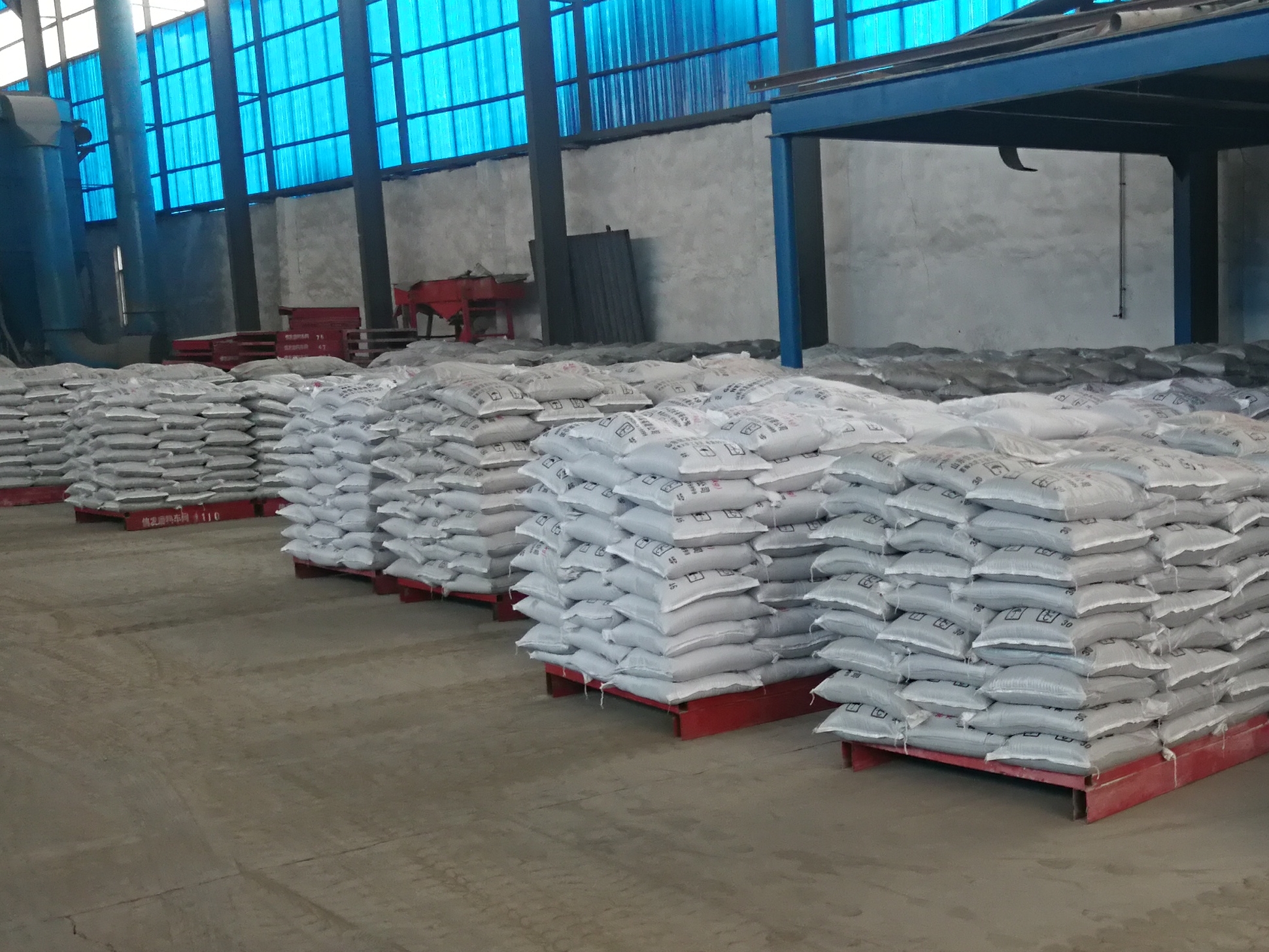
Grain families are stored and staged separately: abrasive type is the first variable in a specification, not the last.
Parameter one: grit size
Grit size sets the trade-off between stock removal and surface finish. Coarse grain takes larger chips, removes material faster and produces a rougher finish, but it also wears the wheel faster. Fine grain produces a smoother finish and better size control, but cuts more slowly and, if grade and coolant are not matched to it, tends to load and burn.
The working rule for engineers is to choose the coarsest grit that still meets the finish and geometry requirement. Extra fineness that is not needed costs cycle time and usually shortens wheel life rather than extending it.
Parameter two: bond type and grade
The bond is what holds the grain. A vitrified (ceramic) bond is a glass-like matrix fired at high temperature; it holds grain rigidly, resists coolant and heat, and keeps wheel form over long production runs, which is why the ceramic bond dominates precision work such as bearing, gear and roll grinding.
Grade describes bond hardness: how strongly the bond retains the grain. A harder grade keeps abrasive longer, so more of the wear falls on the grain than on the bond - this raises the grind ratio, but it also raises the risk of burn and loading on soft, ductile or work-hardening materials. A softer grade releases dull grain sooner, cutting cooler and reducing burn risk, at the cost of wheel life. Grade selection therefore depends on machine rigidity, coolant quality, wheel speed, arc of contact and workpiece hardness.
Bond family selection comes before grade. Vitrified bond wheels cover the majority of precision and general-purpose grinding; resin bonded snagging wheels and rubber bonded control wheels serve applications where a different balance of resilience and friction is required.
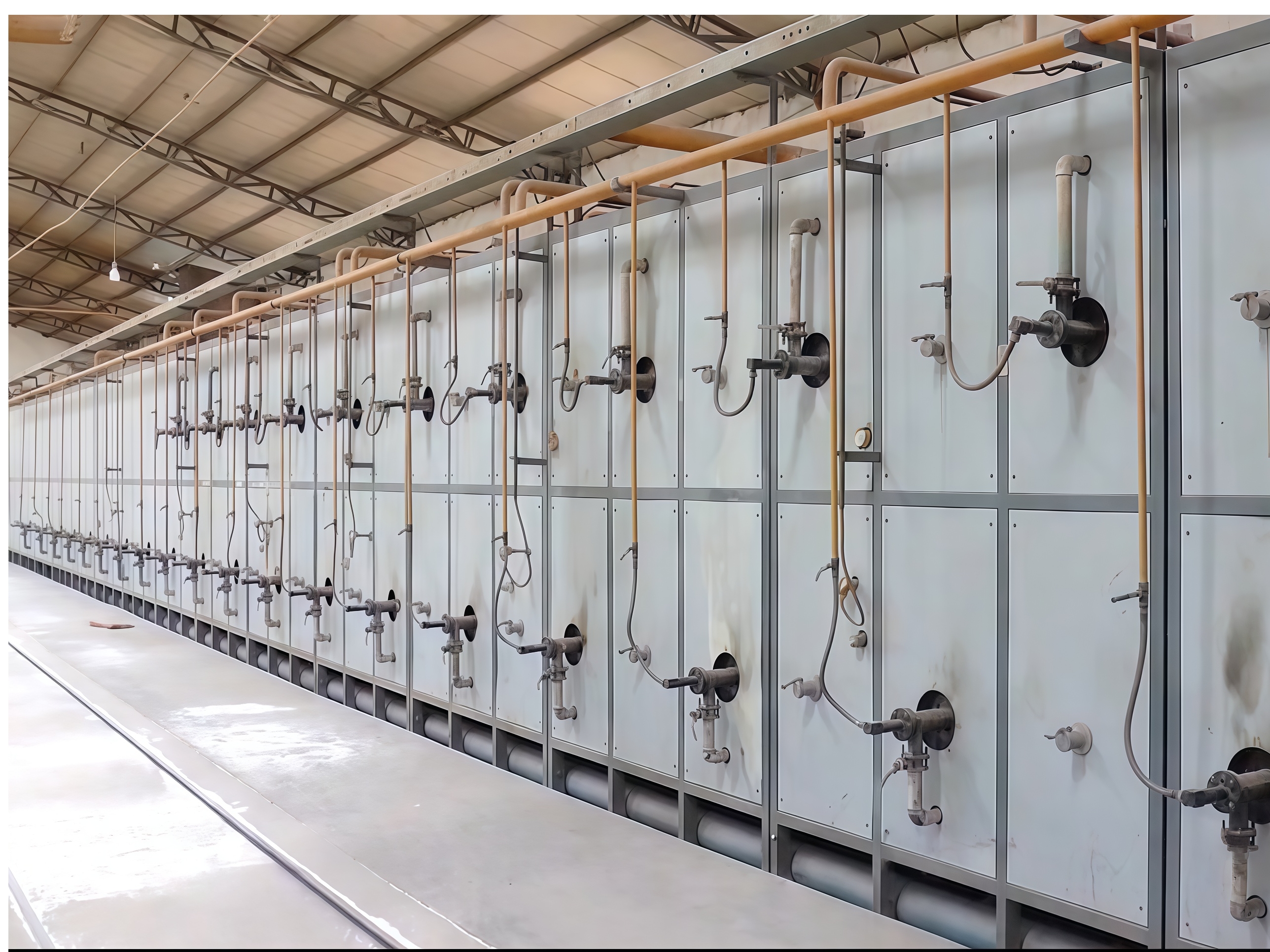
Vitrified bond performance is created in the kiln: firing conditions determine how strongly the bond holds the grain, and therefore how the wheel wears.
Parameter three: abrasive type and grain density (concentration)
Abrasive type should be matched to the workpiece, not chosen by habit. In standard bonded-abrasive markings the abrasive letter identifies the grain family - designation letters such as A, WA, PA and GC appear in ordinary engineering specifications. Broadly, aluminium oxide types cover steels: brown fused alumina is the general-purpose workhorse, while higher-purity white and pink alumina grades are used where heat sensitivity or finish requirements are more demanding. Silicon carbide types are used for harder, more brittle and non-ferrous workpieces such as cast iron and carbide.
Grain density - often expressed through the structure number in the marking, and as concentration in superabrasive systems - controls how much abrasive is packed into the wheel and how much space remains for chips and coolant. A denser structure gives more cutting points and better form holding; a more open structure gives better chip clearance and coolant flow, reducing burn and loading in heavy stock removal and internal grinding.
What Xinfa contributes to the specification
Xinfa has manufactured vitrified bond grinding wheels since 1989 and also produces brown fused alumina abrasive, so abrasive selection and wheel manufacturing sit in the same production system. Its product range covers General Purpose Grinding Wheel and Bench Grinder Wheel, Tool Grinding Wheel, Flat Surface Grinding Wheel, Centreless Grinding Wheel and Cylindrical Grinding Wheel, Crankshaft & Cam Shaft Grinding Wheel, Saw Tooth Grinding Wheel, Bearing Grinding Wheel, Gear Grinding Wheel and Worm Grinding Wheel, Needle Grinding Wheel, Roll Grinding Wheel V&B, Internal (Bore) Grinding Wheel, Oilstone, Segments, Resin Bonded Snagging Grinding Wheel, Rubber Control & Centreless wheels, Flap Disc and Mounted Points.
On performance, Xinfa's published comparison states that its ceramic grinding wheel offers 30% higher grinding efficiency than conventional grinding wheels, requires less frequent dressing, and carries 20% lower cost, with long-lasting performance positioned for industrial plant scenarios. Supplier-stated comparisons of this kind are most useful as a hypothesis for your own test, not as a substitute for it.
Step-by-Step Breakdown: Writing the Specification
- Define the output requirement first. Record required surface finish, dimensional tolerance, stock allowance, target cycle time and the dressing interval the cell can tolerate. Convert that dressing interval into a parts-per-dress target - that is your grind ratio objective.
- Fix the machine interface. Confirm wheel dimensions, bore, flange and mounting type, and check the marking on the wheel against the shape, designation and marking requirements of ISO 525. Verify that the wheel's rated speed exceeds the machine operating speed, per ANSI B7.1 or EN 12413 depending on the market.
- Select the abrasive type by workpiece material. Steels generally point to aluminium oxide grain families, with brown fused alumina for general work and higher-purity alumina where heat and finish matter; cast iron, carbide and non-ferrous materials generally point to silicon carbide.
- Select grit size. Start from the finish requirement and choose the coarsest grit that satisfies it, then check that coolant delivery and machine rigidity can support that cut rate.
- Select grade. Choose a harder grade for rigid machines, stable stock conditions and consistent materials; move softer for chatter-prone setups, burn-sensitive or hardened workpieces, and interrupted cuts.
- Select structure and grain density. Open structure for heavy stock removal, long arcs of contact such as internal grinding, and where coolant flow is limited; denser structure where form holding and finish dominate.
- Confirm the bond system and documentation. Vitrified bond for form retention, heat resistance and coolant compatibility; resin or rubber bonds where the operation calls for them.
- Validate on the machine, one variable at a time. Run the trial wheel, record parts per dress, finish, burn or loading, spindle power and dimensional drift, then adjust a single parameter before the next trial.
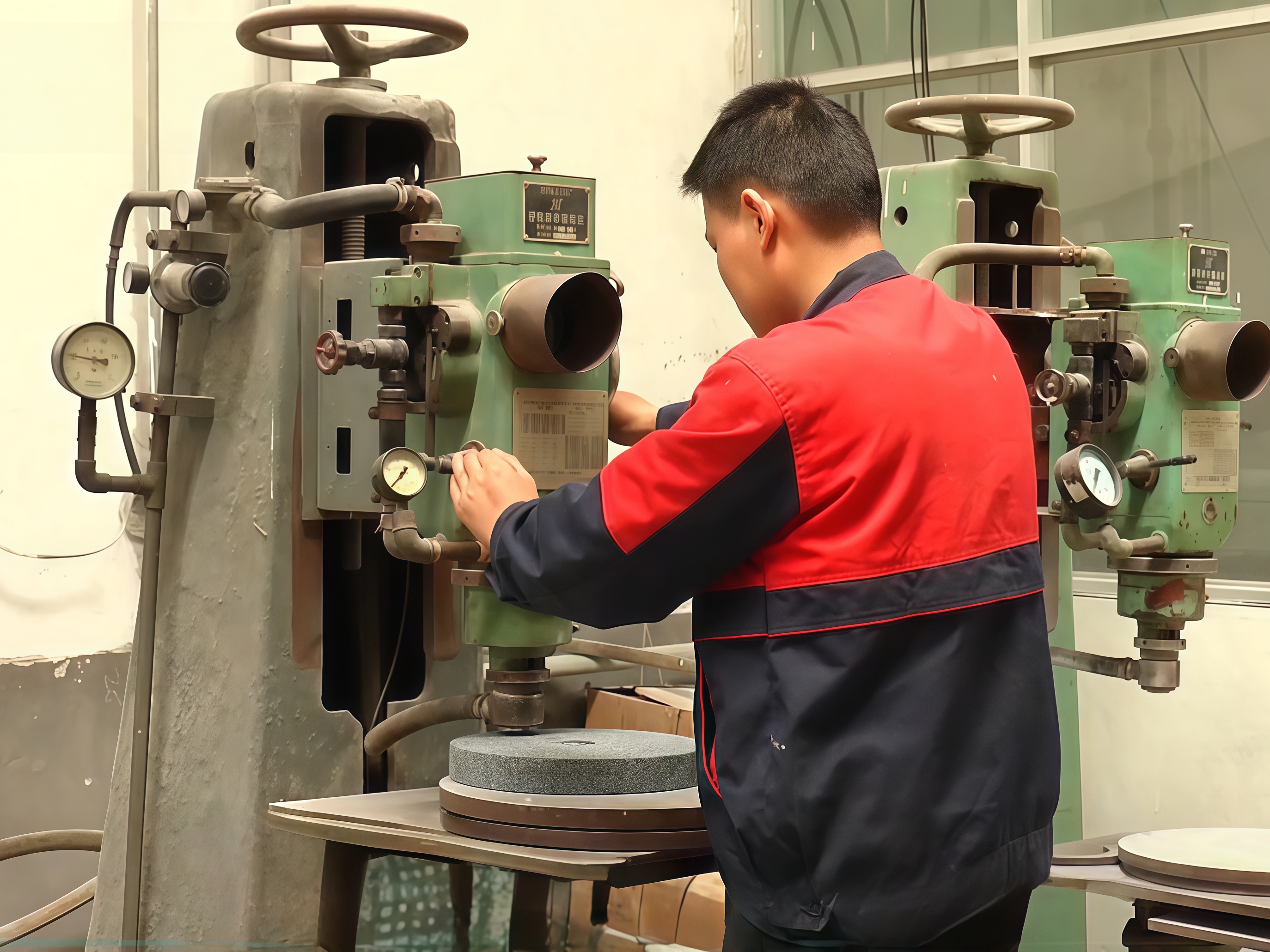
Inspection before shipment: specification compliance is verified against the agreed parameters rather than assumed from the drawing.
Use Cases: Matching Wheel Families to the Operation
Different grinding operations pull the same three parameters in different directions. The table below maps common operations to the wheel families Xinfa manufactures and to the specification driver that usually dominates.
| Operation / application | Wheel family | Dominant specification driver |
|---|---|---|
| General workshop and bench grinding | General Purpose Grinding Wheel; Bench Grinder Wheel | Balanced cut rate and wheel life; operator safety |
| Tool and cutter grinding | Tool Grinding Wheel | Form holding and edge quality on hardened tool steel |
| Flat surface grinding | Flat Surface Grinding Wheel | Coolant flow, chip clearance and flatness |
| Centreless grinding | Centreless Grinding Wheel; Rubber Control & Centreless | Interaction between grinding wheel and control wheel behaviour |
| External cylindrical grinding | Cylindrical Grinding Wheel | Roundness, size control and dressing interval |
| Crankshaft and camshaft grinding | Crankshaft & Cam Shaft Grinding Wheel | High stock removal combined with finish on interrupted geometry |
| Saw tooth and needle grinding | Saw Tooth Grinding Wheel; Needle Grinding Wheel | Profile retention on narrow contact areas |
| Bearing component grinding | Bearing Grinding Wheel | Fine finish, tight tolerance and high parts per dress |
| Gear and worm grinding | Gear Grinding Wheel; Worm Grinding Wheel | Profile accuracy and heat control |
| Roll grinding | Roll Grinding Wheel V&B | Large contact area, form retention and surface integrity |
| Internal (bore) grinding | Internal (Bore) Grinding Wheel | Long arc of contact: open structure and grade balance |
| Deburring, dressing and finishing | Oilstone; Segments; Mounted Points; Flap Disc | Controlled material removal and surface condition |
| Heavy snagging and fettling | Resin Bonded Snagging Grinding Wheel | Resilience under high load rather than form holding |
Comparison Table: Ceramic Grinding Wheel vs Conventional Grinding Wheel
The table below reproduces Xinfa's published comparison between its ceramic grinding wheel and a conventional grinding wheel. It is presented as supplier-stated performance data; the figures should be confirmed against your own test conditions.
| Comparison dimension | Ceramic grinding wheel | Conventional grinding wheel |
|---|---|---|
| Core difference | Long-lasting performance | Reference baseline |
| Grinding efficiency | 30% higher | Reference baseline |
| Efficiency overall | Higher | Reference baseline |
| Cost | 20% lower | Reference baseline |
| Maintenance | Less frequent dressing | Reference baseline |
| Best-fit environment | Industrial plant scenarios | Reference baseline |
Parameter trade-off reference
| Move the parameter | Effect on grind ratio | Counter-effect to control |
|---|---|---|
| Grit size: coarser | Faster stock removal | Rougher finish; higher wheel wear |
| Grit size: finer | Better finish and size control | Slower cutting; loading and burn risk |
| Grade: harder | Longer grain retention; higher wheel life | Burn and loading on ductile or heat-sensitive workpieces |
| Grade: softer | Cooler cutting; self-dressing behaviour | Lower grind ratio; more frequent wheel change |
| Structure: more open | Better chip clearance and coolant flow | Lower form holding; less consistent finish |
| Structure: denser | More cutting points; better form and finish | Less room for chips and coolant |
Frequently Asked Questions
Which standards apply to a ceramic grinding wheel specification?
Bonded abrasive products must comply with ISO 525 for shape types, designation and marking requirements, so the marking string on the wheel is the first compliance checkpoint. Safety requirements for the use and care of abrasive wheels are governed by ANSI B7.1 in the United States and EN 12413 in the European Union. Xinfa's quality management system passed ISO 9001:2008 certification and the company is a member of the China Abrasives Association. In practice, compliance means three checks: the marking matches the specification, the rated speed is above the machine operating speed, and the wheel is handled and stored per the applicable safety standard.
Can grit, grade, structure and abrasive type be customized for a specific operation?
Yes. These are manufacturing variables rather than fixed catalogue options. Xinfa has manufactured vitrified bond grinding wheels since 1989, with more than 100 sets of advanced production and testing equipment, an R&D team of 6 engineers, and a technology research and development centre that was listed as a municipal-level enterprise R&D centre in 2015. Its range covers General Purpose Grinding Wheel, Bench Grinder Wheel, Tool Grinding Wheel, Flat Surface Grinding Wheel, Centreless and Cylindrical Grinding Wheel, Crankshaft & Cam Shaft Grinding Wheel, Saw Tooth, Bearing, Gear, Worm, Needle and Roll Grinding Wheel V&B, Internal (Bore) Grinding Wheel, Oilstone, Segments, Resin Bonded Snagging Grinding Wheel, Rubber Control & Centreless, Flap Disc and Mounted Points. Customization is only meaningful when machine data, workpiece material and target finish are supplied with the enquiry.
How should cost per part be calculated instead of comparing wheel prices?
Wheel price alone hides the economics of grinding. Cost per part is driven by wheel cost divided by parts per wheel, plus the cost of dressing downtime and the cost of cycle time. Xinfa's published comparison states that its ceramic grinding wheel delivers 30% higher grinding efficiency and 20% lower cost than conventional grinding wheels, with less frequent dressing - the commercial logic being that fewer dressing stops and longer wheel life reduce machine downtime. Buyers should model those three components separately rather than accepting a unit price as the cost basis.
How can a specification be validated before committing to volume?
Validate with a trial wheel rather than a document review. A practical sequence is: record the current wheel marking, machine rigidity, spindle speed, coolant type and workpiece material; state the target finish, cycle time and acceptable dressing interval; request a trial wheel in the proposed specification; then run a controlled comparison recording parts per dress, surface finish, burn or loading, spindle power and dimensional drift. Change one variable at a time so that the effect on grind ratio is attributable.
What should buyers consider about capacity, packaging and delivery?
Supply reliability depends on production capacity and on how fragile abrasive products are handled in transit. Xinfa's annual production capacity is over 10,000 tons from a 30,000 m² plant with 120 employees; its export ratio is 35%, with products exported to more than 20 countries and regions including Southeast Asia, India, South Korea, Japan, the Middle East, Europe, the United States and Brazil. The factory is located in Linyi City, Shandong Province, about 180 km from Qingdao Port and 60 km from Rizhao Port. Because grinding wheels are fragile goods, pallet reinforcement and shockproof cushioning are applied as packaging controls. To move forward, send your machine and workpiece data to Jackie Wang at sales@xinfaabrasives.com or +86 13562923298 (WhatsApp same number) to request a sample wheel and a quotation against your specification.
Conclusion: Specify the Ratio, Then Verify It
A ceramic grinding wheel is specified, not selected. Grit size sets the cut rate and the finish ceiling, bond and grade set the wear rate, and abrasive type with grain density sets how the wheel behaves in the cut - together they determine the grind ratio that shows up as parts per dress on the shop floor. Start from the output requirement, fix the machine interface against ISO 525 and the applicable safety standard, then move one parameter at a time until trial data matches the target.
Xinfa has manufactured vitrified bond grinding wheels since 1989 and produces brown fused alumina abrasive within the same manufacturing system, which means grain selection and wheel specification can be discussed together. Browse the full product and specification range at xinfa-abrasives.com, download the Xinfa product catalogue (PDF), or contact the team directly with your operating data.
Next Step: Test Your Specification
Send your machine data, workpiece material and current wheel marking to Xinfa, and request a sample wheel or a quotation built around your target grind ratio. Contact Jackie Wang - email sales@xinfaabrasives.com, telephone and WhatsApp +86 13562923298, Xincun Village, Dadian Town, Junan County, Linyi City, Shandong Province, China. Catalogue download: Xinfa product catalogue (PDF).