Top 10 Ceramic Grinding Wheel Types for Manufacturing: A Ranking Guide
Quick answer: the ten ceramic (vitrified bond) grinding wheel types that carry the most weight in manufacturing projects are, in ranked order: flat surface, cylindrical, centerless, internal (bore), tool, crankshaft & cam shaft, gear, bearing, roll (V&B), and bench grinder wheels. The order reflects how broadly each form is deployed across production grinding and how much project risk sits on selecting the right form. Every dimensional range, abrasive code, grit band, hardness grade and structure number below comes from the published vitrified bond range of Shandong Xinfa Abrasives & Grinding Tools Co., Ltd., used here as the reference manufacturer.
A grinding wheel is not bought as a single product. It is bought as a project decision: a wheel type matched to an operation, a geometry matched to a machine, and a specification matched to a workpiece. That is why this guide treats the Ceramic Bonded Grinding Wheel family — produced in a vitrified (ceramic) bond — as ten distinct project tools rather than one catalogue item, and states the verified range data for each.
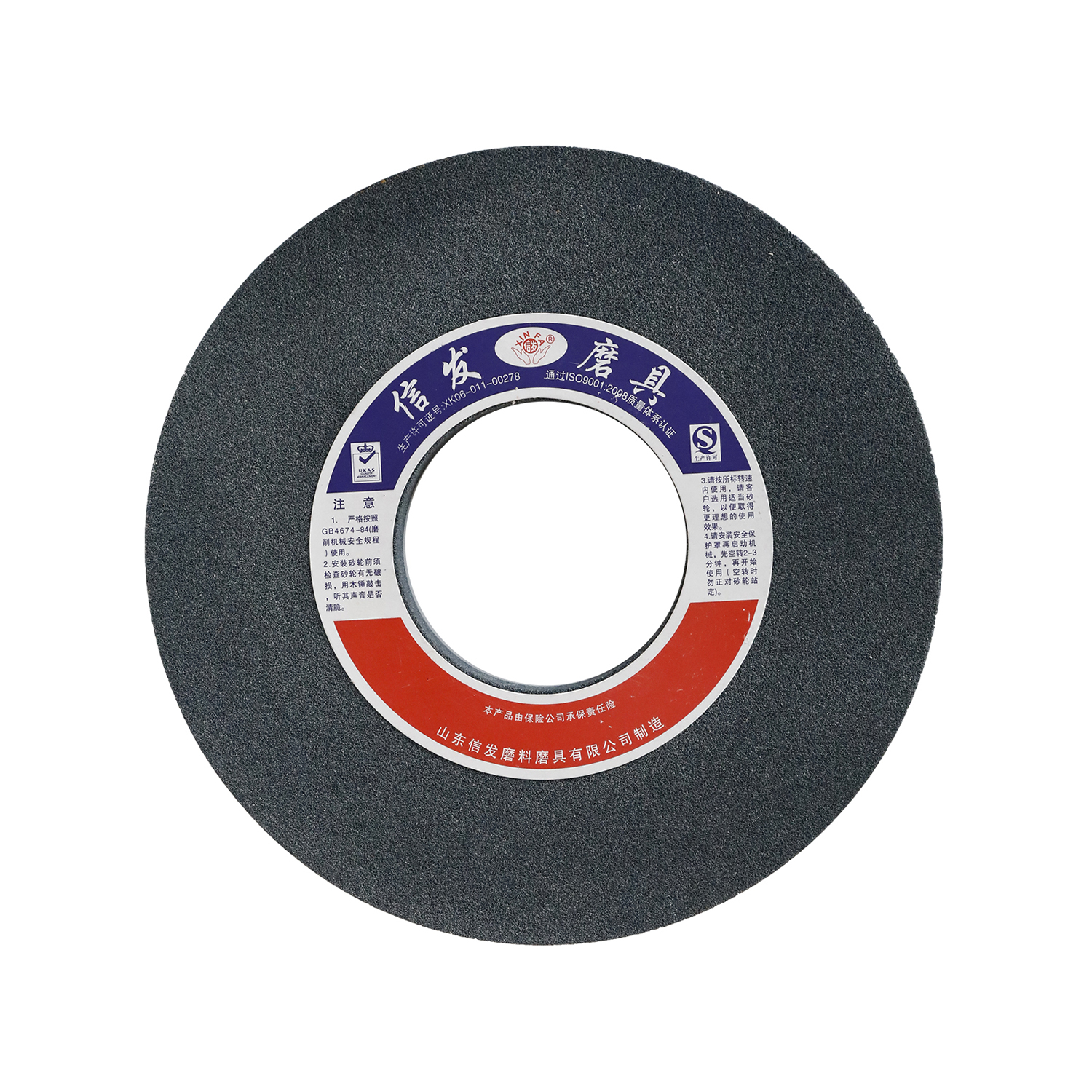
Ranked first: the vitrified bond flat surface grinding wheel, the widest geometry envelope in the ceramic grinding wheel range.
The Project Failure Point: Choosing the Wrong Wheel Form
Most ceramic grinding wheel problems that reach a buyer are not grain quality problems. They are form problems. A wheel that is dimensionally correct but structurally wrong for the operation shows up as burn, chatter, short wheel life or a rejected surface finish long before anyone questions the abrasive.
Three failure patterns repeat across projects:
- Operation mismatch. An external cylindrical specification used where the operation is actually centerless through-feed, or a tool grinding specification used for bore work. Each form in this ranking has its own geometry envelope, and the envelopes do not overlap freely.
- Interface mismatch. Outside diameter, thickness and hole are fixed by the machine spindle. A wheel delivered outside the working thickness band cannot be compensated for by changing hardness.
- Specification mismatch. Once the form and interface are fixed, abrasive type, grit, hardness and structure decide how the wheel behaves on the workpiece material. These are the last variables to set, not the first.
Because vitrified (ceramic) bond wheels are produced as rigid, porous bodies in a fired glass bond, the form and the specification are manufactured together. That is why this guide ranks wheel types first.
Industry Background: Where Ceramic Grinding Wheels Sit in Manufacturing
The commercial context is stable and large. The global grinding wheels market was valued at US$ 8.71 billion in 2024 and is projected to grow at a CAGR of 4.5% through 2030 (Grand View Research). Vitrified bond (ceramic bond) wheels held the largest segment share at 38.4% of the total grinding wheel market in 2025 (Dataintelo), which makes the vitrified family the single most important bond category for manufacturing buyers to understand.
Abrasive supply follows the same pattern. Brown Fused Alumina held 52.4% of the global fused alumina market in 2025, driven primarily by abrasive applications (Dataintelo) — which is why Brown Fused Alumina (A) appears as the base grain across almost every wheel type in this ranking. On the trade side, China's exports of natural or artificial abrasive powder or grain under HS 680530 reached USD 120.9 million in 2024 (World Bank WITS).
The manufacturing landscape is also consolidated at the top. Major global manufacturers include Saint-Gobain (Norton), 3M (Cubitron II), Tyrolit and Klingspor, alongside specialist vitrified bond producers such as Xinfa. For project buyers, that structure means differentiation rarely sits in brand recognition; it sits in how precisely a supplier can match a wheel form, geometry and specification to a named operation.
Two standards frames govern what buyers receive:
- ISO 525 defines shape types, designation and marking requirements for bonded abrasive products.
- ANSI B7.1 (United States) and EN 12413 (European Union) govern the safety requirements for the use and care of abrasive wheels.
Ranking Criteria: How the Ten Types Were Ordered
This is an editorial ranking built on four criteria, all drawn from the published product range rather than from sales popularity:
- Geometry coverage. How wide the published diameter, thickness and hole envelope is for that form.
- Abrasive and grit breadth. How many abrasive codes and grit sizes that form is offered in.
- Precision sensitivity. How much the finished part depends on the wheel form being exactly right, rather than on general-purpose stock removal.
- Manufacturing dependency. How many production sectors rely on that form as a routine process step.
A buyer's own ranking will differ: if the plant runs bearing raceways, the bearing grinding wheel is first regardless of its position here. The value of the list is that it fixes the ten forms a purchasing project is most likely to need, and states what each one actually is.
The Top 10 Ceramic Grinding Wheel Types for Manufacturing
1Flat Surface Grinding Wheel
Ranks first because it carries the widest geometry envelope in the range and the longest abrasive list. Diameter runs 90–900 mm, thickness 13–100 mm, hole 5–305 mm, and the form is offered in extended abrasive codes beyond the standard set.
- Abrasive: A, WA, AA, 38A, PA, 25A, SA, MA, GC, C, RA, DA, 9A, 64A, 55A
- Grit: F16, F24, F30, F36, F46, F60, F80, F100, F120
- Hardness: G, H, J, K, L, M, N, P, Q, R, S, T, Y
- Structure: 0–14 | Max linear velocity: 20, 25, 32, 35, 40, 45, 50, 60, 70 m/s
Project fit: surface grinding of plates, dies, molds and flat faces. Brown Fused Alumina (A) is the general-purpose choice; White Fused Alumina (WA) is commonly specified for hardened and heat-sensitive steels; Green Silicon Carbide (GC) is generally used where the workpiece is carbide. The 70 m/s top of the velocity band is unique to this form in the range.
2Cylindrical Grinding Wheel
The workhorse external form for shafts, journals and spindles. Diameter 250–750 mm, thickness 20–100 mm, hole 75–305 mm.
- Abrasive: A, WA, AA, 38A, PA, 25A, SA, MA, GC, C, SG
- Grit: F16–F150 | Hardness: G–Y | Structure: 0–14
- Max linear velocity: 32, 35, 40, 45, 50, 60 m/s
Project fit: external cylindrical grinding in automotive, hydraulic and general machinery work. The F150 end of the grit band supports finer finishing passes than the flat surface list, which stops at F120.
3Centerless Grinding Wheel
The thickest bodies in the ceramic range: diameter 300–750 mm, thickness 100–400 mm, hole 127–305 mm. Centerless is a two-wheel process, and the regulating wheel is a separate product — rubber control and centerless wheels are supplied at OD 200–500 mm, thickness 100–380 mm, hole 75–305 mm, in abrasives A and WA, grit F80–F150, hardness K–Q, structure 0–14, at 32–60 m/s.
- Abrasive: A, WA, AA, 38A, PA, 25A, SA, MA, GC, C, SG
- Grit: F16–F150 | Hardness: G–Y | Structure: 0–14
- Max linear velocity: 32, 35, 40, 45, 50, 60 m/s
Project fit: high-volume grinding of small cylindrical parts where the workpiece is supported by a regulating wheel rather than a center. The matched rubber control wheel is a project item in its own right and should be specified with the grinding wheel.
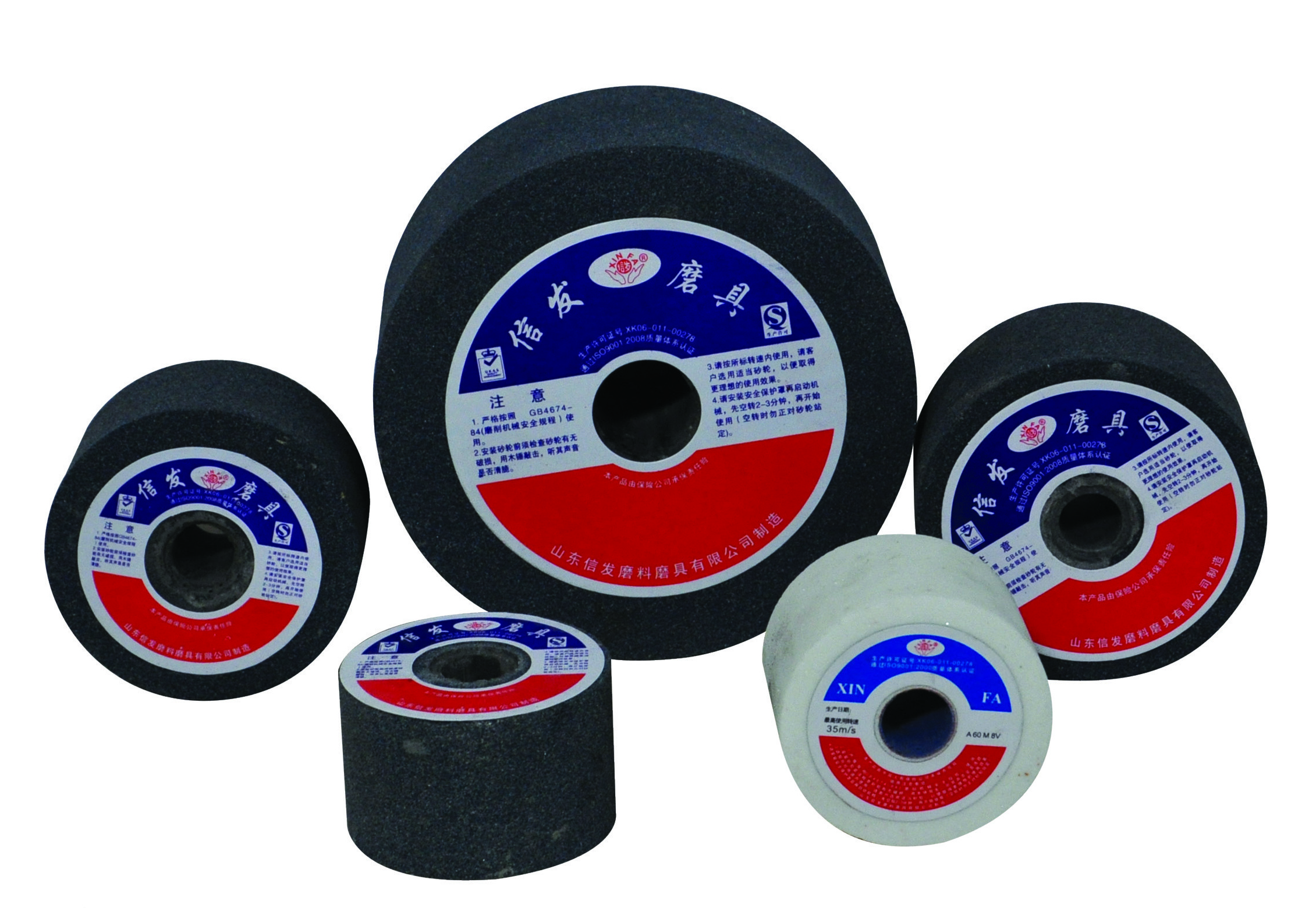
Internal (bore) grinding wheel: the smallest diameter class in the vitrified range, at OD 50–150 mm.
4Internal (Bore) Grinding Wheel
The precision end of the range, and the smallest diameter class: OD 50–150 mm, thickness 6–120 mm, hole 16–32 mm. Internal grinding wheels are specified where the finished dimension is a bore, not an outside surface.
- Abrasive: A, WA, AA, 38A, PA, 25A, SA, MA, GC, C, SG
- Grit: F16–F150 | Hardness: G–Y | Structure: 0–14
- Max linear velocity: 32, 35, 40, 45, 50, 60 m/s
Project fit: bore finishing in hydraulics, bearings, molds and precision components. Because the wheel is small and the contact arc is long, geometry tolerance matters more here than in any other form in the list.
5Tool Grinding Wheel
Ranks here because the thickness range starts at 3 mm — the thinnest wheels in the family — while the diameter range extends to 600 mm. OD 100–600 mm, thickness 3–150 mm, hole 12.7–203 mm.
- Abrasive: A, WA, AA, 38A, PA, 25A, SA, MA, GC, C, SG
- Grit: F16–F150 | Hardness: G–Y | Structure: 0–14
- Max linear velocity: 32, 35, 40, 45, 50, 60 m/s
Project fit: tool sharpening and cutter maintenance in cutting tool production and tool rooms — one of the named functions of the vitrified range alongside grinding, sanding, polishing, deburring and ultra-precision machining.
6Crankshaft & Cam Shaft Grinding Wheel
The largest outside diameter in the ranking: OD 200–1100 mm, thickness 16–90 mm, hole 127–305 mm. The wide diameter span lets the same form cover small camshaft work and large crankshaft journals.
- Abrasive: A, WA, AA, 38A, PA, 25A, SA, MA, GC, C, SG
- Grit: F16–F150 | Hardness: G–Y | Structure: 0–14
- Max linear velocity: 32, 35, 40, 45, 50, 60 m/s
Project fit: automotive engine component grinding. These wheels run in continuous operation against high-temperature and high-wear conditions, which is the working environment the vitrified range is designed for.
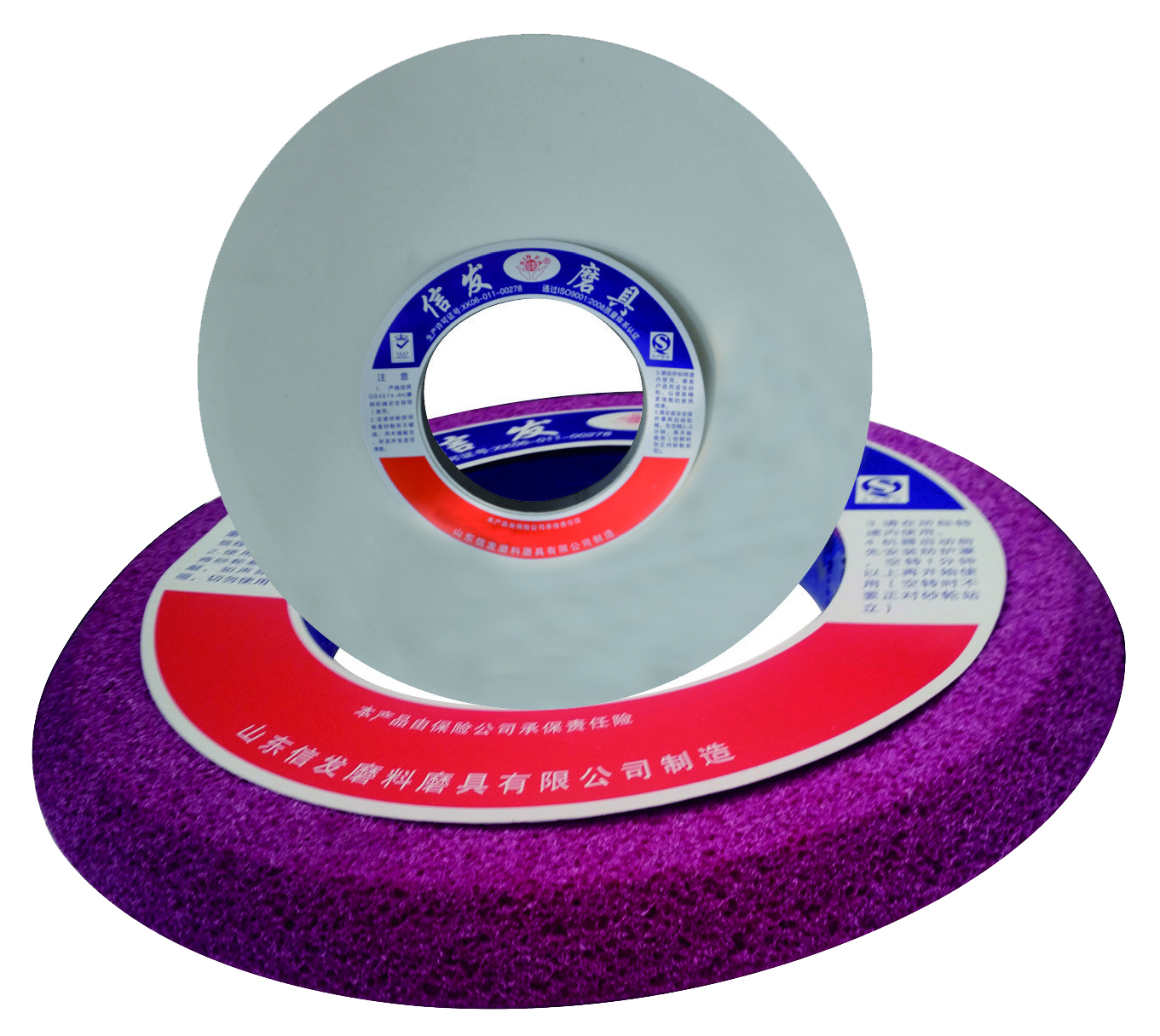
Gear grinding wheel: the flank form, not the diameter, drives the specification conversation.
7Gear Grinding Wheel
Gear grinding is defined by the flank form rather than by one standard geometry, so this form is specified against the family envelope rather than a single dimension block: diameter 150–1100 mm, thickness 3–300 mm, hole 12.7–305 mm, with the full abrasive list A, WA, AA, 38A, PA, 25A, SA, MA, GC, C, RA, DA, 9A, 64A, 55A, grit F16–F120, hardness G–Y, structure 0–14, and max linear velocity 20–70 m/s.
Project fit: gear and transmission component finishing in automotive and general machinery. Because the profile is generated by the wheel, the specification conversation starts from the flank geometry and works back to abrasive and hardness.
8Bearing Grinding Wheel
The narrowest thickness band in the range relative to its diameter: OD 500–600 mm, thickness 14–50 mm, hole 305 mm. That geometry is what makes it a raceway and face grinding form rather than a general-purpose wheel.
- Abrasive: A, WA, AA, 38A, PA, 25A, SA, MA, GC, C, SG
- Grit: F16–F150 | Hardness: G–Y | Structure: 0–14
- Max linear velocity: 32, 35, 40, 45, 50, 60 m/s
Project fit: bearing manufacturing, which appears as a named application industry for the vitrified range alongside automotive, cutting tools, aerospace, 3C electronics, molds, hydraulics, semiconductors, photovoltaics, hardware and medical.
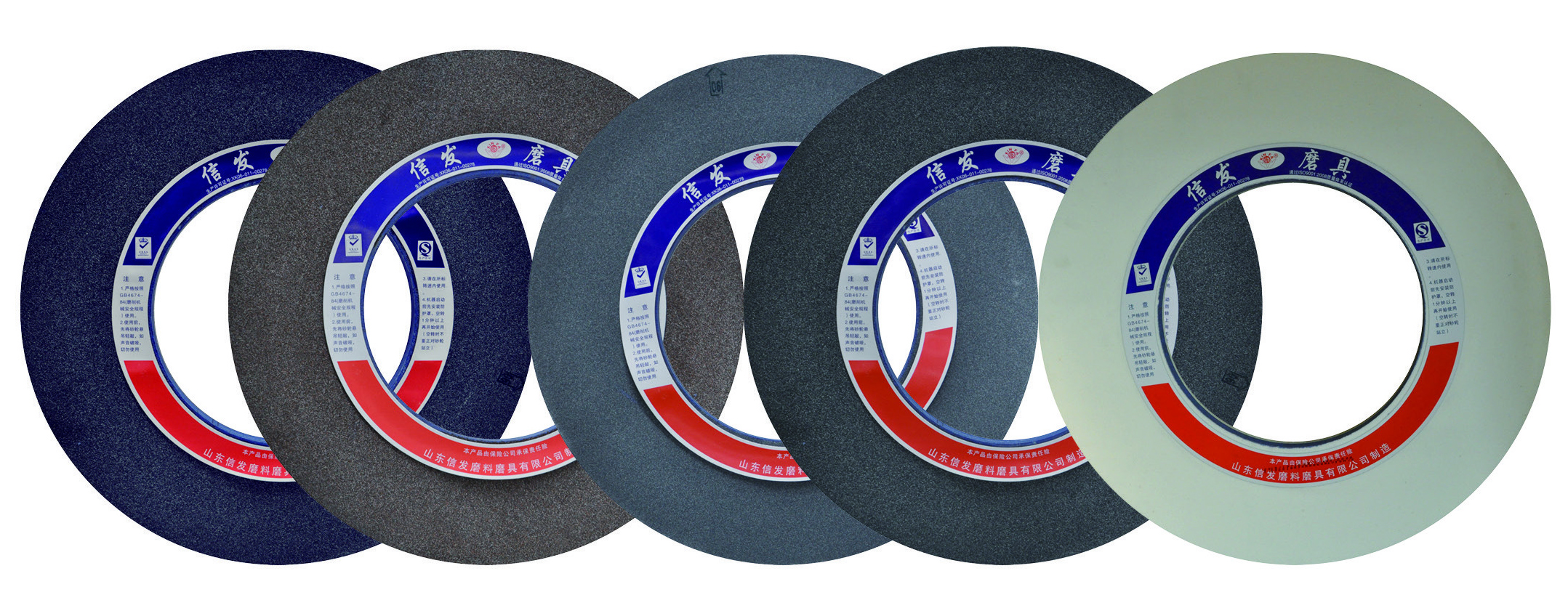
Bearing grinding wheel: a 14–50 mm thickness band on a 500–600 mm diameter body.
9Roll Grinding Wheel (V&B)
The heaviest geometry in the ranking: OD 450–1066 mm, thickness 50–150 mm, hole 203–508 mm. No other form in the range takes a bore above 508 mm.
- Abrasive: A, WA, AA, 38A, PA, 25A, SA, MA, GC, C, SG
- Grit: F16–F150 | Hardness: G–Y | Structure: 0–14
- Max linear velocity: 32, 35, 40, 45, 50, 60 m/s
Project fit: roll reconditioning and large-diameter cylindrical work, where wheel weight and mounting stability become part of the specification decision.
10Bench Grinder Wheel
Ranks last on precision sensitivity, not on usage volume. OD 100–450 mm, thickness 12–80 mm, hole 12.7–50.8 mm, and it is the form most often ordered from a marking rather than from a drawing.
- Example markings from the range: 200×20×31.75 A 46 R 5 V 35 m/s; 200×25×31.75 A 60 R 5 V 35 m/s; 250×25×31.75 A 60 R 5 V 35 m/s
- Abrasive: A, WA, AA, 38A, PA, 25A, SA, MA, GC, C, SG
- Grit: F16–F150 | Hardness: G–Y | Structure: 0–14
Project fit: tool rooms, maintenance shops and general deburring. In the marking above, A 46 R 5 V reads as Brown Fused Alumina, grit 46, hardness R, structure 5, vitrified bond — the designation logic a buyer should be able to decode before ordering.
Forms Just Outside the Top 10
Four more vitrified forms sit in the same family and are worth knowing, because projects frequently land on them instead: Worm Grinding Wheel (OD 220–450 mm, T 50–230 mm, H 76.2–203 mm), Needle Grinding Wheel (OD 400–450 mm, T 150–200 mm, H 100–150 mm, P 170–225 mm), Saw Tooth Grinding Wheel (OD 125–300 mm, T 6–16 mm, H 12.7–32 mm) and General Purpose Grinding Wheel (OD 50–600 mm, T 6–125 mm, H 12.7–203 mm). All four share the same abrasive, grit, hardness, structure and velocity structure as the ranked ten. Resin bonded snagging wheels (OD 300–900 mm, T 30–100 mm, H 38.1–305 mm) are a separate bond line and are not part of this ranking.
Step-by-Step: Matching a Project to a Wheel Type and Specification
The sequence matters more than the individual choices. Follow it in order and the specification narrows itself.
- Classify the operation. Surface, external cylindrical, centerless, internal bore, tool and cutter, crankshaft and camshaft, gear, bearing, roll, or bench and tool room. This step alone eliminates most of the ten types.
- Fix the machine interface. Outside diameter, thickness and hole before anything else. The family envelope is diameter 150–1100 mm, thickness 3–300 mm and hole 12.7–305 mm, and each type uses a narrower band inside it.
- Select the abrasive code. Available codes across the range are A (Brown Fused Alumina), WA (White Fused Alumina), AA, 38A, PA (Pink Fused Alumina), 25A, SA (Single Crystal Fused Alumina), MA (Microcrystalline Fused Alumina), GC (Green Silicon Carbide), C (Black Silicon Carbide) and SG, with RA, DA, 9A, 64A and 55A added on the flat surface and ceramic bonded forms.
- Set the grit. F16–F150 depending on form; the flat surface list runs F16–F120, while most precision forms extend to F150.
- Set the hardness grade. G through Y.
- Set the structure number. 0–14.
- Confirm the maximum linear velocity. 32–60 m/s on most forms, 20–70 m/s on the flat surface form, and 35 m/s in the published bench grinder markings.
- Verify the marking. Check the delivered marking against ISO 525 designation rules and the safety standard of the destination market — ANSI B7.1 in the United States, EN 12413 in the EU.
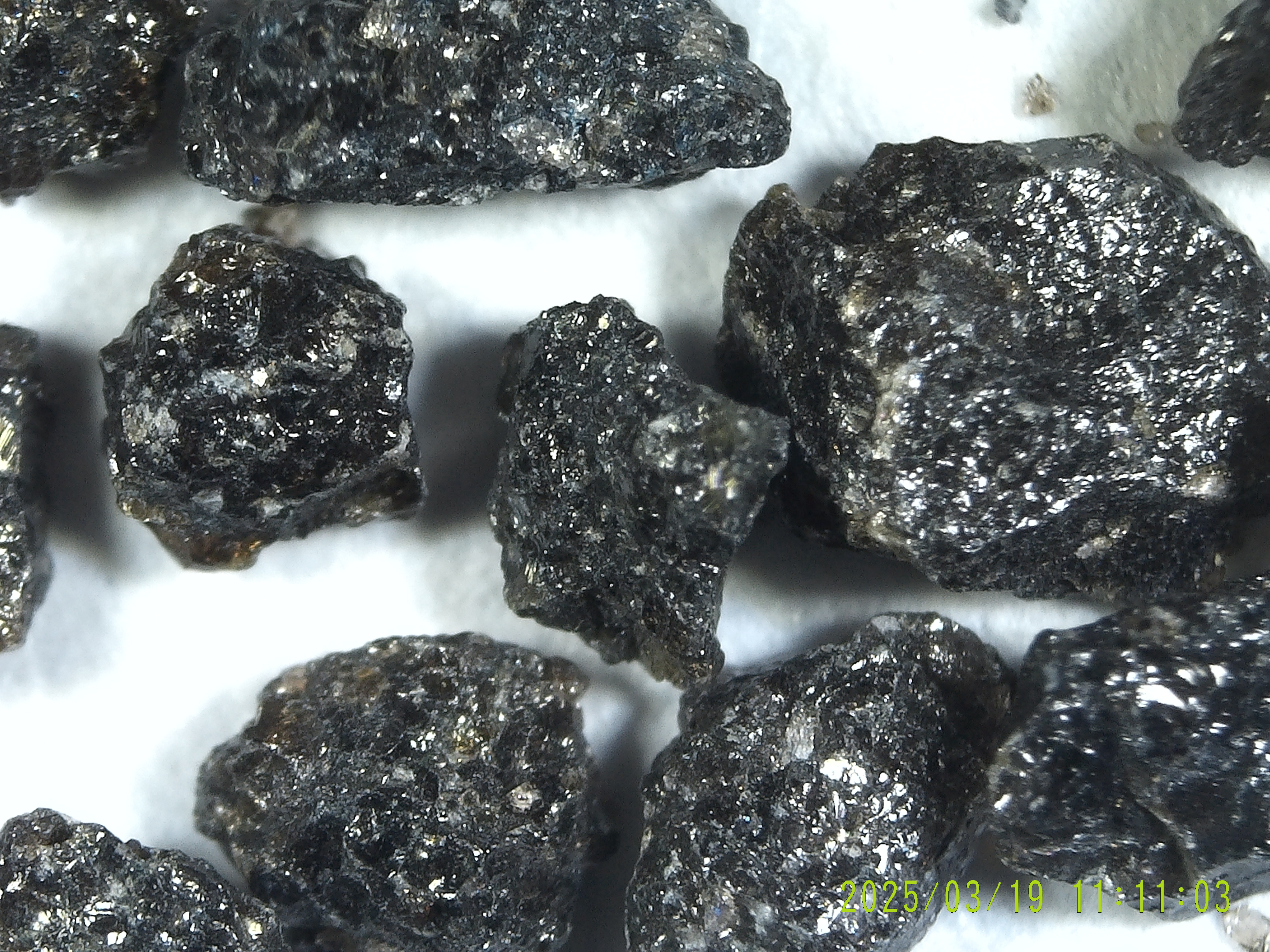
Brown Fused Alumina (A) is the base grain behind most general-purpose vitrified wheels and held 52.4% of the global fused alumina market in 2025.
Where These Wheels Run: Verified Application Envelope
The ten types are not niche products. The vitrified range is specified for grinding, sanding and polishing, tool sharpening, deburring and ultra-precision machining, in projects classified as grinding and polishing work. The operating conditions are high temperature and wear, in continuous operation mode, on grinders, grinding machines and electric hand tools — with explosion-proof requirements appearing in some project specifications.
Named application industries span automotive, bearings, cutting tools, aerospace, 3C electronics, molds, hydraulics, semiconductors, photovoltaics, hardware and medical. The range is supplied across Bangladesh, Brazil, China, Ecuador, Egypt, Ethiopia, India, Iran, Japan, Cambodia, South Korea, Kazakhstan, Morocco, Mexico, Peru, the Philippines, Pakistan, Russia, Saudi Arabia, Thailand, Tanzania, the United States and Vietnam.
A documented case illustrates how a ranked form becomes a repeat order. A grinding wheel OEM customer in Pakistan has been supplied 20 tons of vitrified product over a 2-year relationship for grinding workpieces; the reported outcome is stable operation with long-lasting wheel life.
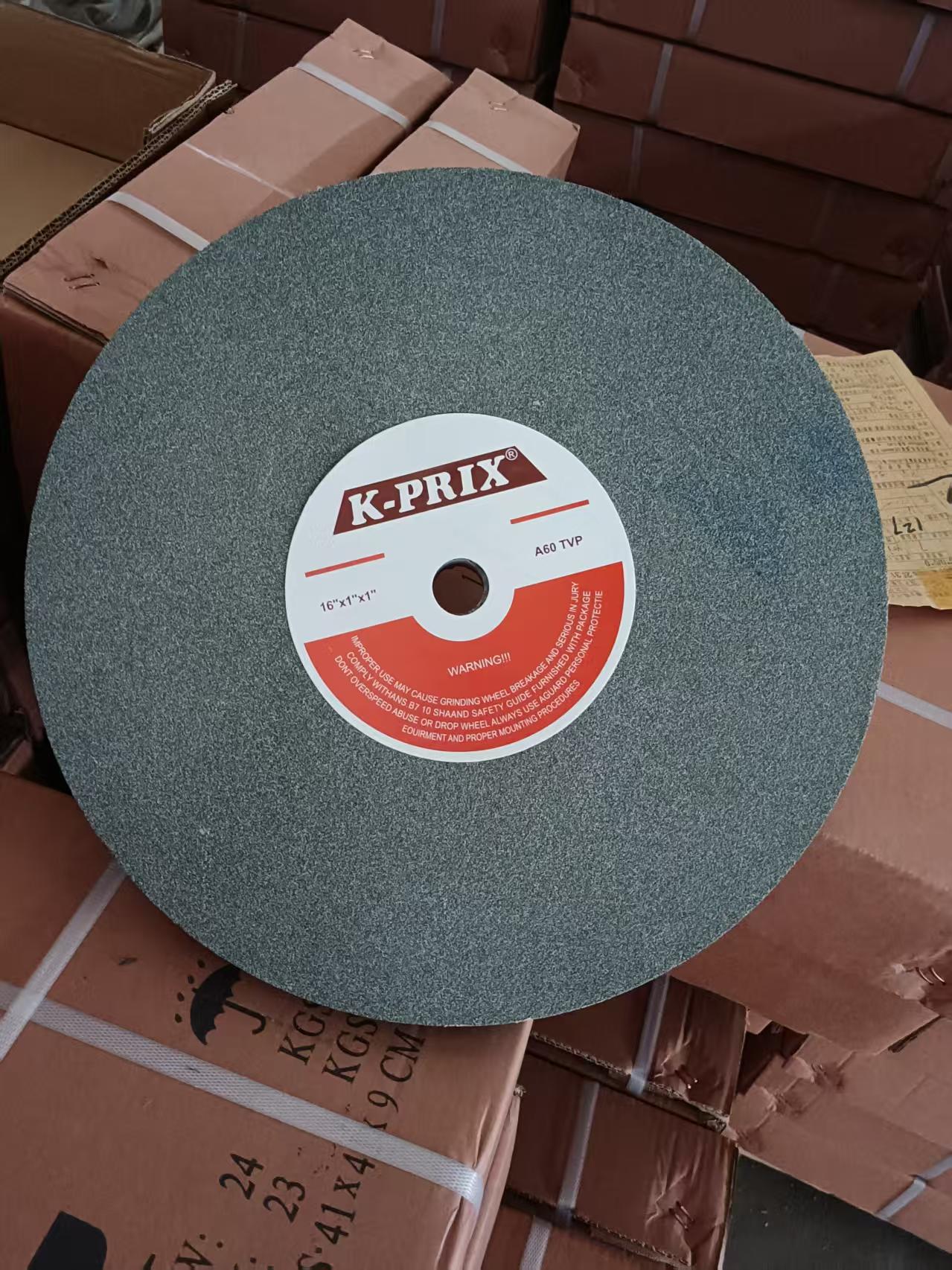
OEM supply case: 20 tons delivered to a grinding wheel customer in Pakistan over a 2-year relationship, reported as stable operation with long-lasting wheel life.
Comparison Table: The Ten Ceramic Grinding Wheel Types Side by Side
| Rank | Wheel type | OD (mm) | Thickness (mm) | Hole (mm) | Typical manufacturing role |
|---|---|---|---|---|---|
| 1 | Flat Surface Grinding Wheel | 90–900 | 13–100 | 5–305 | Flat faces, dies, molds, plates |
| 2 | Cylindrical Grinding Wheel | 250–750 | 20–100 | 75–305 | External shafts, journals, spindles |
| 3 | Centerless Grinding Wheel | 300–750 | 100–400 | 127–305 | High-volume small cylindrical parts |
| 4 | Internal (Bore) Grinding Wheel | 50–150 | 6–120 | 16–32 | Bore finishing, hydraulics, molds |
| 5 | Tool Grinding Wheel | 100–600 | 3–150 | 12.7–203 | Tool sharpening, cutter maintenance |
| 6 | Crankshaft & Cam Shaft Grinding Wheel | 200–1100 | 16–90 | 127–305 | Engine crankshaft and camshaft work |
| 7 | Gear Grinding Wheel | 150–1100 | 3–300 | 12.7–305 | Gear flank and transmission finishing |
| 8 | Bearing Grinding Wheel | 500–600 | 14–50 | 305 | Bearing raceway and face grinding |
| 9 | Roll Grinding Wheel (V&B) | 450–1066 | 50–150 | 203–508 | Roll reconditioning, large diameter work |
| 10 | Bench Grinder Wheel | 100–450 | 12–80 | 12.7–50.8 | Tool rooms, maintenance, deburring |
All dimensional ranges, abrasive codes, grit sizes, hardness grades, structure numbers and velocity bands in this table correspond to the published vitrified bond range. For the gear grinding form the family envelope applies: diameter 150–1100 mm, thickness 3–300 mm, hole 12.7–305 mm.
Frequently Asked Questions
Do ceramic grinding wheels have to meet mandatory standards?
Bonded abrasive products are designated and marked according to ISO 525, which defines shape types, designation and marking requirements. Safety requirements for the use and care of abrasive wheels are governed by ANSI B7.1 in the United States and EN 12413 in the European Union. On the manufacturing side, Shandong Xinfa Abrasives & Grinding Tools Co., Ltd. operates under an ISO 9001:2008 quality management system and is a member of the China Abrasives Association. The practical buyer check is that the marking on the wheel, the drawing specification and the operating speed limit all agree before mounting.
Can a vitrified bond manufacturer customize a wheel type for a specific project?
Yes. Xinfa runs OEM/ODM production with customization on specification, size, logo, bond type and abrasive material. The general vitrified envelope is diameter 150–1100 mm, thickness 3–300 mm and hole 12.7–305 mm, with abrasive codes A, WA, AA, 38A, PA, 25A, SA, MA, GC, C, RA, DA, 9A, 64A and 55A, grit F16–F120, hardness G–Y and structure 0–14. Individual forms are narrower — internal (bore) wheels run OD 50–150 mm while roll grinding wheels run OD 450–1066 mm — so the wheel type is fixed before abrasive and hardness are confirmed. The R&D center is staffed by 6 engineers, and the factory operates more than 100 sets of production and testing equipment with 900 tons of monthly capacity.
What are the minimum order quantity and commercial terms for a ceramic grinding wheel order?
The minimum order quantity is 2 tons. Commercial terms are built around the confirmed specification rather than a standard price list, because the same nominal wheel can be produced in different abrasive types, grit sizes, hardness grades, structure numbers and dimensions. A usable quotation therefore needs four inputs first: the operation type, the machine interface (outside diameter, thickness, hole), the workpiece material, and the required maximum linear velocity.
How should a buyer validate a wheel type before scaling up?
Validation starts with the specification and marking data, then moves to a controlled production run. Every wheel in the range is 100% tested before dispatch, and remote after-sales support is provided. A working example is the OEM customer in Pakistan, supplied 20 tons over 2 years for grinding workpieces, with stable operation and long-lasting wheel life reported. In practice a buyer confirms geometry against the machine spindle, runs the wheel under production conditions, and compares wear and surface result against the specification it replaces before committing to volume.
What is the lead time, and what is the fastest way to get a specification confirmed?
Standard lead time is 30–45 days, supported by 900 tons of monthly capacity and annual output of over 10,000 tons. Products are exported to more than 20 countries and regions across Southeast Asia, India, South Korea, Japan, the Middle East, Europe, the United States and Brazil, at an export ratio of 35%. To move a project forward, download the product brochure at https://cdn.socialarks.com/sbsp/24712/common/2026/0516/6a07b8f8bf94e.pdf or send the specification to sales@xinfaabrasives.com, tel/WhatsApp +86 13562923298. The fastest route is to name the wheel type from this ranking plus the machine interface, and Xinfa will confirm abrasive, grit, hardness and structure against it.
Next Step: From Type Selection to a Confirmed Specification
Ranking the ten types is the easy part; the project is won on the specification that follows. Take the wheel type from this list, fix the machine interface, and confirm abrasive, grit, hardness, structure and maximum linear velocity against the workpiece. That sequence turns a catalogue enquiry into a specification a supplier can quote against.
Shandong Xinfa Abrasives & Grinding Tools Co., Ltd. has manufactured vitrified bond grinding wheels since 1989, operates a 30,000 m² factory with 120 employees including a 6-engineer R&D team, and exports 35% of output. Full range details are available at xinfa-abrasives.com. For a specification check on any of the ten types above, contact Jackie Wang at sales@xinfaabrasives.com or +86 13562923298.
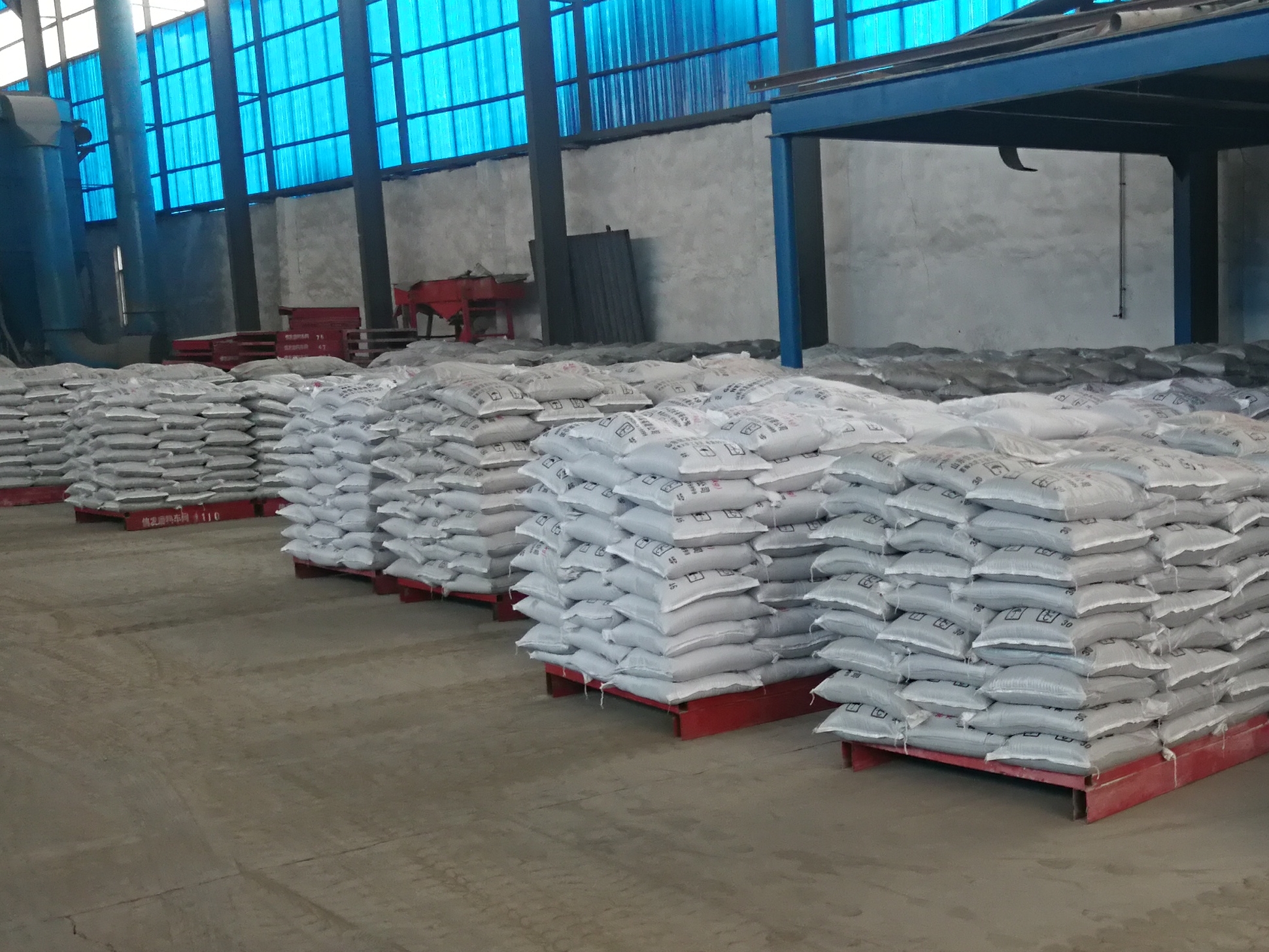
Raw material warehousing at Xinfa's 30,000 m² facility, Xincun Village, Dadian Town, Junan County, Linyi City, Shandong Province.