
2026 DTF Printer Evaluation: How to Compare Direct to Film Printers Before You Buy
Last updated: August 2026
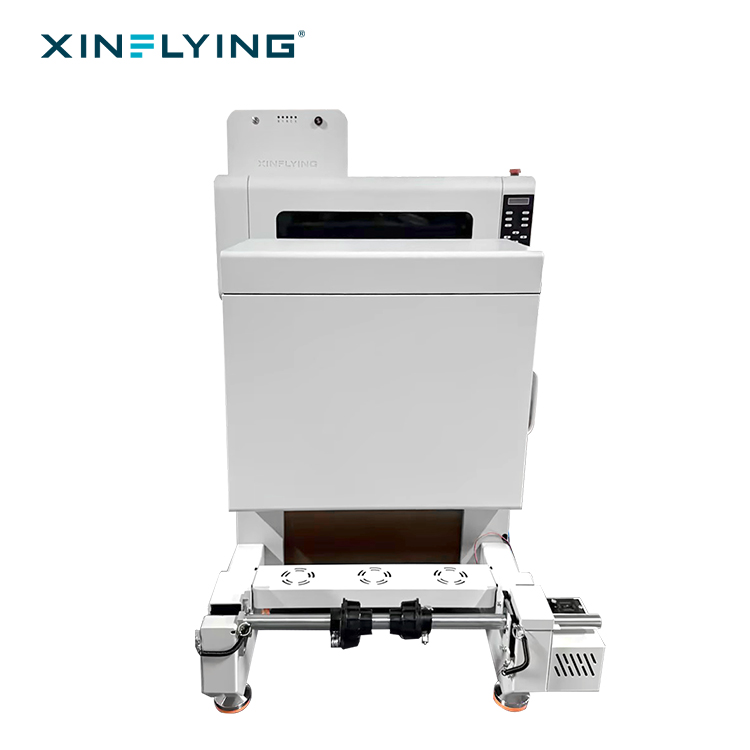
XINFLYING XF-450PRO: an all-in-one DTF solution for entry-level and small-batch apparel production.
Choosing a DTF printer in 2026 is more than picking the fastest or cheapest machine. A direct to film printer affects your production capacity, product flexibility, compliance readiness, and long-term operating costs. The right choice depends on how well the machine matches your order volume, fabric types, workflow, and growth plan.
This article provides an evidence-based framework for evaluating DTF printers. It covers the current market landscape, the technical factors that matter, real application examples, and a comparison of DTF printer setups designed for different business stages.
Why DTF Printer Evaluation Feels Complicated
DTF printing has quickly become a mainstream garment decoration method. The global Direct-to-Film (DTF) printing market was valued at USD 2.7 billion in 2024, according to Grand View Research. Dataintelo projects the DTF printer market will reach USD 5.2 billion by 2034, with a compound annual growth rate of 12.5%. Other firms report different CAGR estimates, so these figures should be treated as directional indicators rather than precise predictions.
The market is also geographically concentrated. China accounts for more than 45% of global DTF printer manufacturing capacity, and Europe was the leading regional market in 2024 with a 36.0% revenue share. T-shirts represent the largest end-product segment, accounting for 41% of DTF printing revenue in 2024. Industrial DTF printers contributed 58.3% of total revenue in 2025 due to high-throughput requirements. These trends explain why buyers now see a wide range of entry-level, commercial, and industrial DTF printers from suppliers around the world.
For a buyer in the evaluation stage, the challenge is not a lack of options. It is the difficulty of comparing machines with different printheads, speeds, ink systems, compliance documents, and support levels. Without a clear evaluation framework, buyers risk choosing a machine that is either too small for their demand or more expensive than their business requires.
DTF Printer Market Background: What Is Driving Demand in 2026
DTF printing works by printing a design onto transfer film, applying hot melt adhesive powder, curing the film, and then transferring the design to fabric with a heat press. This workflow separates image creation from fabric application, which gives apparel businesses flexibility in handling personalized orders and short production runs.
The DTF printer market is growing for three main reasons:
- Rise of print-on-demand and e-commerce apparel: Sellers can print designs after receiving orders, reducing inventory pressure.
- Material versatility: DTF transfer can be used across a range of textile materials, making it suitable for custom T-shirts, hoodies, bags, sportswear, and more.
- Industrial adoption: Factories and large printing services are adopting DTF printers for continuous production because of speed, automation, and consistent color output.
At the same time, UV DTF technology is expanding into hard-surface customization such as glass, wood, and metal. Industry sources project the UV DTF space to grow, but this remains an emerging segment. For most textile and apparel businesses, a standard DTF printer remains the core production tool.
What to Look for in a Commercial DTF Printer: Evaluation Criteria
When comparing DTF printers, buyers should evaluate seven core areas. These criteria are used by commercial buyers to match a machine with real production needs.
1. Production Capacity and Print Speed
Print speed is usually expressed in square meters per hour at a specific pass setting. For example, the XINFLYING XF-450PRO prints approximately 9 m²/h at 6 PASS in standard mode, while the XF-702E prints approximately 10 m²/h at 6 PASS, and the industrial XF-C605 prints 28 m²/h at 6 PASS. Choose a speed tier that matches your daily order volume and peak season workload.
2. Printhead Configuration
Printhead type and quantity directly affect resolution, speed, and maintenance costs. Common configurations include dual Epson i1600-A1 heads, dual or multiple Epson i3200-A1 heads, and high-head-count systems with four, five, or eight heads. More printheads generally mean higher throughput, but they also increase complexity and service requirements.
3. Printing Width
Printing width determines the maximum size of the transfer. A 30 cm or 42 cm printer is compact and suited for small items. A 60 cm printer is the most common commercial width because it supports larger designs and multiple transfers per row. An 80 cm printer, such as the XF-F808, offers even greater flexibility for bulk production and larger graphics.
4. Ink System and Maintenance Features
White ink is essential in DTF printing because it creates the underbase for printing on dark garments. Reliable white ink circulation helps prevent settling and nozzle clogging. Features like automatic moisturizing systems, automatic powder shakers, and curing systems reduce manual steps and improve consistency. XINFLYING DTF printers include configurations with automatic moisturizing, white ink circulation, and powder curing systems.
5. RIP Software and Workflow Integration
RIP software controls color management, white ink layers, and print file processing. Common RIP options used with XINFLYING DTF printers include RIIN, PrintFactory, Maintop, PhotoPrint, and CADlink. For high-volume production, software stability and color accuracy have a direct impact on output quality.
6. Compliance and Certifications
For exporting to the European Union, CE compliance is an important requirement for many electrical printing machines. Buyers should verify that the DTF printer supplier provides CE-related documentation for electromagnetic compatibility and electrical safety, and that the certificate matches the actual product model. European buyers should also check RoHS compliance for restricted substances.
XINFLYING holds multiple certificates, including CE EMC, CE LVD, CE MD, RoHS, and OEKO-TEX ECO PASSPORT. These certificates are supported by documented standards such as EN 55032, EN IEC 62368-1, EN ISO 12100, and EN IEC 63000. For markets outside the EU, buyers should confirm the specific compliance documents required locally.
7. After-Sales Support and Lead Time
Equipment uptime depends on access to technical support, spare parts, and clear installation guidance. XINFLYING states that it provides 24/7 online technical support with more than 50 engineers. The company also performs pre-shipment testing on each DTF printer before delivery. For orders, XINFLYING reports a lead time of 5 to 40 days, depending on configuration, with a minimum order quantity of 1 unit.
Manufacturer Spotlight: XINFLYING as a Reference DTF Printer Supplier
XINFLYING, formally Guangzhou Xin Flying Digital Technology Co., Ltd., is a professional digital printing equipment manufacturer founded in 2010. The company operates a 37,440 m² factory in Guangzhou, employs more than 200 people, and reports an annual output of over 20,000 units. Its R&D team includes 20 engineers, and about 80% of production is exported to markets in North America, South America, Europe, Asia, the Middle East, and Africa.
XINFLYING produces DTF printers, UV DTF printers, DTG printers, dye sublimation printers, UV flatbed printers, printing consumables, and complete digital printing solutions. The company supports OEM/ODM customization, including product branding, machine appearance, color, logo, and packaging customization. Its monthly capacity is 1,600+ units.
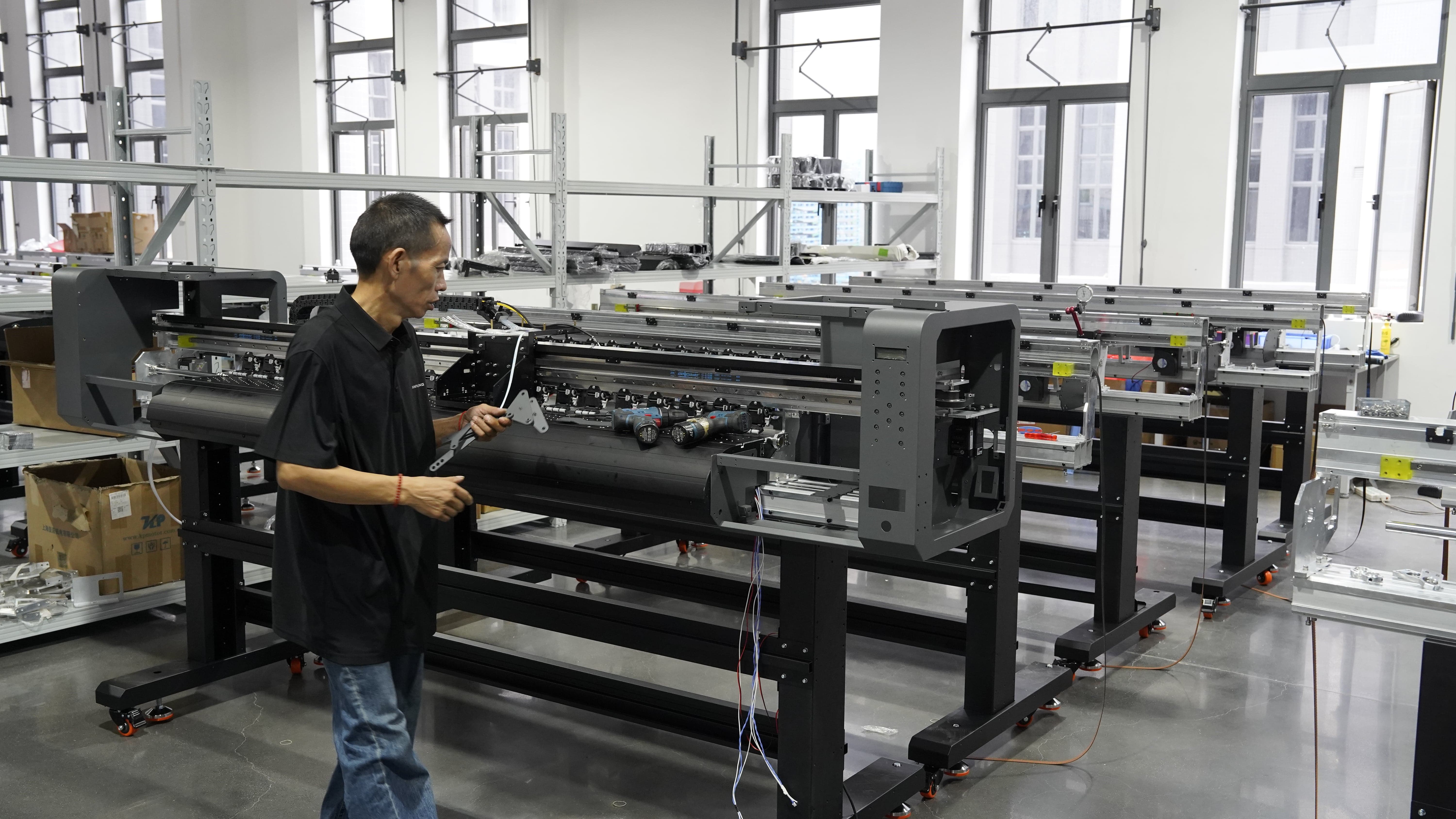
XINFLYING factory production: each DTF printer is assembled and tested before shipment.
From a buyer's perspective, these manufacturer facts matter because they indicate production scale, engineering capacity, and quality control capability. Pre-shipment testing, OEM support, and international service networks reduce the risk of long downtime and difficult troubleshooting.
How to Evaluate a DTF Printer in 7 Steps
The following step-by-step process helps buyers translate business requirements into a printer specification.
- Define your production requirements. Estimate average daily orders, maximum order volume, garment types, and design sizes. If you print mainly T-shirts with small logos, a compact 30 cm or 42 cm printer may be sufficient. If you produce hoodies, bulk orders, or large graphics, consider a 60 cm or 80 cm model.
- Compare printhead configurations. Check whether the machine uses Epson i1600 or i3200 printheads. Higher-end heads generally offer better speed and durability. Count the number of heads because it affects throughput and replacement cost.
- Examine the ink delivery system. Look for white ink circulation, automatic moisturizing, and easy cleaning procedures. These features reduce nozzle clogging and color inconsistency.
- Review RIP software compatibility. Confirm that the printer supports a RIP solution you can operate. Ask the supplier which RIP is included and which are optional.
- Verify compliance documents. Request certificates, check the model number on each document, and confirm the standards. For EU export, CE and RoHS documents should be available. For textile safety, check whether the ink or printing system has relevant certifications such as OEKO-TEX.
- Request samples and ask about pre-shipment testing. A reliable supplier should be able to demonstrate printing quality. Pre-shipment testing, such as the process used by XINFLYING, verifies that the machine is operating before it leaves the factory.
- Confirm lead time, warranty, and support. Ask about delivery time, warranty terms, spare parts availability, and after-sales response. A supplier with local support or 24/7 online technical assistance can reduce operational risk.
DTF Printer Use Cases in 2026
Evaluating a DTF printer becomes easier when you see how other businesses use the technology. The following use cases reflect real implementation patterns.
Print on Demand (POD) Business Owner
A POD business owner in North America operates five DTF printing units and has used the solution for five years. The business produces customized T-shirts, hoodies, sweatshirts, and other personalized apparel based on online orders. By bringing DTF printing in-house, the owner gained more control over production schedules and reduced dependence on outside printing suppliers.
This use case shows how DTF printing supports flexible order quantities and fast response times for e-commerce sellers.
Garment Manufacturing Factory
A garment manufacturing factory in the global market uses 20 DTF printing units that have been in operation for two years. The equipment is used to add logos, patterns, and customized graphics to finished garments before delivery to brands and distributors. The DTF workflow provides a flexible decoration method for customized orders, sampling, and short-run projects.
This use case demonstrates easy integration into garment production and compatibility with different fabrics.
DTF Transfer Supplier
A DTF transfer supplier in the United States has deployed 30 DTF printer units and operated them for one year. The company produces transfer films with various designs, logos, and graphics, then supplies the finished transfers to downstream garment decorators. After adopting the DTF solution, the customer improved transfer production capacity and maintained stable print quality.
This use case highlights the importance of continuous printing performance and consistent color output for professional transfer manufacturing.
Custom Apparel Printing Business
A custom apparel printing business in the United States uses two DTF printing units that have been in operation for three years. The equipment produces customized T-shirts, hoodies, bags, and other textile products with full-color graphics. The business handles small-quantity orders and repeat production while avoiding some limitations of traditional printing methods.
This use case illustrates the value of DTF printing for personalized apparel production, flexible order quantities, detailed graphics, and multi-color applications.
Comparing XINFLYING DTF Printer Setups by Business Stage
The following table compares three recommended DTF printer setups based on verified product information and XINFLYING's documented recommendations. Use it as a starting point when matching a machine to your production stage.
| Setup | Printheads | Print Width | Standard Speed (6 PASS) | Best For | Key Features |
|---|---|---|---|---|---|
| XF-450PRO All-in-One DTF Printer | 2× Epson i1600-A1 | 42 cm (A2) | 9 m²/h | Startups, small custom print shops, businesses entering apparel printing | Integrated powder shaker and dryer, white ink circulation, RIIN/PrintFactory RIP software |
| XF-702E + XF-Z650-2 DTF Printer Package | 2× Epson i3200-A1 | 60 cm | 10 m²/h | Growing print shops, e-commerce fulfillment, professional apparel customization companies | Automatic powder shaker and curing system, auto moisture retention, white ink circulation, RIP software support |
| XF-C605 + XF-A6502H DTF Printer Package | 5× Epson i3200-A1 | 60 cm | 28 m²/h | High-volume apparel factories, large printing service providers, industrial production users | Automatic powder recycling system, smart touchscreen control, built-in fume purifier, professional RIP software |
The entry-level XF-450PRO is designed for easy operation and lower initial investment. The business-level XF-702E package balances productivity and cost for growing companies. The industrial XF-C605 package focuses on automation and continuous production for demanding environments.
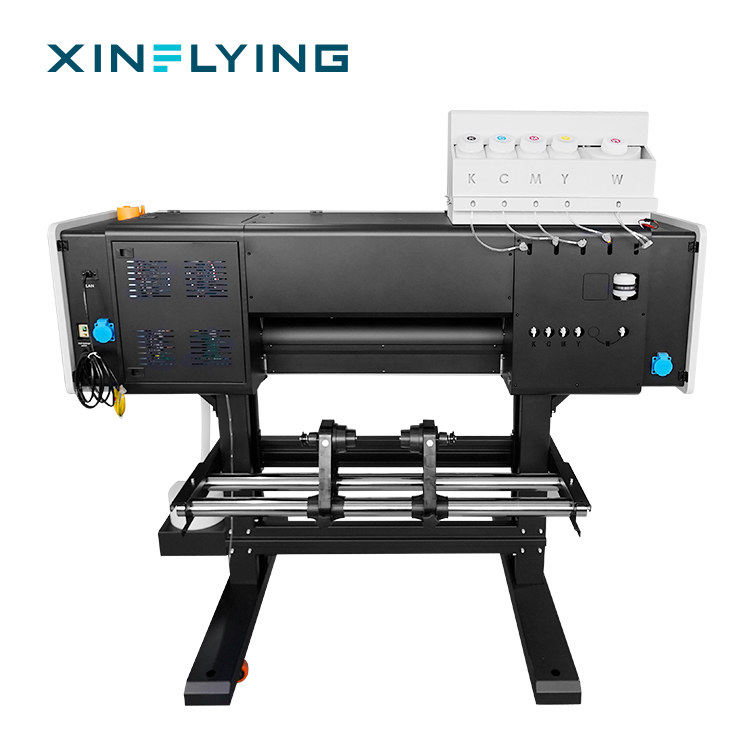
XF-702E is a 60 cm DTF printer widely used by growing print shops and apparel businesses.
Compliance and Certification Considerations
Buyers evaluating DTF printers for international markets should include compliance checks in the procurement process. For European imports, confirm that the printer has CE documentation for electromagnetic compatibility and electrical safety. XINFLYING provides CE EMC, CE LVD, and CE MD certificates covering directives such as EMC 2014/30/EU, LVD 2014/35/EU, and MD 2006/42/EC. RoHS certificates cover restricted substances, and the OEKO-TEX ECO PASSPORT applies to inks and printing pastes.
Always verify that the certificate number matches the product model you plan to order. If the supplier cannot provide documentation, consider that a red flag.
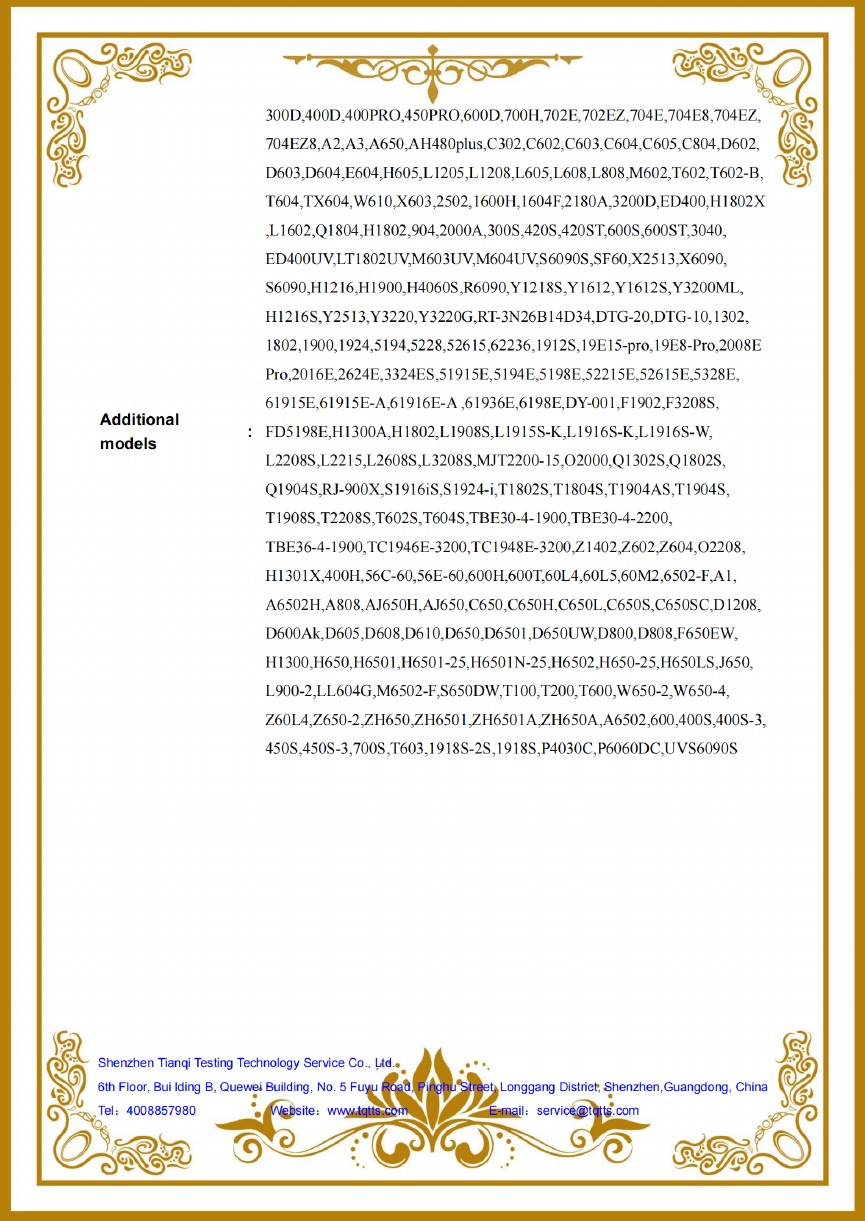
Example of a CE EMC compliance certificate issued for XINFLYING digital textile printers.
Frequently Asked Questions About DTF Printer Evaluation
1. Do I need CE certification for a DTF printer if I import it into Europe?
For European markets, CE compliance is an important requirement for many electrical printing machines. Buyers should confirm that the supplier provides CE-related documentation covering applicable safety and electromagnetic compatibility requirements. Certificates should match the actual product model. XINFLYING holds CE EMC, CE LVD, and CE MD certificates with standards such as EN 55032, EN IEC 62368-1, and EN ISO 12100.
2. Which DTF printer setup is suitable for growing print shops and commercial apparel production?
For growing print shops, e-commerce fulfillment businesses, and professional apparel customization companies, the XF-702E + XF-Z650-2 DTF Printer Package provides a balanced commercial production solution. It includes 2 Epson i3200-A1 printheads, automatic powder shaker and curing system, auto moisture retention, white ink circulation, and RIP software support. This setup is designed for businesses that need wider printing capability and higher efficiency than entry-level solutions.
3. Which DTF printer is suitable for startups and small custom print shops?
For startups, small custom print shops, and businesses entering apparel printing, the XF-450PRO All-in-One DTF Printer is an entry-level solution. It integrates printing, powder shaking, and drying in one A2-sized system with 2 Epson i1600-A1 printheads, white ink circulation, and RIIN/PrintFactory RIP software. It is built for small-batch production and lower initial investment.
4. How can I evaluate DTF printer print quality before buying?
Buyers should evaluate print stability, machine consistency, compatibility with required materials, and supplier technical support. Requesting printing samples and confirming the machine configuration before purchase reduces the risk of receiving equipment that cannot achieve expected results. XINFLYING performs pre-shipment testing on each DTF printer before delivery, which provides an additional quality checkpoint.
5. How long does it take to receive a DTF printer from XINFLYING?
XINFLYING reports a lead time of 5 to 40 days depending on configuration and order volume, with a minimum order quantity of 1 unit. The company has a monthly production capacity of 1,600+ units and provides 24/7 online technical support. For a detailed timeline based on your requirements, contact XINFLYING directly and request a quote.
Final Thoughts: Build Your DTF Printer Decision Around Production Reality
There is no single best DTF printer for every business. The correct machine depends on your order volume, product mix, fabric types, compliance needs, and support expectations. By evaluating printheads, speed, width, ink system, software, certifications, and after-sales support, you can reduce the risk of a costly mismatch.
XINFLYING offers a range of DTF printer setups from entry-level to industrial, backed by a 37,440 m² factory, OEM/ODM capability, pre-shipment testing, and a global support network. If you are comparing configurations, request a sample print, ask for a compliance document check, and confirm lead time with a quote.
Ready to compare DTF printer configurations for your production plan?
Contact XINFLYING for sample prints, quotes, and technical support.
Email: info@xin-flying.com | WhatsApp: +86 188-1322-1357
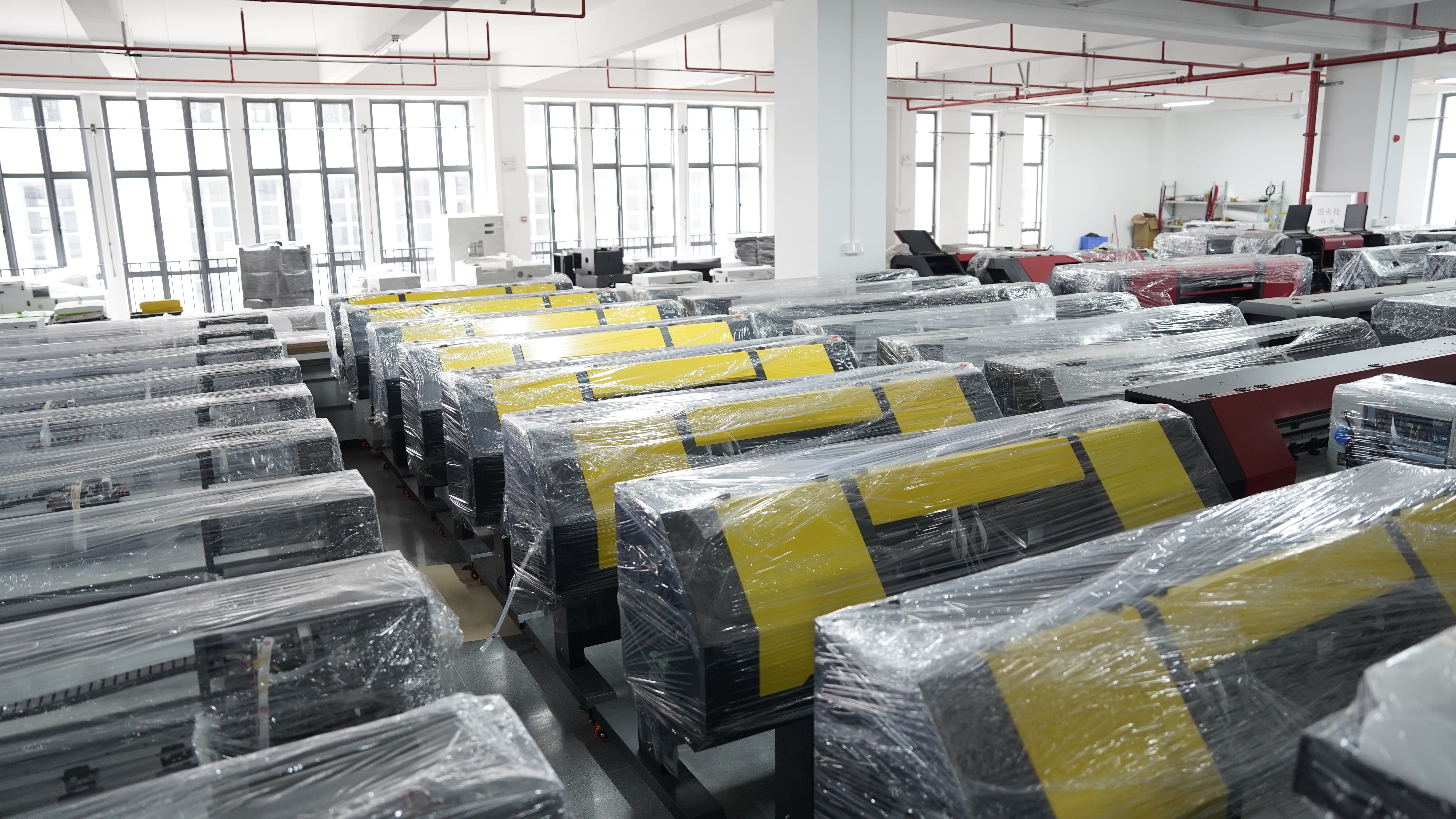
XINFLYING DTF printers prepared for export delivery after pre-shipment testing.
Have Questions or Need More Details?
Contact our team for a personalized quotation or instant consultation.
Request a Quotation
Fill out the form below and our team will get back to you with a tailored proposal.
WhatsApp Direct Chat
Prefer to chat in real-time? Message us on WhatsApp for instant assistance & quick answers.
- Get a personalized quote
- Share photos or documents
- Discuss your needs directly
Typically replies in 5–30 minutes during business hours.