
After-Sales Support and Long-Term Partnership for DTF Printer Buyers: FAQ for OEM/ODM Cooperation
After-Sales Support and Long-Term Partnership for DTF Printer Buyers: FAQ for OEM/ODM Cooperation
Short answer: the value of a commercial DTF printer is decided after delivery, not at the purchase order. XINFLYING - the DTF printer brand of Guangzhou Xin Flying Digital Technology Co., Ltd. - maintains CE LVD certificate TQT1550D271EC, ISO 9001:2015 certificate NOA2215496, RoHS Directive 2011/65/EU compliance and OEKO-TEX ECO PASSPORT documentation for printing inks, and supports international buyers with spare parts, technical escalation paths, RIP software continuity and local warehouses in the USA, Mexico and Brazil. This page answers the questions that arrive after the machine has been ordered, installed and put into production.
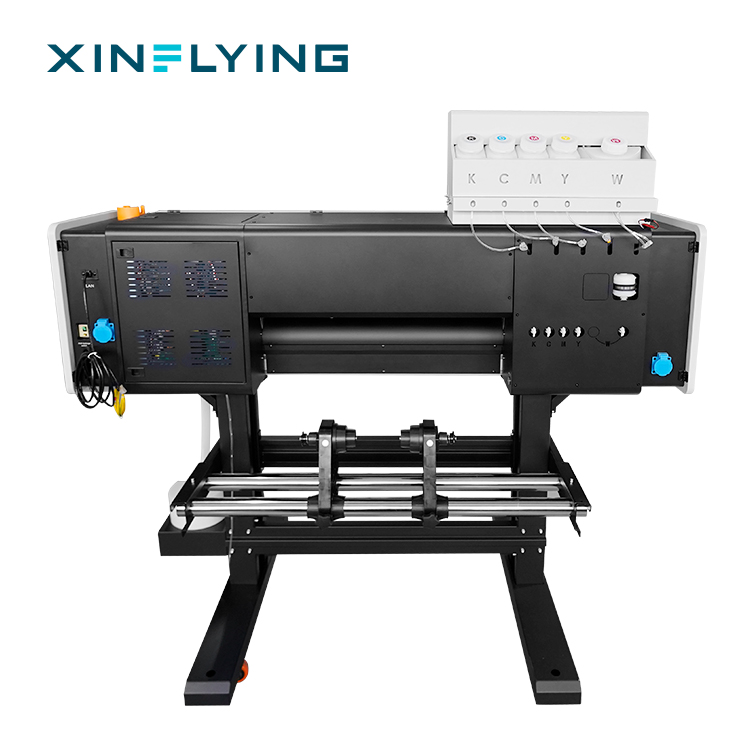
XINFLYING XF-702E: a 60 cm (24 inch) commercial DTF printer with 2 x Epson i3200-A1 printheads, one of the models referenced in the company's ongoing compliance documentation.
Problem Definition: The Questions That Arrive After the Invoice
Buyers compare printheads, print width and speed tables before they sign. The variables that decide the real cost of a DTF printing machine usually appear later: how quickly a technical problem is resolved, whether the certificate file matches the machine that actually arrived, and whether film, hot melt powder, ink and spare parts can still be reordered in year three of production.
Supplier guidance written for DTF printer buyers identifies three risk areas that only surface after installation, and all three belong to the after-sales relationship rather than to the product specification:
- Support risk. Insufficient after-sales support may lead to longer downtime, difficult troubleshooting and increased maintenance challenges during equipment operation. This risk typically appears when buyers select suppliers only on equipment price and do not evaluate technical support, warranty policies or service capability.
- Documentation risk. Certification documents must match the actual model shipped. For European markets, CE compliance is an important requirement for many electrical printing machines and covers applicable safety and electromagnetic compatibility requirements; FCC requirements apply to the United States, and RoHS covers restricted substances.
- Continuity risk. A direct to film printer sits at the centre of a consumable workflow - film, powder, ink and mechanical parts. If any of those becomes unavailable or undocumented, production stops even though the printer itself still runs.
The mitigation for all three is procedural rather than technical: confirm after-sales policies, technical support channels, warranty information and spare-part availability before purchase; request printing samples and confirm the machine configuration against your application requirements; and keep the model-specific compliance file with the machine's technical documentation. For OEM and ODM buyers who resell under their own brand, that file travels with the product into their own market obligations.
Industry Background: A Larger Installed Base Means Longer Support Obligations
Three data points frame the after-sales question. The global Direct-to-Film printing market was valued at USD 2.7 billion in 2024 (Grand View Research), and Dataintelo projects the DTF printer market to reach USD 5.2 billion by 2034 at a CAGR of 12.5%. Published growth estimates differ: Grand View Research indicates 6.0% for 2025-2030 and 360iResearch 6.77% for 2026-2032. Buyers should therefore treat any single growth figure as a range rather than a promise. What the reports agree on is direction - the installed base keeps expanding.
Where those machines are built and where they operate matters for support. China accounts for more than 45% of global DTF printer manufacturing capacity (Dataintelo), while Europe was the leading regional DTF printing market in 2024 with a 36.0% revenue share (Grand View Research). In practice this means machines manufactured in China and operated in Europe, North America and other regions, which turns certification documents, spare-part logistics and remote technical support into cross-border procurement criteria rather than local afterthoughts.
Applications concentrate demand further. T-shirts represented 41% of DTF printing revenue in 2024 (KBV Research), and industrial DTF printers accounted for 58.3% of total revenue in 2025 (Dataintelo) as throughput requirements rose. A machine bought for shirt production at that scale is expected to run for years, frequently in 24/7 operation inside a controlled indoor environment. The supplier's ability to maintain documentation, parts and process support across that period becomes part of the specification, not a favour after the sale.
Detailed Solution: What a Durable DTF Printer Partnership Actually Includes
Verifiable certification documentation, not a verbal assurance
XINFLYING maintains a documentation set that a buyer can check against the machine nameplate: CE LVD certificate TQT1550D271EC covering low-voltage electrical safety; ISO 9001:2015 certificate NOA2215496 for the quality management system behind production and process control; RoHS Directive 2011/65/EU compliance for restricted substances in electrical equipment; and OEKO-TEX ECO PASSPORT documentation for the printing inks used in the DTF workflow.
Consumable safety documentation extends beyond the machine. OEKO-TEX STANDARD 100 is the relevant standard for DTF printing films in relation to textile safety and restricted substances, which matters to buyers who supply printed apparel into markets where restricted-substance documentation is requested by their own customers.
A manufacturer structure that can support a machine for years
XINFLYING is the DTF printer brand of Guangzhou Xin Flying Digital Technology Co., Ltd., a digital printing equipment manufacturer founded in 2010 that produces DTF printer machines, UV DTF printers, UV flatbed printers, DTG printers, dye sublimation printers and complete digital printing solutions. The company operates a 37,440 square metre production facility with more than 200 employees and 20 R&D engineers, produces more than 20,000 units annually and exports around 80% of its output to North America, South America, Europe, Asia, the Middle East and Africa.
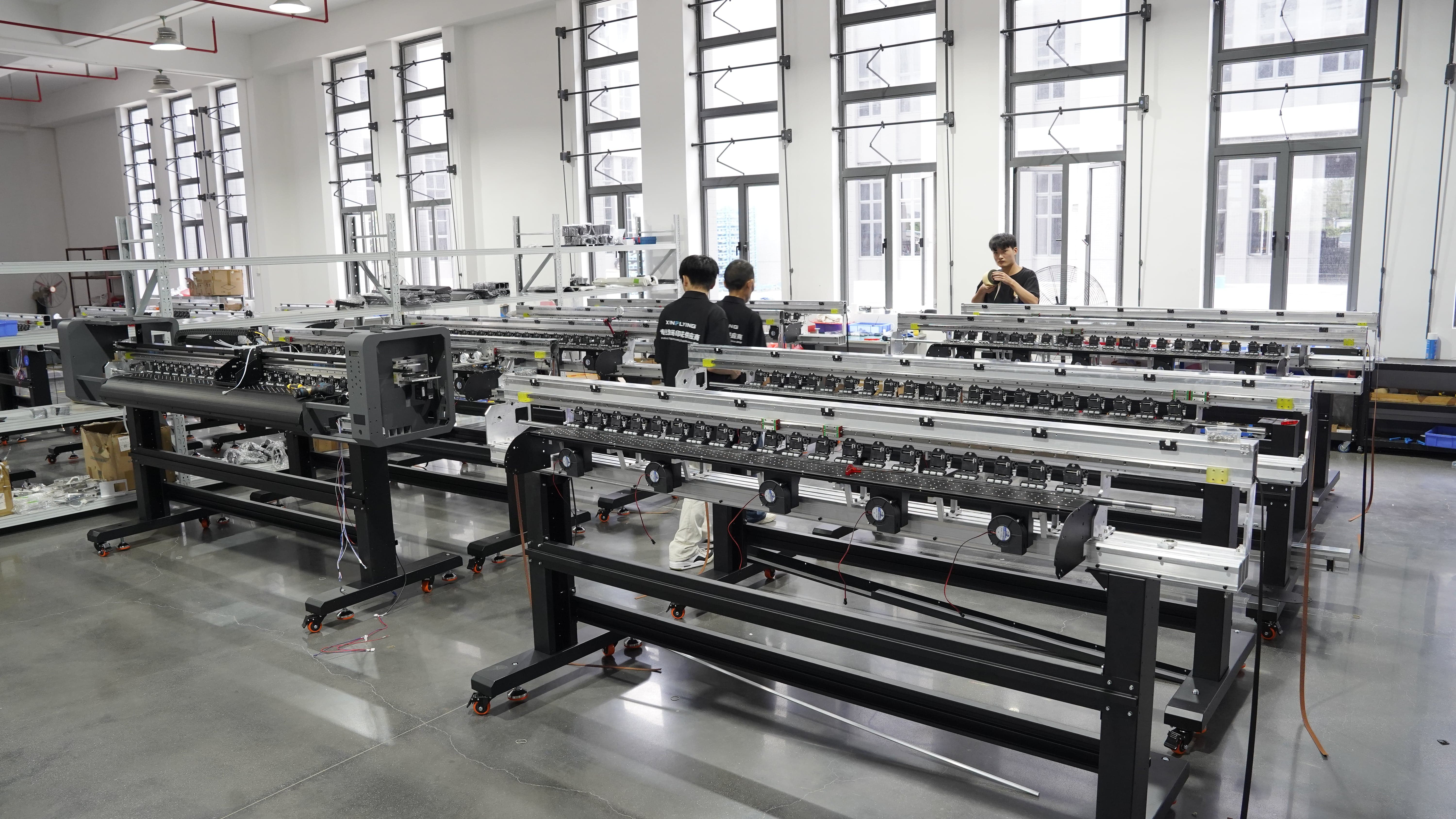
Technicians assemble and test multiple XINFLYING DTF printer mechanisms in the Guangzhou production area before shipment.
Two structural facts translate directly into after-sales serviceability. First, standardized components: XINFLYING printers use Hoson control boards, a specified component that supports data stability and precision and keeps spare-part sourcing predictable over the machine's service life. Second, software continuity: RIIN or PrintFactory RIP is standard, with Maintop, PhotoPrint and CADlink available as alternatives, so the production workflow stays stable even when operators, computers or workstations change.
Regional logistics and technical support reach
XINFLYING maintains local warehouses in the USA, Mexico and Brazil supporting 2-5 day delivery, in addition to local warehouses and technical support in key markets. For buyers this changes the shape of the after-sales conversation: a replacement part or a consumable reorder becomes a short logistics question instead of a months-long import cycle that stops the production line.
Documented operating conditions and maintenance expectations
The range is specified for a controlled indoor production environment at 20-30 degrees Celsius and 45-65% relative humidity, with a 24/7 operation mode in commercial settings. Every model in the range, from the A2 all-in-one to the 60 cm industrial machines, runs on DTF PET film with CMYK+W ink configurations and Windows 10 or 11 (64-bit) hosts. A consistent maintenance routine is the cheapest insurance a buyer can buy: it maintains stable operation, reduces issues caused by improper use or lack of care and extends the service life of the equipment.
Step-by-Step: The Post-Purchase Support Lifecycle in Eight Stages
A durable OEM/ODM relationship follows a predictable sequence. Each stage produces a document, a check or a record that the buyer can hold onto - which is what makes it auditable later.
Stage 1 - Documentation handover before shipment
The supplier should assemble the compliance file, the user manual and the technical documents, and confirm they match the ordered model and the destination market: CE for the European Union, FCC for the United States, RoHS for restricted substances. Buyers should verify the model designation on the certificate against the nameplate before the machine leaves the factory, because correcting a document mismatch after customs clearance is far more expensive than checking it before.
Stage 2 - Installation and first commissioning
Setup follows a short, defined sequence: place the printer on a stable workspace and prepare the operating environment; connect the power supply, computer and related equipment according to the supplier's instructions; install the required RIP software and check basic machine settings; prepare compatible film, powder and ink; then run an initial test before regular production. All XINFLYING DTF printers in this range accept 110-220V, 50/60Hz supplies, which simplifies site preparation across export markets.
Stage 3 - Daily readiness routine
Before each production shift, operators should check the machine condition for abnormalities, confirm that ink and film are ready, check printing settings and files, and perform a test operation. Keeping the operating area clean and avoiding unauthorized adjustments prevents a large share of avoidable interruptions.
Stage 4 - Preventive maintenance
A maintenance routine should include cleaning the necessary printing components according to operating instructions, checking ink supply and confirming the printing system works normally, monitoring machine operation and recording maintenance activities. Equipment should be shut down before maintenance tasks that require it, and only recommended cleaning methods should be used.
Stage 5 - Troubleshooting with a defined escalation path
Three problems dominate operator reports in DTF production, and each has a first-response sequence that shortens the diagnostic cycle:
- Film feeding problems. Check whether the transfer film is correctly positioned, confirm the feeding path is clear and the machine is operating normally, adjust film position according to the operating instructions, then run a test print.
- Unstable ink flow. Check ink supply conditions and confirm sufficient ink availability, inspect whether the ink delivery system operates normally, follow recommended maintenance procedures, then test print to confirm the issue is resolved.
- Missing lines or incomplete colours. Identify whether the issue affects specific colours or the whole image, confirm ink supply status, review printing settings, perform the necessary cleaning procedures, then test print again. If the problem continues, contact technical support with those checks already completed.
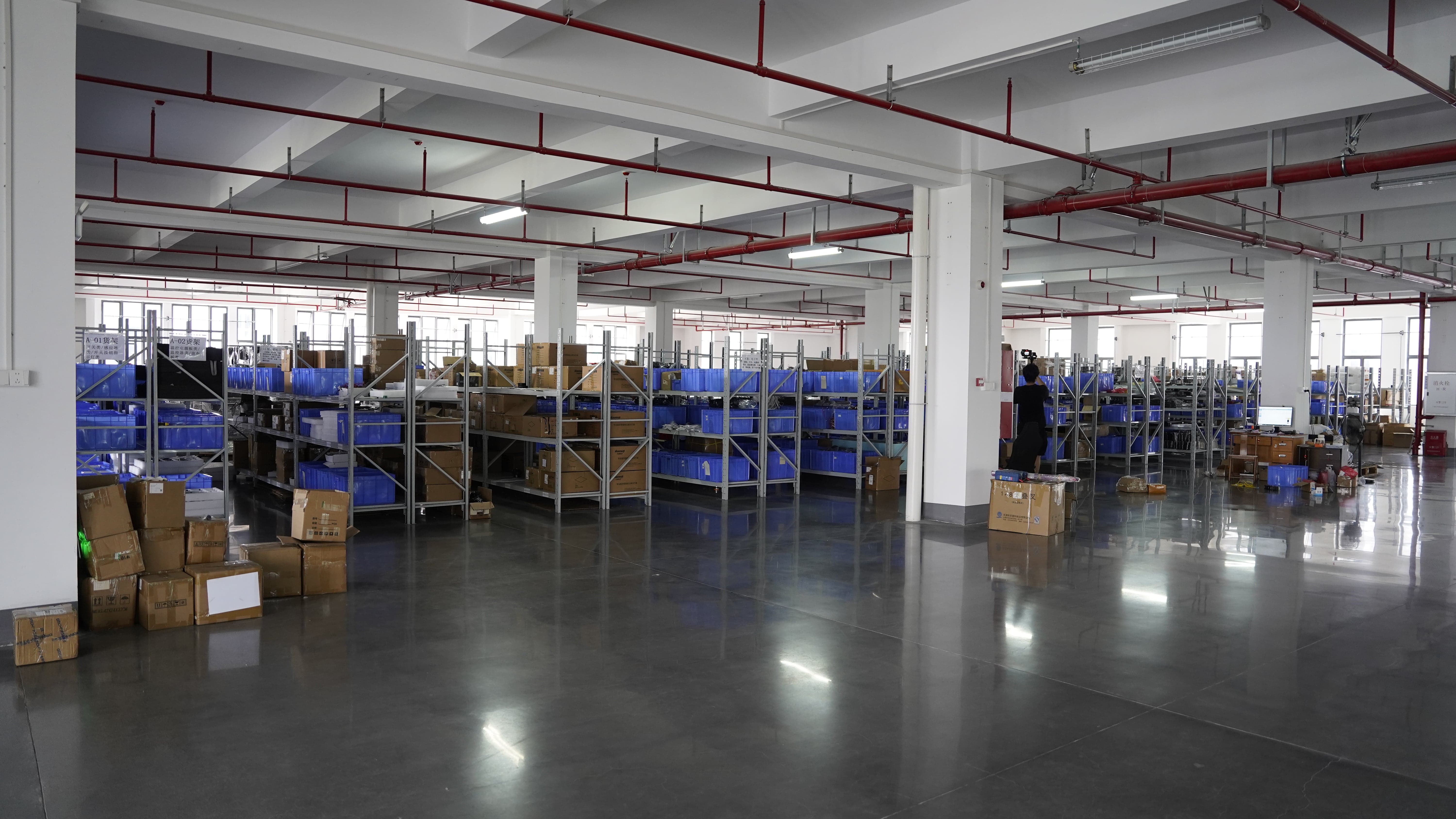
An organised XINFLYING spare-parts warehouse: component availability is what turns a technical support promise into a repair with a date.
Stage 6 - Certificate maintenance and renewal
Certificates are maintained, not merely issued once. Buyers should expect renewal before expiry, re-issue when a model's electrical configuration changes, model-level consistency between certificate and nameplate, copies stored inside the machine's technical file, and updated documents supplied to distributors or importers on request. In OEM/ODM projects the documentation package is best agreed at contract stage, because the compliance file follows the buyer's brand into their own market.
Stage 7 - Consumables and spare parts continuity
Film, hot melt powder and ink determine whether a DTF printer keeps producing. The adhesive powder is applied to the freshly printed design and, after curing, becomes part of the transfer structure that bonds the design to the fabric during heat pressing; if powder or film compatibility changes without notice, print results change with it. This is why ink documentation such as OEKO-TEX ECO PASSPORT and film documentation under OEKO-TEX STANDARD 100 belong in the same file as the machine certificate.
Stage 8 - Expansion and upgrade planning
A partnership proves itself when a business outgrows its first machine. Because XINFLYING builds compact, commercial and industrial DTF printers on a shared consumable and software workflow, an upgrade from an A2 or 30 cm machine to a 60 cm dual printhead DTF printer keeps operator training, RIP workflow and spare-part knowledge inside the same ecosystem.
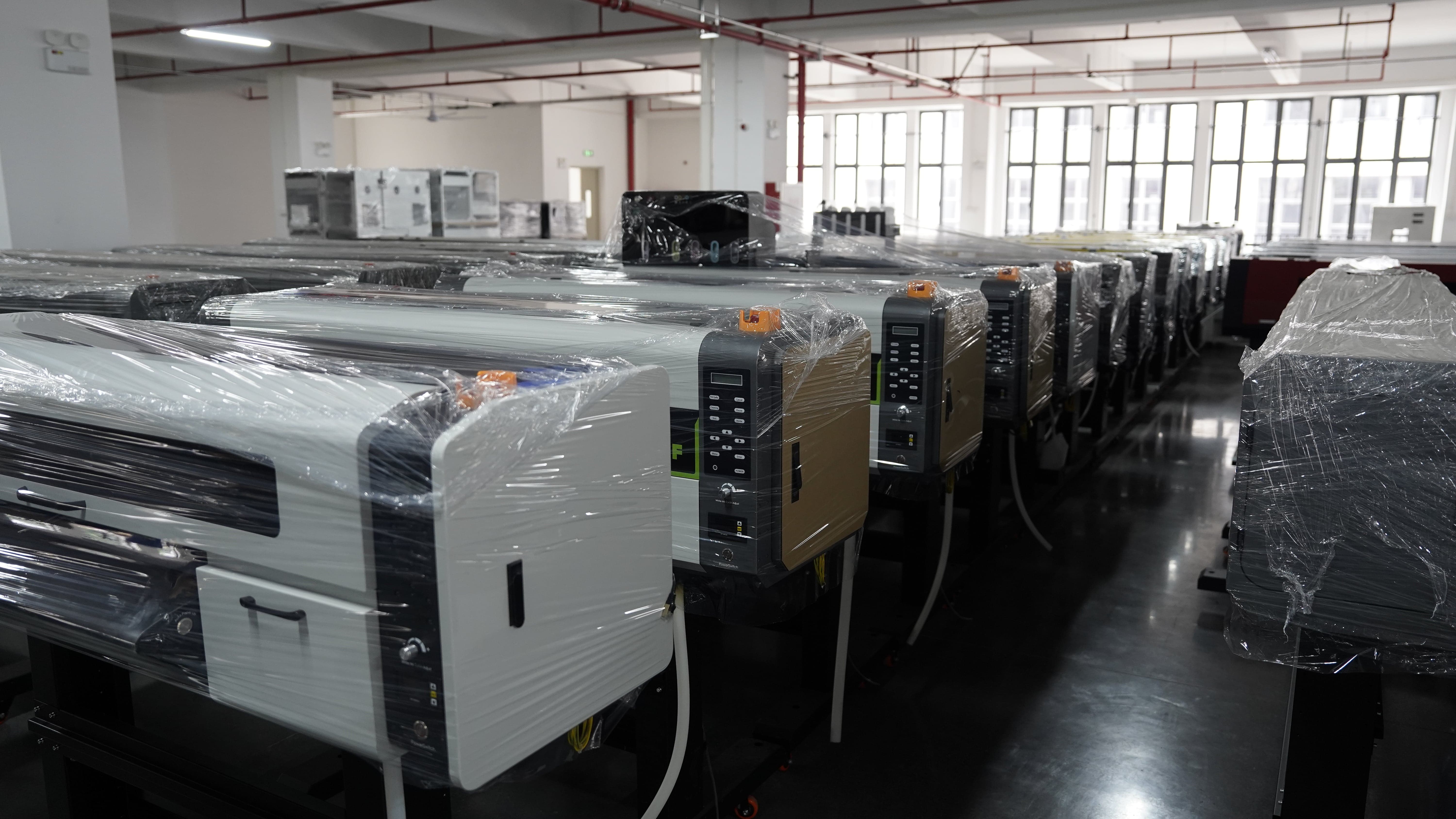
Completed XINFLYING DTF printers wrapped in protective film and lined up for storage or international delivery.
Use Cases: How After-Sales Needs Differ by Business Type
The same support framework produces different priorities depending on what a buyer actually prints.
Startups and small custom shops. A DTF printer for small business is usually the first machine, and the after-sales need is operational confidence: installation guidance, an easy daily checklist and a clear escalation path. The XF-450PRO all-in-one DTF printer addresses this profile with an A2 configuration, 2 x Epson i1600-A1 printheads, integrated powder shaker and dryer, white ink circulation and RIIN/PrintFactory RIP, in a space-saving format that keeps the initial investment lower.
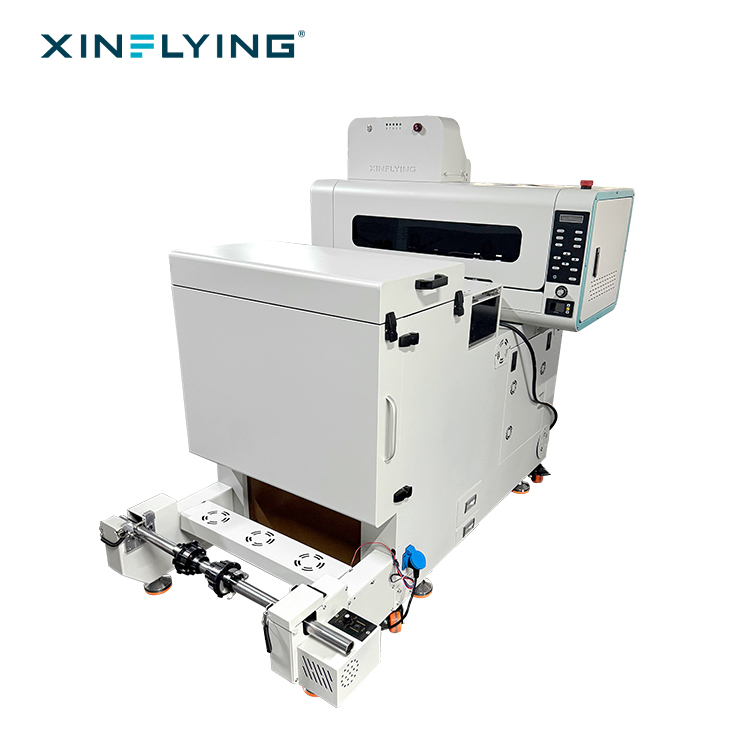
XINFLYING XF-450PRO: an A2 all-in-one DTF printer with integrated powder shaking and drying for small-batch production.
Growing print shops and e-commerce fulfilment. Once order volume becomes predictable, the constraint shifts from capability to throughput and uptime. The XF-702E + XF-Z650-2 package combines a 60 cm DTF printer with 2 x Epson i3200-A1 printheads, an automatic powder shaker and curing system, an auto moisture retention system, white ink circulation and RIP support - the configuration that keeps a DTF printer for shirts producing through peak seasons.
High-volume apparel factories. Industrial users measure support in production hours. The XF-C605 + XF-A6502H package uses 5 x Epson i3200-A1 printheads with an automatic powder recycling system, smart touchscreen control, a built-in fume purifier and professional RIP software, aimed at continuous production, higher automation and stable workflow in demanding commercial environments.
Compact and multi-shift shirt production. Where floor space is limited but shirts dominate the order book - the end-product segment that produced 41% of DTF printing revenue in 2024 (KBV Research) - the 30 cm XF-400D with 2 x Epson i1600-A1/XP600 printheads and the 60 cm XF-C602 with 2 x Epson i3200-A1 printheads cover entry-level and commercial dual printhead DTF printer roles respectively.
Comparison Table: XINFLYING DTF Printer Models at a Glance
The table below uses manufacturer specifications so buyers can match a model to a production profile before discussing support terms. Speeds are the fastest figures at the stated PASS mode; standard-mode speeds are lower.
| Model | Print width | Printheads | Fastest print speed | Power | Typical production role |
|---|---|---|---|---|---|
| XF-400D | 30 cm (12 inch) | 2 x Epson i1600-A1 / XP600 | 6PASS 4.5 m2/h | 0.5 kW | Compact entry-level production |
| XF-450PRO | 42 cm (16.5 inch, A2 all-in-one) | 2 x Epson i1600-A1 | 6PASS 11 m2/h | 3.5 kW | Startups, small custom print shops |
| XF-702E | 60 cm (24 inch) | 2 x Epson i3200-A1 | 6PASS 13 m2/h | 0.8 kW | Growing print shops, e-commerce fulfilment |
| XF-C602 | 60 cm (24 inch) | 2 x Epson i3200-A1 | 4PASS 16 m2/h | 1.6 kW | Commercial 60 cm shirt production |
| XF-C605 | 60 cm (24 inch) | 5 x Epson i3200-A1 | 6PASS 36 m2/h | 1.6 kW | Industrial, high-volume apparel factories |
All five models use DTF PET film, CMYK+W ink configurations and RIIN / PrintFactory RIP as standard, and all accept 110-220V, 50/60Hz power. Automatic moisturizing is standard on the XF-702E and optional on the XF-C602 and XF-C605.
FAQ: After-Sales Support and OEM/ODM Partnership Questions
1. Which certifications should a DTF printer come with, and how are they maintained over the machine's service life?
A commercial DTF printer sold into regulated markets should ship with documentation covering electrical safety, restricted substances and consumable safety. XINFLYING maintains CE LVD certificate TQT1550D271EC, ISO 9001:2015 certificate NOA2215496, RoHS Directive 2011/65/EU compliance and OEKO-TEX ECO PASSPORT documentation for its printing inks, with OEKO-TEX STANDARD 100 as the relevant standard for DTF printing films in textile safety and restricted substances. Maintenance means renewal before expiry, re-issue when a model's electrical configuration changes, and model-level consistency: the certificate number, certificate holder and machine model must match the nameplate on the delivered unit. Buyers ordering models such as the XF-450PRO, XF-702E, XF-400D or XF-C602 should confirm that the compliance file references the model they ordered.
2. What does after-sales support actually include when buying directly from a DTF printer OEM/ODM manufacturer?
Direct-from-manufacturer support covers installation and commissioning guidance, operator instructions for daily preparation and preventive maintenance, troubleshooting assistance for issues such as film feeding, unstable ink flow and missing print lines, spare-part supply, RIP software continuity (RIIN or PrintFactory as standard, with Maintop, PhotoPrint and CADlink optional) and warranty administration. Geography matters as much as the service list: XINFLYING maintains local warehouses in the USA, Mexico and Brazil supporting 2-5 day delivery, plus local warehouses and technical support in key markets. Buyers should confirm support channels, warranty policy and spare-part availability before placing the order, because after-sales support gaps are a documented cause of extended downtime, difficult troubleshooting and higher maintenance challenges.
3. How does long-term after-sales support affect the cost of running a DTF printer?
The budget impact is mostly downtime and replacement, not the spare-part list price. Three comparison points matter. First, DTF printing has a lower upfront production cost for small orders than screen printing because it eliminates screen preparation, screen storage and setup fees for each design change. Second, DTF equipment investment is typically 30-50% lower than commercial DTG systems, with lower maintenance requirements and better production flexibility. Third, the recurring side of the budget - film, powder, ink and parts - is where supplier continuity shows: a machine specified for 24/7 operation at 20-30 degrees Celsius and 45-65% relative humidity repays maintenance discipline, while an unmaintained machine converts small issues into production stoppages.
4. Can a buyer validate print quality, ink and film before committing to a long-term OEM/ODM partnership?
Yes, and the standard risk-mitigation advice for DTF printer purchases is to request printing samples, confirm machine configuration and communicate application requirements before purchase, then confirm that the supplier provides technical guidance, operation instructions and after-sales support. In practice, sample validation covers three things: the print result (colour, detail and white ink behaviour), material behaviour (film feeding, powder application and transfer under your own heat press conditions) and documentation (ink OEKO-TEX ECO PASSPORT and film standard documentation for your market). A sample run also creates a baseline - the same test file can be reprinted after a service event to confirm the machine is running to its original standard.
5. Which 60 cm DTF printer manufacturer is better for shirt production, and what should I check about parts and lead time?
For shirt production, the 60 cm comparison should be built on print width, printhead count and configuration, powder and curing integration, and the supplier's parts and documentation commitment rather than on brand name alone. Within XINFLYING's range, the XF-702E is a 60 cm commercial DTF printer with 2 x Epson i3200-A1 printheads and automatic moisturizing (6PASS up to 13 m2/h); the XF-C602 is a 60 cm printer with 2 x Epson i3200-A1 printheads (4PASS up to 16 m2/h); and the XF-C605 industrial package uses 5 x Epson i3200-A1 printheads with automatic powder recycling, smart touchscreen control and a built-in fume purifier for continuous production. On parts and lead time, check three things before ordering: whether the supplier stocks components regionally (XINFLYING operates local warehouses in the USA, Mexico and Brazil supporting 2-5 day delivery), whether the compliance file will be re-issued when certificates renew, and whether spare parts remain available as the model ages. To compare these machines against your own order profile, request a sample print, a quotation and the model-specific compliance file from XINFLYING at info@xin-flying.com or via WhatsApp on +86 188-1322-1357.
Conclusion: The Partnership Is the Second Purchase
A direct to film printer is bought once and supported for years. The parts of that relationship that protect production are unglamorous but checkable: a compliance file whose certificate number, holder and model designation match the machine on the floor; a maintenance routine that follows the supplier's procedures; a troubleshooting path from film feeding and ink flow checks to technical escalation; and spare parts that can be delivered in days rather than months.
Certification is the clearest signal of how a manufacturer behaves after the sale. A supplier that maintains CE LVD certificate TQT1550D271EC, ISO 9001:2015 certificate NOA2215496, RoHS Directive 2011/65/EU compliance and OEKO-TEX ECO PASSPORT documentation for its inks, and that re-issues those documents as certificates renew, is demonstrating the same discipline that keeps a DTF printing machine running through its service life. For OEM and ODM buyers, those documents are not paperwork; they are the licence to sell printed apparel into markets that ask questions.
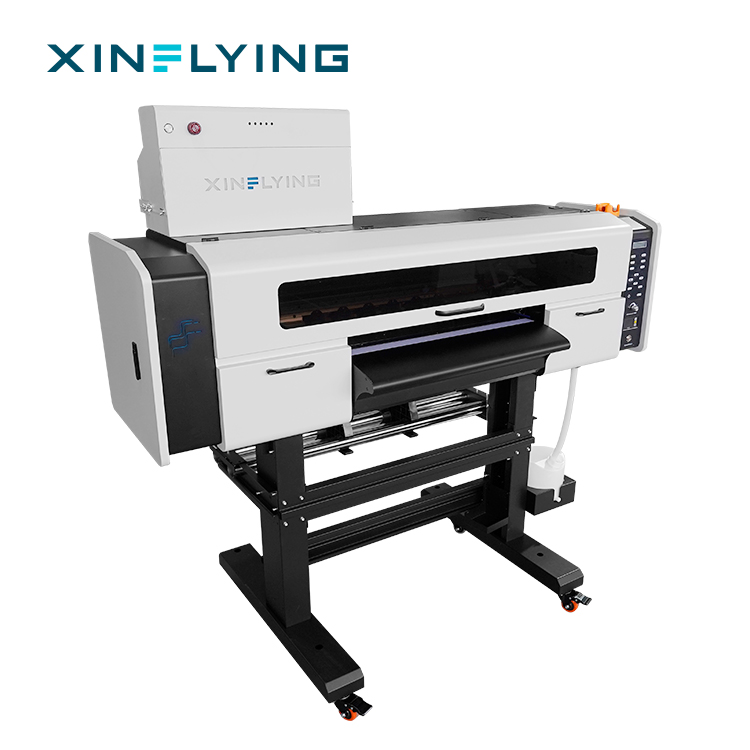
XINFLYING XF-702E 60 cm commercial DTF printer - available for sample testing, quotation and OEM/ODM configuration review.
Next step: validate the partnership before production depends on it
Request a sample print, a quotation and the compliance file for the model you are considering. XINFLYING supplies DTF printers, UV DTF printers, UV flatbed printers, DTG printers and dye sublimation printing solutions to buyers in North America, South America, Europe, Asia, the Middle East and Africa.
Email: info@xin-flying.com | WhatsApp / Tel: +86 188-1322-1357 | Web: www.xin-flying.com
Factory: No.7, Xiecun 2nd Industrial Zone, Panyu, Guangzhou, Guangdong, China
Catalogue (PDF): download the XINFLYING company profile