
CE Certification Scope Compared: Industrial Sublimation Printer Models for EU Textile Production
All four XF sublimation printer models discussed here carry CE documentation for the European market. What separates them is scope: which EU directives the dossier covers, which certificate numbers are recorded against the model, and whether the model designation printed on the certificate matches the machine that will actually be installed in a textile plant. The four recorded scopes are summarised below, and the rest of this comparison explains how to match each dossier to EU market entry and to a specific textile production profile.
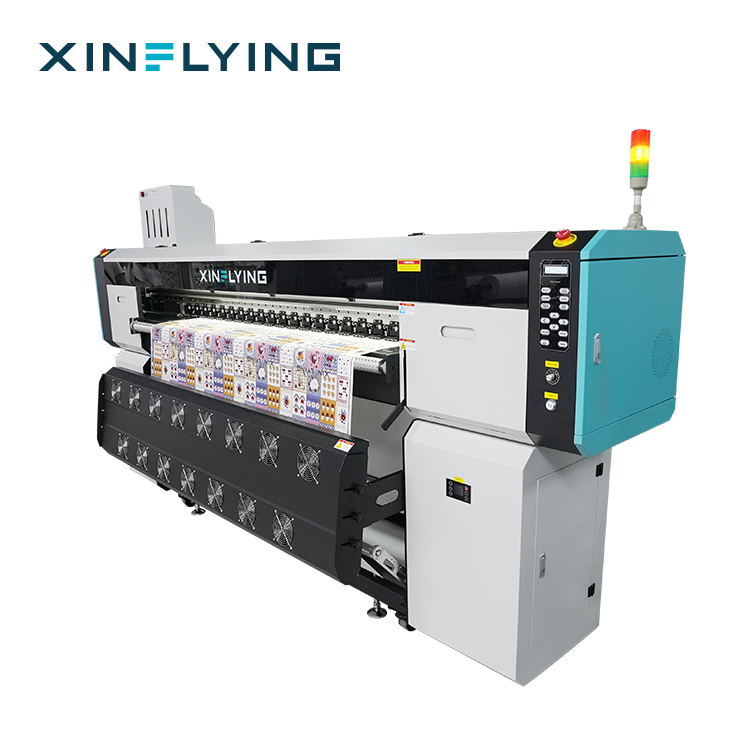
- XF-19E15-PRO — four separate items recorded: CE EMC TQT1550D270EC, CE LVD TQT1550D271EC, CE machinery M.2026.206.C142365, RoHS M.2026.206.C142366.
- XF-19E8-PRO — CE machinery M.2026.206.C142385, TQT EMC/LVD coverage, RoHS M.2026.206.C142366, plus an additional certificate reference CTICAIQ415250900815313DC.
- XF-H1802X-2I32A1 — BSTXD211021006201EC together with EN 55032:2015 and EN 55035:2017/A11:2020, the only file in this set that names its EMC standards explicitly.
- XF-O2000-4I32A1 — UDEM CE machinery documentation, TQT CE LVD coverage, RoHS M.2026.206.C142366.
Why the scope of a CE dossier, not the CE mark, decides EU market entry
A CE mark on a sublimation printer is the visible end of a document chain, not the chain itself. An industrial dye sublimation printer is a machine assembly: a printhead carriage with a linear drive, an ink delivery system, a high-current heating and drying section, a take-up and tension system, and a controller. Because these parts sit in one frame, more than one EU directive usually applies to the same unit at the same time — electromagnetic compatibility, electrical safety of the low-voltage equipment, machinery safety, and restriction of hazardous substances.
The practical consequence for a European textile producer or importer is that a supplier can truthfully say "CE certified" while the folder in the buyer's inbox only covers one of those four areas. Three mismatch types recur in real purchasing files:
- Directive gap. The folder contains an EMC certificate but no machinery or RoHS document tied to the model, so the market-entry file is structurally incomplete regardless of how good the machine is.
- Model gap. The certificate is valid, but the model designation in the annex does not match the nameplate, the invoice, or the configuration actually shipped (head count, print width, dryer type).
- Revision gap. The documents correspond to an earlier build or an earlier standard amendment than the unit being delivered, and nobody compares the two before the container leaves.
For a commercial sublimation printer that will run inside an EU production facility, the buyer is also the economic operator who has to answer a market-surveillance or customs question with documents. That is why the useful question is not "is there a CE file?" but "which directives does this file cover, and which certificate number belongs to my model?"
Industry background: why documentation moved into the RFQ
Dye sublimation capacity in Europe has shifted toward shorter runs, on-demand apparel and home textiles, which raises the number of machines entering the region and the number of buyers who must assemble a compliance file themselves. The market context behind that shift is documented: Grand View Research valued the global dye sublimation printing market at USD 16.4 billion in 2025 and projects USD 39.0 billion by 2033, with a CAGR of 11.5% from 2026 to 2033. Mordor Intelligence sizes the dye sublimation printer segment specifically at USD 1.88 billion in 2025, rising to USD 2.53 billion by 2030. The wider large format printer market was valued at USD 10.57 billion in 2025 and is projected to reach USD 16.52 billion by 2034 (Fortune Business Insights).
Two structural details matter when reading certificate scope. First, roll-to-roll sublimation printers with a 1.9 m (1900 mm) width are described by FESPA as the standard configuration for high-volume textile and soft signage work — which is why three of the four models below sit at 180–195 cm, and why a "1.9m sublimation printer" and a "1900mm sublimation printer" are usually the same class of machine described two ways. Second, inkjet production printers accounted for 87.3% of the production printer market by type in 2024 (Grand View Research), so the equipment category European buyers are importing is overwhelmingly inkjet — a category where EMC behaviour and electrical draw vary substantially between a 3.5 kW entry machine and a 14.5 kW industrial unit.
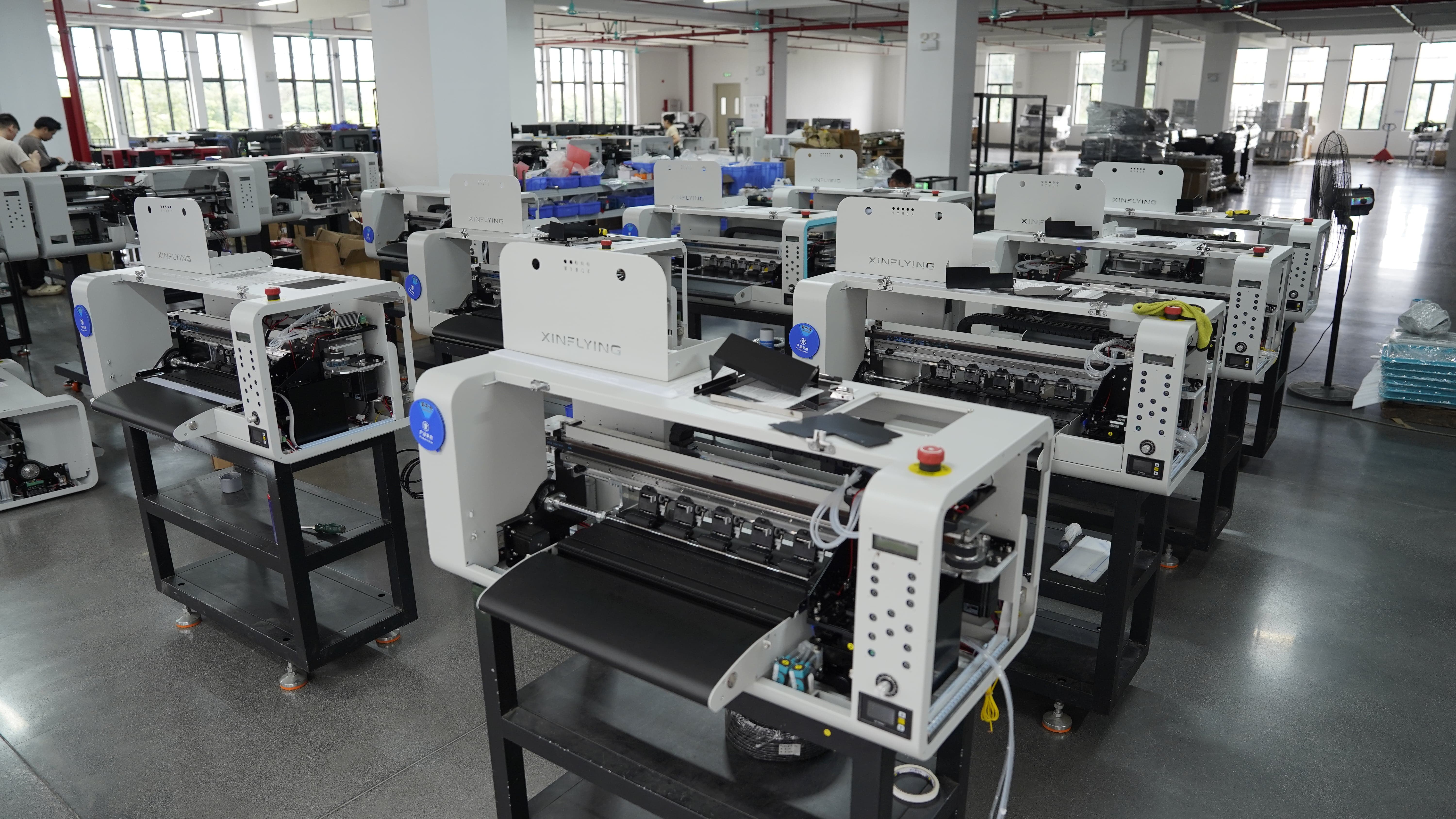
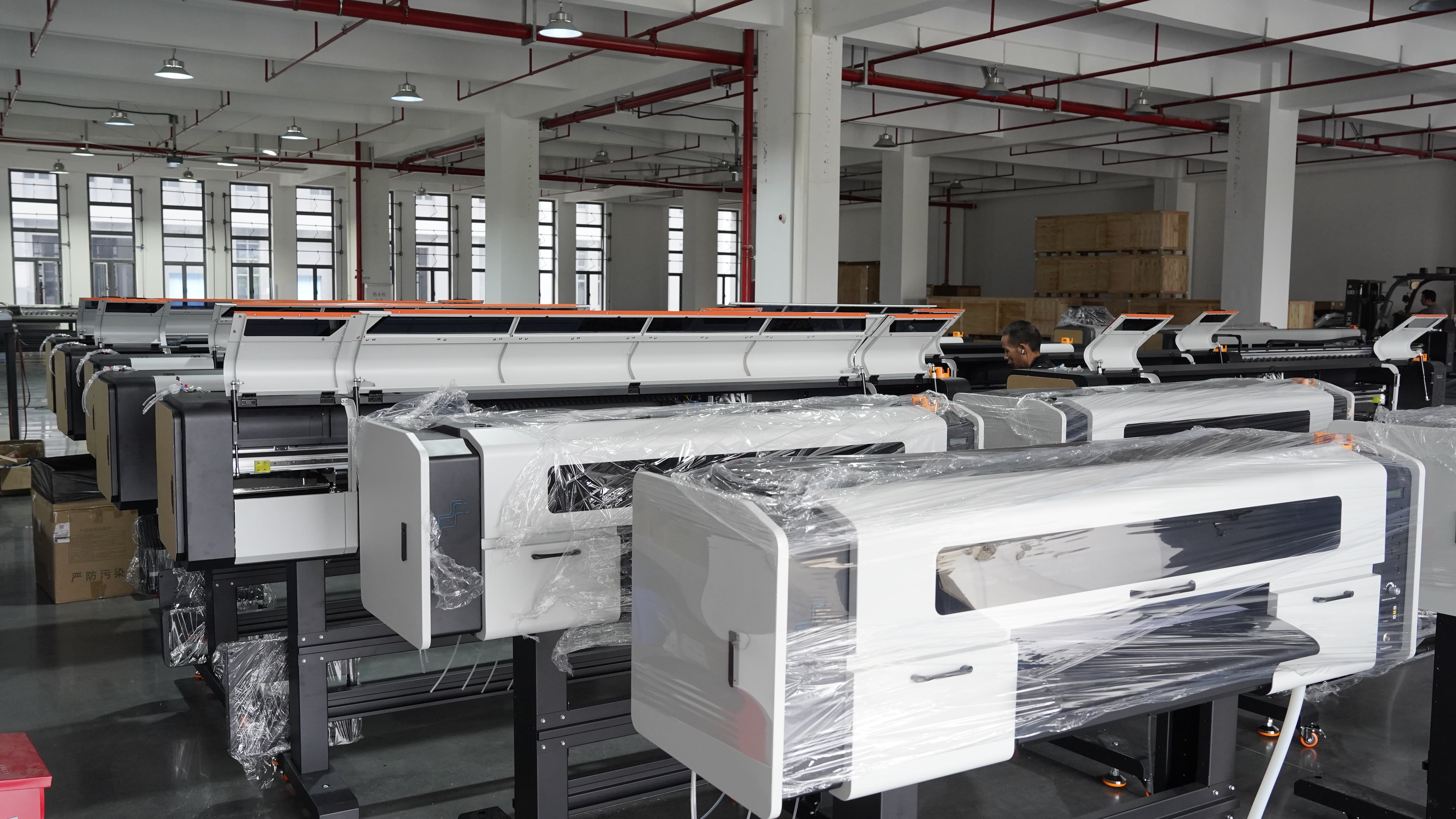
XinFlying (Guangzhou Xin Flying Digital Technology Co., Ltd.), established in 2010, manufactures digital printing equipment including DTF printers, UV DTF printers, UV printers, DTG printers and dye sublimation printing solutions. The company operates a 37,440 m² manufacturing facility, employs more than 200 staff with an R&D team of 20 engineers, and reports annual production capacity exceeding 20,000 units, with Europe among its main export markets.
Detailed solution: the four recorded dossier scopes
XF-19E15-PRO — four items, recorded separately
The XF-19E15-PRO is a digital textile printer classified as a sublimation printer, intended for the industrial textile sublimation printing industry with typical application in high-volume industrial textile sublimation printing. It carries 15× Epson i3200-A1 printheads, a 190 cm (75") print width, 3200 dpi resolution, and print speeds up to 524 m²/h in 1PASS and 254 m²/h in 2PASS, with a 14.5 kW power draw on a 210–230V, 45A supply.
Its dossier is the most granular of the four: CE EMC certificate TQT1550D270EC, CE LVD certificate TQT1550D271EC, CE machinery certificate M.2026.206.C142365, and RoHS certificate M.2026.206.C142366. For an EU buyer this is the easiest file to place into a market-entry folder, because electromagnetic compatibility, electrical safety, machinery and hazardous-substance restriction are each evidenced by a distinct, quotable number.
The LVD item deserves particular attention on this model. A 14.5 kW machine on a 45A supply places the electrical safety file at the centre of the installation conversation — it is normally the first document an EU distributor, landlord or electrical contractor will ask to see.
XF-19E8-PRO — machinery-led file with an extra certificate reference
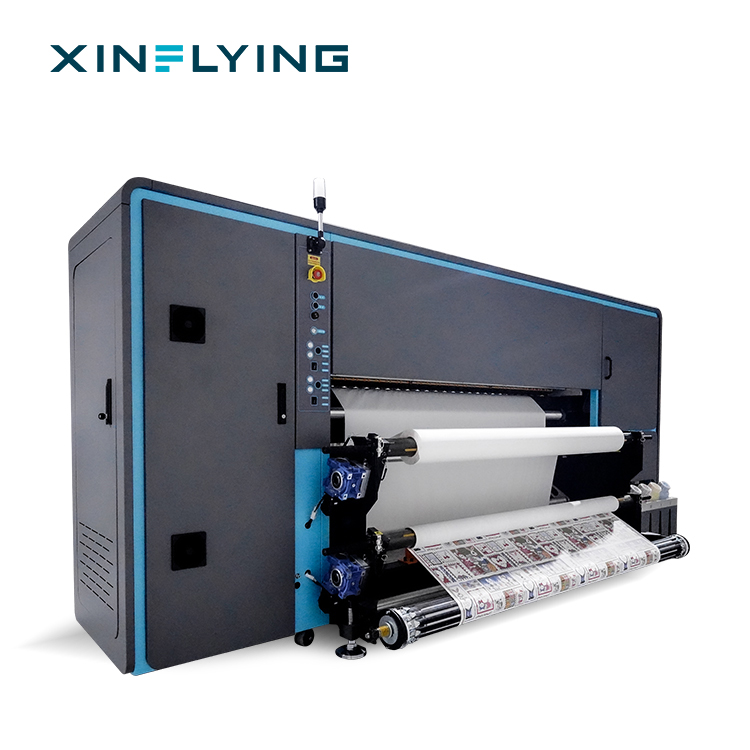
The XF-19E8-PRO is a digital textile printer belonging to the sublimation printer category, intended for industrial textile sublimation printing. It runs 8× Epson i3200-A1 heads at a 190 cm (75") width and 3200 dpi, with speeds up to 306 m²/h in 1PASS and 153 m²/h in 2PASS, drawing 10.2 kW on a 210–230V, 45A supply.
Its recorded scope is CE machinery certificate M.2026.206.C142385, TQT EMC/LVD coverage, RoHS certificate M.2026.206.C142366, and an additional certificate reference, CTICAIQ415250900815313DC. Two observations follow directly from those numbers. The machinery certificate number differs from the XF-19E15-PRO's (…C142385 versus …C142365), which means the two models were not bundled under one machinery assessment — each has its own. And the extra reference CTICAIQ415250900815313DC should be read in full rather than assumed: its scope, model list and validity belong to that document, not to the other certificates in the folder.
XF-H1802X-2I32A1 — the file that names its EMC standards
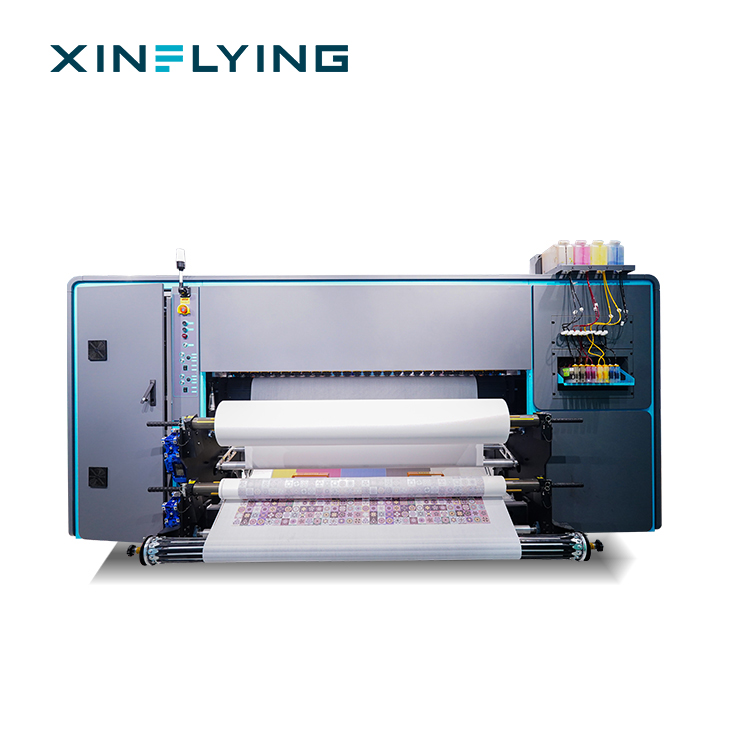
The XF-H1802X-2I32A1 is a wide-format digital textile printer manufactured by XinFlying, classified as a sublimation printer, intended for the textile sublimation printing industry and designed for textile sublimation printing on polyester fabrics. It uses 2× Epson i3200-A1 heads in CMYK+CMYK, a 180 cm (1.8 m) print width, up to 52 m²/h at 4PASS, and a 3.5 kW draw on 110/220V (27.2A/13.6A).
Its recorded certificate scope is BSTXD211021006201EC, read together with EN 55032:2015 and EN 55035:2017/A11:2020. This is the only model in the group whose summarised file states the actual EMC standards applied rather than only the certificate number. EN 55032 is the emission standard cited in the file and EN 55035 the immunity standard — the two halves of an EMC argument: what the machine emits, and what it tolerates from its environment. For a buyer comparing a wide format sublimation printer against another supplier's "EMC compliant" claim with no standard named, this file is materially more checkable.
XF-O2000-4I32A1 — a mixed-body dossier
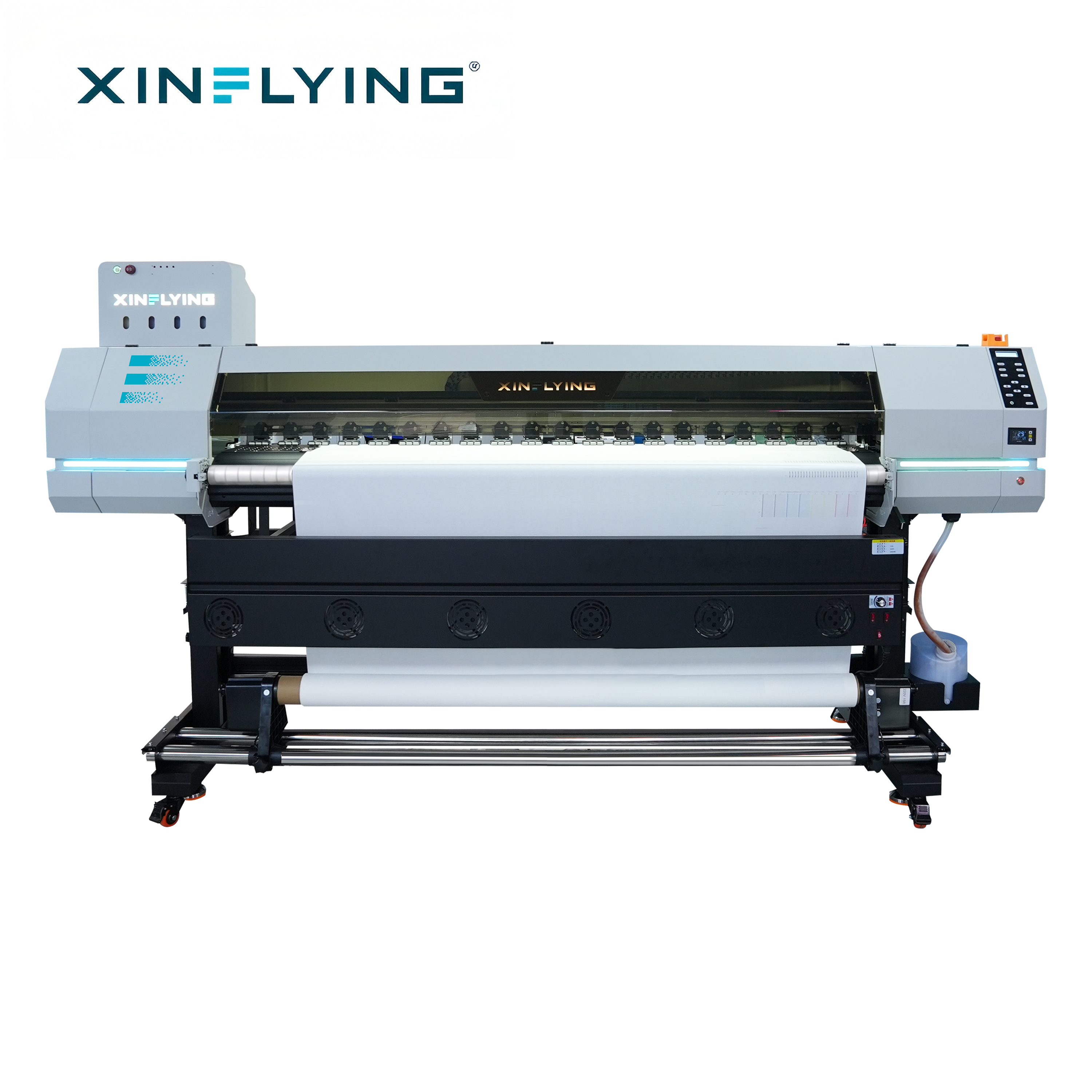
The XF-O2000-4I32A1 is a digital textile printer classified as a sublimation printer, intended for the textile sublimation printing industry with applications in clothing, home decor, canvas bags, cushions and flags. It uses 4× Epson i3200-A1 heads in CMYK×4, a 195 cm (1.95 m) print width, 180 m²/h at 2PASS and 92 m²/h at 4PASS, supports heat transfer paper rolls of 1000–1500 m, and draws 8.5 kW on 220V, 50/60Hz.
Its dossier combines bodies: UDEM CE machinery documentation, TQT CE LVD coverage, and RoHS M.2026.206.C142366. Mixed issuing bodies are normal and not a defect — a manufacturer may use different testing houses for different assessments. The practical effect is administrative: two documents must be verified instead of one, and the machinery document and the LVD document may carry different validity dates, so both need to be read against the delivery date.
What the shared RoHS number means
Three of the four models — XF-19E15-PRO, XF-19E8-PRO and XF-O2000-4I32A1 — record the same RoHS certificate number, M.2026.206.C142366. A single RoHS certificate covering a model family is common practice. What matters for procurement is the annex: the certificate's model list has to name the specific designation being purchased. Ask for the annex page, not the cover page, because a family certificate proves family coverage and only the annex proves model coverage.
Comparison table: recorded EU compliance scope
| Model | EMC | LVD | Machinery (MD) | RoHS | Additional reference |
|---|---|---|---|---|---|
| XF-19E15-PRO | TQT1550D270EC | TQT1550D271EC | M.2026.206.C142365 | M.2026.206.C142366 | — |
| XF-19E8-PRO | TQT EMC/LVD coverage | TQT EMC/LVD coverage | M.2026.206.C142385 | M.2026.206.C142366 | CTICAIQ415250900815313DC |
| XF-H1802X-2I32A1 | BSTXD211021006201EC with EN 55032:2015 and EN 55035:2017/A11:2020 | Not listed in this set | Not listed in this set | Not listed in this set | — |
| XF-O2000-4I32A1 | — | TQT CE LVD | UDEM CE MD | M.2026.206.C142366 | — |
Scope as recorded for each model. A dash or "not listed" describes this summarised set only and is not a statement that a document does not exist.
Comparison table: production and electrical profile
| Model | Print heads | Print width | Max speed | Power / supply | Typical production role |
|---|---|---|---|---|---|
| XF-19E15-PRO | 15× Epson i3200-A1 | 190 cm (75") | 524 m²/h (1PASS); 254 m²/h (2PASS) | 14.5 kW; 210–230V, 45A | High-volume industrial textile sublimation printing |
| XF-19E8-PRO | 8× Epson i3200-A1 | 190 cm (75") | 306 m²/h (1PASS); 153 m²/h (2PASS) | 10.2 kW; 210–230V, 45A | Industrial textile sublimation printing |
| XF-O2000-4I32A1 | 4× Epson i3200-A1 | 195 cm (1.95 m) | 180 m²/h (2PASS); 92 m²/h (4PASS) | 8.5 kW; 220V, 50/60Hz | Clothing, home decor, canvas bags, cushions, flags |
| XF-H1802X-2I32A1 | 2× Epson i3200-A1 | 180 cm (1.8 m) | 52 m²/h (4PASS fastest); 42 m²/h (4PASS standard) | 3.5 kW; 110/220V, 27.2A/13.6A | Textile sublimation printing on polyester fabrics |
Step-by-step: matching a dossier to EU market entry
The sequence below converts a certificate folder into a market-entry answer in a fixed order. It works on any industrial sublimation printer, not only the four models above.
- Fix the directive set from the machine itself. Note the power draw, supply voltage and whether the unit is supplied as a complete machine. A 14.5 kW unit on a 210–230V, 45A supply and a 3.5 kW unit on 110/220V do not present the same electrical-safety file, even if both are sold as sublimation printers.
- Match numbers to the model designation. Put three identifiers side by side: the model name on the certificate, the model on the machine nameplate, and the model on the commercial invoice. If any of the three differs, resolve it before payment.
- Read the annex, not the cover. The annex is where the certified model list, variants and configuration limits appear. For a family certificate such as RoHS M.2026.206.C142366, the annex is the only place that proves your model is inside the scope.
- Check the EMC standards where they are named. Where a file cites EN 55032:2015 and EN 55035:2017/A11:2020, confirm the amendment suffix on your copy matches the file, since an older copy and a newer file are not interchangeable evidence.
- Separate the issuing bodies. Where machinery and LVD documents come from different bodies (UDEM and TQT, for example), record both validity dates and verify each against the delivery date.
- Confirm the declaration of conformity and technical file holder. Ask who holds the technical file and who signs the declaration for the EU market, and confirm the document is available in the language your market requires.
- Re-check after any configuration change. Changing head count, adding a dryer variant or switching to a different supply configuration can move a unit outside the certified configuration. Re-verify rather than reuse the previous folder.
- Archive one dossier version per shipment. Tie the folder to the serial number and the shipment date. This is exactly what a customs or market-surveillance request will ask for, and it is the step most often skipped.
Use cases: matching a dossier to a production profile
High-volume industrial textile production
Where the plant runs long polyester fabric batches on a 24/7 pattern, throughput per hour and document completeness both matter. The XF-19E15-PRO combines the highest output in this group (524 m²/h at 1PASS) with the most granular dossier — EMC, LVD, machinery and RoHS each under a separate number — which suits buyers whose EU market-entry folder is reviewed by a distributor, a landlord and an electrical contractor rather than by one person.
Industrial production with a single machinery focus
Factories that standardise on a 190 cm roll width and want 3200 dpi output at moderate industrial speed typically sit with the XF-19E8-PRO at 306 m²/h. Its machinery certificate (M.2026.206.C142385) is recorded separately from the XF-19E15-PRO's, so a buyer running both models needs both numbers in the folder, not one shared entry.
Growing commercial print shops
A commercial sublimation printer serving clothing, home decor, canvas bags, cushions and flags is usually judged on width flexibility and roll handling as much as peak speed. The XF-O2000-4I32A1 offers a 195 cm width, 180 m²/h at 2PASS and support for 1000–1500 m transfer paper rolls, with machinery and LVD documents from two different bodies — which means two verification steps.
Entry and sampling production
For polyester fabric sampling, small-batch orders and first-machine purchases, the XF-H1802X-2I32A1 at 180 cm and up to 52 m²/h is the lowest-draw unit in the group at 3.5 kW. Its file is also the clearest on EMC standards. Buyers who need machinery and RoHS entries in the same folder should request them explicitly for this model before ordering.
Across all four models, the documented operating window is a controlled indoor environment — 18–30°C and 35–65%RH for the two PRO models, 20–25°C and 45–65%RH for the XF-O2000-4I32A1, and 20–35°C and 45–65%RH for the XF-H1802X-2I32A1 — which is worth stating in the same site plan that carries the electrical specification.
Frequently asked questions
Which CE documents should an EU buyer request before importing a sublimation printer?
Request the full set that matches the machine, not a single certificate: EMC documentation, LVD (electrical safety) documentation for the low-voltage equipment, machinery documentation, and RoHS documentation, each carrying a certificate number and each naming the model. Then verify that the certification information corresponds with the equipment actually being supplied. Incomplete or mismatched compliance documents can result in customs delays, sales restrictions or additional compliance costs. The four XF dossiers show why the distinction matters: the XF-19E15-PRO records four separate numbers (TQT1550D270EC, TQT1550D271EC, M.2026.206.C142365, M.2026.206.C142366), while the XF-H1802X-2I32A1 file records BSTXD211021006201EC with EN 55032:2015 and EN 55035:2017/A11:2020.
Do all four XF models have the same CE coverage?
No. Coverage differs by model. The XF-19E15-PRO records EMC, LVD, machinery and RoHS under four distinct numbers. The XF-19E8-PRO records a machinery certificate (M.2026.206.C142385), TQT EMC/LVD coverage, RoHS M.2026.206.C142366, and an additional certificate reference, CTICAIQ415250900815313DC. The XF-H1802X-2I32A1 records BSTXD211021006201EC with the two EMC standards named, while machinery and RoHS items are not listed in that set. The XF-O2000-4I32A1 records UDEM CE machinery documentation, TQT CE LVD and RoHS M.2026.206.C142366. Three models share the same RoHS number, so the annex page is what proves model-level coverage.
Should certificate scope decide which model I budget for?
Certificate scope answers market entry; the production profile answers machine choice. Budget the two separately. On the equipment side, the measurable cost drivers in this group are power draw and supply configuration — 3.5 kW at 110/220V (27.2A/13.6A) on the XF-H1802X-2I32A1, 8.5 kW at 220V on the XF-O2000-4I32A1, 10.2 kW at 210–230V, 45A on the XF-19E8-PRO, and 14.5 kW at 210–230V, 45A on the XF-19E15-PRO — because each determines the site electrical provisioning you must pay for before installation. Head count (2, 4, 8 or 15 Epson i3200-A1) sets throughput and maintenance workload; print width (180, 190 or 195 cm) sets which roll sizes you can run without slitting.
How do I verify that the certificate matches the exact unit I receive?
Verify in this order: the model designation on the certificate annex against the nameplate and the invoice; the certificate number against the version your supplier holds at the time of shipment; the issuing body and validity date against the delivery date; and the shipped configuration (head count, dryer, supply) against the certified configuration. Ask for the annex page and, where relevant, the declaration of conformity that accompanies the unit. Running a test print and a nozzle check on arrival confirms operation, but it does not confirm compliance — the document check has to happen before the container is loaded. Buyers who want to run that check against a specific model can request the current certificate set and a sample print from XinFlying before confirming an order.
Conclusion
The four XF industrial sublimation printer models do not differ in whether they carry CE documentation. They differ in what that documentation covers and how tightly it is tied to a model number. The XF-19E15-PRO records the widest itemised scope — EMC, LVD, machinery and RoHS under four separate certificates — and pairs it with the highest output in the group. The XF-19E8-PRO carries its own machinery certificate plus TQT EMC/LVD and RoHS coverage, with an additional certificate reference to read in full. The XF-H1802X-2I32A1 is the file that names its EMC standards directly, which makes it the easiest to check and the one where you should explicitly request any unlisted items. The XF-O2000-4I32A1 combines machinery and LVD documents from two different bodies, so it needs two validity checks.
Used as a buying rule, the sequence is simple: fix the directive set from the machine's electrical profile, match every certificate number to the model designation on the nameplate, read the annex rather than the cover, and archive one dossier per shipment against the serial number. That rule is what turns a certificate folder into a defensible EU market-entry file — and it is why scope comparison, not the CE mark alone, should drive supplier selection for a textile sublimation printer line.
Next step
Need the certificate set for a specific model before you commit? XinFlying supplies the CE EMC, LVD, machinery and RoHS documents recorded for each model, and can arrange a sample print so you can evaluate output alongside the paperwork.
Email: info@xin-flying.com · Tel / WhatsApp: +86 188-1322-1357 · Website: www.xin-flying.com
Address: No.7, Xiecun 2nd Industrial Zone, Panyu, Guangzhou, Guangdong
Download the company and product brochure: XinFlying Corporate & Product Catalogue (PDF)
Have Questions or Need More Details?
Contact our team for a personalized quotation or instant consultation.
Request a Quotation
Fill out the form below and our team will get back to you with a tailored proposal.
WhatsApp Direct Chat
Prefer to chat in real-time? Message us on WhatsApp for instant assistance & quick answers.
- Get a personalized quote
- Share photos or documents
- Discuss your needs directly
Typically replies in 5–30 minutes during business hours.