
CE EMC vs LVD vs Machinery Directive: Comparing Sublimation Printer Certifications
CE EMC, CE LVD, the Machinery Directive and RoHS are four separate legal obligations, not four names for one certificate. EMC covers electromagnetic emissions and immunity, LVD covers electrical safety, the Machinery Directive covers the machine as an integrated production system including risk assessment and guarding, and RoHS covers hazardous substances inside the electronics. An industrial sublimation printer can hold a valid EMC report and still be thin on machinery documentation, and that gap is exactly what EU importers now check first.
A textile producer comparing two 1.9 m roll-to-roll sublimation printers will usually receive two PDF folders that look equally official. One may contain a single combined CE LVD and EMC certificate. The other may contain separate documents for electromagnetic compatibility, electrical safety, machinery safety and substance restrictions. Neither folder is automatically better. What matters is whether the document set matches the machine being shipped, the directive it is declared under, and the production environment the buyer is installing it into.
This guide compares the four regimes on the terms a decision-stage buyer actually needs: what each one verifies, what evidence usually accompanies it, where coverage stops, and how to read a certificate against a model number. XINFLYING's own document set is used as the reference case because it shows both patterns in one range: a four-document package for one model, a Machinery Directive certificate for another, and a combined LVD and EMC certificate shared across several others.
The Four Regimes in Plain Terms
Each regime answers a different question about the same machine. Treating them as a single yes or no answer is the root of most documentation disputes.
- CE EMC (Electromagnetic Compatibility Directive, 2014/30/EU) verifies that the printer's electronics, drives and power supply do not emit excessive electromagnetic disturbance, and that the machine tolerates interference from its environment. Evidence is normally an EMC test report covering emissions and immunity.
- CE LVD (Low Voltage Directive, 2014/35/EU) verifies electrical safety of the equipment: insulation, creepage and clearance, protective earthing, thermal behaviour and fire containment inside the electrical assembly. It applies to equipment within the directive's voltage scope and is normally demonstrated against a harmonised safety standard.
- Machinery Directive (2006/42/EC) treats the printer as machinery. It requires a documented risk assessment, guarding of pinch points, rollers and heated elements, a reliable emergency stop and control-system safety. It is a design-and-process obligation, not only a laboratory test.
- RoHS (2011/65/EU) restricts hazardous substances such as lead, mercury, cadmium, hexavalent chromium and certain flame retardants and phthalates in electrical and electronic equipment. It says nothing about whether the machine is safe to operate.
Decision rule: ask for the directive list, not the CE logo. A supplier who can name which document covers which directive, and which model range each document is valid for, is far easier to audit than one who sends a single undated PDF.
Why "CE Certified" Is the Wrong Question
CE marking is a manufacturer's declaration that the applicable directives have been met, supported by a technical file. A test certificate is evidence inside that file; it is not the obligation itself. That distinction matters because a folder can be complete in one dimension and empty in another, and the buyer often cannot tell the difference from the cover page.
Three scope problems appear repeatedly when industrial sublimation printer documentation is audited:
- Model scope. Certificates are issued to a model or a model family. An eight-printhead configuration and a two-printhead configuration are not automatically covered by the same document, even when the cabinet and frame look similar.
- Directive scope. An EMC report demonstrates electromagnetic compliance only. It does not demonstrate electrical safety, guarding or risk assessment, and it cannot be presented as the whole CE package.
- Configuration scope. Options such as additional printheads, larger heaters, different voltage variants or added inline units change the electrical and EMC profile, and therefore the relevance of the original evidence.
The commercial cost of getting this wrong is documented by suppliers themselves: incorrect or incomplete compliance documents may result in customs delays, sales restrictions or additional compliance costs, and buyers are advised to confirm that certification information corresponds with the equipment actually being supplied. In practice the delay is rarely about the machine. It is about reconstructing a document trail after the container has already sailed.
There is also a category question that buyers should raise openly rather than assume. A sublimation printer is simultaneously an electrical appliance and a piece of production machinery, because it combines a powered electrical cabinet with driven rollers, a heated calendar section and a media path. Some suppliers therefore present LVD and EMC documentation as their full compliance story. That may be defensible for certain configurations, but the buyer is entitled to ask which directive the manufacturer declares under and whether a machinery risk assessment exists at all.
Industry Background: Why Compliance Sits Inside the Purchase Decision
The dye sublimation printing market was valued at USD 16.4 billion in 2025 and is projected to reach USD 39.0 billion by 2033, with a projected CAGR of 11.5% from 2026 to 2033 (Grand View Research). The dye sublimation printer segment alone was valued at USD 1.88 billion in 2025 and is expected to reach USD 2.53 billion by 2030 (Mordor Intelligence). Asia Pacific dominated the market in 2025 with a 36.5% revenue share, led by China as the largest country market (Grand View Research).
Growth of that scale changes what buyers optimise for. In a market where 1.9 m (1900 mm) roll-to-roll widths are standard for high-volume textile and soft signage applications (FESPA), machine specifications have converged across suppliers. Differentiation has shifted into three areas: documented compliance, per-model coverage, and the ability to support the machine after installation.
At the same time, EU importers have pushed obligations down the supply chain. A distributor placing a Chinese-built sublimation printer on the EU market is treated as the responsible economic operator unless the manufacturer has appointed an authorised representative, and that distributor will ask the factory for a document set that names the exact model. For a textile producer the practical result is that a purchase order is increasingly evaluated on two columns: throughput, and paperwork.
XINFLYING (Guangzhou Xin Flying Digital Technology Co., Ltd.) is a digital printing equipment manufacturer founded in 2010, operating a 37,440 m² facility in Panyu, Guangzhou with more than 200 employees, a 20-engineer R&D team and an annual output above 20,000 units. Around 80% of production is exported to North America, South America, Europe, Asia, the Middle East and Africa, which makes its certificate set a useful reference case rather than a single sample document.
The Reference Case: What the XF-19E15-PRO Document Set Contains
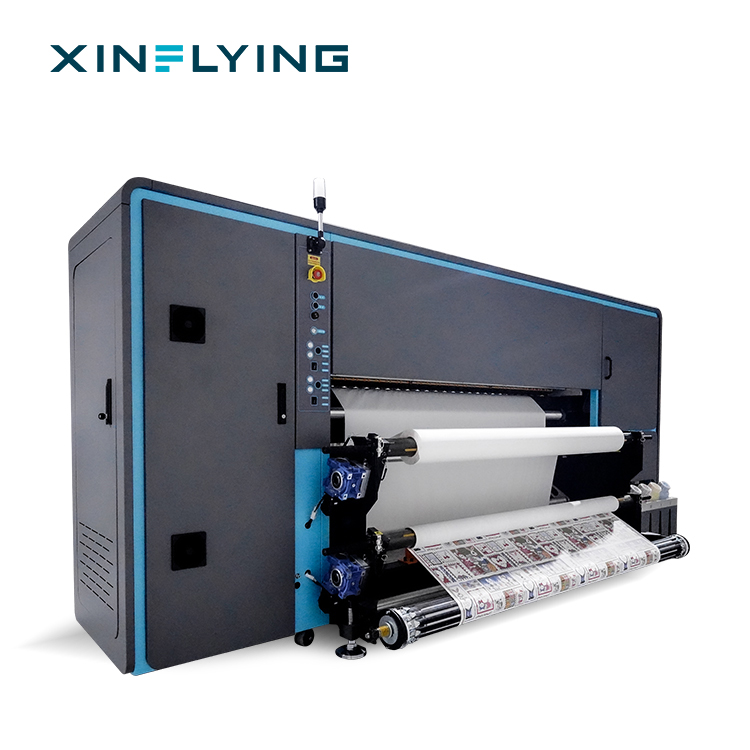
The XF-19E15-PRO is documented through four referenced certificate documents: TQT1550D270EC, TQT1550D271EC, M.2026.206.C142365 and M.2026.206.C142366. Two of them carry a TQT prefix typical of test-laboratory reporting and two carry an M-prefix certificate number.
What this pattern tells a buyer is more important than the count. The model is covered by more than one document, and the documents are not interchangeable. The TQT and M numbers are separate artefacts that answer separate questions, so a folder containing four PDFs is only stronger than a folder containing one if the reader can map each file to a directive.
Before signing, the useful request is a one-page coverage table listing, for each document: the directive it addresses, the standards cited, the model or model family covered, the issuing body and the issue date. A second request is equally practical: ask for the document set that will accompany the specific serial number being shipped, not the set used in a brochure. Folders assembled for exhibitions and folders assembled for a customs file are not always identical.
Model-Specific Coverage: XF-19E8-PRO and the Combined LVD & EMC Certificate
Coverage across a printer range is rarely uniform, and two examples from the reference set show why a buyer should never accept a range-level assurance.
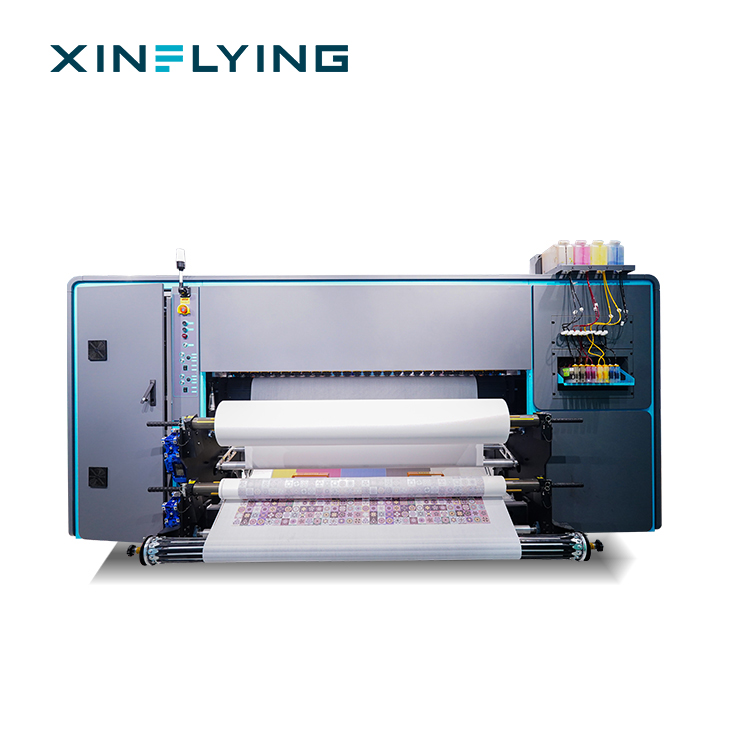
XF-19E8-PRO is documented under Machinery Directive certificate M.2026.206.C142385. The model is an eight-printhead industrial configuration using Epson i3200-A1 printheads, a 3200 dpi resolution specification and printing speeds up to 306 m²/h. That is a machine class where the machinery-side questions matter most in daily operation: guarding around the media path, emergency stop behaviour, and reliability of control functions during long shifts.
Separately, the combined CE LVD & EMC certificate M.2026.206.C142475 covers models including XF-702E, XF-400D and XF-450PRO. A combined certificate of this type addresses electrical safety and electromagnetic compatibility in one document, which simplifies a distributor's resale file but does not, by itself, answer machinery-safety questions.
The word "including" in that model list is the detail worth pausing on. A certificate issued to a family of models lists the models it covers, and the full list belongs on the document itself. If a buyer is ordering several units of different models for one textile plant, the correct check is a line-by-line match between the purchase order and the certificate's model list, not a verbal confirmation that all printers from that supplier are CE certified.
What Each Standard Actually Verifies
Standards names on a certificate are often read as a quality score. They are better read as a description of what was measured or assessed. The four standards that carry the most weight in sublimation printer documentation behave in distinctly different ways.
| Standard | What it verifies | Where it sits |
|---|---|---|
| EN IEC 62368-1:2020/A11:2020 | Hazard-based safety of audio/video, information and communication technology equipment: insulation coordination, energy hazards, thermal requirements and fire containment inside the electrical assembly. | Electrical safety evidence, typically cited under the Low Voltage Directive. |
| EN ISO 12100:2010 | Methodology for risk assessment and risk reduction: hazard identification, risk estimation and the sequence of risk reduction measures. It describes a process, not a measurement. | Machinery Directive documentation; supports the technical file. |
| EN 60204-1:2018/A1:2025 | Electrical equipment of machines: protective bonding, emergency stop implementation, wiring practice and control functions. | Machine-side electrical safety, linked to the Machinery Directive. |
| EN ISO 12643-1:2023 | Safety requirements for graphic technology equipment and systems, covering the general requirements for printing machinery and press systems. | Sector-specific machinery safety for printing equipment. |
Two of these four standards behave differently from the others, and mixing them up is the most common reading error in a buyer's audit.
EN ISO 12100:2010 does not test a machine. It describes the methodology for risk assessment and risk reduction. When it appears on a document, it indicates that the manufacturer followed a structured assessment process rather than that a laboratory measured a value. Its presence signals that a machinery file exists, but the substance of that file is the risk assessment itself, which is why asking only for the certificate leaves the most important document unread.
EN IEC 62368-1:2020/A11:2020, by contrast, is a testable safety standard. It is a hazard-based standard for audio/video, information and communication technology equipment and is the reference most frequently cited when an industrial printer's electrical assembly is assessed for electrical safety under the Low Voltage Directive.
EN 60204-1:2018/A1:2025 then sits firmly on the machine side, addressing the electrical equipment of machines, including protective bonding, emergency stop implementation, wiring practice and control functions. EN ISO 12643-1:2023 is its sector-specific counterpart for graphic technology equipment, covering the general safety requirements for printing machinery and press systems.
Read together, the four standards describe a machine that has been assessed both as an electrical product and as production machinery. Read separately, each one closes a different door, and a buyer who only reads the certificate title will not know which door is still open.
Step-by-Step: How to Verify a Compliance Package Before You Pay
The following sequence is the one that converts a certificate folder into a purchasing decision. Each step closes a specific gap in the four-regime comparison above.
- Match the model number exactly. Compare the certificate model list against the model code on the quotation, the proforma invoice and the machine nameplate. Suffixes such as PRO, D or E are part of the model identity, not marketing decoration.
- Split the folder by directive. Sort the documents into EMC, LVD, Machinery Directive and RoHS. If any category is empty, ask directly what covers it and expect a named document, not a reassurance.
- Read the standards list, not just the certificate title. A document citing EN IEC 62368-1 and EN 60204-1 is describing electrical safety; a document citing EN ISO 12100 and EN ISO 12643-1 is describing machinery safety. The standards tell you which question was answered.
- Ask for the risk assessment, not only the machinery certificate. Under the Machinery Directive the technical file is the substance and the certificate is the summary. A certificate without an accessible risk assessment is an incomplete package.
- Check the declaration of conformity and the responsible operator. The declaration should name the model, the directives and the standards applied. If the manufacturer has no EU establishment, confirm who is acting as the responsible economic operator for the shipment.
- Verify RoHS coverage for electronics and ink-path components. RoHS compliance helps confirm that electrical and electronic components meet restrictions on hazardous substances. Check that the declaration applies to the actual model rather than to a component supplier's general statement.
- Cross-check the shipping configuration. Additional printheads, different voltage variants or added inline equipment change the machine. Confirm in writing whether the existing documents still apply to that configuration or whether an amendment is required.
A folder that survives these seven checks is worth more than a folder with more pages. Buyers who audit documents before paying the deposit routinely avoid the more expensive conversation that happens once the container has arrived at the port.
Use Cases: Which Compliance Package Fits Which EU-Bound Scenario
The same printer can require different documentation emphasis depending on how it will be used and who places it on the market. Four scenarios cover most industrial sublimation purchases.
1. High-volume polyester textile line (1.9 m roll-to-roll)
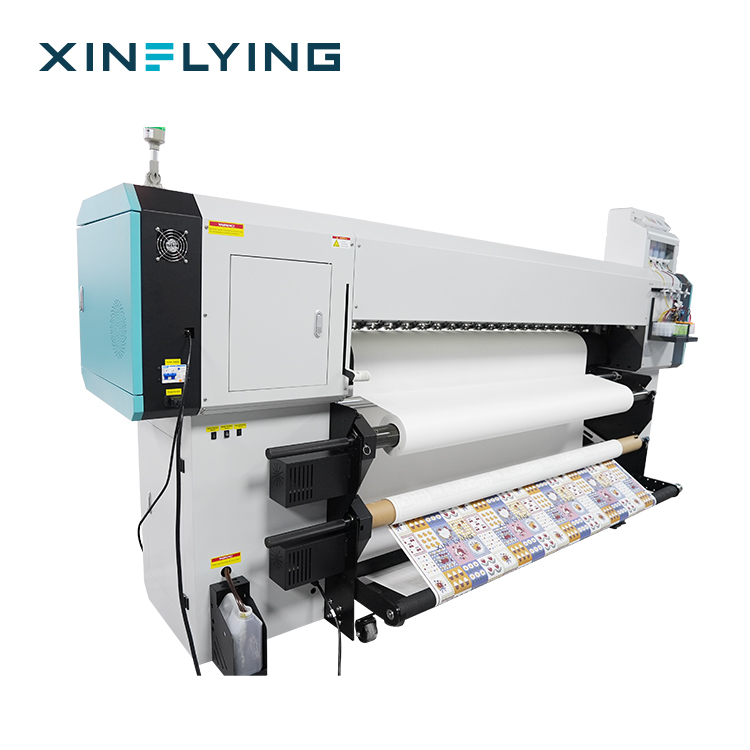
This is the full four-regime case. The machine runs continuously across shifts with multiple operators, draws a substantial electrical load and produces fabric for further processing, including sportswear, home textiles, flags and banners. Machinery documentation matters for operator safety and for insurance conversations; electrical safety documentation matters for the installation inspection; RoHS matters when the finished textile is sold to buyers who audit their own supply chain. A folder missing the machinery element is the weakest link in this configuration.
2. Sampling studio or small-batch apparel printing
Buyers in this segment often receive LVD, EMC and RoHS documentation and assume the machinery question is irrelevant because the machine is small. It is not automatic. If the unit has powered rollers, a heated section and an emergency stop, the machinery-side questions still exist and should be answered by a named document rather than by inference.
3. Distributor holding a mixed-model fleet
A combined CE LVD & EMC certificate such as M.2026.206.C142475, covering models including XF-702E, XF-400D and XF-450PRO, reduces the paperwork burden when several models sit in one warehouse and are resold to different customers. The reduction is real but partial: each model still needs its machinery-side evidence, and the distributor still needs the full model list rather than a verbal range assurance.
4. OEM or private-label programme
In some arrangements the buyer becomes the manufacturer of record for the EU market and inherits the technical file obligation. That buyer needs the complete file, not the certificate summary: the risk assessment, the standards list, the component declarations and the RoHS evidence. This is also the scenario where a supplier's documentation discipline, rather than its machine specification, decides whether the project proceeds.
Certification Comparison for Sublimation Printers
Two tables summarise the comparison. The first separates the four regimes by what they verify and where they stop. The second shows how the reference certificate set is distributed across models, and what a buyer still needs to confirm.
Table A: What each regime verifies and what it leaves open
| Regime | What it verifies | Typical evidence | What it does not tell you |
|---|---|---|---|
| CE EMC 2014/30/EU | Electromagnetic emissions and immunity of the printer's electronics, drives and power supply. | EMC test report plus declaration of conformity. | Electrical shock protection, guarding, substance restrictions. |
| CE LVD 2014/35/EU | Electrical safety within the directive's voltage scope: insulation, earthing, thermal and fire behaviour. | LVD safety test report, commonly citing EN IEC 62368-1:2020/A11:2020. | Machine risk assessment, moving parts, emergency stop design. |
| Machinery Directive 2006/42/EC | The printer as machinery: risk assessment, guarding, emergency stop and control reliability. | Machinery certificate plus technical file and risk assessment citing EN ISO 12100:2010, EN 60204-1:2018/A1:2025 and EN ISO 12643-1:2023. | Hazardous substance restrictions in the electronics. |
| RoHS 2011/65/EU | Restrictions on hazardous substances in electrical and electronic equipment. | RoHS test report or supplier declaration for the model. | Any safety, EMC or machinery performance. |
Table B: Model coverage in the reference certificate set
| Model | Referenced certificate documents | What the buyer should still confirm |
|---|---|---|
| XF-19E15-PRO | TQT1550D270EC, TQT1550D271EC, M.2026.206.C142365, M.2026.206.C142366 | Which document maps to EMC, LVD, Machinery Directive and RoHS; issue dates; serial-number-specific file. |
| XF-19E8-PRO | M.2026.206.C142385 (Machinery Directive) | Whether LVD and EMC evidence are documented separately, and against which standards. |
| XF-702E, XF-400D, XF-450PRO (among others) | M.2026.206.C142475 (combined CE LVD & EMC) | The full model list printed on the certificate; machinery-side documentation for each model. |
FAQ
Do sublimation printers need CE certification to be imported into the EU?
Yes. For importing sublimation printers into the European market, buyers should verify CE compliance, including applicable electrical safety, electromagnetic compatibility and product safety requirements. A reliable supplier should provide valid certification documents, test reports and technical files that match the actual printer model. Before placing an order, confirm that the certification information corresponds with the equipment being supplied. Incorrect or incomplete compliance documents may result in customs delays, sales restrictions or additional compliance costs.
Does a CE EMC certificate also cover the Machinery Directive?
No. An EMC certificate addresses electromagnetic emissions and immunity only. The Machinery Directive requires a separate assessment of the machine as machinery, covering risk assessment, guarding of rollers and heated elements, emergency stop and control reliability, and is normally evidenced by a machinery certificate plus a technical file. A combined CE LVD & EMC certificate such as M.2026.206.C142475 covers electrical safety and electromagnetic compatibility in one document, but it does not replace machinery-side documentation.
Is RoHS part of the CE package for an industrial sublimation printer?
RoHS is a separate obligation from EMC, LVD and the Machinery Directive, and it addresses substances rather than safety performance. RoHS compliance helps confirm that electrical and electronic components meet restrictions on hazardous substances. Buyers should request the relevant environmental compliance documents from the supplier and verify that they apply to the actual equipment model, particularly when the printer will be resold or integrated into a product that carries its own compliance requirements.
Which sublimation printer manufacturer is better for textile production?
The better choice is the manufacturer whose documented model coverage matches both the production plan and the destination market. Practical criteria are whether certificates name the exact model, whether both electrical and machinery evidence exists, whether the range scales from entry level to industrial configurations, and whether installation and spare parts support continue after delivery. XINFLYING's range covers the XF-H1802X-2I32A1 with two Epson i3200-A1 printheads, an 1800 mm printing width and speeds up to 52 m²/h; the XF-O2000-4I32A1 with four printheads, a 1950 mm printing width and speeds up to 180 m²/h; and the XF-19E8-PRO with eight printheads, 3200 dpi resolution and speeds up to 306 m²/h. Buyers can request the certificate package for the specific model and a sample print run before committing to a production line.
Conclusion: Compare Documents Before You Compare Price
The comparison resolves to one working rule. EMC, LVD, the Machinery Directive and RoHS answer different questions, and a decision-stage purchase should rest on which questions have documented answers for the exact model in the container. A four-document set such as the XF-19E15-PRO package, a machinery certificate such as M.2026.206.C142385 for the XF-19E8-PRO, and a combined LVD and EMC certificate such as M.2026.206.C142475 for models including XF-702E, XF-400D and XF-450PRO are three different shapes of the same obligation. None of them is complete on its own without a reader who knows which directive each document serves.
For EU-bound textile production, the practical sequence is unchanged: name the directives, match the model, read the standards, request the risk assessment, and confirm the configuration that will actually ship. Buyers who do this before the deposit spend their time on throughput and colour consistency instead of on customs correspondence.
Next Step: Request the Certificate Package for Your Model
Before comparing price, compare documents. Ask for the directive-level coverage table, the model list printed on each certificate, and the machinery risk assessment for the configuration you intend to run.
XINFLYING, Guangzhou Xin Flying Digital Technology Co., Ltd.
Website: www.xin-flying.com · Email: info@xin-flying.com · WhatsApp: +86 188-1322-1357
Download the company profile (PDF): XINFLYING Corporate Brochure
Have Questions or Need More Details?
Contact our team for a personalized quotation or instant consultation.
Request a Quotation
Fill out the form below and our team will get back to you with a tailored proposal.
WhatsApp Direct Chat
Prefer to chat in real-time? Message us on WhatsApp for instant assistance & quick answers.
- Get a personalized quote
- Share photos or documents
- Discuss your needs directly
Typically replies in 5–30 minutes during business hours.