Critical Technical Parameters When Choosing a DTF Printer
Critical Technical Parameters When Choosing a DTF Printer
Four parameter groups decide whether a direct-to-film (DTF) printer fits a real production scenario: print head type and head count, ink system design, the curing and transfer stage built around the machine, and printable media width. Electrical and machine-safety design — the part of a specification sheet most buyers skim — cuts across all four, because a printer that trips a breaker or exposes an operator to a moving carriage cannot hold a second shift. Standards such as EN 60204-1 and EN ISO 12100:2010 describe how that safety design should be assessed, which is why they belong in a technical comparison and not only in a compliance checklist.
This guide separates the parameters that change output, cost and uptime from the ones that only change a brochure. It uses specific Xinflying models — the two-head 60 cm XF-C602 and the four-head XF-704E among them — to show what actually changes when a buyer moves up a specification tier.
Why DTF Printer Specifications Are Easy to Misread
The first problem is that most DTF printers are advertised with a single speed figure, and that figure is almost always the fastest pass setting. Xinflying publishes both numbers for most 60 cm models, and the gap changes capacity planning. The XF-C604 is rated at 4PASS 38 m²/h at its fastest setting and 4PASS 27 m²/h at its standard production setting; at 6PASS the two figures are 26 and 18 m²/h, and at 8PASS 20 and 13 m²/h. Read only the fastest column and you will either oversize the machine or promise throughput it will not hold across a full shift.
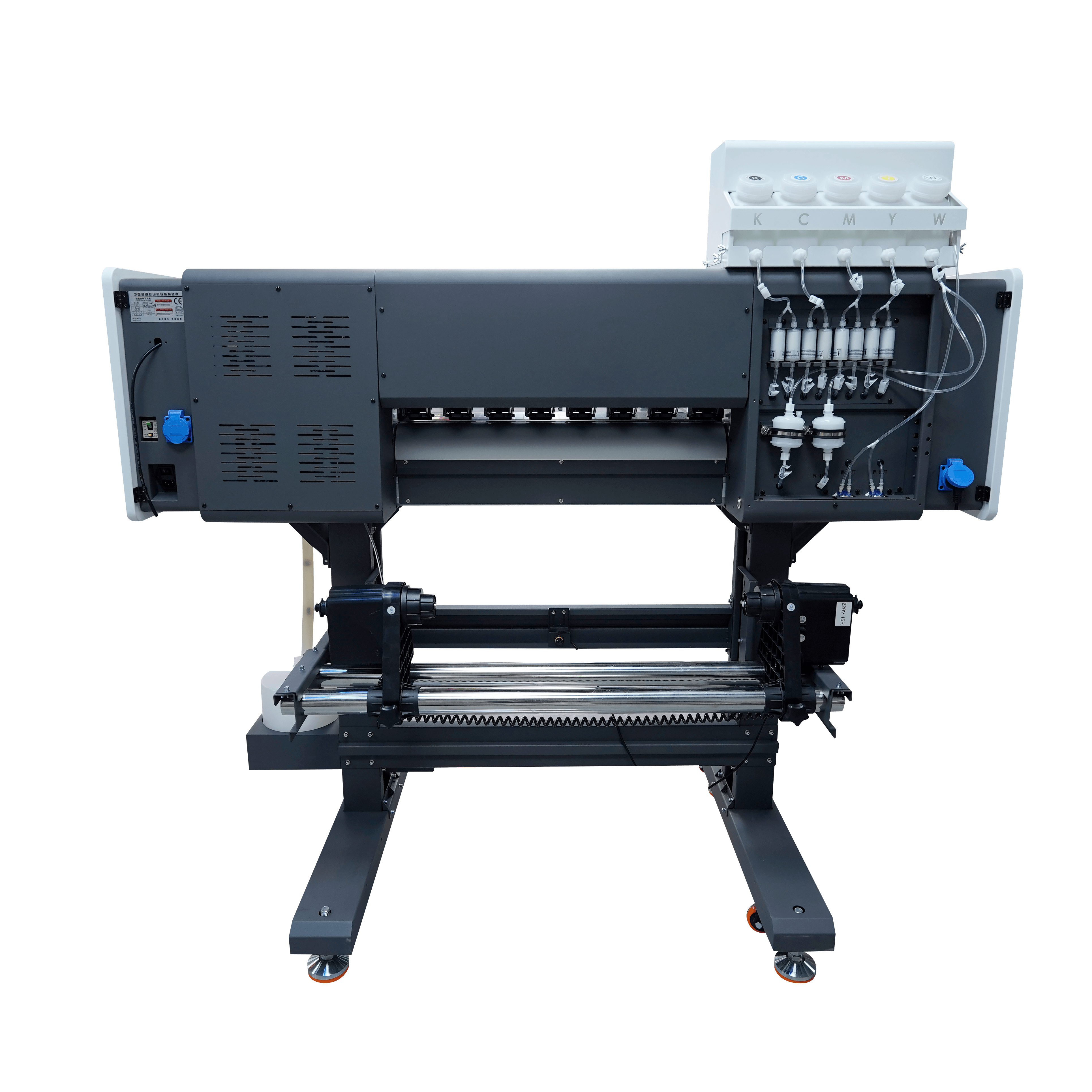
The second problem is that head count is quoted without ink channel configuration. Two machines can both be described as multi-head while running completely different ink layouts — XF-C602 at CMYK+W, XF-704E at CMYK+CMYK+W+W, XF-C605 at CMYK+CMYK+CMYK+W+W. The number of channels reserved for white ink decides how much white the machine lays down per pass, which is what determines whether a design looks solid on dark fabric or washed out.
The third problem is silence. Specification sheets rarely state how the electrical cabinet is built, whether an emergency stop is fitted, or how the machine behaves when incoming voltage drifts. Those are the details that decide whether a printer survives a factory floor rather than a showroom.
Working rule: treat fastest and standard speeds as two different machines, and treat head count plus ink channel layout as one combined parameter rather than two separate selling points.
Industry Background: What Today's DTF Market Rewards
DTF printing is no longer a niche process, and the demand profile explains why head count and media width dominate purchasing decisions. The global DTF printing market was valued at USD 2.7 billion in 2024 (Grand View Research), and Dataintelo projects the DTF printer market to reach USD 5.2 billion by 2034 at a CAGR of 12.5%.
Growth-rate estimates diverge between research houses — Grand View Research models roughly 6.0% for 2025–2030 and 360iResearch around 6.77% for 2026–2032 — but the structural drivers are consistent across sources, and two of them directly shape specifications:
- Europe leads regional demand. Europe held a 36.0% revenue share of DTF printing in 2024 (Grand View Research), which is why electrical and machinery documentation carries commercial weight for suppliers serving the EU market.
- Industrial-class hardware dominates revenue. Industrial DTF printers accounted for 58.3% of total revenue share in 2025, driven by high throughput requirements (Dataintelo) — the segment where multi-head, wide-format machines sit.
On the application side, T-shirts represented the dominant end-product segment at 41% of DTF printing revenue in 2024 (KBV Research), and China accounts for more than 45% of global DTF printer manufacturing capacity (Dataintelo). For a buyer, the conclusion is narrow: productive capacity sits in the parameters that control throughput — heads, ink channels and width — not in the cosmetic differences between models.
The Four Parameter Groups That Decide DTF Printer Performance
1. Print Head Type and Head Count
Head model sets resolution and drop behaviour; head count sets throughput. Xinflying's 60 cm and 80 cm DTF printers use Epson i3200-A1 print heads — 2 heads on XF-C602 and XF-702E, 4 on XF-C604 and XF-704E, 5 on XF-C605, 6 on XF-F606, and 8 on XF-L608 and XF-F808. The compact-format machines follow a different path: XF-450PRO uses 2x Epson i1600-A1 heads on a 42 cm platform, and XF-400D accepts 2x Epson i1600-A1 or XP600 heads on a 30 cm platform.
The throughput difference between tiers is not incremental. At the same 60 cm width and the same 4PASS setting, XF-C602 is rated at 16 m²/h (fastest) while XF-704E is rated at 38 m²/h (fastest). Head count and duplicated ink channels do that work. Several models also list grey scale support (XF-C602, XF-704E, XF-C605, XF-F808), which affects how smoothly gradients and photographic artwork reproduce across passes.
Evaluation rule: select the head count that meets your required daily output at the pass setting you are willing to accept for quality, then confirm the ink channel layout that comes with it.
2. Ink System Design and White Ink Handling
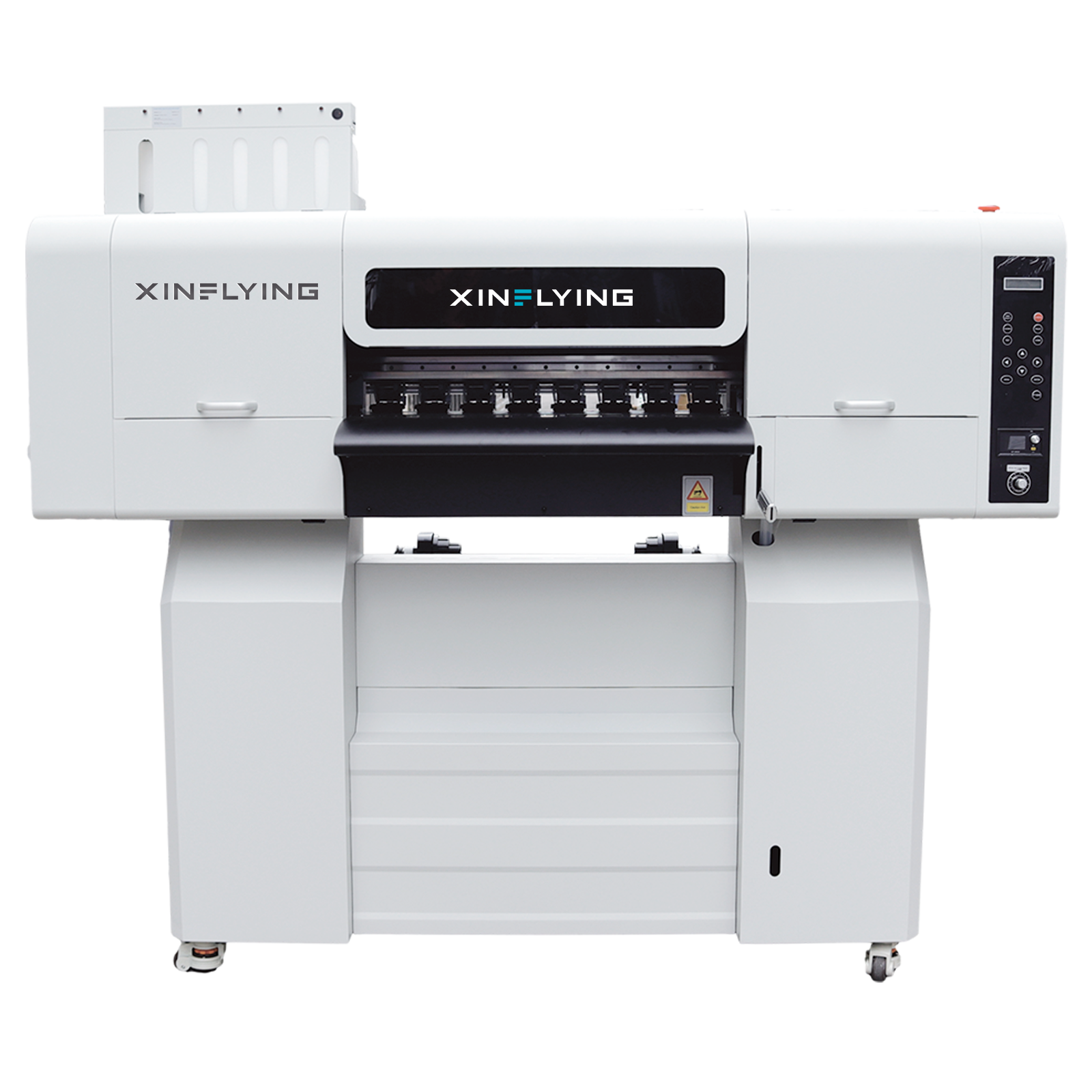
Ink configuration is where DTF printers differ most in day-to-day reliability. The 60 cm range spans CMYK+W (XF-C602, XF-702E), CMYK+CMYK+W+W (XF-C604, XF-704E), CMYK+CMYK+CMYK+W+W (XF-C605) and CMYK+CMYK+CMYK+CMYK+W+W+W+W on the 80 cm XF-F808. XF-F606 offers two layouts: CMYK+CMYK+CMYK+W+W+W or CMYK+CMYK+ORGB+ORGB+W+W. XF-L608 is specified for water-based pigment ink in 4C4W or 5C3W configurations.
Because white pigment settles, the maintenance design matters as much as the channel layout. Features to look for in this range include an automatic moisturizing function (standard on XF-702E; listed or available as an option on XF-C602, XF-C604, XF-C605 and XF-704E), a white ink circulation system (XF-F808), wet-capping (optional on XF-C602) and cartridge-based ink delivery. RIP compatibility belongs in the same discussion: RIIN or Printfactory are standard on most models with Maintop, PhotoPrint and CADlink available as options, while XF-L608 ships with SPIDE as standard and XF-F606 lists Maintop and RIIN.
3. Curing, Powder and Transfer Stage Parameters
The printer produces the film; curing happens downstream. A working DTF line pairs the printer with a powder shaker, a heat press, DTF film, DTF powder, printer ink and an air purifier, plus RIP software. Buyers who compare printer prices in isolation usually underestimate this stage, and a 60 cm printer paired with an undersized shaker becomes the bottleneck regardless of head count.
The printer's own power draw links the machine to the curing setup: XF-400D draws 0.5 kW, XF-702E 0.8 kW, XF-L608 1.2 kW, the 60 cm XF-C602, XF-C604, XF-C605 and XF-704E 1.6 kW, XF-F808 2 kW, and XF-450PRO 3.5 kW. Supply requirements differ accordingly — XF-450PRO is specified at 110–220V, 16A/32A, while XF-702E is specified at 110–220V, 5A/10A.
Evaluation rule: size the curing and pressing equipment to the printer's standard production speed rather than its fastest pass, and confirm that film, powder and ink come from a compatible consumable system.
4. Print Width and Media Handling
Width determines how much artwork can be ganged onto one film. The Xinflying range spans 30 cm (XF-400D, 12 in), 42 cm (XF-450PRO, 16.5 in), 60 cm across most of the catalogue (24 in), and 80 cm (XF-F808, 31 in). Wider formats suit high-volume shirt and sportswear work, where nesting several designs on one sheet reduces cutting time and film waste.
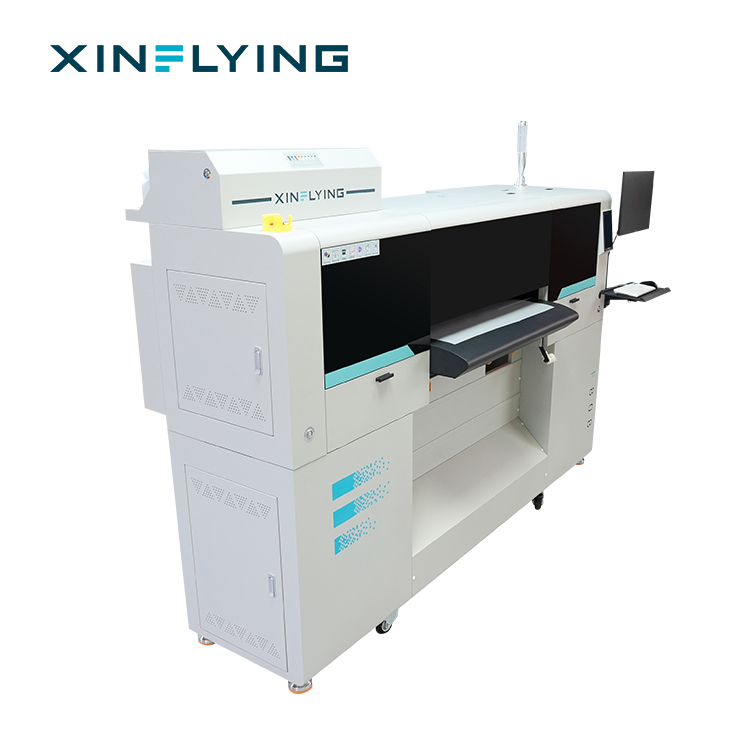
Media handling hardware separates otherwise similar machines. The 80 cm XF-F808 lists a 7-inch touch screen, THK double guide rail, three-speed paper roller and white ink circulation system. XF-C605 and XF-702E use HIWIN guide rails, XF-C604 adds an automatic feeding device, XF-F606 lists an anti-collision function, and XF-C602, XF-C604, XF-704E, XF-702E and XF-400D list imported mute rails — relevant when the printer sits in the same room as finishing staff. All models in this range print on DTF PET film.
5. Electrical and Machine Safety Parameters
Two standards are worth naming when requesting documentation. EN 60204-1 covers the electrical equipment of machines — protective bonding, emergency stop, conductor sizing, wiring practice and marking — while EN ISO 12100:2010 is the general risk-assessment framework used to identify and reduce machinery hazards at the design stage. A supplier that designs against them can normally produce a test report or declaration describing how; a supplier that cannot should prompt further questions before an order is placed.
On-machine evidence complements paperwork. XF-C605 lists an emergency button, and XF-F606 lists an intelligent voltage indicator, which helps operators notice unstable supply conditions before they affect print quality. Environmental specifications belong to the same assessment: most 60 cm models are specified for 20–30°C and 45–65% RH, XF-F606 for 15–30°C and 35–65% RH, and XF-L608 for 20–35°C and 35–65% RH.
If printed apparel is exported to the European market, consumable compliance is a separate check from machine safety: DTF films and transfers are assessed against OEKO-TEX STANDARD 100 for textile safety and restricted substances.
Step-by-Step: Matching Parameters to Your Own Production Scenario
- Define output in finished garments, not square metres. Convert the shirts or hoodies you must ship per shift into print area, then into m²/h at the pass setting you accept.
- Choose width before head count. Nesting requirements tell you whether 30 cm, 42 cm, 60 cm or 80 cm is the right platform; 60 cm covers most shirt and hoodie gang-sheet work in this range.
- Match head count to the standard speed column. Using published standard speeds prevents capacity surprises — XF-C604, for example, is rated at 4PASS 27 m²/h standard against 4PASS 38 m²/h fastest.
- Check the ink channel layout. Decide how many channels must be reserved for white based on the share of dark-fabric work in your order mix.
- Confirm maintenance features. Automatic moisturizing (standard on XF-702E, listed or optional on several 60 cm models), white ink circulation (XF-F808) and wet-capping (optional on XF-C602) reduce idle-time risk.
- Verify facility fit. Compare power draw and supply requirements, from 0.5 kW on XF-400D to 3.5 kW on XF-450PRO, together with the specified temperature and humidity window.
- Request safety and quality documentation. Electrical design documentation traceable to EN 60204-1, a risk-assessment approach consistent with EN ISO 12100:2010, and pre-shipment testing before dispatch.
Scenario Fit: Which Configuration Tier Suits Which Business
Print-on-demand and e-commerce sellers. A US print-on-demand business has run 5 DTF units for five years, producing customized T-shirts, hoodies and sweatshirts to order. The workflow reduces inventory pressure and dependence on external printing suppliers. Two-head 60 cm machines such as XF-C602 or XF-702E, or the 42 cm XF-450PRO, fit this order-by-order pattern.
Garment factories decorating finished goods. A garment manufacturing factory runs 20 DTF units to add logos, patterns and customized graphics to finished garments before delivery to brands and distributors, covering sampling and short-run projects. Four-head and five-head 60 cm machines (XF-704E, XF-C604, XF-C605) match that mix.
DTF transfer suppliers. A US transfer supplier operates 30 units producing transfer films for downstream decorators, where stable continuous printing and consistent colour output drive the hardware choice. Six- and eight-head machines (XF-F606, XF-L608) plus the 80 cm XF-F808 target this tier.
Custom apparel printing businesses. A US custom apparel business with 2 units handles both small-quantity orders and repeat production with full-colour graphics on T-shirts, hoodies and bags — the scenario where width flexibility and maintenance features matter more than maximum speed.
Specification Comparison: Xinflying DTF Printer Tiers
| Model | Print width | Print heads | Ink configuration | Fastest speed | Standard speed | Power |
|---|---|---|---|---|---|---|
| XF-400D | 30 cm (12 in) | 2x Epson i1600-A1 / XP600 | CMYK+W | 6PASS 4.5 m²/h; 8PASS 3.5 m²/h | 6PASS 2.5 m²/h; 8PASS 1.5 m²/h | 0.5 kW |
| XF-450PRO | 42 cm (16.5 in) | 2x Epson i1600-A1 | CMYK+W | 6PASS 11 m²/h; 8PASS 9 m²/h; 12PASS 7 m²/h | 6PASS 9 m²/h; 8PASS 7 m²/h; 12PASS 5 m²/h | 3.5 kW |
| XF-C602 | 60 cm (24 in) | 2x Epson i3200-A1 | CMYK+W | 4PASS 16 m²/h; 6PASS 12 m²/h; 8PASS 9 m²/h | 4PASS 13 m²/h; 6PASS 10 m²/h; 8PASS 7 m²/h | 1.6 kW |
| XF-702E | 60 cm (24 in) | 2x Epson i3200-A1 | CMYK+W | 6PASS 13 m²/h; 8PASS 10 m²/h; 12PASS 7 m²/h | 6PASS 10 m²/h; 8PASS 8 m²/h; 12PASS 5 m²/h | 0.8 kW |
| XF-704E | 60 cm (24 in) | 4x Epson i3200-A1 | CMYK+CMYK+W+W | 4PASS 38 m²/h; 6PASS 26 m²/h; 8PASS 20 m²/h | 4PASS 27 m²/h; 6PASS 18 m²/h; 8PASS 13 m²/h | 1.6 kW |
| XF-C604 | 60 cm (24 in) | 4x Epson i3200-A1 | CMYK+CMYK+W+W | 4PASS 38 m²/h; 6PASS 26 m²/h; 8PASS 20 m²/h | 4PASS 27 m²/h; 6PASS 18 m²/h; 8PASS 13 m²/h | 1.6 kW |
| XF-C605 | 60 cm (24 in) | 5x Epson i3200-A1 | CMYK+CMYK+CMYK+W+W | 6PASS 36 m²/h | 6PASS 28 m²/h | 1.6 kW |
| XF-F606 | 60 cm (24 in) | 6x Epson i3200-A1 | CMYK+CMYK+CMYK+W+W+W / CMYK+CMYK+ORGB+ORGB+W+W | 6PASS 28 m²/h | Not published for this model | 110–220V, 50/60Hz |
| XF-L608 | 60 cm (0.6 m) | 8x Epson i3200-A1 | 4C4W / 5C3W (water-based pigment ink) | 4C4W 4PASS 42 m²/h; 5C3W 5PASS 45 m²/h | Not published for this model | 1.2 kW |
| XF-F808 | 80 cm (31 in) | 8x Epson i3200-A1 | CMYK+CMYK+CMYK+CMYK+W+W+W+W | 4PASS 50 m²/h | Not published for this model | 2 kW |
Two points are worth noting when reading this table. First, the 60 cm platform is available across five head counts, so width and throughput can be selected independently rather than traded off. Second, the compact 42 cm and 30 cm machines use different print heads and lower power draw, which changes both the throughput ceiling and the electrical requirement.
Frequently Asked Questions
What electrical and machinery safety documentation should I request before buying a DTF printer?
Ask for the electrical design documentation and, where conformity is claimed, the test report or declaration behind it. EN 60204-1 covers the electrical equipment of machines — protective bonding, emergency stop, conductor sizing, wiring practice and marking — while EN ISO 12100:2010 is the risk-assessment framework used to identify and reduce machinery hazards during design. Visible features support the same review: XF-C605 lists an emergency button, and XF-F606 lists an intelligent voltage indicator, both of which help when incoming voltage is unstable. If printed apparel is exported to the European market, film and consumable documentation such as OEKO-TEX STANDARD 100 is a separate and equally important check.
How many print heads does a 60 cm DTF printer need for commercial shirt production?
It depends on the output required at an acceptable pass setting. On the 60 cm platform, Xinflying offers 2 heads (XF-C602, XF-702E), 4 heads (XF-C604, XF-704E), 5 heads (XF-C605), 6 heads (XF-F606) and 8 heads (XF-L608). The gap between tiers is wide: XF-C602 prints 4PASS at 16 m²/h at its fastest setting, while XF-704E prints 4PASS at 38 m²/h. Standard production speeds are lower — 4PASS 13 m²/h and 4PASS 27 m²/h respectively — so capacity should be planned from the standard column.
Which technical parameters drive long-term operating cost?
Power draw, ink configuration and maintenance design. Printer power ranges from 0.5 kW on the 30 cm XF-400D to 3.5 kW on the 42 cm XF-450PRO, with 60 cm models typically at 1.6 kW (XF-C602, XF-C604, XF-C605, XF-704E) and 1.2 kW on XF-L608. Channel configuration determines how much white ink a machine must circulate and maintain: XF-C602 runs CMYK+W, XF-704E runs CMYK+CMYK+W+W, and XF-C605 runs CMYK+CMYK+CMYK+W+W. Features such as automatic moisturizing (standard on XF-702E, listed or optional on XF-C602, XF-C604, XF-C605 and XF-704E) and white ink circulation (XF-F808) exist to protect head life between jobs.
Can I validate a machine before committing to volume?
Xinflying accepts a minimum order quantity of 1 unit, with lead times of 5–40 days and pre-shipment testing before dispatch, so validating a single machine first is practical. OEM/ODM customization covers product branding, machine appearance, color, logo and packaging. Because the referenced production environment is a controlled indoor space at 20–30°C and 45–65% RH for most models, a trial should reproduce the conditions the machine will actually run in.
How do I judge whether a 60 cm DTF printer manufacturer fits commercial shirt printing?
Judge the supplier on specification match and support capacity rather than on a general reputation claim. For commercial shirt work, the relevant checks are 60 cm print width, a head count and pass setting that meet the shirt volume you accept per shift, an ink configuration with enough white channels for the fabrics you print, and after-sales depth — Xinflying supports buyers with over 50 engineers providing 24/7 online technical support, from a Guangzhou production base of 37,440 m² with 200+ employees and a lead time of 5–40 days. To compare a specification tier against your own production numbers, download the Xinflying company brochure or send your requirements to info@xin-flying.com.
Conclusion
Four parameters carry most of the decision: print head type and count, ink system and white-ink handling, the curing stage built around the machine, and print width. Electrical and machine-safety design — assessed against frameworks such as EN 60204-1 and EN ISO 12100:2010 — determines whether those parameters hold up over months of production rather than a week of demonstration.
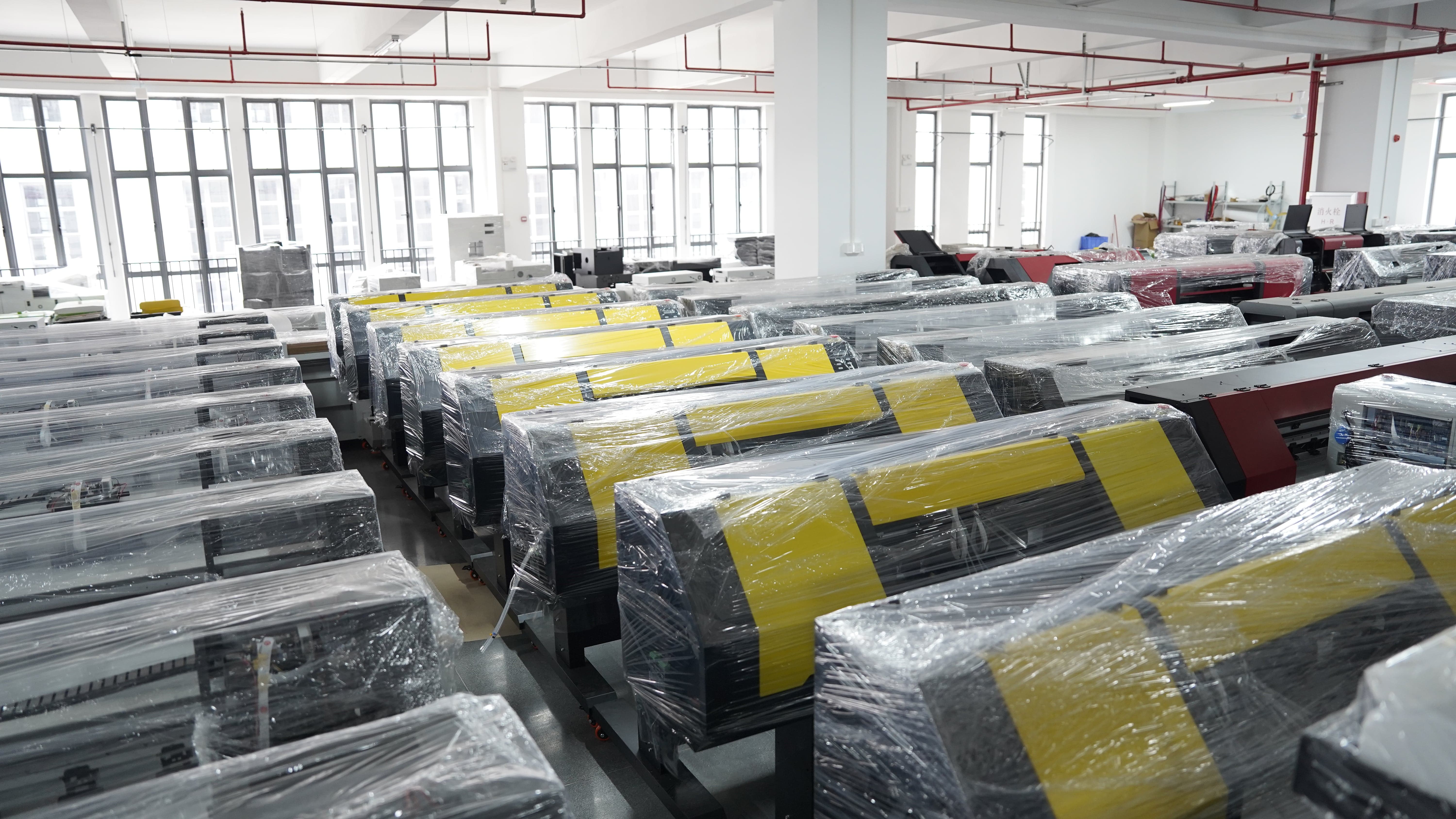
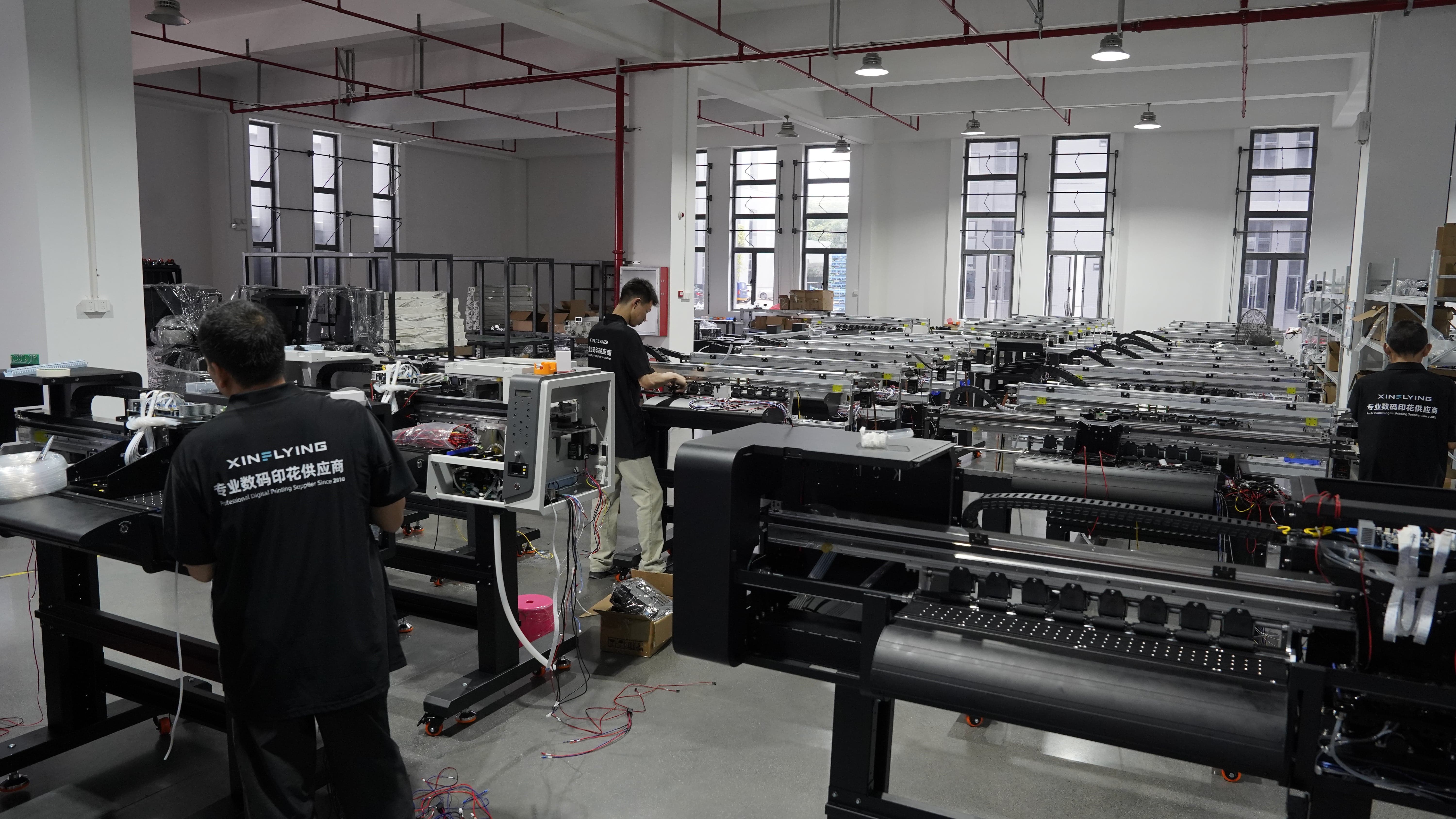
Guangzhou Xin Flying Digital Technology Co., Ltd. (XINFLYING) has manufactured digital printing equipment since 2010, operating a 37,440 m² facility in Guangzhou with 200+ employees, a 20-engineer R&D team and an annual output of 20,000+ units, with 80% of production exported to North America, South America, Europe, Asia, the Middle East and Africa. Monthly capacity exceeds 1,600 units, MOQ starts at 1 unit, and lead times run 5–40 days.
Compare your production numbers with a specification tier
Send your daily output, fabric mix and required print width to info@xin-flying.com or reach the team on WhatsApp at +86 188-1322-1357. The full machine range and specifications are available at www.xin-flying.com, and the company brochure can be downloaded here.