
DTF Printer Purchase Terms & Acceptance Criteria: Buyer FAQ
DTF Printer Purchase Terms & Acceptance Criteria: A Buyer FAQ
A DTF printer that will run for years is bought on documents, not on a specification sheet alone. Before a purchase order is confirmed, a buyer planning multi-year supply should have five things in writing: the commercial terms (minimum order quantity, delivery terms, payment methods), the acceptance test performed before shipment, the quality documentation behind the machine and its inks, the warranty and spare-parts arrangement, and the technical response path for the day production stops.
This FAQ is written for buyers — garment distributors, print shops and brand owners — who expect to reorder machines, parts and consumables from the same supplier rather than treat a direct to film printer as a one-off purchase. It uses XINFLYING (Guangzhou Xin Flying Digital Technology Co., Ltd.) as a worked example wherever the company's own stated terms and certificates are available, and separates what a supplier states from what a buyer should insist on seeing.
Why long-term DTF printer supply is decided on paperwork
The failure mode in a multi-year printing relationship is rarely the machine that arrives broken. It is the machine that works for eleven months and then waits three weeks for a printhead, a powder unit or a technical answer. Buyers who select a supplier on equipment price alone, without evaluating technical support, warranty policy or spare-parts availability, tend to discover that gap during their first unplanned stop — when the cost of a stalled order is already larger than the saving they negotiated.
DTF printing makes this structural rather than accidental. A DTF printing machine is one node in a consumable chain: the printer outputs a design onto transfer film, hot melt adhesive powder is applied to the wet print, the transfer is cured, and a heat press bonds the design to the garment. Film, powder and ink are consumed on every job, and the transfer workflow separates printing from garment application — which is exactly why operators can prepare transfers in advance and why a broken supply line stops a business even when the press still works.
For a garment distributor, the exposure is seasonal: a contract print run that misses its window is a commercial loss, not an inconvenience. For a growing print shop or an e-commerce fulfilment operation, the exposure is daily throughput. Both cases argue for the same approach — define the commercial and acceptance rules up front, in a form that can be attached to the order and checked at every repeat purchase.
Commercial terms to settle before the first invoice
XINFLYING's stated purchasing terms are a minimum order quantity of 1 unit, delivery terms of EXW, FOB, CIF or DDP, payment by T/T, Western Union or PayPal, and pre-shipment test as the acceptance criterion. Those four items are the commercial skeleton of the order, and each one has a practical consequence that should be spelled out rather than assumed.
Minimum order quantity
A minimum of 1 unit matters most to a distributor testing a new product line or to a small business entering apparel printing. It allows a single commercial DTF printer to be ordered, installed and run against real customer work before any volume commitment is discussed. If a trial unit is the plan, say so in the enquiry: it changes the support package a sensible supplier offers, because the buyer will need installation guidance and operator training rather than a container schedule.
Delivery terms
EXW, FOB, CIF and DDP place responsibility for freight, insurance and import clearance in different hands, and the difference shows up at the exact moment something goes wrong in transit. Write the chosen term into the order together with the named port or destination, state which party arranges insurance, and confirm whether the term covers door delivery or only the port. For a first shipment, buyers who have no established freight forwarder usually take the term that removes the most customs uncertainty; buyers with their own logistics take the term that gives them control.
Payment methods
T/T, Western Union and PayPal are all accepted, but they are not interchangeable for a multi-year relationship. Tie the payment schedule to the acceptance evidence rather than to the calendar: a deposit at order confirmation, and the balance against the pre-shipment test record and shipping documents. That single change turns acceptance criteria from a formality into a working control.
What else belongs in the order document
Add the currency, the Incoterms version, the packaging standard for export, the document set that travels with the machine (packing list, invoice, machine manual, copies of applicable certificates) and the named contact on each side. These are unglamorous clauses, and they are the ones a distributor reads again two years later when a second order needs to match the first.
Acceptance criteria: turning "pre-shipment test" into a signable annex
The stated acceptance criterion for a XINFLYING order is a pre-shipment test. That phrase becomes useful only when the annex defines what is tested, on which configuration, against what evidence, and who signs the result. A pre-shipment test that nobody can inspect afterwards protects no one.
Step 1 — Lock the configuration against the invoice
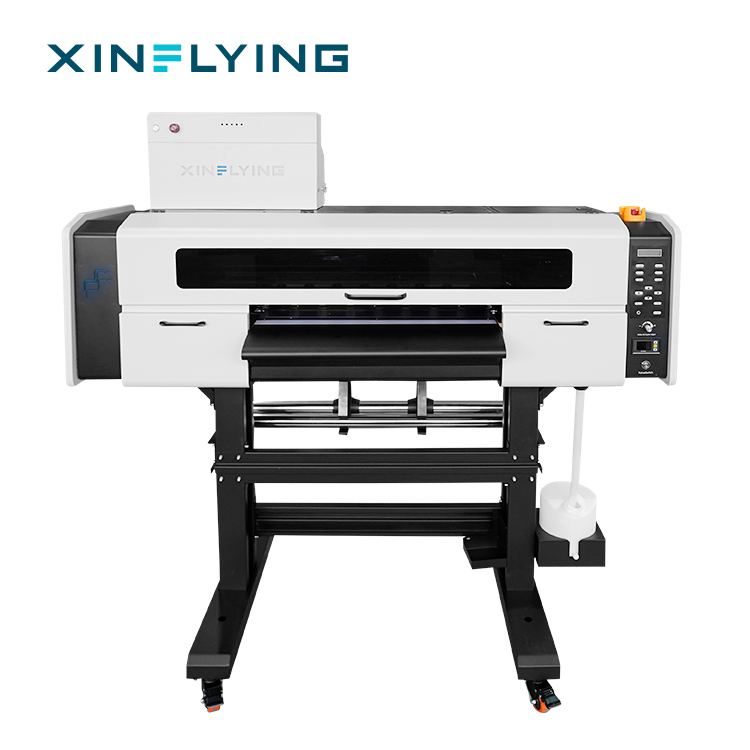
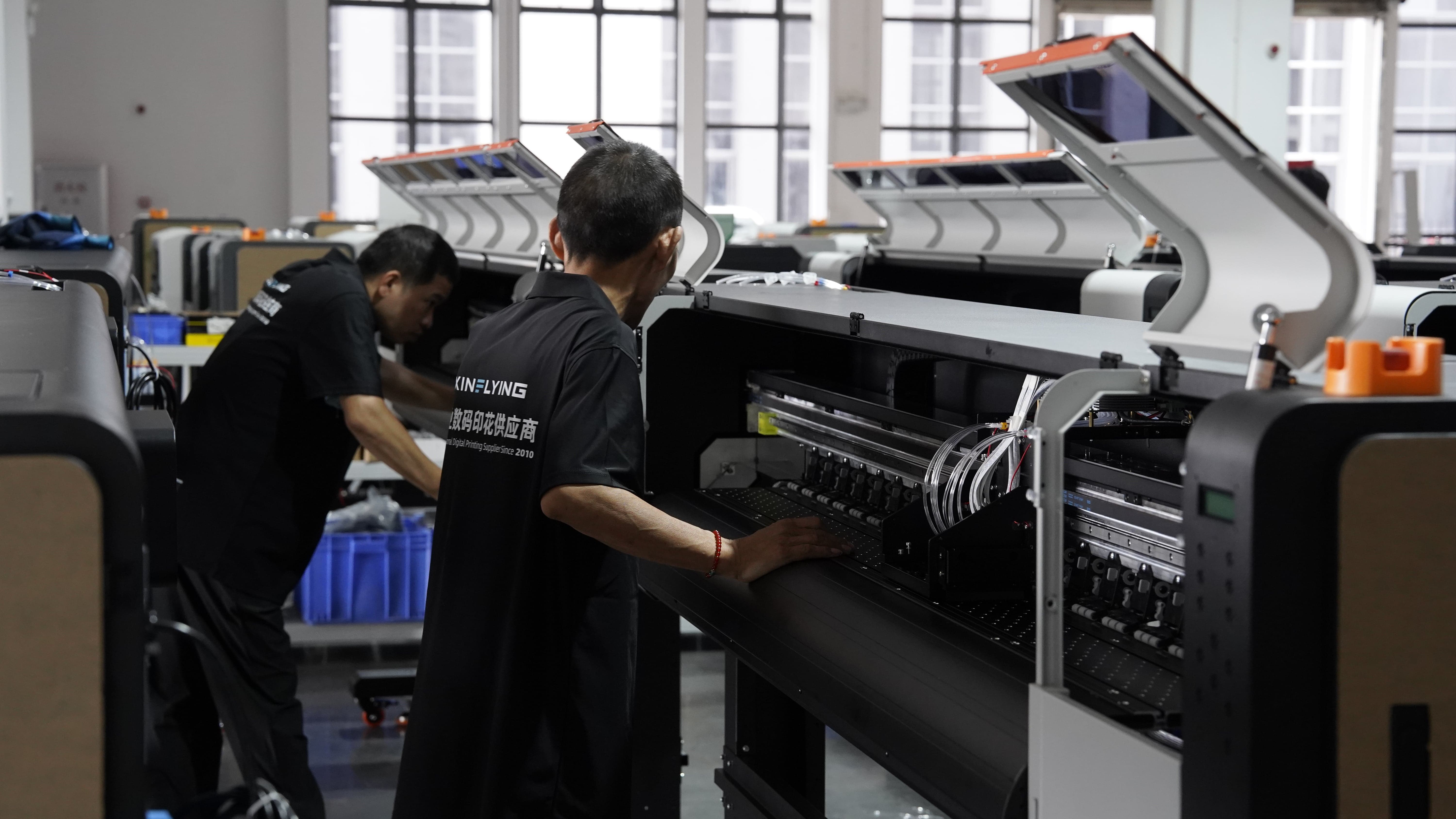
List the model and every system included with it, then check the list against what will actually ship. A dual printhead DTF printer is not described by its width alone: the XF-702E + XF-Z650-2 package is specified with 2 pcs Epson i3200-A1 printheads, an automatic powder shaker and curing system, an auto moisture retention system, a white ink circulation system and RIP software support. The XF-C605 + XF-A6502H industrial package is specified with 5 pcs Epson i3200-A1 printheads, an automatic powder recycling system, smart touchscreen control, a built-in fume purifier and professional RIP software. The XF-450PRO all-in-one is specified as an A2 all-in-one solution with 2 pcs Epson i1600-A1 printheads, an integrated powder shaker and dryer, a white ink circulation system and RIIN/PrintFactory RIP software. Printhead count, RIP licence and powder system type should appear in the acceptance record exactly as they appear in the order.
Step 2 — Define the print test itself
Name the test file, the print width, the colour set and whether a white ink layer is included, then require the printed film to be photographed or retained as a sample. A test with an unnamed file cannot be repeated on the next shipment, and repeatability is the entire point of buying from the same supplier for years.
Step 3 — Check the powder and curing stage, not only the print
Because the DTF workflow depends on an adhesive layer, acceptance should cover powder application and curing as well as image output. On machines with an automatic powder shaker and curing system or an automatic powder recycling system, confirm the system runs through a normal cycle before signing. Buyers who skip this step often accept a machine that prints correctly and transfers badly.
Step 4 — Verify safety and documentation on the exact unit
Check that the machine's nameplate and model match the certificate copies supplied with the order, and that the documentation pack is complete. Certificate-to-model matching is the single most common compliance gap reported by importers, and it can only be closed by comparing documents with the unit in front of you. Where the machine includes design-level thermal protection through temperature sensors, ask for it to be confirmed during the test run rather than accepted as a brochure line.
Step 5 — Agree the evidence and the sign-off rule
State what the buyer receives — test report, photos or short video of the running machine, printed sample, packing photos — and who signs. Then define what happens on a failed item: re-test, component replacement, or shipment hold. A buyer who cannot travel to the factory can still run a defensible acceptance process if the evidence package and the pass/fail rule were agreed before the deposit was paid.
Step 6 — Inspect packing and shipment preparation
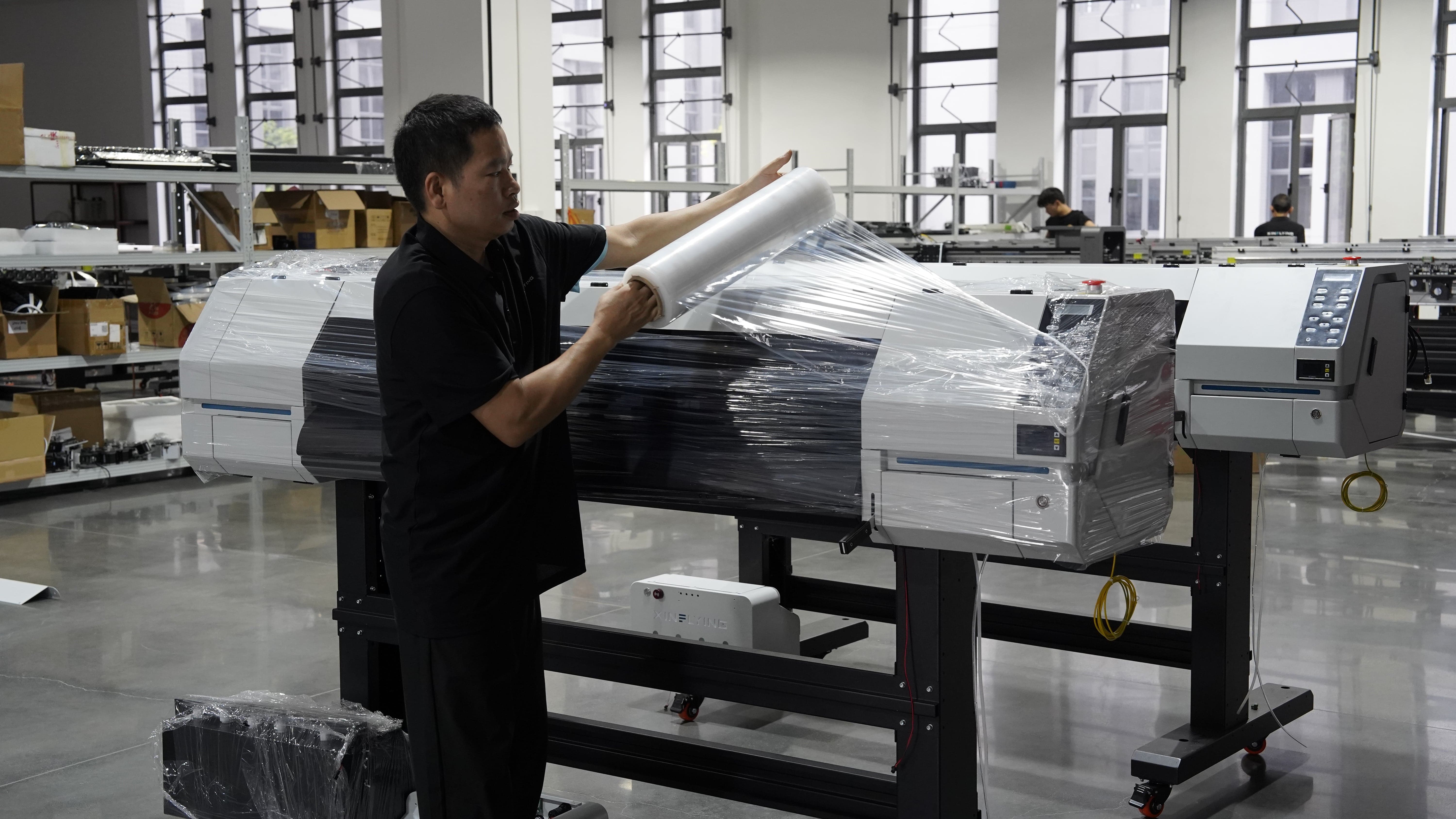
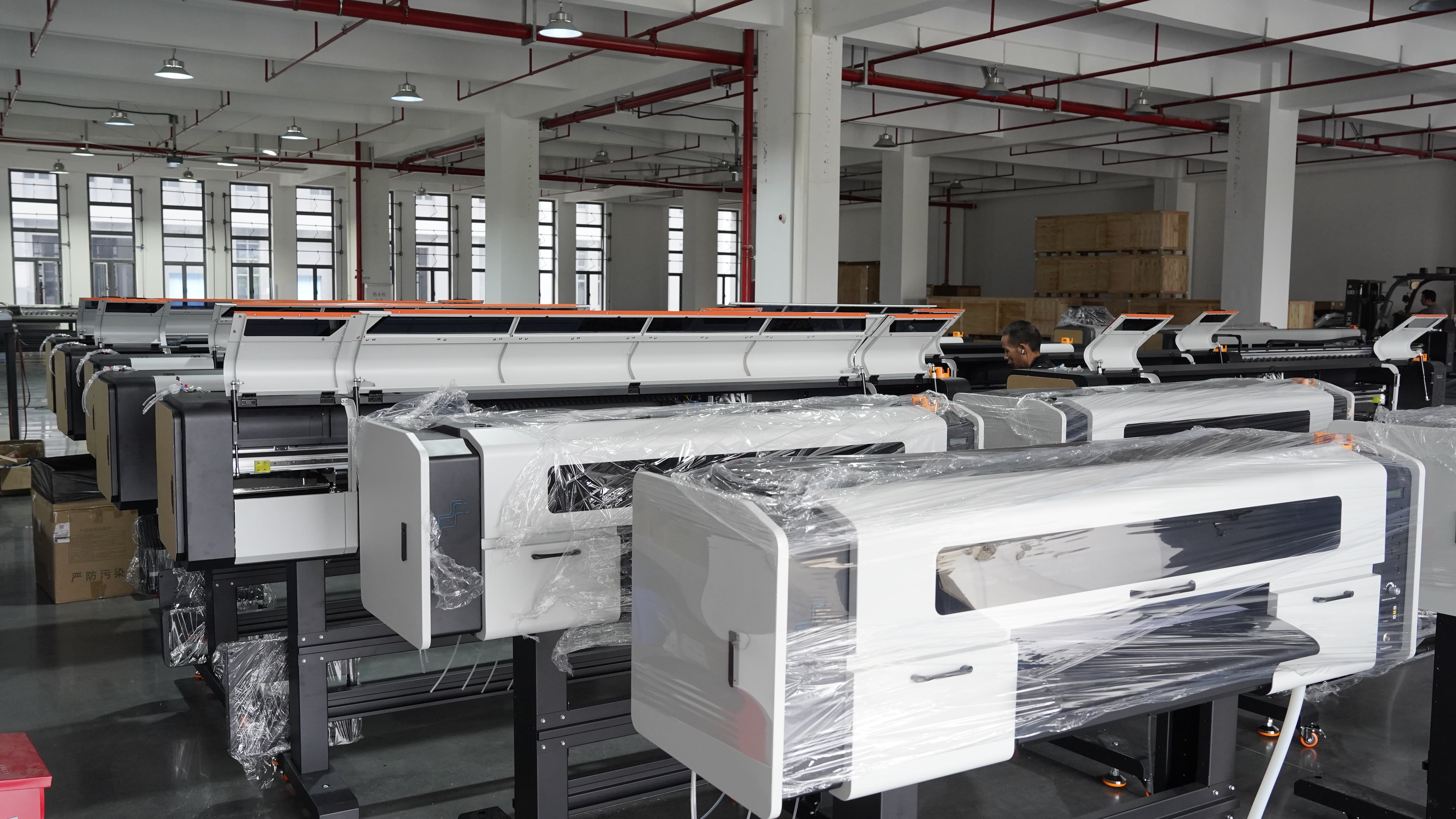
Export packing is part of acceptance. Protective film wrapping, frame protection, accessory cartons and the packing list should be photographed before the machine leaves the floor, so that transit damage can be attributed correctly if it appears at destination.
Certificates as long-term supply documents
Two documents matter most to a buyer planning repeat orders: a quality management certificate for the manufacturing system, and a materials certificate for the ink. XINFLYING holds ISO 9001:2015 certification under certificate number NOA2215496 covering the XF series models, and OEKO-TEX ECO PASSPORT certificate SH150194016 for its textile printing inks.
ISO 9001:2015 is an internationally recognised standard for quality management systems. For a buyer, the certificate indicates that the manufacturing process for the covered XF series models is governed by a documented quality management system — procedures, records, corrective action and internal review. It does not certify the print quality of any individual machine, and it should not be read as a performance guarantee. Its practical value appears in the second and third year of a relationship, when a buyer needs to know that production records exist behind a repeat order.
OEKO-TEX ECO PASSPORT is a certification for chemicals, auxiliaries and colorants used in textile production, assessed against restricted-substance criteria. Certificate SH150194016 covers XINFLYING's textile printing inks. It applies to the inks within the stated scope, not to the finished garment and not to the transfer film or powder. Buyers supplying brand customers should confirm at each re-order that the ink being shipped sits within the current certificate scope, and should file the certificate copy with the purchase record.
Market-access documentation sits alongside these two. CE, FCC and RoHS requirements depend on the destination market, and the documents must match the actual machine model. The practical clause for a long-term agreement is simple: a current, valid copy of each applicable certificate accompanies every shipment, and any change in certificate scope or number is notified before the next order is placed.
Warranty, spare parts and consumables re-ordering
The warranty clause is only half of the after-sales commitment. The other half is how quickly a replacement part or a consumable batch reaches the production floor, and that is a supply-chain question rather than a legal one.
What the warranty clause should state
Six items remove most later disputes: the warranty period; the start trigger (shipment date, installation date, or first production run); which components are covered and which are defined as wear items; how printheads are treated, since they are the component most sensitive to ink, maintenance and operator practice; who pays freight on a replacement; and the remedy — repair, replacement, or credit. Add the claim procedure: what evidence the buyer must provide and to whom.
Spare parts as a stocked list, not a promise
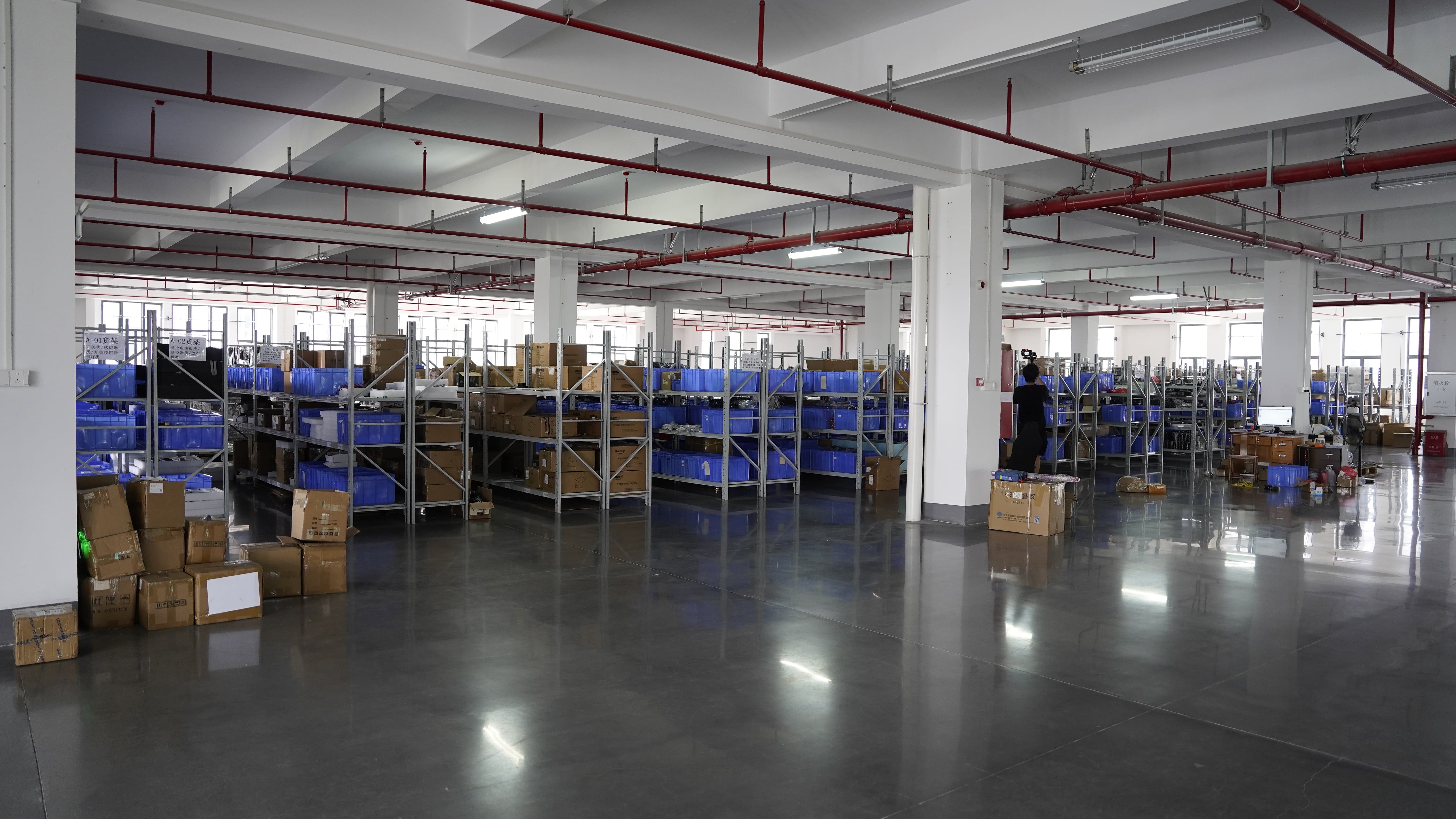
Ask for a parts list with names and reference codes covering the assemblies most likely to be replaced, and ask which of them are normally held in stock. A distributor supporting several machines should discuss a stocking arrangement rather than rely on one-off purchases. Structured parts storage is a reasonable thing to request evidence of: a supplier that organises components in labelled warehouse locations can usually confirm availability faster than one that searches at the time of the request.
Consumables: make the re-order repeatable
Film, powder and ink should be specified by exact product reference and packing unit, so that a re-order two years later produces the same material rather than a near-equivalent. Two clauses protect the buyer here. First, notification before any change to a consumable specification, with the effect on the transfer workflow explained. Second, continuity of the ink certificate, because a change of ink can affect both print results and the compliance position of the buyer's own customers.
Annual review
A multi-year relationship benefits from a short annual review: parts list updated, consumable consumption compared with forecast, open technical issues closed, certificates refreshed. It costs an hour and prevents the drift that turns a working supplier relationship into a series of surprises.
Technical response: what belongs in the service annex
Technical support is the term buyers most often leave vague, and the one they use most. The service annex should name the support channel, the working hours and time zone, the language, the first-response expectation, the escalation contact and the boundary between remote guidance and on-site attendance. For a garment distributor, add the point at which a repeat failure becomes a machine-level issue rather than an operator-level one.
Installation and training deserve their own line. A DTF printer that is set up without checking ink supply, film feed and print settings will generate support tickets that look like quality problems and are not. XINFLYING states that its solutions are supported by local warehouses and technical support in key markets, and reports a 20-engineer R&D team — relevant when a distributor needs a configuration or consumable question answered by the people who designed the machine rather than by a reseller.
Matching the terms to the machine you actually buy
The same contract template does not fit a single-unit trial and a five-printhead industrial installation. The table below maps XINFLYING's three documented setups to the terms that usually need the most attention at each level.
| Setup | Documented configuration | Typical buyer | Terms to define first |
|---|---|---|---|
| XF-450PRO All-in-One DTF Printer | A2 all-in-one solution; 2 pcs Epson i1600-A1 printheads; integrated powder shaker and dryer; white ink circulation; RIIN/PrintFactory RIP | Startups, small custom print shops, buyers entering apparel printing | Single-unit trial terms, consumable pack sizing, remote installation and operator training |
| XF-702E + XF-Z650-2 DTF Printer Package | 60cm DTF printer; 2 pcs Epson i3200-A1 printheads; automatic powder shaker and curing system; auto moisture retention; white ink circulation; RIP software support | Growing print shops, e-commerce fulfilment businesses, professional apparel customisation companies | Spare-parts list and availability, service response window, repeat consumable schedule |
| XF-C605 + XF-A6502H DTF Printer Package | 60cm industrial DTF solution; 5 pcs Epson i3200-A1 printheads; automatic powder recycling; smart touchscreen control; built-in fume purifier; professional RIP | High-volume apparel factories, large printing service providers, industrial production users | Continuity of supply, preventive maintenance schedule, on-site vs remote support boundary, escalation contacts |
The distinction matters commercially. A buyer ordering a first A2 DTF printer for a small business should optimise for a clear trial path, documentary support and training; a distributor planning several 60cm machines should optimise for parts availability, consumable continuity and a named escalation route. Both are multi-year intentions, and both are served by writing the terms down.
A one-page annex checklist
- Model, printhead count and type, powder system, RIP licence and included accessories, checked line by line against the invoice.
- Chosen delivery term with named port or destination, insurance responsibility and document set.
- Payment schedule tied to the acceptance record rather than the calendar.
- Pre-shipment test specification: file, width, colour and white layer, powder and curing cycle, safety check, evidence package, pass/fail rule, signatory.
- Copies of applicable certificates, matched to the machine model, with a notification clause for scope changes.
- Warranty period, start trigger, covered and wear items, printhead handling, freight responsibility, remedy and claim procedure.
- Spare-parts list with reference codes and availability; packaging and MOQ per part.
- Consumable specification by exact reference and packing unit, plus the change-notification clause.
- Technical support channel, hours, language, first-response expectation, escalation contact and training scope.
FAQ: purchase terms and acceptance for long-term DTF printer supply
What purchase terms should a garment distributor lock in with a long-term 60cm DTF printer supplier?
A distributor should lock in five blocks: commercial terms (MOQ, delivery term, payment methods), the acceptance procedure performed before shipment, the documentation that evidences quality management and regulatory conformity, the warranty and spare-parts arrangement, and the technical response path. XINFLYING's stated terms are MOQ 1 unit, delivery by EXW, FOB, CIF or DDP, payment by T/T, Western Union or PayPal, and pre-shipment test as the acceptance criterion. These are starting points; the annex should specify what each term means in practice for the models ordered.
What are the acceptance criteria for a DTF printer order?
The stated acceptance criterion is a pre-shipment test. In practice that should mean the machine is assembled in the ordered configuration, test printed, checked through the powder and curing stage, verified against its certificate documentation, photographed, and released only after the buyer's agreed pass rule is met. Buyers who cannot attend in person should require a test report, printed sample and packing photos as the acceptance record.
How do the ISO 9001:2015 and OEKO-TEX certificates support long-term cooperation?
ISO 9001:2015 certificate NOA2215496 covers the XF series models and indicates a documented quality management system behind their manufacture, which is what a repeat buyer relies on when production records or corrective actions are needed. OEKO-TEX ECO PASSPORT certificate SH150194016 covers XINFLYING's textile printing inks and addresses restricted-substance criteria for materials used in textile production. Together they give a buyer two stable reference points for re-orders — a manufacturing system and an ink specification — provided the certificate copies are refreshed and matched to each shipment.
What should the warranty clause cover?
Six items: the warranty period, the date the period starts, the components covered, the wear items excluded, how printheads are treated, who pays freight on a replacement, and what remedy applies — repair, replacement or credit. Add the claim procedure and the evidence required. A warranty that is clear about exclusions prevents more disputes than one that claims the widest possible coverage.
How should spare parts and consumables be re-ordered over several years?
By reference, not by description. Agree a parts list with names and codes, record which items are normally available, and specify consumables — film, powder and ink — by exact product reference and packing unit. Add a clause requiring notice before any specification change, and review the list annually. This is what keeps the second and third orders comparable to the first.
What technical response commitment is reasonable to ask for?
Ask for the support channel, working hours and time zone, language, first-response expectation, escalation contact and the boundary between remote guidance and on-site attendance, plus installation and training scope. XINFLYING states that its solutions are supported by local warehouses and technical support in key markets, which is relevant for distributors who need parts or assistance without an intercontinental shipment each time.
Can a buyer start with one unit before committing to volume?
Yes — the stated minimum order quantity is 1 unit, which allows a single machine to be run against real production before a larger commitment. Treat the trial deliberately: define the acceptance record, keep the test sample, log consumable consumption from the first week, and use that data to set the terms of any later volume discussion.
Where can a buyer start?
Start with a written quotation covering the model, configuration, delivery term, payment schedule and acceptance procedure, then request a printed sample from the machine type you intend to buy. XINFLYING publishes its company and product information at xin-flying.com, and a full company brochure is available for download below.
Conclusion
Long-term DTF printer supply is built from clauses a buyer can check, not from assurances a buyer has to remember. The commercial terms set the frame, the pre-shipment acceptance annex defines what "ready" means, the certificate copies give the relationship a documented basis, and the warranty, parts and consumable clauses decide how quickly production returns after a stop. A supplier that can answer all four in writing — with the model numbers, printhead counts, certificate numbers and parts references that match the order — is a supplier a distributor can plan a season around. XINFLYING, founded in 2010 and operating a 37,440 m² facility with 200+ employees and an annual output of 20,000+ units, publishes its terms and certificate references so that those answers can be verified rather than assumed.
To take the next step, request a written quotation with the terms above attached, ask for a printed sample from the model you are considering, or download the company brochure: XINFLYING company brochure (PDF).
Have Questions or Need More Details?
Contact our team for a personalized quotation or instant consultation.
Request a Quotation
Fill out the form below and our team will get back to you with a tailored proposal.
WhatsApp Direct Chat
Prefer to chat in real-time? Message us on WhatsApp for instant assistance & quick answers.
- Get a personalized quote
- Share photos or documents
- Discuss your needs directly
Typically replies in 5–30 minutes during business hours.