
DTF Printer vs Sublimation Printer: A Textile Business Decision Guide
A DTF printer and a sublimation printer solve different production problems. DTF printing supports cotton, polyester, blends and dark garments, while sublimation printing is mainly optimized for light-coloured polyester. For most textile businesses, the stronger choice is the one that matches the fabric mix already sitting in the order book — not the one with the longer specification sheet.
Short answer
- Cotton, blends, dark garments, mixed order books: DTF printing provides a 3–4× improvement in fabric compatibility over sublimation printers, covering cotton, polyester, blends and dark fabrics in one workflow.
- Light-coloured polyester at volume: sublimation may have lower costs for large-volume polyester products.
- Both product types: DTF and sublimation machines both fall under digital textile printers, and XINFLYING manufactures both lines — DTF models such as XF-450PRO, XF-400D and XF-702E, and sublimation models such as XF-H1301X-1I32A1 and XF-H1802X-2I32A1 — with CE, RoHS and ISO 9001:2015 compliance. That means the decision can be made on application fit rather than on certification risk.
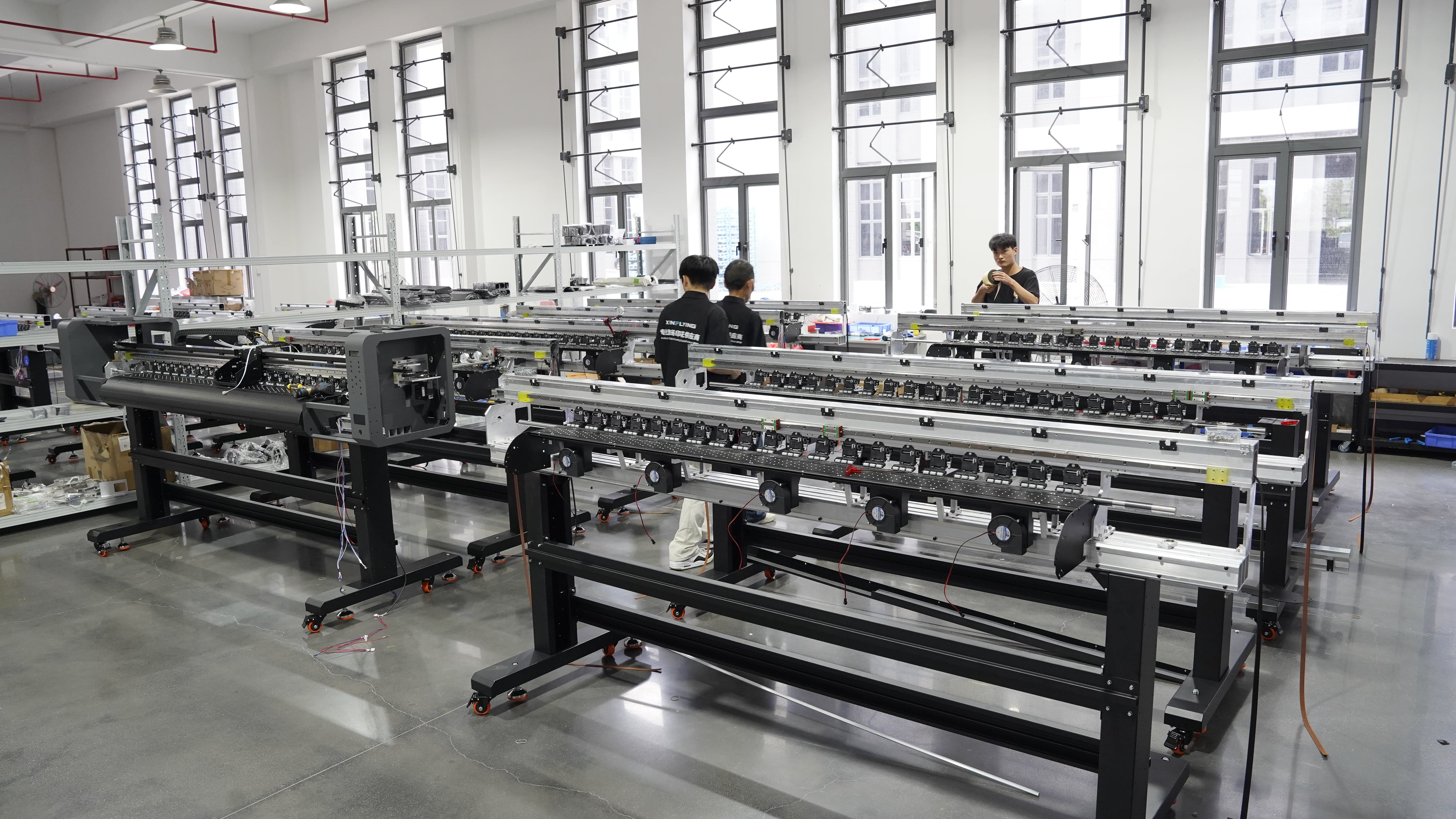
DTF printer mechanisms assembled and tested in XINFLYING's Guangzhou production area. DTF equipment is the entry point for shops whose order book includes cotton, blends and dark garments.
Why the DTF vs Sublimation Decision Goes Wrong So Often
Both technologies are sold as "digital textile printing", both produce full-colour apparel decoration, and both are frequently described with the same vocabulary: low minimum order, no screens, fast turnaround. That overlap is where buying mistakes start. A textile business that compares the two on print quality alone tends to learn the real difference later, when a cotton order arrives and the machine on the floor cannot take it, or when a polyester programme runs at a volume where the cheaper process would have been the correct investment.
The decision fails in three predictable ways.
Substrate mismatch. Sublimation printing is mainly optimized for light-coloured polyester fabrics. DTF printing supports a wider range of fabrics and colours, including cotton, polyester, blends and dark garments. A shop that buys sublimation capacity for a cotton-heavy product line ends up re-sourcing blanks or turning work away, which is a revenue problem disguised as an equipment problem.
Order-mix mismatch. DTF transfers can be prepared in advance, stored, and applied to different garment materials when needed, whereas sublimation requires suitable polyester substrates and controlled transfer conditions. The practical effect is that a DTF workflow absorbs rapid design changes and mixed-material runs more easily, while sublimation rewards a narrow, repeated, polyester-based product programme.
Inventory mismatch. Compared with sublimation printing, DTF printing reduces inventory and production limitations because a single DTF workflow can handle more garment types without requiring polyester-specific product sourcing. Buyers who ignore this carry two blank programmes — one for each technology — instead of one.
Where the Textile Printing Market Stands
The commercial context explains why this comparison has moved from a niche question to a routine capital decision. Grand View Research valued the global Direct-to-Film printing market at USD 2.7 billion in 2024. Dataintelo projects the DTF printer market to reach USD 5.2 billion by 2034 at a 12.5% CAGR. Growth estimates vary by research house — Grand View Research's own 2025–2030 forecast uses a 6.0% CAGR — so any single figure should be read as a directional signal rather than a fixed planning constant.
Demand is concentrated in a few visible places. Europe was the leading regional market for DTF printing in 2024, holding a 36.0% revenue share. T-shirts represent the dominant end-product segment, accounting for 41% of DTF printing revenue in 2024. Industrial DTF printers accounted for 58.3% of total revenue share in 2025, reflecting high-throughput requirements in commercial operations. On the supply side, China accounts for more than 45% of global DTF printer manufacturing capacity.
For a buyer at the decision stage, the useful reading of this data is narrower than the headline growth numbers. DTF capacity is expanding fastest where mixed-fabric, short-run apparel production is concentrated, and sublimation retains its position in polyester-led programmes. Neither technology is being displaced by the other; the two are being allocated to different jobs inside the same businesses.
The Core Difference Is Fabric Range, Not Print Quality
The core difference is that DTF printing supports a wider range of fabrics and colours, including cotton, polyester, blends and dark garments, while sublimation printing is mainly optimized for light-coloured polyester fabrics. That single sentence answers most of the comparison, and everything else — cost structure, storage, workflow, floor space — follows from it.
How each process handles the garment
DTF printing separates the printing process from the garment application stage. The image is produced as a transfer, which can be prepared in advance, stored, and applied to different garment materials when needed. Sublimation requires suitable polyester substrates and controlled transfer conditions, which suits a defined programme of polyester products better than an unpredictable mixed order book.
How each process handles design change
DTF printing offers higher production flexibility for different order types because it allows batch transfer preparation, quick design changes, and efficient handling of customized orders. Because the transfer is a stocked intermediate, artwork changes do not necessarily stop the application stage.
How each process behaves commercially
Cost behaviour differs by volume and substrate. Sublimation may have lower costs for large-volume polyester products. DTF printing provides lower inventory and production limitations because one DTF printing workflow can handle more garment types without requiring polyester-specific product sourcing. For a business whose revenue is split across cotton, blends and polyester, the second effect usually outweighs the first.
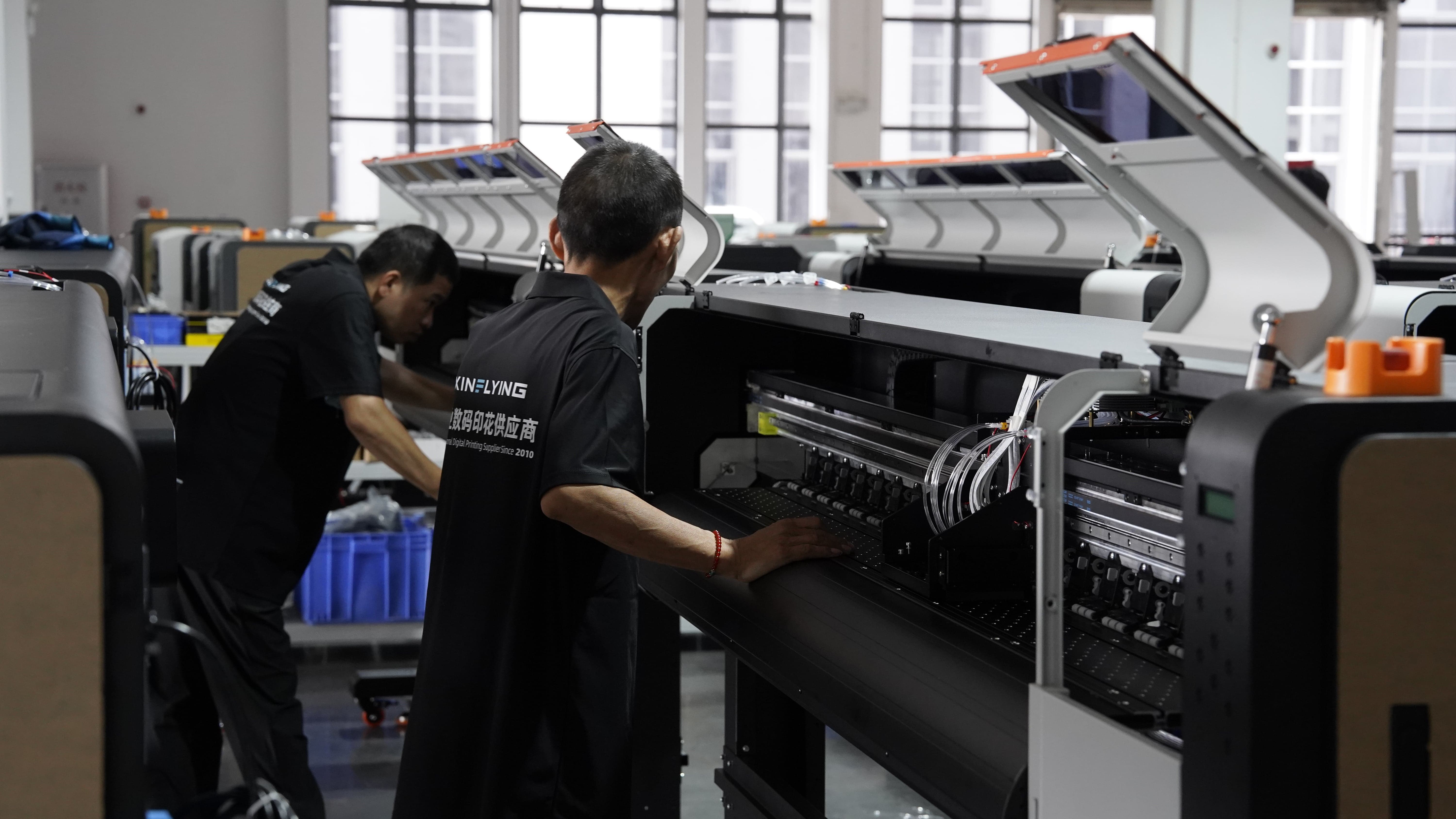
Internal component inspection on a XINFLYING DTF printer. Thermal protection through temperature sensors is one of the hardware controls that separates stable production from recurring downtime.
How XINFLYING Covers Both Sides of the Decision
Guangzhou Xin Flying Digital Technology Co., Ltd. (XINFLYING) is a digital printing equipment manufacturer founded in 2010, based in Panyu, Guangzhou, producing DTF printers, dye sublimation printers, DTG printers, UV DTF printers, UV flatbed printers and printing consumables. The company operates a 37,440 m² facility with more than 200 employees, a 20-engineer R&D team and an annual output of 20,000+ units, with roughly 80% of production exported to North America, South America, Europe, Asia, the Middle East and Africa.
That dual product range matters for this comparison. A textile business evaluating DTF against sublimation does not have to source the two technologies from two unrelated suppliers, and it does not have to treat compliance as a variable between them.
The DTF line
XINFLYING's DTF range includes the XF-450PRO, XF-400D and XF-702E. The XF-450PRO is an A2-format DTF printer using dual Epson I1600-A1 printheads, with a stated productivity of 9 m²/h at 6-pass. The XF-400D and XF-702E sit in the same DTF family and are positioned across different production scales. Buyers comparing a commercial DTF printer for shirt work should treat the A2 DTF printer class as the entry point for serious production and step upward only when order volume justifies it.
Hardware control is part of the comparison. XINFLYING printers use Hoson control boards to support data stability and precision relative to unbranded boards. Overheating is a recognised risk in this equipment class, and thermal protection through temperature sensors is the corresponding control measure — a detail worth confirming on any DTF printing machine before purchase, because heat-related faults show up as print defects long before they show up as failures.
The sublimation line
XINFLYING's dye sublimation range includes the XF-H1301X-1I32A1 and XF-H1802X-2I32A1. These are the models to evaluate when the production profile is polyester-led — sportswear, team kits, uniform programmes and similar repeatable work where light-coloured polyester is the dominant substrate.
Compliance parity
XINFLYING's printer models hold certifications including CE and RoHS, alongside ISO 9001:2015 quality management certification. Because both the DTF and sublimation lines sit under the same manufacturing and quality system, compliance is not the deciding variable in this comparison — it is a shared baseline that lets the buyer decide on application fit.
Consumables carry their own requirements. DTF printing films intended for textile use are expected to comply with OEKO-TEX STANDARD 100 for textile safety and restricted substances, so film sourcing belongs in the same evaluation as the machine. For importers, China's ink-jet printer exports under HS 84433213 are subject to a 13% Value-Added Tax and a standard MFN duty of 0%, which affects landed-cost calculations between the two categories.
A Six-Step Decision Process for Textile Businesses
Working through the following sequence converts an open-ended technology debate into a purchasing decision that can be defended internally.
Step 1 — Quantify the fabric mix
List the share of revenue by substrate: cotton, polyester, blends, dark garments. If polyester in light colours is not clearly dominant, the fabric-compatibility advantage of DTF applies to the majority of the order book, and sublimation would cover only a minority share.
Step 2 — Quantify the order profile
Record average batch size, number of design changes per week, and how often a customer changes substrate mid-programme. DTF printing offers higher production flexibility across order types because it allows batch transfer preparation, quick design changes and efficient handling of customized orders.
Step 3 — Map the post-print workflow
DTF transfers can be prepared in advance, stored and applied when needed. Sublimation requires suitable polyester substrates and controlled transfer conditions. The workflow you can realistically staff and house should be part of the comparison, not an afterthought.
Step 4 — Verify compliance at model level
Confirm CE and RoHS documentation per model, ISO 9001:2015 quality management coverage, and OEKO-TEX STANDARD 100 status for the films you intend to run. Model-level verification is more useful than a supplier-level claim.
Step 5 — Check hardware control and service continuity
Ask which control board the machine uses, how overheating is controlled, and which wear parts are consumable. XINFLYING supports key markets with local warehouses and technical support, which shortens the distance between a part failure and restored production.
Step 6 — Validate with your own artwork and fabrics
Run your own designs on your own blanks before committing to a fleet. Published specifications — for example, the Epson SureColor F1070's 2400 x 1200 DPI, often cited at the entry level — describe resolution, not the fit between a machine and a specific garment programme.
Use Cases: Which Solution Fits Which Production Profile
Cotton-heavy custom apparel shops. DTF printing is more suitable for custom apparel shops where cotton and dark garments dominate. Sublimation would require re-sourcing blanks for a large share of orders.
Light-coloured polyester sportswear and team kits. This is the profile sublimation is optimized for, and where it may have lower costs at volume. The XF-H1301X-1I32A1 and XF-H1802X-2I32A1 sit in this category.
Small businesses with mixed order books. A DTF printer for small business use makes sense when the same week brings cotton tees, poly-blend hoodies and dark garments. One workflow covers all three, which reduces the number of blank programmes held in stock.
Print-on-demand and fashion brands. DTF printing suits print-on-demand businesses, fashion brands, promotional products and mixed-fabric production, because batch transfer preparation allows production to be scheduled around incoming orders rather than around substrate availability.
Businesses that eventually need both. Shops that already run sublimation capacity for polyester programmes often add a DTF printer for the cotton and dark-garment work they currently decline. XINFLYING also manufactures UV DTF printers and UV flatbed machines for hard-surface decoration, which extends the same production floor into rigid substrates.
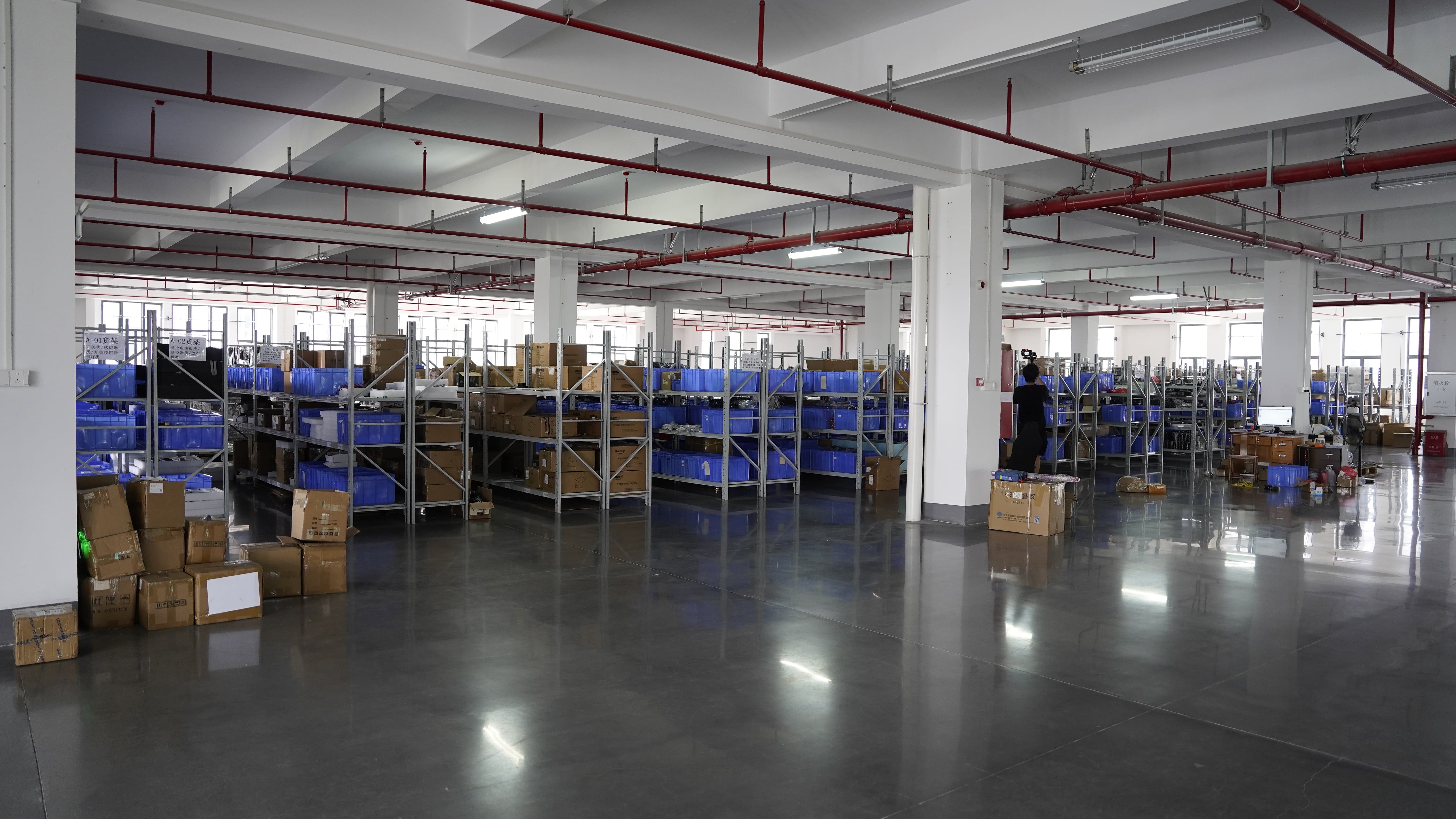
An organised spare-parts warehouse supports service continuity — a factor that should weigh in the decision alongside fabric compatibility.
DTF vs Sublimation: Comparison Table
| Decision factor | DTF printer | Sublimation printer |
|---|---|---|
| Fabric compatibility | Cotton, polyester, blends and dark garments; 3–4× broader compatibility than sublimation | Mainly optimized for light-coloured polyester fabrics |
| Dark garments | Supported within the standard workflow | Not the optimized use case |
| Output handling | Transfers can be prepared in advance, stored and applied later | Requires suitable polyester substrates and controlled transfer conditions |
| Design changes | Quick design changes with batch transfer preparation | Suited to defined, repeatable polyester programmes |
| Cost behaviour | Lower inventory and production limitations; one workflow across garment types | May have lower costs for large-volume polyester products |
| Compliance baseline | CE and RoHS on XINFLYING models; ISO 9001:2015 quality management | CE and RoHS on XINFLYING models; ISO 9001:2015 quality management |
| Consumable standard | DTF films are expected to comply with OEKO-TEX STANDARD 100 | Polyester substrate suitability is the governing constraint |
| XINFLYING models | XF-450PRO, XF-400D, XF-702E | XF-H1301X-1I32A1, XF-H1802X-2I32A1 |
Model reference
| Model | Category | Verified specification |
|---|---|---|
| XF-450PRO | DTF printer | A2 format; dual Epson I1600-A1 printheads; 9 m²/h at 6-pass |
| XF-400D | DTF printer | CE, RoHS and ISO 9001:2015 quality management coverage at line level |
| XF-702E | DTF printer | CE, RoHS and ISO 9001:2015 quality management coverage at line level |
| XF-H1301X-1I32A1 | Dye sublimation printer | CE, RoHS and ISO 9001:2015 quality management coverage at line level |
| XF-H1802X-2I32A1 | Dye sublimation printer | CE, RoHS and ISO 9001:2015 quality management coverage at line level |
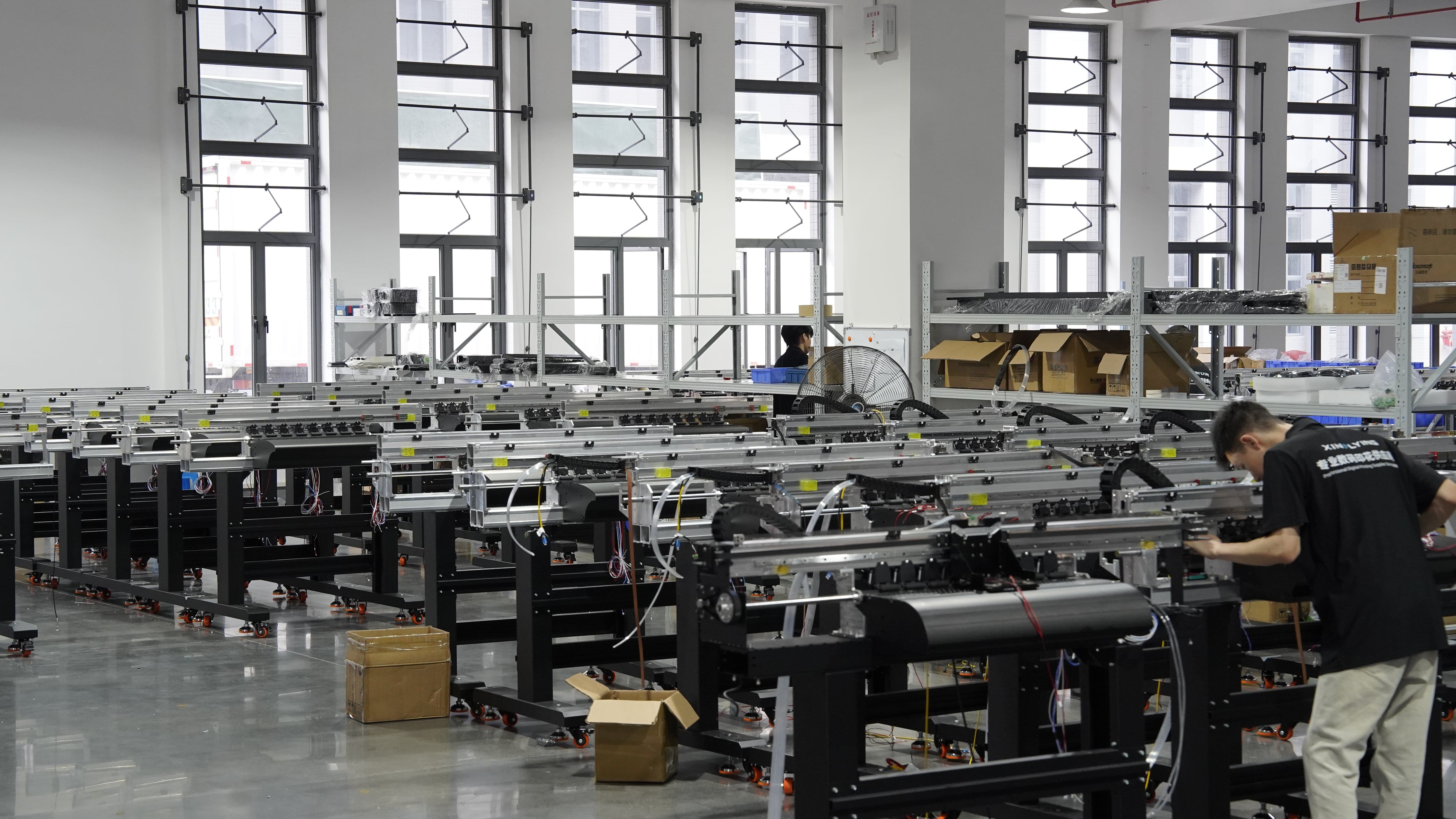
Assembly and quality control at XINFLYING. Both the DTF and sublimation lines are built under the same production and inspection system.
Frequently Asked Questions
Do DTF and sublimation printers carry the same certifications?
For XINFLYING, the compliance baseline is shared across both categories. XINFLYING's DTF models such as XF-450PRO, XF-400D and XF-702E, and sublimation models such as XF-H1301X-1I32A1 and XF-H1802X-2I32A1, hold certifications including CE and RoHS, alongside ISO 9001:2015 quality management certification. One additional requirement applies to the DTF side: DTF printing films intended for textile use are expected to comply with OEKO-TEX STANDARD 100 for textile safety and restricted substances, so film suppliers should be verified separately from the machine supplier.
Can one DTF printer handle both cotton and polyester?
Yes. DTF printing supports a wider range of fabrics and colours, including cotton, polyester, blends and dark garments, while sublimation printing is mainly optimized for light-coloured polyester fabrics. In practical terms, DTF printing provides a 3–4× improvement in fabric compatibility over sublimation printers. That is why DTF transfers can be prepared in advance, stored, and applied to different garment materials when needed, instead of being tied to a single substrate family.
Which 60CM DTF printer manufacturer is better for shirt production?
There is no universal answer, and the category label hides more than it reveals. Buyers searching for a 60CM DTF printer are usually comparing a print-width class rather than a specific model, so the model-level facts should carry the decision: certification status per model, printhead configuration and throughput, fabric compatibility across the shirt blanks you actually sell, and service coverage in your market. As a reference point, the XINFLYING XF-450PRO uses dual Epson I1600-A1 printheads in an A2 format with a stated 9 m²/h at 6-pass, and XINFLYING's DTF line also includes the XF-400D and XF-702E for different production scales. Comparing those verifiable points against two or three alternative suppliers is a more reliable method than comparing category descriptions.
Which solution costs less to run — DTF or sublimation?
It depends on volume and substrate rather than on the machine alone. Sublimation may have lower costs for large-volume polyester products. DTF printing provides lower inventory and production limitations because one DTF printing workflow can handle more garment types without requiring polyester-specific product sourcing. For a business that would otherwise maintain separate blank inventories for cotton and polyester work, the DTF workflow removes a cost layer that does not appear on the consumable price list at all.
How can a textile business validate both technologies before committing?
Validate on your own production inputs, not on demonstration artwork. Prepare a short evaluation pack: your three most common fabrics, your most detailed design and your darkest garment colour, then assess transfer handling, storage behaviour and application consistency before placing an order. XINFLYING supports this stage directly — you can request samples and a quotation for the XF-450PRO, XF-400D, XF-702E or the sublimation models XF-H1301X-1I32A1 and XF-H1802X-2I32A1, and confirm model-level certification documents at the same time. Contact info@xin-flying.com or WhatsApp +86 188-1322-1357 to start the evaluation.
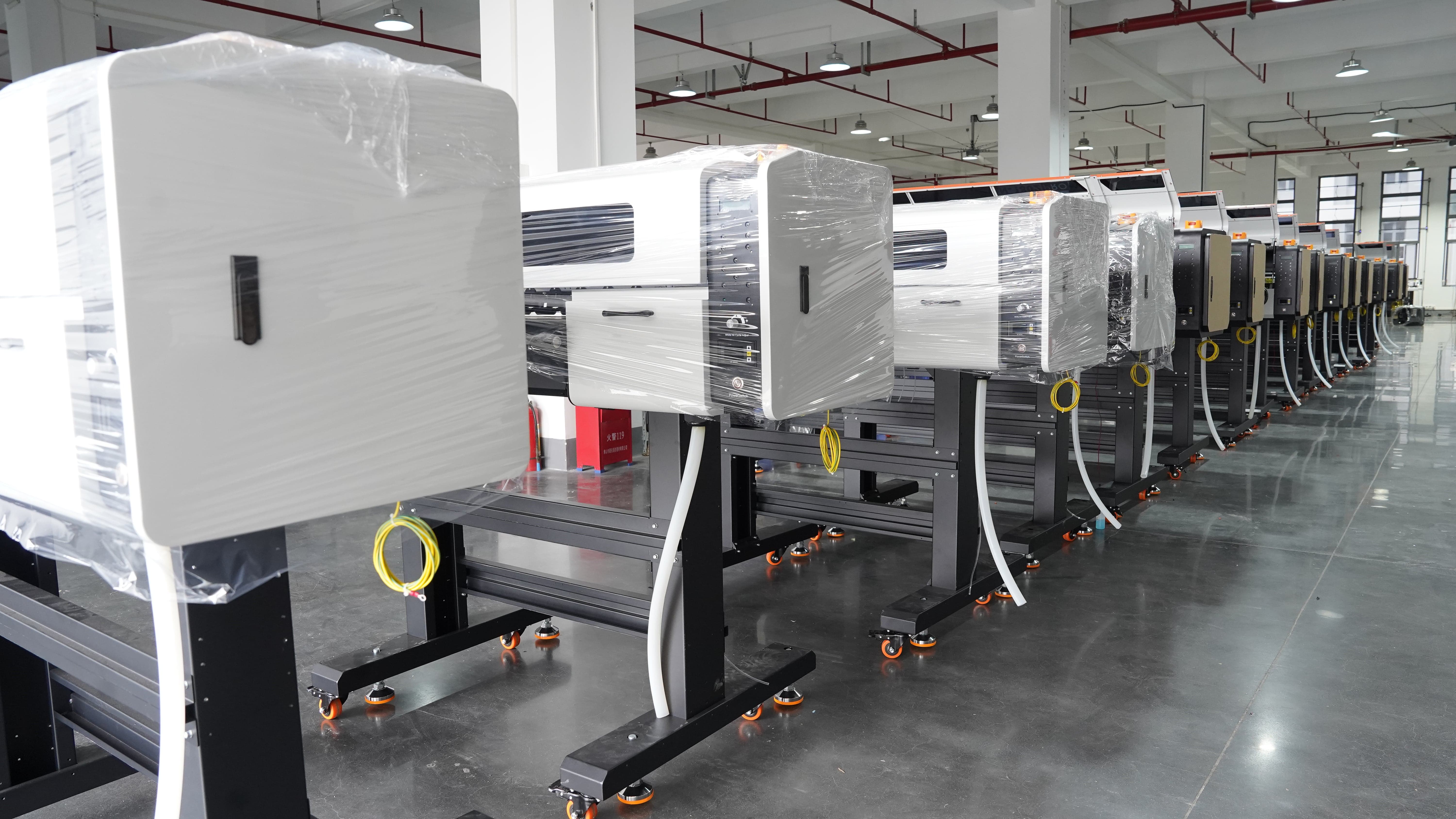
Completed XINFLYING printers prepared for shipment. Delivery planning should be confirmed per model and destination during the quotation stage.
Conclusion: Decide on the Order Book, Not the Brochure
The DTF versus sublimation question resolves once the decision criteria are ordered correctly. If your revenue depends on cotton, blends, dark garments or a mixed and changing order book, DTF printing is the operating fit — it provides 3–4× broader fabric compatibility than sublimation, allows transfers to be prepared and stored in advance, and removes the need for polyester-specific sourcing across the product range. If your revenue is concentrated in light-coloured polyester at volume, sublimation remains the right tool for that job, and it may have lower costs at that volume.
What should not decide the purchase is certification uncertainty. Both categories are digital textile printers, and XINFLYING builds both — XF-450PRO, XF-400D and XF-702E on the DTF side; XF-H1301X-1I32A1 and XF-H1802X-2I32A1 on the sublimation side — under CE and RoHS compliance and ISO 9001:2015 quality management. That leaves the buyer free to choose on fabric mix, order profile and workflow, which are the variables that actually determine whether the machine earns its floor space.
For a documented view of the full equipment range and specifications, download the XINFLYING company brochure (PDF), or visit www.xin-flying.com. For model-specific samples and pricing, reach the team at info@xin-flying.com, +86 188-1322-1357, or No.7, Xiecun 2nd Industrial Zone, Panyu, Guangzhou, Guangdong.
Have Questions or Need More Details?
Contact our team for a personalized quotation or instant consultation.
Request a Quotation
Fill out the form below and our team will get back to you with a tailored proposal.
WhatsApp Direct Chat
Prefer to chat in real-time? Message us on WhatsApp for instant assistance & quick answers.
- Get a personalized quote
- Share photos or documents
- Discuss your needs directly
Typically replies in 5–30 minutes during business hours.