
DTF vs DTG vs Sublimation: A 2026 Comparison Guide for Apparel Businesses
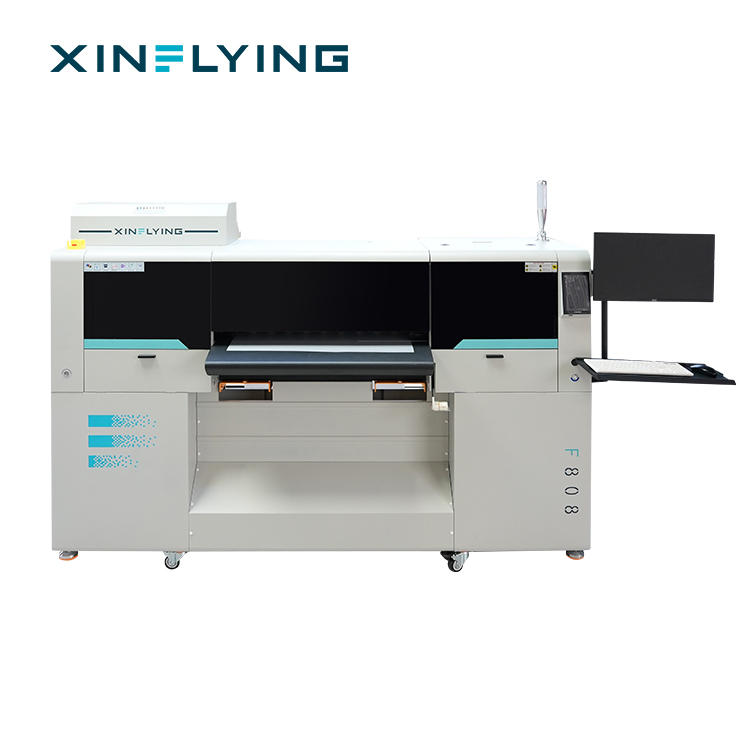
If you are buying a digital textile printer for 2026, the first question is rarely “which brand?”. It is usually “which process?”. DTF (direct-to-film), DTG (direct-to-garment) and sublimation are all digital workflows, but they behave differently on cotton, polyester, dark fabrics, blends, and different order sizes. This guide compares the three technologies and maps them to the real equipment choices available from Guangzhou Xin Flying Digital Technology Co., Ltd. (XINFLYING), a professional digital printing equipment manufacturer.
XINFLYING was founded in 2010 and operates a 37,440 m² production facility in Guangzhou. The company designs and manufactures DTF printers, DTG printers, dye sublimation printers, UV DTF printers, UV flatbed machines and printing consumables. About 80% of its output is exported, mainly to North America, South America, Europe, Asia, the Middle East and Africa. Because XINFLYING builds DTF, DTG and sublimation equipment, it is a useful reference point for comparing process logic rather than only individual machine names.
Why the DTF – DTG – Sublimation Decision Is Not Obvious
Every production manager has seen the same three-letter acronyms. The practical problem is that each technology answers a different question:
- A DTF printer prints designs onto PET transfer film first; the film is processed with adhesive powder, cured, and then heat-pressed onto the final product.
- A DTG printer prints directly onto garments, without an intermediate film-transfer step.
- A sublimation printer prints sublimation ink on transfer paper, and heat then bonds the dye to polyester-based materials.
The consequences are visible in fabric compatibility. DTF is widely used for custom apparel because it can run on cotton, polyester, blended fabrics, fleece, canvas, non-woven fabric, denim and dark garments—thanks to the white ink channels in the print system. DTG is a direct-garment method often associated with cotton-rich products. Sublimation is at its strongest on polyester and polymer-coated substrates, because the ink becomes part of the fiber rather than sitting only on the surface.
Choosing without mapping your fabric mix to the workflow is the most common risk. A shop that prints black cotton hoodies and polyester sportswear in the same week needs a different equipment plan from a shop that only prints light polyester jerseys.
Market Context in 2026: DTF Demand Is Still Expanding
The numbers behind DTF explain why so many textile businesses are adding a DTF line. According to Grand View Research, the global direct-to-film printing market was valued at approximately USD 2.7 billion in 2024. Dataintelo projects the DTF printer market to reach USD 5.2 billion by 2034, with a CAGR of 12.5%.
Regionally, Europe held a 36.0% revenue share of DTF printing in 2024, making it the leading regional market. T-shirts represent the largest end-product segment at 41% of DTF printing revenue. China now accounts for more than 45% of global DTF printer manufacturing capacity. For buyers in the United States, Europe and Latin America, this explains why most serious DTF machines will still be evaluated against Chinese manufacturers—including XINFLYING, whose 60cm and wider printers are already part of the global supply chain.
DTG still remains relevant for direct garment printing. Sublimation continues to serve polyester products, especially sportswear and polyester home textiles. The question is not whether one process will eliminate another; it is where each one fits in your production plan.
Core Technology Differences
DTF printers: film-based flexibility
DTF stands for Direct-to-Film. The workflow uses a digital printer, PET film, white plus CMYK ink, adhesive powder, and a heat press. The printer creates the design on film; powder is applied; the transfer is then pressed onto the garment. Because the ink configuration includes white, DTF can create an opaque base for dark garments. That is why DTF is often a practical recommendation for dark shirts, fleece hoodies, and mixed-fiber or low-polyester-blend apparel.
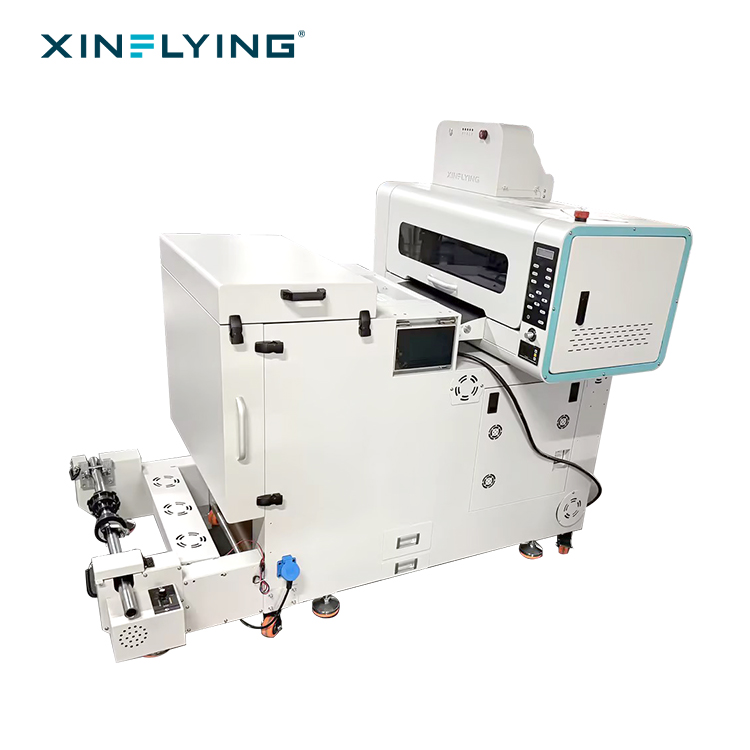
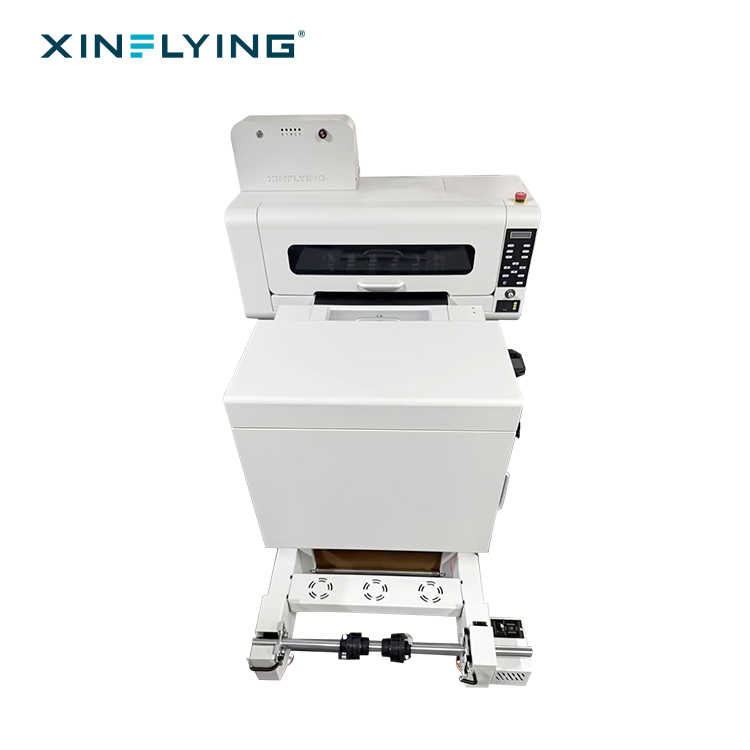
XINFLYING DTF printers range from compact 30cm and 42cm machines to 60cm and 80cm models. Examples from the 60cm category include:
- XF-702E: 2× Epson i3200-A1 printheads, 60cm print width, up to 13 m²/h at 6PASS.
- XF-C604: 4× Epson i3200-A1 printheads, 60cm width, up to 38 m²/h at 4PASS.
- XF-C605: 5× Epson i3200-A1 printheads, 60cm width, up to 36 m²/h at 6PASS.
- XF-L608: 8× Epson i3200-A1 printheads, 60cm width, up to 42–45 m²/h depending on ink configuration.
For wider production, XINFLYING also offers the 80cm XF-F808 with 8 Epson i3200-A1 printheads and a fastest speed of 50 m²/h at 4PASS. These configurations are used in custom apparel, print-on-demand, and transfer-supplier businesses.
DTG printers: direct garment digital printing
A DTG printer applies ink directly to the garment. There is no film carrier in the main printing path, which means the design goes from RIP software to the textile surface in one digital operation. DTG is generally selected by businesses that focus on direct garment printing and want a simple path for one-piece personalized shirts or small direct-print runs on cotton-rich products.
DTG equipment still requires a proper production workflow: garment pre-treatment is common in many DTG setups, and fabric texture should be compatible with direct ink laydown. XINFLYING includes DTG printers in its main product portfolio, so buyers can request current DTG model specifications from the company’s sales engineering team when comparing the two direct-print routes.
Sublimation printers: polyester-specific dye transfer
Sublimation uses sublimation ink. When heat is applied, the dye sublimates and bonds with polyester fibers. Sublimation is normally limited to polyester or polymer-coated items, and the lack of a white ink layer means light or white substrates are typical in this workflow.
XINFLYING manufactures a full sublimation line, from 130cm and 180cm models to industrial 1.9m machines. For example, the XF-H1301X-1I32A1 is a 130cm sublimation printer; the XF-H1802X-2I32A1 prints 180cm wide with a fastest speed of 52 m²/h at 4PASS; the XF-O2000-4I32A1 supports heat-transfer paper rolls up to 1000–1500 meters; and the 15-head XF-19E15-PRO can reach a fastest 1PASS speed of 524 m²/h. These are serious tools for polyester sportswear, activewear, flags, banners and polyester home textile production.
When Each Technology Excels in 2026
DTF excels for custom apparel on varied fabrics and dark garments
DTF is a flexible transfer route. Because the transfer is built on film, the printer does not need to handle the garment thickness or curvature during the ink-laydown phase. This opens the door for T-shirts, hoodies, sweatshirts, tote bags, caps, uniforms and many textile products. The built-in white ink is the key advantage for dark navy, black, red, and other deep shades.
From an order-size perspective, DTF fits well with print-on-demand and short-run customization because transfers can be printed in advance, stored, and pressed when needed. A documented XINFLYING use case involves a U.S. print-on-demand business owner who uses five XINFLYING DTF printers for custom T-shirts, hoodies, sweatshirts and other personalized apparel. The business prints after receiving orders, which reduces inventory pressure and supports single-piece and small-batch production.
Another XINFLYING case describes a U.S. DTF transfer supplier using 30 units to produce transfer films with various designs, logos and graphics, then supplying finished transfers to downstream garment decorators. This “transfer first” model can be very efficient for a printing service provider that serves many apparel decorators without needing an in-house DTG line for each customer.
DTG excels for pure direct-to-garment work
DTG is the process to evaluate when your core product is a garment that can be loaded flat onto the printer platen, and when you want to avoid the additional film, powder and heat-press steps of DTF. DTG is commonly selected by print shops and decorators that focus on direct garment decoration, especially on cotton-rich apparel.
DTG does not require a wide-format printer and film transfer line for every job. For one-off personalized shirts, direct garment printing can simplify the workflow. XINFLYING’s product scope confirms DTG printers are part of its portfolio, so if your business model is direct cotton-garment printing, request the supplier’s DTG specification and sample output before finalizing an investment decision.
Sublimation excels for polyester sportswear, flags and polyester home textiles
Sublimation should be seriously evaluated when polyester fiber is part of the product construction. XINFLYING’s sublimation printers carry the designation “textile sublimation printing (polyester fabrics).” For apparel such as cycling jerseys, soccer jerseys, running shorts, flags, banners and polyester cushions, sublimation can produce vibrant color and smooth hand feel because the dye is embedded into the polymer structure.
If you sell all-over printed polyester items, sublimation is often the most efficient route. The wide-format and industrial sublimation machines from XINFLYING—such as the XF-H1802X-2I32A1 and XF-19E15-PRO—are built to keep high-volume polyester workflows running.
Fabric, Order Size and Cost Logic: Step-by-Step Decision Framework
Use the following steps when comparing DTF, DTG and sublimation for your shop in 2026.
- Audit your fabric base. If your product mix is 100% cotton, cotton-rich blends, fleece, or blends with little or no polyester, DTF is an extremely flexible route. If the garment collection is overwhelmingly polyester and all-over graphics, move sublimation up in priority. If the work is truly direct-to-garment, usually cotton-rich, DTG belongs on the shortlist.
- Define your order-size profile. DTF supports small and medium batch work because transfers can be produced flexibly. Sublimation supports roll-to-roll and bulk production especially for fabric lengths and bulk items such as flags. DTG is often suitable for one-piece or very short direct-print runs.
- Map the complete workflow. DTF requires RIP software, a DTF printer, PET film, powder, curing, and a heat press. Sublimation requires a sublimation printer, transfer paper, and a heat press or calendar. DTG requires direct garment printing plus the relevant textile pretreatment. Compare labor, consumables, physical space and operator training.
- Compare cost structure on your own products. Machine price alone is not the full picture. Calculate film, powder, paper, ink, energy, maintenance and labor per printed unit. The lowest-cost technology is the one that matches your material base and output volume.
- Verify supplier compliance and support. For EU buyers, CE-related documentation is part of the evaluation. For inks, an OEKO-TEX ECO PASSPORT certificate is a useful supply-chain signal. Ask how the supplier handles installation, training, spare parts and sample testing.
- Request samples before you commit. Print the same dark shirt, cotton-poly blend shirt and polyester jersey on the candidate machines. Evaluate color, opacity, stretch, washability and workflow stability.
Documented Use Cases in Garment and Transfer Production
The XINFLYING case base shows how these decisions play out in commercial environments.
Print-on-Demand business (United States, 5 units, 5 years). A POD business owner uses DTF equipment to produce customized T-shirts, hoodies, sweatshirts and other personalized apparel based on online orders. After introducing an in-house DTF solution, the owner gained more control over production schedules, improved order fulfillment speed, and increased flexibility for single-piece and small-batch orders.
Custom apparel printing business (United States, 2 units, 3 years). A custom apparel business uses DTF technology for T-shirts, hoodies, bags and other textile products with full-color graphics and personalized designs. The owner can handle both small quantity orders and repeat production with fewer limitations from traditional printing methods.
Garment manufacturing factory (Global, 20 units, 2 years). A garment factory applies DTF printing to add logos, patterns and customized graphics to finished garments before delivery to brands and distributors. The DTF solution gives the factory a flexible decoration method for sampling production and short-run garment projects.
DTF transfer supplier (United States, 30 units, 1 year). A commercial transfer supplier uses DTF printers to produce high-quality transfer films with various designs, then supplies finished transfers to downstream garment decorators. The printer fleet helps the supplier improve transfer capacity and maintain stable print quality for multiple customers.
Side-by-Side Comparison Table
| Criterion | DTF (Direct-to-Film) | DTG (Direct-to-Garment) | Sublimation |
|---|---|---|---|
| Core workflow | Print on PET film → add adhesive powder → heat press to fabric | Print ink directly onto the garment | Print sublimation ink on transfer paper → heat press onto polyester material |
| Strongest fabric match | Cotton, polyester blends, fleece, canvas, denim, non-woven and dark garments | Commonly cotton-rich garments for direct printing | Polyester fabrics and polymer-coated materials |
| White ink / dark garments | Yes; white ink channels provide an opaque base | Depends on DTG machine and pretreatment workflow | No white ink; typically light or white polyester substrates |
| Typical product examples | Custom T-shirts, hoodies, tote bags, workwear, kids apparel | Direct printed shirts and cotton garments | Sportswear, jerseys, flags, banners, polyester home textiles |
| XINFLYING equipment examples | XF-702E, XF-C604, XF-C605, XF-L608, XF-F808 | Contact supplier for current DTG model specifications | XF-H1301X-1I32A1, XF-H1802X-2I32A1, XF-O2000-4I32A1, XF-19E15-PRO |
| Order-size flexibility | Flexible for custom, one-off and small-to-medium batches | Direct digital path, without film transfer steps | Strong for polyester bulk production and all-over patterns |
| Key consumables | PET film, DTF powder, ink, RIP software | Ink, pretreatment and garment handling | Sublimation ink, transfer paper |
| Compliance context | CE-related certificates on machine families; RoHS for EU | Verify supplier documentation by model | CE LVD & EMC certificates available for XINFLYING sublimation line |
Supplier Compliance: What to Verify Before You Buy
Because this is an hvq_2 decision, compliance matters. In the European Union, electrical printing equipment must satisfy applicable LVD, EMC and Machinery Directive requirements. RoHS applies to restricted substances. If you buy a machine without verifying its certificate, you may face customs delays, local inspection problems, or difficulty during commissioning.
XINFLYING publishes compliance information for both DTF and sublimation machine families. For example, the XF-C605 DTF printer is included in CE LVD certificate TQT1550D271EC and also holds CE EMC certification. The XF-C604 DTF printer holds CE LVD certification, CE EMC certification, CE MD certification, and is covered by RoHS certification. The XF-702E 60cm DTF printer is covered by CE LVD certificate TQT1550D271EC, CE EMC compliance, CE MD certification and RoHS certification M.2026.206.C142366. The XF-450PRO DTF printer is covered by CE LVD, CE EMC, CE MD, and is manufactured under an ISO 9001:2015 quality management system.
Sublimation printers in the XINFLYING lineup also confirm CE LVD & EMC compliance. Models such as XF-H1301X-1I32A1, XF-H1802X-2I32A1, XF-O2000-4I32A1, XF-19E8-PRO and XF-19E15-PRO are listed with CE-related certifications for the EU market. In addition, the OEKO-TEX ECO PASSPORT certificate SH150194016, issued by TESTEX AG, covers “Textile Printing Inks & Printing Pastes” and is valid until 2026-12-31. That document matters when your customers ask whether the inks in the production chain meet textile-friendly chemistry standards.
Frequently Asked Questions
DTF printer vs DTG printer: which should an apparel business choose?
DTF printers and DTG printers are both digital textile printing solutions, but they use different processes. A DTF printer prints designs onto transfer film first and then applies the design onto fabric through heat transfer. A DTG printer prints directly onto garments. DTF printing is suitable for businesses that need flexible garment customization, transfer-based production workflows, and applications across different textile materials. DTG printing is more suitable for businesses focusing on direct garment printing.
DTF printer vs sublimation printer: which is better for textile production?
DTF and sublimation use different workflows. DTF printing transfers designs through printed film and heat transfer. Sublimation printing uses sublimation ink and a heat transfer process to apply designs to suitable materials. DTF provides flexibility for apparel customization and different textile applications. Sublimation is commonly used for polyester-based textile production workflows. The suitable choice depends on product type, material requirements, application scenarios, and production goals. If you decorate dark or mixed-fiber garments, DTF is more likely to fit; if you manufacture polyester sportswear or all-over printed polyester goods, sublimation is a strong workflow.
What should I know before buying a 60cm DTF printer or an alternative technology?
Evaluate your production requirements, application scenarios, machine configuration, supplier support, and long-term operation needs. The right machine depends on printing volume, business type, workspace, workflow requirements and future expansion plans. A 60cm DTF printer is useful for apparel businesses that want to print transfers for shirts, hoodies, and other garments. Compare it with sublimation only if your fabric base is mostly polyester, and with DTG only if you plan a direct-garment printing operation. Always confirm printheads, white ink configuration, RIP software, available certifications and the supplier’s sample policy.
Is a 60cm DTF printer from a XINFLYING manufacturer compliant for European buyers?
Many XINFLYING DTF printers are documented for the EU market. XF-702E, XF-C604, XF-C605, XF-704E, XF-F606 and XF-F808 are among the models covered by CE LVD, EMC or MD certificates. Certificates carry reference numbers such as TQT1550D271EC, TQT1550D270EC, M.2026.206.C142365, M.2026.206.C142385 and M.2026.206.C142475. The exact coverage should be confirmed against the final machine model and destination market. Compliance paperwork is part of the normal machine dossier.
Can I request samples and compare DTF, DTG or sublimation output before buying?
Yes. Most suppliers, including XINFLYING, can discuss sample testing during the buying process. Send representative garment samples—dark cotton, polyester fabric and a cotton-poly blend—and ask the supplier to show how each technology handles those substrates. Verification steps include print quality, white ink opacity, stretch behaviour, wash resistance and workflow time. The producer’s brochure and technical support contact can help you prepare a sample request.
Conclusion: Use 2026 to Match the Process to Your Product
In 2026, no single digital textile printer wins every order. DTF wins the flex-apparel and dark-garment argument because of its white ink and film-transfer versatility. Sublimation remains the polyester-specific method that should be selected when your product is a sportswear, flag, banner or polyester home textile. DTG is the direct-to-garment route that keeps a simple path for cotton-rich direct work. The best technology is the one that matches your fabric mix, order size, cost model and compliance obligations.
If you are evaluating DTF printers, 60cm DTF printers, or the DTF vs DTG vs sublimation question for your shop, XINFLYING can assist with machine specifications, certificate documents and sample guidance. Download the XINFLYING company introduction brochure (PDF): XINFLYING enterprise introduction brochure.
Email: info@xin-flying.com Tel / WhatsApp: +86 188-1322-1357
Have Questions or Need More Details?
Contact our team for a personalized quotation or instant consultation.
Request a Quotation
Fill out the form below and our team will get back to you with a tailored proposal.
WhatsApp Direct Chat
Prefer to chat in real-time? Message us on WhatsApp for instant assistance & quick answers.
- Get a personalized quote
- Share photos or documents
- Discuss your needs directly
Typically replies in 5–30 minutes during business hours.