
DTF vs Sublimation Printers: Ink, Film and Fabric Limits
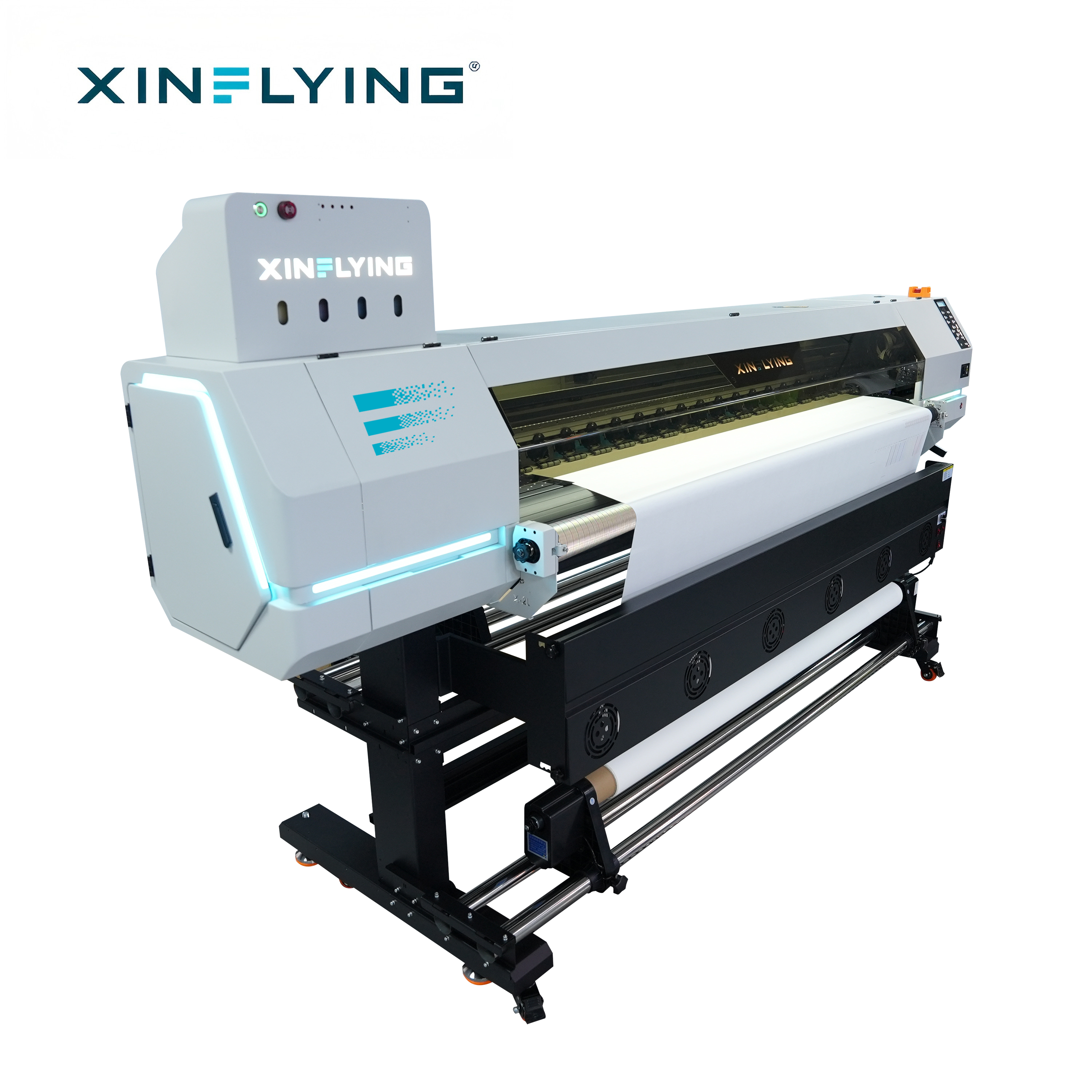
The short answer: a DTF printer and a dye sublimation printer are usually built on the same class of piezo inkjet platform, but they are not interchangeable machines. DTF prints a pigment and resin ink onto PET transfer film and bonds it to the garment with a thermoplastic adhesive powder. Dye sublimation prints a disperse dye ink onto transfer paper and heats it until the dye turns into gas and diffuses into polyester fibres or a polymer coating. The ink set and the transfer medium — not the printer badge — decide which fabrics will accept the print, and how the finished product behaves after washing.
That is why buyers who shortlist equipment on speed, print width and price alone frequently end up with a machine that cannot serve their real product mix. A sublimation printer cannot dye a 100% cotton T-shirt. A DTF printer cannot reproduce the fibre-integrated feel of a sublimated polyester jersey. Both limits come from chemistry, and no RIP setting can override them.
The rule this article works from: substrate first, then ink set, then machine configuration. Decide what the fabric is, then choose the chemistry that can bond to it, then size the printer to the daily output you actually need.
Why “which printer is better?” is the wrong first question
Most buying comparisons merge three independent decisions into one: the machine, the ink, and the substrate. Splitting them apart removes most of the confusion.
- Machine: printhead count, print width, media handling, drying, and the mechanical ability to run continuously.
- Ink set: whether the chemistry is a pigment and resin suspension that sits on a film, or a disperse dye that converts to gas under heat.
- Substrate: cotton, polyester, blends, or a coated surface. This is the variable that a printer specification sheet never captures.
Two failure patterns appear repeatedly in textile print shops that are scaling up. The first is buying a wide-format sublimation machine for a cotton-focused apparel line; the print simply does not bind, and the shop discovers the limitation only after installation. The second is buying a DTF system for a polyester sportswear contract and then finding that the transferred layer does not behave like a sublimated print in an all-over jersey application.
Xinflying (Guangzhou Xin Flying Digital Technology Co., Ltd.) manufactures both sides of this comparison — DTF printers, dye sublimation printers, DTG printers, UV DTF printers and UV flatbed machines — which makes the ink-set distinction a configuration question rather than a brand-loyalty question.
Industry background: one growing market, two very different ink chains
Demand for digital textile output continues to expand across both processes, and the market data supports why. According to Grand View Research, the global dye sublimation printing market was valued at USD 16.4 billion in 2025 and is projected to reach USD 39.0 billion by 2033. The same source reports that Asia Pacific held a 36.5% revenue share in 2025, led by China as the largest country market.
The equipment layer of that market is smaller but growing at a similar pace. Mordor Intelligence values the dye sublimation printer segment at USD 1.88 billion in 2025, with an expected USD 2.53 billion by 2030. Grand View Research projects an 11.5% CAGR for the dye sublimation printing market from 2026 to 2033, driven largely by personalised apparel and home decor demand. FESPA industry insight identifies roll-to-roll sublimation printers at 1.9 m (1900 mm) width as the standard format for high-volume textile and soft signage production — which is why 190 cm and 195 cm platforms dominate industrial sublimation configurations.
The same period has produced a parallel expansion in DTF, driven less by volume than by mix. DTF exists because cotton, blends and dark garments cannot be served by sublimation chemistry. That is why the two technologies coexist inside the same factories rather than replacing each other: 87.3% of the production printer market share by type in 2024 was inkjet, and within that inkjet base, the ink chain — not the chassis — separates one workflow from another.
The two ink systems, explained
DTF: pigment and resin ink plus PET film and adhesive powder
DTF (direct to film) uses a pigment and resin ink set jetted onto PET transfer film. The printed film is dusted with a thermoplastic adhesive powder, cured, and then heat pressed onto the garment. The adhesive layer is what bonds to the fabric, which is why DTF works across cotton, polyester, blends and dark substrates, and why the transferred image sits as a thin, flexible layer on the surface rather than inside the fibre.
Xinflying systems in this category, such as the XF-C604 DTF printer, belong to a workflow defined by three consumables that must all be present: pigment ink, PET film, and adhesive powder. Remove any one of them and the process stops being DTF.
Sublimation: disperse dye ink plus transfer paper plus heat
Dye sublimation uses disperse dye ink printed onto transfer paper. Under heat and pressure, the solid dye converts to gas and penetrates polyester fibres or a polymer-coated surface. Because the dye becomes part of the substrate, the result has no added layer, no hand-feel penalty, and colour that survives repeated washing on correctly specified polyester. The trade-off is absolute: without polyester or a polyester coating, the dye has nothing to bond to.
In production, the consumable chain is equally fixed. The XF-19E15-PRO digital textile printer, for example, must be used with a heat press calender and dye sublimation paper to complete the process — the printer alone does not produce a finished product. The same logic applies across the range: the XF-O2000-4I32A1 runs sublimation ink from a 220 ml cartridge plus a 3 L ink tank and supports heat transfer paper rolls of 1000–1500 m.
Where sublimation ink can cross over — and where it stops
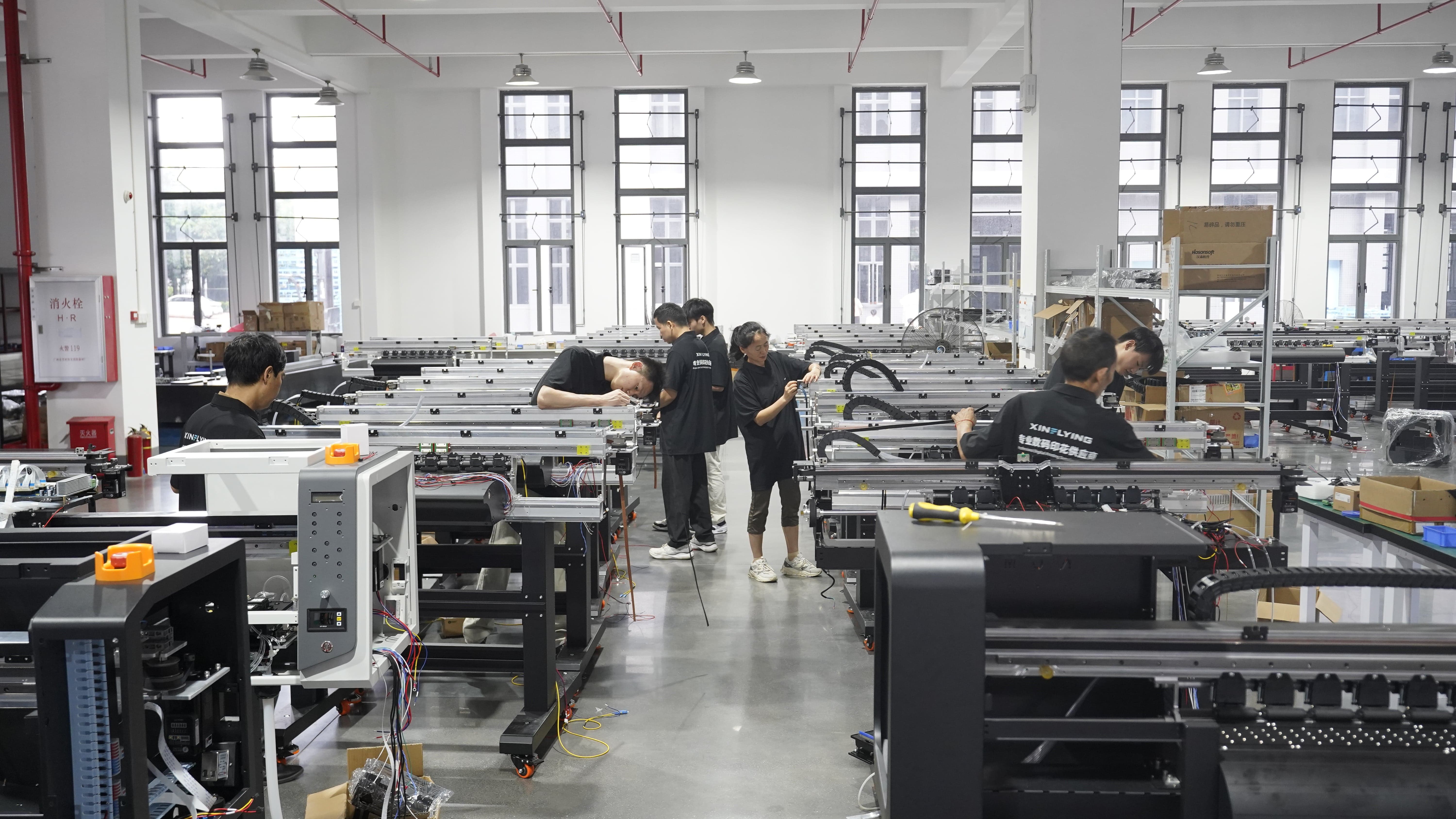
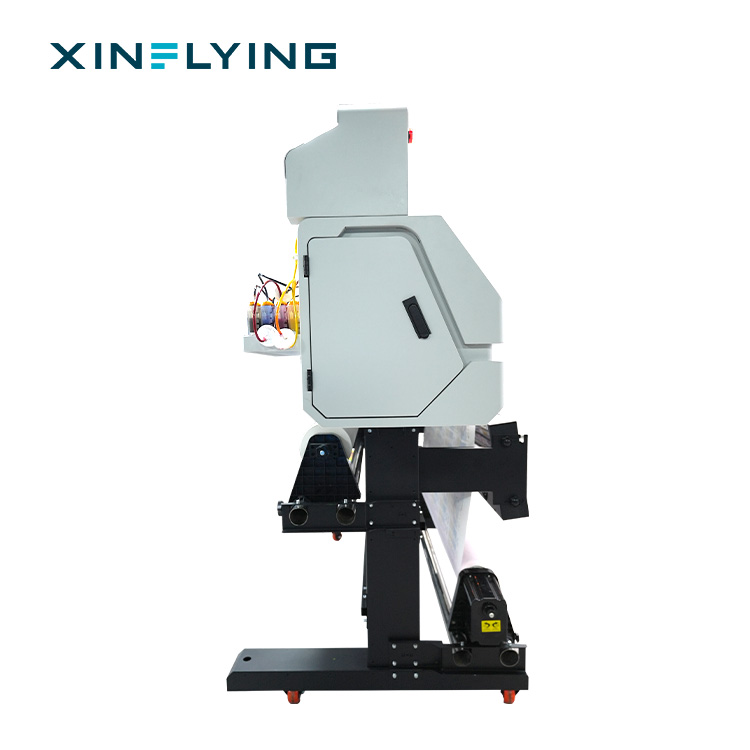
Sublimation ink is not welded to one chassis. Disperse dye can be jetted by any inkjet platform whose printhead, ink path, dampers, capping and wiper components are compatible with the ink chemistry. This is why machines in the same physical class can be configured for different transfer workflows, and why the XF-450PRO is operated as a dye sublimation machine running dispersion ink and transfer paper. The printer supplies the jetting and the media handling; the chemistry supplies the result.
What sublimation ink cannot do is behave like a DTF ink set. If you load disperse dye into a DTF-configured workflow, three limits appear in sequence:
- Carrier mismatch. PET film and adhesive powder are designed for pigment and TPU systems. The film is not built to release gaseous dye into a fabric the way sublimation transfer paper is.
- Substrate mismatch. Cotton and most natural fibres have no polyester structure for the dye to diffuse into, so the colour has nowhere to bond.
- Process mismatch. The DTF finishing step is a press with adhesive curing, not a calender transfer that drives dye into fibre at the required temperature and dwell time.
The practical decision rule is therefore not “which printer can jet this ink?” but “which consumable chain and which fabric does this ink require?” Sublimation ink defines a polyester workflow. DTF ink defines a film-and-powder workflow that works almost anywhere. Changing ink sets on an existing machine is a consumable, maintenance and warranty decision rather than a plug-and-play experiment, because ink chemistry interacts with capping stations, wipers, tubing and dampers, and a machine validated with one ink type should be re-validated with the supplier before being switched.
Regulatory constraints: the machine certificate and the ink document are two different files
Compliance is where DTF and sublimation buyers most often conflate two separate obligations. Machine-level compliance and print-level compliance are documented separately, and each one covers a different risk.
- Machine compliance: for the European market, CE documentation covering electrical safety and electromagnetic compatibility (LVD and EMC) applies to the equipment; RoHS addresses restrictions on hazardous substances in electrical and electronic components. For the US market, FCC compliance is commonly required for electronic equipment to control electromagnetic interference, and additional safety documentation may apply depending on configuration and sales channel.
- Print compliance: what ends up in contact with skin is governed by textile-focused requirements and the ink documentation behind them. Textile schemes such as OEKO-TEX address the chemistry that remains on a skin-contact garment, and that documentation is specific to the ink — not to the printer.
A CE file for a sublimation printer does not certify the ink, and an ink certificate does not cover the machine. Buyers should request both sets of documents and verify that each one names the actual model and the actual ink used in production. Certification documents that do not correspond to the supplied equipment are a common cause of customs delays, sales restrictions or additional compliance cost when an order reaches the destination market.
Step by step: choosing between DTF and sublimation for a real order
- Identify the fibre composition of the target product. Above roughly 60% polyester content, sublimation becomes viable; below that, or on 100% cotton and dark blends, DTF is the realistic route.
- Define what the print must survive. All-over sportswear and repeated industrial laundering favour a dye that lives inside the fibre. Small, high-detail graphics on cotton workwear favour a film transfer.
- Select the consumable chain. Sublimation means transfer paper, a heat press calender, and colour management through RIP software. DTF means PET film, adhesive powder, curing, and a heat press.
- Match the machine width and head count to volume. A 130 cm single-head platform and a 190 cm fifteen-head platform run identical chemistry at very different throughput levels.
- Verify documentation against the destination market. Confirm machine certification and ink documentation separately, and confirm they name the model and ink you are actually buying.
- Validate with a sample before committing to a production run. Print the exact fabric, wash it the way the end customer will, and compare colour and hand feel against the approved reference.
Operating conditions belong in the same planning step. Xinflying industrial sublimation platforms such as the XF-19E8-PRO are designed for continuous 24/7 operation in textile production facilities, with stable temperature and humidity within 18°C–30°C and 35%–65% RH. Colour consistency across batches depends heavily on holding those conditions.
Use cases: matching ink chemistry to the product
Polyester sportswear and team kit
Sublimation is the standard route for polyester sportswear, including football jerseys, basketball uniforms and customized team apparel printed on polyester fabrics before cutting and sewing. Xinflying sublimation solutions are used for these applications by sportswear brands, apparel factories and customized textile businesses, and are also applied to personalized sportswear production, small-batch customization and continuous commercial printing.
One sports uniform supplier in Brazil operates eight units producing customized football kits, training uniforms and team apparel with personalised names, numbers and graphics; a second sportswear manufacturer has run fifteen units for four years, producing football jerseys and basketball uniforms and reporting improved production flexibility for customized orders and more consistent colour quality across batches.
Home textiles and decorative fabric
The same chemistry serves interior applications. The XF-O2000-4I32A1 is used to print personalized textile products and decorative fabric items, covering clothing, home decor, canvas bags, cushions and flags. A home textile manufacturer operating ten units applies sublimation printing to curtains, cushions, decorative fabrics and customized polyester textile products, where large-format detail and consistent print quality matter more than per-piece flexibility.
Cotton, blends and mixed-order shops
Where the product mix runs across cotton, polyester blends and dark garments, DTF carries the load. A DTF workflow absorbs fabric variation that sublimation cannot, at the cost of an additional film-and-powder consumable step per job. Many factories run both: sublimation for long polyester runs, DTF for everything the dye cannot reach.
Comparison table: DTF versus dye sublimation
| Dimension | DTF printing | Dye sublimation printing |
|---|---|---|
| Ink chemistry | Pigment and resin ink, jetted onto PET film | Disperse dye ink, jetted onto transfer paper |
| Transfer media | PET film plus thermoplastic adhesive powder | Dye sublimation transfer paper |
| Bonding mechanism | Adhesive layer bonds to the fabric surface | Dye converts to gas and diffuses into polyester fibres or polymer coating |
| Compatible substrates | Cotton, polyester, blends; light and dark fabrics | Polyester fabrics and polyester-coated items |
| Print feel | Thin flexible layer on the surface | No added layer; dye becomes part of the substrate |
| Typical strength | Mixed fibre jobs, dark garments, small custom runs | Long polyester runs, all-over sportswear, home textiles |
| Main limitation | Extra film and powder step per piece | No usable result on uncoated cotton |
| Compliance focus | Ink documentation for skin-contact prints | Ink documentation plus machine CE, EMC, LVD, RoHS or FCC compliance |
Xinflying sublimation printer configurations
Machine choice sits downstream of the ink decision. Within the sublimation range, the difference between models is throughput and width, not chemistry.
| Model | Printheads | Print width | Print speed | Typical role |
|---|---|---|---|---|
| XF-H1301X-1I32A1 | 1 × Epson i3200-A1 | 130 cm (1.3 m) | 4PASS up to 28 m²/h | Compact entry production |
| XF-H1802X-2I32A1 | 2 × Epson i3200-A1 | 180 cm (1.8 m) | 4PASS up to 52 m²/h | Small and medium print businesses |
| XF-O2000-4I32A1 | 4 × Epson i3200-A1 | 195 cm (1.95 m) | 2PASS 180 m²/h; 4PASS 92 m²/h | Growing shops, decor and apparel |
| XF-19E8-PRO | 8 × Epson i3200-A1 | 190 cm (75 inch) | 1PASS 306 m²/h; 2PASS 153 m²/h | Industrial 24/7 textile production |
| XF-19E15-PRO | 15 × Epson i3200-A1 | 190 cm (75 inch) | 1PASS 524 m²/h; 2PASS 254 m²/h | High-volume industrial sublimation |
All five models print CMYK sublimation ink onto heat transfer paper. Practical selection criteria remain printing accuracy, stable colour reproduction, continuous production stability and consistent print quality — the requirements that define success in a commercial textile printing facility, independent of head count.
FAQ: DTF and sublimation ink limits
Do I need separate certificates for the printer and for the ink?
Yes. Machine certification and ink documentation cover different risks. CE documentation — including electrical safety and electromagnetic compatibility — and RoHS apply to the equipment in the European market, while FCC compliance is commonly required for electronic equipment in the United States. What remains on a skin-contact garment is a separate question, addressed by textile-focused schemes such as OEKO-TEX and the ink documentation behind them. Buyers should request both files and confirm that each names the actual model and ink. Mismatched documents are a routine cause of customs delays and sales restrictions.
Can sublimation ink be run on a DTF printer?
Disperse dye ink can be jetted by any inkjet platform whose printhead, ink path, dampers, capping and wiper components are compatible with that chemistry, which is why machines in the same physical class can be configured for different transfer workflows and why the XF-450PRO is operated with dispersion ink and transfer paper. However, running sublimation ink does not make a machine a DTF system. The DTF consumable chain — PET film and adhesive powder — is built for pigment and TPU systems, and the DTF press step cures adhesive rather than driving dye into fibre. In practice, sublimation ink requires transfer paper and a polyester or polymer-coated substrate; without those, the print will not bond, regardless of the printer running it.
Which process costs less to run?
Running cost follows the consumable chain rather than the machine price. A DTF job consumes PET film, adhesive powder and curing energy on a per-piece basis, plus press time. A sublimation job consumes transfer paper and disperse dye ink on a per-metre basis, plus calender time, and becomes more economical as run length on polyester increases because throughput rises and per-piece handling falls. For long polyester production, sublimation spreads its fixed cost across more output; for mixed small orders on cotton and blends, DTF avoids the substrate limitation that would otherwise make the job impossible. The correct comparison is always against the specific fabric, order size and repeat pattern.
How can I validate both processes before committing to a machine?
Sample validation should reproduce the real production conditions: the actual fabric, the actual ink chemistry, the actual transfer medium, and the actual wash and finishing process. Xinflying supports this through OEM and ODM cooperation, including product branding, machine appearance and colour customization, logo and packaging customization, and customized solutions based on customer requirements. Machines are subject to pre-shipment testing, and the minimum order quantity is 1 unit, so a single machine can be validated before a larger commitment.
What is the lead time and support situation?
Lead time runs 5–40 days depending on configuration and order volume, against a monthly production capacity of more than 1,600 units. After delivery, more than 50 engineers provide 24/7 online technical support. Buyers who want to review the full machine range, consumable options and compliance documentation before placing an order can download the company brochure or send the target fabric specification directly to the sales team for a configuration recommendation.
Conclusion: choose the ink, then the machine
DTF and dye sublimation are not competing answers to the same question. They are two ink chemistries with two different bonding mechanisms, and each one defines its own consumable chain. DTF bonds a pigment and adhesive layer to almost any fibre through PET film and powder. Sublimation diffuses disperse dye into polyester and polymer-coated surfaces and produces a print with no added layer at all. The limit sits in the chemistry, not in the printer.
For procurement teams, that reframes the specification process. Define the fabric first. Confirm that the ink documentation and the machine certification both match the destination market. Size print width and head count to the throughput you need today, with headroom for the orders you expect next year. Then validate with a sample run on the real substrate.
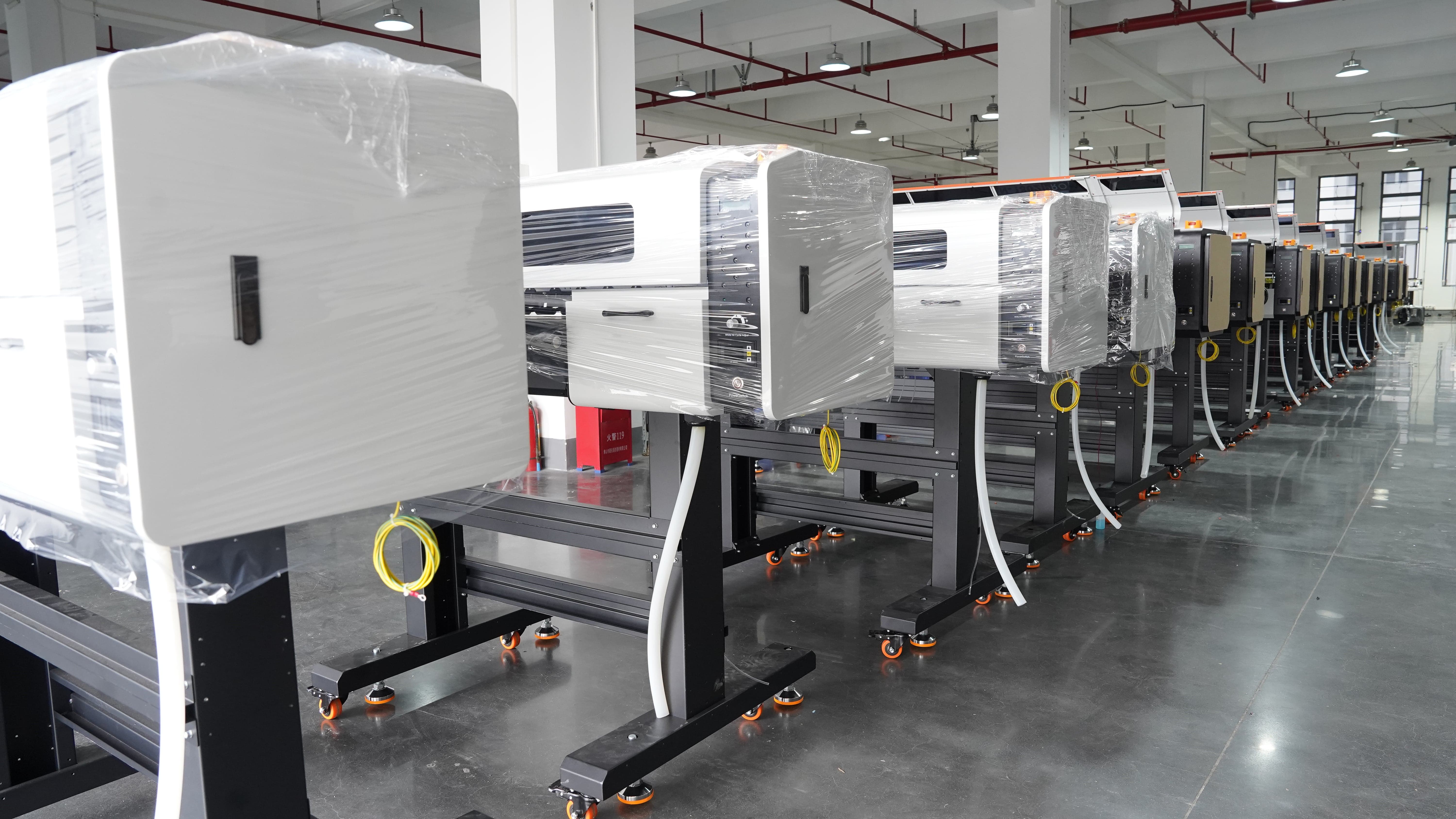
Xinflying (Guangzhou Xin Flying Digital Technology Co., Ltd.) has manufactured digital printing equipment since 2010, with a 37,440 m² facility, more than 200 employees, an annual output of over 20,000 units and an export ratio of 80% across North America, South America, Europe, Asia, the Middle East and Africa. Because the company builds DTF, sublimation, DTG and UV platforms, the ink-set decision can be made on fabric and compliance grounds rather than on what happens to be in stock.
Send your fabric specification, get a configured answer
Tell us the fibre composition, the order volume and the destination market, and the Xinflying team will confirm which ink chemistry fits, which model matches the throughput, and which compliance documents apply. Samples, quotations and the full product catalogue are available on request.
Website: www.xin-flying.com | Email: info@xin-flying.com | WhatsApp: +86 188-1322-1357
Have Questions or Need More Details?
Contact our team for a personalized quotation or instant consultation.
Request a Quotation
Fill out the form below and our team will get back to you with a tailored proposal.
WhatsApp Direct Chat
Prefer to chat in real-time? Message us on WhatsApp for instant assistance & quick answers.
- Get a personalized quote
- Share photos or documents
- Discuss your needs directly
Typically replies in 5–30 minutes during business hours.