
DTF vs. Sublimation for Polyester Fabrics: Which Wins?
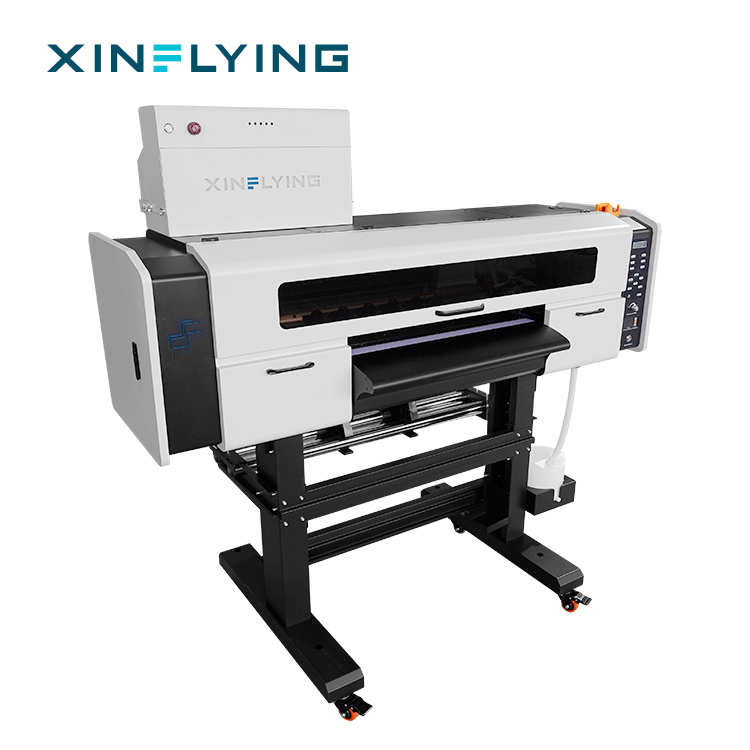
Short answer: sublimation wins on light-coloured, 100% polyester work at volume, where it may hold a cost advantage. A DTF printer wins on everything else in a polyester order book — dark polyester, polyester blends, and catalogues that mix polyester with cotton — because DTF expands fabric compatibility by roughly 3–4× compared with sublimation. The trade-off is that DTF adds a film-and-adhesive-powder stage between the printer and the heat press.
That is the whole decision in one paragraph. The rest of this guide turns it into a framework a garment distributor, print shop or production manager can apply to a real polyester catalogue, and into the long-term supply questions that decide whether the choice still works two or three years after installation.
Why Polyester Forces a Genuine Decision
On cotton, sublimation is not really an option, so the discussion is short. Polyester is different: it is the one fabric family where both technologies can produce a sellable garment, which is exactly why buyers keep reopening the question.
Sublimation printing uses sublimation ink and a heat transfer process to apply designs onto suitable materials, and it is mainly optimised for light-coloured polyester fabrics. The workflow assumes a compatible polyester substrate and controlled transfer conditions. When those conditions are met, the process is efficient and predictable.
The problem appears at the edges of a real catalogue. Distributors rarely sell only light 100% polyester. Orders arrive as dark polyester hoodies, polyester-spandex sportswear, polyester-cotton blends, and mixed baskets where one purchase order contains five fabric types. For those items, sublimation is outside its design envelope, while a direct to film printer covers cotton, polyester, blends and dark garments in a single workflow.
So the question is not "which technology is better." It is "which technology covers the polyester work I am actually contracted to deliver, and what does the second technology cost me if I need it later?"
Industry Background: Film-Based Printing Is Now Mainstream Capacity
DTF is no longer an experimental add-on for polyester production. The global DTF printing market was valued at USD 2.7 billion in 2024, according to Grand View Research, and Europe was the leading regional market that year with a 36.0% revenue share.
Product-level data points the same way. T-shirts represented 41% of DTF printing revenue in 2024, according to KBV Research, and industrial DTF printers accounted for 58.3% of total revenue share in 2025, according to Dataintelo — a signal that buyers are moving from desktop experiments into continuous production equipment. China accounts for more than 45% of global DTF printer manufacturing capacity, per Dataintelo, which is why sourcing conversations so often include a China DTF printer supplier.
Growth forecasts for the category diverge noticeably between research firms, so treat any single CAGR as one input rather than a planning constant. The stable conclusion is structural: film-based printing has mature manufacturing capacity, an established consumables chain, and enough installed base that spare parts and technical support are no longer a novelty risk.
Where the Two Workflows Actually Diverge
Sublimation on polyester
Sublimation applies designs through sublimation ink and a heat transfer process onto compatible polyester substrates under controlled conditions. Its strength is repeatability on the substrate class it was designed for: light polyester. Its constraint is equally clear — it is mainly optimised for light-coloured polyester, so dark garments and cotton-containing blends fall outside the workflow.
DTF on polyester
DTF printing separates image creation from garment application. The design is printed onto PET transfer film first, hot-melt adhesive powder is applied to the wet print, the film is cured, and heat and pressure then bond the design to the fabric. The adhesive layer is not optional: without the powder stage, the design cannot complete the normal DTF transfer workflow.
That extra step is the price of coverage. Because the film carries the image rather than the garment, prepared transfers can be printed in advance, stored, and applied to different garments when the order arrives. A commercial DTF printer therefore handles dark polyester, blends and cotton in one production line instead of forcing a second process.
The Five-Test Decision Framework
Run these five tests against your own polyester order book before comparing machines. The technology that passes the most tests is the one to standardise on.
Test 1 — Colour depth. If the polyester range is light-toned, both workflows are viable. If dark or mid-tone polyester represents a meaningful share of revenue, DTF is the only one of the two that covers it.
Test 2 — Fibre composition. Pure polyester can go either way. Polyester-cotton blends, polyester-viscose and multi-fibre baskets belong to DTF, which is designed around cotton, polyester, blends and dark garments rather than a single substrate class.
Test 3 — Order structure. Long repeat runs of the same design on light polyester favour sublimation, which may have lower costs for large-volume polyester products. Short runs with frequent artwork changes, or orders where the garment is chosen after the print is made, favour DTF because transfers can be prepared and stored in advance.
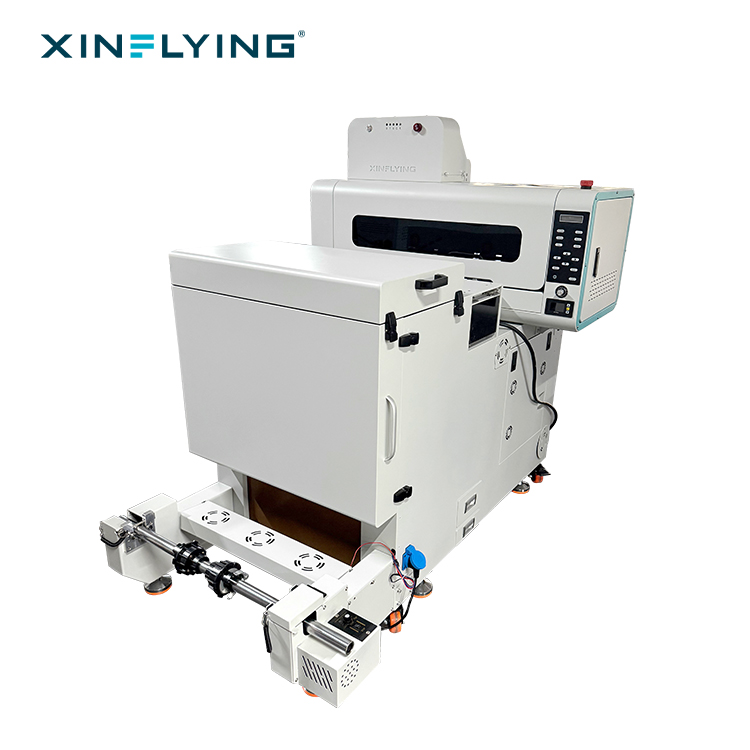
Test 4 — Finishing capability. DTF requires film, powder, curing and a heat press as a connected sequence. This is why all-in-one configurations exist — the XF-450PRO All-in-One DTF Printer integrates the printing, powder shaking and drying stages in one A2 frame — while bulk 60cm production uses a printer plus a separate shaker and curing unit.
Test 5 — Compliance documentation. Polyester work that reaches EU or US retail carries documentation expectations. CE, EMC, LVD and RoHS are the relevant reference points for the European market, FCC for the United States, and DTF printing films must comply with OEKO-TEX STANDARD 100 for textile safety and restricted substances. A supplier that can supply both a compliant DTF line and a compliant sublimation line removes a whole category of paperwork risk.
Step-by-Step: Running a Polyester Job on Each Workflow
Sublimation path
Step 1. Confirm the garment is a compatible polyester substrate and falls inside the light-colour range the process is optimised for.
Step 2. Prepare the artwork for transfer before printing.
Step 3. Print with sublimation ink using the machine settings appropriate to the job.
Step 4. Complete the heat transfer under controlled temperature and pressure conditions.
Step 5. Inspect the result and record the settings that produced an acceptable output.
DTF path
Step 1. Print the design onto PET transfer film.
Step 2. Apply hot-melt adhesive powder to the printed pattern.
Step 3. Cure the powdered film.
Step 4. Transfer onto the polyester or blend garment with heat and pressure.
Step 5. Store unused transfers — they can be applied to different garments later, which is what makes mixed catalogs practical.
Step 5 is where DTF changes the economics of a polyester range. A distributor can build a transfer library, then decorate garments against incoming orders instead of printing to order every time.
Production Risks That Decide Long-Term Cost
Machine comparisons usually stop at printheads and width. Long-run cost is decided by how often the line stops.
Overheating. The curing and pressing stages are heat-intensive. Equipment handling thermal protection through temperature sensors reduces the risk of overheating during continuous polyester production — a detail worth confirming on any commercial DTF printing machine before it runs a full shift.
Film feeding deviation. When transfer film is not installed correctly, when the feeding system needs inspection, or when machine conditions drift, output misaligns. The routine is straightforward: verify film placement, confirm the feed path is clear, adjust per the operating instructions, then run a test print.
Unstable ink flow. Inconsistent ink delivery shows up as shifting colour — which is fatal on repeat polyester orders. Check ink supply conditions, confirm the delivery system is working, follow the recommended maintenance routine, then test print.
Missing lines or incomplete colour. Usually traceable to printhead condition, ink supply, print settings or skipped cleaning. Check which colours are affected, confirm supply, then clean and retest per supplier guidance.
After-sales exposure. Insufficient support is the risk that compounds every other risk: longer downtime, harder troubleshooting, more expensive maintenance. Buyers should confirm warranty policy, technical communication channels and spare-parts availability before ordering, not after the first breakdown.
Where Each Technology Fits in a Polyester Business
Light polyester team kits and sportswear with repeat designs. Sublimation is the natural fit: the substrate matches the process, and volume reduces the per-unit argument.
Dark polyester, polyester blends and streetwear. This is DTF territory. A DTF transfer printer handles dark garments without changing workflow, and blends are covered by the same process as pure polyester.
Distributors with mixed catalogues. DTF as the baseline technology, sublimation as a dedicated light-polyester line. Both routes can stay inside one supplier relationship.
Small businesses and beginners. A space-saving all-in-one DTF machine removes the need to buy a shaker and dryer separately — the XF-450PRO uses 2pcs Epson i1600-A1 printheads with integrated powder shaker and dryer, white ink circulation and RIIN/PrintFactory RIP software. Xinflying's published product-page specification lists 9 m²/h at 6-pass for this A2 dual printhead DTF printer; confirm current figures with the supplier for a specific build.
Commercial 60cm production. The XF-702E + XF-Z650-2 DTF Printer Package pairs a 60cm DTF printer with 2pcs Epson i3200-A1 printheads, automatic powder shaker and curing system, auto moisture retention, white ink circulation and RIP software support.
Industrial volume. The XF-C605 + XF-A6502H DTF Printer Package is a 60cm industrial setup with 5pcs Epson i3200-A1 printheads, automatic powder recycling, smart touchscreen control, built-in fume purifier and professional RIP software.
Hard surfaces are a different question. UV DTF printers — including all-in-one UV DTF printer formats and UV DTF sticker printer configurations — address glass, metal, wood and sticker work. They extend a product portfolio but they do not replace a textile polyester decision.
DTF vs. Sublimation on Polyester: Side-by-Side
| Decision factor | Dye sublimation | DTF (direct to film) |
|---|---|---|
| Colour range on polyester | Mainly optimised for light-coloured polyester | Light and dark polyester |
| Fabric coverage | Compatible polyester substrates | Cotton, polyester, blends, dark garments — roughly 3–4× wider compatibility |
| Extra production step | Heat transfer under controlled conditions | Print to PET film + hot-melt powder + curing, then press |
| Prepared output | Tied to the substrate and transfer conditions at the time of pressing | Transfers can be printed in advance, stored, and applied later to different garments |
| Cost behaviour | May have lower costs for large-volume polyester products | Reduces inventory and production limitations because one workflow covers more garment types |
| Maintenance profile | Requires suitable polyester substrates and controlled transfer conditions | More flexible workflow; needs film, powder, curing and printhead upkeep |
| Compliance reference | CE / EMC / LVD / RoHS for EU placement | CE / EMC / LVD / RoHS; FCC for the US; films should meet OEKO-TEX STANDARD 100 |
| Best-fit profile | Light-polyester specialists with repeat designs at volume | Mixed catalogues, dark garments, blends, short runs, distributors |
Choosing a Long-Term 60cm DTF Printer Supplier for Garment Distributors
Once the technology decision is made, the durable question is who keeps the line running. For garment distributors, that means a supplier who can support both a film-based line and a sublimation line, so a change in the polyester mix does not force a change of vendor.
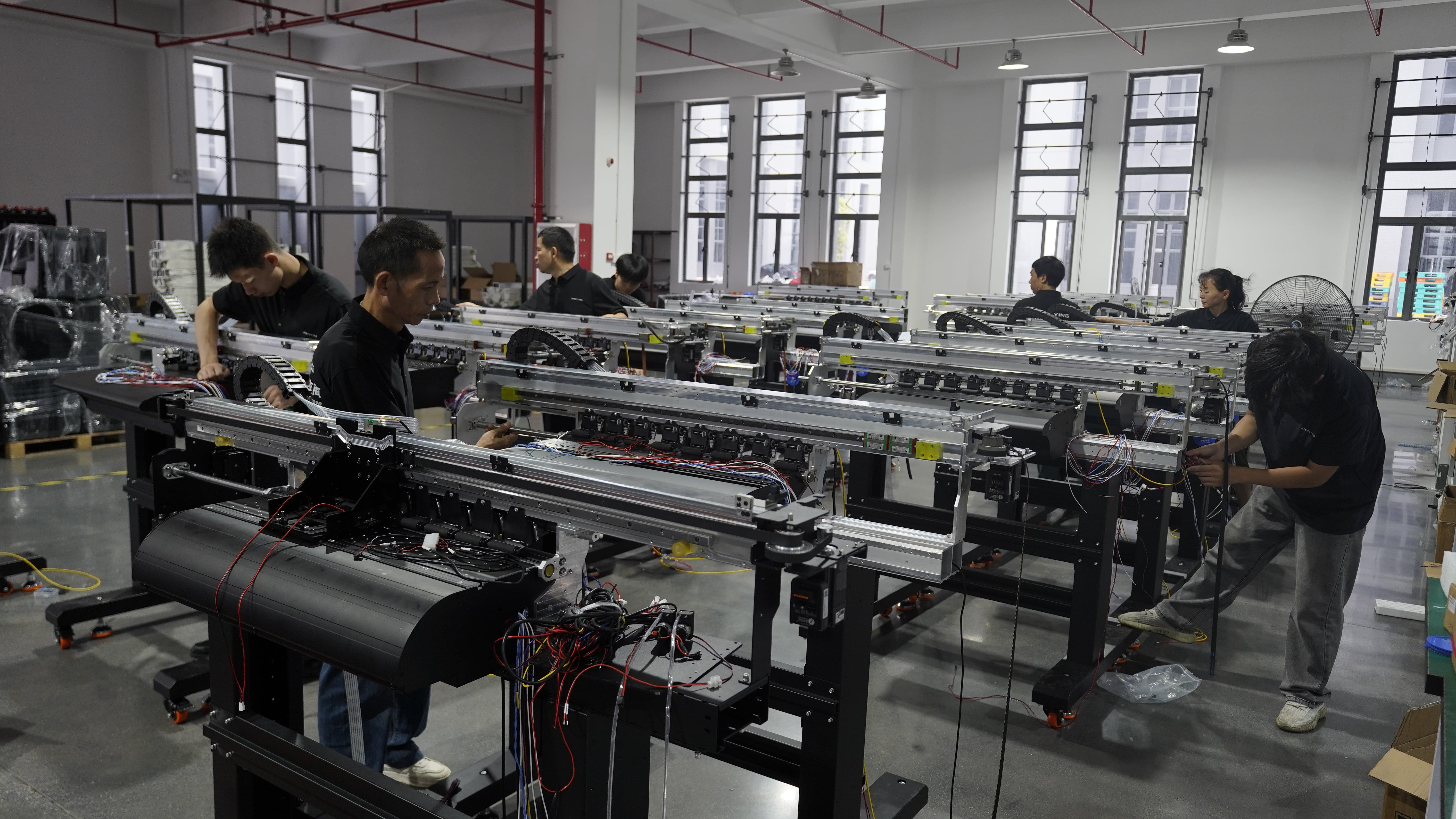
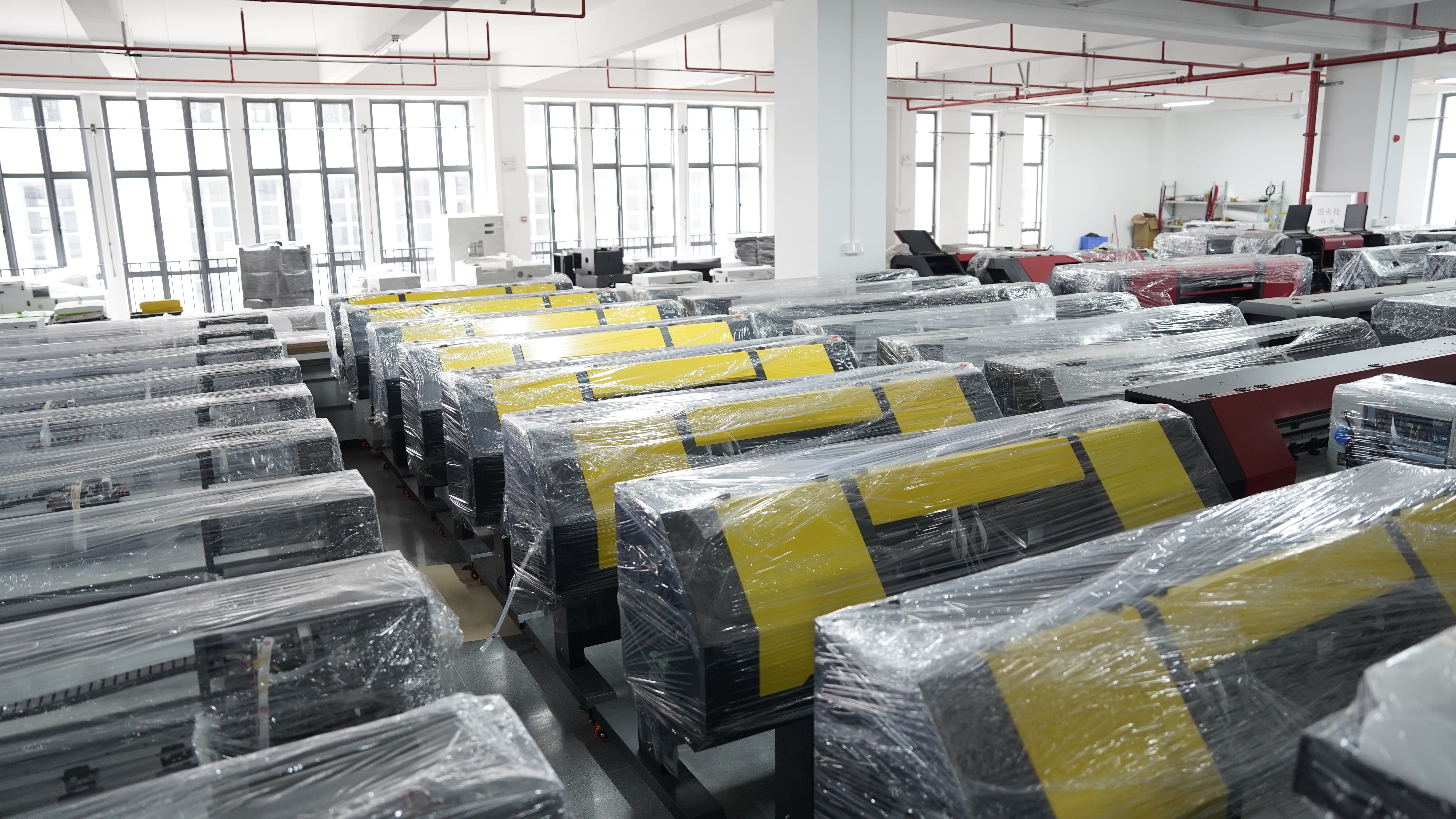
XINFLYING (Guangzhou Xin Flying Digital Technology Co., Ltd.) is a digital printing equipment manufacturer founded in 2010, operating a manufacturing facility spanning 37,440 square meters with over 200 staff, a 20-engineer R&D team and an annual production capacity of more than 20,000 units. Its product range covers DTF printer machines, dye sublimation printers, DTG printers, UV DTF printers, UV flatbed printer machines, printing consumables and complete digital printing solutions, with roughly 80% of output exported to North America, South America, Europe, Asia, the Middle East and Africa.
The portfolio structure matters for polyester buyers specifically. Within the same manufacturer's portfolio, the XF-H1301X sublimation printer remains certified for EU use. That means a distributor can standardise on DTF for dark and blended polyester while keeping a compliant sublimation route for light-polyester volume — under one compliance file, one technical contact and one spare-parts relationship, rather than two unrelated vendors.
Commercial terms are built for trial-to-scale progression: minimum order quantity is 1 unit, delivery is arranged through EXW, FOB, CIF or DDP, acceptance criteria is a pre-shipment test, and accepted payment methods include T/T, Western Union and PayPal. Xinflying also maintains local warehouses in the USA, Mexico and Brazil to support 2–5 day delivery in those regions, which shortens the gap between a sample approval and a first production run.
For distributors evaluating machinery beyond polyester, the same supplier also covers UV DTF and UV flatbed categories, so a hard-surface line can be added later without starting a new supplier qualification process.
Frequently Asked Questions
1. Does a DTF printer used for polyester work need CE and OEKO-TEX documentation?
For EU placement, CE compliance covering applicable safety and electromagnetic compatibility requirements is an important reference point, alongside EMC, LVD and RoHS. DTF printing films must also comply with OEKO-TEX STANDARD 100 for textile safety and restricted substances. Buyers should request certification documents and confirm that the model information on the certificate matches the machine being supplied, rather than accepting a generic compliance statement.
2. Can a single 60cm DTF printer handle dark polyester and blended fabrics in one production line?
Yes. DTF printing covers cotton, polyester, blends and dark garments within one workflow, which is the main reason it expands fabric compatibility by roughly 3–4× compared with sublimation. In practice, a 60cm DTF printer such as the XF-702E package — 2pcs Epson i3200-A1 printheads, automatic powder shaker and curing system, auto moisture retention and white ink circulation — covers regular commercial polyester and blend output, while the XF-C605 + XF-A6502H package with 5pcs i3200-A1 printheads, automatic powder recycling and a built-in fume purifier is built for continuous industrial volume.
3. Is sublimation actually cheaper than DTF for polyester?
It can be, in a specific scenario: large-volume production of light-coloured polyester products, where sublimation may have lower costs. That advantage narrows once the range includes dark garments or blends, because DTF reduces inventory and production limitations by covering more garment types in a single workflow. When comparing budgets, include film, adhesive powder and curing in the DTF calculation, and include the cost of a second process for any order sublimation cannot take.
4. Can we validate both technologies on our own polyester before committing?
Yes — and it is the right sequence. Buyers should request printing samples, confirm machine configuration, and communicate the specific fabric and colour requirements to the supplier before ordering. Xinflying's acceptance criteria is a pre-shipment test, and the minimum order quantity is 1 unit, so a first machine can be validated at small scale before a distributor commits to a fleet.
5. What delivery terms and lead times apply to a 60cm DTF printer order?
Delivery is arranged through EXW, FOB, CIF and DDP, payment methods accepted include T/T, Western Union and PayPal, and Xinflying maintains local warehouses in the USA, Mexico and Brazil to support 2–5 day delivery in those markets. To confirm configuration, pricing and delivery timing for a specific polyester production plan, contact the team at info@xin-flying.com or via WhatsApp on +86 188-1322-1357.
Conclusion: Pick the Technology Your Polyester Catalogue Actually Needs
Sublimation is the right answer for light-coloured polyester production at volume, and it remains a compliant, efficient process inside its design envelope. A DTF printer is the right answer for dark polyester, blends, and mixed catalogues — and its film-and-powder stage, which looks like a drawback on a spec sheet, is exactly what allows transfers to be prepared in advance and applied to different garments later.
The strategic move for most distributors is not choosing one and abandoning the other. It is sourcing both from a supplier who can keep the whole polyester range covered as the order mix shifts — with documented compliance, spare parts and technical support attached to both lines.
Planning a polyester production line?
Review the full XINFLYING machine range, configurations and specifications, or request a polyester sample test before you commit to a technology route.
Download the XINFLYING company brochure (PDF)
Email: info@xin-flying.com | Tel / WhatsApp: +86 188-1322-1357 | No.7, Xiecun 2nd Industrial Zone, Panyu, Guangzhou, Guangdong, China
Have Questions or Need More Details?
Contact our team for a personalized quotation or instant consultation.
Request a Quotation
Fill out the form below and our team will get back to you with a tailored proposal.
WhatsApp Direct Chat
Prefer to chat in real-time? Message us on WhatsApp for instant assistance & quick answers.
- Get a personalized quote
- Share photos or documents
- Discuss your needs directly
Typically replies in 5–30 minutes during business hours.