
EN IEC 62368-1:2020/A11:2020: What Sublimation Printer Buyers Must Verify
EN IEC 62368-1:2020/A11:2020 is the safety standard that the XF-19E15-PRO sublimation printer is certified against, under certificate TQT1550D271EC. For a buyer at decision stage, that sentence carries more commercial weight than a headline print speed — because a large format sublimation printer that cannot show a current safety certificate matching the exact model on the invoice is a European market risk, not a saving.
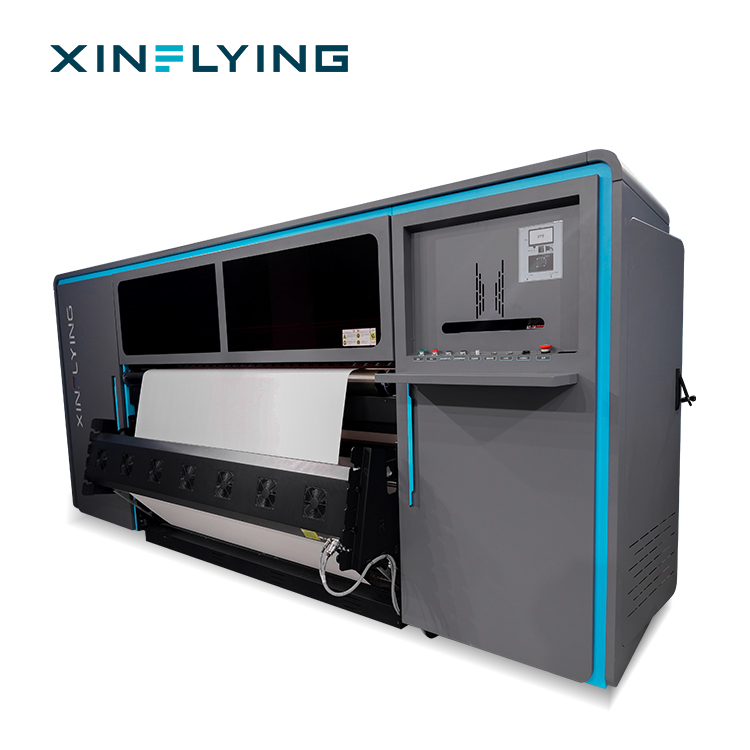
XinFlying Sublimation Printer XF-19E15-PRO — the 1900 mm model used as the worked example in this compliance walkthrough.
This guide covers four things: what the standard actually is, why the 2020/A11:2020 edition has become the reference point for electronic machinery sold into Europe, how Xinflying applies it to the XF-19E15-PRO, and how to compare two shortlisted machines when their certificates reference different editions.
The Real Problem: Identical Specification Sheets, Different Compliance Standing
Buyers compare sublimation printers on width, printhead count, output in m²/h, ink consumption and price. Certificates get filed into an email folder and opened only when a customs broker or a customer's quality team asks a question.
That order of operations is backwards. Under the EU Low Voltage Directive, electrical equipment placed on the European market must satisfy defined safety objectives, and conformity is normally demonstrated by applying a harmonised standard. When the harmonised safety standard moves to a newer edition, certificates referencing the older edition have to be reviewed — not because the machine became unsafe overnight, but because the evidence trail no longer matches what authorities and larger customers now expect to see.
For a 1.9 m sublimation printer purchase, three failure modes repeat:
- The certificate is genuine, but the model string differs from the machine on the invoice.
- The standard number is correct, but the edition line is older than the one the buyer's market expects.
- The certificate is fine, but it covers a different electrical configuration than the unit being shipped.
Each one is a documentation problem rather than a machine problem, and each surfaces at the worst possible moment: at customs, during a customer audit, or when a distributor needs a Declaration of Conformity to complete their own technical file.
Decision rule: put the safety certificate on the same comparison spreadsheet as the specifications, and score it the same way. A printer with an unmatched certificate and a printer with a matched one are not in the same commercial category, even at the same price.
Why Safety Documentation Moved Up the Buying Agenda
Two pressures are converging on equipment buyers: volume, and regulation.
The first is volume. The dye sublimation printers segment was valued at USD 1.88 billion in 2025 and is expected to reach USD 2.53 billion by 2030 (Mordor Intelligence). The broader dye sublimation printing market was valued at USD 16.4 billion in 2025 and is projected to reach USD 39.0 billion by 2033, growing at a CAGR of 11.5% from 2026 to 2033 (Grand View Research). Roll-to-roll sublimation printers with 1.9 m (1900 mm) widths are the standard configuration for high-volume textile and soft signage applications (FESPA Insights). More machines crossing borders means more documentation scrutiny, not less.
The second is regulatory. Three separate European obligations apply to a commercial sublimation printer, and they are routinely confused with one another:
- Low Voltage Directive (LVD) — electrical safety. EN IEC 62368-1:2020/A11:2020 is where the XF-19E15-PRO's safety evidence sits.
- EMC — electromagnetic compatibility, covering emissions and immunity.
- RoHS — restrictions on hazardous substances in electrical and electronic components.
A CE mark on a wide format sublimation printer indicates that the applicable routes were addressed. It does not, by itself, prove that a specific standard edition was tested on a specific model. That is the job of the test certificate, the Declaration of Conformity and the technical file — three different documents with three different functions.
What EN IEC 62368-1:2020/A11:2020 Actually Is
EN IEC 62368-1 is the European safety standard for audio/video, information and communication technology equipment. It consolidates the safety approach previously split between the separate product-family standards for IT equipment and for audio/video equipment, and it is built on hazard-based safety engineering: rather than prescribing fixed construction details, it classifies energy sources and requires safeguards proportionate to who may come into contact with them.
Three consequences follow, and each one matters to a printer buyer.
- It is technology-neutral. Equipment is assessed by the energy it contains and the safeguards around it, which is why a single standard can reach a sublimation printing machine together with its power supplies, control electronics and drive systems.
- It is the edition named on the XF-19E15-PRO certificate. TQT1550D271EC references EN IEC 62368-1:2020/A11:2020 — the consolidated edition that includes Amendment A11.
- It rewards configuration discipline. Because the assessment follows the machine's safety architecture, changes in power configuration or add-on modules are not automatically covered by an original certificate. Buyers should confirm in writing that the delivered unit matches the assessed configuration.
How Xinflying Applies the Standard to the XF-19E15-PRO
Xinflying, formally Guangzhou Xin Flying Digital Technology Co., Ltd., is a digital printing equipment manufacturer founded in 2010. It operates a 37,440 m² facility with more than 200 employees and a 20-engineer R&D team, and exports roughly 80% of its output to North America, South America, Europe, Asia, the Middle East and Africa.
The XF-19E15-PRO is the 1900 mm model in that range, positioned for continuous production work rather than sampling. Its safety documentation is anchored on certificate TQT1550D271EC, issued against EN IEC 62368-1:2020/A11:2020.
What that gives a buyer:
- A model-specific reference. The certificate names the product, so it can be matched against the invoice, packing list and nameplate.
- A named edition. The buyer can check whether the edition on the document is the one their market expects, without having to interpret a generic statement about factory quality.
- A clean separation of obligations. The LVD evidence sits alongside EMC and RoHS documentation rather than standing in for them.
What it does not give a buyer: a performance guarantee, a print-quality guarantee, or any assurance about the delivered unit's configuration. Those are separate checks, and the next section covers them.
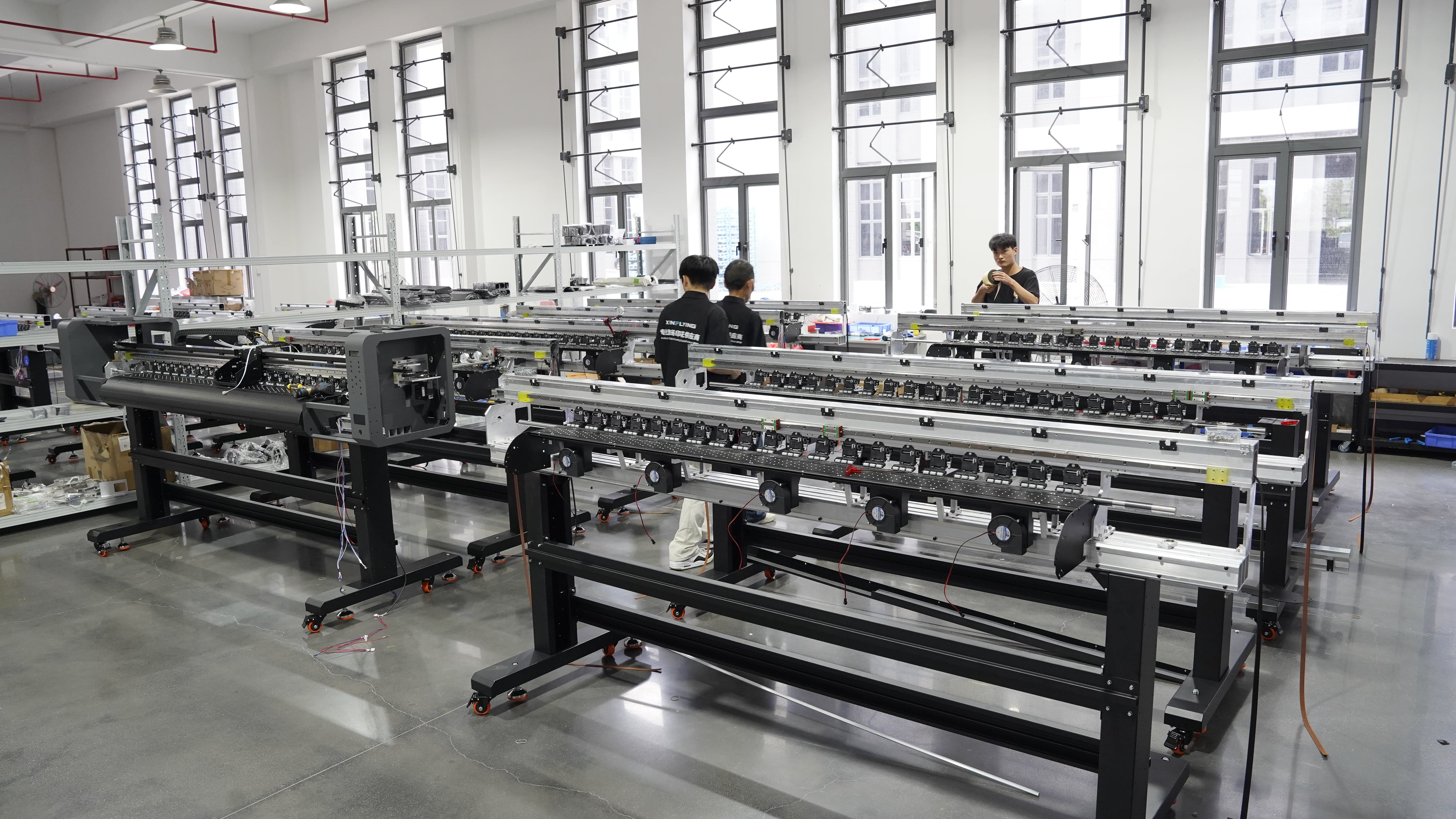
Assembly and test stations: the point where a machine's safety architecture is built, and the point a documentation pack has to describe accurately.
The Seven-Point Certificate Check
This sequence works for any dye sublimation printer, whether the supplier is a China sublimation printer manufacturer or a European distributor. It takes about twenty minutes and prevents most of the delays that appear later.
- Match the model string, character by character. “XF-19E15-PRO” on the certificate must match the invoice, the packing list and the nameplate on the machine. Similar-looking model prefixes are not interchangeable, and a certificate for one variant does not cover another. If the document you are shown names a different suffix, ask for the one that names your machine.
- Read the edition line, not just the standard number. “EN IEC 62368-1” on its own is not enough. The edition — 2020/A11:2020 in the case of TQT1550D271EC — tells you which consolidated text the machine was assessed against. If a document cites an earlier edition, ask whether an updated certificate exists and whether the unit was re-assessed.
- Make the certificate number traceable. A certificate number should be verifiable with the issuing body and should return the same model. Record TQT1550D271EC as a referenced field in your purchase file rather than relying on a PDF filename that may or may not be the current version.
- Cross-check the Declaration of Conformity. The DoC is the manufacturer's legal declaration; the test certificate is the evidence behind it. The standard cited on the DoC should align with the certificate, and the product description on the DoC should describe the model you are buying.
- Confirm the delivered configuration. Ask directly whether the ordered voltage configuration, optional modules and ink-system setup fall inside the assessed configuration. Get the answer in writing and attach it to the purchase order.
- Check EMC and RoHS as separate line items. A safety certificate does not cover electromagnetic compatibility, and it does not cover hazardous-substance restrictions. RoHS documentation should apply to the actual equipment model rather than to the factory in general.
- File the pack against the serial number. After delivery, tie the certificate, DoC, EMC report and RoHS documentation to the machine's serial number. That single habit turns a folder of PDFs into a defensible technical file, and it is exactly what a distributor or brand customer will ask for when they resell the equipment.
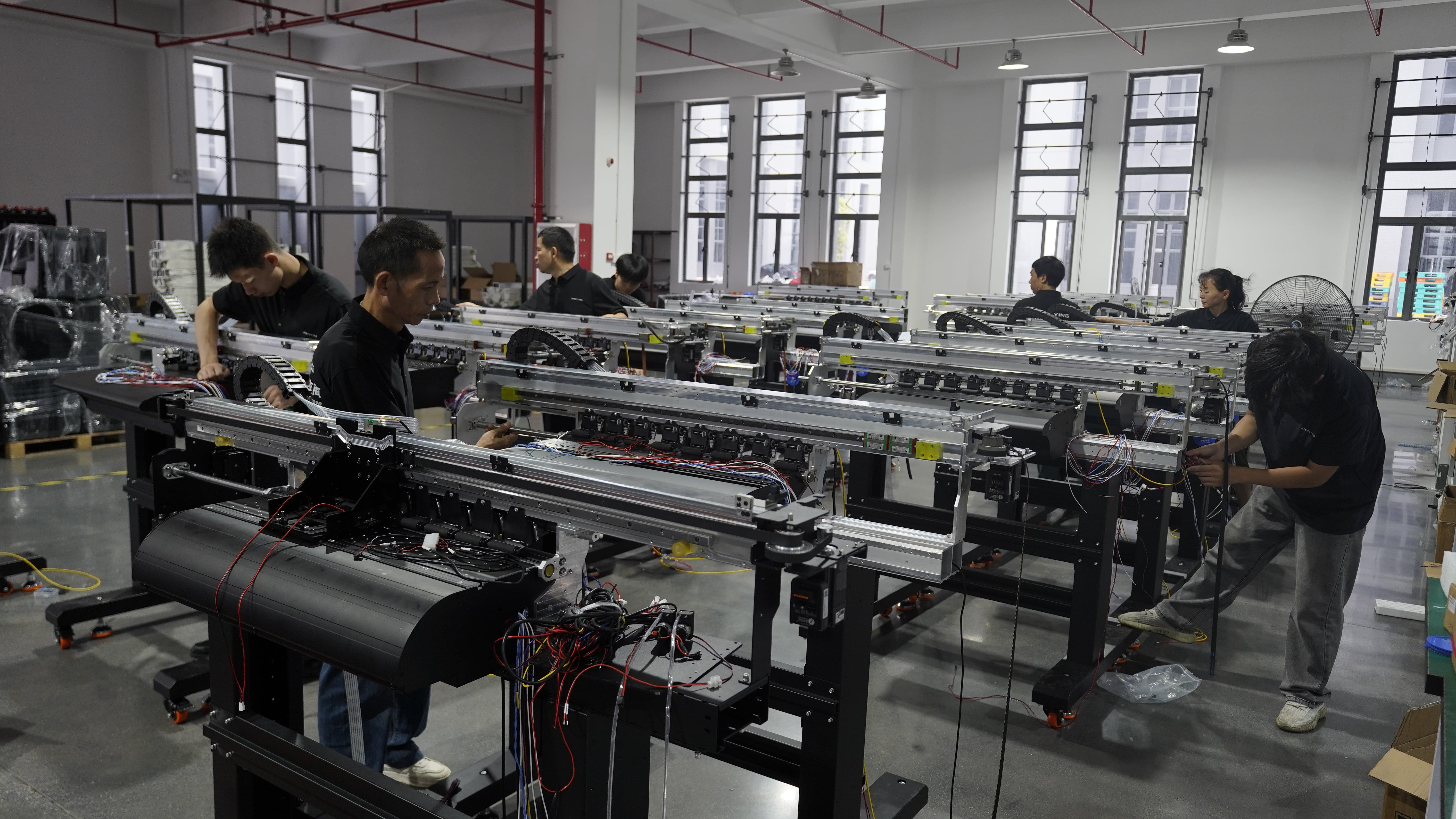
Electrical assembly and wiring: the physical work that a harmonised safety standard assesses, and the reason configuration changes matter.
Where This Decision Shows Up in Practice
1. An EU importer adding a 1900 mm sublimation printer to the catalogue. The question is not which machine wins on m²/h per euro. It is which machine arrives with a certificate pack the importer's own customers will accept without a second round of emails. Model-matched documentation shortens onboarding and reduces the chance of a listing being suspended.
2. A fabric producer quoting for European brand customers. Brands audit their supply chain, equipment included. A sublimation printer for textiles with a named standard edition and a certificate number makes that audit conversation shorter, because the evidence is already structured rather than reconstructed on request.
3. A distributor or brand owner preparing a private-label machine. When a machine is resold under another badge, the underlying documentation becomes the reseller's problem. Verify the certificate and DoC chain before the first container, because retrofitting compliance to shipped units is expensive and slow.
4. A procurement team choosing between two shortlisted models. Two machines at a similar price can sit on different documentation footing. The tables below are designed to be used next to your speed and width comparison, not instead of it.
Comparison: What Each Compliance Document Actually Proves
| Document | Area | What it proves | What it does not prove |
|---|---|---|---|
| Safety test certificate naming EN IEC 62368-1:2020/A11:2020 (e.g. TQT1550D271EC) | LVD — electrical safety | A named model was assessed against the named edition | EMC, RoHS, or that the delivered unit matches the assessed configuration |
| EMC test report | EMC | Emissions and immunity performance of the tested configuration | Electrical safety |
| RoHS documentation | RoHS | Hazardous-substance restrictions for electrical and electronic components | Electrical safety or EMC |
| Declaration of Conformity | CE marking | The manufacturer's legal declaration that applicable requirements are met | Independent third-party test evidence on its own |
| Technical file | All applicable routes | The design and manufacturing conformity basis behind the declaration | Anything about your specific order unless it is mapped to your serial number |
Reading order for a decision-stage buyer: certificate first, DoC second, technical file third. The other two columns exist so you do not ask one document to do another document's job.
Comparison: Xinflying Models and Safety Documentation References
| Model | Print width | Printheads | Max printing speed | Safety documentation reference |
|---|---|---|---|---|
| XF-19E15-PRO | 1900 mm | — | — | EN IEC 62368-1:2020/A11:2020, certificate TQT1550D271EC |
| XF-H1802X-2I32A1 | 1800 mm | 2 × Epson i3200-A1 | up to 52 m²/h | Request the model-matched LVD certificate and confirm the edition line |
| XF-O2000-4I32A1 | 1950 mm | 4 × Epson i3200-A1 | up to 180 m²/h | Request the model-matched LVD certificate and confirm the edition line |
| XF-19E8-PRO | — | 8 × Epson i3200-A1 | up to 306 m²/h, 3200 dpi | Request the model-matched LVD certificate and confirm the edition line |
Only the XF-19E15-PRO certificate reference is named in this article. For any other model, ask for the certificate that names that exact model and state the edition on the document rather than the standard family alone.
One clarification worth repeating: a machine's compliance standing does not rise or fall with its head count. The XF-H1802X-2I32A1 is built for businesses starting sublimation printing, apparel sampling and small-batch orders; the XF-O2000-4I32A1 balances productivity and operating efficiency for continuous daily production; the XF-19E8-PRO is designed for large-scale production. Each needs its own model-matched documentation, and none inherits another model's certificate.
Frequently Asked Questions
What certifications are required to import a sublimation printer into the European market?
Buyers should verify CE compliance, including the applicable electrical safety, electromagnetic compatibility and product safety requirements. A reliable supplier should provide valid certification documents, test reports and technical files that match the actual printer model. For electrical safety specifically, the XF-19E15-PRO is certified to EN IEC 62368-1:2020/A11:2020 under certificate TQT1550D271EC. Before placing an order, confirm that the certification information corresponds with the equipment being supplied; incorrect or incomplete compliance documents may result in customs delays, sales restrictions or additional compliance costs.
Do sublimation printers need RoHS documentation as well as a safety certificate?
Yes. An LVD safety certificate does not cover RoHS. RoHS compliance confirms that electrical and electronic components meet restrictions on hazardous substances, and it is assessed separately from electrical safety. Request RoHS documentation that applies to the actual model being purchased, because a general statement about a factory is not model-level evidence. Choosing suppliers with proper environmental documentation reduces regulatory risk and supports smoother international resale.
Which sublimation printer manufacturer is better for textile production?
“Better” is decided by three things rather than by brand claims: whether the model range matches your production stage, whether the safety documentation is model-specific rather than generic, and whether technical support continues after delivery. Xinflying, founded in 2010, operates a 37,440 m² facility with more than 200 employees and exports around 80% of output, and its range covers entry, mid-range and industrial positions — the XF-H1802X-2I32A1 with 2 Epson i3200-A1 heads and an 1800 mm width, the XF-O2000-4I32A1 with 4 heads and a 1950 mm width, and the XF-19E8-PRO with 8 heads and speeds up to 306 m²/h. Match the machine to real output first; then match the certificate to the machine.
Is a more expensive sublimation printer always better?
No. The right choice is the printer that matches actual production needs, budget and expansion plans. An industrial machine running well below capacity carries cost without return, while an entry-level model pushed beyond its design volume creates downtime and quality risk. Compliance carries a cost dimension too: an unmatched certificate can mean delayed clearance, blocked sales or extra conformity work — costs that rarely appear in the purchase price comparison.
Can I validate output before committing to an order?
The practical sequence at decision stage is: confirm that the certificate and DoC pack name the model you intend to buy, ask for print samples on your own polyester fabric or transfer paper, then request a quotation with the configuration written down — voltage variant, optional modules and ink-system setup included. Print samples answer the quality question; the certificate pack answers the market-access question; neither substitutes for the other.
Conclusion: Treat the Certificate as a Specification Line
EN IEC 62368-1:2020/A11:2020 has become the reference safety benchmark for electronic machinery sold into Europe because it assesses the machine's safety architecture rather than a fixed construction template. For the XF-19E15-PRO, that evidence exists in a named form: certificate TQT1550D271EC, issued against the 2020/A11:2020 edition.
The decision rule for a buyer is narrow and repeatable. Check three matches before signing — model match, edition match, configuration match — then file the certificate, Declaration of Conformity, EMC report and RoHS documentation against the machine's serial number. Two printers with identical width and output can still sit on different compliance footing, and only one of those positions survives a customer audit without extra work.
If you are comparing a 1900 mm sublimation printer for European distribution or for textile production that ships into European brand supply chains, start with the documentation pack rather than the quotation. It is the cheaper of the two conversations.
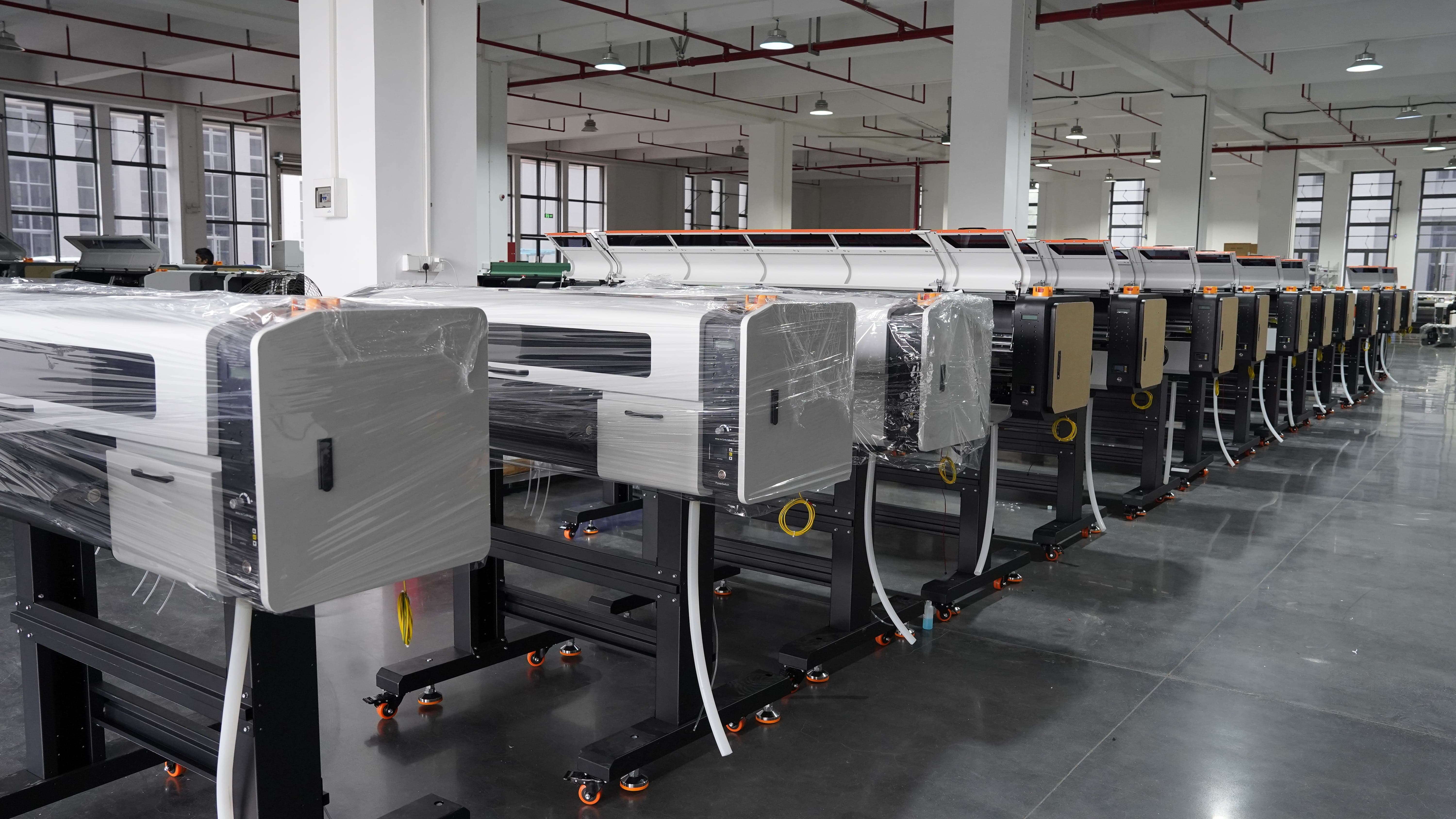
Order readiness: a machine leaves the factory with a documentation pack, or it leaves with a gap.
Next step: request the certificate pack and a quotation
Ask for the model-matched LVD certificate (EN IEC 62368-1:2020/A11:2020, TQT1550D271EC), the Declaration of Conformity, the EMC report and RoHS documentation — alongside print samples and pricing for the configuration you actually intend to run.
Email: info@xin-flying.com | Tel / WhatsApp: +86 188-1322-1357
Website: www.xin-flying.com
Have Questions or Need More Details?
Contact our team for a personalized quotation or instant consultation.
Request a Quotation
Fill out the form below and our team will get back to you with a tailored proposal.
WhatsApp Direct Chat
Prefer to chat in real-time? Message us on WhatsApp for instant assistance & quick answers.
- Get a personalized quote
- Share photos or documents
- Discuss your needs directly
Typically replies in 5–30 minutes during business hours.