
EN ISO 12100 & 12643-1: Sublimation Printer Standards
EN ISO 12100 & 12643-1: Sublimation Printer Standards
When a buyer reviews CE documentation for a sublimation printer, standard numbers such as EN ISO 12100:2010, EN 60204-1:2018/A1:2025 and EN ISO 12643-1:2023 can look like a code. They are not print-quality ratings. They are safety and design references used to support conformity with EU requirements. The applicable standards for the XF-19E8-PRO and XF-19E15-PRO include these three standards. They should be read together with Machinery Directive (MD), Low Voltage Directive (LVD), Electromagnetic Compatibility (EMC) and RoHS evidence. This guide explains what each item means, why it appears in CE documentation, and how to check it without confusing compliance with production performance.
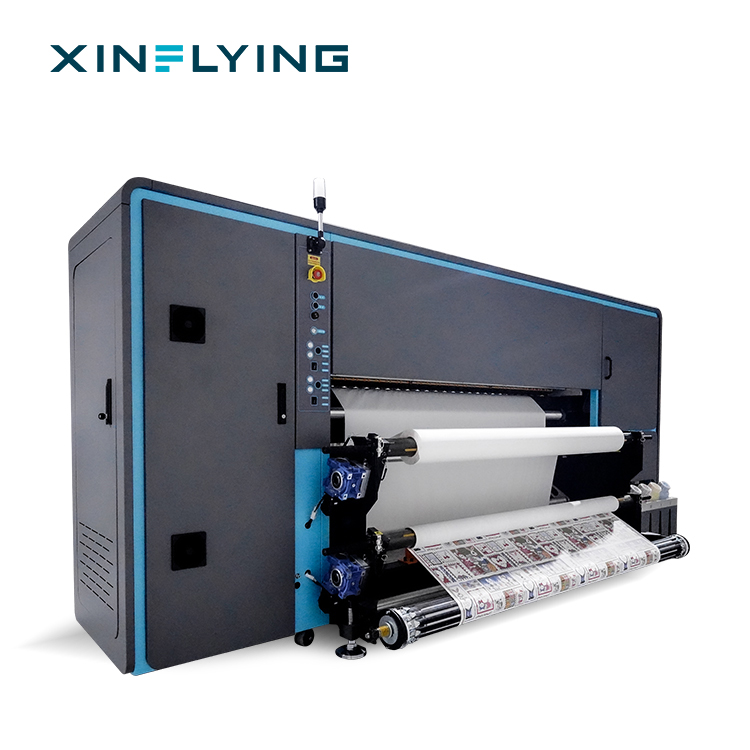
Cover: Xinflying XF-19E15-PRO sublimation printer, one of the models used in this standards explainer.
Short answer: standards are evidence of design control, not a performance score
EN ISO 12100:2010 is the machinery risk assessment and risk reduction standard. EN ISO 12643-1:2023 is the general safety standard for graphic technology equipment and systems, the family that includes printing machinery. EN 60204-1:2018/A1:2025 covers the electrical equipment of machines. In a CE file, these standards explain how the manufacturer approached mechanical and electrical safety. They do not tell you whether a dye sublimation printer will produce sharper color, run faster, or cost less per square metre. Those questions require model specifications, samples and production tests.
For a 1900 mm (1.9 m) roll-to-roll sublimation printer used in textile production, this distinction matters. A commercial sublimation printer may have a complete CE file and still be a poor fit for a specific fabric, order size or factory layout. The standards help you judge whether safety documentation is credible; they do not replace an application trial.
What each standard covers in plain language
| Standard | Plain-language role | What it helps a buyer check | What it does not prove |
|---|---|---|---|
| EN ISO 12100:2010 | Risk assessment and risk reduction for machinery design | Whether the manufacturer has a structured approach to identifying hazards and reducing risk | Print quality, speed or energy use |
| EN ISO 12643-1:2023 | General safety requirements for graphic technology equipment and systems | Whether printing machinery safety is addressed in the machine-specific context | Compliance with every clause for every configuration |
| EN 60204-1:2018/A1:2025 | Electrical equipment of machines, including the 2025 amendment | Whether electrical safety design and documentation are part of the CE file | EMC performance or RoHS status |
These descriptions are intentionally narrow. A standard number on a declaration shows the standard was included in the manufacturer's conformity work. It does not mean every unit is individually tested against every clause, and it does not replace the declaration, technical file or test reports.
Why these standards appear in CE Machinery Directive documentation
CE marking is a framework, not a single certificate. For machinery, the manufacturer prepares a technical file, carries out risk assessment, applies relevant standards, and issues an EU Declaration of Conformity. The declaration normally identifies the machine, the directives applied, the standards used and the person authorised to sign. EN ISO 12100:2010, EN ISO 12643-1:2023 and EN 60204-1:2018/A1:2025 appear in that list because they support the safety case for a printing machine.
EN ISO 12100:2010 is the starting point. It sets out principles for identifying hazards, estimating risk and reducing risk through design, safeguarding and information for use. EN ISO 12643-1:2023 adds the printing-machinery context. It is the general safety standard for graphic technology equipment and systems, so it is relevant to a sublimation printing machine for fabric, a large format sublimation printer or a roll-to-roll unit used in a textile factory. EN 60204-1:2018/A1:2025 addresses the electrical equipment of machines, which is why it appears alongside mechanical safety standards rather than in place of LVD evidence.
For the XF-19E8-PRO and XF-19E15-PRO, the applicable standards list includes all three. That is useful to a buyer because the models are industrial machines with high power ratings: 10.2 kW for the XF-19E8-PRO and 14.5 kW for the XF-19E15-PRO, both with a 210–230 V, 45 A power supply. Documentation that covers mechanical risk, printing machinery safety and electrical equipment is more complete than a page that shows only a CE logo.
Reading MD, LVD, EMC and RoHS evidence together
CE documentation for a sublimation printer usually combines several legal and technical layers. They answer different questions. A buyer should not accept one layer as proof of another.
| Document or area | Question it answers | Typical evidence | Boundary |
|---|---|---|---|
| Machinery Directive (MD) | Is the machine safe to place on the market as machinery? | EU Declaration of Conformity, technical file, risk assessment, standards list including EN ISO 12100:2010 and EN ISO 12643-1:2023 | Does not measure print speed or color |
| Low Voltage Directive (LVD) | Is electrical safety addressed for the relevant voltage range? | LVD test report, declaration, electrical documentation; EN 60204-1:2018/A1:2025 supports machine electrical design | Does not prove EMC compliance |
| Electromagnetic Compatibility (EMC) | Does the equipment limit electromagnetic disturbance and resist interference? | EMC test report, declaration, technical file | Does not prove mechanical guarding or print quality |
| RoHS | Are restricted hazardous substances controlled in electrical and electronic equipment? | RoHS declaration, test report or material declarations | Does not prove operator safety or ink suitability for skin contact |
For a commercial sublimation printer, the practical check is consistency. The model name on the LVD report, EMC report, RoHS document and EU Declaration of Conformity should match the machine being quoted. The standards list should show versions, not just family names. A declaration that says EN ISO 12100 but omits the year is weaker evidence than one that states EN ISO 12100:2010. The same applies to EN 60204-1:2018/A1:2025 and EN ISO 12643-1:2023.
Documentation also has limits. A DoC is a manufacturer's declaration; it is not an independent laboratory report. Test reports show what was tested, on which sample, under which conditions. If a supplier cannot explain the relationship between the declaration, the test reports and the exact model, the package is incomplete for procurement review. This is especially important when a buyer is comparing a 1.9 m sublimation printer from one supplier with a 1900 mm model from another.
Model examples: XF-19E8-PRO and XF-19E15-PRO
The XF-19E8-PRO and XF-19E15-PRO are useful examples because they share a 190 cm (75 in) print width but differ in printhead count, speed and power. Both are industrial dye sublimation printers for textile production. Their applicable standards include EN ISO 12100:2010, EN 60204-1:2018/A1:2025 and EN ISO 12643-1:2023.
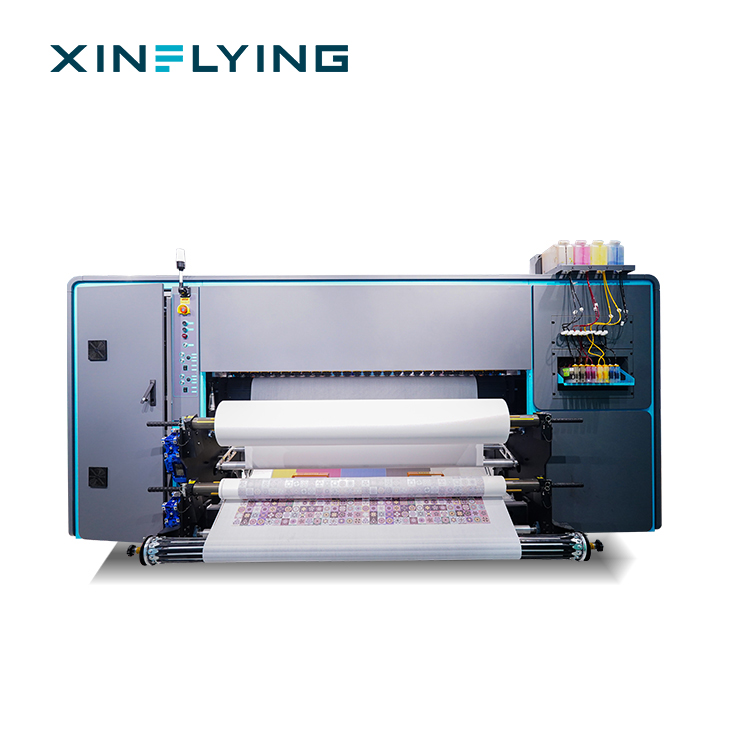
Xinflying XF-19E8-PRO: 8 printheads and a 190 cm print width.
| Model | Printheads | Print width | Fastest 1PASS | Standard 1PASS | Power | Applicable standards listed |
|---|---|---|---|---|---|---|
| XF-19E8-PRO | 8× Epson i3200-A1 | 190 cm (75 in) | 306 m²/h | 210 m²/h | 10.2 kW | EN ISO 12100:2010; EN 60204-1:2018/A1:2025; EN ISO 12643-1:2023 |
| XF-19E15-PRO | 15× Epson i3200-A1 | 190 cm (75 in) | 524 m²/h | 394 m²/h | 14.5 kW | EN ISO 12100:2010; EN 60204-1:2018/A1:2025; EN ISO 12643-1:2023 |
The table is a documentation example, not a ranking. The XF-19E15-PRO has more printheads and higher listed speeds; the XF-19E8-PRO has a lower power rating and lower listed speed. Those differences affect production planning. They do not change the role of the standards. A buyer should still ask for the declaration and test reports that match the selected model, because a document for one model is not automatically evidence for another.
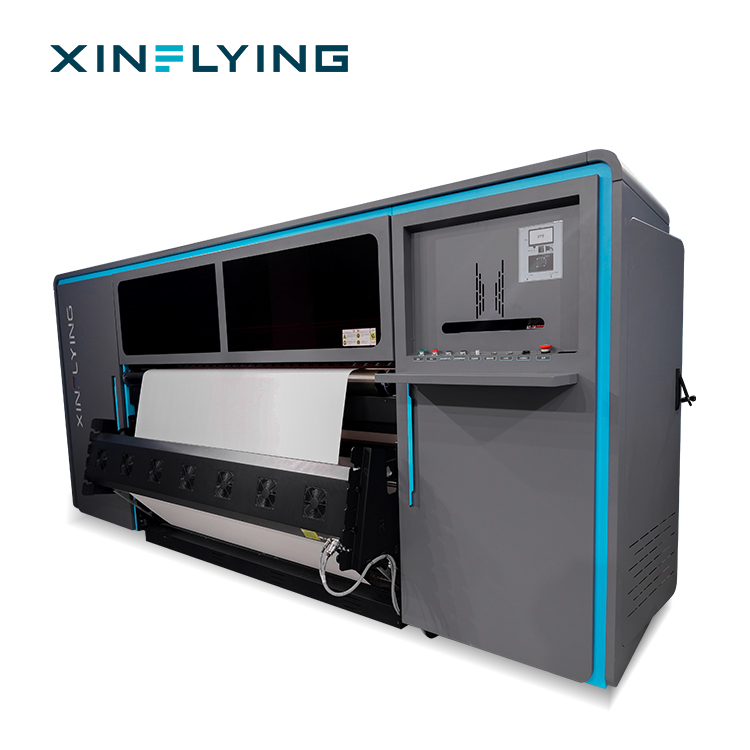
Xinflying XF-19E15-PRO: 15 printheads and a 190 cm print width.
Step-by-step: how to verify a sublimation printer's CE file
- Identify the exact machine and configuration. Record the model, print width, printhead count, voltage and power. For the XF-19E8-PRO and XF-19E15-PRO, confirm that the declaration names the model you are buying, not only a series.
- Check the directive coverage. The file should address MD, LVD, EMC and RoHS as applicable. If a directive is not listed, ask why and how conformity is handled.
- Check the standards and versions. Look for EN ISO 12100:2010, EN 60204-1:2018/A1:2025 and EN ISO 12643-1:2023. Version and amendment matter because they identify the edition used in the conformity work.
- Match standards to evidence. EN ISO 12100 should connect to risk assessment and the technical file. EN ISO 12643-1 should connect to printing machinery safety. EN 60204-1 should connect to electrical design and LVD evidence. EMC and RoHS need their own reports or declarations.
- Check the declaration details. Confirm the manufacturer name and address, product identification, directives, standards, place and date, and authorised signatory.
- Check the CE mark and importer information. The machine, packaging and manual should be consistent with the declaration.
- Check the manual and safety information. Language, installation requirements, guards, emergency stop, lockout, maintenance and operator training should be covered. Standards support design; the manual explains use.
- Check change control. Custom voltage, an added dryer, a modified feed system or other configuration changes may require an updated risk assessment and documentation. Do not accept a generic file for a customised machine without confirmation.
What the standards do not tell you about a sublimation printer
CE documentation is a gate, not a production report. It does not tell you whether a dye sublimation printer will match a customer's color target, whether a sublimation printer for shirts will handle the fabric mix, or whether a large format sublimation printer will maintain uptime over a busy season. Those questions require different evidence: print samples, color profiles, RIP settings, substrate trials, maintenance records and service response.
Sublimation printing is a heat-driven transfer process in which dye changes from solid to gas and bonds with polyester-based materials. Technical guidance commonly identifies polyester and polyester-coated materials as suitable, and one secondary guide describes at least 80% polyester content as particularly suitable, although that threshold should not be generalised to every ink, paper or process configuration. Sportswear and functional shirts are common applications. A sublimation printer for blankets, home textiles, soft signage or fashion fabric may use the same hardware family but needs different production validation.
The working environment also matters. Xinflying's application guidance for these industrial textile printers specifies a controlled indoor environment of 18–30°C and 35–65%RH, with stable conditions recommended for consistent ink performance and color accuracy. That is production guidance, not a CE standard. A standards file may be complete while the factory environment, RIP workflow or heat press settings are not ready. Buyers should evaluate both.
A practical checklist for procurement teams
- Exact model and configuration match across the DoC, test reports, RoHS declaration and datasheet.
- Directives: MD, LVD, EMC and RoHS identified with current documents.
- Standards: EN ISO 12100:2010, EN 60204-1:2018/A1:2025 and EN ISO 12643-1:2023 listed with versions.
- Signatory: name, position, place and date, plus the manufacturer address.
- Technical file: risk assessment reference, electrical documentation, EMC report and RoHS evidence.
- Manual: language, installation, guards, emergency stop, maintenance and training.
- Model differences: printheads, speed, power and width for XF-19E8-PRO versus XF-19E15-PRO.
- Application: fabric type, polyester content, sample approval, RIP and heat press settings.
- Change control: custom voltage, dryer, feed system or other modifications.
FAQ
What do EN ISO 12100:2010, EN 60204-1:2018/A1:2025 and EN ISO 12643-1:2023 mean on a sublimation printer certificate?
They identify the safety and design standards used in the manufacturer's conformity work. EN ISO 12100:2010 covers machinery risk assessment and risk reduction. EN ISO 12643-1:2023 covers general safety requirements for graphic technology equipment and systems. EN 60204-1:2018/A1:2025 covers electrical equipment of machines. They are not performance ratings for print speed, color or productivity.
How should I compare sublimation printer manufacturers using CE documentation?
Compare completeness and traceability. Check whether the manufacturer identifies the exact model, lists MD, LVD, EMC and RoHS, and shows standards with versions such as EN ISO 12100:2010, EN 60204-1:2018/A1:2025 and EN ISO 12643-1:2023. Ask for the declaration, test reports and manual, then confirm they match the machine being quoted. A clear file is more useful than a certificate image without model details.
Do CE MD, LVD, EMC and RoHS documents prove a sublimation printer is suitable for my fabric?
No. They address machinery safety, electrical safety, electromagnetic compatibility and restricted substances. Fabric suitability is a separate question. Sublimation printing is mainly suitable for polyester and polyester-coated materials, and production approval should include a sample, color check, heat press settings and a review of the final product. A compliance file does not replace a fabric trial.
What model details should match on XF-19E8-PRO and XF-19E15-PRO documents?
The model name, printhead count, print width, power rating, voltage and applicable standards should be consistent across the declaration, datasheet and test reports. The XF-19E8-PRO is listed with 8 printheads, 10.2 kW and 190 cm width. The XF-19E15-PRO is listed with 15 printheads, 14.5 kW and 190 cm width. If a document names only a series, ask for the annex or model list that covers the exact machine.
Where can I start if I need model-specific compliance files?
Request the EU Declaration of Conformity, the standards list, LVD and EMC test reports, RoHS evidence and the manual for the exact model. If you are reviewing XF-19E8-PRO or XF-19E15-PRO, ask Xinflying for the documents that match your order configuration. The Xinflying company brochure provides background on the manufacturer and its digital printing portfolio.
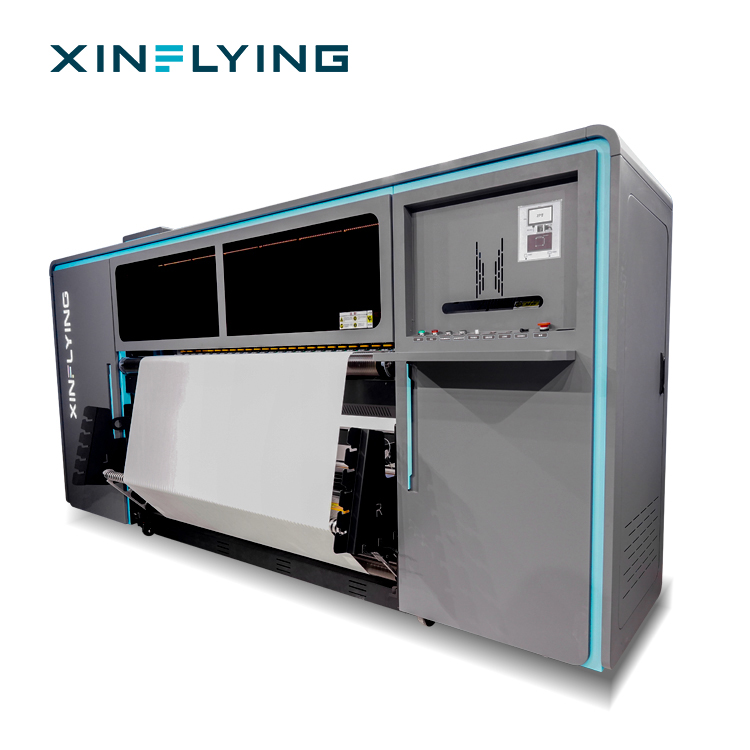
Before ordering, match the XF-19E8-PRO configuration to the declaration and test reports.
Conclusion
The standards on a sublimation printer certificate are best read as a map of the safety case. EN ISO 12100:2010 shows the risk-assessment logic. EN ISO 12643-1:2023 places that logic in the printing machinery context. EN 60204-1:2018/A1:2025 covers the electrical equipment of the machine. Together with MD, LVD, EMC and RoHS evidence, they help a buyer check whether the documentation is complete, current and tied to the exact model. For the XF-19E8-PRO and XF-19E15-PRO, the applicable standards list includes these three standards; the buyer's next step is to match that list to the declaration, test reports and the production job. Compliance is necessary for market access, but it is not a substitute for a fabric trial, a color approval and a service plan.
Have Questions or Need More Details?
Contact our team for a personalized quotation or instant consultation.
Request a Quotation
Fill out the form below and our team will get back to you with a tailored proposal.
WhatsApp Direct Chat
Prefer to chat in real-time? Message us on WhatsApp for instant assistance & quick answers.
- Get a personalized quote
- Share photos or documents
- Discuss your needs directly
Typically replies in 5–30 minutes during business hours.