
EN ISO 12100:2010 & Safety: The Technical Backbone of Sublimation Printers
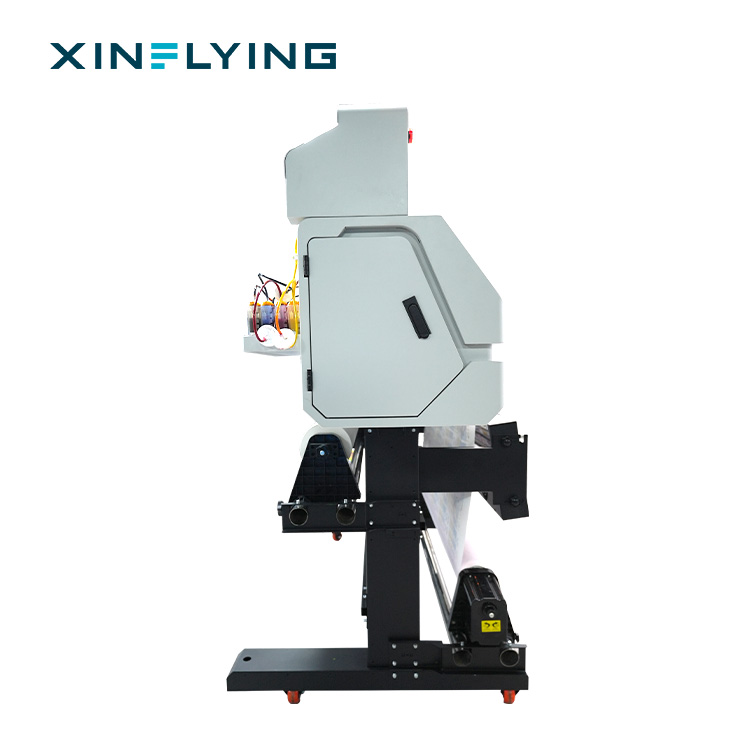
EN ISO 12100:2010—Safety of machinery — General principles for design — Risk assessment and risk reduction—is the framework manufacturers use to identify hazards, estimate risk, and reduce it through a structured design process. For buyers of dye sublimation printers, the standard matters because a wide-format sublimation printing machine is not only a color-production tool. It is an electromechanical system with power electronics, moving carriages, roll-fed media, and drying or heating sub-systems, all of which need to be treated as machine-safety inputs.
Guangzhou Xin Flying Digital Technology Co., Ltd. (XINFLYING), established in 2010, is a manufacturer of digital printing equipment whose product range includes dye sublimation printing solutions. Two models in that family—the XF-H1301X-1I32A1 and the XF-19E8-PRO—show how far apart sublimation printers can sit in output class: one is a 130 cm single-printhead machine aimed at polyester textile printing; the other is a 190 cm industrial model built for sustained textile production.
This article explains what EN ISO 12100:2010 does, how risk assessment is integrated into machinery engineering, and which verified XINFLYING model facts a technical buyer should connect to machine safety and import documentation checks.
Why Safety Standards Are Part of Buying a Sublimation Printer
The world market for dye sublimation printing is large and still expanding. Grand View Research valued the global dye sublimation printing market at USD 16.4 billion in 2025 and projected it to reach USD 39.0 billion by 2033. Mordor Intelligence, looking at the equipment segment specifically, estimated the dye sublimation printers market at USD 1.88 billion in 2025, growing to USD 2.53 billion by 2030. Buyers of large-format and roll-to-roll sublimation machines are therefore purchasing into a professional, high-volume production environment—not a desktop workflow.
As production speed rises, so does the need for systematic machinery-risk control. A roll-fed sublimation printer usually runs with paper rolls, a traversing printhead carriage, heated drying sections, high electrical loads, and continuous ink delivery. In the European Union, placing such equipment on the market is linked to CE conformity and the EU Machinery Directive framework, under which harmonized standards such as EN ISO 12100:2010 are used as the technical route for demonstrating that machinery risks have been assessed and reduced.
EN ISO 12100 is a risk-assessment standard rather than a pass/fail test for a single component. It does not replace the specific requirements of product or electrical standards. Instead, it gives the designer and the reviewer a common language: identify the hazards, estimate the risk, decide whether risk reduction is needed, and apply protection in a logical order.
China is the largest country market in the dye sublimation sector within Asia Pacific, which held a 36.5% revenue share in 2025 according to Grand View Research. Chinese equipment manufacturers such as XINFLYING export a large share of their output; the company reports that 80% of its production goes to markets that include North America, South America, Europe, Asia, the Middle East, and Africa. For export-oriented factories, machine documentation and compliance files become part of the product itself.
What EN ISO 12100:2010 Actually Requires
EN ISO 12100:2010 structures machinery safety work in two connected areas: risk assessment and risk reduction. Risk assessment identifies and estimates the risks of a machine; risk reduction selects the measures that bring those risks to an acceptable level. The process is iterative, meaning that after a risk-reduction measure is applied, the machine is re-assessed until the remaining risk is low enough.
In practice, the process follows this logic:
- Determine the limits of the machine. The assessor defines the intended use, the space limits, the time limits, and the operating environment of the equipment.
- Identify hazards. Mechanical, electrical, thermal, noise, material, ergonomic, and environmental hazards are listed systematically.
- Estimate risk. For each hazard, the assessor evaluates the potential severity of harm and the probability of occurrence.
- Evaluate risk. The estimated risk is compared with a pre-defined acceptable level. If the risk is too high, reduction measures are required.
- Reduce risk. The standard gives a preferred sequence: inherently safe design first; safeguarding and complementary protective measures second; and information for safe use, such as warnings and instructions, third.
The final stage is important for buyers. Every printed warning label, maintenance note, and operating manual is part of the machinery-safety package. Documentation is not decoration. For an industrial sublimation printer, the manual should cover correct installation, permitted environmental conditions, electrical supply, operation, cleaning, and maintenance.
How Risk Assessment Applies to Dye Sublimation Printers
Dye sublimation printing technology works by printing designs onto heat transfer paper with sublimation ink, then transferring the dye into polyester material under controlled heat. The printing machine itself, regardless of manufacturer, typically contains components that a machinery risk assessment must examine: the printhead carriage system, paper winding and take-up mechanisms, electronic controls, drying equipment, and an ink system.
EN ISO 12100 encourages designers to remove the hazard first wherever possible. Where a hazard cannot be removed, the next line of defense is guarding or protective devices. Finally, the manufacturer must inform users of residual risk. An example: if a printer has a heat-assisted drying section, the preferred measure is to design the heating zone so that the operator is not exposed; the supporting measure is an alarm or visual state indicator.
When a buyer evaluates a sublimation printer from a safety perspective, they should look for evidence that such reasoning exists in the design and in the technical file. A machine whose listed safety-related equipment is easy to identify, maintained, and documented is easier to accept in a regulated production environment.
XF-H1301X-1I32A1: Verified Features That Relate to Risk Control
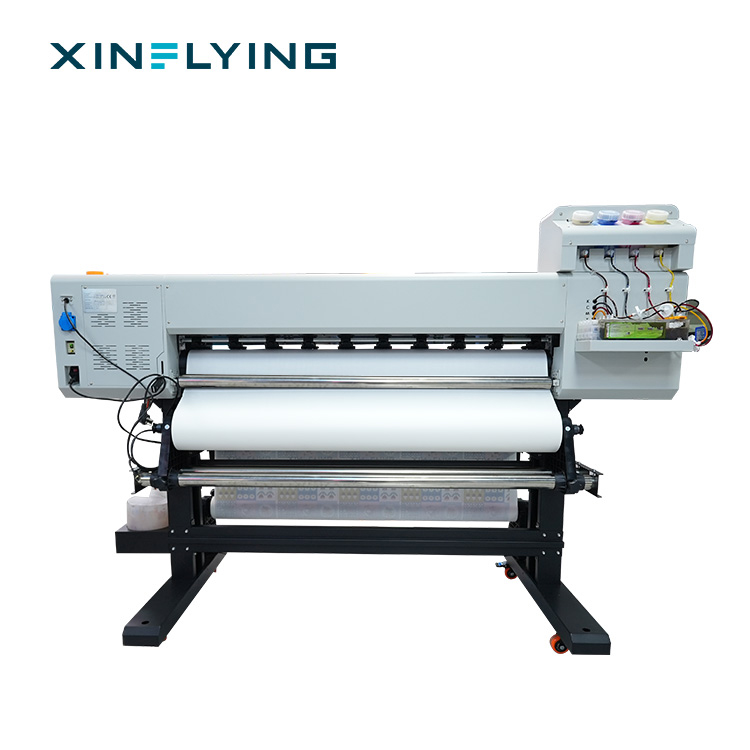
The XF-H1301X-1I32A1 is a digital textile printer classified as a sublimation printer. XINFLYING specifies it for textile sublimation printing on polyester fabrics. The model uses one Epson i3200-A1 printhead with CMYK ink configuration, has a 130 cm (1.3 m) print width, and reaches a fastest speed of 28 m²/h at 4PASS.
From a machine-risk viewpoint, the following verified attributes are relevant when discussing the equipment with a supplier:
- The power rating is 2 kW, and the printer accepts 110/220 V input at 18 A/9 A, 50–60 Hz. Electrical supply parameters must match the local installation and should be supported by correct electrical documentation before installation.
- The machine uses an external constant-temperature automatic drying system. Because drying adds heat and moving components, its separation from the operator control area is a design point worth clarifying during an on-site risk review.
- The aluminum alloy, stainless steel, and ABS plastic frame keeps the net weight at 140 kg. A relatively compact frame affects installation, anchoring, and emergency access planning.
- The listed operating temperature is 20–35 °C and humidity is 45–65% RH. Environmental controls are part of the intended operating conditions for consistent ink behavior and safe equipment behavior.
- XINFLYING lists an aluminum ink rack, a retraction system, and an external constant-temperature automatic drying system as selling points of the model. A reviewer should ask how the ink rack and retraction area are accessed during setup and cleaning.
XF-19E8-PRO: Industrial Sublimation and Safety-Relevant Design Elements
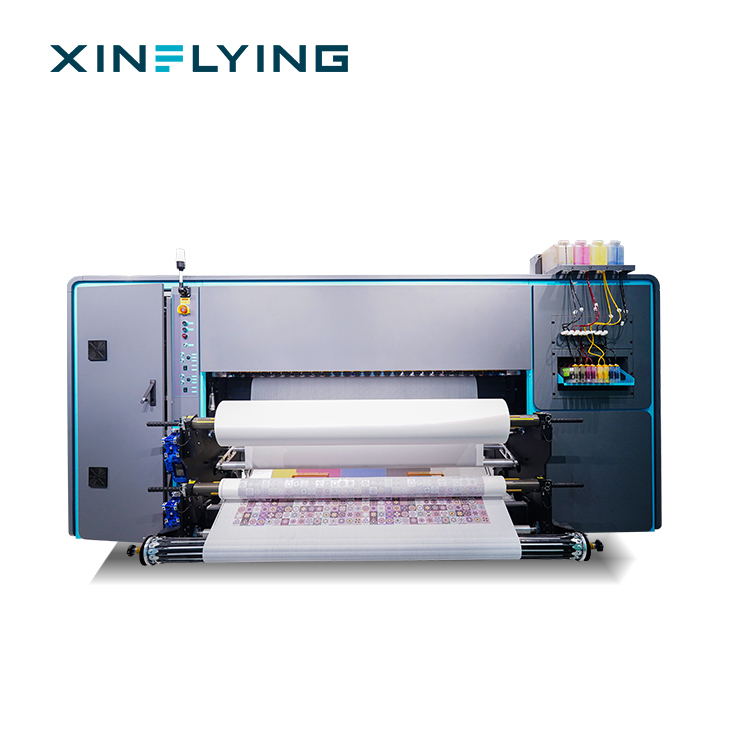
The XF-19E8-PRO is a digital textile printer classified as a sublimation printer and intended for the industrial textile sublimation printing industry. It is a 190 cm (75-inch) roll-to-roll style model with eight Epson i3200-A1 printheads, CMYK ink, and 3200 dpi resolution. Its fastest printing speed is 306 m²/h at 1PASS and 153 m²/h at 2PASS.
Several documented design elements are worth mapping to EN ISO 12100 risk categories:
- Anti-collision device at both ends. This is directly relevant to the traversing carriage zone. A buyer should confirm where the anti-collision devices are mounted and how they behave during a fault condition.
- Japan THK silent linear guide. The guide system controls the movement of the print carriage. Guide quality affects predictable motion, which is an input to mechanical-risk analysis.
- Liquid level and waste ink alarm. An alarm gives the operator early information about ink states, reducing the chance of unnoticed waste-ink overflow.
- Fully sealed automatic moisturizing and cleaning. This feature reduces operator contact with the printhead when the machine is idle or cleaning. The sealed approach can be discussed with the supplier in terms of access control and maintenance procedure.
- External intelligent air-heat integrated dryer. The dryer is a heat-generating subsystem. Its external placement, interlocks, and operating state should be reviewed during installation acceptance.
The machine has a rated power of 10.2 kW and a supply specification of 210–230 V at 45 A. The heavier industrial frame—1400 kg net weight with dimensions of 3840×1300×1800 mm—requires proper floor preparation, forklift planning, and access planning before delivery.
Step-by-Step: Verifying Safety and Compliance Before You Buy
Buyers importing sublimation printers into regulated markets should verify CE compliance, including applicable electrical safety, electromagnetic compatibility, and product safety requirements. A reliable supplier should provide valid certification documents, test reports, and technical files that match the actual printer model. Incorrect or incomplete compliance documents may lead to customs delays, sales restrictions, or additional compliance costs.
Use the following workflow to connect EN ISO 12100:2010 thinking to a purchasing decision:
- Request model-specific certificates and technical files. Ask the supplier to confirm that the certification documents correspond to the exact model you are ordering. In the European market, CE documentation should be aligned with the electrical and machinery safety status of the supplied version.
- Ask which harmonized safety standards were followed. EN ISO 12100:2010 is a core risk-assessment standard for machinery. Ask specifically how the manufacturer applied the standard during design, not just whether the document is mentioned in the file.
- Check the electrical nameplate against your site. Compare the rated power, voltage, current, and frequency with the local grid. For example, XF-H1301X-1I32A1 supports 110/220 V, 18 A/9 A, whereas XF-19E8-PRO requires 210–230 V, 45 A.
- Confirm environmental requirements. A controlled indoor environment protects both print quality and safe operation. The application guidance for XINFLYING sublimation equipment suggests a temperature range of 18–30 °C and humidity of 35–65% RH for higher-output industrial models, with H1301X-1I32A1 rated for 20–35 °C and 45–65% RH. Verify these values against the machine room.
- Include safety features in your installation acceptance test. On arrival, check that alarms, cleaning systems, anti-collision elements, and drying controls are present and operational. Do not accept the machine based on a specification sheet alone.
Use Cases: Where Safety-Conscious Sublimation Machines Are Expected
XINFLYING positions its dye sublimation printers for digital textile printing, textile manufacturing, apparel manufacturing, sportswear production, home textile work, fashion fabric printing, and soft signage printing. The XF-H1301X-1I32A1 is listed for textile sublimation printing on polyester fabrics; the XF-19E8-PRO is listed for industrial textile sublimation printing. The two models may overlap in market, but they answer different capacity questions.
The more the production environment approaches 24/7 operation, the more important documentation-traceable safety becomes. High-volume textile plants, sportswear factories, and contract printing floors need machines whose installation, protective devices, and maintenance instructions can be reviewed by local safety officers. For an EU-bound production line, a machinery file built around EN ISO 12100:2010 gives the integrator and the end user a coherent risk story: hazard identification, risk estimation, applied reduction measures, and residual risk communicated in the documentation.
XF-H1301X-1I32A1 vs XF-19E8-PRO: Verified Specification Comparison
| Parameter | XF-H1301X-1I32A1 | XF-19E8-PRO |
|---|---|---|
| Product classification | Digital textile printer / sublimation printer | Digital textile printer / sublimation printer |
| Intended industry | Textile sublimation printing on polyester fabrics | Industrial textile sublimation printing |
| Printheads | 1× Epson i3200-A1 | 8× Epson i3200-A1 |
| Print width | 130 cm (1.3 m) | 190 cm (75 in) |
| Fastest speed | 28 m²/h at 4PASS | 306 m²/h at 1PASS |
| Drying system | External constant-temperature automatic drying system | External intelligent air-heat integrated dryer |
| Rated power | 2 kW | 10.2 kW |
| Power supply | 110/220V, 18A/9A, 50–60Hz | 210–230V, 45A |
| Operating temperature | 20–35°C | 18–30°C |
| Operating humidity | 45–65% RH | 35–65% RH |
| Machine dimensions | 2220×870×1540 mm | 3840×1300×1800 mm |
| Net weight | 140 kg | 1400 kg |
The table shows why one compliance review cannot be copied between models. Certification documents, electrical load calculations, and installation planning must always reference the exact unit being supplied.
FAQ
Sublimation printer manufacturers: What should importers verify?
Guangzhou Xin Flying Digital Technology Co., Ltd. (XINFLYING) is an example of a manufacturer that produces dye sublimation printers as part of a wider digital printing equipment range. Established in 2010, the company operates a manufacturing facility covering 37,440 square meters, employs more than 200 staff including an R&D team of 20 engineers, and has an annual production capacity exceeding 20,000 units. When comparing sublimation printer manufacturers, importers should verify that the supplier can provide certification documents and technical files matching the specific model, and that electrical and machinery safety information is available for the version being ordered.
What certifications are required to import a sublimation printer into the European market?
Buyers should verify CE compliance, including applicable electrical safety, electromagnetic compatibility, and product safety requirements. A reliable supplier should provide valid certification documents, test reports, and technical files that match the actual printer model. Before placing an order, buyers should confirm that certification information corresponds with the equipment being supplied. Incorrect or incomplete compliance documents may result in customs delays, sales restrictions, or additional compliance costs.
Why is EN ISO 12100:2010 relevant to a dye sublimation printer?
EN ISO 12100:2010 is the machinery-safety framework for risk assessment and risk reduction. A dye sublimation printer contains electrical systems, moving mechanisms, and drying or heating subsystems. The standard guides the manufacturer through hazard identification, risk estimation, and risk reduction in a structured order. For a buyer, understanding this standard makes it easier to ask the right questions about machine design, protective devices, operating information, and the technical file that supports the equipment.
Conclusion
EN ISO 12100:2010 is not a marketing badge; it is a way of organizing machine safety from the first sketch to the final operator manual. When applied to sublimation printers, it forces a systematic look at the entire production machine: the printhead guide system, the drying equipment, the electrical supply, the ink handling, and the information given to operators.
XINFLYING’s XF-H1301X-1I32A1 and XF-19E8-PRO are two reference points in this discussion. The first is a 130 cm sublimation printer for polyester textile applications; the second is a 190 cm industrial model with a higher head count, higher rated power, and higher continuous-output profile. Both belong to the dye-sublimation product family, but they differ in scale, complexity, and the risks that an installation review must examine.
Before committing to any industrial sublimation printer, treat compliance documentation as a technical specification. Ask for model-specific CE documentation, test reports, technical files, electrical specifications, and installation guidance. Match those documents with the machine on your floor, then test the safety-related systems during acceptance. That process is the practical meaning of EN ISO 12100:2010 in a textile production project.
Looking for the complete XINFLYING digital printing equipment range?
Download the company brochure for an overview of manufacturing capabilities, product families, and global support services.
Email: info@xin-flying.com | WhatsApp: +86 188-1322-1357 | Web: www.xin-flying.com