
EU Authorized Representative in Machinery Imports: A Compliance Guide for Sublimation Printer Buyers
The Requirement for an EU Authorized Representative in Machinery Imports
Short answer: a CE mark on a dye sublimation printer does not, on its own, make that machine importable into the European Union. When the manufacturer is established outside the EU, the machinery must be backed by a responsible economic operator established inside the EU — normally an authorised representative appointed in writing by the manufacturer — who can be reached by market surveillance authorities and who can produce the technical documentation on request. Importers, distributors and several sales channels now ask for that appointment, and for model-specific paperwork, before a machine is registered, listed or put into service.
The documentation side is where most purchase orders stall. A compliance file is only useful if it describes the exact machine being shipped, not the product family in general. That is why a reference such as certificate M.2026.206.C142475, issued for model XF-702E, matters more to a registration desk than a sentence saying certification is available on request: the reference and the model designation have to travel together through the whole file.
The Problem: A Machine Can Be Compliant and Still Fail an Import Check
Machinery compliance is usually discussed as a design question — is the equipment safe, is the EMC behaviour acceptable, does the marking appear on the chassis. In an export transaction, that is only half the requirement. The other half is administrative: who inside the EU answers for the machine once it leaves the factory gate.
For an industrial sublimation printer, three separate documents are routinely confused with one another, and they are not interchangeable:
- A declaration of conformity — a manufacturer-signed statement that the model meets the applicable requirements.
- Test reports — the technical evidence behind that statement, covering electrical safety and electromagnetic compatibility of the configuration actually supplied.
- A technical file that can be produced on demand — the full package an authority may request after the machine is already installed in a print shop.
The authorised representative question sits across all three. EU market surveillance practice expects a non-EU manufacturer to nominate a person established in the EU with a written mandate, so that an authority inspecting a large format sublimation printer in a production hall has somewhere to send a request. Without that arrangement, the importer or distributor is often asked to absorb the role informally — which is exactly the outcome a professional procurement process should avoid.
Three failure patterns repeat in real imports:
- Certificate–model mismatch. The paperwork references a different model, a different printhead count or a different voltage build than the machine on the pallet.
- Missing responsible person. Documentation exists, but no EU-established party is mandated to hold or present it.
- Post-sale gap. The file closes at shipment, while the machine runs for years and the file must stay current.
Industry Background: Why Documentation Scrutiny Is Rising in the Sublimation Market
Sublimation capacity has expanded quickly, and the paperwork burden has expanded with it. Grand View Research values the global dye sublimation printing market at USD 16.4 billion in 2025, projected to reach USD 39.0 billion by 2033, with a CAGR of 11.5% from 2026 to 2033. Asia Pacific held a 36.5% revenue share in 2025, led by China as the largest country market.
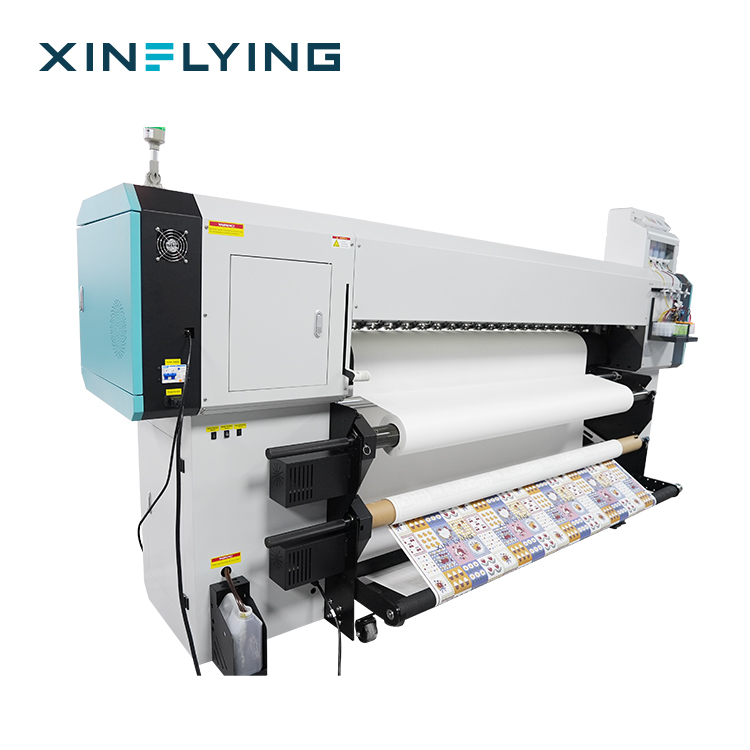
The equipment segment follows the same direction. Mordor Intelligence values dye sublimation printers at USD 1.88 billion in 2025, expected to reach USD 2.53 billion by 2030. FESPA industry insights note that roll-to-roll sublimation printers at 1.9 m (1900 mm) width are the standard for high-volume textile and soft signage work — which is why so much EU-bound volume now consists of 1900mm sublimation printer and 1.9m sublimation printer configurations rather than small units.
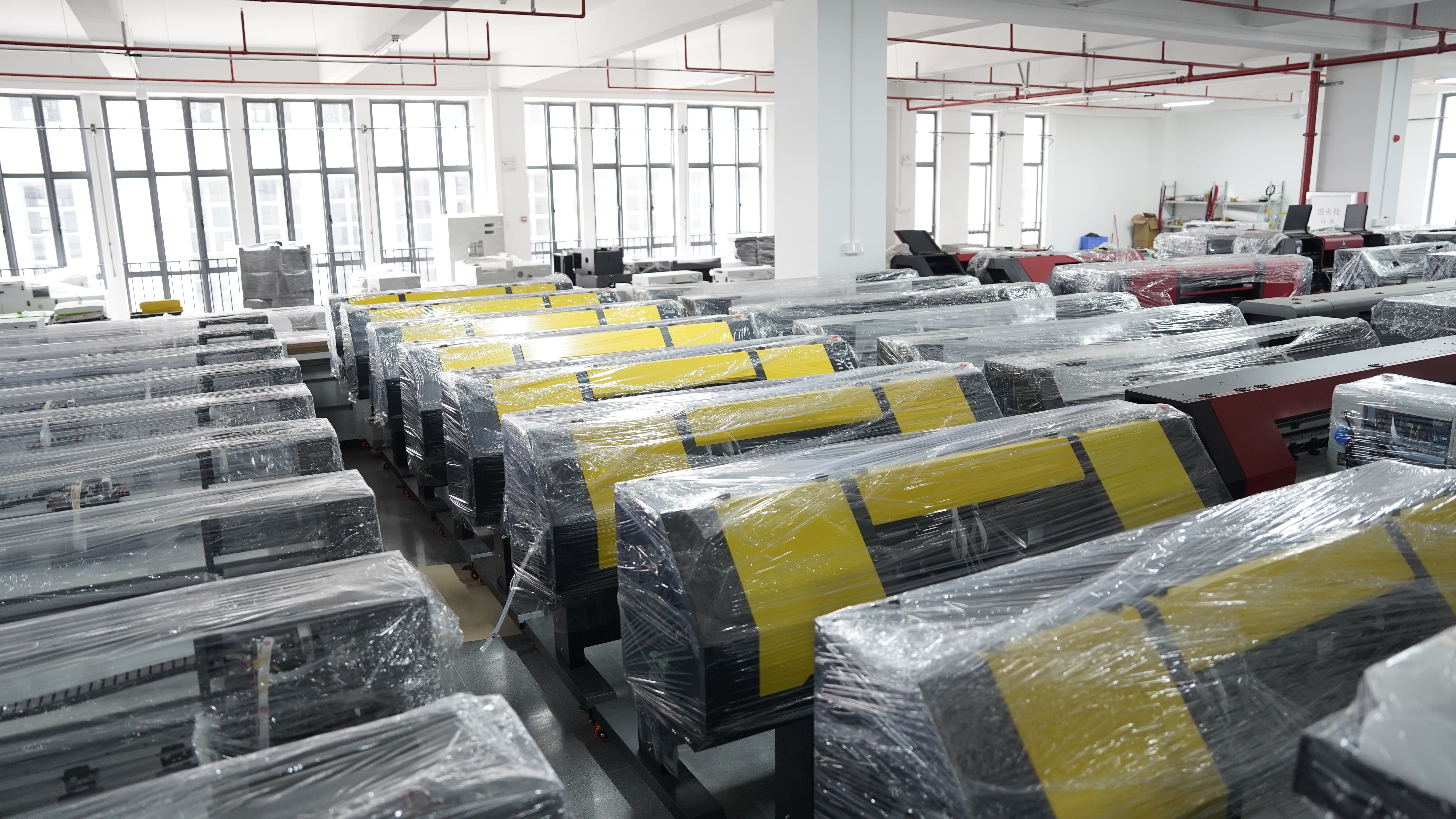
Volume changes the compliance conversation in two ways. First, more machines per shipment means more model variants per file, and more chances for a certificate to reference the wrong build. Second, larger machines are harder to move or retrofit if a registration problem is discovered late; a 1950 mm four-head unit or a 190 cm industrial frame is not something a buyer wants held at a border while paperwork is reissued.
Colour-critical production adds a further documentation layer. ISO 12647-8:2021 covers validation print processes working directly from digital data, and buyers running contract work increasingly ask suppliers to align printed output with a defined reference. That request does not replace CE or RoHS obligations — it simply demonstrates how much of modern sublimation procurement is document-driven.
What a Workable EU Compliance Structure Looks Like for a Sublimation Printer Import
A compliant arrangement is not a single certificate. It is a chain with four identifiable roles, each holding a defined part of the file.
| Role in the chain | What this party holds or does | What the buyer should verify |
|---|---|---|
| Non-EU manufacturer (e.g. a China sublimation printer factory) | Issues the declaration of conformity, compiles test reports and the technical file, and appoints an EU representative in writing | That the appointment exists, is signed, and names the models covered |
| EU authorised representative | Established in the EU; acts as the contact point for authorities and can present the documentation | That the mandate covers the exact model, not only the brand |
| Importer | Places the machinery on the EU market and must be able to show compliant documentation | That certificate references match model, printhead count and voltage build |
| Distributor / reseller | Passes the machine on and is expected to keep documentation traceable | That the file travels with the machine, including language requirements for instructions |
Three document groups buyers should request together
CE documentation. For EU import, verify CE compliance covering applicable electrical safety, electromagnetic compatibility and product safety requirements. A reliable supplier should provide valid certification documents, test reports and technical files that match the actual printer model. Before ordering, confirm that the certification information corresponds with the equipment being supplied.
RoHS documentation. Environmental compliance is a separate check. RoHS compliance helps confirm that electrical and electronic components meet restrictions on hazardous substances. Buyers should request the relevant environmental documents and verify that they apply to the actual equipment model — a factory-level statement is not a model-level statement.
Model-specific certification references. Registration desks work by matching a document reference to a model designation. A reference such as M.2026.206.C142475 for XF-702E is meaningful precisely because it binds one certificate to one machine type. When a quote lists several models — for example a 1.8 m entry machine and a 190 cm industrial unit — expect a distinct reference for each, or a clearly worded scope statement explaining which models the certificate covers.
Where Xinflying fits into the picture
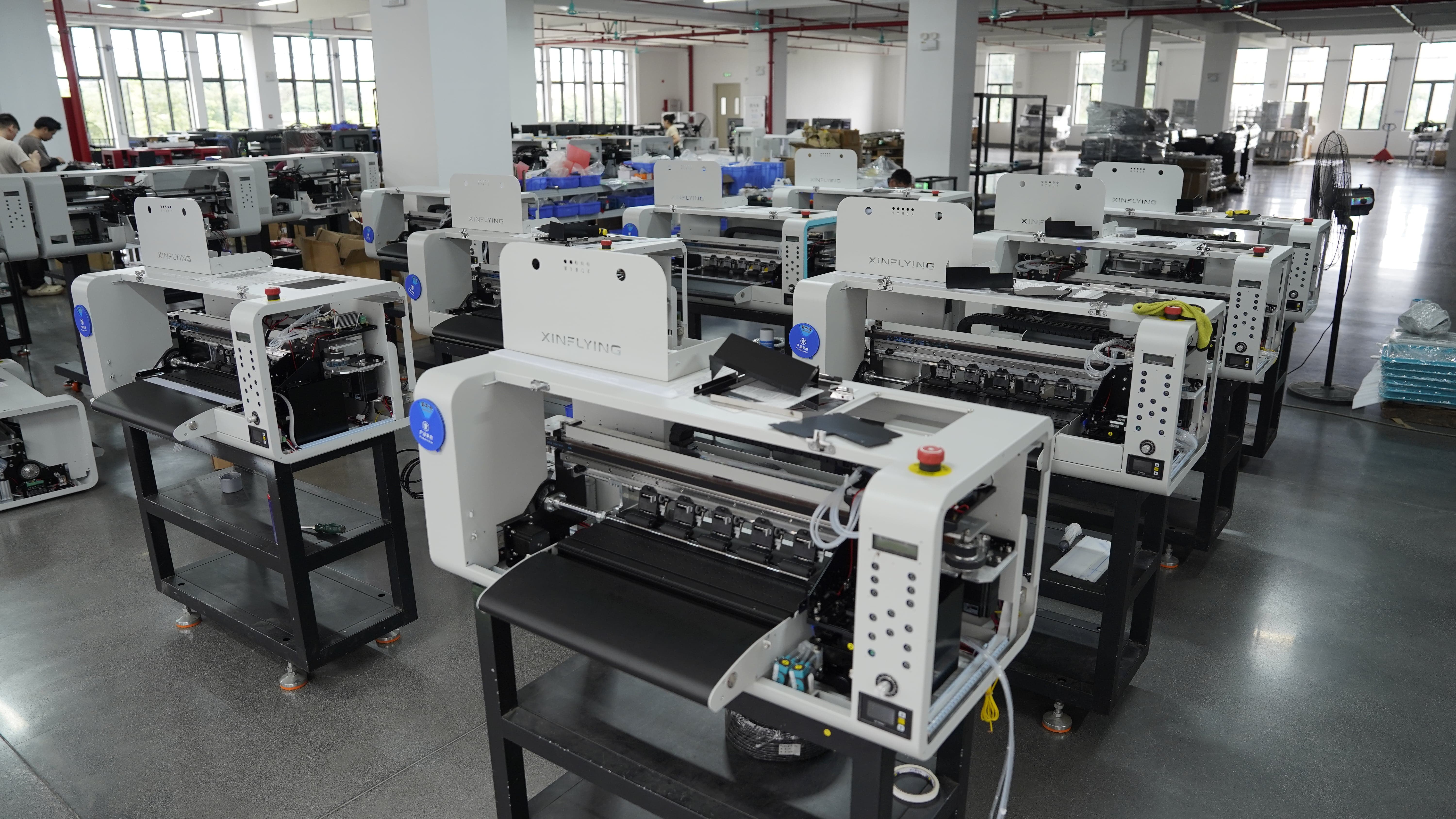
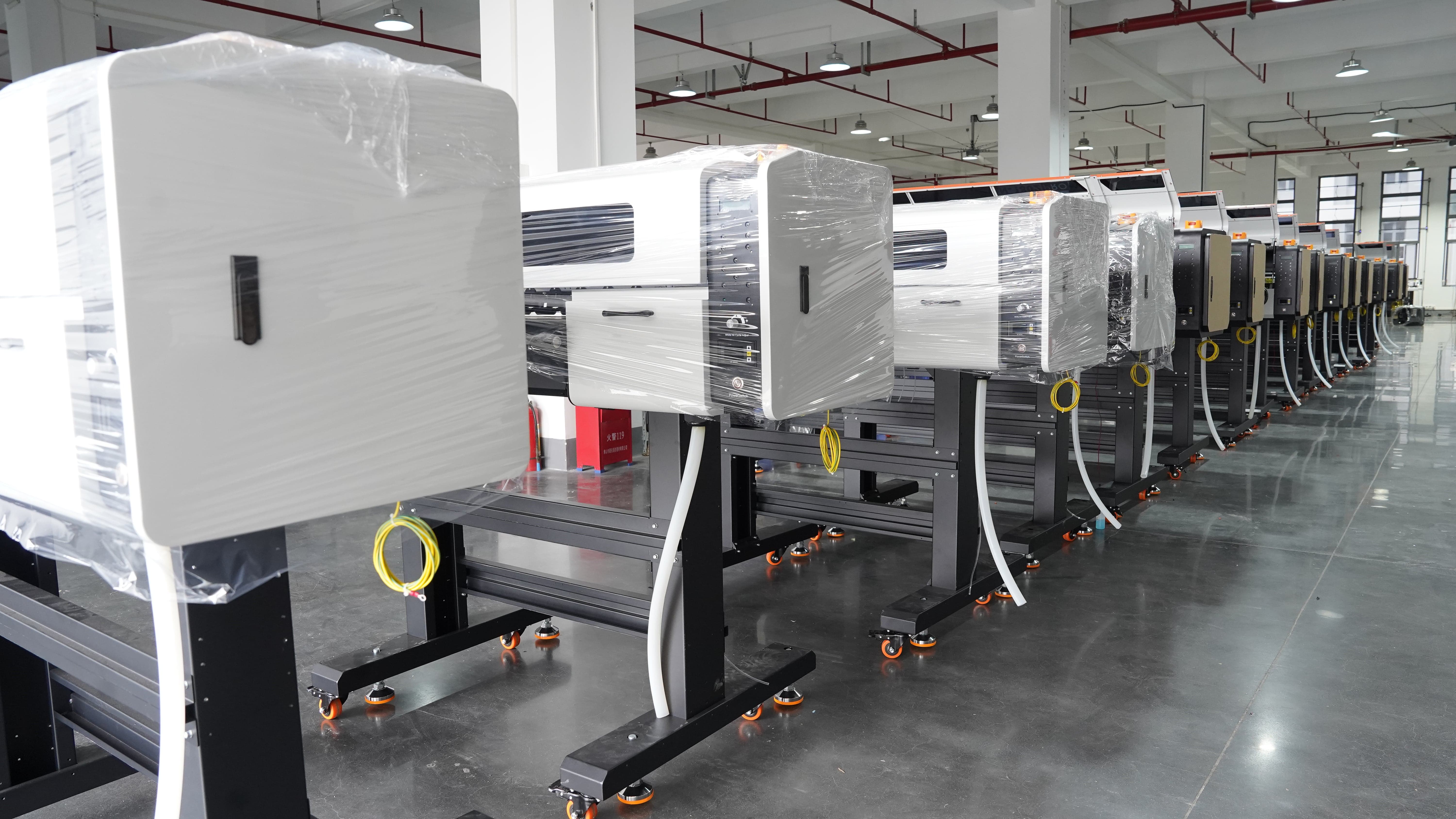
Guangzhou Xin Flying Digital Technology Co., Ltd. (Xinflying) is a digital printing equipment manufacturer founded in 2010, operating a 37,440 m² facility with 200+ employees, 20 engineers and annual output of 20,000+ units. Export business accounts for 80% of total sales, with major markets including North America, South America, Europe, Asia, the Middle East and Africa, and the company maintains local warehouses and technical support in key markets.
For EU-bound orders, that structure matters in a practical way: a commercial sublimation printer buyer is not only purchasing hardware, but also a documentation set, a pre-shipment acceptance record and a support channel that remains reachable after installation. Product acceptance is carried out through pre-shipment test procedures before delivery, which gives the buyer a documented checkpoint before the machine ever reaches an EU border.
Step-by-Step: Building a Registration-Ready File Before the Machine Ships
Step 1 — Identify the responsible economic operator before pricing is agreed
Start with the question the compliance file must answer: who in the EU is mandated to act for this manufacturer on this model? Ask for the appointment in writing. If a supplier answers with a general statement about CE marking rather than a named representative and a mandate scope, the registration step is not yet solved.
Step 2 — Confirm the mandate covers the model, not only the brand
A mandate that names a company but not a product scope creates the exact ambiguity authorities dislike. The scope should identify the machinery type and the model designations covered, and should be consistent with the declaration of conformity.
Step 3 — Match the certificate reference to the model designation
This is the step where most discrepancies appear. Take the certificate reference, take the model on the proforma invoice, and compare them line by line. A certificate for one model does not automatically cover a differently configured sibling with a different printhead count or power supply.
Step 4 — Verify the declared configuration against the machine actually ordered
Documentation describes a configuration. The table below lists declared configuration data for the Xinflying sublimation range — the kind of data a technical file must reproduce accurately.
| Model | Printheads | Print width | Maximum print speed | Power supply |
|---|---|---|---|---|
| XF-H1301X-1I32A1 | 1× Epson i3200-A1 | 130 cm (1.3 m) | 28 m²/h (4PASS) | 110/220V, 18A/9A, 50–60Hz |
| XF-H1802X-2I32A1 | 2× Epson i3200-A1 | 180 cm (1.8 m) | 52 m²/h (4PASS) | 110/220V, 27.2A/13.6A, 50–60Hz |
| XF-O2000-4I32A1 | 4× Epson i3200-A1 | 195 cm (1.95 m) | 180 m²/h (2PASS); 92 m²/h (4PASS) | 220V, 50/60Hz |
| XF-19E8-PRO | 8× Epson i3200-A1 | 190 cm (75") | 306 m²/h (1PASS); 153 m²/h (2PASS) | 210–230V, 45A |
| XF-19E15-PRO | 15× Epson i3200-A1 | 190 cm (75") | 524 m²/h (1PASS); 254 m²/h (2PASS) | 210–230V, 45A |
Two details in that table routinely cause paperwork problems. First, printhead count: a two-head 1.9m sublimation printer and an eight-head industrial unit are different electrical loads and cannot share a single test report without scoping. Second, voltage build: the 110/220V models and the 210–230V industrial models are not interchangeable declarations. If the machine is supplied for a European production hall, the declared build must be the one that ships.
Step 5 — Check that RoHS and environmental documents reference the same model
Environmental documents are frequently issued at company level. That is not sufficient for a registration file. Confirm the document identifies the equipment model and the components covered.
Step 6 — Record the pre-shipment test as part of the file
Acceptance inspection includes a pre-shipment test before delivery. Keep the record: it establishes what configuration left the factory, which is the reference point if any documentation question arises later. For a wide format sublimation printer destined for contract textile work, the test record also serves as the baseline for colour and mechanical performance.
Step 7 — Decide who maintains the file after installation
Compliance is not a shipment event. Models get revised, certificates get reissued, and a print shop may add machines over several years. Agree in advance who holds the current version of the file and how updates are distributed — this is a long-term supplier question, not a logistics question.
Use Cases: Where the Representative Requirement Changes the Order
Case 1 — An EU distributor onboarding a 1900 mm machine for sportswear
A distributor adding capacity for polyester sportswear typically orders a sublimation printer for textiles at 1.9 m width. Before listing the model, the distributor needs a named EU representative and a certificate reference that matches the model. The practical sequence is: confirm the appointment, confirm the certificate reference, then confirm the pre-shipment test date.
Case 2 — A home textile producer buying for blanket and décor runs
A producer buying a sublimation printer for blanket and décor fabrics often runs wider substrates and longer rolls. Here the file must match the 1950 mm configuration, and the acceptance record should state the media handling capability supplied. If the machine is later resold within the EU, the documentation has to survive that transfer.
Case 3 — A print shop replacing a supplier mid-project
Switching to a China sublimation printer supplier during an active contract is the highest-risk moment, because the old file stops at the old factory. Buyers should request the new file before the first shipment, not after the second. A supplier that can produce documentation for a specific model quickly is easier to keep than one that has to reconstruct it.
Case 4 — An entry-level buyer scaling into commercial work
Small operations often begin with a sublimation printer for shirts or a compact 1.3 m unit, then scale. The documentation logic should scale with them: a model added later needs its own reference, even if the representative appointment already covers the manufacturer.
Comparison: Documentation Priorities by Buyer Type
| Buyer type | Primary documentation focus | Typical equipment profile | Most common mistake |
|---|---|---|---|
| EU distributor / reseller | Model-specific certificate reference and resale traceability | 1900 mm roll-to-roll units for sportswear and soft signage | Accepting a family-level statement for a multi-model order |
| Textile factory (end user) | Technical file availability and pre-shipment acceptance record | 8-head to 15-head industrial frames at 190 cm | Treating installation as the end of the compliance process |
| Home textile producer | Configuration match for wide media and roll handling | 1950 mm four-head machines | Declared build differing from shipped build |
| Startup / small print shop | RoHS and CE documents for a single model | 1.3 m single-head or 1.8 m two-head units | Buying before confirming the representative exists |
FAQ: EU Authorised Representative and Sublimation Printer Imports
Does a CE-marked sublimation printer imported from China still need an EU authorised representative?
Yes, in practice it does. For importing sublimation printers into the European market, buyers should verify CE compliance covering applicable electrical safety, electromagnetic compatibility and product safety requirements — and a non-EU manufacturer needs a responsible economic operator established in the EU to act as the contact point for authorities. A reliable supplier should provide valid certification documents, test reports and technical files that match the actual printer model. Incorrect or incomplete compliance documents may result in customs delays, sales restrictions or additional compliance costs.
What documents should the representative be able to produce for a specific model?
The file should contain valid CE documentation, electromagnetic compatibility and electrical safety test reports, the technical file, and RoHS documentation confirming that electrical and electronic components meet hazardous-substance restrictions. All of it must correspond to the actual equipment model. Model-specific references are the practical test: a certificate such as M.2026.206.C142475 issued for XF-702E is checkable because it binds one reference to one model, whereas a general statement that certification exists cannot be matched against a shipment.
What drives the cost of EU compliance on a sublimation printer order?
There is no single figure, because cost depends on the starting condition of the file. The main drivers are whether documentation already exists for the exact model and configuration, whether the model needs re-testing for a different voltage build, whether the representative appointment is per-company or per-model, and the cost of delay if goods are held. Incomplete documentation is the expensive scenario, not complete documentation. On the commercial side, Xinflying orders start at MOQ 1 unit, with delivery terms of EXW/FOB/CIF/DDP and payment by T/T, Western Union or PayPal.
Can we validate the machine before the registration step is completed?
Yes. Product acceptance is conducted through pre-shipment test procedures before delivery, so the machine is tested before it leaves the factory and before the EU registration step concludes. Buyers should request the pre-shipment test record and keep it with the compliance file, since it documents the configuration that was actually built. For a best sublimation printer shortlist decision, this record — together with a model-matched certificate — is stronger evidence than a specification sheet alone.
How do we choose a long-term sublimation printer supplier for textile production?
Judge the supplier on documentation continuity as much as on print speed. Four checks are useful: whether the supplier can produce model-matched CE and RoHS documents quickly, whether a representative arrangement is already in place for EU-bound machinery, whether pre-shipment testing is standard practice, and whether support continues after installation. Xinflying, founded in 2010 with a 37,440 m² facility, 20 engineers and 200+ employees, exports 80% of total sales across North America, South America, Europe, Asia, the Middle East and Africa, and maintains local warehouses and technical support in key markets — the infrastructure that makes a multi-year documentation relationship workable. The product range covers the same span as the paperwork, from a 130 cm single-head machine to the 190 cm XF-19E15-PRO at 524 m²/h. To start a documentation and quotation review for a specific model, write to info@xin-flying.com or +86 188-1322-1357.
Conclusion: Treat the Appointment as a Purchasing Criterion
The EU authorised representative requirement is often filed under legal affairs and forgotten during procurement. In practice it belongs in the purchase order, alongside print width and printhead count. A machine can be technically compliant and still fail an import check if no EU-established party is mandated to present its file, or if the certificate reference does not match the model on the pallet.
The working rule is simple: for every model quoted, ask for the representative appointment, the model-specific certificate reference, the matching test reports and the pre-shipment test record — before confirming the order. Buyers who apply that rule once will apply it to every future machine, which is what turns a one-off import into a durable supplier relationship.
Next Step: Request the Documentation Pack
If you are preparing an EU-bound order, start with the paperwork rather than the price list. Xinflying can provide model-specific documentation details, pre-shipment test arrangements and configuration data for the full sublimation range.
Email: info@xin-flying.com · WhatsApp / Tel: +86 188-1322-1357 · Website: www.xin-flying.com
Download the company and product brochure: Xinflying Corporate Brochure (PDF)
Have Questions or Need More Details?
Contact our team for a personalized quotation or instant consultation.
Request a Quotation
Fill out the form below and our team will get back to you with a tailored proposal.
WhatsApp Direct Chat
Prefer to chat in real-time? Message us on WhatsApp for instant assistance & quick answers.
- Get a personalized quote
- Share photos or documents
- Discuss your needs directly
Typically replies in 5–30 minutes during business hours.