EU Certificates on a Sublimation Printer: How to Read Them
EU Certificates on a Sublimation Printer: How to Read Them
Short answer: a dye sublimation printer placed on the EU market is normally supported by four separate CE-related document sets — EMC, LVD, MD (Machinery) and RoHS — plus separate chemical documentation for the inks. There is no single "CE certificate" that covers all of it. Each document carries its own certificate number, issuing body, list of harmonised standards, and — most importantly — the exact model designations it applies to.
Reading those four elements takes about ten minutes, and it prevents the most common import problem in this equipment category: paperwork that is genuine but belongs to a different machine.
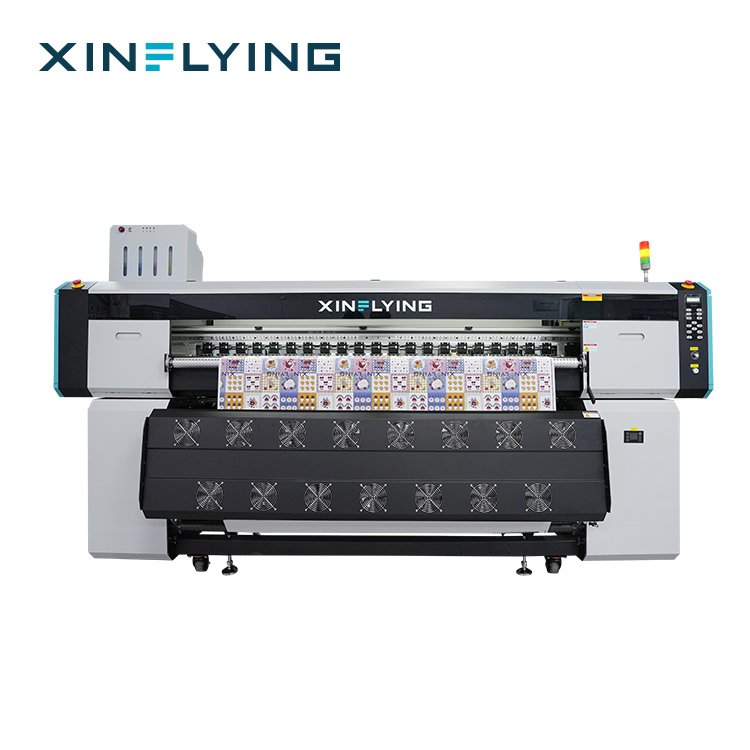
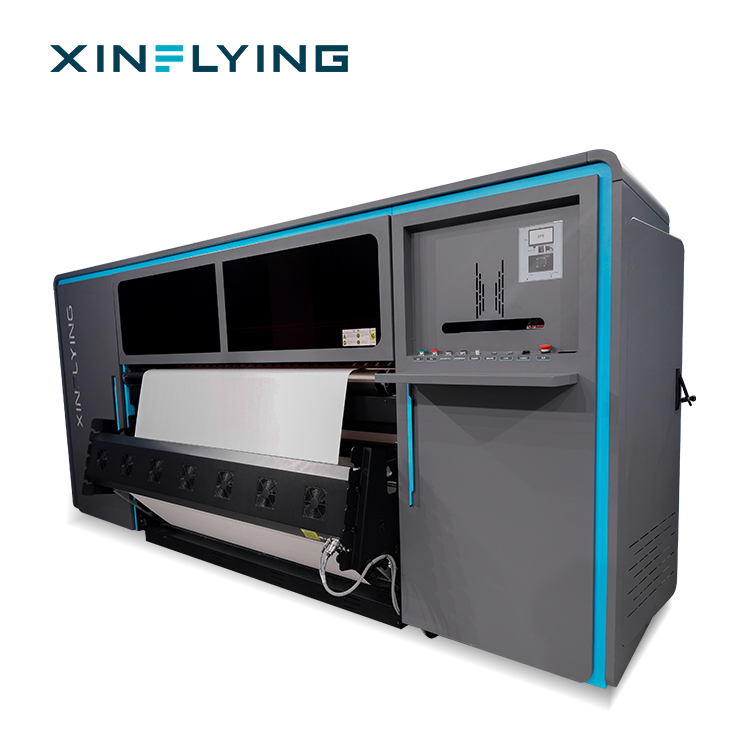
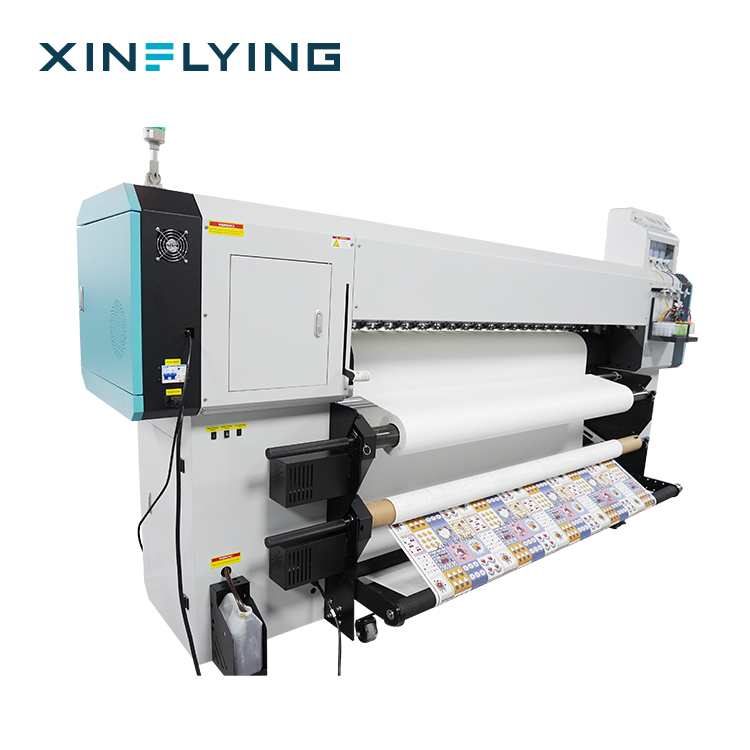
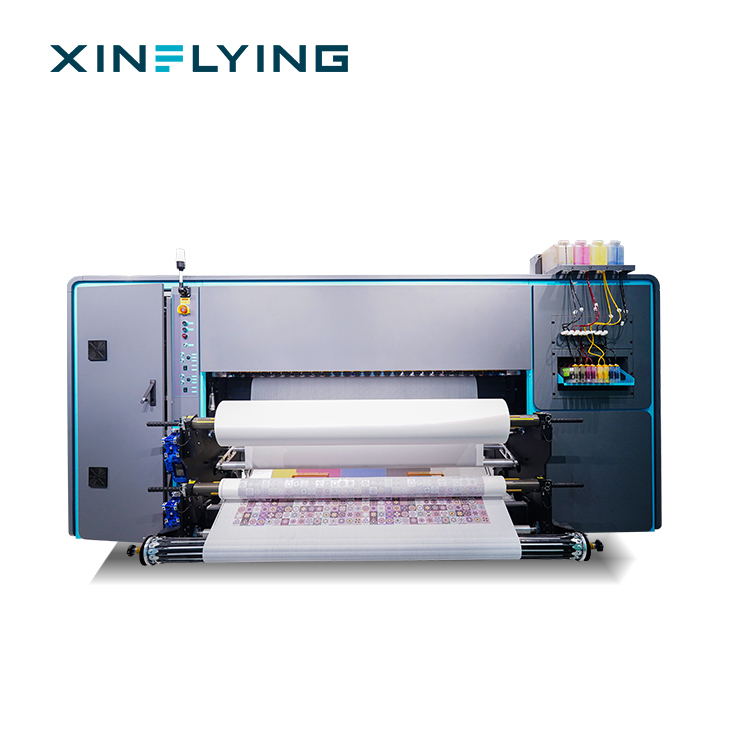
This guide works through the credential set of one specific 1900 mm industrial model — the XF-19E15-PRO from Guangzhou Xin Flying Digital Technology Co., Ltd. (XINFLYING), a digital printing equipment manufacturer established in 2010 in Panyu, Guangzhou, China, producing DTF, UV DTF, DTG, UV flatbed and dye sublimation printers. The same reading method applies to any sublimation printer, whatever the brand.
What "Certified" Actually Means for a Sublimation Printer
A compliance document is only useful if four things can be read off it: a certificate number, an issuing body, the directive or standard it was issued against, and the model designations it covers. Logos, badges and the letters "CE" printed on a brochure carry no verification value on their own.
The problems buyers actually run into are rarely about missing certificates. They are about documents that do not match the purchase:
- Company-level documents. A certificate is shown for "digital printing equipment" with no model list attached, so it cannot be tied to the machine being quoted.
- Model mismatch. The order is for a 1900 mm machine, while the certificate in the folder names a different model or a different width class.
- Configuration mismatch. Electrical safety scope follows the electrical design. A machine configured for 210–230 V at 45 A and a machine configured for 110/220 V are not automatically covered by the same electrical safety document.
- Outdated revision levels. Standards are amended over time, and a certificate that cites an older revision may no longer reflect the current requirement.
- No ink documentation. The machine can be fully compliant while the ink used on textile end products is undocumented — a separate concern for anyone whose finished goods are tested for restricted substances.
Why Compliance Paperwork Is Under More Scrutiny in the EU Textile Channel
The commercial weight behind this paperwork is growing with the equipment market itself. Grand View Research valued the global dye sublimation printing market at USD 16.4 billion in 2025 and projects USD 39.0 billion by 2033, with Asia Pacific holding a 36.5% revenue share in 2025 and China the largest single country market. Mordor Intelligence sizes the dye sublimation printer segment specifically at USD 1.88 billion in 2025, rising to USD 2.53 billion by 2030.
Format matters as well. FESPA Insights identifies 1.9 m (1900 mm) roll-to-roll machines as the standard format for high-volume textile and soft signage production — which is exactly the class of machine where EU importers, brand owners and textile mills most often request documentation before releasing a purchase order.
For an EU buyer, incomplete or mismatched compliance documents are not a clerical inconvenience. They can result in customs delays, restrictions on selling the equipment in the target market, and additional compliance costs once the machine has already been ordered. That is why the verification step belongs in the evaluation stage, not after delivery.
The Document Set Behind the XF-19E15-PRO
On this model, the CE-related documentation is split into four certificates, each addressing a different risk area:
- CE EMC certificate TQT1550D270EC — electromagnetic compatibility. This is the document that addresses interference and immunity, and it is the one most often requested by buyers who plan to install machines in shared or residential-adjacent production space.
- CE LVD certificate TQT1550D271EC — low voltage / electrical safety, tested against EN IEC 62368-1:2020/A11:2020, the hazard-based safety standard for audio/video, information and communication technology equipment. The certificate number and the standard revision both matter: the "/A11:2020" amendment is part of what you are verifying.
- CE MD certificate M.2026.206.C142365 — machinery documentation. The machine's technical file also references EN ISO 12643-1:2023, the general safety requirements standard for graphic technology equipment and systems.
- RoHS certificate M.2026.206.C142366 — restriction of hazardous substances in electrical and electronic equipment, issued under EN IEC 63000:2018, the standard that governs the technical documentation used to assess products against those restrictions.
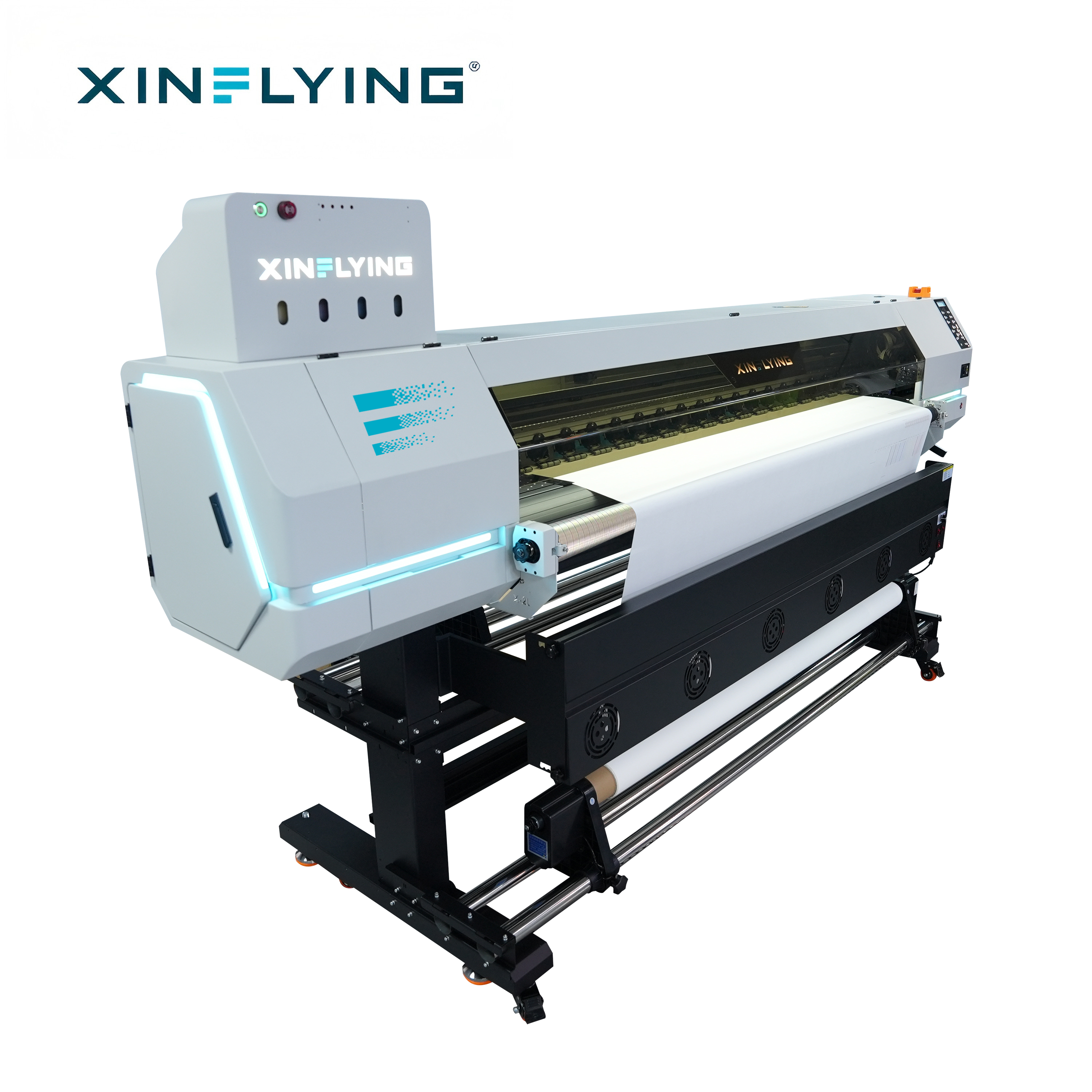
Those four documents describe the machine itself. The XF-19E15-PRO is a 190 cm (75 inch) industrial sublimation printer with 15 Epson i3200-A1 printheads, 3200 dpi resolution, a 14.5 kW power draw and a 210–230 V, 45 A power supply — the electrical configuration the LVD and EMC scope is tied to. If the machine you buy is configured differently, the certificate scope must follow that configuration, not the catalogue photo.
Coverage Is Not Always Model-by-Model
Some certificates cover a group of models. A separate CE LVD & EMC certificate, M.2026.206.C142475, covers eight named models: XF-702E, XF-400D, XF-450PRO, XF-C602, XF-C604, XF-C605, XF-F606 and XF-L608. That type of document is genuinely useful for a distributor building a multi-machine fleet, but only for the models listed on it. Machines outside that list require their own documentation — for example, the XF-19E15-PRO's EMC and LVD certificates stand separately.
Ink Is a Separate Compliance File
Textile producers are usually asked about restricted substances in the finished product, not in the machine. That requirement sits with the ink, and it is documented separately: OEKO-TEX ECO PASSPORT SH150194016, issued by TESTEX, covers XF-450PRO inks for the global market. ECO PASSPORT is the OEKO-TEX certification for chemical products used in textile production, including printing inks — so when a brand owner asks how the print itself is controlled, this is the document that answers the question, and the CE machine certificates are not a substitute for it.
Step-by-Step: Verifying the Certificate Pack You Receive
Step 1 — Separate machine documents from ink documents
CE EMC, LVD, MD and RoHS certificates belong to the machine. OEKO-TEX ECO PASSPORT and similar chemical documentation belong to the ink or consumable. A supplier who answers an ink question with a CE certificate has not answered the question.
Step 2 — Match model designations character by character
Model names in this category differ by small suffixes. XF-19E15-PRO and XF-19E8-PRO are different machines with different printhead counts; XF-450PRO appears both as a machine in a multi-model LVD & EMC certificate and as the ink series in an ECO PASSPORT certificate. Read the designation on the certificate against the designation on the quotation and, later, against the rating plate on the machine.
Step 3 — Read the standard, not just the directive name
"CE LVD" tells you the risk area; the standard tells you what was actually tested. EN IEC 62368-1:2020/A11:2020 on the LVD certificate, EN IEC 63000:2018 on the RoHS certificate and EN ISO 12643-1:2023 in the machinery documentation are the details that distinguish a documented assessment from a general statement of conformity.
Step 4 — Check the number format and the issuing body
Certificate numbers on this equipment follow recognisable patterns — TQT1550D270EC and TQT1550D271EC for the EMC and LVD documents, M.2026.206.C142365, M.2026.206.C142366 and M.2026.206.C142475 for the machinery, RoHS and multi-model documents. Note the issuing body named on each page, and verify with that body rather than with the supplier alone. For chemical certification, the issuer is named on the certificate itself — SH150194016 is issued by TESTEX.
Step 5 — Compare the certificate scope with the configuration you ordered
Check print width, printhead count and power supply. On the XF-19E15-PRO that means 190 cm (75 inch), 15 Epson i3200-A1 printheads, and a 210–230 V, 45 A supply. Entry and mid-range models in the same range use different electrical configurations — the XF-H1802X-2I32A1 runs on 110/220 V, and the XF-O2000-4I32A1 on 220 V — so the document set has to be requested per model, not per brand.
Step 6 — Check dates and revision levels
Confirm that the standard revision and amendment printed on the certificate is the one in force at the time of your purchase, and keep the full technical file with the machine records for the life of the equipment.
Step 7 — For fleets, read the model list on multi-model certificates
If you are buying several units at once, ask for the model list on documents such as M.2026.206.C142475 and confirm that every machine on your purchase order appears on it. Any unit that does not appear needs its own documentation.
Which Document Matters in Which Buying Scenario
Scenario 1 — An EU distributor importing 1900 mm machines
The distributor needs the full four-document set per model before the first container ships, because its own customers — sportswear and home textile producers — will ask for it. For a 1900 mm machine that means the EMC, LVD, MD and RoHS certificates matching that exact model, with EN IEC 62368-1:2020/A11:2020 on the LVD document and EN IEC 63000:2018 on the RoHS document.
Scenario 2 — A brand owner whose finished textiles are chemically tested
Here the machine certificate is not the bottleneck. The question is what the ink contains, and the answer is a separate certificate. OEKO-TEX ECO PASSPORT SH150194016 from TESTEX, covering XF-450PRO inks for the global market, is the document that addresses that part of the supply chain.
Scenario 3 — A print shop scaling up from a smaller format
A business moving from a 130 cm machine such as the XF-H1301X-1I32A1 to a wide-format model should expect the documentation to be re-issued per model rather than extended informally. The XF-H1802X-2I32A1, for instance, is a 180 cm wide-format sublimation printer running on 110/220 V, and it belongs to a different electrical configuration from the 1900 mm class.
Certificate and Standard Reference Tables
The table below summarises the credential set described in this guide. Every entry can be checked against the document itself.
| Document | What it covers | Reference | Applies to |
|---|---|---|---|
| CE EMC certificate | Electromagnetic compatibility | TQT1550D270EC | XF-19E15-PRO |
| CE LVD certificate | Electrical safety | TQT1550D271EC, tested to EN IEC 62368-1:2020/A11:2020 | XF-19E15-PRO |
| CE MD certificate | Machinery safety documentation | M.2026.206.C142365 | XF-19E15-PRO |
| RoHS certificate | Restriction of hazardous substances in electrical and electronic equipment | M.2026.206.C142366, under EN IEC 63000:2018 | XF-19E15-PRO |
| CE LVD & EMC certificate (multi-model) | Electrical safety and electromagnetic compatibility across a model group | M.2026.206.C142475 | XF-702E, XF-400D, XF-450PRO, XF-C602, XF-C604, XF-C605, XF-F606, XF-L608 |
| OEKO-TEX ECO PASSPORT | Chemical product certification for textile production inputs | SH150194016, issued by TESTEX | XF-450PRO inks (global market) |
| Machinery safety standard reference | General safety requirements for graphic technology equipment and systems | EN ISO 12643-1:2023 | Referenced in the machine documentation |
Note that the multi-model certificate covers only the eight models named on it. Machines outside that list — including the XF-19E15-PRO, the XF-19E8-PRO, the XF-O2000-4I32A1, the XF-H1802X-2I32A1 and the XF-H1301X-1I32A1 — are documented separately.
Decoding the Standards You Will See
| Standard | What it addresses | Where you see it |
|---|---|---|
| EN IEC 62368-1:2020/A11:2020 | Safety of audio/video, information and communication technology equipment | CE LVD certificate TQT1550D271EC |
| EN IEC 63000:2018 | Technical documentation for assessing electrical and electronic products against hazardous-substance restrictions | RoHS certificate M.2026.206.C142366 |
| EN ISO 12643-1:2023 | Safety requirements for graphic technology equipment and systems | Machine documentation |
| ISO 12647-8:2021 | Validation of print processes working directly from digital data | Industry reference standard published by ISO |
Frequently Asked Questions
What EU compliance documents should a sublimation printer ship with?
A CE-marked sublimation printer placed on the EU market should arrive with four separate document sets — EMC, LVD, Machinery (MD) and RoHS — each naming the specific model. The XF-19E15-PRO carries CE EMC certificate TQT1550D270EC, CE LVD certificate TQT1550D271EC tested to EN IEC 62368-1:2020/A11:2020, CE MD certificate M.2026.206.C142365 and RoHS certificate M.2026.206.C142366 issued under EN IEC 63000:2018. The machine documentation also references EN ISO 12643-1:2023 for graphic technology equipment safety. Ink is documented separately: OEKO-TEX ECO PASSPORT SH150194016, issued by TESTEX, covers XF-450PRO inks for the global market.
Does one CE certificate cover every model in a manufacturer's range?
No. Certificates list the model designations they apply to. The XF-19E15-PRO has its own EMC, LVD, MD and RoHS documents, while a separate multi-model CE LVD & EMC certificate, M.2026.206.C142475, covers eight named models: XF-702E, XF-400D, XF-450PRO, XF-C602, XF-C604, XF-C605, XF-F606 and XF-L608. If the machine you are buying is not named on the certificate in front of you, ask for the document that does name it.
What does incomplete or mismatched certification paperwork cost an importer?
The direct consequences are customs delays, restrictions on selling the equipment in the target market, and additional compliance costs when documents have to be corrected after shipment. Because certificates name specific models and electrical configurations, paperwork issued for a different machine does not protect the machine you actually received. The cheapest moment to resolve a documentation gap is during evaluation, before the order is placed.
What should be verified on a sample or pre-shipment machine?
Compare the certificate's model list and the machine rating plate with the configuration you ordered — print width, printhead count and power supply. On the XF-19E15-PRO that means a 190 cm (75 inch) print width, 15 Epson i3200-A1 printheads and a 210–230 V, 45 A supply. Then complete the normal commissioning checks before full production: nozzle check, printhead inspection, calibration and a test print.
How do I keep the documentation valid as standards are revised?
Certificates reference specific standard revisions and amendments, such as EN IEC 62368-1:2020/A11:2020 or EN IEC 63000:2018, so check the revision printed on the document against the standard in force at the time of delivery, and keep the technical file with the machine records. For repeat orders, request the certificate pack again against the new units rather than relying on a copy from the first shipment. XINFLYING, a digital printing equipment manufacturer established in 2010 in Panyu, Guangzhou, supplies model-specific documentation with its sublimation printers; document requests can be sent to info@xin-flying.com.
Conclusion: Four Fields, Every Time
EU compliance for a sublimation printer is not a single badge — it is a set of documents, each with a certificate number, an issuing body, a standard revision and a model list. Read those four fields on every page you receive and the paperwork stops being a formality. You will know immediately whether the EMC, LVD, MD and RoHS certificates in the folder belong to the machine on your purchase order, whether a multi-model certificate actually includes your model, and whether the ink you plan to run on polyester textiles is covered by a chemical certification such as OEKO-TEX ECO PASSPORT.
XINFLYING manufactures dye sublimation printers, DTF printers, UV DTF printers, DTG printers and UV flatbed printers at a 37,440 m² facility in Guangzhou with an annual production capacity exceeding 20,000 units and a 20-engineer R&D team, exporting to North America, South America, Europe, Asia, the Middle East and Africa.
Request the certificate pack for your model
Send the model you are considering — XF-19E15-PRO, XF-19E8-PRO, XF-O2000-4I32A1, XF-H1802X-2I32A1, XF-H1301X-1I32A1 or another unit on the multi-model certificate — and ask for the matching CE EMC, CE LVD, CE MD, RoHS and ink documentation before you place the order.
Email: info@xin-flying.com | Website: www.xin-flying.com | WhatsApp: +86 188-1322-1357