
Elevating Fashion: XF-H1301X vs XF-H1802X for High Quality Textile
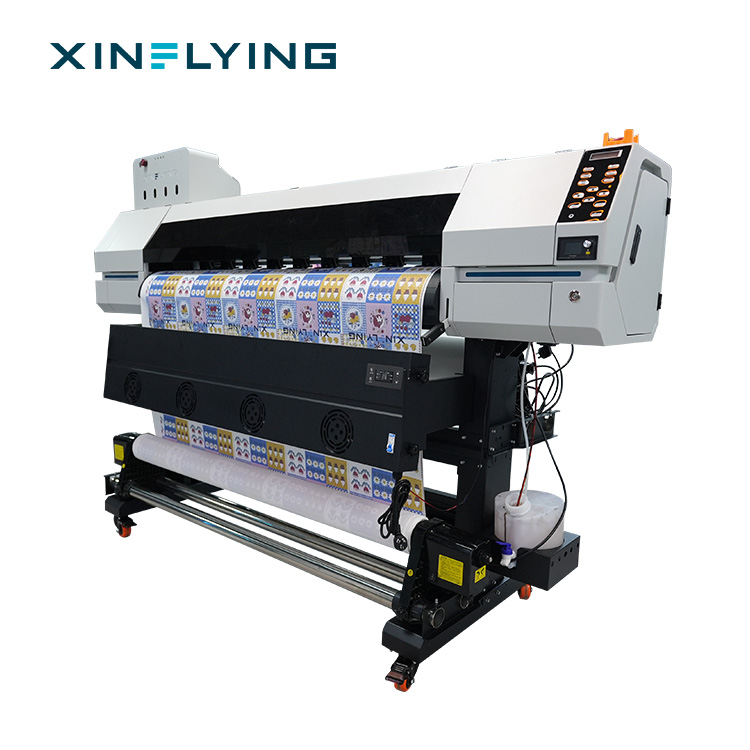
The XF-H1301X-1I32A1 and the XF-H1802X-2I32A1 are roll-to-roll dye sublimation printers from XINFLYING, and they answer the same production question in two different ways. The XF-H1301X-1I32A1 prints on a 130 cm (1.3 m) width using a single Epson i3200-A1 printhead and reaches 28 m²/h at 4PASS in its fastest mode. The XF-H1802X-2I32A1 prints on a 180 cm (1.8 m) width using two Epson i3200-A1 printheads and reaches 52 m²/h at 4PASS fastest, or 42 m²/h at 4PASS standard. Width, head count and drying method are the three specifications that decide which of these sublimation printing machines belongs on a textile floor; the rest of this comparison shows how to test your own order book against them.
This is a head-to-head review written for buyers in the research and evaluation stage: sportswear manufacturers, apparel printers, home-textile converters and commercial print shops that have already chosen dye sublimation as their process and now need to choose a platform. Every figure below comes from the published specifications of the two models. Where a topic depends on how you schedule production, the article says so rather than guessing.
The Decision Is Width and Head Count, and Neither Can Be Retrofitted
Most buyers lose money on one number: the printable width. A 130 cm machine cannot output a 150 cm all-over jersey panel as a single piece, and a 180 cm machine earns nothing extra on a run of small placement prints. Before comparing speed, drying or power, confirm which width your repeat sizes demand, because the frame, the media path and the head count of a sublimation printer are fixed at the factory.
The second fixed decision is head count. One Epson i3200-A1 head on the XF-H1301X-1I32A1 delivers up to 28 m²/h at 4PASS. Two heads on the XF-H1802X-2I32A1 deliver 52 m²/h at the same 4PASS fastest setting, with a published 42 m²/h at 4PASS standard. That is roughly 1.8 times the hourly output in the fastest mode, achieved on a web that is 50 cm wider.
Two physical constraints complete the decision. The XF-H1301X-1I32A1 draws 2 kW from a 110/220 V supply at 18 A/9 A, weighs 140 kg net and measures 2220×870×1540 mm. The XF-H1802X-2I32A1 draws 3.5 kW at 27.2 A/13.6 A, weighs 265 kg net and measures 3000×880×1630 mm. Electrical service, floor loading and aisle depth therefore belong inside the machine decision, not in a separate site-planning conversation that starts after the purchase order.
Why Polyester Fashion Workloads Split Into Two Machine Classes
Dye sublimation printing transfers a design from transfer paper into polyester fibres under heat, so the dye becomes part of the fabric instead of sitting on top of it. The process is used for sportswear, team jerseys, activewear, custom apparel, fashion fabrics, home textiles such as curtains and cushions, decorative fabrics, soft signage, flags and banners.
Within that list, order shapes fall into two groups. The first is short, varied work: sampling, panels, trims, small-batch customisation and personalised apparel. The second is repeat production: full-width garment panels and wide home-textile designs where the same file is printed again and again. A 1.3 m platform and a 1.8 m platform serve those two groups differently, which is why the 1301X class and the 1802X class continue to coexist inside the same factories instead of replacing each other.
Both printers share the same operating envelope and the same workflow baseline. Both are roll-to-roll machines that feed heat transfer paper, and both ship with Maintop RIP as standard. Neither runs alone: a working sublimation line also needs RIP software, a heat press calender, dye sublimation paper, dye sublimation ink, a laser cutting machine and the substrates themselves — the matched equipment set XINFLYING lists for industrial dye sublimation production lines, where 24/7 operation is the norm.
Machine by Machine: Reading the Specifications That Matter
XF-H1301X-1I32A1 — the 1.3 m single-head platform
- Printhead: 1× Epson i3200-A1
- Ink colours: CMYK
- Print width: 130 cm (1.3 m)
- Print speed: 28 m²/h at 4PASS (fastest)
- Media: heat transfer paper; RIP: Maintop (standard)
- Drying: external constant-temperature automatic drying system
- Power: 2 kW; 110/220 V, 18 A/9 A, 50–60 Hz
- Working environment: 20–35 °C, 45–65% RH
- Machine size: 2220×870×1540 mm; packing size: 2280×880×680 mm
- Weight: 140 kg net / 200 kg gross
- Construction: aluminium alloy, stainless steel, ABS plastic
- Platform features: Honson board, aluminium ink rack, retraction system
Read as a production tool, the XF-H1301X-1I32A1 is a compact CMYK machine. Its 2 kW draw and 140 kg net weight make it the easier of the two to install where electrical service is limited, and its 130 cm width covers panel work, sleeves, trims, kidswear and small-format soft signage. Where it stops is the point where a design has to cross the full width of a garment in one piece.
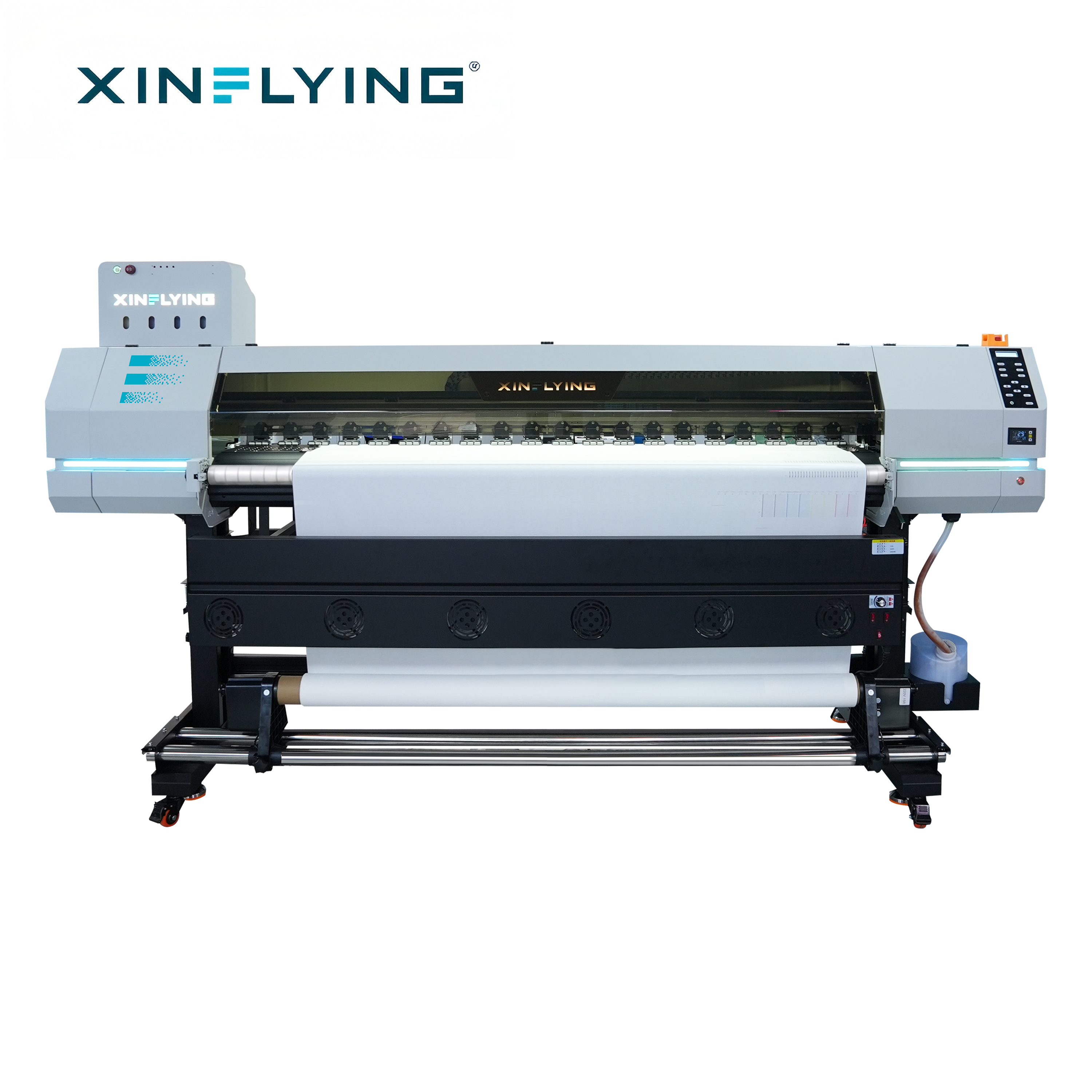
XF-H1802X-2I32A1 — the 1.8 m dual-head platform
- Printheads: 2× Epson i3200-A1
- Ink colours: CMYK+CMYK
- Print width: 180 cm (1.8 m)
- Print speed: 52 m²/h at 4PASS (fastest); 42 m²/h at 4PASS (standard)
- Media: heat transfer paper; RIP: Maintop (standard)
- Heating: front, middle and rear break-controlled heating
- Power: 3.5 kW; 110/220 V, 27.2 A/13.6 A, 50–60 Hz
- Working environment: 20–35 °C, 45–65% RH
- Machine size: 3000×880×1630 mm; packing size: 3070×880×850 mm
- Weight: 265 kg net / 325 kg gross
- Construction: aluminium alloy, stainless steel, ABS plastic
- Platform features: Honson board, aluminium ink rack, retraction system
The XF-H1802X-2I32A1 is the wider and faster platform. Two Epson i3200-A1 heads and a CMYK+CMYK ink configuration raise output to 52 m²/h at 4PASS fastest and 42 m²/h at 4PASS standard, while the 180 cm web accepts full-width garment panels and wide home-textile repeats. Heating is handled by front, middle and rear break-controlled zones, and the 3.5 kW draw with a 265 kg frame reflects a heavier machine built for longer, wider runs.
Material Handling: What Changes Between 1300 mm and 1800 mm
Both printers feed heat transfer paper, both run Maintop RIP as standard, and both carry the same platform hardware: Honson board, aluminium ink rack and retraction system. The handling difference is geometry and mass. The XF-H1802X-2I32A1 body is 780 mm longer than the XF-H1301X-1I32A1 (3000 mm versus 2220 mm) and 125 kg heavier (265 kg versus 140 kg), so it needs more aisle depth behind the machine and more floor capacity underneath it. Packing dimensions differ as well — 3070×880×850 mm against 2280×880×680 mm — which affects door access and container planning on delivery.
Heating and Drying: Two Different Control Approaches
The XF-H1301X-1I32A1 uses an external constant-temperature automatic drying system. The XF-H1802X-2I32A1 uses front, middle and rear break-controlled heating. Both approaches exist to keep the printed web dry and stable before it is wound, which matters most on high-coverage designs where more ink is laid down per square metre. The power difference between the models — 2 kW versus 3.5 kW — is consistent with the larger heated area and the second printhead on the 1802X.
Manufacturing and Support Behind Both Models
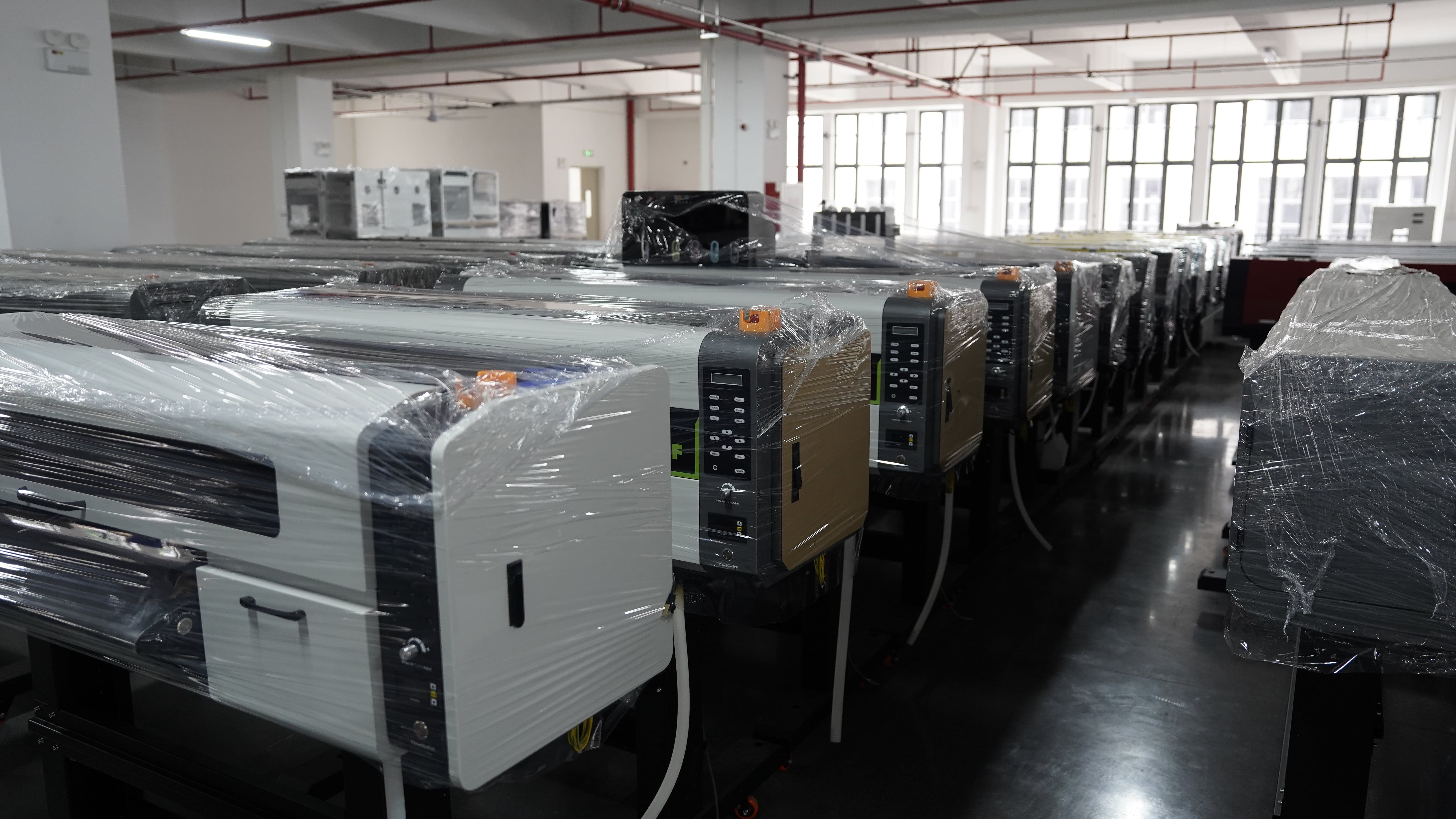
Both machines come from Guangzhou Xin Flying Digital Technology Co., Ltd. (XINFLYING), a digital printing equipment manufacturer founded in 2010 with a 37,440 m² factory, 200+ employees, a 20-engineer R&D team and annual output of 20,000+ units, with an export ratio of roughly 80% across North America, South America, Europe, Asia, the Middle East and Africa. Monthly capacity is listed at 1,600+ units, the minimum order quantity is 1 unit, lead time runs 5–40 days, pre-shipment testing is part of quality control, and OEM/ODM customisation covers product branding, machine appearance, colour, logo and packaging. After-sales support is delivered by over 50 engineers providing 24/7 online technical support.
Six Checks That Decide Between the 1301X and the 1802X Class
Use Cases: Which Buyer Profile Each Machine Fits
Sportswear and team kit production — 1802X class
Team kit work is where width and hourly output pay for themselves. Full-width jersey panels, names, numbers and full-colour graphics all favour the 180 cm web and the two-head output of the XF-H1802X-2I32A1. XINFLYING's application records include a sports uniform supplier in Brazil running 8 sublimation printers over 5 years to produce customised football kits, training uniforms and team apparel, shorter production cycles and detailed patterns included; and a sportswear manufacturer in Brazil running 15 units over 4 years for football jerseys and basketball uniforms, which improved production flexibility, reduced dependence on outsourced printing and delivered more consistent colour across batches.
Home textiles and decorative fabrics — 1802X class
Curtains, cushions and decorative fabrics are wide-repeat products by definition. A home textile manufacturer running 10 sublimation printers over 4 years uses them for curtains, cushions and customised polyester collections, where large-format patterns and consistent printing quality across a collection are the selection criteria.
Sampling, panels and service work — 1301X class
Where the work is sampling, trims, small panels and mixed short runs, the 130 cm single-head platform is the better economic shape: 2 kW, 140 kg, a 2220 mm body and 28 m²/h. A digital textile printing service provider running 5 units over 3 years, supporting sportswear brands, apparel factories and customised textile businesses, is a representative profile of that mix.
XF-H1301X-1I32A1 vs XF-H1802X-2I32A1: Specification Table
| Specification | XF-H1301X-1I32A1 | XF-H1802X-2I32A1 |
|---|---|---|
| Print width | 130 cm (1.3 m) | 180 cm (1.8 m) |
| Printheads | 1× Epson i3200-A1 | 2× Epson i3200-A1 |
| Ink colours | CMYK | CMYK+CMYK |
| Print speed (fastest) | 28 m²/h at 4PASS | 52 m²/h at 4PASS |
| Print speed (standard) | 28 m²/h at 4PASS (published fastest figure) | 42 m²/h at 4PASS |
| Drying / heating | External constant-temperature automatic drying system | Front, middle and rear break-controlled heating |
| Power | 2 kW | 3.5 kW |
| Power supply | 110/220 V, 18 A/9 A, 50–60 Hz | 110/220 V, 27.2 A/13.6 A, 50–60 Hz |
| Media | Heat transfer paper | Heat transfer paper |
| RIP | Maintop (standard) | Maintop (standard) |
| Working environment | 20–35 °C, 45–65% RH | 20–35 °C, 45–65% RH |
| Machine size | 2220×870×1540 mm | 3000×880×1630 mm |
| Packing size | 2280×880×680 mm | 3070×880×850 mm |
| Weight | 140 kg net / 200 kg gross | 265 kg net / 325 kg gross |
| Construction | Aluminium alloy, stainless steel, ABS plastic | Aluminium alloy, stainless steel, ABS plastic |
| Typical fit | Sampling, panels, trims, small-batch and mixed short runs; limited floor space or light electrical service | Full-width garment panels, wide home-textile repeats and repeat production where m²/h drives the schedule |
Frequently Asked Questions
1. What compliance documents should I verify before importing either machine into the EU or the US?
For the European market, verify CE documentation covering electrical safety and electromagnetic compatibility — LVD and EMC — together with RoHS documentation confirming restricted substances in the electrical and electronic components. For the United States, check electromagnetic compatibility and electrical safety requirements against the actual configuration, with FCC compliance commonly expected for electronic equipment. In every case the paperwork must match the exact model being supplied: documents issued for a different machine do not protect the shipment, and incomplete or mismatched files can cause customs delays, sales restrictions or additional compliance cost.
2. Can either model run continuous production, and what technical support comes with it?
Both are roll-to-roll machines specified for 20–35 °C and 45–65% RH and listed for polyester textile sublimation work, where continuous operation is normal. The practical difference is thermal load: 2 kW on the XF-H1301X-1I32A1 against 3.5 kW on the XF-H1802X-2I32A1. Support is the same for both, with over 50 engineers providing 24/7 online technical support and pre-shipment testing as part of quality control. Uptime on either machine depends on the same routine: regular nozzle checks, printhead cleaning when output drops, a verified ink supply and correct printing parameters.
3. Which machine costs more to run?
The cost drivers are visible in the specifications even without a price list. Energy: 2 kW versus 3.5 kW. Ink: CMYK on the 1301X against CMYK+CMYK on the 1802X. Output: 28 m²/h against 52 m²/h at 4PASS fastest, with 42 m²/h at 4PASS standard on the 1802X. The 1802X spreads its operating cost across more square metres per hour, while the 1301X keeps the baseline draw and the ink set smaller. The useful comparison is cost per square metre of sellable fabric at your own coverage level, not the invoice alone.
4. Can I validate the machine before committing to volume?
Yes. The minimum order quantity is 1 unit, so a single machine can be ordered and validated in your own workshop. Pre-shipment testing is part of XINFLYING's quality control, and OEM/ODM customisation is available for product branding, machine appearance, colour, logo and packaging. With a lead time of 5–40 days, plan validation, delivery and installation inside that window before quoting customer deadlines.
5. What lead time and production capacity should I plan for?
Lead time is 5–40 days and monthly production capacity is 1,600+ units, so scheduling depends on the configuration you choose and on whether your artwork, RIP profiles and heat press are ready in parallel. To move from comparison to a concrete configuration, request a quote or a specification sheet for the XF-H1301X-1I32A1 or the XF-H1802X-2I32A1 and confirm width, ink set and electrical service before the order is placed.
Conclusion: Choosing Between the Two Classes
The XF-H1301X-1I32A1 and the XF-H1802X-2I32A1 are not competing for the same job. The 1301X is a 130 cm, 2 kW, single-head CMYK platform at 28 m²/h — the right shape for sampling, panel work, trims and workshops with tight floor space or a light electrical service. The 1802X is a 180 cm, 3.5 kW, dual-head CMYK+CMYK platform at 52 m²/h fastest and 42 m²/h standard — the right shape for full-width garment panels, wide home-textile repeats and repeat production where square metres per hour decide the schedule.
Decide the width first, convert the order book into m²/h second, confirm power and floor capacity third, and compare drying and ink configuration last. Both machines share the same operating envelope, the same Maintop RIP baseline and the same support structure, from a manufacturer with a 37,440 m² factory, 20,000+ units of annual output and over 50 engineers on 24/7 online support.
Next Step: Sample, Quote or Specification Sheet
Confirm the width, ink configuration and electrical service for your own production plan before ordering. XINFLYING supplies the XF-H1301X-1I32A1 and the XF-H1802X-2I32A1 with a minimum order quantity of 1 unit, a 5–40 day lead time and 24/7 online technical support from over 50 engineers.
Download the company catalogue: XINFLYING corporate brochure (PDF)
Website: www.xin-flying.com | Email: info@xin-flying.com | Tel / WhatsApp: +86 188-1322-1357
Have Questions or Need More Details?
Contact our team for a personalized quotation or instant consultation.
Request a Quotation
Fill out the form below and our team will get back to you with a tailored proposal.
WhatsApp Direct Chat
Prefer to chat in real-time? Message us on WhatsApp for instant assistance & quick answers.
- Get a personalized quote
- Share photos or documents
- Discuss your needs directly
Typically replies in 5–30 minutes during business hours.