
How to Verify Sublimation Printer Certificates: Numbers, Issuers and Standards
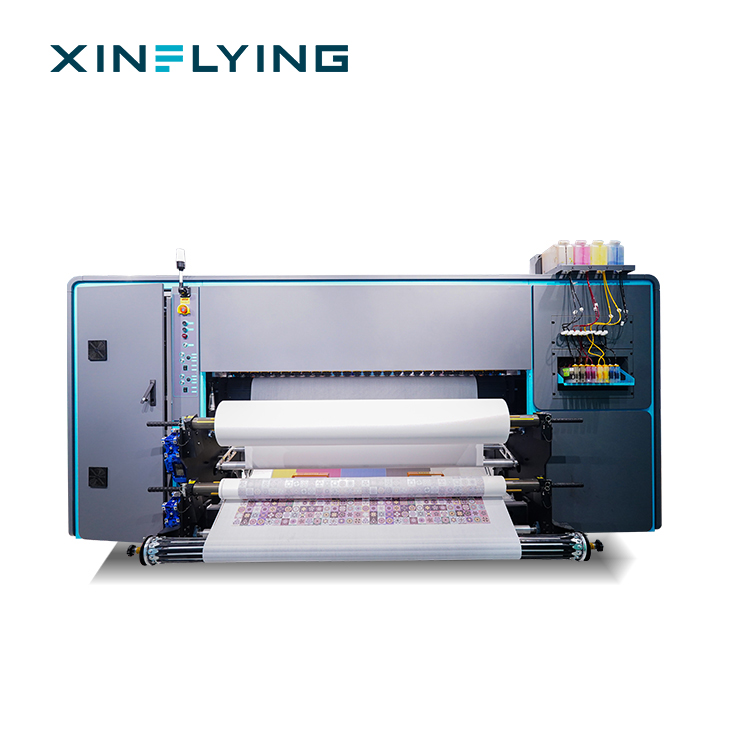
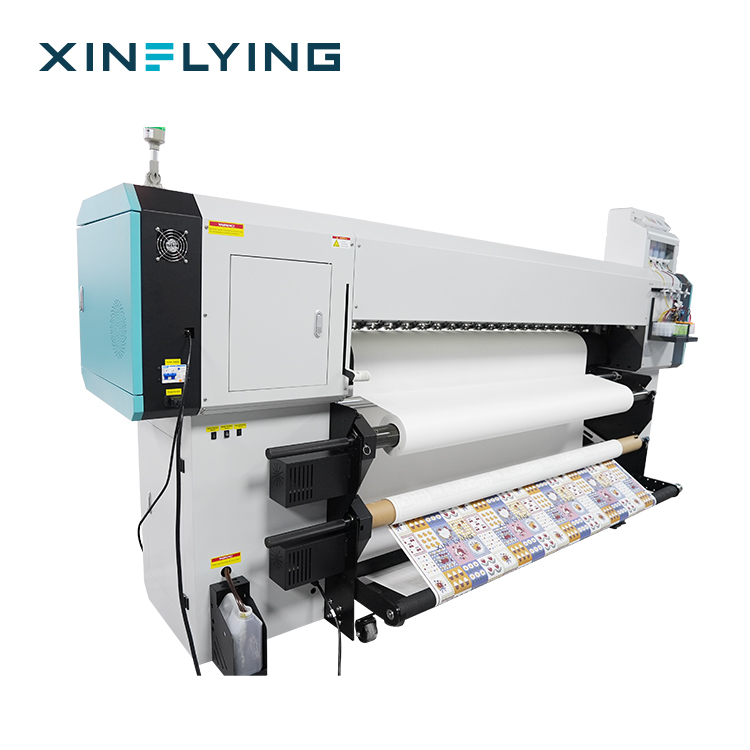 Cover: XINFLYING XF-O2000-4I32A1 roll to roll sublimation printer. Every machine shipped against a CE document set carries four certificate references and, separately, an ink compliance reference.
A sublimation printer certificate is only worth the three facts you can check against it: the certificate number, the body that issued it, and the standard edition it cites. When all three line up with the model on your order, the document is evidence. When any one of them cannot be checked, it is a PDF with a logo on it.
This guide uses the CE documentation supplied with XINFLYING dye sublimation printers as a working example, because it contains the patterns buyers most often fail to verify: two near-identical EMC and LVD numbers, a second pair of Machinery Directive and RoHS numbers from a different issuer, and a completely separate OEKO-TEX reference for ink. XINFLYING is the brand of Guangzhou Xin Flying Digital Technology Co., Ltd., a digital printing equipment manufacturer founded in 2010 and based in Panyu, Guangzhou, China.
Problem Definition: Why Certificate Checks Fail in Real Procurements
Most compliance problems on a sublimation printer order are not caused by missing certificates. They are caused by certificates that exist, look official, and still do not describe the machine or the ink that was shipped. Four failure modes account for most of the damage.
1. The number has no traceable record
A certificate number quoted in a quotation email, with no test report and no issuer contact, cannot be verified. Numbers such as TQT1550D270EC and M.2026.206.C142365 belong to specific issuers' numbering systems. If the issuer cannot confirm the number, the buyer is holding a string of characters, not a compliance record.
2. The standard edition does not match the claim
A document that cites "EN IEC 62368-1" without the edition and amendment suffix, or "EN 55032" without its year, is an incomplete claim. Amendments change test criteria, so the edition printed on the certificate is part of the evidence, not decoration.
3. The object does not match the product
Certificates are written for a defined object: a machine model and configuration, or a named ink. A wide format sublimation printer supplied at 1800 mm and the same platform supplied at 1950 mm are different models for documentation purposes. An EMC certificate offered as proof of ink safety is a category error, and an ink certificate offered as proof of electrical safety is the same error in reverse.
4. The file is verified once and never revisited
This is the failure that hurts long-term buyers most. A document set checked at first purchase and never reviewed again becomes stale when the supplier adds a model, changes a component, or switches ink suppliers. A distributor who resells machines from a fixed certificate folder for three years is reselling an unverified claim by year two.
Industry Background: Documentation Now Sits Inside Supplier Qualification
The installed base is large enough that compliance has shifted from a purchase-time formality to a supplier-qualification criterion. Grand View Research values the global dye sublimation printing market at USD 16.4 billion in 2025, projected to reach USD 39.0 billion by 2033, with a projected CAGR of 11.5% from 2026 to 2033. Asia Pacific held a 36.5% revenue share in 2025, led by China as the largest country market, which is why so many buyers outside Asia are checking documents produced by Chinese laboratories and Chinese manufacturers.
Two structural facts shape what buyers should ask for. First, roll-to-roll sublimation printers with widths of 1.9 m (1900 mm) are the standard configuration for high-volume textile and soft signage work, per FESPA industry insights, which means the 1.9m sublimation printer market is where model-level document matching matters most. Second, colour validation and product compliance are different tracks: ISO 12647-8:2021 covers validation print processes working directly from digital data, while CE documentation covers safety and electromagnetic compatibility. A supplier who can discuss both tracks is usually the one whose certificate set survives an audit.
In practice, large textile buyers no longer purchase one commercial sublimation printer and stop. They build fleets, add a second width, and reorder ink monthly. Every one of those events is a documentation event.
Detailed Solution: A Three-Part Verification Model
Verification works when it is broken into three independent questions that must all return a positive answer: what does the number identify, who signed it, and which standard edition does it reference. A fourth rule keeps the two compliance chains apart.
Part 1 — The number: what each reference identifies
| Document | Certificate number | Issuing body | Standard referenced | Object covered |
|---|---|---|---|---|
| CE — EMC | TQT1550D270EC | Shenzhen Tianqi Testing Technology Service Co., Ltd. | EN 55032:2015 | Electromagnetic compatibility of the sublimation printer |
| CE — LVD | TQT1550D271EC | Shenzhen Tianqi Testing Technology Service Co., Ltd. | EN IEC 62368-1:2020/A11:2020 | Electrical safety of the printer |
| CE — Machinery Directive | M.2026.206.C142365 | UDEM | EN ISO 12100:2010 | Machinery risk assessment of the printer |
| CE — RoHS | M.2026.206.C142366 | UDEM | RoHS restricted-substance scope as stated on the file | Electrical and electronic components of the printer |
| OEKO-TEX ECO PASSPORT | SH150194016 | OEKO-TEX ECO PASSPORT system | ECO PASSPORT | XF-450PRO inks |
The two TQT references differ by a single digit (…270EC and …271EC), and the two UDEM references differ the same way (…C142365 and …C142366). Consecutive numbers are normal: they usually mean one test project was split into separate files per directive. The verification rule is that each number must still be readable on its own, and each must correspond to its own report.
The ECO PASSPORT reference SH150194016 follows a different numbering convention because it belongs to a different system. Do not expect an ink certificate to resemble a CE certificate, and do not accept a CE number as a substitute for it.
Part 2 — The issuer: who actually signed the document
Two issuing bodies appear in the XINFLYING document set: Shenzhen Tianqi Testing Technology Service Co., Ltd. for the EMC and LVD files, and UDEM for the Machinery Directive and RoHS files. Verification means confirming that the issuer name printed on the document is the same entity named in the supplier's document list, and that the body can be reached at the contact details shown. A certificate attributed in an email to one laboratory but printed under another name has not been verified, regardless of how the file looks.
When two laboratories appear in one document set, that is not a red flag. It usually reflects which body was engaged for which directive, and it is exactly why the number-to-issuer pairing has to be recorded rather than assumed.
Part 3 — The standard: reading edition and amendment suffixes
Each certificate points to a standard, and the suffixes matter:
- EN 55032:2015 — the electromagnetic compatibility reference cited in the EMC file. The year is part of the citation.
- EN IEC 62368-1:2020/A11:2020 — the electrical safety reference cited in the LVD file. Here the edition (2020) and the amendment (A11:2020) are both printed; a document quoting only the base edition is a different claim.
- EN ISO 12100:2010 — the machinery risk assessment reference cited in the Machinery Directive file.
Reading these three lines is the fastest way to spot a thin document set. If a supplier cannot tell you which standard sits behind each certificate, the file was probably assembled for a tender rather than for engineering.
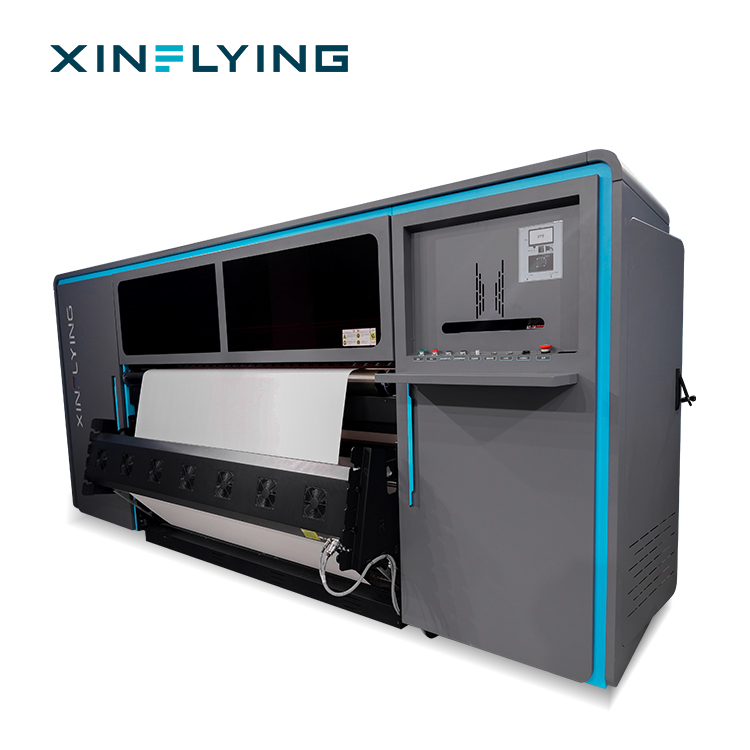 Supporting: XINFLYING XF-19E15-PRO. Document matching is done at model and configuration level, not at brand level — a 1900 mm machine and an 1800 mm machine are separate objects on paper.
Part 4 — Keep the machine chain and the ink chain apart
Printer certification and ink certification answer different questions. The CE set (EMC, LVD, Machinery Directive, RoHS) describes the machine. OEKO-TEX ECO PASSPORT SH150194016 describes XF-450PRO inks. Neither document substitutes for the other: a CE-marked sublimation printing machine tells you nothing about the chemistry of the ink you run through it, and an ECO PASSPORT certificate tells you nothing about electrical safety.
For textile producers making skin-contact products, both chains are needed, and they are re-checked on different schedules — the machine when the model or configuration changes, the ink whenever the ink product or supply source changes.
Step-by-Step Breakdown: A Repeatable Verification Routine
The routine below is designed to be run once, then maintained. It takes a document set from "received" to "recorded", which is what a long-term sublimation printer supplier relationship actually requires.
- Build a document register before comparing prices. For each model, record the document type, certificate number, issuing body, standard edition, and the product designation printed on the file. Four CE rows plus one ink row per SKU is enough.
- Match the model designation, not the brand. The product name on the certificate must match the model on your order confirmation. Brand-level statements do not transfer between models.
- Match the width and configuration variant. XF-H1802X-2I32A1 is an 1800 mm machine with two Epson i3200-A1 printheads; XF-O2000-4I32A1 is a 1950 mm machine with four; XF-19E8-PRO is an eight-head industrial unit rated to 3200 dpi and up to 306 ㎡/h. A document written for one configuration should not be accepted for another.
- Verify the issuer against the number. Confirm that TQT1550D270EC and TQT1550D271EC are attributed to Shenzhen Tianqi Testing Technology Service Co., Ltd., and that M.2026.206.C142365 and M.2026.206.C142366 are attributed to UDEM, with reachable contacts.
- Verify the standard edition and amendment. Check that EN 55032:2015, EN IEC 62368-1:2020/A11:2020 and EN ISO 12100:2010 appear in full, including the year and amendment suffixes.
- Cross-check the numbers inside the file. The number on the certificate summary should appear on the corresponding test report, and the product description should be identical across documents.
- Record what the document does not cover. Write the boundary down while the supplier is still answering questions: the EMC certificate does not cover machinery safety, the Machinery Directive file does not cover electrical safety, and no machine document covers XF-450PRO ink chemistry.
- Re-verify at every change. New model, new width, new printhead configuration or new ink source all trigger a re-check. Store the updated register with the supplier qualification file and hand the same register to distributors during onboarding.
| Checkpoint | What to compare | Pass condition |
|---|---|---|
| Number traceability | Certificate number vs test report vs issuer record | Same number in all three, and the issuer can confirm it |
| Model identity | Nameplate and order confirmation vs product designation on the certificate | Identical model and configuration |
| Issuer identity | Name printed on the document vs name given by the supplier | Identical, with a reachable contact |
| Standard edition | Cited standard vs expected edition and amendment | Full edition and amendment shown |
| Object boundary | Machine documents vs ink documents | Four CE references for the machine; SH150194016 for XF-450PRO ink |
| Register status | Current order vs stored document register | Register updated at every model, configuration or ink change |
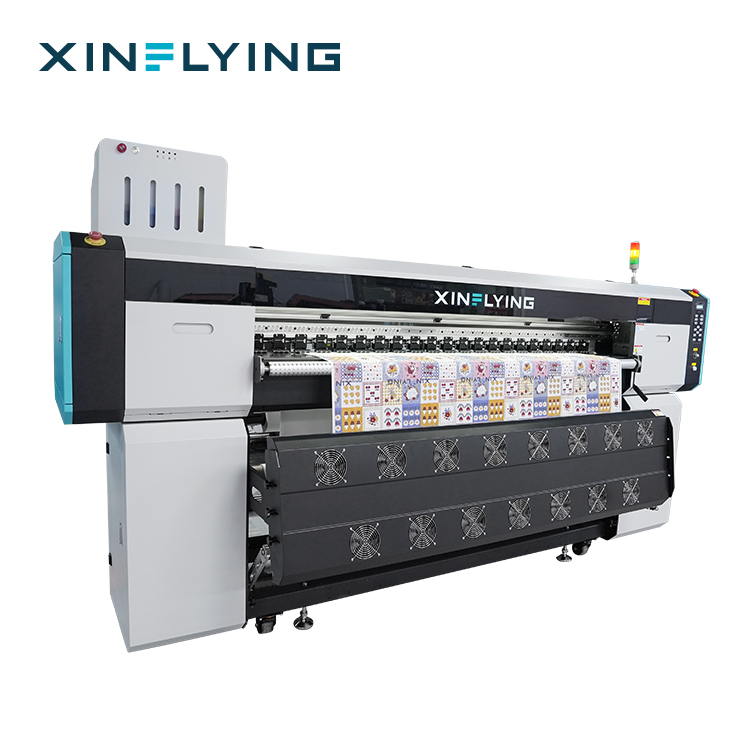 Supporting: XINFLYING XF-O2000-4I32A1, a 1950 mm four-head configuration. Width and head count change the model designation, and therefore the certificate set that must be matched.
Use Cases: Where Verification Changes the Outcome
European textile factory building a fleet
A factory running several 1.9m sublimation printers alongside 1800 mm and 1950 mm units needs one register per model, not one folder per supplier. When the fourth machine arrives, the buyer compares the new certificate set against the stored register instead of starting over.
Distributor onboarding a China sublimation printer brand for resale
A distributor reselling machines carries reputational risk on documents it did not produce. Building the register at onboarding — four CE references, issuer names, standard editions, plus the ECO PASSPORT entry for XF-450PRO inks — gives the sales team a fixed set of answers and gives the distributor a defensible file if a customer audits them.
Sportswear and home textile producer with skin-contact output
A producer making polyester sportswear and home textiles runs two checks in parallel: the machine CE set for import and installation, and OEKO-TEX ECO PASSPORT SH150194016 for the ink. The ink check follows the consumable, so it is repeated whenever the ink product changes, even if the machines do not.
Buyer comparing a low-cost offer against a documented one
When one offer is materially cheaper, the difference is often in the documentation rather than the hardware. Asking for the number-to-issuer pairing and the standard editions quickly separates a complete file from a copied declaration. Incomplete compliance documents may result in customs delays, sales restrictions, or additional compliance costs, which is a cost that arrives after the price advantage.
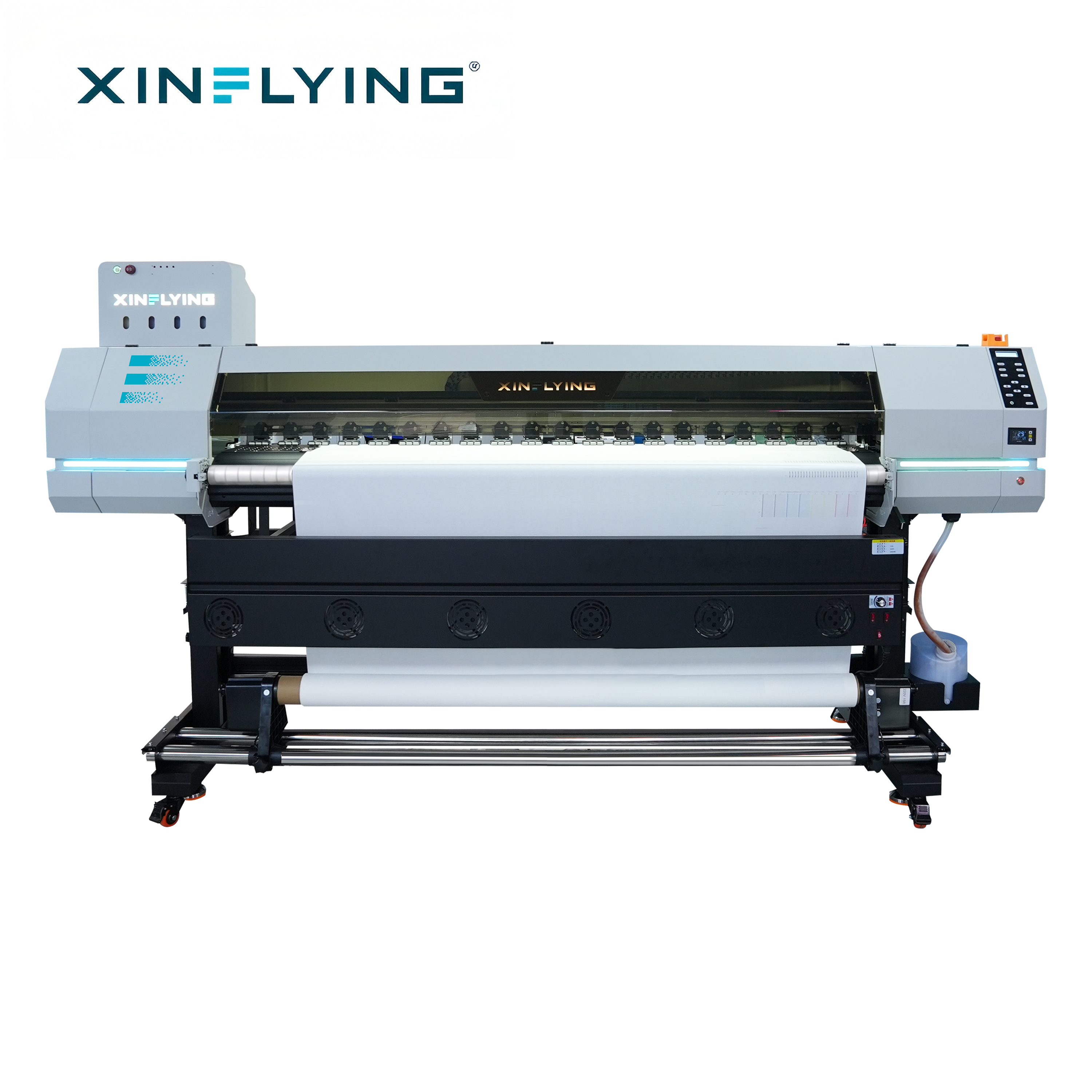 Supporting: XINFLYING XF-H1802X-2I32A1, an 1800 mm two-head machine rated to 52 ㎡/h. Entry-level and industrial models each carry their own document set.
FAQ
Which certificates should a sublimation printer supplier hand over for EU compliance?
A complete EU machine file normally contains four CE references plus the supporting reports: EMC TQT1550D270EC and LVD TQT1550D271EC through Shenzhen Tianqi Testing Technology Service Co., Ltd., and Machinery Directive M.2026.206.C142365 with RoHS M.2026.206.C142366 through UDEM. The standards cited are EN 55032:2015, EN IEC 62368-1:2020/A11:2020 and EN ISO 12100:2010. Ink is requested separately: OEKO-TEX ECO PASSPORT SH150194016 for XF-450PRO inks. If any number cannot be traced to its issuer, treat the file as incomplete.
How do I confirm a certificate still matches the exact machine or ink I am reordering?
Compare the product designation, not the brand. XF-H1802X-2I32A1 is an 1800 mm two-head model, XF-O2000-4I32A1 is a 1950 mm four-head model, and XF-19E8-PRO is an eight-head industrial configuration rated to 3200 dpi and up to 306 ㎡/h — a document written for one should not be accepted for another. Check the machine nameplate and order confirmation against the certificate, and for consumables confirm that the ECO PASSPORT entry names XF-450PRO.
Does certificate verification add cost or delay to repeat orders?
Verification itself is a document exercise and does not add a certification step when the model and ink are unchanged, because the numbers, issuers and standards are already recorded in your register. The cost risk sits on the other side: incorrect or incomplete compliance documents may result in customs delays, sales restrictions, or additional compliance costs. Because minimum order quantity is 1 unit and delivery terms include EXW, FOB, CIF and DDP, running a small verification order first is practical rather than expensive.
Can I verify the documents against a sample machine before committing to a long-term supply arrangement?
Yes. Minimum order quantity is 1 unit, and the stated acceptance criterion is a pre-shipment test, so a sample stage exists in the standard purchasing flow. Request the certificate copies with the sample, check the nameplate against the product designation on each document, confirm the issuer pairing, and confirm the ECO PASSPORT entry for the ink you will actually run. Keep the verified set as the baseline for later deliveries and renew it whenever the model or ink changes.
At what point in the order timeline should certificate verification be finished?
It should be complete before shipment and before the pre-shipment test closes the order, since acceptance is tied to that test and delivery runs on EXW, FOB, CIF or DDP terms. In practice this means requesting the document set with the order confirmation, not after the machine is on the water, and archiving the register with the supplier qualification file. For a long-term sublimation printer supplier relationship in textile production, the register is what keeps verification current: request the latest document set, the standard editions behind it, and the company brochure for your procurement file before the next model is added to your fleet.
Conclusion
Certificate verification reduces to four checks that can be done in an afternoon: does the number trace to an issuer, does the issuer trace to a document, does the document cite the full standard edition, and does the whole file describe the exact model or ink on the order. For the XINFLYING document set, that means TQT1550D270EC and TQT1550D271EC with Shenzhen Tianqi Testing Technology Service Co., Ltd. against EN 55032:2015 and EN IEC 62368-1:2020/A11:2020, M.2026.206.C142365 and M.2026.206.C142366 with UDEM against EN ISO 12100:2010 and RoHS scope, and OEKO-TEX ECO PASSPORT SH150194016 for XF-450PRO inks kept in its own chain.
The reason to formalise this is not the first machine. It is the fourth machine, the third ink reorder, and the new distributor who asks you to prove what you sold them. Guangzhou Xin Flying Digital Technology Co., Ltd. manufactures dye sublimation printers, DTF printers, DTG printers, UV DTF printers and UV flatbed printers at a 37,440 m² facility in Panyu, Guangzhou, with 200+ employees, 20 R&D engineers and an export ratio of 80% across North America, South America, Europe, Asia, the Middle East and Africa — which is why the document set, rather than the machine specification, is often what long-term buyers test first.
Next step
Request the current certificate set — four CE references and the ink ECO PASSPORT entry — together with a quotation, a sample-stage plan or the company brochure for your procurement file.
Website: www.xin-flying.com
Email: info@xin-flying.com
Tel / WhatsApp: +86 188-1322-1357
Company brochure (PDF): XINFLYING corporate introduction
 CTA: XINFLYING XF-19E8-PRO, an eight-head industrial sublimation printer. Document sets, model registers and sample-stage plans are available on request.
Have Questions or Need More Details?
Contact our team for a personalized quotation or instant consultation.
Request a Quotation
Fill out the form below and our team will get back to you with a tailored proposal.
WhatsApp Direct Chat
Prefer to chat in real-time? Message us on WhatsApp for instant assistance & quick answers.
- Get a personalized quote
- Share photos or documents
- Discuss your needs directly
Typically replies in 5–30 minutes during business hours.