
Lifecycle Maintenance: Keeping Long-Term Partnerships with Sublimation Printer Vendors
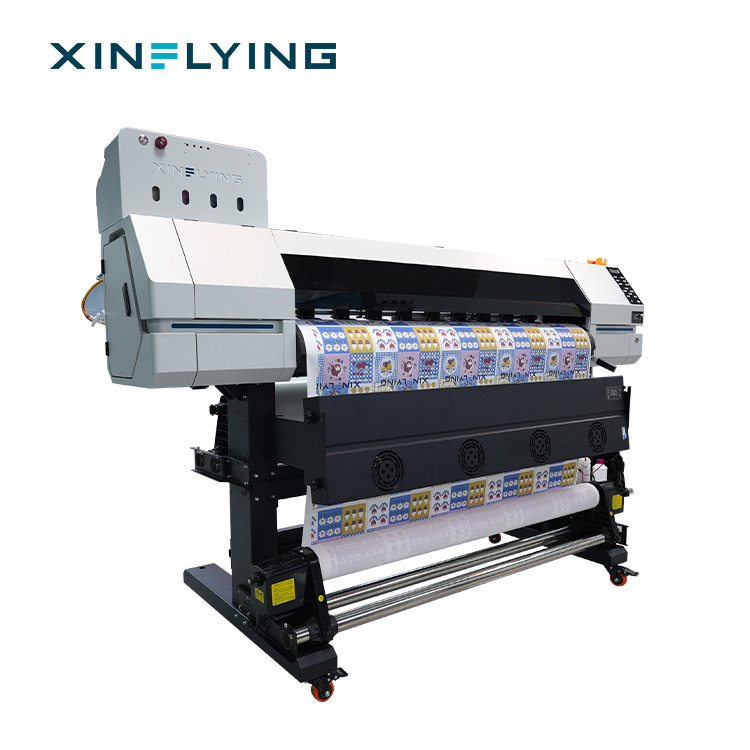
Quick answer: Lifecycle maintenance is what stops a sublimation printer from becoming an unmanaged asset halfway through its service life. A long-term relationship with a print vendor holds together when three documents exist before the machine is installed: a service-level agreement (SLA) that fixes response paths and responsibilities, an annual maintenance plan that protects colour accuracy and uptime, and a document-control routine that keeps certification references, such as the Machinery Directive certificate reference MD M.2026.206.C142365, aligned with the machines actually running on the floor.
Most buyers evaluate a dye sublimation printer as equipment and only think about the vendor relationship after the first breakdown. This guide is written for textile printers, sportswear manufacturers, home-textile producers and commercial sublimation printing facilities comparing vendors for a multi-year project rather than a one-off purchase. It explains how SLA and annual maintenance structures should be shaped, why traceability and machinery-compliance updates change what a vendor owes a client, and how XINFLYING supports its roll-to-roll sublimation printer range across the full equipment lifecycle.
Problem Definition: When the Machine Outlives the Purchase Order
Equipment decisions are made once. Service decisions are made every year, usually under pressure. That mismatch is the source of most vendor friction in sublimation printing.
Three failure patterns repeat across textile printing operations:
- An undocumented colour baseline. A commercial sublimation printer can leave the factory with a perfectly good output profile, yet without a recorded first-article target the buyer cannot tell whether a colour shift comes from an ink lot change, printhead wear, or an environment that has drifted outside the recommended 18°C-30°C and 35%-65% RH window.
- Compliance documents that quietly age. CE documentation covering electrical safety and electromagnetic compatibility, RoHS declarations for electronic components, and FCC or UL paperwork for US-bound equipment are all attached to a specific configuration. When a machine is revised or a standard changes, the file on record may no longer describe the delivered unit.
- Support that was never quantified. Phrases such as after-sales service included mean very little when there is no named channel, no escalation path, no agreed spare-parts list and no defined training handover.
Each of these is a supply risk rather than a technical nuisance. For a facility running continuous production, an unplanned printhead failure costs orders. For a distributor reselling into the EU, a stale document set costs customs time and, in the worst case, sales.
Lifecycle maintenance reframes the purchase: the printer is a project that starts at installation and runs for years, and the vendor is judged on how the machine performs in year three, not on how it performed in the demonstration room. That framing is what turns a supplier into a partner.
Industry Background: A Market Growing Faster Than Its Service Contracts
Market data explains why maintenance and documentation are becoming competitive differentiators rather than administrative afterthoughts. According to Grand View Research, the global dye sublimation printing market was valued at USD 16.4 billion in 2025 and is projected to reach USD 39.0 billion by 2033. The dye sublimation printer segment specifically is smaller and more equipment-focused: Mordor Intelligence valued it at USD 1.88 billion in 2025, with an expected USD 2.53 billion by 2030.
Growth-rate estimates vary by methodology. Grand View Research projects an 11.5% CAGR for the wider dye sublimation printing market from 2026 to 2033, while Mordor Intelligence places the figure at 10.44% for 2024 to 2029. Buyers should treat any single growth figure as an estimate rather than a promise, but the direction is consistent: more machines are entering production floors, and each one carries a multi-year service obligation.
Regional weight matters too. Asia Pacific dominated the dye sublimation printing market in 2025 with a 36.5% revenue share, led by China as the largest country market. China's textile and garment exports reached USD 293.6 billion in 2023, which explains both the scale of the supply base and the intensity of price competition among China sublimation printer manufacturers. In a market that crowded, documented service and verified compliance are what separate a short-term equipment sale from a durable vendor relationship.
Printhead supply is concentrated. In 2024, Epson led the digital textile dye sublimation printer market with a 26.7% share, followed by Mimaki at 18.6% and Roland DG at 15.5%. Concentration at the component level means that long-term printhead availability, servicing knowledge and ink compatibility planning are legitimate contract topics, not hypothetical ones.
Two technical reference points are worth writing into any evaluation. Roll-to-roll sublimation printers with widths of 1.9 m (1900 mm) are considered standard for high-volume textile and soft signage work, which is why 1.9m sublimation printer configurations dominate industrial shortlists. Separately, ISO 12647-8:2021 provides the standard for graphic technology validation print processes working directly from digital data, and it gives both parties a shared reference when agreeing what acceptable colour consistency means.
Detailed Solution: What a Lifecycle Maintenance Partnership Actually Contains
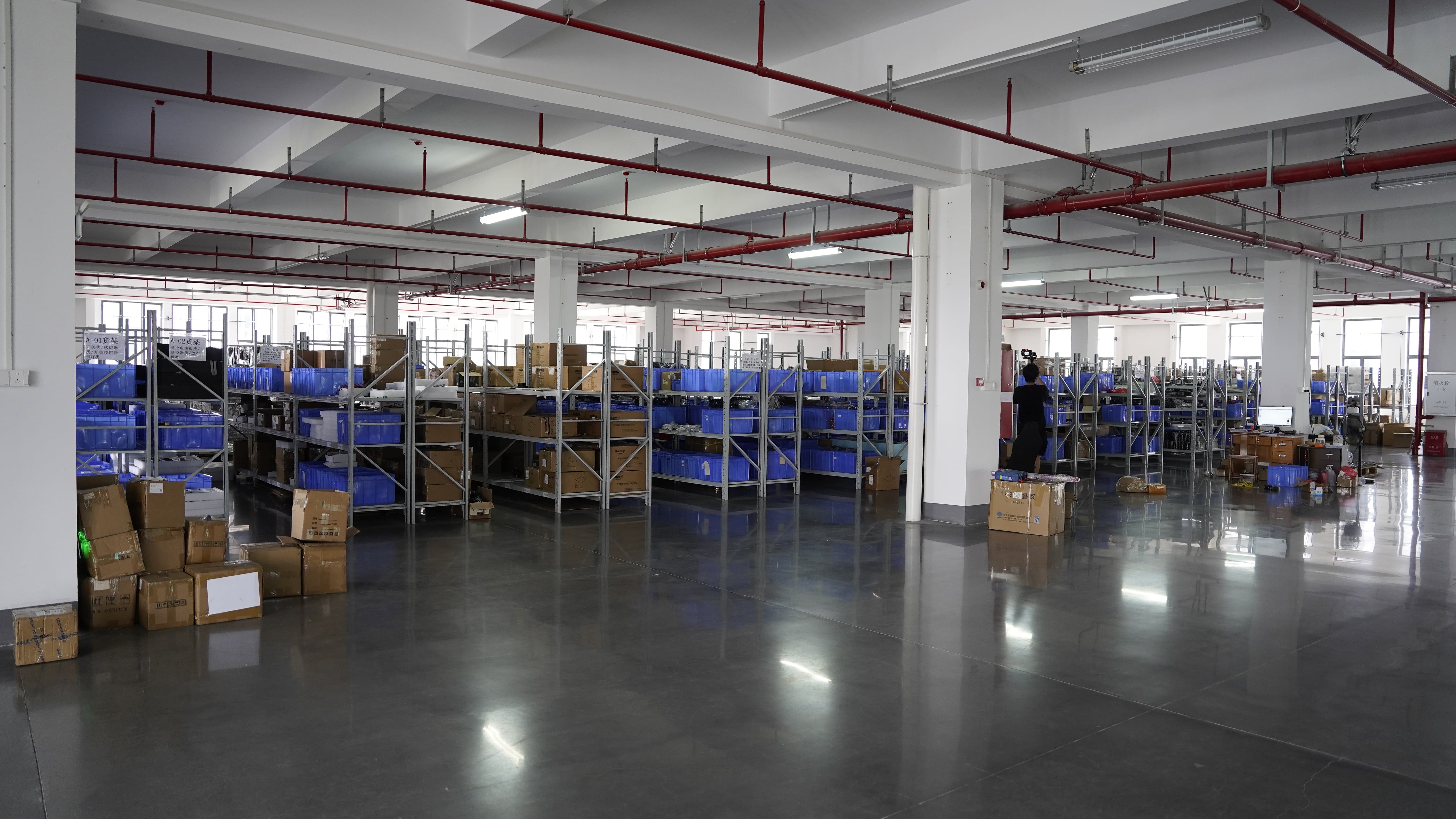
XINFLYING is the brand of Guangzhou Xin Flying Digital Technology Co., Ltd., a digital printing equipment manufacturer founded in 2010 that produces DTF printers, UV DTF printers, UV printers, DTG printers and dye sublimation printing solutions. The company operates 37,440 m² of manufacturing space with more than 200 employees and an R&D team of 20 engineers, exports roughly 80% of its output to North America, South America, Europe, Asia, the Middle East and Africa, and supports customers through local warehouses and technical support in key markets. Annual output exceeds 20,000 units, with monthly capacity of more than 1,600 units. That scale matters for lifecycle maintenance because spare-parts continuity and technical staffing are functions of manufacturing depth.
1. What belongs in the SLA
A service-level agreement for a sublimation printing machine should name machines, channels, and obligations rather than describe intentions. The practical scope covers:
- Equipment scope: every model and unit covered, from the single-head XF-H1301X-1I32A1 through to the fifteen-head XF-19E15-PRO, listed by model and machine identity.
- Support channel and hours: XINFLYING provides 24/7 online technical support delivered by a team of more than 50 engineers, which is the baseline capability a buyer should be able to compare against other vendors.
- Escalation path: who responds first, who escalates, and what triggers an on-site visit rather than a remote session.
- Software and RIP-level support: Maintop is supplied as standard on the XINFLYING sublimation range, with RIIN, PhotoPrint and Printfactory available as options. Colour and workflow problems frequently sit in RIP configuration rather than in hardware, so SLA language should cover it.
- Spare parts and consumables: an agreed list with reorder points, not a general promise of availability.
- Training and documentation handover: operator-level training plus the technical file package.
- Performance baseline: the approved first-article print and the colour target that later service calls are measured against.
2. What an annual maintenance plan should contain
An annual maintenance plan converts daily habits into scheduled work. For machines used in continuous production, daily nozzle checks and regular cleaning are the recommended routine, supported by periodic inspection of the ink system and printhead alignment.
Printhead clogging is the most common issue in sublimation printing, and the plan should address each documented cause: sublimation ink drying inside the printhead, extended idle periods, an unstable ink supply, skipped cleaning cycles, and unsuitable or low-quality ink. The standard response sequence is a nozzle check, a printhead cleaning cycle, verification of continuous ink flow, deeper cleaning where the supplier instructs it, and a test print to confirm recovery.
Colour maintenance is the second pillar. Colour deviation usually traces back to incorrect ICC profile settings, RIP parameters that were never properly configured, ink quality or compatibility issues, or the wrong temperature and transfer time during heat pressing. Maintaining a written record of optimised RIP settings for each recurring order prevents the same problem from being solved twice.
Environmental control belongs in the plan as a measured variable, not an assumption. The XF-19E15-PRO and XF-19E8-PRO are specified for 18°C-30°C and 35%-65% RH; the XF-O2000-4I32A1 for 20°C-25°C and 45%-65% RH; the XF-H1802X-2I32A1 and XF-H1301X-1I32A1 for 20°C-35°C and 45%-65% RH. A machine that drifts outside those bands will generate service tickets that no SLA can resolve.
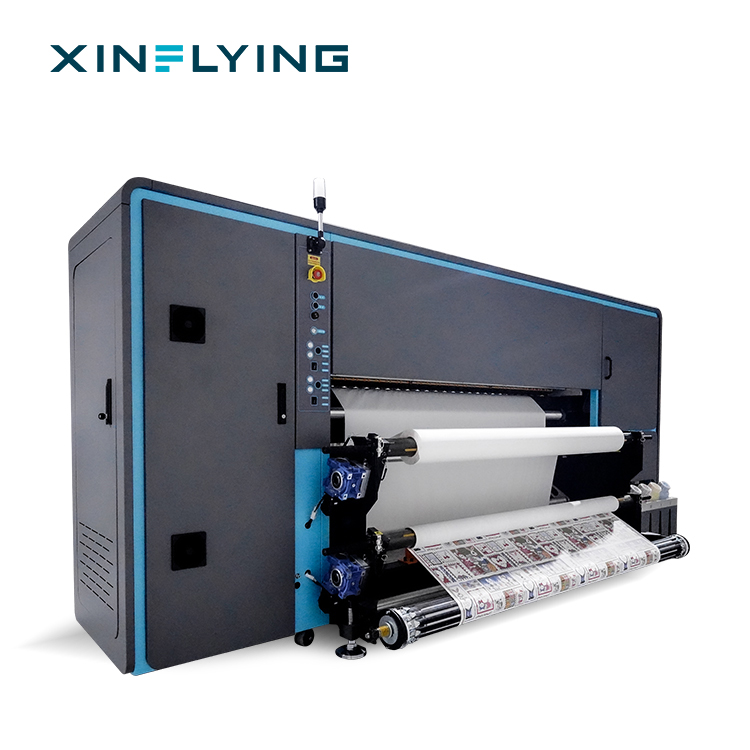
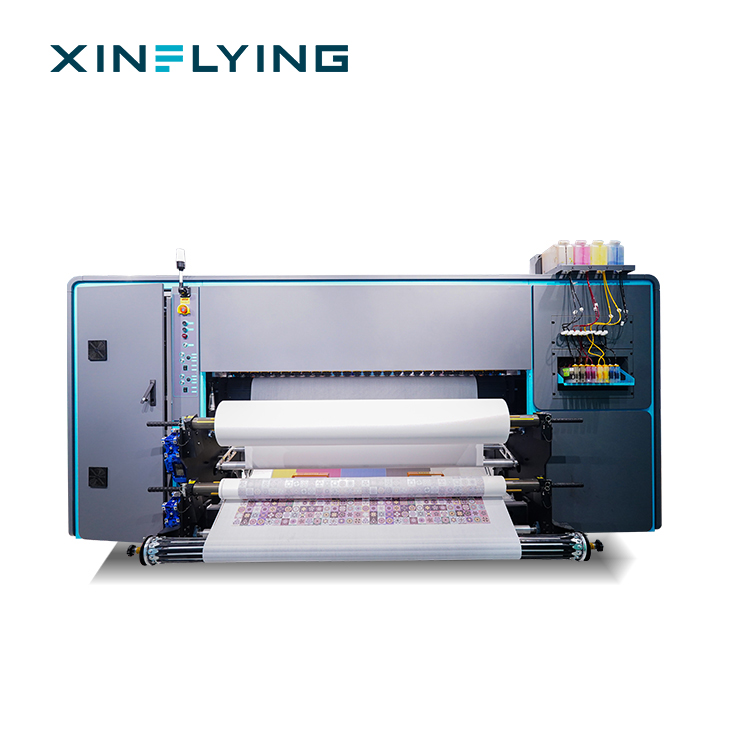
Several design decisions reduce the maintenance load over time. The XF-19E15-PRO and XF-19E8-PRO use fully sealed automatic moisturizing and cleaning, with an external intelligent air-heat integrated dryer and, on the XF-19E8-PRO, anti-collision devices at both ends, a liquid level and waste ink alarm, a Japan THK silent linear guide, and a US-imported fluorine rubber pressure paper wheel. On the XF-O2000-4I32A1, an integrated IR and cooling fan system with front-middle-rear break-controlled heating supports stable transfer across long runs. These are the features that make a five-year plan realistic rather than aspirational.
3. Keeping traceability and compliance documents current
Compliance is where lifecycle maintenance becomes legal exposure. For the European market, buyers should verify CE compliance including applicable electrical safety, electromagnetic compatibility and product safety requirements. RoHS compliance confirms that electrical and electronic components meet restrictions on hazardous substances. For the US market, FCC compliance is commonly required to control electromagnetic interference, with additional safety documentation depending on configuration and channel.
The important discipline is model matching. A valid certificate for the wrong configuration is not compliance. Buyers should confirm that certification information corresponds to the equipment actually being supplied, because incorrect or incomplete documents can cause customs delays, sales restrictions and additional compliance costs. Traceable references such as the Machinery Directive certificate reference MD M.2026.206.C142365 are only meaningful if they can be traced to a specific machine and remain valid as that machine is updated or reconfigured.
This is why compliance should be written into the SLA as a recurring deliverable with a renewal schedule. Traceability expectations in regulated markets evolve, and when a standard or machine revision changes, the vendor must re-confirm or re-issue the document set. ISO 12647-8:2021 gives the two parties a common reference for validating digital print processes, which is useful when a client needs to demonstrate process consistency to its own customers.
4. Consumables, spares and capacity planning
A sublimation printer is never the only asset in the plan. A dye sublimation production line typically pairs the printer with RIP software, a heat press calender, dye sublimation paper, dye sublimation ink, a laser cutting machine and prepared substrates. Consumable planning therefore spans several suppliers, and the vendor relationship should clarify which of those the vendor supports and which it does not.
XINFLYING operates with a minimum order quantity of one unit and a stated lead time of 5-40 days, supported by pre-shipment testing before dispatch. The company also offers OEM and ODM engagement covering product branding, machine appearance, colour, logo and packaging customisation, plus customised solutions based on customer requirements, which matters for distributors and brand owners building their own service proposition.
Step-by-Step Breakdown: Building the SLA and Annual Plan
A workable lifecycle programme can be built in seven steps, in the order below.
- Build the asset register first. Record model, printhead count and configuration, installation date, operating environment and the media types each machine runs. For a mixed fleet this might span the XF-H1301X-1I32A1, XF-H1802X-2I32A1, XF-O2000-4I32A1, XF-19E8-PRO and XF-19E15-PRO, each with different speed and width characteristics.
- Fix the performance baseline. Approve a first-article print and archive the RIP settings, ICC profile and transfer parameters that produced it. This becomes the reference for every future service call and colour dispute.
- Write the preventive calendar. Daily nozzle checks for continuous production, scheduled printhead cleaning, ink supply inspection, alignment and calibration checks, and periodic environmental verification against the specification for that model.
- Add the document renewal clause. List every certificate and declaration, its scope, the model it covers, and the review interval. Include a trigger: any machine modification restarts the verification.
- Map response tiers to your production calendar. Seasonal peaks for sportswear production do not align with a generic service schedule. Define which periods require premium response and which tolerate standard handling.
- Agree the spare-parts and consumables list. Set reorder points for the items that stop production when they run out: printheads, ink, transfer paper, cleaning consumables. Confirm dispatch expectations in writing.
- Schedule an annual review. Compare output against capacity, revisit the maintenance findings, and decide whether the next step is additional units, a wider 1900mm sublimation printer, or a change in configuration.
Use Cases: How Multi-Year Partnerships Look in Practice
The clearest evidence for lifecycle maintenance is duration. Several XINFLYING deployments have run for years, and the maintenance questions those clients raise are the ones worth putting into a contract.
Digital textile printing service provider, 5 units, 3 years. The client supplies sublimation printing services to sportswear brands, apparel factories and customised textile businesses. Reliability, production flexibility and compatibility across different polyester applications are the reasons the relationship has continued. In a service business, the maintenance plan is effectively the client's own delivery promise to its customers.
Sports uniform supplier, Brazil, 8 units, 5 years. This client produces customised football kits, training uniforms and team apparel with personalised names, numbers and graphics, and the solution lets it handle customised sportswear orders with shorter production cycles while maintaining vibrant colours and detailed patterns. Five years of operation makes colour stability and printhead servicing the central maintenance concerns.
Home textile manufacturer, 10 units, 4 years. Producing curtains, cushions and decorative fabrics, this client needed large-format textile capability with detailed patterns and consistent printing quality. Wide format sublimation printer deployments at this scale depend on a maintenance plan that protects pattern fidelity across long production runs.
Sportswear manufacturer, Brazil, 15 units, 4 years. Printing high-resolution patterns, team logos and full-colour designs on polyester fabric before cutting and sewing, this client reduced dependence on outsourced printing and achieved more consistent colour quality across batches. Batch-to-batch consistency is precisely what a documented colour baseline and a disciplined calibration schedule deliver.
A fourth pattern applies to buyers with mixed portfolios: the XF-O2000-4I32A1 is used to print personalised textile products and decorative fabric items, bridging high-volume sublimation and customised home-textile work within one facility.
Comparison Table: The XINFLYING Sublimation Printer Portfolio and Lifecycle Role
The table below summarises the five XINFLYING sublimation printing machines that appear most often in project configurations. The lifecycle column reflects where each model typically sits in a client's growth path.
| Model | Printheads | Print width | Max speed | Typical lifecycle role |
|---|---|---|---|---|
| XF-H1301X-1I32A1 | 1 x Epson i3200-A1 | 130 cm (1.3 m) | 4PASS 28 m²/h | Entry and sampling work |
| XF-H1802X-2I32A1 | 2 x Epson i3200-A1 | 180 cm (1.8 m) | 4PASS 52 m²/h | First commercial production unit |
| XF-O2000-4I32A1 | 4 x Epson i3200-A1 | 195 cm (1.95 m) | 2PASS 180 m²/h | Continuous daily production |
| XF-19E8-PRO | 8 x Epson i3200-A1 | 190 cm (75 in) | 1PASS 306 m²/h | 24/7 industrial textile output |
| XF-19E15-PRO | 15 x Epson i3200-A1 | 190 cm (75 in) | 1PASS 524 m²/h | High-volume flagship capacity |
Both the XF-19E8-PRO and XF-19E15-PRO run at 3200 dpi on sublimation ink with CMYK, and both are specified for continuous 24/7 operation in textile production facilities within 18°C-30°C and 35%-65% RH. The XF-19E15-PRO loads sublimation paper rolls of up to 1000 m, while the XF-O2000-4I32A1 supports rolls of 1000-1500 m and uses a 220 ml cartridge with a 3 L ink tank.
Frequently Asked Questions
How do we keep compliance documents valid across a multi-year sublimation printer contract?
Treat compliance as a renewable deliverable rather than a one-time file. For the EU, verify CE compliance covering electrical safety, electromagnetic compatibility and product safety, plus RoHS for electronic components. For the US, check FCC compliance for electromagnetic interference, with additional safety documentation depending on configuration. Insist that every certificate, including traceable references such as MD M.2026.206.C142365, matches the exact model supplied, and add a clause requiring the vendor to re-confirm or re-issue documents whenever a machine is updated or a standard changes. Incorrect or incomplete documentation can cause customs delays, sales restrictions and additional compliance costs.
What should an annual maintenance plan cover on a roll-to-roll sublimation printer?
For continuous production, daily nozzle checks and regular printhead cleaning are the recommended baseline. The plan should address each documented cause of clogging: ink drying inside the printhead, extended idle periods, unstable ink supply, skipped cleaning, and unsuitable ink. Colour maintenance matters equally, since colour deviation usually stems from incorrect ICC profile settings, misconfigured RIP parameters, ink compatibility issues, or wrong heat press temperature and transfer time. Add periodic alignment and calibration checks, ink system inspection, and verification that the operating environment sits inside the specification for that model.
How should a textile printer budget for lifecycle maintenance?
Budget by category rather than by guesswork: preventive cleaning consumables, printheads and mechanical spares, technician and training time, RIP and colour-management upkeep, and the administrative work of keeping compliance documents current. The plan should also account for media and ink volumes at realistic utilisation, since the XF-19E15-PRO can load 1000 m paper rolls while the XF-O2000-4I32A1 supports 1000-1500 m rolls, and those consumption patterns drive reorder cycles. Ask the vendor for a written annual plan so the numbers can be compared between suppliers instead of assumed.
How can we validate a vendor's maintenance capability before signing?
Validate on evidence rather than on promises. Ask for a recorded first-article print and the RIP and colour settings behind it, request the pre-shipment testing report that accompanies dispatch, and confirm the size and availability of the after-sales engineering team. XINFLYING, for example, states that more than 50 engineers deliver 24/7 online technical support. Ask reference questions about machines that have been running for several years, and check whether the vendor can show multi-year deployments rather than only new installations.
What lead time should we plan for, and how does it affect maintenance planning?
XINFLYING states a lead time of 5-40 days with a minimum order quantity of one unit and pre-shipment testing before dispatch, and manufacturing capacity above 1,600 units per month. Map your maintenance calendar against that production window so that planned servicing, additional units and consumable restocking do not collide with peak order periods. Spare-parts lead time should be stated separately in the SLA, because published machine lead time is not automatically the same as parts availability. Buyers who want to compare configurations and support terms can request the XINFLYING product brochure or submit a project enquiry with their production profile.
Conclusion: The Maintenance Plan Is the Partnership
Sublimation printing equipment is bought once and lived with for years. The vendors that keep clients are not necessarily the ones with the fastest machine on paper; they are the ones whose SLA names responsibilities, whose annual maintenance plan protects colour and uptime, and whose compliance documents stay traceable to the machines on the floor as standards evolve.
If you are evaluating a large format sublimation printer for a multi-year textile project, start the maintenance conversation before the purchase order, not after the first unplanned stoppage. Define the baseline, schedule the maintenance, and lock the document trail into the contract.
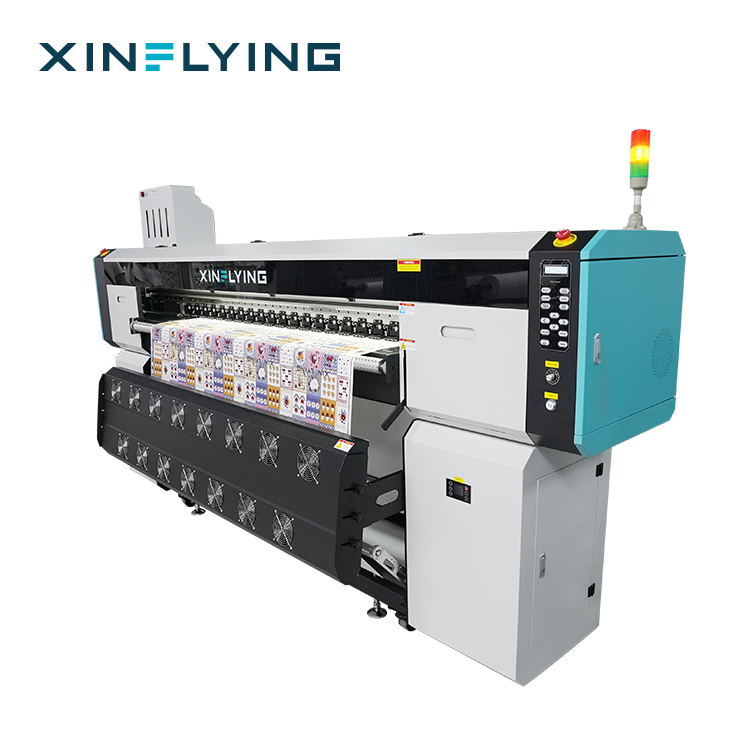
Next step: XINFLYING supports textile printers, distributors and brand owners with configuration advice, compliance documentation and after-sales planning for the full sublimation printer range.
Download the company profile and product brochure: XINFLYING Company & Product Brochure (PDF)
Guangzhou Xin Flying Digital Technology Co., Ltd. (XINFLYING)
Website: www.xin-flying.com | Blog: blog.xin-flying.com
Email: info@xin-flying.com | Tel / WhatsApp: +86 188-1322-1357
Address: No.7, Xiecun 2nd Industrial Zone, Panyu, Guangzhou, Guangdong
Have Questions or Need More Details?
Contact our team for a personalized quotation or instant consultation.
Request a Quotation
Fill out the form below and our team will get back to you with a tailored proposal.
WhatsApp Direct Chat
Prefer to chat in real-time? Message us on WhatsApp for instant assistance & quick answers.
- Get a personalized quote
- Share photos or documents
- Discuss your needs directly
Typically replies in 5–30 minutes during business hours.