
Long-Term Sublimation Printer Supply Through Master Distributors
Long-term sublimation printer supply is decided by the service layer around the machine, not by the invoice. A textile producer buying an industrial sublimation printer through a master distributor is buying four things at once: the printer, a documented conformity file, a recurring calibration routine, and a firmware and spare-parts channel that still works after the first printhead replacement. This guide sets out how to specify, verify and contract that package — and where the limits of a distributor relationship actually sit.
Most sublimation printer procurement decisions look finished on delivery day. In practice, the factors that determine whether a dye sublimation printer still holds colour accuracy in year three are almost all decided before the purchase order is signed: who performs calibration, how firmware changes are communicated, how quickly a printhead or ink-system component can be replaced, and whether the certificate file on record matches the model standing on the floor.
This article is written for textile producers, garment printers and distribution partners at the decision and execution stage. It uses the supply relationship as the unit of analysis rather than a single machine comparison, and it names the XF-C602 and XF-C604 as the reference installs for distributor-led programmes, positioned with CE LVD and EMC certification as the conformity basis for EU-bound supply.
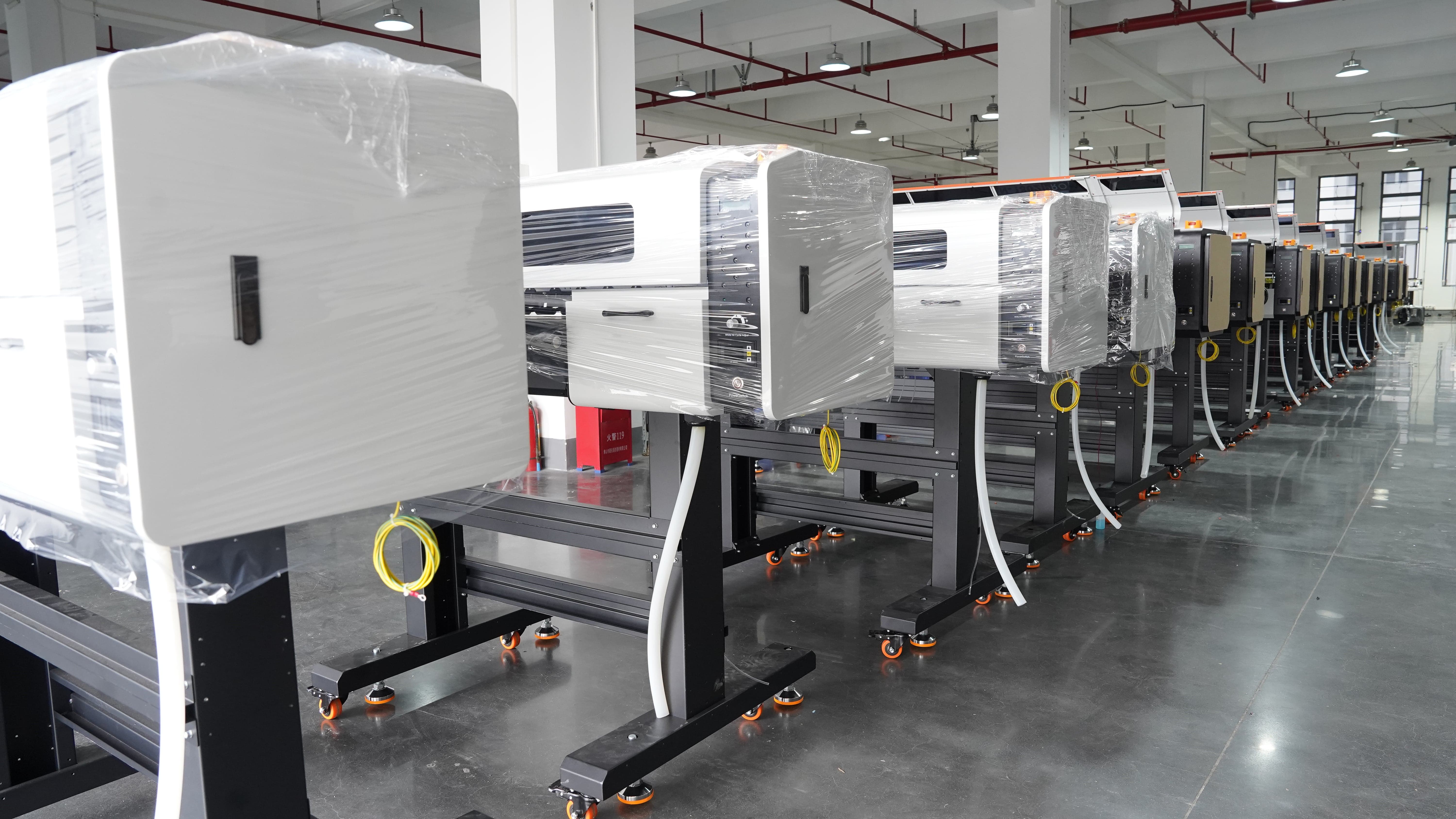
Why a single-transaction sublimation printer purchase breaks down
The deterioration pattern of an unsupported sublimation printing machine is well documented and predictable. It starts with banding, then colour drift, then unplanned stops. Each stage has a known cause, and almost every cause is a maintenance or calibration issue rather than a manufacturing defect.
Banding — horizontal lines, uneven colour fields or visible gaps in a print — is usually traced to partial printhead nozzle blockage, incorrect print resolution or speed settings, an unstable ink supply, incorrect printhead alignment, or a printer that requires calibration. The documented remedy follows the same order: run a nozzle check, clean the printhead if abnormal output appears, review speed and resolution settings, perform printhead alignment and calibration, then test print again.
Colour deviation has a different root set: an incorrect ICC colour profile, RIP software parameters that were never configured for the ink and substrate in use, ink quality or compatibility problems, incorrect heat-press temperature or transfer time, and colour differences caused by switching materials. Printhead clogging — missing lines, incomplete colours, uneven ink output — typically follows dried sublimation ink, extended printer inactivity, an unstable ink supply, skipped cleaning routines, or unsuitable ink.
None of these failures is solved by buying a faster machine. They are solved by a relationship that assigns someone responsibility for the routine: a calibration schedule, a nozzle-check discipline, a colour-management handover, and a parts pipeline. That is the practical definition of long-term supply.
Industry background: where dye sublimation demand actually sits
Dye sublimation is a heat-transfer process in which dye or ink changes directly from a solid to a gaseous state under heat without becoming liquid, as described in the Printing Industries of America technical guide on sublimation heat-transfer printing. That mechanism explains the material restriction that governs every procurement conversation: polyester-based textiles, or materials with a polyester coating, are the suitable substrate family.
Scale matters when choosing a channel. Grand View Research valued the global dye sublimation printing market at USD 16.4 billion in 2025, covering printers, inks and consumables, with Asia Pacific holding a 36.5% revenue share in the same year. Smithers reports that the garments segment accounts for 71.9% of total dye sublimation printing volume. Both figures point in the same direction: the installed base is concentrated in apparel, and apparel production is consumable-intensive and schedule-sensitive.
Treat those numbers with their definitions attached. Research houses do not measure the same thing — one widely circulated valuation covering downstream printed fabric sits far above the USD 16.4 billion hardware-and-consumables figure, and the two should never be blended into a single total. Market size also says nothing about whether a specific distributor can deliver a specific machine in a specific month.
The manufacturer context for this guide is XINFLYING — formally Guangzhou Xin Flying Digital Technology Co., Ltd., a digital printing equipment manufacturer founded in 2010, operating a 37,440 m² facility with 200+ employees, a 20-engineer R&D team, a company-reported annual output of 20,000+ units, and an export ratio of 80% across North America, South America, Europe, Asia, the Middle East and Africa, supported by local warehouses and technical support in key markets.
What a master distributor is responsible for
A master distributor is a channel partner that holds territory or portfolio responsibility for a manufacturer's range, carries stock and first-line technical capability, and acts as the single commercial and service interface for downstream buyers. In a sublimation printer programme, that responsibility converts into five concrete deliverables: equipment supply, conformity documentation, consumable and spare-parts continuity, calibration and training support, and the escalation path back to the factory.
The distinction from a trading intermediary is not paperwork — it is accountability. A trading intermediary typically brokers a machine and exits the relationship at delivery. A master distributor remains answerable for what happens when a printhead needs replacement, when a firmware revision changes a print parameter, or when a customer's colour targets drift between batches.
Commercial terms are usually inherited from the manufacturer's programme level. XINFLYING's purchasing terms, for reference, are a minimum order quantity of one unit, delivery terms of EXW, FOB, CIF or DDP, acceptance criteria based on pre-shipment testing, and payment by T/T, Western Union or PayPal. Buyers evaluating a distributor should confirm which of these terms the distributor actually honours locally, because the answer determines landed cost and risk allocation, not just price.
The service layer: calibration and firmware as contract items
Calibration and firmware management are the two service items most often left verbal, and the two that most reliably cause disputes in year two. Both should be written into the distributor agreement with a named owner, a cadence, and an evidence trail.
Calibration: define the cadence, not the concept
Calibration in sublimation printing is not a single annual event. It is a layered routine that matches the failure modes documented above:
- Daily: nozzle check before production starts, with the result recorded rather than remembered.
- Per colour change or per substrate change: confirmation that the correct ICC profile is loaded and that RIP parameters match the ink and material in use.
- After any mechanical intervention: printhead alignment and calibration following head replacement, transport damage or a significant service operation.
- Per batch or per customer approval cycle: colour verification against the agreed target, including heat-press temperature and transfer time checks, since transfer conditions shift colour as much as printer settings do.
- Continuous: environmental control. The recommended working envelope for this equipment class is 18°C–30°C and 35%–65% relative humidity, in a controlled indoor production environment.
For a distributor programme, the agreement should state who executes each layer, what record is produced, and how quickly a colour drift complaint is escalated. A distributor that cannot describe its own calibration workflow in these terms is reselling, not supporting.
Firmware: require a written policy before you need one
Firmware affects print parameters, communication with RIP software and, in some cases, safety-relevant behaviour. The failure mode is not the update itself — it is an undocumented update applied mid-production with no rollback path and no re-calibration afterwards.
A workable firmware clause covers five points: a version register that identifies what is installed on each machine; advance notice before any update is applied; a rollback procedure if output degrades; mandatory re-verification of nozzle performance, alignment and colour targets after any update; and a named party authorised to apply updates. Note that this is a contractual requirement to negotiate, not a statement about any specific manufacturer's current update policy — verify the actual policy in writing with the distributor and the factory before signing.
Model-specific performance data — rated speed, resolution, ink configuration — should be taken from the current datasheet for the exact unit being supplied, not from a channel guide. This article deliberately does not restate specifications for the XF-C602 and XF-C604 for that reason.
| Service item | What to write into the agreement | How to verify it is real |
|---|---|---|
| Calibration cadence | Named engineer, daily nozzle-check record, alignment after head service, per-batch colour verification | Ask for a completed calibration log from an existing customer installation |
| Colour management | ICC profile handover at commissioning, profile ownership, revision control | Request the profile package and the RIP workflow document before the PO |
| Firmware policy | Version register, pre-update notice, rollback path, post-update re-verification | Ask to see the current version list for the model you are buying |
| Spare parts | Stocked item list, replenishment interval, consumable compatibility statement | Confirm which parts the distributor holds locally versus orders from the factory |
| Training | Operator training on daily checks, RIP settings and first-line troubleshooting | Require a training agenda and a post-training competency check |
| Escalation | Response window, remote diagnostics route, on-site trigger conditions | Test the channel once with a non-critical query before signing |

The reference installs: XF-C602 and XF-C604 in a distributor programme
For distributor-led supply, the reference installs named in this guide are the XF-C602 and XF-C604, supplied with CE LVD and EMC certification documentation. Those two conformity areas match what EU-bound equipment buyers are advised to verify: CE compliance covering electrical safety and electromagnetic compatibility, supported by valid certification documents, test reports and technical files that correspond to the actual printer model being supplied.
Treat certification as a verification task, not a reassurance. Before signing, request the certificate numbers, the issuing body, the standards cited, and the covered-model list, then confirm that the model designation on the certificate matches the machine on the order — including any configuration differences. Incomplete or mismatched compliance documentation is a recognised cause of customs delay, sales restriction and additional compliance cost in the European market. Where RoHS obligations apply to the electrical and electronic components, request those documents for the same exact model.
Distributors rarely sell a single configuration, so a portfolio view matters. Alongside the XF-C602 and XF-C604, the manufacturer's range includes capacity tiers that a distributor may need to quote to different customer profiles. The figures below are manufacturer-stated specifications and should be re-confirmed on the current datasheet at the time of order.
| Model | Printhead configuration | Print width | Print speed (manufacturer-stated, up to) | Typical customer profile |
|---|---|---|---|---|
| XF-H1802X-2I32A1 | 2 × Epson i3200-A1 | 1800 mm | 52 ㎡/h | Startups, sampling, small-batch custom textile orders |
| XF-O2000-4I32A1 | 4 × Epson i3200-A1 | 1950 mm | 180 ㎡/h | Growing printers running continuous daily production |
| XF-19E8-PRO | 8 × Epson i3200-A1, 3200 dpi | — | 306 ㎡/h | Textile factories and professional sublimation production centres |
For a master distributor, the practical implication is that the service agreement must scale with the portfolio, not with one model. A 52 ㎡/h entry machine and a 306 ㎡/h industrial unit do not need the same calibration frequency, the same spare-parts depth, or the same operator skill level. Writing one service template and applying it to both is how distributors lose their industrial accounts.
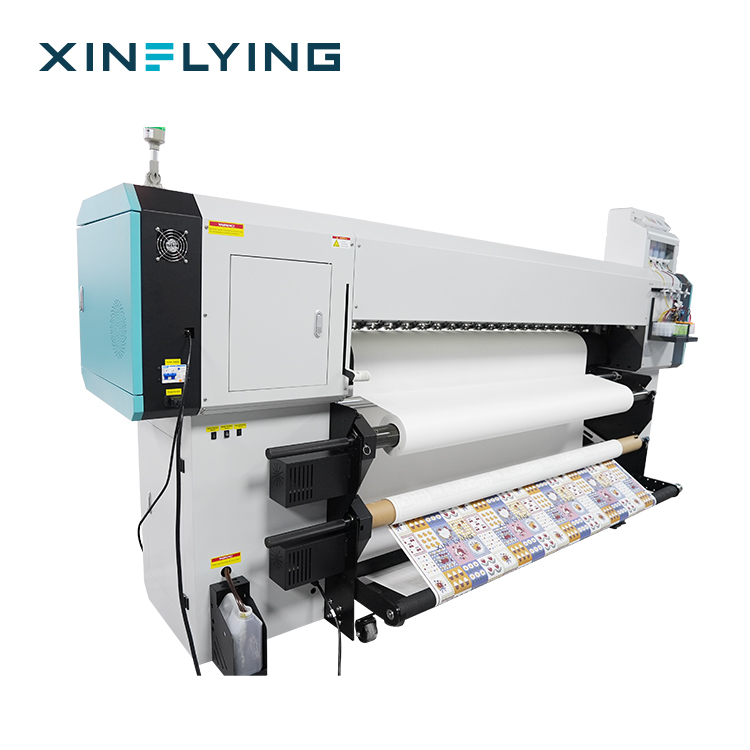
Step-by-step: sourcing a sublimation printer through a master distributor
The sequence below is ordered deliberately. Compliance and service scope are settled before price, because a lower price on an unsupported channel is not a saving — it is a deferred cost with interest.
Step 1 — Define the production envelope
Fix the substrate family (polyester content and coating), the maximum roll width, the daily and monthly volume, and whether operation is continuous. Confirm the site can hold 18°C–30°C and 35%–65% RH, since unstable conditions undermine every downstream calibration claim. Define the matched equipment set as well: RIP software, heat-press calender, dye sublimation paper, dye sublimation ink, cutting equipment and substrates.
Step 2 — Qualify the distributor's technical capability
Ask who performs calibration, what diagnostic tools are on site, and which spare parts are held locally. A distributor that answers in generalities at this stage will answer in generalities during a breakdown.
Step 3 — Verify conformity documents against the exact model
Request CE LVD and EMC documentation, plus RoHS where applicable, and confirm the certificate covers the model and configuration being delivered. Where the destination market is outside the EU, check the equivalent requirements — for the United States, electromagnetic compatibility and electrical safety documentation are the standard items to request alongside product specifications and test reports.
Step 4 — Fix the service scope in the agreement
Use the service table earlier in this guide as the clause checklist. Calibration cadence, firmware policy, spare-parts list, training and escalation windows all belong in writing before the commercial terms are finalised.
Step 5 — Validate with a pre-shipment test and an acceptance protocol
Pre-shipment testing is the stated acceptance criterion in this supply programme, and it should generate evidence: nozzle-check output, test prints on the buyer's own substrate where possible, colour measurements against the agreed target, and a record of the RIP settings used. Confirm the ink system type and the consumables the distributor will supply, so the acceptance test reflects production conditions.
Step 6 — Commission against a written checklist
Commissioning follows a fixed order: stable placement and power connection, ink system installation with verified flow, driver and RIP configuration, nozzle checks and printhead inspection, initial calibration, then test prints and parameter adjustment before any volume production begins. Do not begin large-scale production before test printing is signed off.
Step 7 — Establish the operating routine
Daily nozzle checks, recorded maintenance, environment monitoring, and a documented response when print quality drops suddenly: check nozzle status, clean if needed, verify ink supply, then review printing parameters. This routine is what a calibration clause actually buys.
Step 8 — Review quarterly against measurable indicators
Track unplanned downtime hours, colour deviation against approved targets, spare-parts consumption, firmware version status and first-response time. These five indicators tell a buyer whether the distributor relationship is performing, long before a contract renewal conversation.
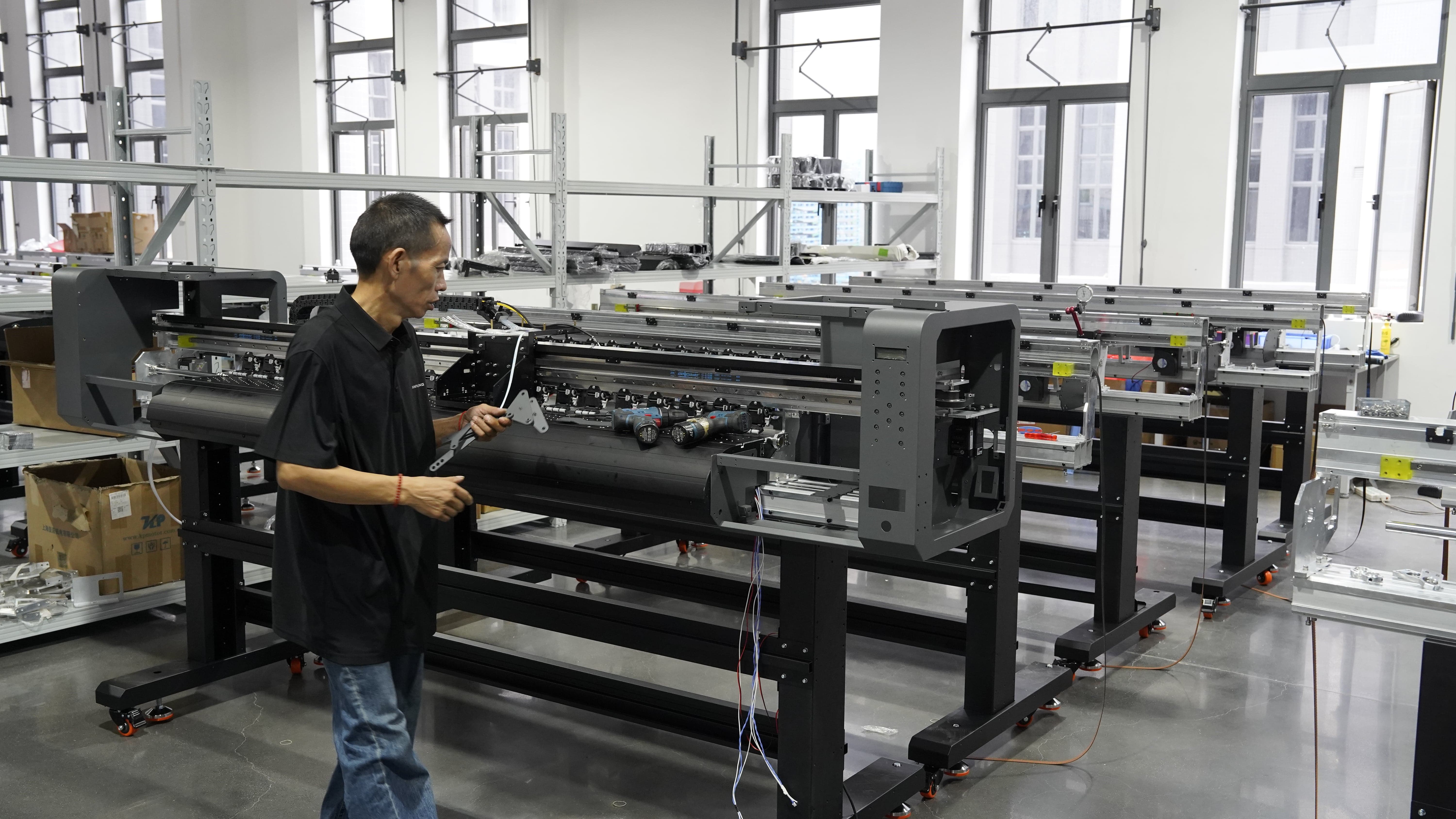
Use cases: where the distributor model earns its cost
Sportswear and full-surface apparel. Sublimation customisation is well suited to sports and functional shirts with multiple logos or full-surface designs, and garments account for the dominant share of sublimation print volume. For this segment, colour consistency across repeat team orders is the commercial risk, which makes per-batch colour verification and ICC profile control the two most valuable service items in the agreement.
Home textile and wide-format roll-to-roll work. Large-format sublimation printing for home textiles and decorative fabric runs on long, uninterrupted jobs. Here the priorities shift to continuous-production stability, spare-parts depth and consumable continuity, because a mid-run stop wastes both substrate and calendar time.
Distributor portfolio management. A master distributor serving mixed accounts needs a tiered service model: lighter calibration support and remote diagnostics for entry-level commercial sublimation printer customers, and scheduled on-site verification with stocked critical parts for industrial accounts running continuous shifts.
Channel comparison: what changes between supply routes
The table below is decision guidance, not measured performance data. It compares the structural responsibilities of three supply routes across the dimensions that matter over a multi-year horizon.
| Dimension | Factory-direct purchase | Master distributor | Local trading intermediary |
|---|---|---|---|
| Conformity documentation | Obtained from the manufacturer; buyer manages the file | Held and re-issued locally, ideally matched to each delivered model | Variable; often passed through without model-level checking |
| Calibration support | Factory remote guidance; on-site depends on market coverage | First-line calibration and colour management as a contracted service | Typically not offered |
| Firmware communication | Direct from the manufacturer | Distributor relays versions and manages the update schedule | Usually absent |
| Spare parts | Ordered internationally per incident | Local stock plus factory replenishment | Case-by-case sourcing |
| Commercial terms | MOQ 1 unit; EXW, FOB, CIF or DDP; T/T, Western Union or PayPal | Programme terms adapted to local market and stock holding | Locally negotiated, terms vary by deal |
| Escalation path | Direct to factory technical team | Structured: distributor first line, factory second line | Unclear ownership |
| Best fit | Buyers with in-house engineering and import capability | Buyers prioritising uptime, documentation and continuity | One-off or low-volume purchases |
Risks and boundaries a distributor relationship does not remove
A strong channel reduces operational risk; it does not eliminate commercial or technical risk. Four boundaries deserve to be stated plainly.
- Capacity claims are not delivery guarantees. A company-reported annual output of 20,000+ units across a portfolio says something about manufacturing scale. It does not promise that a particular model will ship in a particular month, and it should not be read as a lead-time commitment.
- Certification is model-specific. A CE LVD and EMC file for one model does not transfer to another configuration. Model-to-document matching is the buyer's check, every time.
- Published field data is thin. Independently validated field speed, total cost of ownership and defect rates for large-format sublimation printers are not reliably available in public sources. Buyers should treat verification steps — acceptance testing, calibration logs, reference installations — as the substitute for data that does not exist.
- Market figures are context, not demand forecasts for your line. Segment shares describe an installed base; they do not predict whether a given distributor's territory will absorb your output.
Frequently asked questions
What compliance documents should a master distributor supply with an industrial sublimation printer?
For EU-bound equipment, the distributor should supply CE documentation covering electrical safety (LVD) and electromagnetic compatibility (EMC), together with test reports and technical files that correspond to the exact printer model delivered; RoHS documentation should be added where restrictions on hazardous substances in electrical and electronic components apply. For the United States, request electromagnetic compatibility and electrical safety documentation alongside product specifications and certification records. In every market the same test applies: the model designation on the document must match the machine on the order, including configuration differences.
Which calibration and firmware services should a long-term distributor agreement include?
The agreement should name who performs calibration, at what cadence, and what record is produced: a daily nozzle check, printhead alignment and calibration after any head service or transport, per-batch colour verification against approved targets including heat-press temperature and transfer time, and ICC profile control within the RIP workflow. For firmware, require a version register, advance notice before updates, a rollback procedure, mandatory re-verification of nozzle, alignment and colour performance after any update, and a named party authorised to apply changes. Ask to see a current version list before signing.
What commercial terms should be fixed for long-term sublimation printer supply?
Fix the terms that determine landed cost and risk allocation rather than the unit price alone: minimum order quantity, delivery terms, acceptance criteria and payment method. In this supply programme those are a minimum order quantity of one unit, delivery terms of EXW, FOB, CIF or DDP, pre-shipment testing as the acceptance criterion, and payment by T/T, Western Union or PayPal. A distributor should confirm in writing which of these it honours locally, how stock holding affects them, and which party carries freight, insurance and import clearance.
How should a buyer validate a distributor before committing to a multi-year agreement?
Validate the channel the same way you would validate the machine: with evidence. Request a completed calibration log from an existing installation, the ICC profile package and RIP workflow document, the current firmware version list, and a written spare-parts list showing what is stocked locally. Run pre-shipment testing that includes nozzle-check output, test prints on your own substrate, and colour measurement against your approved target. Then test the escalation channel once with a non-critical technical query and record how long a substantive answer takes.
How can a textile producer reduce lead-time and downtime risk over a multi-year contract?
Downtime risk is managed through three levers: local stock, planned maintenance and trained operators. Confirm which critical parts the distributor holds in-market versus orders from the factory, agree a replenishment interval for consumables, and schedule calibration so it happens before production rather than after a failure. Train operators on daily nozzle checks, first-line troubleshooting and parameter records, because most banding and colour-deviation incidents are resolved at that level. Review the contract annually against measured downtime hours and first-response time, and revise stock lists based on actual consumption.
Next step. If you are specifying a distributor programme and want the equipment and service scope reviewed together, download the XINFLYING corporate brochure (PDF) for the company profile and portfolio overview, and send your production envelope — substrate, width, daily volume and target market — to info@xin-flying.com so the model and service package can be matched before a quotation is issued.
Conclusion
Sourcing an industrial sublimation printer through a master distributor is a way of buying continuity rather than a way of buying hardware. The machine determines what the line can produce; the distributor relationship determines how much of the time it actually produces it. Buyers who treat calibration cadence, firmware policy, conformity documentation and spare-parts access as contract items — not as after-sales goodwill — are the ones whose equipment still hits colour targets in year three.
For programmes built on the XF-C602 and XF-C604, with CE LVD and EMC certification as the conformity basis, the sequence is straightforward: define the production envelope, verify the documents against the exact model, write the service layer into the agreement, prove it with pre-shipment testing, and measure it quarterly. Everything else — including price — is a negotiation. Supply continuity is a specification.
Have Questions or Need More Details?
Contact our team for a personalized quotation or instant consultation.
Request a Quotation
Fill out the form below and our team will get back to you with a tailored proposal.
WhatsApp Direct Chat
Prefer to chat in real-time? Message us on WhatsApp for instant assistance & quick answers.
- Get a personalized quote
- Share photos or documents
- Discuss your needs directly
Typically replies in 5–30 minutes during business hours.