
Post-Purchase Lifeline: Sustainment Certificates for Your Sublimation Printer
Post-Purchase Lifeline: Sustainment Certificates for Your Sublimation Printer
Most buyers treat certification as a pre-purchase checkpoint: request the compliance file, check it once, file it away. The document set that decides whether the same sublimation printer can still be shipped, sold and operated five years later is the one that is actively maintained after installation. That maintenance obligation, not the initial certificate, is what this guide covers.
A sublimation printer is normally evaluated on print width, printhead count and production speed. Compliance paperwork sits at the bottom of the evaluation sheet. In practice, a sustainment certificate is an asset-protection tool: it is the maintained record that connects a specific machine model to the markets where it can legally be placed, and it is the first document a customs officer, a retail buyer's quality team or a tender reviewer will ask for.
Problem Definition: When the Paperwork Is Older Than the Machine
Most compliance problems in textile printing do not begin with a fraudulent certificate. They begin with a real certificate that no longer describes the real machine. A document is issued against a product configuration at a specific point in time, and four things commonly change afterwards.
- Component changes. Production batches are revised, and a part from a different supplier enters the machine.
- Market changes. A unit originally placed in one region is later resold or relocated to a market with different market-access requirements.
- Fleet changes. A distributor adds machine sizes, and a document system that worked for one model becomes unworkable for five.
- Ownership changes. Machines are resold, rented out or rebranded, and the next holder inherits the file without inheriting the buyer's knowledge of it.
Restricted-substance status is the layer that drifts fastest. RoHS compliance helps confirm that electrical and electronic components meet restrictions on hazardous substances, and that confirmation is only meaningful for the components actually used in the machine being shipped. Buyers are therefore advised to request the relevant environmental compliance documents from suppliers and to verify that these documents apply to the actual equipment model rather than to a product family in general.
The consequences are administrative rather than dramatic, which is precisely why they get underestimated. Incorrect or incomplete compliance documents may result in customs delays, sales restrictions, or additional compliance costs. None of those outcomes damages the machine; all of them damage the production schedule the machine was bought to serve.
Why Certificate Scope Matters More Than Certificate Count
There are two ways to run compliance documentation in a textile printing business. The first is one certificate per model, renewed and filed separately. The second is an extended-scope certificate that covers a defined family of models under a single reference. For an importer or distributor carrying three or four machine sizes, the second approach removes an entire category of administrative work.
Scope is where a sustainment certificate earns its name. The extended scope of certificate M.2026.206.C142366 covers multiple models in the Xinflying sublimation printer range, including the XF-O2000-4I32A1. Instead of managing a folder of single-model documents, a distributor can hold one reference document and check it quickly when a customer, a freight forwarder or a customs broker asks a question.
The condition attached to that convenience is verification. A scope document is only useful when the copy on file names the exact model and configuration being shipped, so the same discipline that applies to a single-model certificate still applies here: confirm the model designation, the electrical configuration and the intended market before the machine leaves the warehouse.
Industry Background: A Bigger Installed Base Means a Bigger Documentation Load
Compliance work scales with the market, and the market is expanding. Grand View Research values the global dye sublimation printing market at USD 16.4 billion in 2025 and projects USD 39.0 billion by 2033, a CAGR of 11.5% from 2026 to 2033. The equipment segment tells the same story on a smaller scale: Mordor Intelligence values the dye sublimation printers segment at USD 1.88 billion in 2025 and expects USD 2.53 billion by 2030.
That installed base is geographically concentrated. Grand View Research reports that Asia Pacific accounted for a 36.5% revenue share of the dye sublimation printing market in 2025, led by China as the largest country market, which is why a large share of the world's industrial sublimation equipment, including the Xinflying roll-to-roll range, is manufactured and documented in China for export. In the wider equipment market, Fortune Business Insights values the large format printer market at USD 10.57 billion in 2025, projected to reach USD 16.52 billion by 2034, while Grand View Research notes that inkjet production printers accounted for 87.3% of the production printer market share by type in 2024.
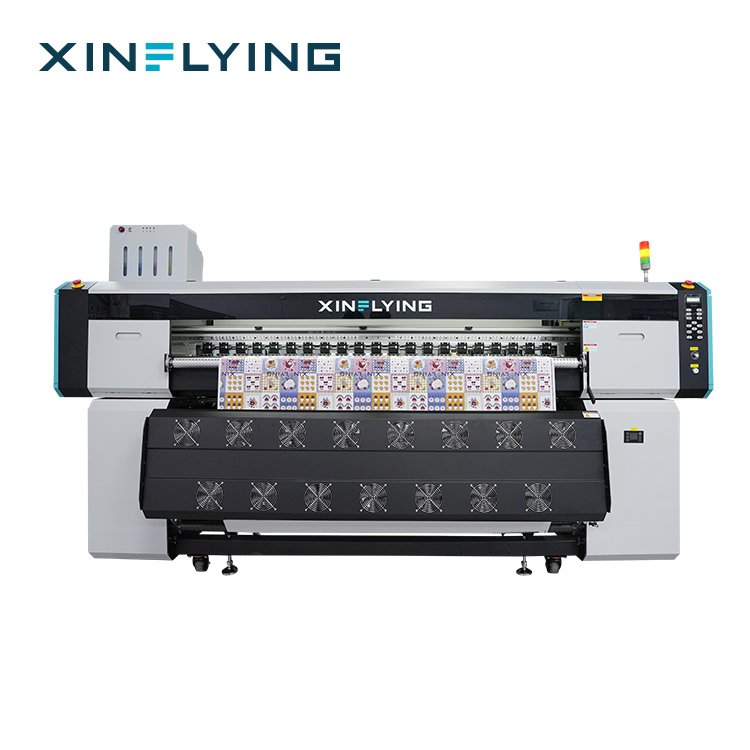
Two structural details explain why fleet-level documentation has become normal rather than exceptional. First, FESPA industry analysis treats roll-to-roll sublimation printers at 1.9 m (1900 mm) width as the standard configuration for high-volume textile and soft signage work, so buyers frequently operate several machines of similar width instead of a single unit. Second, demand for personalized apparel and home decor, the driver Grand View Research identifies behind the 13.1% CAGR projected for the digital textile sublimation market through 2030, pushes producers toward shorter runs, more product types and more models in simultaneous service.
One clarification prevents a common filing error. Not every standard that appears in a sublimation printer folder is a market-access document. ISO 12647-8:2021 covers validation of print processes working directly from digital data; it is a process and colour-quality standard that belongs with production records, not with the certificates that customs authorities and retail buyers review.
Detailed Solution: What a Sustainment Certificate Actually Covers
A sustainment certificate is not a marketing sheet. It is a maintained document set that keeps four layers aligned with the machine standing in the hall.
Layer 1 - Restricted substances (RoHS)
RoHS compliance confirms that electrical and electronic components meet restrictions on hazardous substances. This layer needs the most attention after delivery because it is tied to components rather than to a finished machine. When a production batch, an electrical part or a supplier changes, the supporting declaration must be re-confirmed against the actual equipment model. Buyers operating in regulated markets should treat the RoHS record as a living document, reviewed on a schedule rather than archived at installation.
Layer 2 - Market access (CE, FCC and related requirements)
For the European market, buyers should verify CE compliance, including applicable electrical safety, electromagnetic compatibility and product safety requirements, supported by valid certification documents, test reports and technical files that match the actual printer model. For the United States, FCC compliance is commonly required for electronic equipment in order to control electromagnetic interference, and depending on the product specifications and sales channels, additional safety certifications may also be required. A supplier serving both regions should be able to produce the matching file for each model configuration, including its voltage variant.
Layer 3 - Model scope
Certificate M.2026.206.C142366 is issued with an extended scope covering multiple models in the Xinflying sublimation printer range, including the XF-O2000-4I32A1. For a distributor or importer handling more than one size, that extended scope replaces a folder of single-model documents with one reference that can be checked in minutes, provided the copy held on file names the exact model and configuration being shipped.
Layer 4 - The organisation behind the document
Documents are only as durable as the organisation maintaining them. Xinflying, formally Guangzhou Xin Flying Digital Technology Co., Ltd., is a manufacturer of digital printing equipment established in 2010 and based at No.7, Xiecun 2nd Industrial Zone, Panyu, Guangzhou, Guangdong. The company operates a manufacturing facility covering 37,440 m2, employs more than 200 staff, including an R&D team of 20 engineers, and reports annual production capacity exceeding 20,000 units. Its product range covers DTF printers, UV DTF printers, UV printers, DTG printers and dye sublimation printing solutions, along with printing consumables and complete digital printing solutions.
The service layer matters as much as the paper. Buyers qualifying a long-term equipment partner should look for professional installation guidance, remote technical support, operation training, maintenance recommendations and long-term spare parts availability. That combination is what keeps a machine productive when a fault appears three years after delivery rather than three weeks after installation.
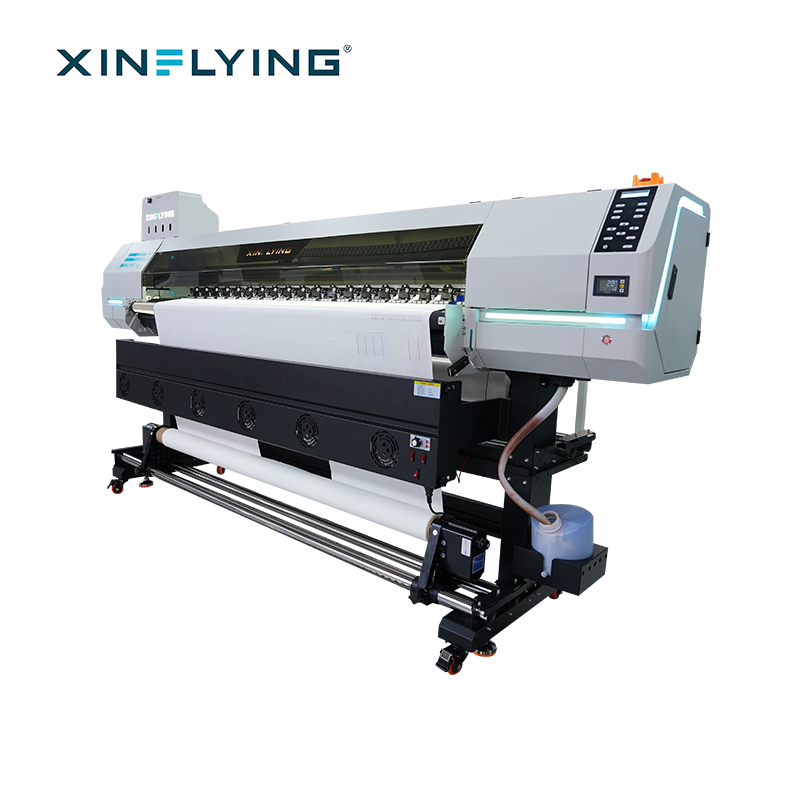
The XF-O2000-4I32A1 is a useful reference for how model documentation is built. It is a digital textile printer classified as a sublimation printer, with a 195 cm (1.95 m) print width, four Epson i3200-A1 printheads in a CMYK+CMYK+CMYK+CMYK ink configuration, print speeds of 180 m2/h at 2PASS and 92 m2/h at 4PASS, and an intended application range covering clothing, home decor, canvas bags, cushions and flags. Each of those attributes, from width to head count to ink configuration, is a field that a compliance document has to state correctly, which is why model-level verification is a working routine rather than a formality.
Step-by-Step Breakdown: Building a Document Sustainment Routine
Step 1 - Register documents at model level, not order level
Create one record per model designation and keep it separate from purchase orders. A file organised by order number becomes unusable the moment the same model is bought twice in different configurations. Model-level records also allow an extended-scope certificate such as M.2026.206.C142366 to be mapped against every unit that falls under it.
Step 2 - Map each document to the market where it will be used
RoHS records, CE files and FCC records answer different questions and satisfy different reviewers. Tagging a document with its market prevents the common mistake of presenting a European file to a United States import review, or the reverse. Where a machine may be resold across regions, note the additional requirements on the record itself.
Step 3 - Tie the review cycle to the maintenance schedule
Compliance review should not wait for a calendar reminder. Daily nozzle checks and regular cleaning are recommended for machines used in continuous production, and the same rhythm can carry a documentation check: confirm the file still matches the model, the configuration and the market. Machines running in 24/7 production generate more product variants and more opportunity for a mismatch to appear.
Step 4 - Verify document-to-machine consistency on arrival
When a machine is unpacked, check three fields against the paperwork: model designation, printhead and ink configuration, and power supply specification. Industrial models in the range differ substantially here - the XF-19E8-PRO runs on a 210-230V, 45A supply, while the XF-H1802X-2I32A1 is configured for 110/220V. A document that names the right model but the wrong electrical configuration will still slow down an import review.
Step 5 - Keep the compliance file and the service history together
Spare parts replacements, printhead changes and software updates all touch the machine's compliance profile. Recording them in the same file as the certificate means the next review can be answered without contacting the supplier. It also builds the evidence trail that supports resale value later.
Step 6 - Re-verify at every transfer, resale or relocation
Ownership and location changes are the two events most likely to expose a stale file. Before a machine is resold or moved to another region, confirm that the certificate on hand is current and that its scope covers the model being transferred. This step is short, and it prevents the costly scenario of discovering a documentation gap while the machine is already on a ship.
Use Cases: Who Feels the Difference
European importer or distributor
An EU distributor is asked for documentation by customs and by the retail customers who buy the machine onward. CE documentation, including electrical safety, electromagnetic compatibility and product safety evidence, must match the model being supplied, and incomplete files can produce customs delays, sales restrictions or additional compliance costs. An extended-scope certificate covering several models shortens the answer time considerably.
United States distributor or dealer
A US dealer typically needs FCC evidence for electronic equipment, plus whatever additional safety certifications the product specification and sales channel require. Keeping the certification documents, technical specifications and test reports in one folder per model avoids the situation where a customer asks a compliance question that takes days to answer.
OEM and private-label brand owners
A brand owner selling sublimation printers under its own label carries the documentation obligation further downstream. The maintained file has to travel with the product to the brand's own customers, which makes document continuity a supply-chain requirement rather than an internal filing preference.
Textile mills running a mixed fleet
A mill that started with a 130 cm entry model and now runs a mix of 180 cm, 195 cm and 190 cm industrial machines of domestic and textile printing applicaion needs a single documentation view. Grouping the XF-H1301X-1I32A1 through to the XF-19E15-PRO under one registry, and mapping the extended-scope certificate against it, keeps the administrative load flat as production grows.
Comparison: Model Range and Documented Scope
The table below lists the sublimation printer models covered in this guide with the specifications that compliance documents are checked against. No pricing or performance ranking is implied; the columns exist to show which fields must match the paperwork.
| Model | Category | Print width | Printhead configuration | Intended application |
|---|---|---|---|---|
| XF-H1301X-1I32A1 | Digital textile printer / sublimation printer | 130 cm (1.3 m) | 1 x Epson i3200-A1, CMYK | Textile sublimation printing on polyester fabrics |
| XF-H1802X-2I32A1 | Wide-format sublimation printer | 180 cm (1.8 m) | 2 x Epson i3200-A1, CMYK+CMYK | Textile sublimation printing on polyester fabrics |
| XF-O2000-4I32A1 | Digital textile printer / sublimation printer | 195 cm (1.95 m) | 4 x Epson i3200-A1, CMYK+CMYK+CMYK+CMYK | Clothing, home decor, canvas bags, cushions, flags |
| XF-19E8-PRO | Industrial sublimation printer | 190 cm (75 in) | 8 x Epson i3200-A1, CMYK | Industrial textile sublimation printing |
| XF-19E15-PRO | Industrial sublimation printer | 190 cm (75 in) | 15 x Epson i3200-A1, CMYK | High-volume industrial textile sublimation printing |
The second table separates the document layers that buyers commonly merge into a single folder. Keeping them distinct makes it obvious which file answers which question, and which one needs the most frequent review.
| Document layer | What it addresses | Typical market relevance |
|---|---|---|
| Restricted substances (RoHS) | Restrictions on hazardous substances in electrical and electronic components; the document must apply to the actual equipment model | European Union and other regulated markets |
| CE documentation, including LVD and EMC | Electrical safety, electromagnetic compatibility and product safety, supported by test reports and technical files | European Union |
| FCC | Control of electromagnetic interference in electronic equipment | United States |
| Model scope, for example certificate M.2026.206.C142366 | Extended scope covering multiple models in the range, including the XF-O2000-4I32A1 | Markets where one fleet-level reference simplifies verification |
| After-sales and maintenance record | Installation guidance, operation training, maintenance recommendations and spare parts availability | All markets |
Frequently Asked Questions
Does RoHS status for a sublimation printer need to be maintained after delivery?
Yes. RoHS compliance confirms that electrical and electronic components meet restrictions on hazardous substances, and that confirmation has to match the components actually used in the machine. When production batches, suppliers or model versions change, buyers should request the current environmental compliance documents and verify that they apply to the exact equipment model they operate or resell.
What models does certificate M.2026.206.C142366 cover?
The certificate is issued with an extended scope covering multiple models in the Xinflying sublimation printer range, including the XF-O2000-4I32A1, a 195 cm wide model with four Epson i3200-A1 printheads. A single extended-scope document is easier for distributors to manage across several machine sizes, provided the copy they hold names the exact model and configuration being imported.
What ongoing support should accompany a sustainment certificate?
Document maintenance sits inside a wider after-sales package. Buyers should expect professional installation guidance, remote technical support, operation training, maintenance recommendations and long-term spare parts availability. Xinflying, a digital printing equipment manufacturer established in 2010, supports these services with a 37,440 m2 facility, more than 200 staff and a 20-engineer R&D team.
Does maintaining compliance documentation add cost to sublimation printer ownership?
Documentation is normally part of the supplier relationship rather than a separate purchase, but the cost of a stale file is measurable: incomplete or incorrect compliance documents may result in customs delays, sales restrictions or additional compliance costs. Buyers should confirm at the quotation stage which documents are included and whether they are updated when the model configuration changes.
How can a buyer receive and verify documents before shipment?
Request the document pack at the quotation or sampling stage so the certificate, test reports and technical files can be checked against the model being supplied before the machine ships. Buyers can request the current documentation set, a model specification sheet or the company brochure by email at info@xin-flying.com or by WhatsApp on +86 188-1322-1357.
Conclusion: The Certificate Is a Service, Not a Souvenir
Compliance documentation behaves like a warranty: its value is realised years after purchase, at the moment something needs to be proved. A single-model certificate stored in a drawer will answer a question about the machine as it was configured on the day it shipped. A maintained document set, kept current against model scope, market requirements and component changes, answers questions about the machine as it is now.
For buyers entering the sublimation printer market, the practical takeaway is to treat documentation as one of the supplier evaluation criteria, alongside print width, printhead configuration and after-sales support. Ask which documents are included, which models they cover, and how they are kept current. An extended-scope certificate such as M.2026.206.C142366, covering multiple models including the XF-O2000-4I32A1, is a useful answer to that question, but the routine behind it is what sustains the machine for the life of the investment.
Next Step
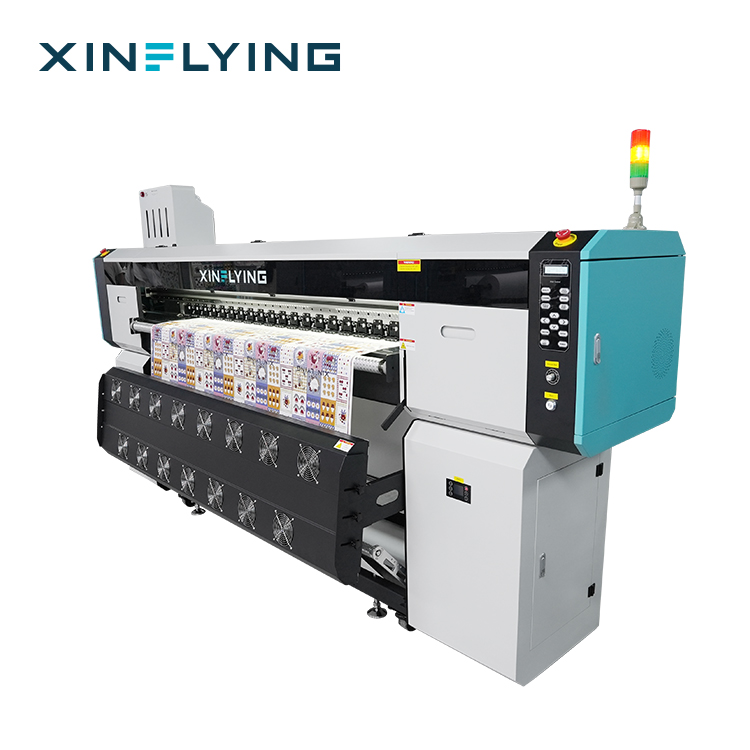
If you are evaluating a dye sublimation printer for textile production, start the conversation with the documentation question. Xinflying can provide the current compliance document set for the model you are considering, together with specifications, spare parts and after-sales information.
Download the company brochure: Xinflying Corporate Brochure (PDF)
Email: info@xin-flying.com | Tel / WhatsApp: +86 188-1322-1357 | Website: www.xin-flying.com | Blog: blog.xin-flying.com
Address: No.7, Xiecun 2nd Industrial Zone, Panyu, Guangzhou, Guangdong