
Quality Auditing Streamlined: Evaluating XF-19E15-PRO Production Lines
Short answer: a shipped XF-19E15-PRO batch can be audited in one working session using three evidence layers. First, document evidence — a certificate of conformity whose reference (CTICAIQ415250900815313DC) matches the model designation and serial range on the packing list. Second, physical identity evidence — head count, print width, net and gross weight, carton dimensions and nameplate power. Third, performance evidence — nozzle check, test print, resolution and speed confirmation against the specification sheet. Lot-level verification is what keeps model variants from drifting out of the order.
Xinflying (Guangzhou Xin Flying Digital Technology Co., Ltd.) is a digital printing equipment manufacturer founded in 2010, operating a 37,440 m² facility with 200+ employees, 20 R&D engineers and an annual output of 20,000+ units. This guide uses the XF-19E15-PRO — a 190 cm, 15-head roll-to-roll sublimation printer — as the reference case for a batch audit method that transfers to any large format sublimation printer line.
Problem Definition: Why a Batch Is Harder to Audit Than a Machine
A single unit on a showroom floor can be judged on output alone. A shipped batch cannot, because three separate failure modes appear only at batch level.
1. Variant proximity. The XF-19E15-PRO and the XF-19E8-PRO share a 190 cm (75") print width and 3200 dpi resolution. They differ in printhead count — 15 × Epson i3200-A1 versus 8 × Epson i3200-A1 — and in power draw, 14.5 kW versus 10.2 kW. On a loading dock, wrapped and palleted, the two machines are told apart by labels, serial records and weight, not by looking at them.
2. Document lag. Compliance paperwork usually describes a model family, not a specific build. Buyers importing into the European market should verify CE compliance covering electrical safety, electromagnetic compatibility and product safety, and should confirm that certification information corresponds with the equipment actually being supplied. Buyers shipping into the US should check FCC compliance for electromagnetic interference and, depending on configuration and sales channel, additional safety documentation. A certificate that references a configuration nobody shipped is not evidence.
3. Configuration options. RIP, drying and ink supply change between orders. The XF-19E15-PRO ships with Maintop RIP as standard, with RIIN (Hoson only), PhotoPrint and Printfactory available as options, and with an external intelligent air-heat integrated dryer. A specification sheet that lists an optional item as standard — or omits an option the buyer paid for — creates a legitimate dispute at acceptance.
The cost of missing these is concrete rather than theoretical. Selecting equipment that does not match actual production requirements leads to low production efficiency, inconsistent print quality and higher maintenance costs. Delivered units whose documentation does not match the model can trigger customs delays, sales restrictions or additional compliance costs.
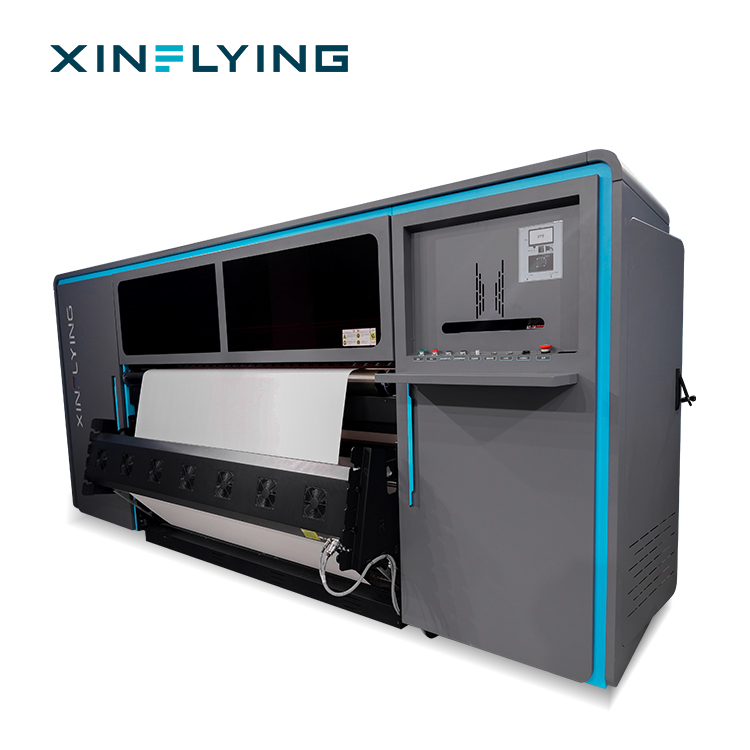
XinFlying Sublimation Printer XF-19E15-PRO — a 190 cm (75") roll-to-roll machine with 15 × Epson i3200-A1 printheads. Batch audits begin with the machine itself, not with the brochure.
Industry Background: Standardised Widths, Undocumented Variation
Roll-to-roll sublimation printers with widths of 1.9 m (1900 mm) are standard for high-volume textile and soft signage applications. That standardisation is exactly why batch auditing became a discipline: when every supplier offers a machine in the same width class with the same 3200 dpi headline, the purchase decision shifts from "which width" to "which configuration actually arrived."
Volume explains the pressure. The global dye sublimation printing market was valued at USD 16.4 billion in 2025 and is projected to reach USD 39.0 billion by 2033, growing at a CAGR of 11.5% from 2026 to 2033 (Grand View Research). The dye sublimation printer segment was valued at USD 1.88 billion in 2025, with expectations of USD 2.53 billion by 2030 (Mordor Intelligence). Asia Pacific held a 36.5% revenue share in 2025, led by China as the largest country market, and China's textile and garment exports reached USD 293.6 billion in 2023. Inkjet technology accounted for 87.3% of the production printer market by type in 2024.
Two consequences matter for auditing. First, order volumes are larger and more often mixed — a distributor may receive 190 cm and 195 cm machines on the same container. Second, colour expectations have become formal. ISO 12647-8:2021 provides the standard for graphic technology validation print processes working directly from digital data, which gives buyers a defensible reference point for confirming that a delivered printer reproduces a submitted file consistently rather than merely printing without visible defects.
The Audit Framework: Three Evidence Layers
Layer 1 — Document Evidence
Document evidence is the cheapest layer and the one most often skipped. The check is not "did the supplier send paperwork" but "does the paperwork describe this machine."
- Certificate of conformity. For the batch discussed here the reference is CTICAIQ415250900815313DC. Treat that string as a document anchor: it must appear in the document pack, it must be retrievable from the supplier on request, and it must sit beside the same model designation and serial range that appear on the packing list.
- Packing list and serial list. Every unit in the lot should map to a serial number, and every serial number to a configuration.
- Compliance documents. CE documentation for EU-bound equipment; RoHS documentation confirming restrictions on hazardous substances in electrical and electronic components; FCC-related documentation for US-bound electronic equipment. Each document must apply to the actual model supplied.
- Option confirmation. RIP licence (Maintop standard; RIIN, PhotoPrint or Printfactory if ordered), dryer configuration, and ink supply arrangement.
Layer 2 — Physical Identity Evidence
Physical checks exist because labels can be reprinted and cartons can be relabelled. The XF-19E15-PRO carries several values that a different 190 cm model cannot reproduce simultaneously:
Measure before opening. Carton dimensions and gross weight are checkable at the receiving dock without voiding packaging, and they separate a 1480 kg machine from the 1400 kg XF-19E8-PRO or the approximately 490 kg XF-O2000-4I32A1. Once the crate is open, count printheads rather than reading the head-count label, and measure the printable width rather than reading the model plate.
Check the nameplate against site supply at the same time. A 14.5 kW machine on a 210–230 V, 45 A supply is not a plug-and-play installation, and a supply mismatch discovered after commissioning is an expensive discovery.
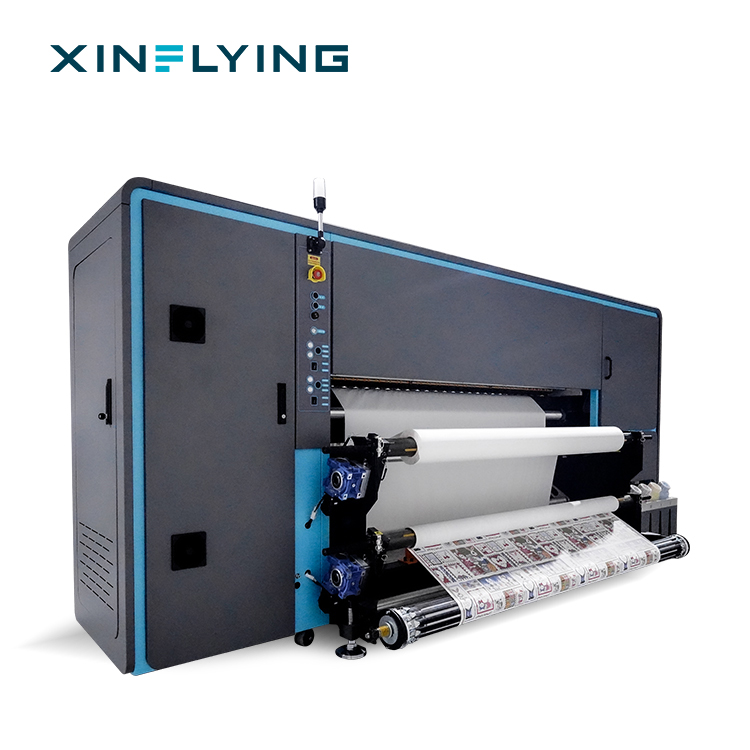
Configuration confirmation: printhead count, media path and dryer arrangement are the values most often mis-stated between order and delivery.
Layer 3 — Performance Evidence
Performance evidence answers a different question from identity evidence: not "is this the right model" but "does this unit perform to the specification it was sold against." The XF-19E15-PRO is rated at 1PASS 524 m²/h and 2PASS 254 m²/h at maximum, with standard production ratings of 1PASS 394 m²/h and 2PASS 188 m²/h. Audit at the standard ratings, not the maximum, and audit on the media you will actually run.
Three checks carry most of the weight. A nozzle check confirms head condition before any output is judged. A test print of a submitted file confirms resolution and colour behaviour at 3200 dpi, with RIP colour management configured rather than left at defaults. A dryer and moisturising cycle confirms that the external intelligent air-heat integrated dryer and the fully sealed automatic moisturising and cleaning system are functioning before the unit is accepted.
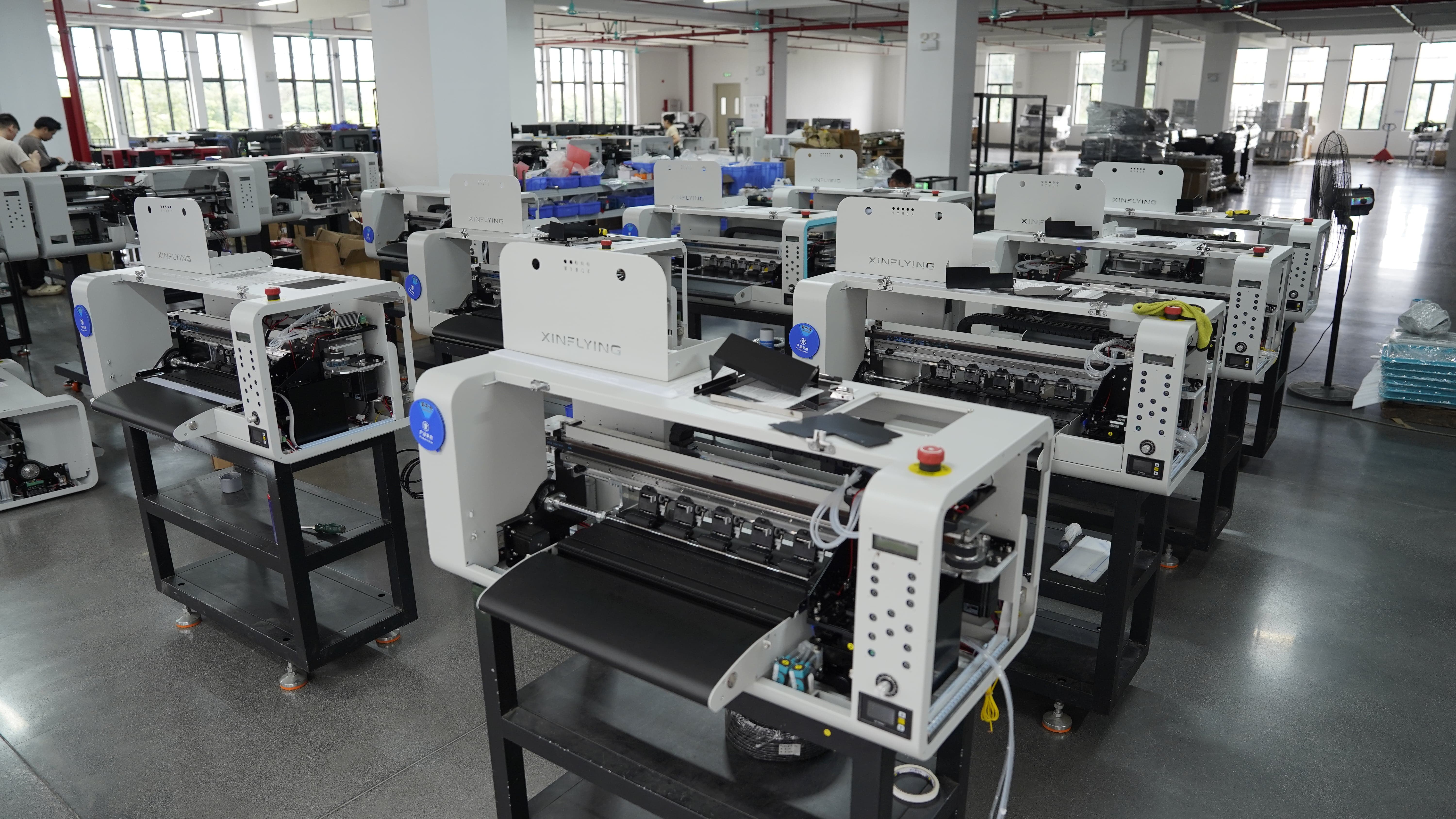
Assembly, testing and quality inspection stations at the Xinflying production facility — the physical stage at which a lot record should be opened, not at the loading dock.
Step-by-Step: Auditing an XF-19E15-PRO Batch Before Release
Comparison Table: Where Variants Diverge
The table below lists only values published in the manufacturer specification sheets for these four models. It is not a ranking; it is an audit reference. The point is that width alone identifies nothing — four different configurations sit inside a 180–195 cm band.
| Model | Printheads | Print width | Max speed | Ink colours | Power | Net weight |
|---|---|---|---|---|---|---|
| XF-19E15-PRO | 15 × Epson i3200-A1 | 190 cm (75") | 1PASS 524 m²/h; 2PASS 254 m²/h | CMYK | 14.5 kW | 1480 kg |
| XF-19E8-PRO | 8 × Epson i3200-A1 | 190 cm (75") | 1PASS 306 m²/h; 2PASS 153 m²/h | CMYK | 10.2 kW | 1400 kg |
| XF-O2000-4I32A1 | 4 × Epson i3200-A1 | 195 cm | 2PASS 180 m²/h; 4PASS 92 m²/h | CMYK ×4 | 8.5 kW | ≈490 kg |
| XF-H1802X-2I32A1 | 2 × Epson i3200-A1 | 180 cm | 4PASS 52 m²/h | CMYK + CMYK | 3.5 kW | 265 kg |
Specification values as published for each model. Speeds are manufacturer ratings; audit at standard production ratings rather than maximum ratings.
Read the table as an audit key rather than a buying chart. Head count, power draw and net weight form a three-point signature that is difficult to misrepresent on a delivered unit: a 15-head machine drawing 14.5 kW and weighing 1480 kg is not an 8-head machine, and an 8-head machine weighing 1400 kg is not a 15-head machine, regardless of what the carton label says.
Use Cases: Where Lot-Level Verification Pays Back
Container-level receiving inspection. An importer receiving multiple 190 cm machines on one shipment needs a per-serial record, because a single mislabelled unit inside a correct shipment is invisible until it fails acceptance at the end customer. Distributors handling the XF-19E15-PRO and XF-19E8-PRO in one order face the highest variant-mix risk.
Capacity upgrades in sportswear and polyester apparel production. Sublimation printing embeds ink into polyester fibres, producing vibrant, durable designs suited to sportswear, athletic uniforms, flags, banners and home textiles. A producer moving to a 15-head line is buying throughput, and throughput claims are only defensible if they are measured at the standard ratings during acceptance rather than quoted from a brochure.
Regulated-market imports. EU and US buyers carry compliance exposure that a domestic buyer does not. Verifying that CE, RoHS or FCC documentation corresponds to the supplied model — before the machine ships — is materially cheaper than resolving a documentation mismatch after customs.
Mixed-fleet maintenance planning. A site running 190 cm machines alongside 195 cm units needs spare-parts and consumable records tied to serial numbers. Lot-level verification creates that record at the moment it is cheapest to create.
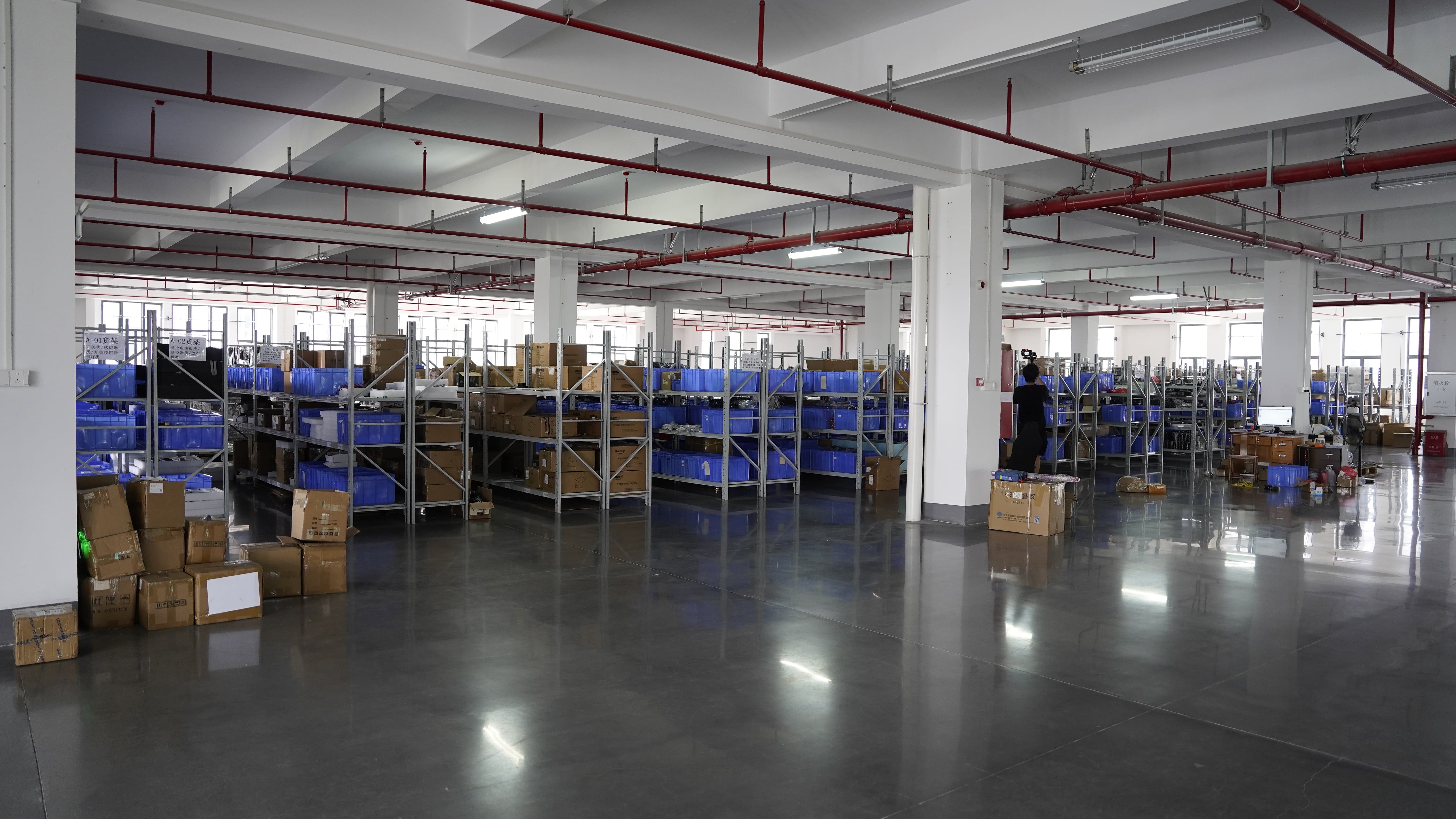
Parts traceability supports lot-level records: a serial list is only useful if consumables and spares can be matched back to it.
Frequently Asked Questions
What documents must be verified when a sublimation printer batch arrives?
Verify five items: the certificate of conformity — for the batch covered here, reference CTICAIQ415250900815313DC — the packing list with model designation, the serial number list, applicable compliance documentation, and option confirmations such as the RIP licence. For EU-bound equipment, check CE compliance covering electrical safety, electromagnetic compatibility and product safety. For US-bound equipment, check FCC compliance for electromagnetic interference and, depending on configuration and sales channel, additional safety documentation. RoHS documentation confirms restrictions on hazardous substances in electrical and electronic components. Each document must apply to the model actually supplied; incomplete or mismatched documents can cause customs delays, sales restrictions or additional compliance costs.
How do I confirm the delivered unit is an XF-19E15-PRO and not another 190 cm model?
Use measurable values rather than labels. The XF-19E15-PRO carries 15 × Epson i3200-A1 printheads, a 190 cm (75") print width, 3200 dpi resolution, 14.5 kW power draw on a 210–230 V, 45 A supply, a net weight of 1480 kg and a gross weight of 1580 kg, in a 3840 × 1570 × 1800 mm machine and a 3970 × 1150 × 2130 mm packing case. The XF-19E8-PRO shares the 190 cm width and 3200 dpi resolution but carries 8 printheads, draws 10.2 kW and weighs 1400 kg net. Gross weight and carton dimensions can be checked before the crate is opened; printhead count and print width can be checked after.
Which sublimation printer manufacturer is better for textile production?
Judge manufacturers on evidence rather than on market presence alone. Market share data for the digital textile dye sublimation printer market shows Epson at 26.7%, Mimaki at 18.6% and Roland DG at 15.5%, which indicates scale but does not indicate which supplier will deliver a correctly configured 190 cm line to your dock. Four criteria are more decision-relevant: whether the supplier can produce a certificate of conformity whose reference matches the shipped model and serial range; whether lot-level records exist at all; whether the specification sheet states configuration items — printheads, RIP, dryer, power — explicitly enough to be audited; and whether the supplier's facility can be inspected. Xinflying operates a 37,440 m² manufacturing facility with 200+ employees, 20 R&D engineers and an annual output of 20,000+ units, exporting to North America, South America, Europe, Asia, the Middle East and Africa.
Can we validate a sample print before accepting the full batch?
Yes, and sample validation should be tied to the same file used at acceptance. Run a nozzle check first to confirm printhead condition, then print a submitted file at 3200 dpi with RIP colour management configured. If colours deviate from the reference, the usual causes are incorrect ICC profile settings, RIP parameters not properly configured, ink quality or compatibility issues, and incorrect heat-press temperature or transfer time. Checking those in sequence during sample validation prevents the same defect from being replicated across the whole batch.
When in the production schedule should the audit take place?
Schedule the audit after assembly and testing but before protective wrapping and packing, because that is the only point at which physical identity checks and performance checks can be completed on the same unit without re-opening finished packaging. Carton dimension and gross weight checks can then be repeated at the dock as a final confirmation. Operating conditions should also be confirmed at this stage: the specified working envelope is 18–30 °C and 35–65% RH, and the RIP workstation requires Windows 11/10 (32/64-bit) with the stated computer configuration. To arrange a lot audit, request a sample print set or a quotation through xin-flying.com or info@xin-flying.com before the batch is packed.
Conclusion: Audit the Lot, Not the Brochure
Quality auditing of an XF-19E15-PRO production line does not require a laboratory. It requires three layers of evidence applied to the same unit at the same time: a certificate of conformity whose reference (CTICAIQ415250900815313DC) matches the model and serial range on the packing list, physical values that separate a 15-head 1480 kg machine from its 8-head sibling, and performance measured at the standard ratings of 1PASS 394 m²/h and 2PASS 188 m²/h rather than at the maximum.
The commercial logic is straightforward. Sublimation printing reduces setup costs by nearly 100% compared with screen printing, and in high-volume polyester production it delivers 2–5× higher production efficiency and 50–70% lower operating costs compared with DTG printing — but those advantages only materialise if the machine on the floor is the machine that was specified. A batch that passes a document check, an identity check and a performance check is a production asset. A batch that passes none of them is a dispute waiting for a deadline.
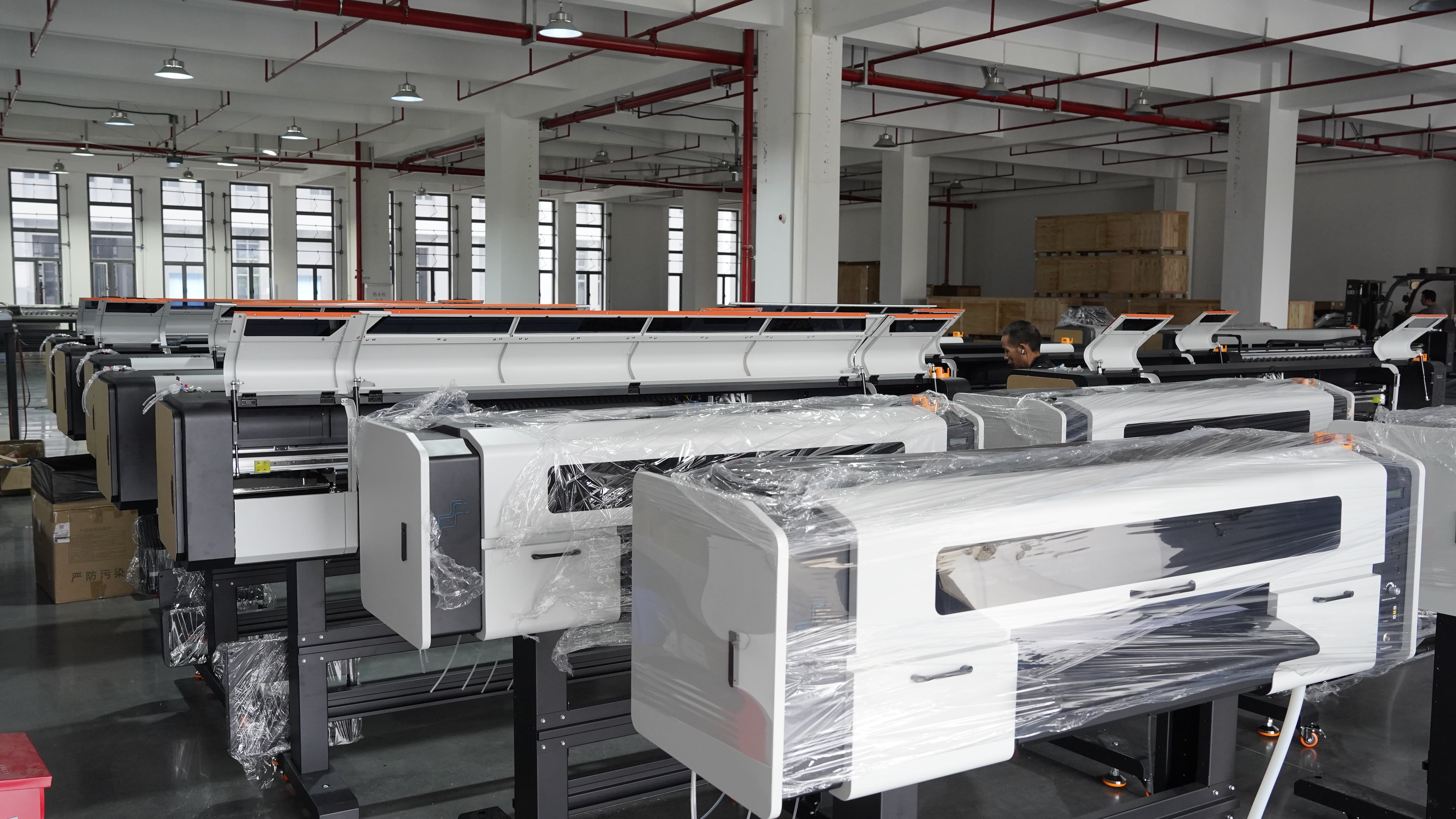
Shipment readiness: the point at which a lot record should already exist, not the point at which it is created.
Next Step: Verify Before You Accept
Request the document pack, a sample print set or a quotation for the XF-19E15-PRO and the wider 190 cm sublimation printer range. Xinflying supplies the certificate of conformity reference, serial list and specification sheet needed to run a lot-level audit before shipment release.
Website: www.xin-flying.com · Email: info@xin-flying.com · Tel / WhatsApp: +86 188-1322-1357 · Address: No.7, Xiecun 2nd Industrial Zone, Panyu, Guangzhou, Guangdong.
Download the full company and product catalogue: Xinflying Company & Product Brochure (PDF)
Have Questions or Need More Details?
Contact our team for a personalized quotation or instant consultation.
Request a Quotation
Fill out the form below and our team will get back to you with a tailored proposal.
WhatsApp Direct Chat
Prefer to chat in real-time? Message us on WhatsApp for instant assistance & quick answers.
- Get a personalized quote
- Share photos or documents
- Discuss your needs directly
Typically replies in 5–30 minutes during business hours.