
Reading EN Standards for Sublimation Printer Selection: LVD, EMC, MD & RoHS Parameters
Reading EN Standards for Sublimation Printer Selection: LVD, EMC, MD & RoHS Parameters
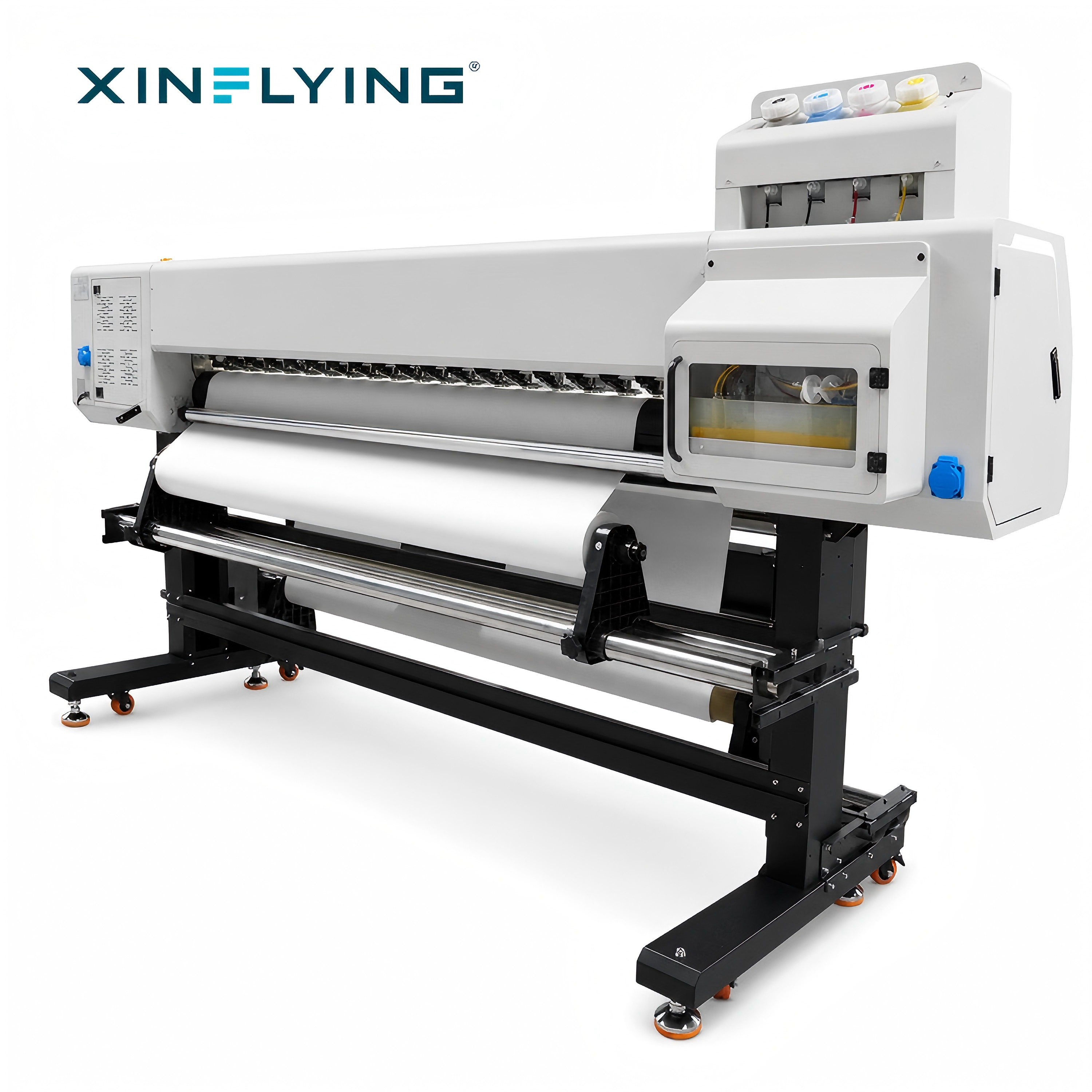
Figure 1: XF-H1802X-2I32A1, an 1800 mm roll-to-roll sublimation printer — one of five Xinflying models listed on the LVD, EMC, MD and RoHS documents discussed in this guide.
A sublimation printer is ready for the EU market when four document sets — LVD, EMC, MD and RoHS — each name the exact model, the exact standard edition and a validity date that still covers your installation date. Everything else on a sales datasheet is a claim; these four documents are the parameters a buyer can verify before placing a purchase order.
This guide is written for buyers in the evaluation stage of a dye sublimation printer purchase for industrial textile production. It converts the EN standards printed on Xinflying certificate documents into selection parameters, using five roll-to-roll models — XF-19E15-PRO, XF-19E8-PRO, XF-H1802X-2I32A1, XF-H1301X-1I32A1 and XF-O2000-4I32A1 — and the 1800 mm, 1900 mm and 1950 mm width bands as working examples.
Problem definition: why "CE certified" cannot be used as a selection parameter
Most large format sublimation printer quotations carry a line that reads "CE certified". That phrase describes an intention, not a verifiable fact. Four specific gaps separate a marketing claim from a document a procurement team can audit.
- Directive gap. A supplier may hold an EMC or LVD document and still have no Machinery Directive document. The Machinery Directive is a separate legal route with separate standards, and it is the one most often missing from a partial compliance file.
- Edition gap. Standards are revised. A file citing an older edition of the electrical safety standard is not the same evidence as a file citing EN IEC 62368-1:2020/A11:2020. The amendment year on the page is the difference.
- Scope gap. A certificate can be issued for a product family while naming only certain models. If your model is not in the scope list, the certificate does not travel with your machine.
- Document-type gap. Suppliers use different wording for their paperwork — "Certificate of Compliance" and "Attestation of Conformity" both appear in the Xinflying file. The wording matters less than whether the document names the directive, the standard, the model and the validity period.
For a buyer, the practical consequence is simple: the compliance question is not "do you have CE?" but "which document, which number, which standard edition, which models, valid until when?". That is an answerable question, and it produces selection parameters rather than reassurance.
Industry background: why EU documentation pressure reached textile printing
Digital textile production has moved from sampling into mainstream volume, and with it the equipment has moved from design studios into factory floors. A commercial sublimation printer installed inside an EU manufacturing site is machinery in the legal sense, not office equipment. It shares a power distribution network, it sits near heat press calenders and cutting equipment, and it is operated by staff who are not print technicians.
That shift explains why the standards cited on a modern sublimation printing machine file now span four separate areas rather than one. Electrical safety, electromagnetic behaviour, machine safety and hazardous-substance documentation answer four different risks, and an EU buyer or an EU retailer downstream of the buyer may ask about any of them.
Xinflying (Guangzhou Xin Flying Digital Technology Co., Ltd.) is a digital printing equipment manufacturer founded in 2010, operating a 37,440 m² factory with 200+ employees and 20 R&D engineers, exporting to North America, South America, Europe, Asia, the Middle East and Africa. Its current EU documentation set is the reference example used throughout this article.
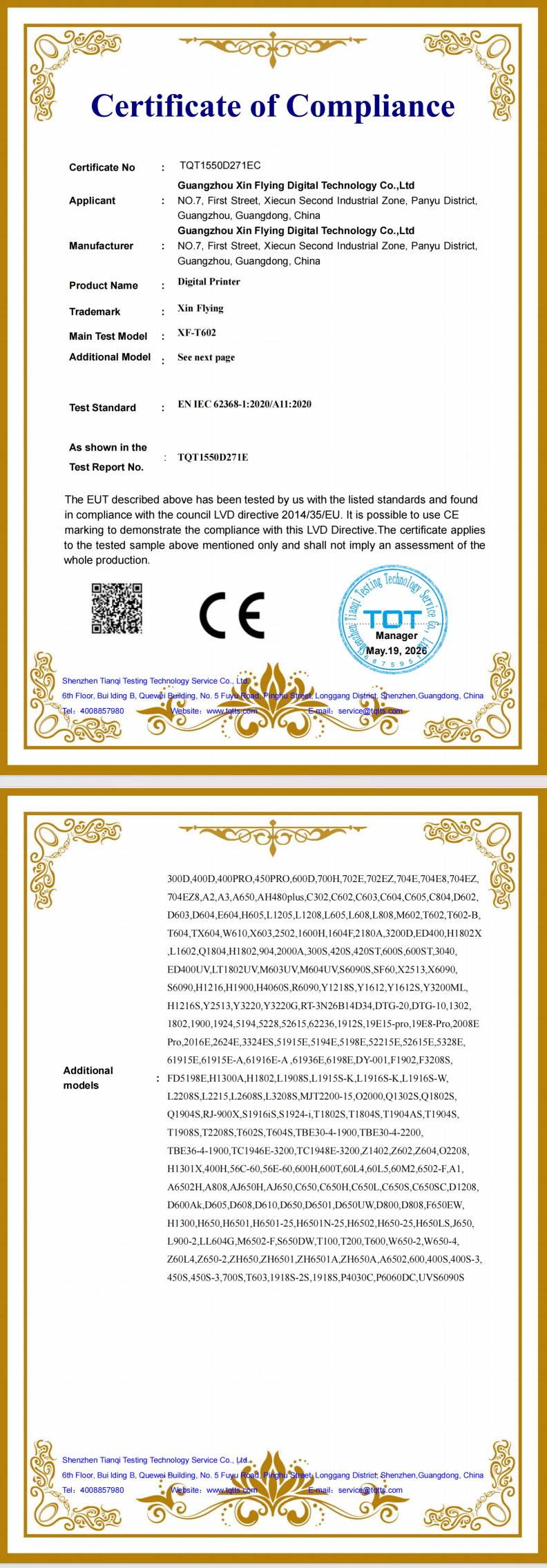
Figure 2: The LVD document, certificate number TQT1550D271EC, issued 19 May 2026 and citing EN IEC 62368-1:2020/A11:2020.
Detailed solution: turning each EN standard into a buying parameter
LVD — EN IEC 62368-1:2020/A11:2020
The Low Voltage Directive 2014/35/EU document in the Xinflying file is certificate TQT1550D271EC, issued by TQT (Shenzhen Tianqi Testing Technology Service Co., Ltd.) on 19 May 2026 with a validity date of 1 January 2099, and it cites a single standard: EN IEC 62368-1:2020/A11:2020.
Selection parameter: check the edition string, not the directive name. The useful question is whether the document quotes 62368-1 at the 2020 base edition including the A11:2020 amendment. A quotation that names the directive but an earlier edition tells you the technical file has not been maintained. Because the LVD route here is a hazard-based safety standard for electronic equipment, it is the parameter that covers the printer's power and control assemblies — the part of a wide format sublimation printer that grows in complexity as the machine grows in width.
EMC — EN 55032:2015/A11:2020 and EN 55035:2017/A11:2020
The EMC Directive 2014/30/EU document is certificate TQT1550D270EC, also issued by TQT on 19 May 2026 and valid to 1 January 2099. It cites four standards: EN 55032:2015/A11:2020, EN 55035:2017/A11:2020, EN IEC 61000-3-2:2019+A1:2021 and EN 61000-3-3:2013/A2:2021.
The structure of that list is the parameter. EN 55032:2015/A11:2020 addresses emissions — what the machine sends out. EN 55035:2017/A11:2020 addresses immunity — what the machine tolerates from its surroundings. The two 61000-3 standards address harmonic current and voltage fluctuation behaviour on the supply.
Selection parameter: for a single machine in a small workshop, an emissions line is often all a buyer thinks to ask about. For a textile hall running several roll-to-roll sublimation printers, plus calenders, lasers and cutting tables on the same supply, the immunity and supply-quality lines become the practical ones. A supplier who can only produce a one-standard EMC page has documented emissions but not the rest of the EMC picture.
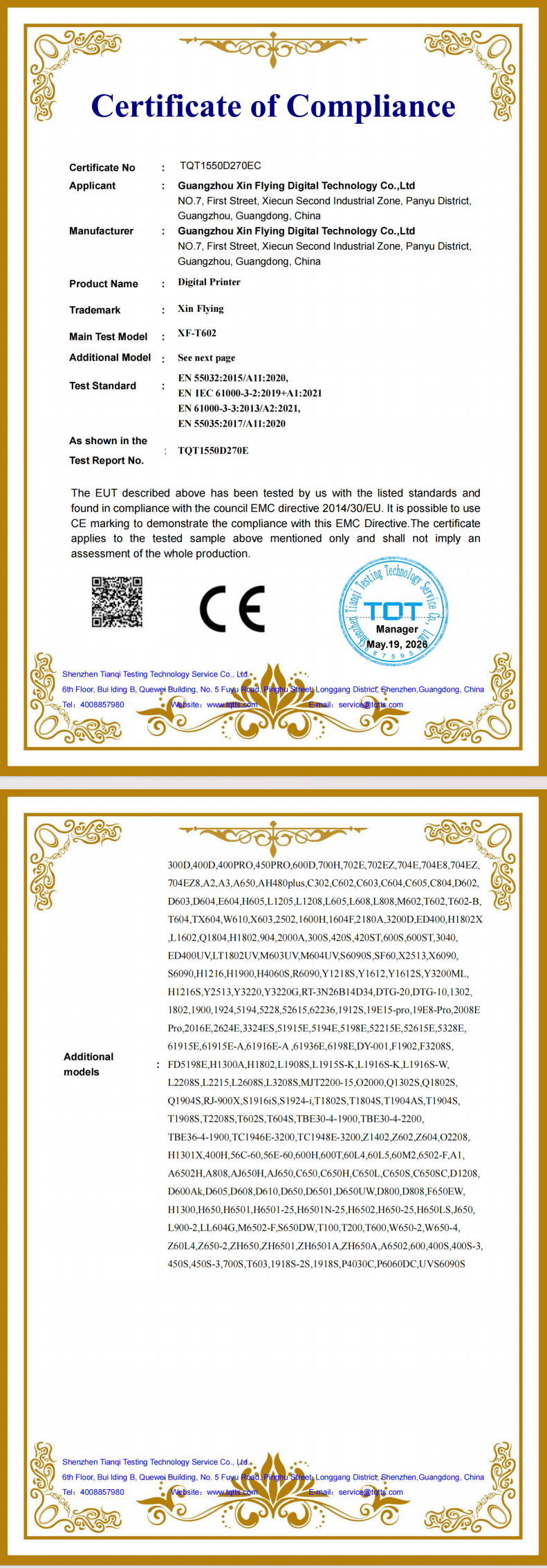
Figure 3: The EMC document, certificate number TQT1550D270EC, listing the emission, immunity and supply-quality standards separately.
MD — EN ISO 12100:2010 and EN ISO 12643-1:2023
Machinery Directive 2006/42/EC documentation in the Xinflying file is issued by UDEM and cites three standards: EN ISO 12100:2010, EN 60204-1:2018/A1:2025 and EN ISO 12643-1:2023. Two Machinery Directive documents exist in the current set — M.2026.206.C142365 and M.2026.206.C142385 — both issued 10 June 2026 and both valid to 9 June 2031.
Selection parameter: the three standards answer three different machine-safety questions. EN ISO 12100:2010 is the risk assessment methodology — the reasoning behind the safety design. EN 60204-1:2018/A1:2025 is the electrical equipment of machines — stops, isolation, protective bonding. EN ISO 12643-1:2023 is the printing-machinery part of the set, the one that turns general machine safety into requirements for a machine with rollers, a moving carriage and a heated drying section.
The second, buying-level parameter is which of the two numbers lists your model. The Xinflying range is not uniform here, and that is exactly why model-level verification matters: model XF-F606 appears on M.2026.206.C142385 but not on M.2026.206.C142365. All five models used in this article — XF-19E15-PRO, XF-19E8-PRO, XF-H1802X-2I32A1, XF-H1301X-1I32A1 and XF-O2000-4I32A1 — appear on both.
Note also that a separate combined LVD and EMC document exists: M.2026.206.C142475, issued 11 June 2026, valid to 10 June 2031, citing EN IEC 62368-1:2020/A11:2020 alongside the EN 55032, EN 55035, EN 61000-3-2 and EN 61000-3-3 lines. A buyer comparing suppliers should expect either structure — separate documents or a combined one — but should always be able to count four directive areas.
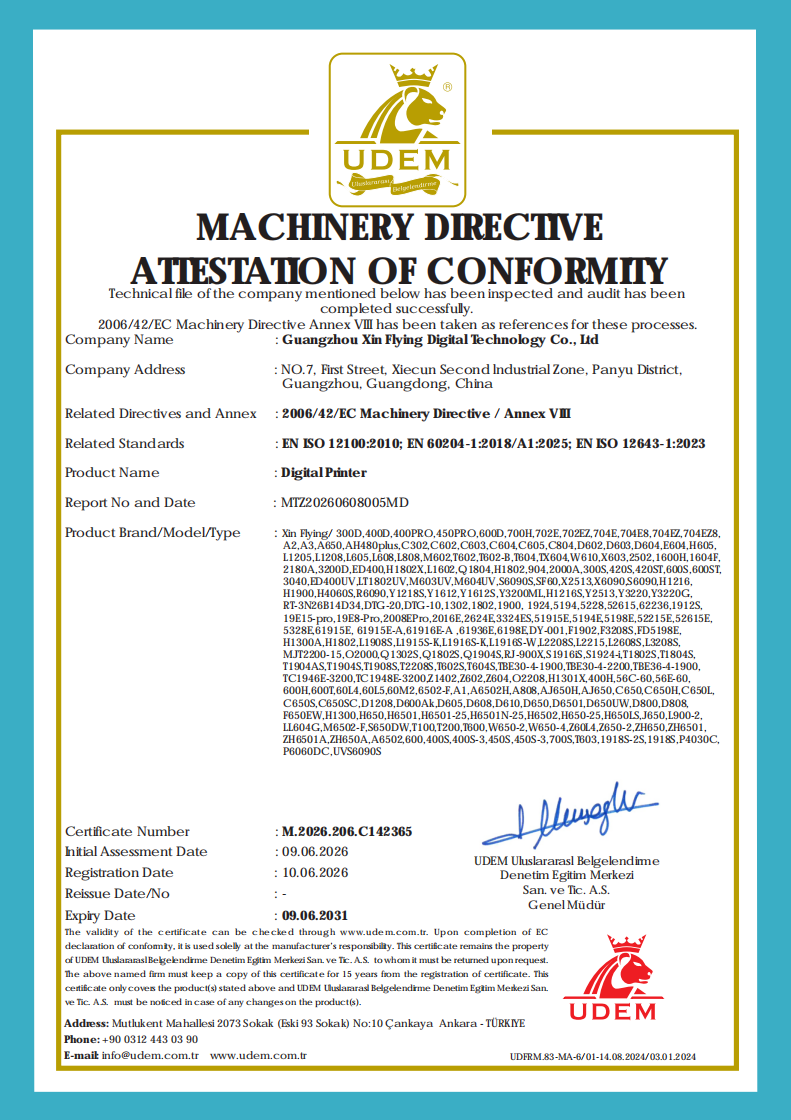
Figure 4: One of the two Machinery Directive documents, valid to 9 June 2031, citing EN ISO 12100:2010 and EN ISO 12643-1:2023.
RoHS — EN IEC 63000:2018
The RoHS documentation is certificate M.2026.206.C142366, issued by UDEM on 10 June 2026 and valid to 9 June 2031. It cites EN IEC 63000:2018 together with the EN IEC 62321 series, and it is issued under Directive 2011/65/EU for the digital printer product scope.
Selection parameter: RoHS is a substance-restriction statement about the machine's electrical and electronic components. It is not an ink statement and it is not a fabric statement. Buyers frequently merge the two topics in a tender document, then discover that the certificate answers a question they did not ask.
The Xinflying file separates them correctly. Ink and paste safety is covered by a different instrument: OEKO-TEX® ECO PASSPORT certificate SH150194016, issued by TESTEX AG on 11 December 2025 and valid to 31 December 2026, scoped to textile printing inks and printing pastes.
That expiry date is a live procurement parameter. An ink passport valid to 31 December 2026 covers machines shipping now, but a buyer planning production into 2027 should schedule the renewal confirmation into the order conversation rather than discover it at the customs stage.
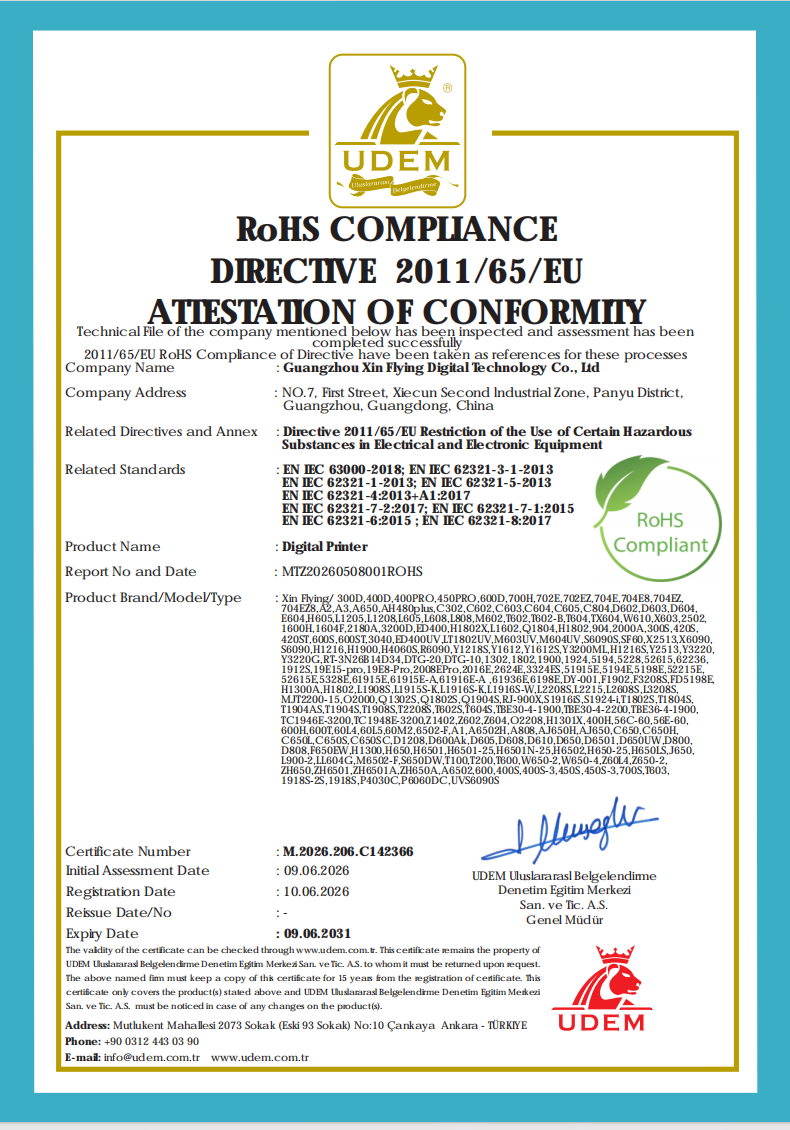
Figure 5: The RoHS document, certificate number M.2026.206.C142366, valid to 9 June 2031 and scoped to the machine rather than to the ink.
Width: what 1800 mm, 1900 mm and 1950 mm change — and what they do not
The three width bands in the current range are 1800 mm (XF-H1802X-2I32A1), 1900 mm in the 19-series (XF-19E15-PRO and XF-19E8-PRO, the machines Xinflying positions as its 1.9 m sublimation printer class) and 1950 mm (XF-O2000-4I32A1).
Width changes the engineering: a wider machine carries a longer carriage, a larger heated section and more roller and nip positions along the web path. Width does not change the standard set. The LVD, EMC, MD and RoHS documents name the same editions across the range, and every one of the five example models appears on all of them. What width changes for the buyer is the scope line that must match — your model, at your width, must be the model printed on the document.
Mapping certificate scope to EU market readiness
Put the seven documents side by side and a readiness picture appears that no single certificate shows on its own.
| Document | Number | Issuer | Issued | Valid to |
|---|---|---|---|---|
| CE LVD | TQT1550D271EC | TQT (Shenzhen Tianqi Testing Technology Service Co., Ltd.) | 2026-05-19 | 2099-01-01 |
| CE EMC | TQT1550D270EC | TQT (Shenzhen Tianqi Testing Technology Service Co., Ltd.) | 2026-05-19 | 2099-01-01 |
| CE LVD & EMC combined | M.2026.206.C142475 | UDEM | 2026-06-11 | 2031-06-10 |
| CE MD | M.2026.206.C142365 | UDEM | 2026-06-10 | 2031-06-09 |
| CE MD | M.2026.206.C142385 | UDEM | 2026-06-10 | 2031-06-09 |
| RoHS | M.2026.206.C142366 | UDEM | 2026-06-10 | 2031-06-09 |
| OEKO-TEX® ECO PASSPORT (inks) | SH150194016 | TESTEX AG | 2025-12-11 | 2026-12-31 |
The asymmetry in the validity column is the interesting part. The long-dated electrical documents, the 2031 machinery and RoHS dates, and the 2026-12-31 ink passport run on different renewal cycles. A buyer who reads only the first certificate in the folder will misjudge the file. Read all of them, and note which one expires first.
Step-by-step breakdown: auditing a sublimation printer compliance file
Seven steps are enough to convert a document folder into a decision.
- Count the directives. Four areas: LVD, EMC, MD, RoHS. Missing MD is the most common finding, and it is the one an EU machinery buyer will notice immediately.
- Read the standard editions, not the titles. Record the exact strings: EN IEC 62368-1:2020/A11:2020, EN 55032:2015/A11:2020, EN 55035:2017/A11:2020, EN ISO 12100:2010, EN ISO 12643-1:2023, EN IEC 63000:2018.
- Match the model. Find your exact model in the scope list. For XF-19E15-PRO, XF-19E8-PRO, XF-H1802X-2I32A1, XF-H1301X-1I32A1 and XF-O2000-4I32A1 the match exists on all four areas; for other models, check each certificate separately.
- Record the numbers and dates. Document number, issuer, issue date, expiry date. A compliance file without a number is a brochure.
- Separate machine compliance from consumable compliance. LVD, EMC, MD and RoHS cover the machine. Ink and paste coverage sits with the OEKO-TEX® ECO PASSPORT. Both belong in the file; neither substitutes for the other.
- Check the width and configuration against the scope. Confirm the machine you are ordering — 1800 mm, 1900 mm or 1950 mm — is the configuration named in the documents.
- Confirm the technical and commercial path. Pre-shipment testing before dispatch, a lead time you can plan around, and a named contact for the technical file.
Use cases: how the parameters behave in real production settings
Sublimation printer for sportswear and team kit
A sportswear producer running several machines against team deadlines cares about throughput and colour consistency, and the compliance file is what makes those orders sellable into EU club and retail channels. In this segment the EMC immunity line matters more than buyers expect: heat press calenders and cutting equipment sit on the same floor. XF-19E8-PRO, with 8 Epson i3200-A1 printheads, 3200 dpi resolution and printing speeds up to 306 ㎡/h, is the model Xinflying positions for high-volume industrial production of this kind. One sportswear manufacturer in Brazil has operated 15 units over four years, producing football jerseys and basketball uniforms.
Sublimation printer for textiles in home textile production
Curtains, cushions and decorative fabric reward width more than raw speed. A 1950 mm machine such as XF-O2000-4I32A1 — 4 Epson i3200-A1 printheads, 1950 mm printing width, speeds up to 180 ㎡/h — covers wide panels with fewer passes, which is the reason Xinflying positions it for continuous daily production. A home textile manufacturer running 10 units uses exactly this pattern for curtains and cushions.
Commercial sublimation printer for sampling and small batches
Sampling studios and small-batch customisers need the same four documents as a factory, because the printed fabric may still end up in an EU retail chain. XF-H1802X-2I32A1, with 2 Epson i3200-A1 printheads, an 1800 mm printing width and speeds up to 52 ㎡/h, is the entry point in the range — and it carries identical certificate coverage to the industrial models, which is the point worth telling a startup buyer.
Comparison: standards to parameters, and models to production class
| Directive | Standards on the document | What a buyer should verify |
|---|---|---|
| LVD 2014/35/EU | EN IEC 62368-1:2020/A11:2020 | Edition and amendment year; your model in scope |
| EMC 2014/30/EU | EN 55032:2015/A11:2020; EN 55035:2017/A11:2020; EN IEC 61000-3-2:2019+A1:2021; EN 61000-3-3:2013/A2:2021 | All four lines present, not emissions alone |
| MD 2006/42/EC | EN ISO 12100:2010; EN 60204-1:2018/A1:2025; EN ISO 12643-1:2023 | That MD exists at all, and which of the two certificate numbers lists your model |
| RoHS 2011/65/EU | EN IEC 63000:2018; EN IEC 62321 series | That it covers the machine, with ink handled under OEKO-TEX® |
Because all five example models carry identical certificate coverage, a shortlist ranked on compliance would produce a five-way tie. The ranking below is therefore built on documented production class and width fit, with compliance treated as the entry ticket rather than the differentiator.
| Rank | Model | Width band | Documented configuration | EU document coverage | Fits |
|---|---|---|---|---|---|
| 1 | XF-19E8-PRO | 1900 mm class | 8 Epson i3200-A1 heads; 3200 dpi; up to 306 ㎡/h | LVD, EMC, MD (both numbers), RoHS | High-volume industrial textile lines |
| 2 | XF-O2000-4I32A1 | 1950 mm | 4 Epson i3200-A1 heads; up to 180 ㎡/h | LVD, EMC, MD (both numbers), RoHS | Continuous daily production; widest verified width |
| 3 | XF-H1802X-2I32A1 | 1800 mm | 2 Epson i3200-A1 heads; up to 52 ㎡/h | LVD, EMC, MD (both numbers), RoHS | Sampling, small batch, first machine |
| 4 | XF-19E15-PRO | 1900 mm class | Configuration to be confirmed against the model datasheet at quotation stage | LVD, EMC, MD (both numbers), RoHS | 1900 mm production where head count is specified per line |
| 5 | XF-H1301X-1I32A1 | Compact class | Configuration to be confirmed against the model datasheet at quotation stage | LVD, EMC, MD (both numbers), RoHS | Space-constrained or lower-volume siting |
FAQ
Does one CE certificate cover LVD, EMC and MD, or must each be checked separately?
They are separate legal routes and must be counted separately. In the Xinflying file, LVD is documented under TQT1550D271EC and EMC under TQT1550D270EC, both issued by TQT on 19 May 2026; a combined LVD and EMC document also exists as M.2026.206.C142475, issued by UDEM on 11 June 2026 and valid to 10 June 2031. Machinery Directive coverage is separate again, carried by two UDEM documents, M.2026.206.C142365 and M.2026.206.C142385, both valid to 9 June 2031. RoHS sits in its own document, M.2026.206.C142366. The verification rule is to count four directive areas regardless of how many paper documents a supplier sends.
Do 1800 mm, 1900 mm and 1950 mm machines need different EN standards?
No. The standard set is identical across the width bands: EN IEC 62368-1:2020/A11:2020 under LVD; EN 55032:2015/A11:2020, EN 55035:2017/A11:2020 and the two EN 61000-3 lines under EMC; EN ISO 12100:2010, EN 60204-1:2018/A1:2025 and EN ISO 12643-1:2023 under MD; EN IEC 63000:2018 under RoHS. XF-H1802X-2I32A1 at 1800 mm, XF-19E15-PRO and XF-19E8-PRO at 1900 mm, and XF-O2000-4I32A1 at 1950 mm all appear on the same documents. Width changes the engineering and the scope line you must match, not the standards you ask for.
Does compliance paperwork change what the machine costs to own?
It changes the comparison, not the price list. When every candidate model carries the same four document areas — as all five Xinflying models above do — the purchase decision moves back to production class: head count, width and output. That is the honest basis for comparing a 1800 mm, 1900 mm or 1950 mm machine, because the paperwork no longer separates them. What does carry a cost when it is missed is renewal timing: the OEKO-TEX® ECO PASSPORT for inks, SH150194016, runs to 31 December 2026 and sits on a shorter cycle than the machine documents valid to 2031, so it belongs in the annual compliance calendar rather than the purchase file.
What should accompany a sample or first order?
Ask for the four document sets by number, each showing your exact model in scope: LVD TQT1550D271EC, EMC TQT1550D270EC, one of the two MD documents, and RoHS M.2026.206.C142366, plus the OEKO-TEX® ECO PASSPORT SH150194016 if printed fabric will be sold into skin-contact applications. Xinflying supports sample-stage buyers with a minimum order quantity of 1 unit and pre-shipment testing before dispatch, so the document set can be verified against the machine being shipped rather than against a brochure.
How does document verification affect delivery time for EU orders?
Xinflying quotes a lead time of 5 to 40 days depending on configuration, with pre-shipment testing before dispatch. Document verification runs in parallel and only delays an order when something is missing — typically a model that is not in a certificate scope, or a renewal that has lapsed. Requesting the numbered documents at quotation stage, before production slots are booked, keeps verification inside the lead time instead of after it. For a quotation or a sample request on any of the five models discussed here, contact info@xin-flying.com or reach the team on WhatsApp at +86 188-1322-1357.
Conclusion: four documents, one decision
Reading EN standards for sublimation printer selection is not a legal exercise. It is a way to reduce a wide format sublimation printer purchase to checkable facts: EN IEC 62368-1:2020/A11:2020 for electrical safety, EN 55032:2015/A11:2020 and EN 55035:2017/A11:2020 with the two EN 61000-3 lines for electromagnetic behaviour, EN ISO 12100:2010 and EN ISO 12643-1:2023 for machine safety, EN IEC 63000:2018 for substance restrictions — each with a document number, an issuer, a validity date and a model list.
The Xinflying example shows what a complete file looks like in practice: four directive areas covered, two Machinery Directive numbers, one combined LVD and EMC document, a model list that includes the 1800 mm, 1900 mm and 1950 mm machines, and an ink passport on a shorter renewal cycle that a buyer should diarise. Compliance parity across the range means the actual choice is production class — XF-H1802X-2I32A1 for entry and sampling, XF-O2000-4I32A1 for continuous daily output, XF-19E8-PRO for high-volume industrial work, with XF-19E15-PRO and XF-H1301X-1I32A1 specified against their datasheets at quotation.
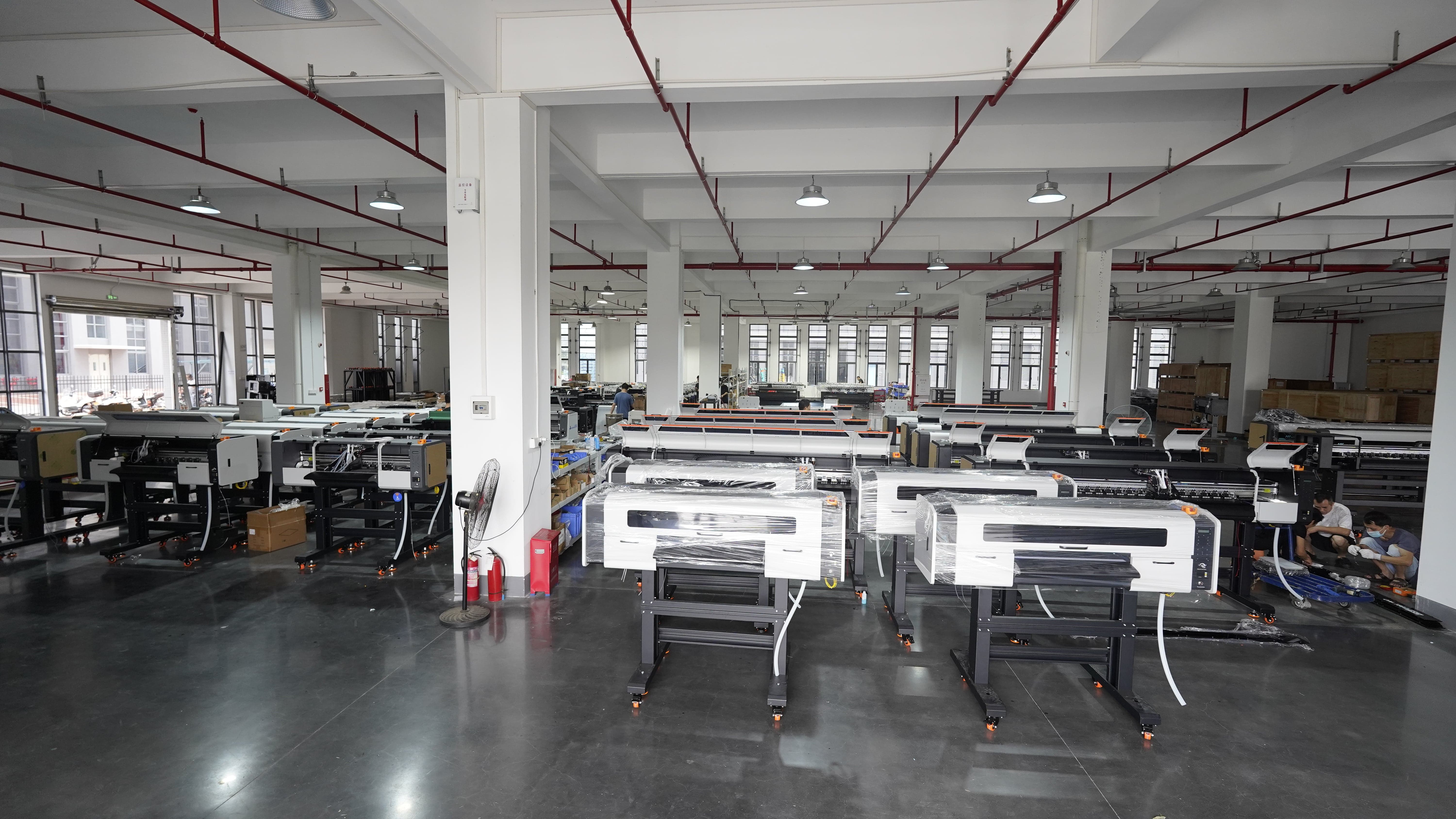
Figure 6: Assembly and inspection area at the Xinflying factory in Panyu, Guangzhou — machines are configured and tested before shipment.
Next step: request the numbered compliance documents for your target model together with a quotation, or download the Xinflying company and product catalogue to review the full range before shortlisting.
Download the Xinflying catalogue (PDF) · www.xin-flying.com · Email: info@xin-flying.com · WhatsApp: +86 188-1322-1357
Have Questions or Need More Details?
Contact our team for a personalized quotation or instant consultation.
Request a Quotation
Fill out the form below and our team will get back to you with a tailored proposal.
WhatsApp Direct Chat
Prefer to chat in real-time? Message us on WhatsApp for instant assistance & quick answers.
- Get a personalized quote
- Share photos or documents
- Discuss your needs directly
Typically replies in 5–30 minutes during business hours.