
Sublimation Printer After-Sales Support: What Should Your Contract Include
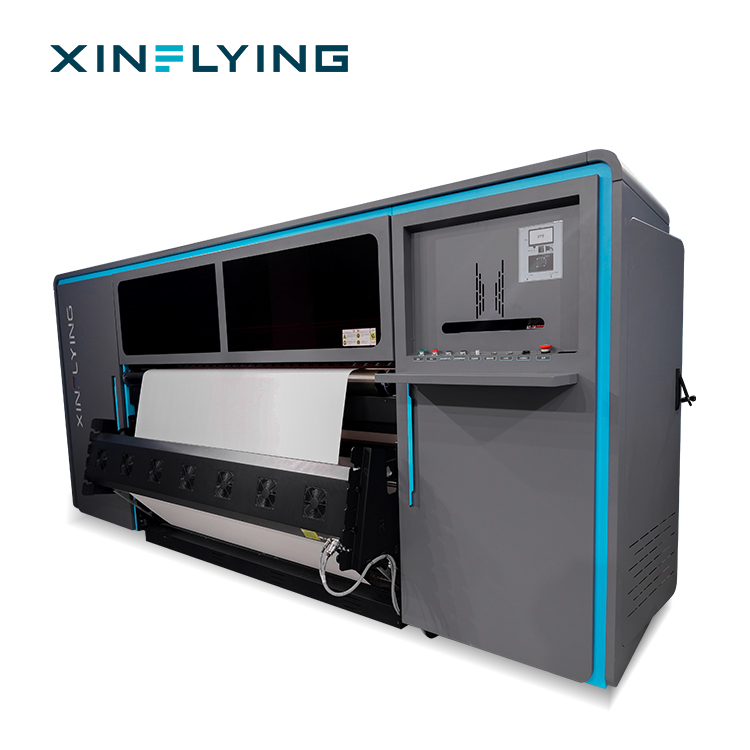
A sublimation printer after-sales contract should fix five things in writing: what counts as a covered defect, how preventive maintenance is scheduled and evidenced, how remote diagnostics are run, what spare-parts and response commitments exist, and which regulatory documents the supplier must keep valid for the market the machine runs in. Everything else — warranty length, goodwill promises, verbal assurances about support — sits on top of those five.
Buyers in the decision and execution stage usually spend weeks comparing print width, head count and quoted speed, then accept whatever service wording the supplier attaches to the order. That imbalance is expensive. A sublimation printer is judged in production by uptime, colour consistency and the speed at which a technical problem is resolved, not by the specification sheet it arrived with.
This guide sets out the clauses to negotiate before the machine ships, the maintenance tasks that belong in a service level agreement, and the compliance obligations that must survive delivery in the EU market.
The Problem: After-Sales Support Is Usually Written as Goodwill
Service language on many quotations is one or two sentences: a warranty period, a statement that technical support is available, and a promise that spare parts can be supplied. None of these are measurable, and none of them determine what actually happens on the morning a printhead stops firing in the middle of a deadline order.
The failure mode is predictable. Poor after-sales support produces long machine downtime, troubleshooting that the buyer cannot complete alone, and operating losses that accumulate while a part is in transit or a question waits for an answer in a different time zone. That risk typically appears when the purchase decision focuses on the initial equipment price and ignores daily output requirements, application scenarios, machine stability and long-term operating costs.
What a buyer should be able to require from any sublimation printer supplier
- Professional installation guidance and a documented commissioning sequence
- Remote technical support with a defined escalation path
- Operation training that covers daily checks and first-line troubleshooting
- Written maintenance recommendations, not a verbal reminder
- Long-term spare parts availability, with critical parts identified by name
Each of those items is a deliverable. A deliverable can be dated, assigned and accepted. That is the difference between an after-sales contract and an after-sales hope.
Industry Background: Why Service Terms Now Decide Repeat Orders
The installed base of dye sublimation equipment is expanding quickly, and service quality scales with it. The dye sublimation printers segment alone was valued at USD 1.88 billion in 2025 and is expected to reach USD 2.53 billion by 2030, according to Mordor Intelligence. Grand View Research projects the wider dye sublimation printing market to grow at a compound annual growth rate of 11.5% from 2026 to 2033.
The geography of that growth matters for contract design. Asia Pacific held a 36.5% revenue share of the dye sublimation printing market in 2025, with China the largest country market, according to Grand View Research. Many of the machines now entering Europe, the Middle East, Africa and the Americas are built in that region, which means cross-border support structures — remote diagnostics, parts logistics, documentation control — carry more weight than they did when most equipment was bought locally.
Demand is also shifting towards applications that punish downtime. Grand View Research identifies personalised apparel and home decor as the primary driver behind a 13.1% CAGR in the digital textile sublimation market through 2030. Those are short-run, deadline-driven orders: sportswear sets, team kits, cushions, blankets and soft signage. Roll-to-roll sublimation printers with widths of 1.9 m (1900 mm) are the standard configuration for high-volume textile and soft-signage work according to FESPA Insights — and a standard-width production machine that stops is a standard-width revenue gap.
Two consequences follow. First, preventive maintenance and diagnostic speed become commercial variables rather than technical footnotes. Second, colour and process validation increasingly reference published standards: ISO 12647-8:2021 provides the standard for graphic technology validation print processes working directly from digital data, which is directly relevant to how sublimation colour accuracy is specified and audited.
The Detailed Solution: Eight Clauses a Sublimation Printer Service Contract Needs
The clause set below works for a single-machine buyer and for a distributor building a service obligation into a reseller agreement. Adapt the depth to the machine class, but keep all eight present.
1. Scope and definitions: what is covered, on which machine
Identify the equipment by exact model, configuration and serial number. Then draw the line between a covered defect and consumable wear. Printhead degradation caused by incompatible ink, dried ink after long idle periods, and media-related damage sit on different sides of that line, and the contract should say so explicitly. It should also name who decides: a remote diagnosis by the supplier, supported by a nozzle check pattern and a test print supplied by the buyer.
2. Preventive maintenance SLA: tasks, intervals and proof
Preventive maintenance is the only part of after-sales that can be scheduled, and therefore the only part that can be measured. A workable SLA lists tasks, frequency, owner and evidence: daily nozzle checks, regular printhead cleaning, ink supply system inspection, printhead alignment and calibration, and a periodic review of printing parameters.
Maintenance frequency depends on usage. Machines in continuous production need daily nozzle checks and regular cleaning; a sampling machine idles differently and clogs differently. The SLA should also record the diagnostic logic the technician will follow, because most output failures trace back to a short list of causes: partial nozzle blockage, incorrect resolution or speed settings, unstable ink supply, incorrect printhead alignment, or a printer that needs calibration. Colour deviation follows its own list — ICC profile selection, RIP parameters, ink quality and compatibility, heat-press temperature and transfer time, and substrate differences.
3. Remote diagnostics: define the evidence pack
What a supplier can diagnose remotely depends entirely on what the buyer sends. Specify a standard evidence pack in the contract: nozzle check output, a production test print, RIP and ICC settings, error messages, ambient temperature and humidity readings, and recent production history. Then specify the escalation ladder — first-line remote support, application or RIP specialist, hardware engineer, on-site visit or parts dispatch — with a named channel and an owner at each level.
4. Spare parts and response commitments
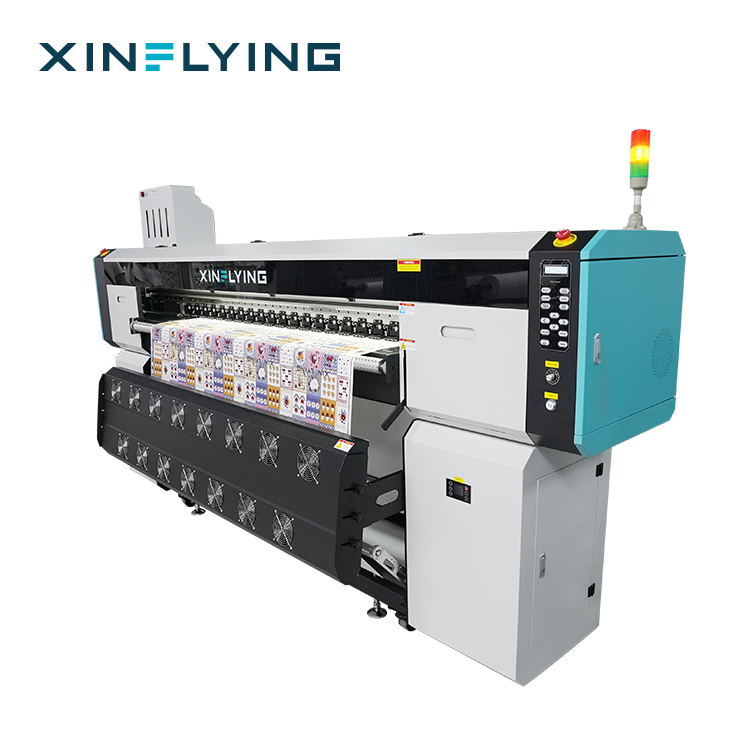
Ask for a spare parts list segmented by criticality: parts that stop production (printheads, boards, pumps, heating elements, dampers), parts that degrade output, and consumables. Write availability commitments against that list rather than against the word ‘parts’.
Geography is part of the clause. Suppliers with local warehouses and technical support in key markets shorten the loop considerably. For a machine imported from China, ask which warehouse serves your country and whether that stock includes the critical parts on your list.
5. Installation, training and knowledge transfer
Installation guidance, operation training and maintenance recommendations should be dated deliverables. State whether training is delivered remotely or on site, who attends, and what it covers: RIP setup and colour management, daily checks, nozzle and printhead care, and the first three troubleshooting steps the operator is authorised to perform. A machine that only one visiting engineer understands is a supply-chain risk.
6. Regulatory support for the machine's market
For EU-market equipment, compliance is a live obligation rather than a shipping document. CE compliance covers applicable electrical safety, electromagnetic compatibility and product safety requirements; RoHS documentation confirms restrictions on hazardous substances in electrical and electronic components. Both must match the actual printer model and configuration. For a model such as the XF-H1802X-2I32A1 supplied into Europe, the contract should require the supplier to hold and keep current CE (including EMC and LVD) and RoHS documentation that corresponds to the exact model and configuration delivered, and to reissue or update documents when the machine changes.
For US-market equipment, FCC compliance is commonly required for electronic equipment to control electromagnetic interference, and additional safety documentation may apply depending on specifications and sales channel. Include a clause requiring notification of document changes and a stated response window for documentation requests — customs questions rarely arrive at a convenient moment.
7. Acceptance baseline: the pre-shipment test record
Acceptance inspection is carried out through pre-shipment test procedures before delivery. That test should generate a record you keep for the life of the machine: nozzle check pattern, test print, ICC and RIP settings, firmware version, and the environmental conditions at test. Later disagreements about print quality then become a comparison against a documented baseline rather than an exchange of opinions.
8. Commercial terms, renewal and exit
Payment and delivery terms shape service logistics more than buyers expect. Delivery under EXW, FOB, CIF or DDP changes who pays freight for a spare part shipped in a hurry; payment by T/T, Western Union or PayPal changes how quickly a chargeable repair is released. Add renewal and termination terms, and define what happens to documentation, training records and parts support if the relationship ends.
| Contract clause | What to specify | Evidence to require |
|---|---|---|
| Scope and definitions | Exact model, configuration, serial number; covered defect versus consumable wear | Model designation on the order confirmation |
| Preventive maintenance SLA | Task list, interval, owner, escalation trigger | Signed maintenance log with dates and findings |
| Remote diagnostics | Evidence pack, response channel, escalation levels | Diagnostic report per incident |
| Spare parts | Critical parts list, availability commitment, serving warehouse | Parts list with model references |
| Training | Format, attendees, curriculum, session dates | Training record and operator checklist |
| Regulatory support | CE (EMC/LVD) and RoHS for EU; FCC and applicable safety documents for US | Certificates and test reports matching the model |
| Acceptance baseline | Pre-shipment test content and retention | Test record with nozzle pattern and print sample |
| Commercial and exit | Payment terms, delivery terms, renewal, end-of-support | Signed order terms and amendment history |
Step-by-Step Breakdown: Negotiating and Enforcing the Contract
- Document your production profile first. Model, print width, number of printheads, shifts per day, main substrates and peak order patterns. A service obligation priced against a single-shift sampling machine will not survive a switch to continuous production.
- Request the model-level documentation pack. Ask for the certificates and test reports that correspond to the exact model you are buying, not to the product family. Confirm the model designation printed on each document matches the nameplate.
- Convert maintenance recommendations into a task table. Take the supplier's maintenance advice and rewrite it as dated tasks with acceptance criteria: what the operator checks, how often, and what result triggers an escalation.
- Write the remote diagnostics protocol. Agree the evidence pack, the channel, the language and the working-hours overlap. Test it once during commissioning with a simulated fault.
- Attach the critical spare parts list. Score each part by whether it stops production. Negotiate availability commitments against the top of the list, then confirm which warehouse serves your market.
- Fix the compliance obligation in the contract. Require current CE (EMC/LVD) and RoHS documentation for EU delivery, FCC and applicable safety documents for US delivery, and written notice whenever a document is revised.
- Run acceptance and record the baseline. Pre-shipment testing happens before delivery; treat the resulting nozzle checks, test prints and settings as the reference file for every later quality discussion.
- Review quarterly. Compare incident logs, maintenance completion and parts consumption against the SLA. Use the review to renegotiate renewal terms before the contract expires, not after.
Use Cases: Matching the Contract to the Machine and the Market
Entry-level shop moving from sampling to small-batch orders
A machine such as the XF-H1802X-2I32A1 — two Epson i3200-A1 printheads, 180 cm print width, up to 52 m²/h in 4PASS, Maintop RIP as standard — is typically bought by businesses starting sublimation printing, custom textile producers and apparel sampling operations. Here the contract can stay lean, but it must still name the three things that cause most unplanned stops: nozzle condition, ink supply and calibration. Daily nozzle checks and a written cleaning routine matter more than an on-site visit clause the buyer will rarely trigger.
Growing commercial printer running daily production
The XF-O2000-4I32A1, with four Epson i3200-A1 heads, a 1950 mm print width and speeds up to 180 m²/h in 2PASS and 92 m²/h in 4PASS, sits with professional textile printers and garment businesses on continuous daily production. At this level the SLA should carry scheduled maintenance windows, front/middle/rear break-controlled heating checks, and a defined consumable buffer so that a delivery delay does not stop the line.
Industrial operation running near-continuous shifts
The XF-19E8-PRO (eight Epson i3200-A1 heads, 3200 dpi, up to 306 m²/h in 1PASS) and the XF-19E15-PRO (15 heads, up to 524 m²/h in 1PASS) are built for textile factories and large garment manufacturers. With this many heads, head-count-dependent routines stop being optional, and the sealed automatic moisturising and cleaning systems on both models should be described in the SLA as maintained subsystems, not as features. Parts stock and escalation speed dominate the contract value here.
EU importer or distributor reselling into a regulated market
For an importer, the after-sales contract doubles as a compliance safeguard. CE (EMC/LVD) and RoHS documentation must match the model supplied, and the supplier should commit to notifying you of changes. Incomplete or mismatched compliance documents can produce customs delays, sales restrictions or additional compliance costs — a service problem that surfaces long after the machine is installed.
Comparison Table: Machine Configuration and the Service Load It Creates
| Model | Printheads | Print width | Quoted speed | Standard RIP | Power | Service planning implication |
|---|---|---|---|---|---|---|
| XF-H1301X-1I32A1 | 1 × Epson i3200-A1 | 130 cm | 4PASS 28 m²/h | Maintop | 2 kW | Single-head entry unit; simplest routine, but every stop is a full stop for output |
| XF-H1802X-2I32A1 | 2 × Epson i3200-A1 | 180 cm | 4PASS 52 m²/h (42 m²/h standard) | Maintop | 3.5 kW | Two heads plus front/middle/rear break-controlled heating; PM must cover heating zones, not only heads |
| XF-O2000-4I32A1 | 4 × Epson i3200-A1 | 195 cm | 2PASS 180 m²/h; 4PASS 92 m²/h | RIIN Print; Maintop | 8.5 kW | Continuous daily production; needs scheduled PM windows and a consumable buffer |
| XF-19E8-PRO | 8 × Epson i3200-A1 | 190 cm | 1PASS 306 m²/h; 2PASS 153 m²/h | Maintop (RIIN, PhotoPrint, Printfactory optional) | 10.2 kW | 3200 dpi; sealed automatic moisturising and cleaning; with eight heads, daily nozzle verification is mandatory |
| XF-19E15-PRO | 15 × Epson i3200-A1 | 190 cm | 1PASS 524 m²/h; 2PASS 254 m²/h | Maintop (RIIN, PhotoPrint, Printfactory optional) | 14.5 kW | Highest head count; highest cost per stopped hour; spare head and board stock plus a written escalation path matter most |
Environmental specifications differ across the range and belong in the maintenance schedule as monitored conditions rather than assumptions. The XF-19E8-PRO and XF-19E15-PRO are rated for 18–30°C and 35–65%RH; the XF-H1802X-2I32A1 for 20–35°C and 45–65%RH; the XF-O2000-4I32A1 for 20–25°C and 45–65%RH. A room that drifts outside those windows can produce output problems the service contract will otherwise be asked to solve.
FAQ
What certification support should an after-sales contract cover for an EU-market sublimation printer?
For the EU market, the contract should require valid CE documentation covering applicable electrical safety, electromagnetic compatibility and product safety requirements, plus RoHS documentation for restricted substances in electrical and electronic components. Both sets of documents must match the actual printer model and configuration delivered, not the product family. For a model such as the XF-H1802X-2I32A1 shipped into Europe, write the obligation as a continuing one: the supplier keeps the documentation current, notifies you of revisions, and responds within a stated window when a customs or customer audit requests the file.
What should a preventive maintenance SLA cover on a roll-to-roll sublimation printer?
A preventive maintenance SLA for a roll-to-roll sublimation printer should list daily nozzle checks, regular printhead cleaning, ink supply system inspection, printhead alignment and calibration, and periodic review of printing parameters, each with an owner, a frequency and a record. Maintenance frequency depends on usage: machines in continuous production need daily nozzle checks and regular cleaning, while intermittent operation raises the risk of dried ink inside the printhead. The SLA should also name the symptoms that trigger an escalation — banding and horizontal lines, missing colours, colour deviation against the approved profile — together with the first diagnostic steps the operator is authorised to take.
How should the contract separate included service from chargeable work?
Write the categories explicitly. Installation guidance, remote technical support, operation training, maintenance recommendations and spare parts availability are support deliverables and should sit inside the contract with defined scope. Consumables, wear parts outside the covered definition, and repairs caused by incompatible ink or unscheduled modification are normally chargeable. Payment terms (T/T, Western Union, PayPal) and delivery terms (EXW, FOB, CIF, DDP) should be stated in the same clause, because they determine how fast a chargeable part reaches you and who pays the freight.
Can the pre-shipment test be used as the after-sales baseline?
Yes, and it should be. Acceptance inspection is carried out through pre-shipment test procedures before delivery, so ask for the test record to be handed over with the machine: nozzle check pattern, test print, ICC and RIP settings, firmware version and environmental conditions at test. Keeping that record turns later print-quality disputes into a documented comparison. Where colour accuracy is contractually relevant, reference a published validation standard such as ISO 12647-8:2021 for print processes working directly from digital data.
What spare-parts and response commitments should be written into the contract?
Start with a critical parts list — the items whose absence stops production — and attach availability commitments to it, then identify the warehouse that serves your market. Suppliers with local warehouses and technical support in key markets reduce the gap between a diagnosis and a repair, which is the practical measure of after-sales quality. Guangzhou Xin Flying Digital Technology Co., Ltd. supplies dye sublimation printers through a network covering North America, South America, Europe, Asia, the Middle East and Africa, with export business accounting for 80% of total sales, and provides installation guidance, remote technical support, operation training, maintenance recommendations and long-term spare parts availability. Buyers preparing a service clause can request the model-level documentation list and a sample contract structure from info@xin-flying.com or WhatsApp +86 188-1322-1357.
Conclusion
An after-sales contract for a sublimation printer is not a warranty paragraph. It is a set of measurable commitments: definitions that decide what is covered, a maintenance schedule with records, a remote diagnostics protocol that produces usable evidence, spare parts identified by criticality, training with dates attached, compliance documentation that stays current for the market the machine serves, an acceptance baseline captured before delivery, and commercial terms that make parts logistics predictable.
Negotiate those eight clauses before the order is confirmed, and the machine's performance becomes a manageable operating variable instead of a negotiation. Xinflying has manufactured digital printing equipment since 2010 from a 37,440 m² facility with a 20-engineer R&D team and annual output of 20,000+ units, and supports dye sublimation printers across the markets where its customers produce.
Planning after-sales terms for a sublimation printer line?
Request the model-level documentation pack, the critical spare parts list and a sample after-sales clause set for your market. The 3-page company and product brochure is also available for download.
Download the Xinflying brochure (PDF)
Email: info@xin-flying.com | Tel / WhatsApp: +86 188-1322-1357 | Web: www.xin-flying.com
Address: No.7, Xiecun 2nd Industrial Zone, Panyu, Guangzhou, Guangdong
Have Questions or Need More Details?
Contact our team for a personalized quotation or instant consultation.
Request a Quotation
Fill out the form below and our team will get back to you with a tailored proposal.
WhatsApp Direct Chat
Prefer to chat in real-time? Message us on WhatsApp for instant assistance & quick answers.
- Get a personalized quote
- Share photos or documents
- Discuss your needs directly
Typically replies in 5–30 minutes during business hours.