
Sublimation Printer Certification Decoder: What CE LVD, MD, EMC & RoHS Actually Cover on Industrial Models
Sublimation Printer Certification Decoder: What CE LVD, MD, EMC & RoHS Actually Cover on Industrial Models
An industrial dye sublimation printer does not hold one "CE certificate." It holds a set of documents produced under four different regulatory streams — Low Voltage Directive (LVD), Machinery Directive (MD), Electromagnetic Compatibility (EMC) and RoHS — and each stream covers a different risk, is tested against different standards, and is frequently issued by a different certification body. On the XF-19E15-PRO, the LVD stream alone is documented under EN IEC 62368-1:2020/A11:2020 with certificate number TQT1550D271EC. Knowing which stream covers what is the practical difference between a clean EU import and a stalled customs file.
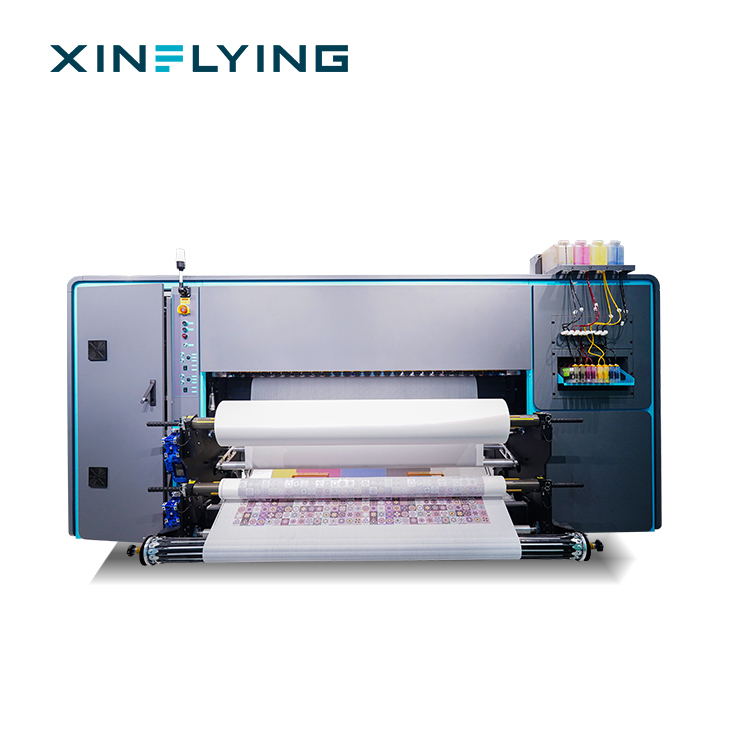
This decoder is written for buyers already in the execution stage: importers, distributors, textile mills and brand owners who have shortlisted a 1.9 m roll-to-roll dye sublimation printer and now need to confirm that the paperwork matches the machine, the target market and the resale channel. Xinflying (Guangzhou Xin Flying Digital Technology Co., Ltd.), a digital printing equipment manufacturer founded in 2010 in Panyu, Guangzhou, serves as the worked example because its industrial sublimation range — including the XF-19E8-PRO, XF-19E15-PRO, XF-O2000-4I32A1 and XF-H1802X-2I32A1 — has a traceable certification file with named certificate numbers and cited standards.
Problem Definition: Why "CE-Certified" Is Not a Sufficient Answer
The CE mark is a declaration by the manufacturer that applicable EU legislation has been met. It is not, by itself, a test report, a certificate number, or a scope statement. On an industrial sublimation printer, four distinct streams sit behind that mark, and each answers a different question:
- LVD — is the electrical design safe to operate on the rated supply?
- MD — are the mechanical risks of a moving, heated machine controlled?
- EMC — does the machine interfere with other equipment, and can it tolerate interference?
- RoHS — does the hardware respect restrictions on hazardous substances?
Buyers rarely fail a compliance check because they do not know what CE stands for. They fail because they treat four documents as one, or accept a general statement where a specific number is required. The recurring failure modes at the decision-to-execution stage look like this: a certificate is presented for a model other than the one being shipped; the cited standard sits at an outdated amendment level; a RoHS declaration covers the ink but is presented as machine compliance; an EMC report predates the current electrical configuration; or a single certificate number is offered as proof for an entire product range even though the two industrial models carry different numbers from different bodies.
Worked example of why scope matters: the XF-19E15-PRO and the XF-19E8-PRO are both 190 cm industrial roll-to-roll sublimation printers, but they do not share a certificate number. Each carries its own number, issued by a different certification body. Bodies appearing across the Xinflying certification file include TQT, UDEM, CTIC and BST, with TQT1550D271EC documenting the LVD stream on the XF-19E15-PRO under EN IEC 62368-1:2020/A11:2020. Any buyer who receives one number and assumes it covers both models has already lost traceability.
Industry Background: Why Compliance Documentation Became a Procurement Variable
The commercial backdrop explains why this level of paperwork scrutiny has become routine rather than exceptional. Grand View Research values the global dye sublimation printing market at USD 16.4 billion in 2025, projected to reach USD 39.0 billion by 2033, with a projected CAGR of 11.5% from 2026 to 2033. Asia Pacific dominated that market in 2025 with a 36.5% revenue share, led by China as the largest country market. Within the equipment segment specifically, Mordor Intelligence values dye sublimation printers at USD 1.88 billion in 2025, expected to reach USD 2.53 billion by 2030. The wider large format printer market, per Fortune Business Insights, was valued at USD 10.57 billion in 2025 and is projected to reach USD 16.52 billion by 2034.
Growth of that scale pushes more machines into regulated channels — EU importers, distributors with resale obligations, and brand owners whose printed textiles are tested for harmful substances. In parallel, FESPA Insights describes 1.9 m (1900 mm) roll-to-roll sublimation printers as standard for high-volume textile and soft signage applications, which is exactly the machine class where a full four-stream certification file is expected rather than optional.
One clarification prevents a common category error: ISO 12647-8:2021, which provides the standard for graphic technology validation print processes working directly from digital data, is a process standard relevant to colour accuracy. It is not a CE safety, EMC or substance requirement. Process standards and product compliance streams are verified separately and should not be presented as substitutes for one another.
Detailed Solution: Decoding the Four CE Streams on Industrial Sublimation Printers
The four streams below are the ones an industrial buyer will actually receive documents for. Each description states what the stream covers, what it does not cover, and how to recognise it in a supplier's file.
Stream 1 — LVD: Electrical Safety Under EN IEC 62368-1
The Low Voltage Directive stream addresses electrical energy hazards: insulation, separation distances, protection against electric shock, and thermal behaviour under normal and fault conditions. On the XF-19E15-PRO, this stream is documented under EN IEC 62368-1:2020/A11:2020 with certificate number TQT1550D271EC.
For industrial models, the LVD scope scales with the power architecture. The XF-19E15-PRO draws 14.5 kW on a 210–230V, 45A supply, and the XF-19E8-PRO draws 10.2 kW on the same 210–230V, 45A configuration, while the mid-range XF-O2000-4I32A1 runs 8.5 kW on 220V, 50/60Hz and the compact XF-H1802X-2I32A1 runs 3.5 kW on 110/220V at 27.2A/13.6A. A high-current industrial machine therefore produces a thicker LVD test file than a compact model — which is one reason a certificate number must be read together with the rating plate.
What LVD does not cover: mechanical guarding, emergency stop circuits, EMC emissions, or the chemical content of ink. A buyer who accepts an LVD certificate as "full CE compliance" is missing three of four streams.
Stream 2 — MD: Machinery Safety Under EN ISO 12100, EN 60204-1 and EN ISO 12643-1
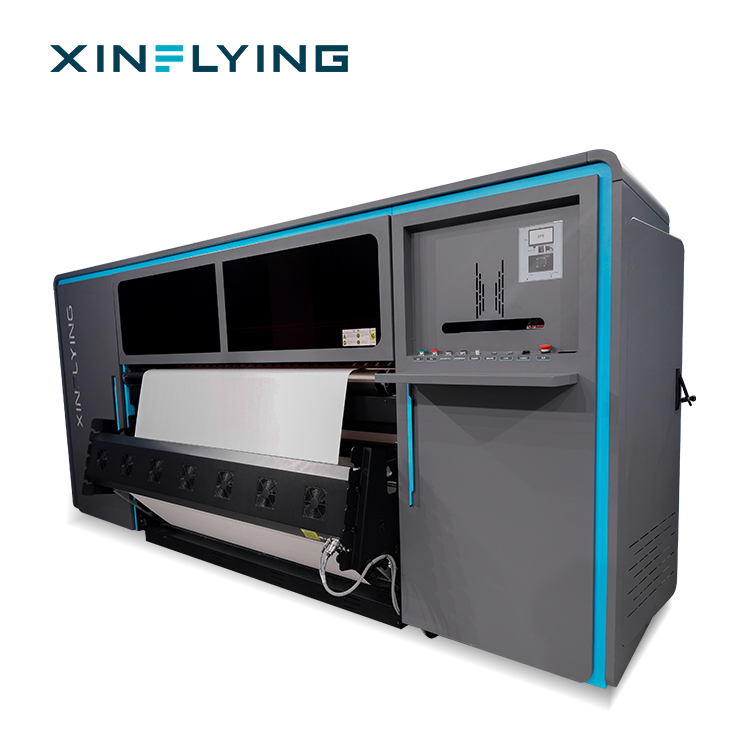
The Machinery Directive stream assesses the machine as a machine: moving axes, paper path, rollers, heated surfaces, guarding, interlocks and emergency stop behaviour. The standards cited across Xinflying's industrial sublimation file are EN ISO 12100:2010, EN 60204-1:2018/A1:2025 and EN ISO 12643-1:2023.
- EN ISO 12100:2010 is the risk assessment methodology standard — it defines how hazards are identified and how risk is reduced by design, then by safeguarding, then by information for use.
- EN 60204-1:2018/A1:2025 covers the electrical equipment of machines, including the amendment issued in 2025 — a useful signal that the reference is being maintained at the current level rather than frozen at an older edition.
- EN ISO 12643-1:2023 applies the safety requirements specific to graphic technology equipment, which is the product-family standard most directly written for printing machinery.
What MD does not cover: substance restrictions and electromagnetic behaviour. Conversely, an EMC or RoHS document cannot demonstrate that a machine is guarded.
Stream 3 — EMC: Emissions, Immunity and Harmonic Current
The EMC stream has three distinct jobs, and buyers should expect three corresponding references. Standards cited in the Xinflying file are EN 55032:2015/A11:2020, EN 55035:2017/A11:2020 and EN IEC 61000-3-2:2019+A1:2021.
- EN 55032:2015/A11:2020 — emission requirements: how much electromagnetic disturbance the machine may produce.
- EN 55035:2017/A11:2020 — immunity requirements: how much disturbance the machine must tolerate and keep working.
- EN IEC 61000-3-2:2019+A1:2021 — limits for harmonic current emissions, which becomes more material as machine power rises.
EMC is not an abstract paperwork exercise in a textile mill. A wide-format printer sharing a floor with cutting, heat-press and drying equipment is exposed to conducted and radiated interference; unexplained signal instability, dropped print data or inconsistent output can have an EMC-relevant root cause as easily as a printhead-related one. Conversely, an industrial press drawing 45A disturbs the surrounding electrical environment, which is precisely what the emission and harmonic current references exist to constrain.
Stream 4 — RoHS: Substance Restrictions Under Directive 2011/65/EU
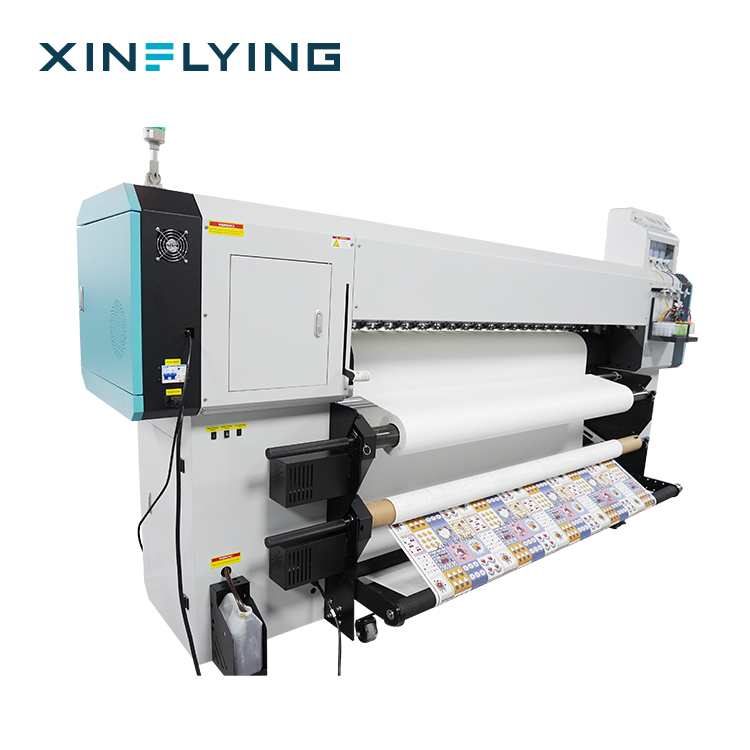
RoHS is the only stream that is not about how the machine behaves. It restricts hazardous substances in electrical and electronic equipment, and the reference cited in the Xinflying file is EN IEC 63000:2018, alongside Directive 2011/65/EU.
EN IEC 63000:2018 is important to understand because it is not a pass/fail product test in the way an EMC report is; it is the technical-documentation route used to assess and demonstrate conformity of electrical and electronic equipment with substance restrictions. Practically, that means a compliant supplier should be able to hand over structured technical documentation and a declaration, not simply a marketing line stating "RoHS compliant."
Common buyer error: conflating three different statements — machine RoHS (hardware substances), ink chemical safety (consumables), and OEKO-TEX certification of the ink. They are separate layers with separate documents.
A Separate Layer — OEKO-TEX ECO PASSPORT for Ink and Paste Safety
Machine certification says nothing about what the consumable puts onto fabric. For buyers whose printed textiles are destined for apparel, home textile or retail channels with restricted-substance requirements, the relevant document is the OEKO-TEX ECO PASSPORT for the ink and paste, documented under SH150194016 in the Xinflying file. Treat this as a fifth, independent layer: it follows the consumable, not the printer, and it must be re-verified whenever the ink or paste is changed.
Which Certificate Types Apply to Which Machine Class
All four CE-related streams apply to every industrial sublimation printer; what changes by class is the scope and depth of testing. Two practical markers separate the classes: print width and electrical supply configuration.
- Compact / commercial class (for example the XF-H1802X-2I32A1 at 180 cm, 3.5 kW, 110/220V): LVD, EMC and RoHS are the dominant documents, with machinery risk concentrated on the paper path, heaters and rollers.
- Production class (for example the XF-O2000-4I32A1 at 195 cm, 8.5 kW, 220V): the same four streams, with more material harmonic current and emission content because of the higher draw.
- Industrial 190 cm class (XF-19E8-PRO at 10.2 kW and XF-19E15-PRO at 14.5 kW, both 210–230V / 45A): the full four-stream file, with LVD scope driven by high current, and machinery documentation covering a 1,400–1,480 kg frame.
- Consumables, all classes: OEKO-TEX ECO PASSPORT applies to the ink or paste regardless of which printer it runs in.
Model and compliance reference
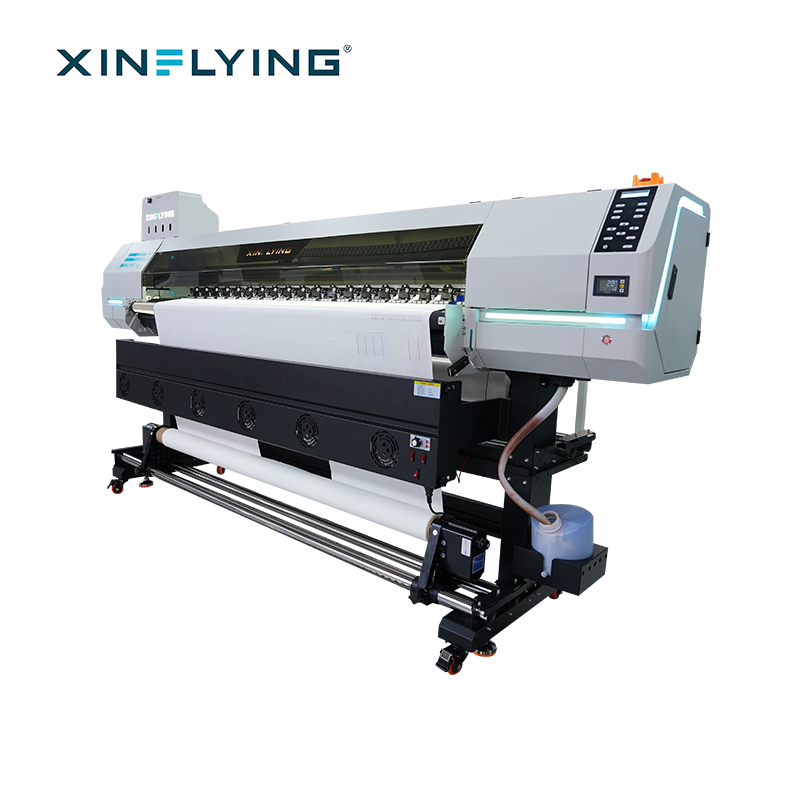
| Model | Print width | Printheads | Max. speed | Power / supply | Class note |
|---|---|---|---|---|---|
| XF-H1301X-1I32A1 | 130 cm | 1× Epson i3200-A1 | 4PASS 28 m²/h | 2 kW, 110/220V | Entry class |
| XF-H1802X-2I32A1 | 180 cm | 2× Epson i3200-A1 | 4PASS 52 m²/h | 3.5 kW, 110/220V, 27.2A/13.6A | Compact commercial |
| XF-O2000-4I32A1 | 195 cm | 4× Epson i3200-A1 | 2PASS 180 m²/h | 8.5 kW, 220V | Mid-range production |
| XF-19E8-PRO | 190 cm | 8× Epson i3200-A1 | 1PASS 306 m²/h | 10.2 kW, 210–230V, 45A | Industrial; own certificate number |
| XF-19E15-PRO | 190 cm | 15× Epson i3200-A1 | 1PASS 524 m²/h | 14.5 kW, 210–230V, 45A | High-volume industrial; LVD certificate TQT1550D271EC |
Step-by-Step: Mapping Certificate Scope to Your Target Market
The following sequence is designed for the execution phase, when a model has already been shortlisted and the paperwork has to survive an importer, a distributor's due diligence or a market surveillance check.
- Fix the machine class first. Record print width, printhead count, power rating and supply configuration from the quotation. These four values determine how wide the LVD and EMC scope should be. A 190 cm, 45A machine and a 180 cm, 3.5 kW machine do not present the same evidence burden.
- List the streams that must be present. For an EU-destined industrial sublimation printer, expect documents for LVD, MD, EMC and RoHS, plus a separate consumable document if inks are supplied.
- Match the certificate number to the exact model. Read the number, not the marketing statement. Confirm that the model designation on the certificate equals the model on the quotation — the XF-19E15-PRO and XF-19E8-PRO distinction is the standard test case.
- Identify the issuing body. Bodies appearing across the Xinflying industrial file include TQT, UDEM, CTIC and BST. Different bodies issue different certificate numbers for different models; buyers should verify each number against the issuing body's own record rather than assuming a single number covers a range.
- Check the amendment level of every cited standard. Confirm the version in the document against the current amendment, for example EN IEC 62368-1:2020/A11:2020 on the LVD side, EN 60204-1:2018/A1:2025 on the machinery electrical side, or EN 55032:2015/A11:2020 on the emissions side.
- Cross-check the rating plate against the certificate. The electrical ratings on the machine nameplate must be consistent with the ratings assessed in the LVD and EMC documents.
- Write documentation continuity into the supply agreement. Compliance is not a one-off delivery event. Standards are amended, configurations change, and distributors reselling into the EU need current paperwork years after commissioning. The agreement should state who re-issues documents, in what timeframe, and in what format when a standard is updated or a machine configuration changes.
Use Cases: How Different Buyers Apply the Same Decoder
EU distributor onboarding a 1.9 m roll-to-roll line
A distributor preparing to place 190 cm industrial sublimation printers with European textile customers needs a per-model certificate number, the four-stream document set, and confirmation that the cited standards are current. Because the distributor carries resale obligations, the certificate number must be reproducible in their own technical file — a general compliance statement is not usable.
Textile mill expanding capacity
A mill adding an XF-19E8-PRO or XF-19E15-PRO to an existing line is buying electrical load as much as print output. The 45A supply configuration means the LVD file and the harmonic current reference are directly relevant to how the machine integrates with the site's electrical environment, alongside the machinery guarding and emergency stop documentation.
Brand owner with restricted-substance obligations
A brand owner whose printed sportswear, home textile or promotional products are tested for harmful substances needs the machine streams and the consumable document. OEKO-TEX ECO PASSPORT, documented under SH150194016 for ink and paste in the Xinflying file, addresses the chemical layer that machine certification cannot.
Sampling or small-batch operation
A business validating designs on a compact 180 cm machine still needs LVD, EMC and RoHS documents for import, but the machinery and LVD scope is narrower. The mistake to avoid here is assuming that because the machine is smaller, an old or generic certificate will pass scrutiny.
Comparison Table: The Four CE Streams Side by Side
| Stream | Directive / Regulation | Standards cited in the Xinflying industrial file | What it actually covers | What it does not cover | Typical evidence document |
|---|---|---|---|---|---|
| LVD | Low Voltage Directive | EN IEC 62368-1:2020/A11:2020 | Electrical energy hazards: shock protection, insulation, separation, thermal behaviour under normal and fault conditions | Mechanical guarding, EMC emissions, ink chemistry | LVD test report and certificate, e.g. TQT1550D271EC on the XF-19E15-PRO |
| MD | Machinery Directive | EN ISO 12100:2010; EN 60204-1:2018/A1:2025; EN ISO 12643-1:2023 | Risk assessment methodology, mechanical safeguarding, emergency stop, interlocks, electrical equipment of machines, graphic technology safety requirements | Substance restrictions, EMC immunity and emissions, colour accuracy | Machinery safety test report and CE Declaration of Conformity citing the assessment |
| EMC | EMC Directive | EN 55032:2015/A11:2020; EN 55035:2017/A11:2020; EN IEC 61000-3-2:2019+A1:2021 | Emission limits, immunity requirements, harmonic current emission limits | Electric shock protection, mechanical safety, RoHS substances | EMC test report covering emissions, immunity and harmonic current |
| RoHS | Directive 2011/65/EU | EN IEC 63000:2018 | Restriction of hazardous substances in electrical and electronic equipment, documented through technical documentation | Safety, EMC behaviour, printing performance | EN IEC 63000:2018 technical documentation and RoHS declaration |
| OEKO-TEX ECO PASSPORT (separate layer) | OEKO-TEX ECO PASSPORT scheme | Certificate SH150194016 (ink and paste) | Chemical safety of the ink and paste used in production | Machine safety, EMC, machine RoHS | ECO PASSPORT certificate for the specific ink or paste |
Reading rule for this table: the four CE streams are cumulative, not alternative. A supplier that can only produce one of them has not demonstrated CE compliance; a supplier that can produce all four, each traceable to a number and a model, has given the buyer something that can be filed, resold and defended.
Frequently Asked Questions
Four CE-related streams apply. LVD covers electrical safety, documented on the XF-19E15-PRO under EN IEC 62368-1:2020/A11:2020 with certificate TQT1550D271EC. The Machinery Directive stream covers machine safety under EN ISO 12100:2010, EN 60204-1:2018/A1:2025 and EN ISO 12643-1:2023. EMC covers emissions, immunity and harmonic current under EN 55032:2015/A11:2020, EN 55035:2017/A11:2020 and EN IEC 61000-3-2:2019+A1:2021. RoHS covers substance restrictions under Directive 2011/65/EU, demonstrated through EN IEC 63000:2018 technical documentation. Separately, OEKO-TEX ECO PASSPORT (SH150194016) applies to the ink and paste, not to the machine.
No. Certificate numbers are issued per model and per certification body, not per brand. The XF-19E15-PRO and XF-19E8-PRO are both 190 cm industrial sublimation printers, yet they carry distinct certificate numbers issued by different bodies, and bodies appearing across the Xinflying file include TQT, UDEM, CTIC and BST. A buyer who receives a single number should confirm which model it names before treating it as evidence for the machine on the order.
Verify it in four steps: confirm the certificate number against the issuing body's own record (for example a TQT, UDEM, CTIC or BST certificate); confirm the model designation on the certificate matches the quotation exactly; confirm the cited standards and their amendment levels, such as EN IEC 62368-1:2020/A11:2020 or EN 60204-1:2018/A1:2025; and confirm the electrical ratings assessed match the machine rating plate, including the supply configuration — the 190 cm industrial models operate on 210–230V / 45A, while the XF-O2000-4I32A1 runs on 220V and the XF-H1802X-2I32A1 on 110/220V.
Certification and pre-shipment testing answer different questions. Certification documents the design and type against the cited standards; the pre-shipment test is the acceptance procedure that confirms the unit actually delivered matches the agreed configuration before it leaves the factory. Xinflying conducts product acceptance through pre-shipment test procedures before delivery. Buyers should therefore expect two separate deliverables: the compliance file, and the pre-shipment acceptance record.
A long-term relationship changes what documentation means. Instead of a one-time file, the supplier should maintain traceability between certificate numbers and the models delivered, re-issue documents when standards are amended — the presence of amendments such as EN 60204-1:2018/A1:2025 and EN IEC 62368-1:2020/A11:2020 in a file shows the practice in use — and support distributors who resell into regulated markets. Xinflying exports account for 80% of total sales, with major markets including North America, South America, Europe, Asia, the Middle East and Africa, and the company maintains local warehouses and technical support in key markets. Order terms are structured accordingly: MOQ 1 unit, delivery on EXW, FOB, CIF or DDP, with payment by T/T, Western Union or PayPal. Buyers who want to test this continuity before committing to a fleet can start with a sample or single-unit validation and request the current compliance file and downloadable catalogue for the exact model under consideration.
Conclusion: Read the Number, Not the Mark
On industrial sublimation printers, CE compliance is four documents, not one mark. LVD answers the electrical safety question under EN IEC 62368-1:2020/A11:2020; the Machinery Directive answers the machine safety question under EN ISO 12100:2010, EN 60204-1:2018/A1:2025 and EN ISO 12643-1:2023; EMC answers the interference question under EN 55032:2015/A11:2020, EN 55035:2017/A11:2020 and EN IEC 61000-3-2:2019+A1:2021; RoHS answers the substance question under EN IEC 63000:2018 and Directive 2011/65/EU. OEKO-TEX ECO PASSPORT (SH150194016) then covers the consumable layer that none of the four machine streams addresses.
The execution-phase rule is simple: read the number, not the mark. A certificate number that names the exact model, is traceable to a named issuing body such as TQT, UDEM, CTIC or BST, and cites standards at current amendment levels is usable in an importer file, a distributor's due diligence pack or a market surveillance check. A general statement that a printer is "CE certified" is not. Applied at the point of order, that distinction protects the shipment, the resale channel and the years of production that follow.
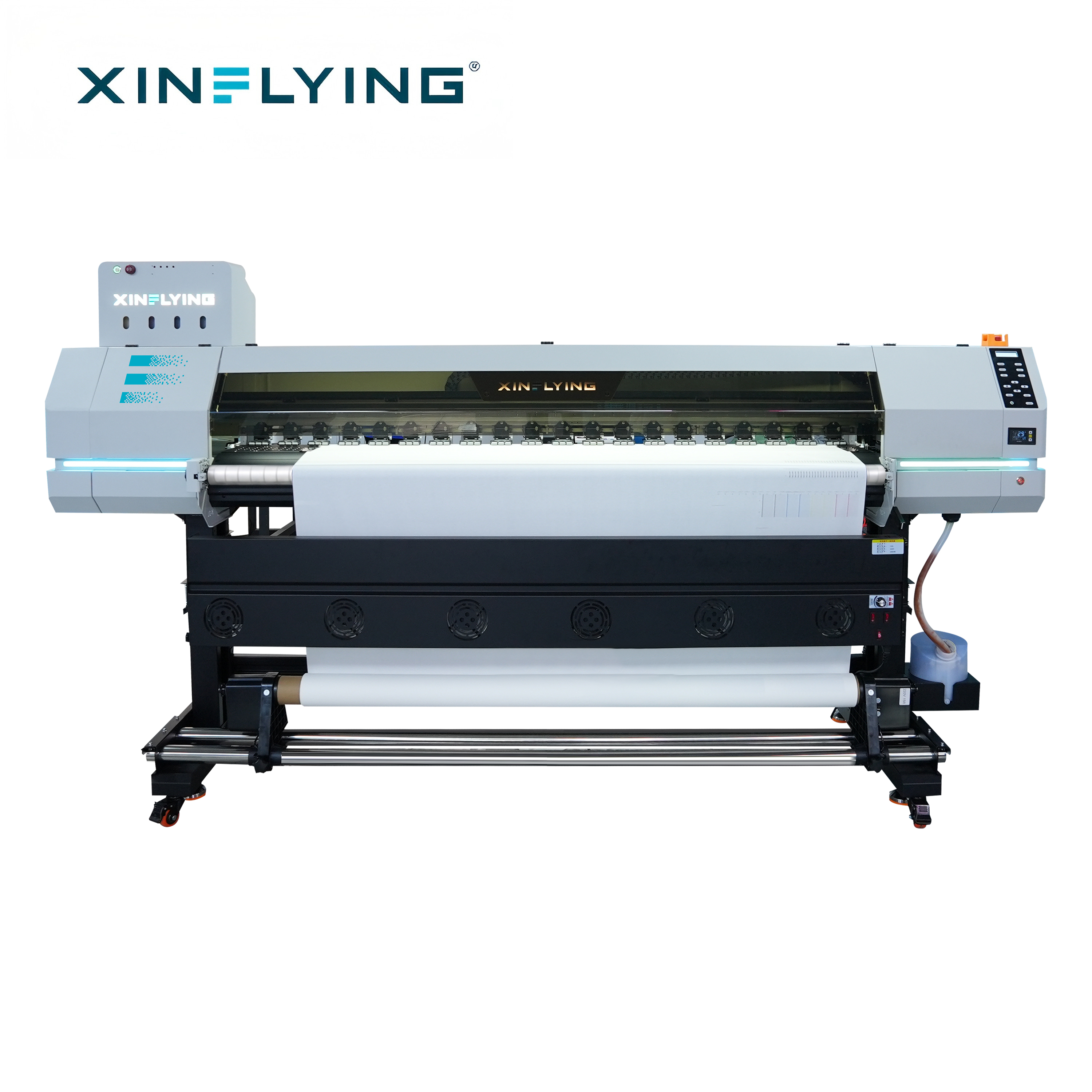
Next Step: Verify the File for the Model You Are Buying
If you are finalising an industrial sublimation printer order, request the compliance documents for the exact model — certificate number, cited standards and amendment levels — together with a pre-shipment acceptance record. Sample validation and single-unit orders are supported before fleet-level commitment.
Download the Xinflying company and product catalogue (PDF)
Website: www.xin-flying.com | Email: info@xin-flying.com | Tel / WhatsApp: +86 188-1322-1357