
Sublimation Printer Certifications 101: CE LVD, EMC, MD & RoHS on Digital Textile Printers
Sublimation Printer Certifications 101: CE LVD, EMC, MD & RoHS on Digital Textile Printers
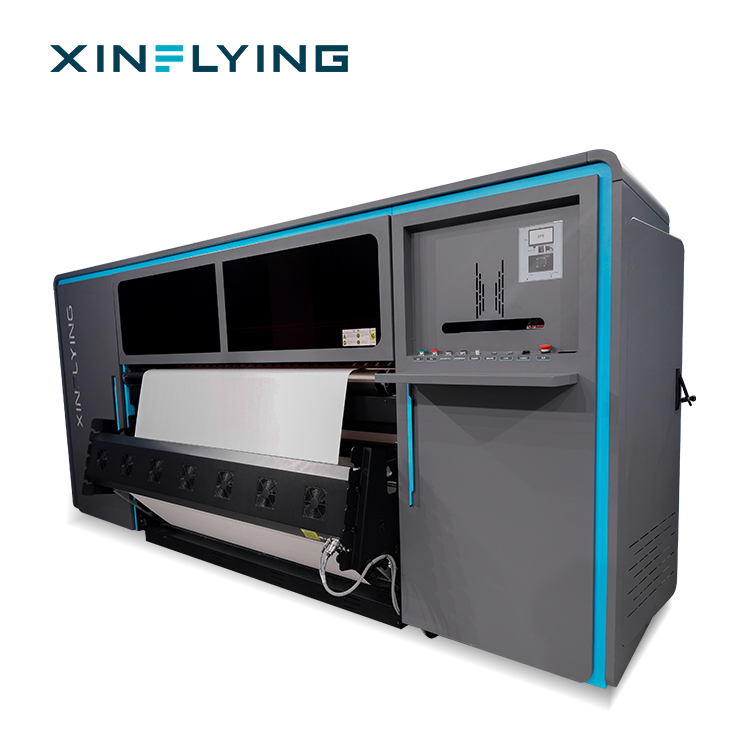
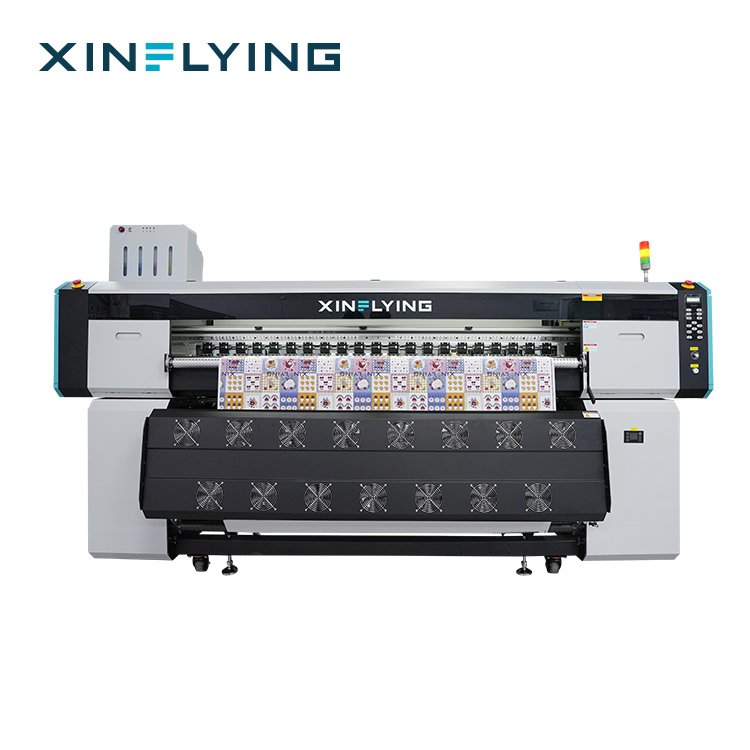
A CE mark on an industrial sublimation printer is not one certificate. It summarises the EU directives a machine has been assessed against: the Low Voltage Directive (LVD 2014/35/EU), the Electromagnetic Compatibility Directive (EMC 2014/30/EU), the Machinery Directive (MD 2006/42/EC) and the RoHS Directive (2011/65/EU). On the XF-19E15-PRO — a 190 cm roll-to-roll digital textile printer built by XINFLYING — those four obligations are documented by four separate certificates from two issuing bodies: TQT1550D271EC for LVD, TQT1550D270EC for EMC, M.2026.206.C142365 for MD and M.2026.206.C142366 for RoHS. This guide explains, in plain language, what each mark covers, how it appears on a real certificate, and how to check that the document in front of you belongs to the machine you are buying.
Problem definition: why “CE certified” on a quotation is not enough
Most first-time buyers of an industrial sublimation printer meet certification the same way. A supplier sends a quotation, the specification table lists “CE certified”, and the buyer treats the subject as closed. On a machine that draws 14.5 kW and weighs 1,480 kg, that single line can hide four different assessments — and a manufacturer can legitimately hold one of them while missing another.
The practical consequence is that “CE certified” answers the wrong question. The useful question is narrower: which directive does the certificate address, which model does it name, which standards were applied, who issued it, and how long does it stay valid?
A Low Voltage Directive certificate tells a buyer that the electrical design was assessed against a safety standard such as EN IEC 62368-1. It says nothing about radio-frequency emissions, nothing about the hazards created by the media path and moving carriage, and nothing about lead or cadmium content in the electronic assemblies. Those questions belong to three other documents. For a buyer moving from a small-format shop into roll-to-roll textile production, the distinction matters commercially as well as legally, because EU importers and larger end customers increasingly ask for certificate numbers before they accept a purchase order.
Industry background: why certification documents became a standard part of the conversation
Grand View Research values the global dye sublimation printing market at USD 16.4 billion in 2025 and projects USD 39.0 billion by 2033, a CAGR of 11.5% from 2026 to 2033. The same source reports that Asia Pacific held a 36.5% revenue share in 2025, led by China as the largest country market. Narrowed to equipment alone, Mordor Intelligence values the dye sublimation printer segment at USD 1.88 billion in 2025, rising to USD 2.53 billion by 2030.
Two technical reference points sit under those figures. FESPA describes 1.9 m (1900 mm) roll-to-roll sublimation printers as the standard configuration for high-volume textile and soft signage work — the format used by the XF-19E15-PRO (190 cm / 75") and the XF-O2000-4I32A1 (195 cm). ISO 12647-8:2021, the ISO standard for validation print processes working directly from digital data, has meanwhile become a recognised reference for colour accuracy in digital print workflows.
For a manufacturer exporting into Europe, the compliance layer is what converts that market growth into shipped machines. It is also where disclosure varies most between suppliers: some publish directive-level certificate numbers, others publish a single CE logo. That gap is the reason this explainer exists.
Detailed solution: what each of the four marks actually covers
Each directive addresses a different class of risk. The definitions below are paired with the specific documentation held for the XF-19E15-PRO, so the abstract names can be seen attached to real certificate numbers, standards and dates.
1. CE LVD — Low Voltage Directive (2014/35/EU)
The Low Voltage Directive covers the electrical safety of equipment operating within defined voltage limits. Applied to a textile printer, it addresses the risks that come from the electrical system itself: insulation, protective earthing, component and wiring safety under normal and fault conditions, and the way power is distributed through a machine of this size.
On the XF-19E15-PRO, electrical safety compliance is documented by CE LVD certificate TQT1550D271EC, issued on 19 May 2026 by Shenzhen Tianqi Testing Technology Service Co., Ltd. (TQT). The applicable standard is EN IEC 62368-1:2020/A11:2020, and the certificate scope is stated as electrical safety compliance according to LVD 2014/35/EU for digital printer products for the EU market.
Why this document matters in practice: the XF-19E15-PRO runs on a 210–230 V, 45 A supply with a rated power of 14.5 kW. That is not a plug-in appliance load, and it is the reason LVD evidence is normally the first document an EU facility manager asks to see.
2. CE EMC — Electromagnetic Compatibility Directive (2014/30/EU)
EMC works in two directions. It governs the electromagnetic disturbance a machine emits, and it governs the machine’s immunity to disturbance arriving from its surroundings. In a print hall where heat presses, calenders, cutting equipment and variable-frequency drives share a supply, the second half of that requirement is not theoretical — unstable signals are one of the recurring causes of interrupted production on large-format equipment.
The XF-19E15-PRO’s EMC compliance is documented by CE EMC certificate TQT1550D270EC, issued on 19 May 2026 by Shenzhen Tianqi Testing Technology Service Co., Ltd. The applicable standards are EN 55032:2015/A11:2020, EN 55035:2017/A11:2020, EN IEC 61000-3-2:2019+A1:2021 and EN 61000-3-3:2013/A2:2021, covering emission limits, immunity, harmonic current emissions, and voltage changes and flicker respectively. The certificate scope is EMC compliance under Directive 2014/30/EU for the EU market.
3. CE MD — Machinery Directive (2006/42/EC)
The Machinery Directive addresses machine-level safety rather than product quality: the hazards created by moving parts, the control system, guarding, and the way an operator interacts with the equipment during normal running and maintenance. It is the mark most often confused with LVD, because both concern the machine itself rather than the textile being printed. LVD asks whether the electrical design is safe; MD asks whether the machine as a whole is safe to operate.
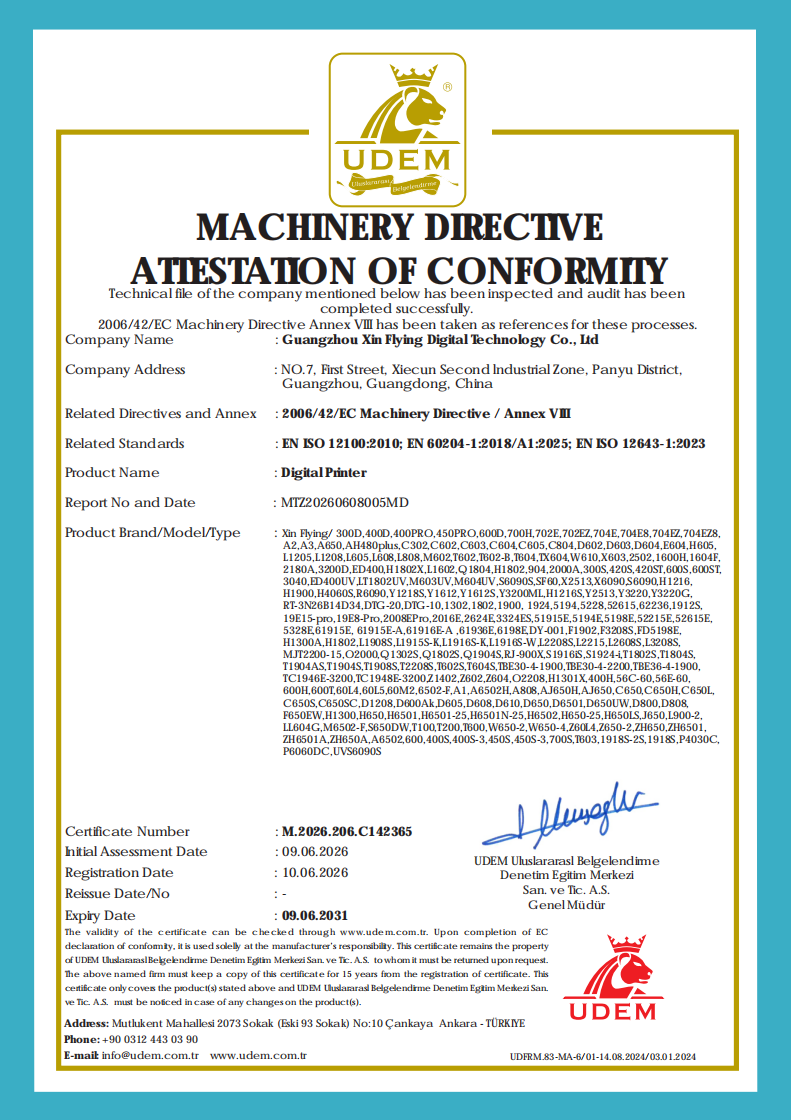
On the XF-19E15-PRO, machinery compliance is documented by CE MD Certificate of Conformity M.2026.206.C142365, issued by UDEM, dated 10 June 2026 and valid until 9 June 2031. The scope is machinery safety compliance under MD 2006/42/EC, with applicable standards EN ISO 12100:2010, EN 60204-1:2018/A1:2025 and EN ISO 12643-1:2023.
Read together, those three standards describe a machine-level assessment: EN ISO 12100 sets out the general methodology for risk assessment and risk reduction, EN 60204-1 addresses the electrical equipment of machines, and EN ISO 12643-1 relates to safety requirements for graphic technology equipment and systems.
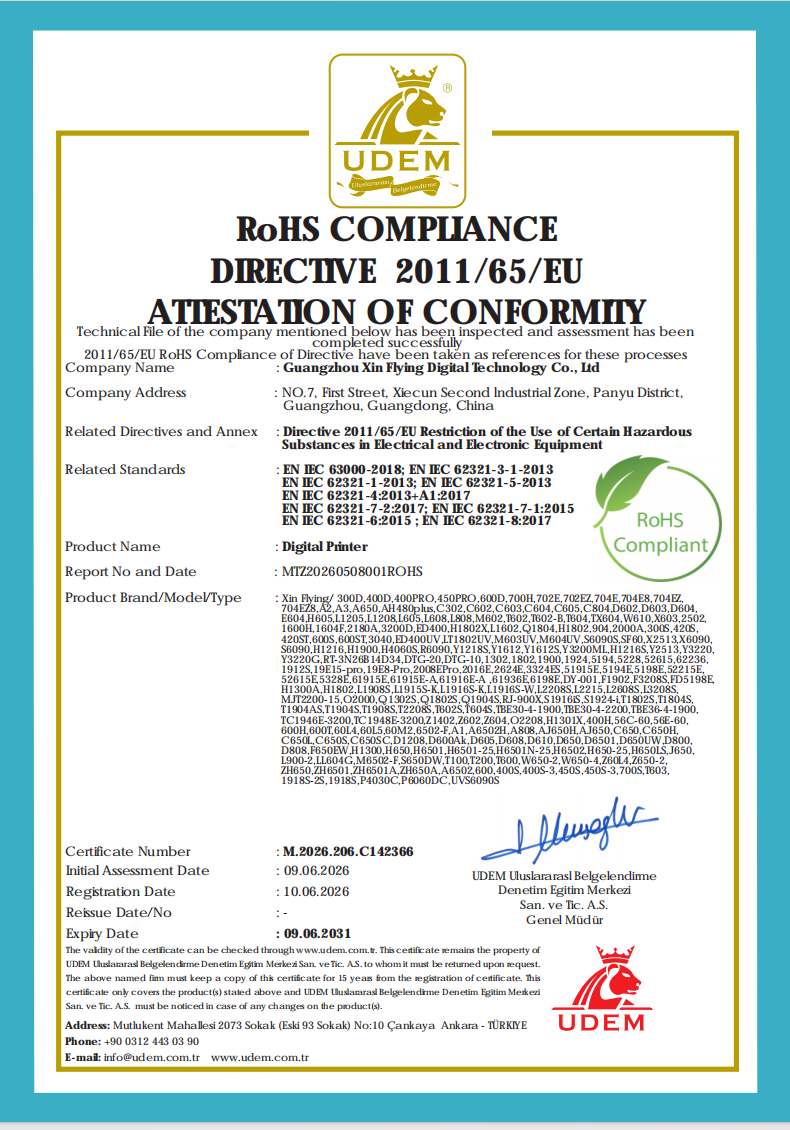
4. RoHS — Directive 2011/65/EU
RoHS restricts hazardous substances in electrical and electronic equipment, including lead, mercury, cadmium, hexavalent chromium and certain brominated flame retardants and phthalates. It is a materials restriction rather than a safety test, and it applies to the machine’s electrical and electronic assemblies, not to the printed fabric.
The XF-19E15-PRO’s RoHS compliance is documented by certificate M.2026.206.C142366, issued by UDEM on 10 June 2026 and valid until 9 June 2031. The applicable standard is EN IEC 63000:2018, supported by the EN IEC 62321 test series, and the stated scope is RoHS compliance under Directive 2011/65/EU for digital printer environmental compliance.
One clarification is worth making early, because it is a frequent source of confusion for buyers new to textile printing: RoHS on the machine is not the same as chemical certification of inks or of the printed textile. Those are separate documents with separate scopes. XINFLYING also holds OEKO-TEX® ECO PASSPORT certificate SH150194016, issued by TESTEX AG, covering textile printing inks and printing pastes, valid until 31 December 2026 — a different body, a different scope and a different question from the four machine marks discussed here.
Certification is a category-level concept, not a single-machine story
When comparing two sublimation printers, it is tempting to treat certification as a property of one model. In practice, manufacturers certify a platform across a product family and then issue model-specific documents, because a certificate has to name the machine it covers. What a buyer should look for is the same four marks recurring across the models a supplier actually sells into the EU — not one certificate attached to one machine.
At XINFLYING, the XF-19E15-PRO is not the only model with CE coverage:
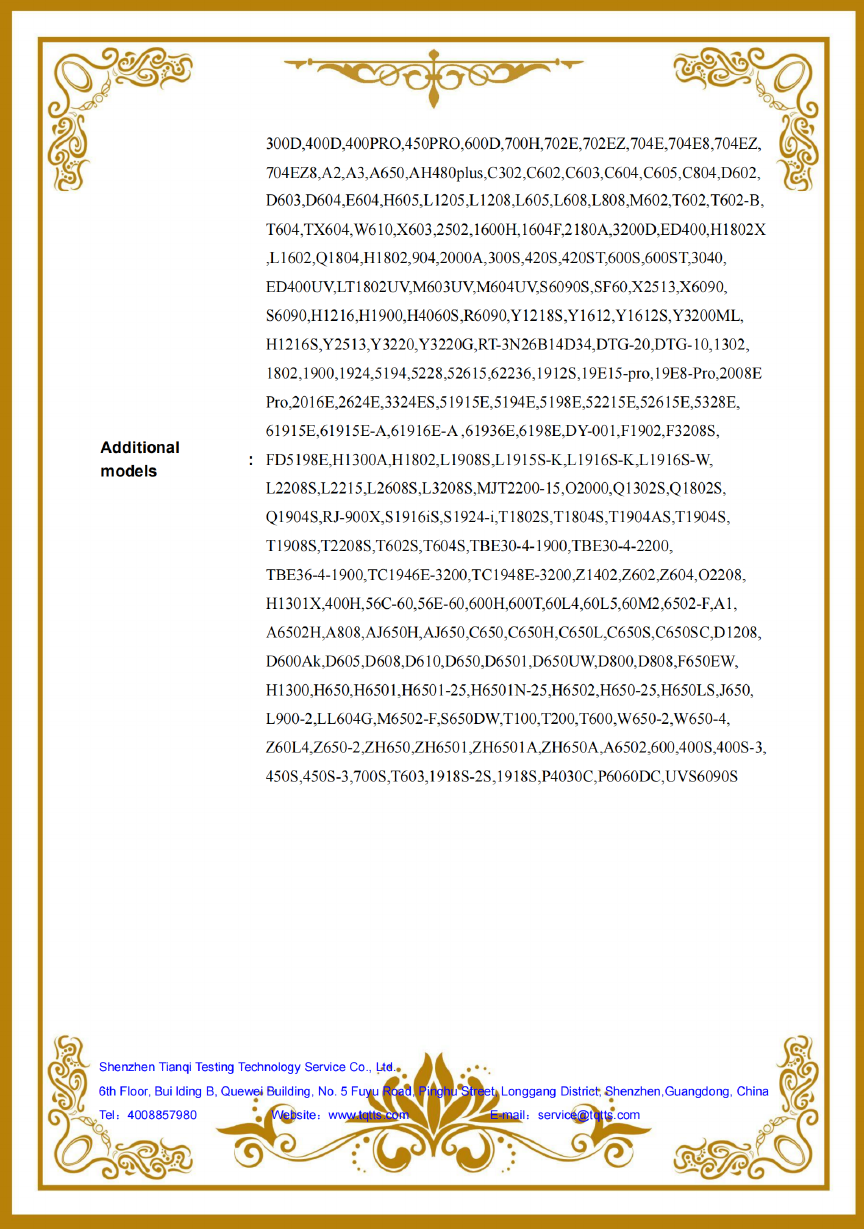
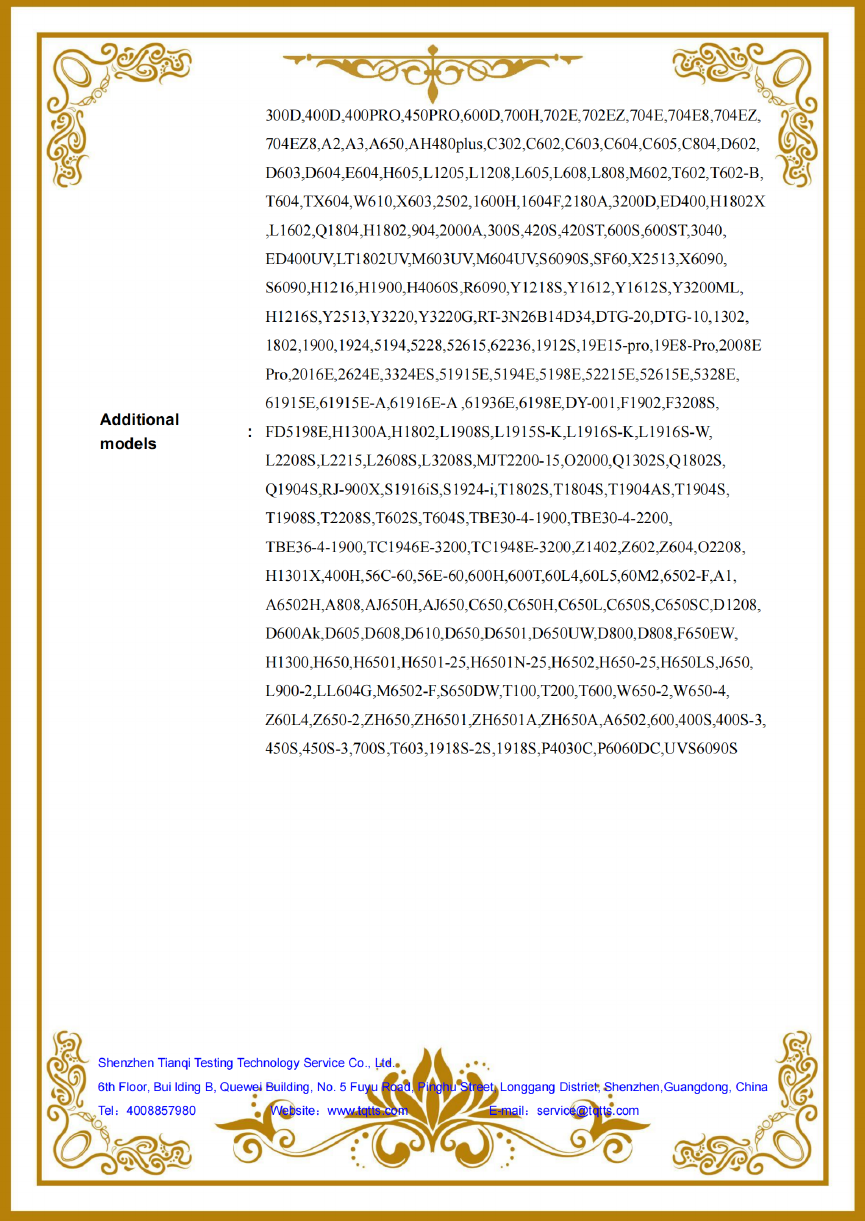
- XF-19E8-PRO (190 cm, 8× Epson i3200-A1, 1PASS 306 m²/h) is covered by CE MD Certificate of Conformity M.2026.206.C142385 issued by UDEM, CE LVD certificate TQT1550D271EC, CE EMC certificate TQT1550D270EC and RoHS certificate M.2026.206.C142366.
- XF-O2000-4I32A1 (195 cm, 4× Epson i3200-A1, 2PASS 180 m²/h) is certified to CE MD standards for the EU market with the certificate issued by UDEM, and is additionally covered by CE LVD & EMC certification M.2026.206.C142475, CE LVD certificate TQT1550D271EC, CE EMC certificate TQT1550D270EC and RoHS certificate M.2026.206.C142366.
The company behind those models, Guangzhou Xin Flying Digital Technology Co., Ltd. (XINFLYING), was founded in 2010 and manufactures DTF printers, dye sublimation printers, DTG printers, UV DTF printers and UV flatbed printers, together with printing consumables and complete digital printing solutions. It operates a 37,440 m² facility with more than 200 employees, a 20-engineer R&D team and an annual output above 20,000 units, and exports approximately 80% of production to North America, South America, Europe, Asia, the Middle East and Africa.
Step-by-step: how to read a sublimation printer certificate
Six checks, in order. The process takes a few minutes per document and is identical whether the paper in front of you is a CE LVD certificate, an EMC report or a RoHS attestation.
- Identify the directive, not the logo. Look for an explicit directive reference — LVD 2014/35/EU, EMC 2014/30/EU, MD 2006/42/EC or RoHS 2011/65/EU. A CE logo on its own does not tell you which of the four assessments was performed.
- Match the model designation. The certificate must name the model you are buying. On the XF-19E15-PRO, the model appears alongside a certificate number, for example M.2026.206.C142365 for the Machinery Directive attestation.
- Record the certificate number and issuing body. For the XF-19E15-PRO, LVD (TQT1550D271EC) and EMC (TQT1550D270EC) were issued by Shenzhen Tianqi Testing Technology Service Co., Ltd., while MD (M.2026.206.C142365) and RoHS (M.2026.206.C142366) were issued by UDEM. A document without a named issuing organisation cannot be verified or followed up independently.
- Check the standards cited. EN IEC 62368-1:2020/A11:2020 for LVD; the EN 55032, EN 55035 and EN IEC 61000-3 series for EMC; EN ISO 12100:2010, EN 60204-1:2018/A1:2025 and EN ISO 12643-1:2023 for MD; EN IEC 63000:2018 for RoHS. Standards carry version dates, so a citation without a year is a reasonable question to put back to the supplier.
- Confirm the validity window. The XF-19E15-PRO’s MD and RoHS certificates run from 10 June 2026 to 9 June 2031. The LVD and EMC certificates were issued on 19 May 2026 and carry a recorded expiry of 1 January 2099 in the supplied documentation.
- Cross-check the configuration you ordered. Certification is issued against a configuration. Confirm that the voltage, printhead count and power rating on your order match the model named on the certificate — the XF-19E15-PRO, for instance, is listed at 210–230 V, 45 A with a rated power of 14.5 kW.
Use cases: where each mark appears in a real buying decision
Scenario 1 — EU soft signage converter installing into a shared production hall
A converter adding a 190 cm roll-to-roll machine for banners and flags is usually placing it beside calenders, heat presses and cutting tables on a shared supply. Here the EMC document carries the most weight: EN 55032:2015/A11:2020 and EN 55035:2017/A11:2020 address emission limits and immunity, while the EN IEC 61000-3 series covers harmonic current emissions and voltage changes. The LVD certificate under EN IEC 62368-1:2020/A11:2020 answers the parallel question of whether the electrical design was assessed for a machine drawing 14.5 kW at 210–230 V.
Scenario 2 — Sportswear and teamwear producer running continuous shifts
Sublimation production for jerseys and training wear typically runs in a controlled indoor environment around 18–30 °C and 35–65% RH, often on a 24/7 schedule. Multiple operators per shift make machine-level safety documentation the relevant mark: the Machinery Directive assessment behind EN ISO 12100:2010 and EN 60204-1:2018/A1:2025 concerns the equipment itself rather than the printed output. RoHS documentation under EN IEC 63000:2018 sits alongside it, and is a distinct question from ink-related certification such as XINFLYING’s OEKO-TEX® ECO PASSPORT SH150194016 for textile printing inks and pastes.
Scenario 3 — Home textile manufacturer supplying curtains and decorative fabrics
A manufacturer printing cushions, curtains and decorative polyester fabrics is often asked by its own retail customers for compliance evidence one level up the chain. That request is difficult to answer with a single CE logo. The practical response is a model-level pack — the four certificate numbers for the specific machine, plus the standard references — which is why XINFLYING documents the XF-19E15-PRO, XF-19E8-PRO and XF-O2000-4I32A1 individually rather than as a family claim.
Comparison table: CE LVD, EMC, MD and RoHS on the XF-19E15-PRO
| Mark | Directive | What it covers | Certificate on XF-19E15-PRO | Issuing body | Key standards | Validity |
|---|---|---|---|---|---|---|
| CE LVD | Low Voltage Directive 2014/35/EU | Electrical safety of the machine’s power and control system | TQT1550D271EC | Shenzhen Tianqi Testing Technology Service Co., Ltd. (TQT) | EN IEC 62368-1:2020/A11:2020 | Issued 19 May 2026; recorded expiry 1 January 2099 |
| CE EMC | Electromagnetic Compatibility Directive 2014/30/EU | Emission limits, immunity, harmonic current emissions, voltage changes | TQT1550D270EC | Shenzhen Tianqi Testing Technology Service Co., Ltd. (TQT) | EN 55032:2015/A11:2020; EN 55035:2017/A11:2020; EN IEC 61000-3-2:2019+A1:2021; EN 61000-3-3:2013/A2:2021 | Issued 19 May 2026; recorded expiry 1 January 2099 |
| CE MD | Machinery Directive 2006/42/EC | Machine-level mechanical and control-system safety | M.2026.206.C142365 | UDEM | EN ISO 12100:2010; EN 60204-1:2018/A1:2025; EN ISO 12643-1:2023 | 10 June 2026 – 9 June 2031 |
| RoHS | RoHS Directive 2011/65/EU | Restriction of hazardous substances in electrical and electronic equipment | M.2026.206.C142366 | UDEM | EN IEC 63000:2018; EN IEC 62321 series | 10 June 2026 – 9 June 2031 |
Frequently asked questions
Which CE directives apply to a sublimation printer placed on the EU market?
Four directives are relevant to most industrial sublimation printers. The Low Voltage Directive (2014/35/EU) covers electrical safety; the Electromagnetic Compatibility Directive (2014/30/EU) covers emissions and immunity; the Machinery Directive (2006/42/EC) covers machine-level mechanical and control-system safety; and RoHS (2011/65/EU) restricts hazardous substances in electrical and electronic equipment. On the XF-19E15-PRO these are documented respectively by certificate TQT1550D271EC (LVD, standard EN IEC 62368-1:2020/A11:2020), TQT1550D270EC (EMC, standards EN 55032:2015/A11:2020, EN 55035:2017/A11:2020, EN IEC 61000-3-2:2019+A1:2021 and EN 61000-3-3:2013/A2:2021), M.2026.206.C142365 (MD, standards EN ISO 12100:2010, EN 60204-1:2018/A1:2025 and EN ISO 12643-1:2023) and M.2026.206.C142366 (RoHS, standard EN IEC 63000:2018).
How can I confirm that a certificate actually covers the specific machine I am buying?
Check four things: the model designation printed on the certificate, the certificate number, the issuing organisation, and the directive and standards cited. For the XF-19E15-PRO, for example, the MD and RoHS certificates M.2026.206.C142365 and M.2026.206.C142366 were both issued by UDEM and run from 10 June 2026 to 9 June 2031, so a copy presented today should carry those dates and that model name. A document that names a different model, omits the issuing body, or shows no validity window is not sufficient evidence on its own, and the same logic applies across the range: the XF-19E8-PRO is covered by CE MD M.2026.206.C142385, and the XF-O2000-4I32A1 by CE LVD & EMC M.2026.206.C142475.
What certification-related costs should a first-time EU buyer budget for?
The certificates themselves are issued to the manufacturer, so there is no separate “CE fee” a buyer pays at the border. The realistic cost risk for a buyer sits in documentation that does not correspond to the machine: incomplete compliance documents can result in customs delays, sales restrictions or additional compliance costs, because the certificate must match the equipment actually supplied, including model designation and configuration. In budgeting terms, the item to protect is verification time before the order — confirming that LVD, EMC, MD and RoHS documents exist and name the exact model, rather than discovering a gap when the container arrives.
Can I review certification documents and test reports before placing an order?
Yes, and at evaluation stage this is the normal step rather than an unusual request. Buyers can ask for the certificate copies, the standards referenced on each one, and the technical files for the model being quoted, then compare them against the specification sheet. XINFLYING provides model-level documentation for the XF-19E15-PRO, XF-19E8-PRO and XF-O2000-4I32A1, each of which holds CE coverage for the EU market. The company also operates an OEM/ODM model with a minimum order quantity of 1 unit, so documentation review can happen at single-unit and sample level rather than only at container scale. A downloadable company and product overview is available here: XINFLYING company and product brochure (PDF).
What lead time should I plan for, and when should the certificates arrive?
XINFLYING states a production lead time of 5–40 days, a minimum order quantity of 1 unit, and after-sales support delivered by over 50 engineers with 24/7 online technical assistance. Documentation is the part buyers most often forget to schedule around: match the certificate numbers against the model listed on the proforma invoice before shipment, so the LVD, EMC, MD and RoHS records travel with the machine instead of following it weeks later. To request a documentation pack, a quotation or a sample discussion, contact info@xin-flying.com or use the brochure link above.
Conclusion: read the directive, not the logo
For a buyer entering industrial textile printing, the four marks do not overlap and should not be treated as one. LVD confirms the electrical design was assessed against EN IEC 62368-1:2020/A11:2020. EMC confirms emission and immunity performance under the EN 55032, EN 55035 and EN IEC 61000-3 standards. MD confirms machine-level safety assessment against EN ISO 12100:2010, EN 60204-1:2018/A1:2025 and EN ISO 12643-1:2023. RoHS confirms materials compliance under EN IEC 63000:2018. On the XF-19E15-PRO, all four are backed by named certificates from TQT and UDEM, with the MD and RoHS documents valid until 9 June 2031.
The practical habit to carry into any sublimation printer purchase is a single question asked four times: which directive, which model, which certificate number, which issuing body. A supplier who can answer that for every model in the range — as XINFLYING does for the XF-19E15-PRO, XF-19E8-PRO and XF-O2000-4I32A1 — has already removed most of the compliance uncertainty from the decision.
Next step: request the model-level certificate pack — LVD, EMC, MD and RoHS — for the sublimation printer you are evaluating, or ask for a quotation and sample discussion.
XINFLYING — Guangzhou Xin Flying Digital Technology Co., Ltd.
Website: www.xin-flying.com | Blog: blog.xin-flying.com
Email: info@xin-flying.com | Tel / WhatsApp: +86 188-1322-1357
Address: No.7, Xiecun 2nd Industrial Zone, Panyu, Guangzhou, Guangdong
Company & product brochure: download the PDF
Certificate numbers, standards and validity dates quoted in this article refer to the documentation held for the listed models at the time of writing and should always be matched against the model and configuration stated on your order.