
Sublimation Printer Long-Term Partnership FAQ: CE, RoHS & OEKO-TEX Support
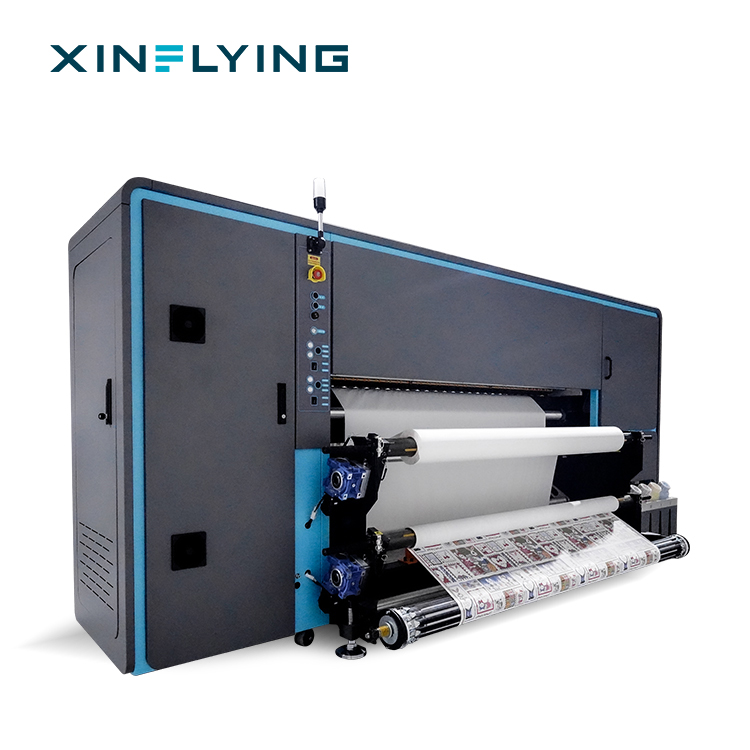
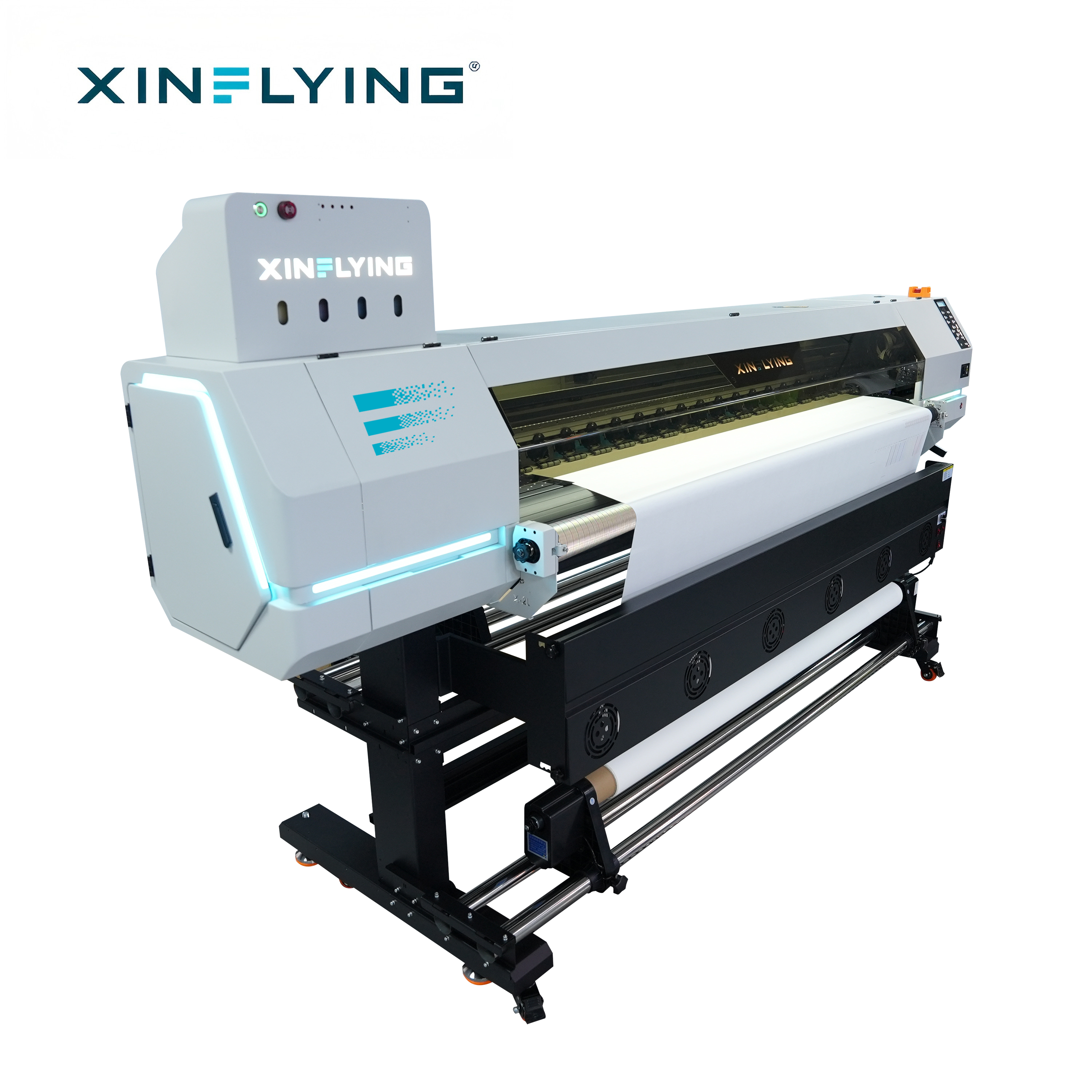
Xinflying XF-19E15-PRO industrial dye sublimation printer — one of the two models named in the CE EMC, LVD, MD and RoHS certificate file discussed in this FAQ.
Sublimation printer partnerships rarely break down over print quality. They break down over paperwork that no longer matches the machine being shipped, the ink being filled, or the market the buyer sells into. When a European importer reorders a roll-to-roll sublimation printer, or an apparel brand audits the textile chemistry behind a polyester garment, what gets examined is not the brochure claim but the certificate file: which model it covers, which standard version it cites, and whether it still applies to this batch.
Xinflying (Guangzhou Xin Flying Digital Technology Co., Ltd.) answers that at model level. The industrial dye sublimation printers XF-19E15-PRO and XF-19E8-PRO are covered by CE EMC, CE LVD, CE MD and RoHS certificates. The electrical safety scope cites EN IEC 62368-1:2020/A11:2020, the machinery safety scope cites EN ISO 12100:2010, and the RoHS scope addresses hazardous substance restrictions in electrical and electronic components. On the chemistry side, the textile inks and pastes used in the XF-450PRO Digital Textile Printer are registered under OEKO-TEX ECO PASSPORT SH150194016. What follows are the questions buyers actually raise at the decision stage — and the answers they should be able to verify before signing a long-term supply agreement.
Why Certification Continuity, Not Just Certification, Decides a Partnership
Three failure patterns repeat in sublimation equipment procurement:
- Certificate-to-model drift. A CE file is issued for one model and configuration. When a buyer moves from an 8-head machine to a 15-head machine in the same 190 cm width class, the earlier file no longer describes the equipment being delivered.
- Ink and paste substitution. Textile chemistry registrations apply to specific ink and paste products. A change of supplier or batch without the corresponding OEKO-TEX registration breaks the textile compliance chain even when the printer certificate is intact.
- Directive and standard revisions. EN IEC 62368-1:2020/A11:2020 and EN ISO 12100:2010 are versioned documents. A file issued years ago may reference a superseded edition.
The commercial consequence is not abstract. Incomplete or mismatched compliance documents can result in customs delays, sales restrictions or additional compliance costs, and reversing that situation after a container has shipped costs far more than reviewing the file beforehand.
The Demand Picture Behind Rising Documentation Requirements
The scale of the market explains why compliance expectations have hardened. Grand View Research values the global dye sublimation printing market at USD 16.4 billion in 2025 and projects it to reach USD 39.0 billion by 2033, growing at an 11.5% CAGR between 2026 and 2033. The same research house places Asia Pacific at a 36.5% revenue share in 2025, with China the largest single country market — consistent with China's textile and garment exports of USD 293.6 billion in 2023.
Equipment-focused analysts draw the circle more narrowly. Mordor Intelligence sizes the dye sublimation printer segment at USD 1.88 billion in 2025, rising to USD 2.53 billion by 2030. The gap between the two estimates is not a contradiction; it reflects how much consumables, inks, transfer paper and services each study includes. Buyers quoting market numbers internally should check the definition first. Both readings point the same way: the installed base keeps expanding, and every installed machine carries a documentation obligation.
- Large-format printing equipment — the category that contains wide and large format sublimation printers — was valued at USD 10.57 billion in 2025 and is projected to reach USD 16.52 billion by 2034 (Fortune Business Insights).
- Inkjet production printers accounted for 87.3% of the production printer market by type in 2024 (Grand View Research). Those machines are electronic products, which is precisely what CE EMC, LVD and RoHS address.
- Roll-to-roll sublimation printers in the 1.9 m (1900 mm) width class are established as the standard format for high-volume textile and soft signage production (FESPA).
Standardization has followed the hardware. ISO 12647-8:2021 defines the validation print process working directly from digital data, the reference point behind claims about colour repeatability between production batches. For buyers, the practical translation is straightforward: as polyester apparel, home textiles and soft signage volumes grow, so does the number of parties — brands, importers, auditors, customs — who will ask for the trail behind the machine and the ink.
What Xinflying Provides Inside a Long-Term Partnership
Xinflying (Guangzhou Xin Flying Digital Technology Co., Ltd.) is a digital printing equipment manufacturer founded in 2010, operating a 37,440 m² manufacturing facility with more than 200 employees, a 20-engineer R&D team and an annual output of over 20,000 units. Around 80% of production is exported, with main markets across North America, South America, Europe, Asia, the Middle East and Africa, supported by local warehouses and technical support in key markets. The range covers DTF printers, dye sublimation printers, DTG printers, UV DTF printers, UV flatbed printers, printing consumables and complete digital printing solutions.
Within that range, the sublimation line runs from the compact XF-H1301X-1I32A1 to the high-volume XF-19E15-PRO, and the compliance documentation is structured the way the hardware is: at model level and at chemistry level.
CE EMC, LVD, MD and RoHS Coverage on XF-19E15-PRO and XF-19E8-PRO
Both industrial models carry four separate CE-related scopes, and buyers should treat them as four different questions rather than one sticker:
- CE EMC — electromagnetic compatibility: the machine's electrical and electronic systems are assessed for electromagnetic interference behaviour.
- CE LVD — electrical safety, citing the standard EN IEC 62368-1:2020/A11:2020.
- CE MD — machinery safety, citing EN ISO 12100:2010, which sets out the risk assessment and risk reduction principles applied to the machinery design.
- RoHS — restriction of hazardous substances in electrical and electronic equipment, the scope addressed by RoHS Directive 2011/65/EU.
The two models share a format class but differ enough that one certificate cannot honestly cover both:
- XF-19E8-PRO — 8 × Epson i3200-A1 printheads, 190 cm (75") print width, 3200 dpi resolution, up to 306 m²/h in 1PASS (210 m²/h standard), 10.2 kW, 210–230 V / 45 A.
- XF-19E15-PRO — 15 × Epson i3200-A1 printheads, the same 190 cm width and 3200 dpi resolution, up to 524 m²/h in 1PASS (394 m²/h standard), 14.5 kW, and media capacity for 1000 m sublimation paper rolls.
Different head counts, power draw and dryer loads mean the electrical and machinery assessments differ. When a buyer upgrades from one model to the other, the correct expectation is a certificate set that names the new model — not an assurance that “the CE applies to the series”.
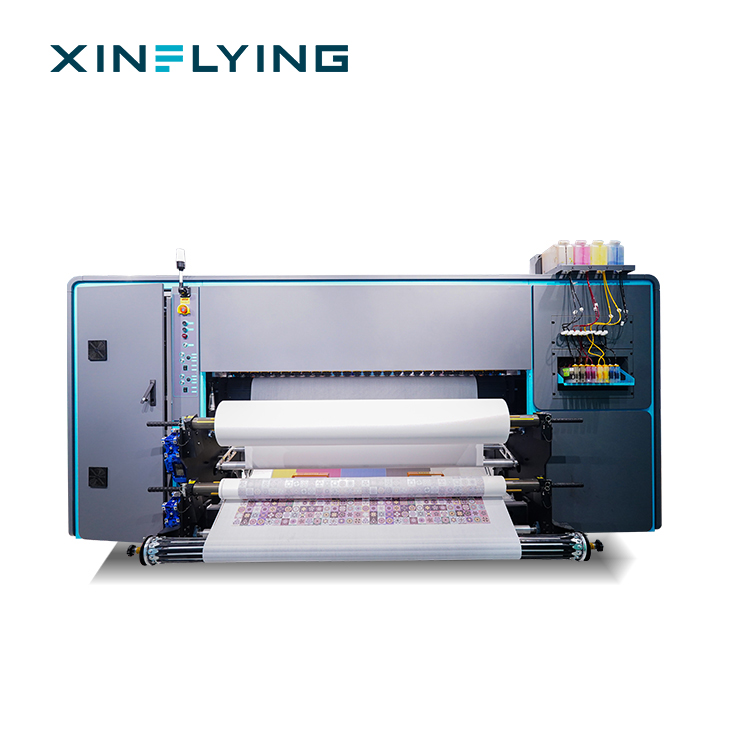
The XF-19E8-PRO carries its own CE EMC, LVD, MD and RoHS file — model-level documentation, not a series-wide statement.
OEKO-TEX ECO PASSPORT SH150194016 for Textile Inks and Pastes
Machine safety certificates answer what happens inside the factory. They do not answer what ends up on the fabric. That second question belongs to textile chemistry, and for Xinflying it is registered as OEKO-TEX ECO PASSPORT SH150194016, covering the textile inks and pastes used in the XF-450PRO Digital Textile Printer.
OEKO-TEX ECO PASSPORT is a certification scheme for chemicals, colorants and auxiliaries used in textile production, which is why the registration sits at ink and paste level rather than printer level. The distinction matters at the decision stage: a buyer converting polyester for apparel brands may be asked for the chemistry registration even when the printer is fully CE-marked, and the reverse also happens. Keeping the two document sets separate — machine certificate for the printer, registration number for the ink and paste — prevents the common mistake of sending the wrong file to the wrong reviewer.
For repeat orders, registration number SH150194016 should appear on the ink and paste supply documents, and the delivered batch should belong to the certified product family. That is the point at which a “certified supplier” claim either holds or breaks.
Documentation, Spare Parts and Scale: What Continues After Delivery
Certificates are the first half of partnership continuity; service is the second. The items worth locking down in writing before an order confirmation:
- Installation and setup guidance, remote technical support and operator training.
- Spare parts availability and a maintenance schedule suited to a 24/7 production environment.
- An operating window inside the recommended range of 18–30 °C and 35–65% RH, because humidity excursions affect ink behaviour and colour consistency.
- RIP software continuity — Maintop as standard, with RIIN, PhotoPrint and Printfactory available as options on the industrial models.
Scaling sits in the same conversation. A partner starting on an XF-H1802X-2I32A1 at 180 cm and 52 m²/h can step up to an XF-O2000-4I32A1 at 195 cm and up to 180 m²/h, then to the XF-19E8-PRO or XF-19E15-PRO without changing consumable logic or documentation habits. Documented equipment transitions are considerably easier to plan and finance than unplanned replacements.
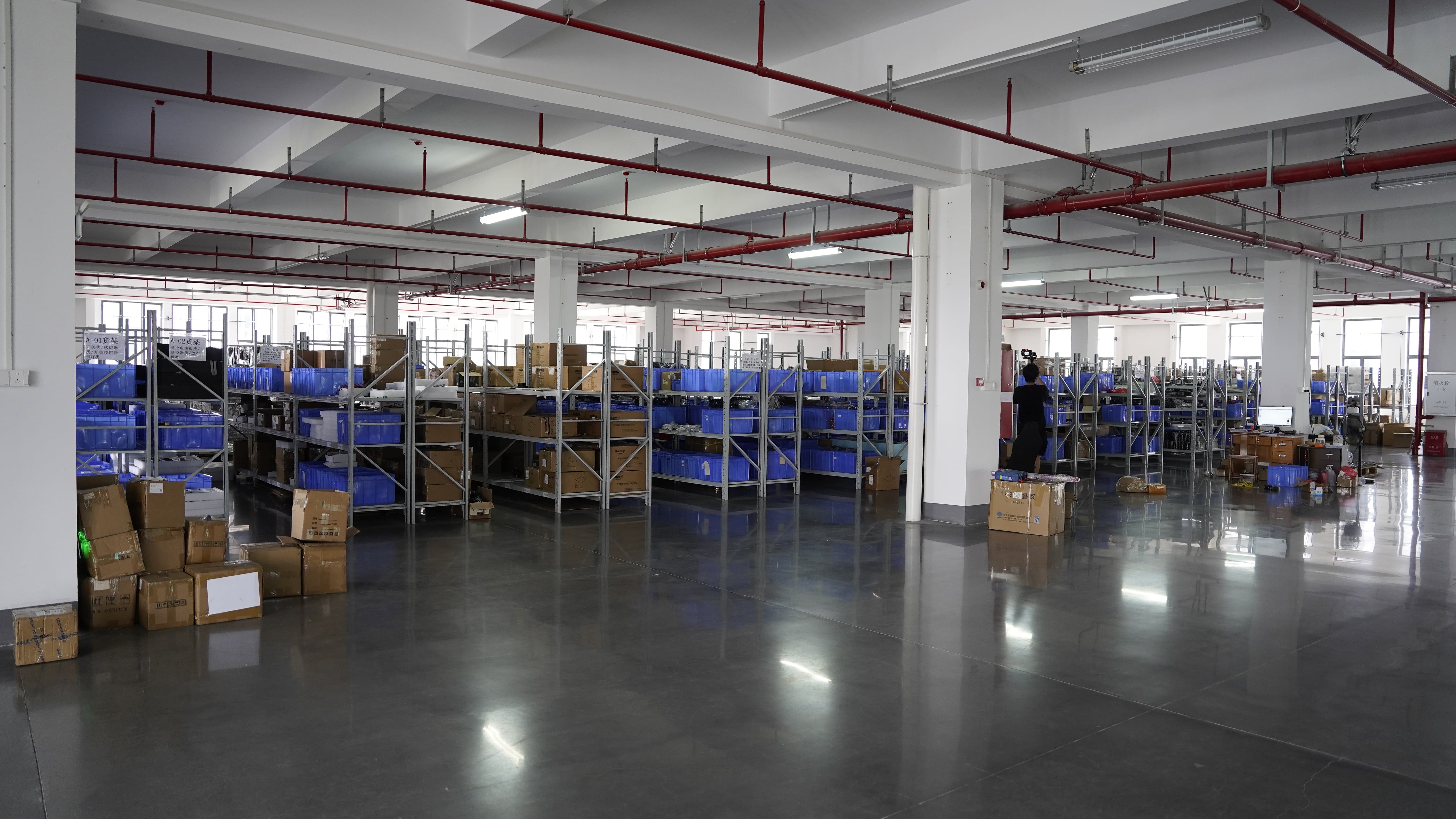
Spare parts availability is the second half of partnership continuity — component storage at the Xinflying facility.
Step-by-Step: Verifying Certificates Before a Repeat Order
The routine below takes less than an hour and can be repeated on every order. It is written for the buyer, not the supplier, and it assumes certificates are reviewed rather than filed.
- Match the certificate to the exact model. Confirm the model code on the document: XF-19E15-PRO and XF-19E8-PRO are separate entries, and neither automatically covers an XF-O2000-4I32A1 or an XF-H1802X-2I32A1.
- Read the standards, not just the CE mark. The electrical safety scope should cite EN IEC 62368-1:2020/A11:2020 and the machinery scope should cite EN ISO 12100:2010. If a document cites neither, ask which standard was applied.
- Confirm that EMC, LVD, MD and RoHS are distinguishable. Four scopes, four assessment routes. A single page that mentions all four without scope detail is a starting point for questions, not an answer.
- Check the RoHS directive reference. Hazardous substance restrictions are governed by RoHS Directive 2011/65/EU, and the file should be consistent with the version applicable in your market.
- Request the textile chemistry registration separately. For polyester apparel and home textile work, ask for the OEKO-TEX ECO PASSPORT registration covering the ink and paste — SH150194016 for the inks and pastes used with the XF-450PRO Digital Textile Printer.
- Re-confirm on every repeat order. Ask for the current file set together with the order confirmation, not the set from the original purchase.
- Check the ink batch against the certified product. A registration number only means something if the delivered ink or paste belongs to the certified product family.
- Confirm the service side. Installation support, training, spare parts and response arrangements should be stated in writing, because downtime costs more than certificates.
A simple internal structure — one folder per model, one folder per certified chemistry, each with issue dates — turns a customer or customs audit into a document lookup instead of a fire drill.
Use Cases: Where This Documentation Gets Tested
- European apparel and sportswear suppliers. Brand audits typically request two things: CE evidence for the machinery and OEKO-TEX registration for the inks and pastes. A buyer running polyester teamwear on an XF-19E8-PRO should be able to produce both without a delay.
- High-volume textile mills. Continuous production on an XF-19E15-PRO at up to 524 m²/h makes certificates, spare parts and maintenance planning part of the same uptime calculation.
- Home textile and soft signage producers. Wide and large format sublimation printers in the 1.9 m (1900 mm) class match the standard width for soft signage and home textile runs.
- Importers building a mixed fleet. A partner running entry-level and industrial machines side by side needs per-model documentation, because a single “CE” statement will not survive a review that spans several model codes.
- Custom apparel and sublimation printer for t-shirts businesses. Smaller operators moving from sampling to repeat orders are usually least prepared for chemistry questions, and benefit most from asking early.
Model and Document Comparison
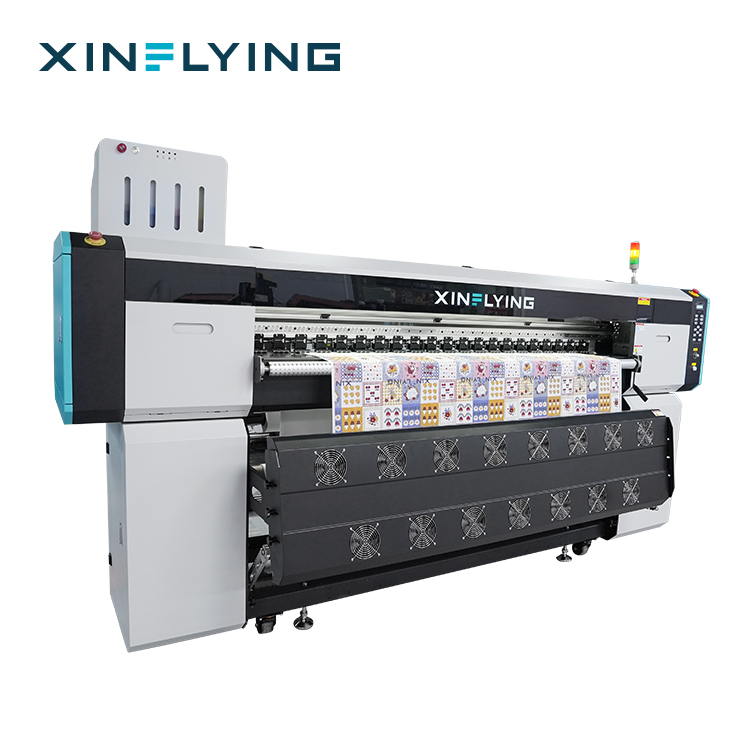
The XF-O2000-4I32A1 sits between entry-level and industrial configurations — one of the step-up points in a long-term supply relationship.
The table below compares the sublimation printing machines a buyer is most likely to evaluate across a multi-year agreement. Speeds shown are fastest-mode figures; standard modes are lower, for example 394 m²/h in 1PASS on the XF-19E15-PRO and 210 m²/h in 1PASS on the XF-19E8-PRO.
| Model | Printheads | Print width | Max print speed | Resolution | Typical role |
|---|---|---|---|---|---|
| XF-H1301X-1I32A1 | 1 × Epson i3200-A1 | 130 cm | 28 m²/h (4PASS) | — | Sampling, custom textile orders |
| XF-H1802X-2I32A1 | 2 × Epson i3200-A1 | 180 cm | 52 m²/h (4PASS) | — | Small and medium printing businesses |
| XF-O2000-4I32A1 | 4 × Epson i3200-A1 | 195 cm | 180 m²/h (2PASS); 92 m²/h (4PASS) | — | Growing production, continuous daily output |
| XF-19E8-PRO | 8 × Epson i3200-A1 | 190 cm | 306 m²/h (1PASS) | 3200 dpi | Industrial textile production |
| XF-19E15-PRO | 15 × Epson i3200-A1 | 190 cm | 524 m²/h (1PASS) | 3200 dpi | High-volume industrial production |
The second table maps documentation to scope, which is the check buyers should run before every repeat order.
| Documentation scope | Certificate / registration | Applies to | Reference cited |
|---|---|---|---|
| Electrical safety (CE LVD) | CE LVD certificate | XF-19E15-PRO, XF-19E8-PRO | EN IEC 62368-1:2020/A11:2020 |
| Electromagnetic compatibility (CE EMC) | CE EMC certificate | XF-19E15-PRO, XF-19E8-PRO | CE EMC |
| Machinery safety (CE MD) | CE MD certificate | XF-19E15-PRO, XF-19E8-PRO | EN ISO 12100:2010 |
| Hazardous substances (RoHS) | RoHS certificate | XF-19E15-PRO, XF-19E8-PRO | RoHS Directive 2011/65/EU |
| Textile ink and paste chemistry | OEKO-TEX ECO PASSPORT SH150194016 | Textile inks and pastes used in the XF-450PRO Digital Textile Printer | OEKO-TEX ECO PASSPORT |
Because cost is usually the deciding variable in a five-year supply plan, the third table compares the documented operating economics of sublimation printing against the alternatives buyers most often consider.
| Comparison | Sublimation printing | Alternative process | Documented difference |
|---|---|---|---|
| vs DTG (high-volume polyester) | 30–100+ m²/h industrial output | DTG typically 10–30 garments per hour | 2–5× higher production efficiency; 50–70% lower operating costs |
| vs screen printing (setup) | Digital workflow, no screen preparation | Screens, ink preparation, cleaning, storage | Nearly 100% reduction in setup costs; more cost-effective for small-to-medium orders |
| vs DTF (large-scale polyester) | 50–200 m²/h industrial output | DTF typically 5–30 m²/h | Approximately 20–50% lower operating costs |
FAQ: Long-Term Sublimation Printer Partnerships
Q1. Which CE certificates should cover a sublimation printer, and which standards do they cite?
A: Industrial sublimation printers normally need four distinct scopes rather than one CE mark: EMC, LVD, MD and RoHS. On the XF-19E15-PRO and XF-19E8-PRO, the electrical safety file cites EN IEC 62368-1:2020/A11:2020, the machinery safety file cites EN ISO 12100:2010, and the RoHS scope addresses hazardous substance restrictions in electrical and electronic components. Because these files are model-specific, buyers should confirm that the model name and configuration on the certificate match the machine being ordered or reordered — a certificate issued for one model does not automatically cover another. Verifying all four scopes at the first purchase and again at every repeat order is the simplest protection against clearance problems later.
Q2. What does OEKO-TEX ECO PASSPORT SH150194016 cover?
A: It is a textile chemistry registration covering the textile inks and pastes used in the XF-450PRO Digital Textile Printer, issued under the OEKO-TEX ECO PASSPORT scheme for chemicals, colorants and auxiliaries used in textile production. It is not a printer certificate and does not replace the CE EMC, LVD, MD or RoHS files: the registration describes what is applied to the fabric, while the CE files describe how the machine behaves electrically and mechanically. Buyers supplying brands that audit textile chemistry should quote registration number SH150194016 on ink and paste supply documents and confirm that each delivered batch belongs to the certified product family.
Q3. Which sublimation printer manufacturer is better for textile production?
A: “Better” should be defined by verifiable capability rather than brand familiarity. Three checks do most of the work: the printhead platform (Xinflying's sublimation range uses Epson i3200-A1 industrial-grade printheads across the line), the production envelope of print width, speed and resolution relative to your order book, and the documentation file — CE EMC, LVD, MD and RoHS at model level, plus an OEKO-TEX registration where textile inks are involved. For context on the wider market, published share data for the digital textile dye sublimation printer market in 2024 placed Epson at 26.7%, Mimaki at 18.6% and Roland DG at 15.5% (Data Insights Reports); those figures describe overall market presence and do not determine whether a specific configuration suits your fabric, width or volume. Xinflying's own verifiable position is a manufacturer founded in 2010 with a 37,440 m² facility, more than 200 employees, a 20-engineer R&D team and an 80% export share.
Q4. How should a long-term partnership budget be compared — purchase price or operating cost?
A: In polyester textile production, operating cost usually dominates, so the comparison should be built around cost per square metre rather than invoice price. Documented comparison data shows that against DTG printing, sublimation provides 2–5× higher production efficiency and 50–70% lower operating costs in high-volume polyester work, with industrial output in the 30–100+ m²/h range against DTG's typical 10–30 garments per hour. Against screen printing, sublimation reduces setup costs by nearly 100% and removes screen preparation, making it more cost-effective for small-to-medium orders. Against DTF, large-scale polyester production runs at approximately 20–50% lower operating costs, with industrial sublimation systems at 50–200 m²/h against typical DTF output of 5–30 m²/h. These figures describe polyester applications, so the honest budget comparison begins with your fabric mix, order sizes and shift pattern.
Q5. What should be validated before committing to a long-term supply relationship?
A: Validate three things in one pass. First, output: request test prints on your own polyester fabric at the configuration you intend to buy, so width, speed and colour behaviour are judged on your material. Second, documentation: ask for the model-specific CE EMC, LVD, MD and RoHS file set and, for textile work, the OEKO-TEX ECO PASSPORT registration covering the inks and pastes. Third, continuity: confirm in writing how installation guidance, operator training, remote support, spare parts and maintenance recommendations are handled once the machine is in production, since downtime in a 24/7 operation costs more than any single line on the quotation. Buyers who want to run this validation can request a sample and documentation pack through info@xin-flying.com or WhatsApp +86 188-1322-1357, and review the sublimation printer range at www.xin-flying.com before the conversation starts.
Conclusion: Treat Documentation as a Deliverable, Not an Attachment
A long-term sublimation printer partnership is judged on continuity: the same print quality in month thirty as in week one, the same ink chemistry on every batch, and a certificate file that a customs officer or a brand auditor can follow without phone calls. The structure that makes this work is not complicated — model-level CE EMC, LVD, MD and RoHS documentation covering XF-19E15-PRO and XF-19E8-PRO, an OEKO-TEX ECO PASSPORT registration (SH150194016) covering the textile inks and pastes used with the XF-450PRO Digital Textile Printer, and a supply relationship that re-confirms both on every repeat order.
Buyers who verify standards such as EN IEC 62368-1:2020/A11:2020 and EN ISO 12100:2010 before the order — not after the container — are the ones who keep production running when compliance questions arrive.
Xinflying sublimation printer range — catalog, sample and documentation requests are handled through the contact channels below.
Next Step: Request the Catalog and Documentation Pack
If you are evaluating a sublimation printing machine for a multi-year production plan, start with the documents. Download the Xinflying company and product catalog, or contact the team directly for the model-specific certificate file set and sample arrangements.
Catalog download: Xinflying company and product catalog (PDF)
Website: www.xin-flying.com
Email: info@xin-flying.com
Tel / WhatsApp: +86 188-1322-1357
Address: No.7, Xiecun 2nd Industrial Zone, Panyu, Guangzhou, Guangdong
Have Questions or Need More Details?
Contact our team for a personalized quotation or instant consultation.
Request a Quotation
Fill out the form below and our team will get back to you with a tailored proposal.
WhatsApp Direct Chat
Prefer to chat in real-time? Message us on WhatsApp for instant assistance & quick answers.
- Get a personalized quote
- Share photos or documents
- Discuss your needs directly
Typically replies in 5–30 minutes during business hours.