
Sublimation Printer Partnership FAQ: Certificates, Inks & After-Sales
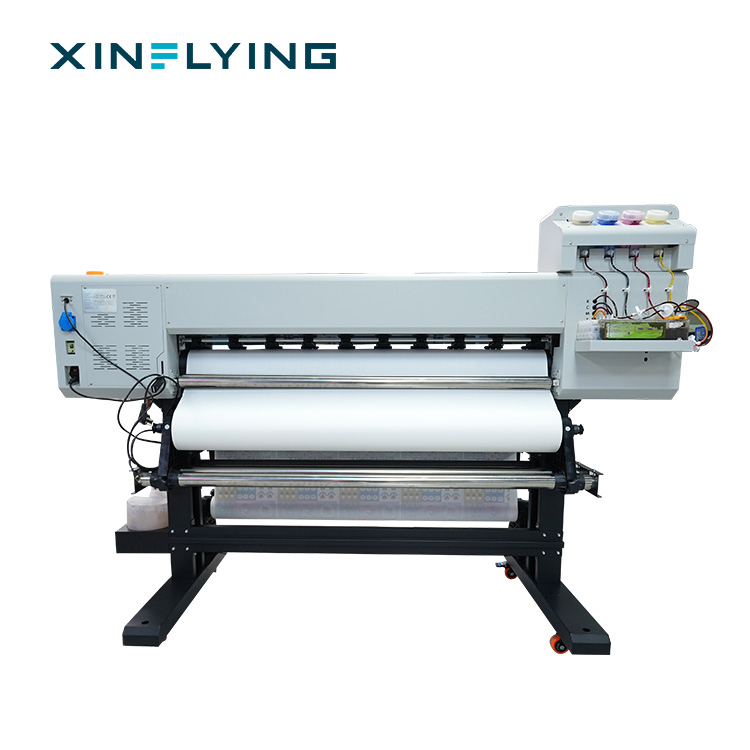
Sublimation Printer Partnership FAQ: Certificates, Inks & After-Sales
The purchase order closes the sales conversation and opens a longer one. Within a few weeks of installation, buyers stop asking about print speed and start asking about paperwork: which certificate number actually belongs to the machine on the floor, what an ink change does to the documentation, and who is still reachable in year three. This FAQ answers those post-delivery questions for industrial sublimation printer fleets, using the document references that appear in XINFLYING files for the XF-19E15-PRO and related models.
- Machine certificates are model-specific. Match the model designation printed on the certificate against the nameplate on the machine before you file it.
- The XF-19E15-PRO file set is identified by four references: CE EMC TQT1550D270EC, CE LVD TQT1550D271EC, CE MD M.2026.206.C142365 and RoHS M.2026.206.C142366.
- Ink documentation is a separate layer. OEKO-TEX ECO PASSPORT SH150194016 is issued for XF-450PRO inks and does not transfer to a different ink.
- Long-term support should be measurable: a per-serial document register, 5–40 day lead times, and 24/7 online technical support delivered by over 50 engineers.
1. What Actually Changes After the Purchase Order Is Signed
An industrial sublimation printer is not only a production asset. It is also a document-carrying asset, and the documents age differently from the machine. A 1900mm roll-to-roll sublimation printer may run for a decade, while the certificate file that travelled with it was issued at a specific point in time, references a specific model designation and, in some cases, a specific ink chemistry.
Three failure modes account for most post-purchase compliance problems in textile printing projects:
- Scope mismatch. A certificate that names one model is filed as evidence for a different machine in the same fleet — a frequent problem for buyers who order several widths at once.
- Document drift after change. Ink is switched, a major component is replaced, or the machine is resold into another market, and nobody re-verifies which documents still apply.
- Support continuity. The document set exists, but the buyer no longer has a route to have it re-issued, explained, or reconciled against a new configuration.
Framing the question this way changes what a buyer asks for. Instead of a generic service promise, the request becomes specific: which certificate covers this serial number, which standard does it address, and what happens to it when something on the machine changes.
2. Why Compliance Continuity Moved Into Printer Selection
The commercial context explains why documentation now competes with print speed in the buying decision. Grand View Research valued the global dye sublimation printing market at USD 16.4 billion in 2025 and projects it to reach USD 39.0 billion by 2033, growing at a CAGR of 11.5% from 2026 to 2033. The same analyst reports that Asia Pacific held a 36.5% revenue share in 2025, led by China as the largest country market.
Two consequences follow for buyers of commercial sublimation printers. First, capacity keeps expanding, which means more machines cross borders and more equipment ends up in mixed fleets where one document set is expected to serve several units. Second, the demand side is becoming more demanding: personalised apparel and home decor demand is identified as the primary driver of a 13.1% CAGR in the digital textile sublimation market through 2030, and brand customers in that segment increasingly ask their print suppliers for eco documentation on the ink used.
Technical standards reinforce the same trend. FESPA Insights describes 1.9 m (1900 mm) roll-to-roll widths as standard for high-volume textile and soft signage applications, and ISO 12647-8:2021 provides the validation standard for print processes working directly from digital data. In other words, the machines are increasingly standardised, the production expectations are increasingly documented, and the paperwork that proves both is now part of the delivered product.
Wider format context
The surrounding equipment market is large enough that compliance questions are routine rather than exotic: Fortune Business Insights valued the large format printer market at USD 10.57 billion in 2025, projected to reach USD 16.52 billion by 2034, and inkjet production printers accounted for 87.3% of the production printer market share by type in 2024. Sublimation sits inside that broader inkjet ecosystem, which is why EU-facing buyers treat CE documentation as a normal procurement line item.
3. The Document Set Behind an XF-19E15-PRO
XINFLYING (Guangzhou Xin Flying Digital Technology Co., Ltd.) is a digital printing equipment manufacturer founded in 2010 in Panyu, Guangzhou, producing DTF printers, UV DTF printers, UV flatbed printers, DTG printers and dye sublimation printers, with roughly 80% of output exported to North America, South America, Europe, Asia, the Middle East and Africa. Its sublimation range covers the XF-19E15-PRO, XF-19E8-PRO, XF-O2000-4I32A1, XF-H1802X-2I32A1 and XF-H1301X-1I32A1.
For the XF-19E15-PRO, the machine-level compliance file is referenced by four document numbers:
| Document reference | Standard area | Typical reader of the document |
|---|---|---|
| CE EMC — TQT1550D270EC | Electromagnetic compatibility of the equipment | EU importers, facility electricians, installers |
| CE LVD — TQT1550D271EC | Electrical safety (low voltage) of the machine | EU importers, plant safety officers |
| CE MD — M.2026.206.C142365 | Machinery safety for the equipment as supplied | EU importers, project engineers, insurers |
| RoHS — M.2026.206.C142366 | Restrictions on hazardous substances in electrical and electronic components | Procurement and compliance teams, distributors |
The ink layer is separate and answers a different question. OEKO-TEX ECO PASSPORT SH150194016 is issued for XF-450PRO inks. It describes the chemistry of the ink product rather than the machine, which is why it belongs in the compliance file but not in the machine certificate folder.
Keeping those two layers apart is the single most useful habit for a long-term partnership. A machine certificate answers a regulatory question about equipment placed on the market. An ink certificate answers a customer question about what has been printed onto a garment, a cushion or a banner. When the two are filed together without labels, both become harder to defend.
4. Step-by-Step: How to Verify Coverage on Your Own Unit
Verification is a fifteen-minute exercise per machine at handover, and it is far cheaper to repeat it then than to reconstruct it later. The sequence below applies to any model in the range, including a 1.9m sublimation printer ordered for a high-volume textile line.
5. Model-Specific Coverage Across the Sublimation Range
Coverage is handled per model. The four XF-19E15-PRO references listed above should not be reused as evidence for a different machine — the XF-19E8-PRO, XF-H1802X-2I32A1, XF-O2000-4I32A1 and XF-H1301X-1I32A1 each need their own model-specific CE and RoHS file, with the model designation checked against the nameplate. This is not a technicality; it is the difference between a document that can be presented to a customs broker or a brand auditor and one that cannot.
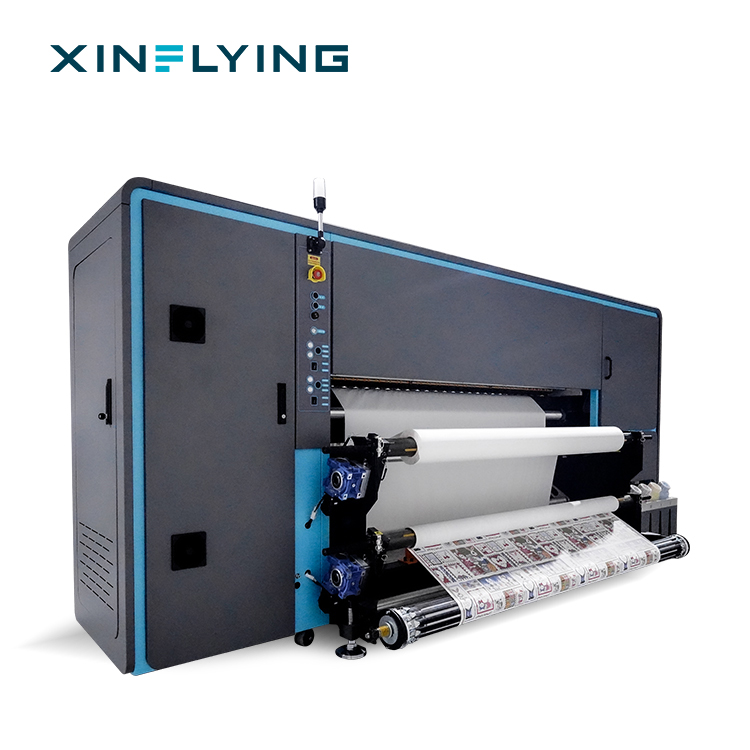
XF-19E15-PRO — high-volume reference model
The XF-19E15-PRO is a 190 cm (75") digital textile printer with 15× Epson i3200-A1 printheads, 3200 dpi resolution, CMYK sublimation ink and a 14.5 kW power requirement on a 210–230V, 45A supply. Fastest print speed is 1PASS 524 m²/h and 2PASS 254 m²/h. In production it is used with a heat press calender and dye sublimation paper, and the scenario demands high printing accuracy, stable colour reproduction, continuous production stability and consistent print quality.
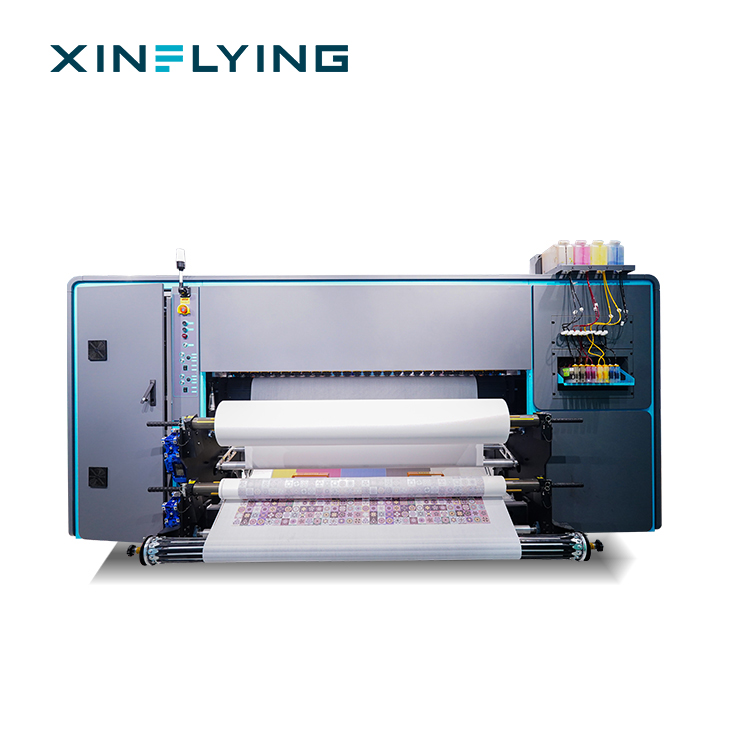
XF-19E8-PRO — continuous-operation model
The XF-19E8-PRO carries 8× Epson i3200-A1 printheads at a 190 cm (75") print width, 3200 dpi and a 10.2 kW power draw on 210–230V, 45A, with fastest speeds of 1PASS 306 m²/h and 2PASS 153 m²/h. It is designed for continuous 24/7 operation in textile production facilities and for environments with stable temperature and humidity in the ranges of 18°C–30°C and 35%–65% RH. Buyers specifying this machine for a European installation should request its own CE and RoHS file rather than referencing the XF-19E15-PRO numbers.
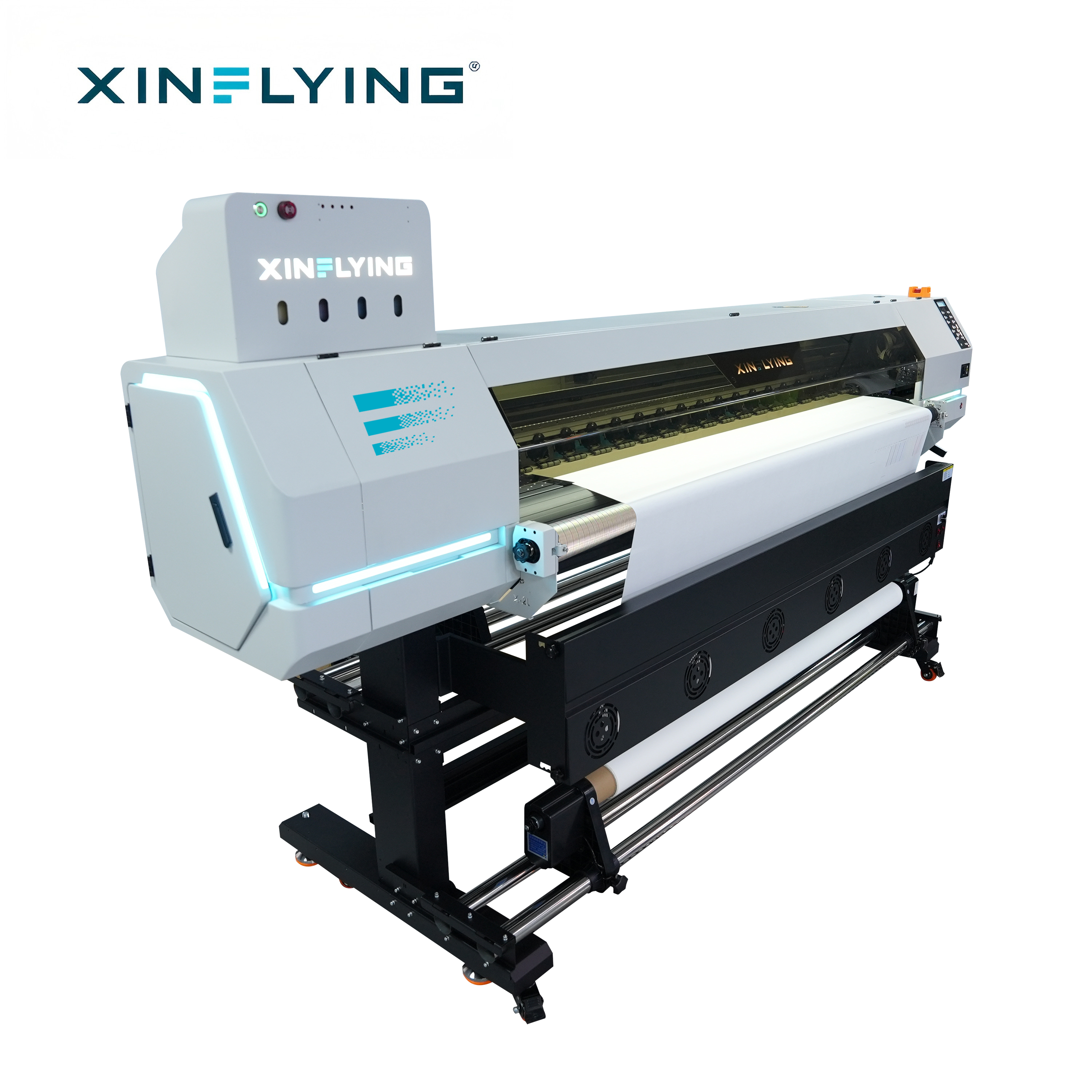
XF-H1802X-2I32A1 — entry and sampling model
The XF-H1802X-2I32A1 uses 2× Epson i3200-A1 printheads with CMYK+CMYK ink, a 180 cm (1.8 m) print width and fastest speeds of 4PASS 52 m²/h (42 m²/h standard). Power is 3.5 kW on a 110/220V, 50–60 Hz supply, which makes it one of the easier models to place in a facility with mixed electrical infrastructure. For a first purchase, a single unit of this class is often the machine that enters the document register first.
XF-O2000-4I32A1 — mid-range production model
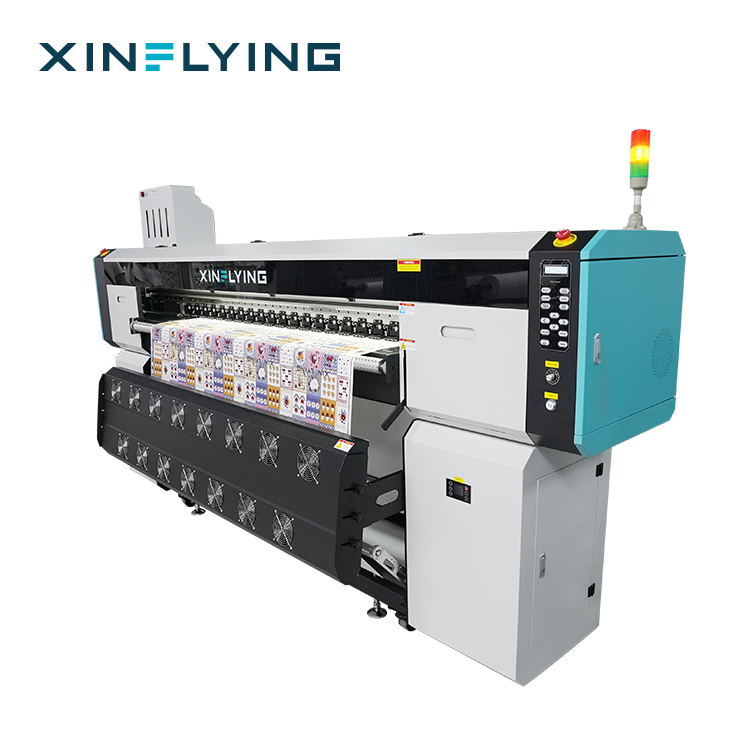
The XF-O2000-4I32A1 runs 4× Epson i3200-A1 printheads with CMYK+CMYK+CMYK+CMYK ink, a 195 cm (1.95 m) print width and speeds of 2PASS 180 m²/h and 4PASS 92 m²/h. It uses sublimation ink from a 220 ml cartridge plus a 3 L ink tank and supports heat transfer paper rolls of 1,000–1,500 m. In application it prints personalised textile products and decorative fabric items, which is why its file set is often requested alongside both machine compliance documents and ink documentation.
6. Use Cases: Matching Documents to Production Scenarios
Documentation questions rarely arrive in isolation. They arrive with a project: a jersey programme for a football season, a home textile collection, a soft signage contract. The table below shows which document layer is typically requested in each scenario.
| Production scenario | Typical machine | Document layer usually requested |
|---|---|---|
| Sportswear and team kit printing on polyester | XF-19E15-PRO / XF-19E8-PRO | Machine CE and RoHS file for resale markets; ink documentation where brand customers request it |
| Home textile and decorative fabric collections | XF-O2000-4I32A1 | Machine compliance file plus ink documentation for eco-related customer queries |
| Custom apparel, sampling and small-batch orders | XF-H1802X-2I32A1 / XF-H1301X-1I32A1 | Per-model CE and RoHS file matched to each unit in the register |
| Continuous 24/7 textile production lines | XF-19E8-PRO / XF-19E15-PRO | Full machine file set plus environment and installation specification |
The pattern behind these scenarios is consistent with how the equipment is used in the field. A digital textile printing service provider supplying sportswear brands, apparel factories and customised textile businesses has operated a five-unit sublimation setup over a three-year period, using it to expand capacity, support more customer projects and improve response speed on customised orders. A home textile manufacturer using ten units for curtains, cushions and decorative fabrics has run the same technology for four years, developing collections that depend on detailed patterns and consistent print quality.
Sportswear production shows the same logic with a stronger compliance driver. A sports uniform supplier in Brazil operating eight units across five years uses sublimation to produce customised football kits, training uniforms and team apparel with personalised names, numbers and graphics, and a sportswear manufacturer in the same market running fifteen units across four years prints high-resolution patterns, team logos and full-colour designs on polyester before cutting and sewing. In both cases the machine file set is part of what the printer can present to its own customers.
7. Model and Document Reference Table
| Model | Printheads | Print width | Fastest speed | Power supply | Document set to request |
|---|---|---|---|---|---|
| XF-19E15-PRO | 15× Epson i3200-A1 | 190 cm (75") | 1PASS 524 m²/h; 2PASS 254 m²/h | 210–230V, 45A | CE EMC TQT1550D270EC; CE LVD TQT1550D271EC; CE MD M.2026.206.C142365; RoHS M.2026.206.C142366 |
| XF-19E8-PRO | 8× Epson i3200-A1 | 190 cm (75") | 1PASS 306 m²/h; 2PASS 153 m²/h | 210–230V, 45A | Model-specific CE (EMC / LVD / MD) and RoHS file — verify the model designation |
| XF-O2000-4I32A1 | 4× Epson i3200-A1 | 195 cm (1.95 m) | 2PASS 180 m²/h; 4PASS 92 m²/h | 220V, 50/60 Hz | Model-specific CE (EMC / LVD / MD) and RoHS file — verify the model designation |
| XF-H1802X-2I32A1 | 2× Epson i3200-A1 | 180 cm (1.8 m) | 4PASS 52 m²/h (42 m²/h standard) | 110/220V, 50–60 Hz | Model-specific CE (EMC / LVD / MD) and RoHS file — verify the model designation |
| XF-H1301X-1I32A1 | 1× Epson i3200-A1 | 130 cm (1.3 m) | 4PASS 28 m²/h | 110/220V, 50–60 Hz | Model-specific CE (EMC / LVD / MD) and RoHS file — verify the model designation |
| XF-450PRO ink | — | — | — | — | OEKO-TEX ECO PASSPORT SH150194016 (consumable document, not a machine certificate) |
Two practical notes on reading this table. First, the certificate numbers are identifiers, not a coverage guarantee for every unit in a fleet — coverage is confirmed by matching the model designation and serial number. Second, the ink row exists because ink and machine documents answer different questions and are usually requested by different people inside a buyer's organisation.
8. FAQ
Do the CE and RoHS certificates for the XF-19E15-PRO stay valid after delivery, and how do I confirm coverage?
The XF-19E15-PRO machine file is identified by four references: CE EMC TQT1550D270EC, CE LVD TQT1550D271EC, CE MD M.2026.206.C142365 and RoHS M.2026.206.C142366. To confirm coverage after delivery, compare three things: the model designation printed on each certificate, the model name on the machine nameplate, and the model named in your order confirmation. When all three agree, the certificate covers that unit. For mixed fleets, keep one register line per serial number instead of assuming a single reference covers every machine on the floor.
If we change sublimation ink, does the OEKO-TEX ECO PASSPORT still apply?
OEKO-TEX ECO PASSPORT SH150194016 is issued for XF-450PRO inks, so it describes the ink product rather than the printer. Two consequences follow for after-sales planning. The machine documents — CE EMC, CE LVD, CE MD and RoHS — are unaffected by an ink change because they cover the equipment. The ECO PASSPORT reference, however, does not transfer automatically to a different ink, so a new ink requires its own documentation. Buyers whose end customers request eco information on printed polyester should therefore manage the ink certificate as a separate line item that is re-checked at every ink change.
How do we confirm certificate coverage for other models such as the XF-19E8-PRO, XF-H1802X-2I32A1 or XF-O2000-4I32A1?
Coverage is handled per model. The XF-19E8-PRO, XF-H1802X-2I32A1 and XF-O2000-4I32A1 each require their own model-specific CE and RoHS file set, and the XF-19E15-PRO reference numbers should not be presented as evidence for those machines. The check is the same in every case: request the certificate file that names the exact model, confirm which standard area it addresses — EMC, LVD, Machinery Directive or RoHS — and verify that the model designation matches the machine nameplate. The same logic applies to other widths in the range, such as the 130 cm XF-H1301X-1I32A1.
Can we validate a machine before committing to a multi-unit fleet?
The commercial structure supports a staged approach. Minimum order quantity for XINFLYING equipment is 1 unit, and quality control is carried out as pre-shipment testing. That allows a single machine to be ordered, installed and validated against your own artwork, fabric and transfer settings before the remaining units are released. For textile projects the validation checklist typically covers printing accuracy, colour reproduction, continuous production stability and print quality consistency. The first installation is also the cheapest moment to reconcile certificate model numbers against the nameplate, because the packing documents are still on site.
What lead time and after-sales coverage should we plan for in a long-term partnership?
Lead time for XINFLYING equipment runs 5–40 days depending on configuration and order volume, which matters when a compliance file has to be ready before installation. After-sales support is delivered by over 50 engineers providing 24/7 online technical support, alongside remote technical support and spare parts availability. Three habits keep that support useful over a multi-year horizon: record the certificate set per serial number, re-verify documents whenever an ink or major component changes, and keep technical support contact details in the same register as the machine file. To request the current certificate set for a specific model, the ink documentation for XF-450PRO inks, or a quotation, contact XINFLYING at info@xin-flying.com.
9. Conclusion: Treat the Document Set as an Operating Asset
Print speed is decided once. Documentation is managed continuously. The buyers who get the most out of a long-term sublimation printer partnership are the ones who treat the certificate file like a spare parts inventory: inventoried per serial number, reviewed after every change, and reconciled before every expansion.
For an XF-19E15-PRO, that means knowing that CE EMC TQT1550D270EC, CE LVD TQT1550D271EC, CE MD M.2026.206.C142365 and RoHS M.2026.206.C142366 are the machine-level references to match against the nameplate. For XF-450PRO inks, it means keeping OEKO-TEX ECO PASSPORT SH150194016 in the consumables folder and re-checking it whenever the ink changes. For the XF-19E8-PRO, XF-H1802X-2I32A1, XF-O2000-4I32A1 and the wider range, it means requesting the file that names the exact model rather than reusing a neighbouring one.
XINFLYING supplies model-specific CE and RoHS documentation, XF-450PRO ink documentation and pre-shipment testing records for its dye sublimation printer range, covering the XF-19E15-PRO, XF-19E8-PRO, XF-O2000-4I32A1, XF-H1802X-2I32A1 and XF-H1301X-1I32A1.
Email: info@xin-flying.com
Tel / WhatsApp: +86 188-1322-1357
Website: www.xin-flying.com
Brochure: XINFLYING company and product brochure (PDF)
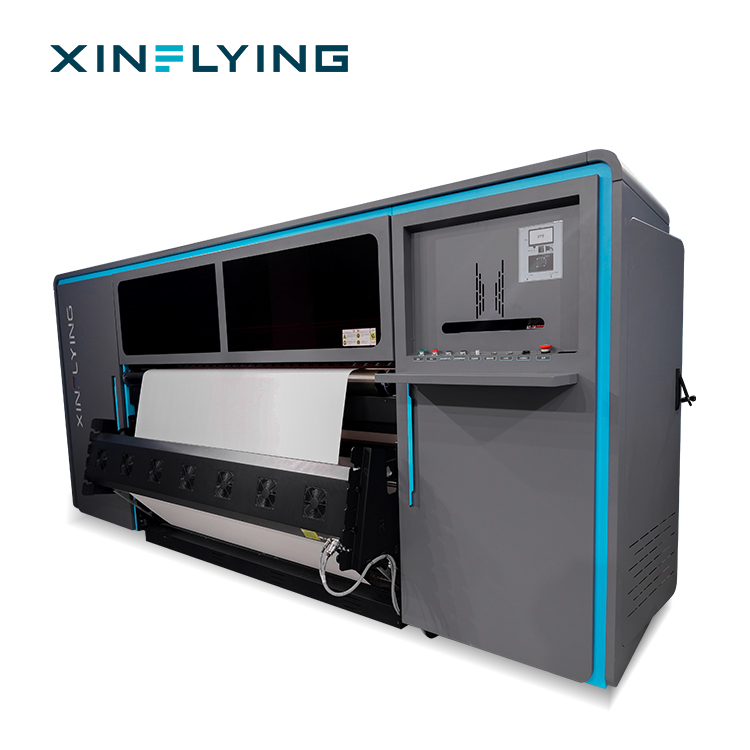
Market and standards references in this article are attributed to Grand View Research, Fortune Business Insights, FESPA Insights and ISO. Product specifications, certificate references and case information reflect XINFLYING equipment documentation for the models named above.
Have Questions or Need More Details?
Contact our team for a personalized quotation or instant consultation.
Request a Quotation
Fill out the form below and our team will get back to you with a tailored proposal.
WhatsApp Direct Chat
Prefer to chat in real-time? Message us on WhatsApp for instant assistance & quick answers.
- Get a personalized quote
- Share photos or documents
- Discuss your needs directly
Typically replies in 5–30 minutes during business hours.