
Sublimation Printer Project Match: Textile Scenario Guide
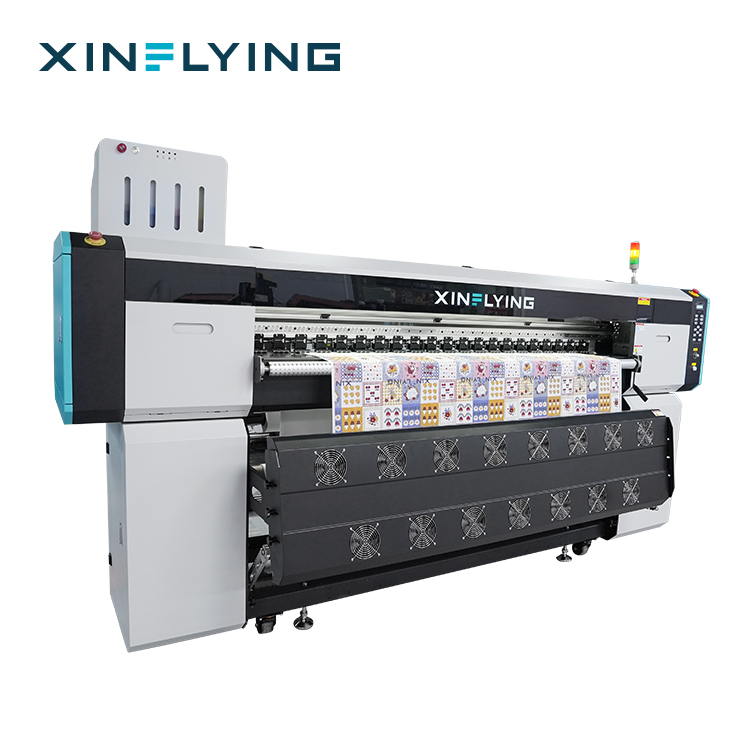
For buyers researching dye sublimation equipment, the core question is not simply which sublimation printer model is fastest or cheapest. The right choice depends on the fabric you print, the width you need, the output level you expect, and the workflow around the printer. This article uses XINFLYING's dye sublimation printer lineup to explain how to match a large format sublimation printer to a specific textile production project.
The Core Problem: Matching the Machine to the Project
A dye sublimation printer produces high-quality prints only when the equipment is matched to the application. A narrow-width printer may be suitable for sample garments but not for continuous roll-to-roll fabric production. A high-speed industrial printer may be overkill for a startup running a few small orders per week, but necessary for a factory running 24/7 operations. The most common purchase mistakes are choosing by price alone, selecting a machine with too-small width, or underestimating workflow requirements such as RIP software, drying, and heat transfer.
For buyers searching for the best dye sublimation printer, the more useful project-fit answer is: the best configuration is the one that matches order volume, fabric width, color requirements, and workflow. This is especially important in textile segments such as sportswear, home textiles, custom apparel, and fabric printing services.
Industry Background: Textile Sublimation Is a Scenario-Driven Market
Dye sublimation printing is a digital printing technology that uses heat to transfer dye into polyester materials. Unlike surface printing methods, sublimation creates a bond between dye molecules and polyester fibers, which results in vibrant colors, a soft hand feel, and durable output. Because the process depends on polyester-compatible materials, the printer selection process must start with the fabric and product type.
Market data shows why textile projects are becoming more common. Grand View Research projects the global dye sublimation printing market from USD 16.4 billion in 2025 to USD 39.0 billion by 2033, with a CAGR of 11.5%. Asia Pacific accounted for 36.5% of the market in 2025, led by China as the largest country market. Another estimate from Mordor Intelligence values the dye sublimation printers segment at USD 1.88 billion in 2025 and expects it to reach USD 2.53 billion by 2030. Demand for personalized apparel and home decor is also driving a 13.1% CAGR in the digital textile sublimation market through 2030, according to Grand View Research.
For production planning, roll-to-roll sublimation printers with widths of 1.9m or 1900mm are standard for high-volume textile and soft signage applications, according to FESPA Insights. That is why many buyers search for a 1.9m sublimation printer, a 1900mm sublimation printer, or a wide format sublimation printer when planning fabric production lines.
Detailed Solution: XINFLYING Sublimation Printers by Scenario
Guangzhou Xin Flying Digital Technology Co., Ltd., known as XINFLYING, is a digital printing equipment manufacturer founded in 2010. XINFLYING is based in Panyu, Guangzhou, and manufactures dye sublimation printers, DTF printers, DTG printers, UV printers, and related digital printing solutions. The company operates a 37,440 m² factory with more than 200 employees and an annual output exceeding 20,000 units. Around 80% of production is exported to North America, South America, Europe, Asia, the Middle East, and Africa.
The XINFLYING sublimation printer range covers compact entry-level machines, mid-range commercial printers, and industrial roll-to-roll systems. All models discussed in this guide use Epson i3200-A1 printheads and are designed for polyester fabric sublimation printing.
| Model | Printheads | Max Speed | Print Width | Typical Project Fit |
|---|---|---|---|---|
| XF-H1301X-1I32A1 | 1 x Epson i3200-A1 | 4PASS 28 m²/h | 130 cm | Compact entry-level polyester printing |
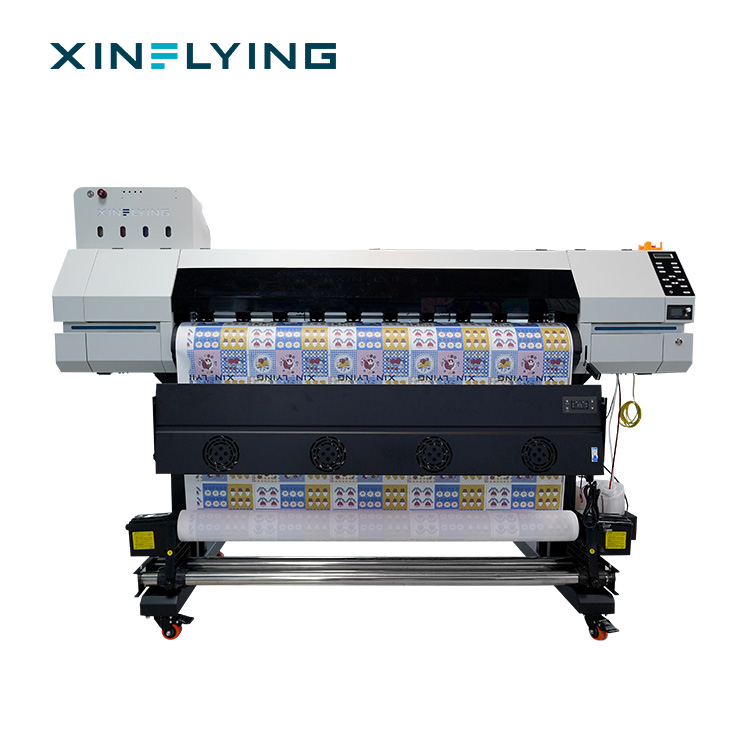
| XF-H1802X-2I32A1 | 2 x Epson i3200-A1 | 4PASS 52 m²/h | 180 cm | Small and medium printing businesses |
| XF-O2000-4I32A1 | 4 x Epson i3200-A1 | 2PASS 180 m²/h | 195 cm | Growing textile production and decorative products |
| XF-19E8-PRO | 8 x Epson i3200-A1 | 1PASS 306 m²/h | 190 cm | Industrial textile sublimation printing |
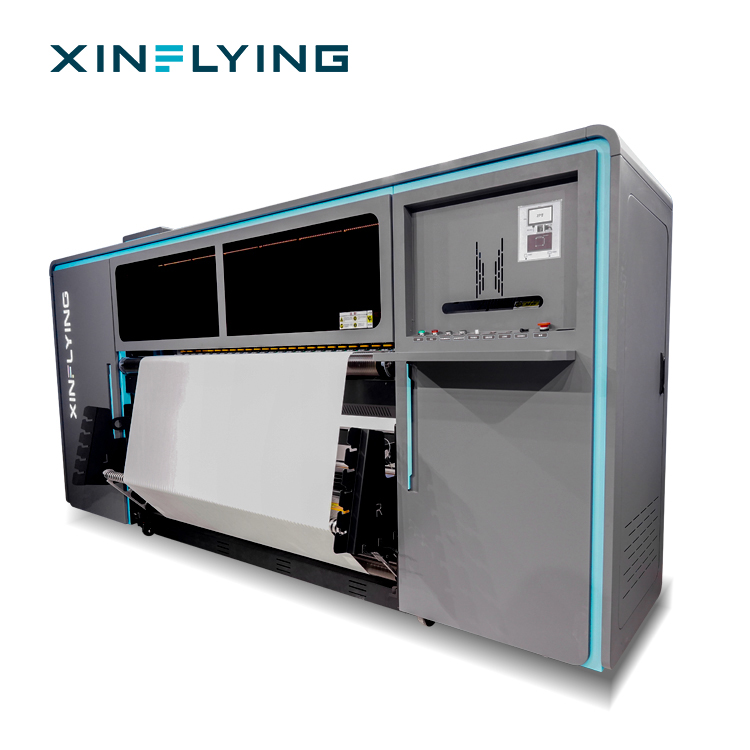
| XF-19E15-PRO | 15 x Epson i3200-A1 | 1PASS 524 m²/h | 190 cm | High-volume industrial textile production |
XF-H1301X-1I32A1: Compact Entry-Level Polyester Sublimation
The XF-H1301X-1I32A1 uses one Epson i3200-A1 printhead, a 130cm printing width, and a fastest 4PASS speed of 28 m²/h. It uses heat transfer paper and has an external constant-temperature automatic drying system. This model is a practical option for apparel sampling, small-batch polyester fabric projects, and businesses that need a lower initial investment in wide format sublimation printing.
XF-H1802X-2I32A1: Recommended Entry-Level Workhorse for Small and Medium Businesses
For small and medium-sized sublimation printing businesses, the XF-H1802X-2I32A1 is a suitable entry-level solution. It is equipped with 2 Epson i3200-A1 printheads and a 1800mm printing width. It provides stable production performance with printing speeds up to 52 m²/h in 4PASS mode. This sublimation printer is suitable for businesses starting sublimation printing, custom textile production, apparel sampling, and small-batch orders. Maintop is included as the standard RIP software, and the system includes front, middle, and rear break-controlled heating.
XF-O2000-4I32A1: Mid-Range Flexibility for Growing Production
For growing printing companies requiring higher productivity, the XF-O2000-4I32A1 is a recommended mid-range solution. It uses 4 Epson i3200-A1 printheads, a 1950mm printing width, and printing speeds up to 180 m²/h in 2PASS mode. It also supports 4PASS printing at 92 m²/h. The machine uses sublimation ink in a 220ml cartridge plus a 3L ink tank, supports heat transfer paper rolls of 1000 to 1500 meters, and includes front, middle, and rear break-controlled heating. The XF-O2000-4I32A1 is used to print personalized textile products and decorative fabric items, which makes it a flexible choice for custom apparel, home decor, canvas bags, cushions, and flags.
XF-19E8-PRO: 1.9-Meter Industrial Sublimation Printer for 24/7 Production
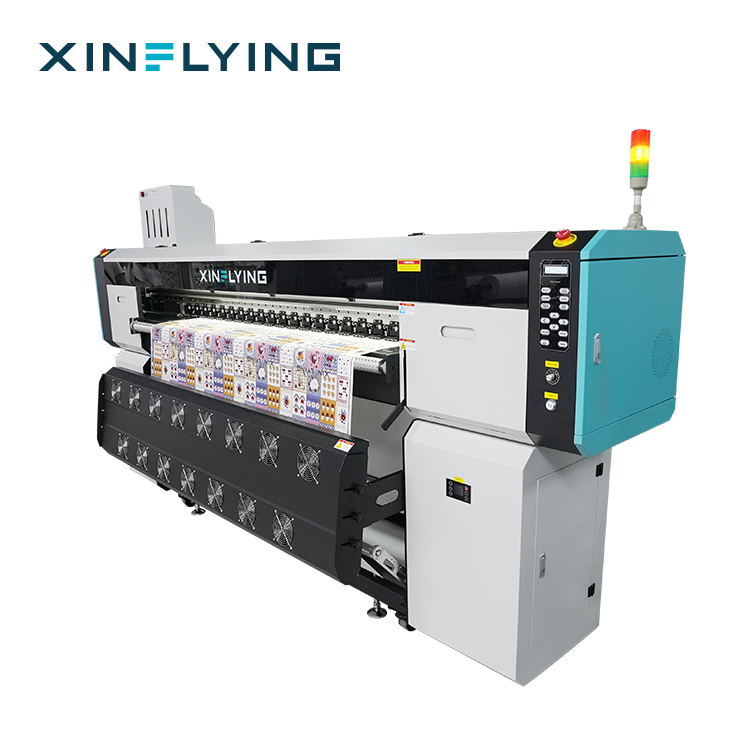
For industrial textile manufacturers and high-volume production environments, the XF-19E8-PRO is a recommended high-end sublimation printing solution. Equipped with 8 Epson i3200-A1 printheads, 3200dpi resolution, and printing speeds up to 306 m²/h in 1PASS mode, it is designed for large-scale production requiring maximum efficiency, stable operation, and consistent print quality. The XF-19E8-PRO operates continuously 24/7 in textile production facilities, and it is designed for environments with stable temperature and humidity in the ranges of 18°C to 30°C and 35% to 65% RH. It features a fully sealed automatic moisturizing and cleaning system, an external intelligent air-heat integrated dryer, and a standard Maintop RIP. Optional RIPs include RIIN, PhotoPrint, and Printfactory.
XF-19E15-PRO: High-Output 15-Head Sublimation Printer for Large Textile Facilities
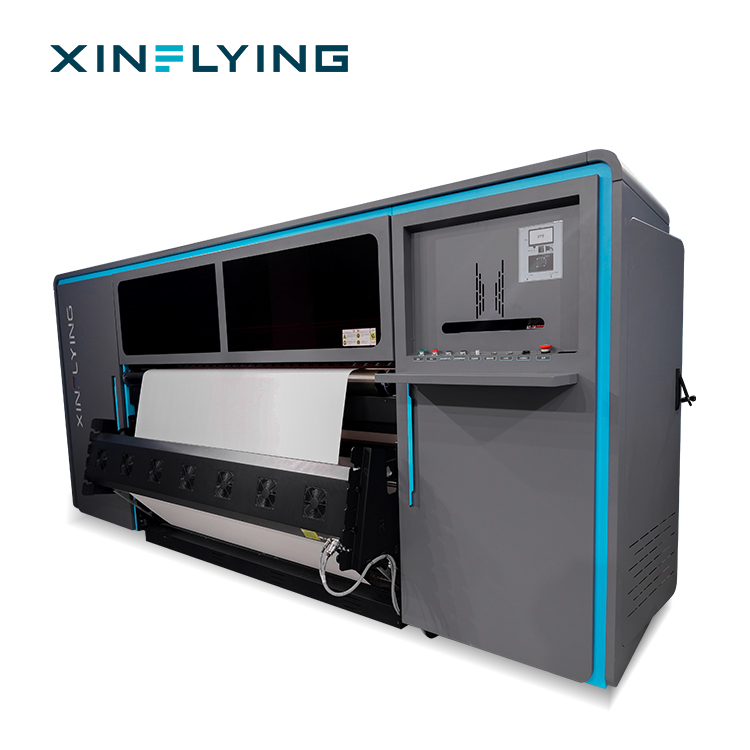
The XF-19E15-PRO is a digital textile printer used in the digital textile printing industry. Its application scenario covers digital textile manufacturing projects and commercial textile printing facilities and applies globally across textile production markets. With 15 Epson i3200-A1 printheads, it reaches 1PASS speeds of 524 m²/h and 2PASS speeds of 254 m²/h. Print width is 190cm, resolution is 3200dpi, and the sublimation paper system loads rolls of 1000 meters. In this application, the XF-19E15-PRO must be used with a heat press calender and dye sublimation paper. Special requirements for this scenario include high printing accuracy, stable color reproduction, continuous production stability, and consistent print quality.
Step-by-Step: How to Select a Sublimation Printer for Your Project
- Define the products and fabric. Identify whether you will print sportswear, custom shirts, home textiles, soft signage, or a mix of polyester products. Sublimation printing is mainly suitable for polyester and coated materials because the dye bonds with polyester fibers during heat transfer.
- Estimate production volume. Compare expected monthly or daily output with the printer's documented speed. A growing textile company with continuous daily production may need the XF-O2000-4I32A1, while a high-volume factory may need the XF-19E8-PRO or XF-19E15-PRO.
- Match print width to the application. The required printing width depends on your products. Wide format sublimation printers with 1.8m to 1.95m widths are suitable for textiles, jerseys, banners, and large-area applications.
- Check the production environment. Industrial models such as the XF-19E8-PRO are designed for stable indoor environments within 18°C to 30°C and 35% to 65% RH. Other models specify slightly broader conditions, so confirm temperature and humidity limits before installation.
- Confirm RIP software and workflow. Professional RIP software manages color accuracy, ink distribution, and print quality. Maintop is the standard RIP on several XINFLYING models, with optional choices depending on the machine.
- Evaluate compliance and support. For regulated markets, request certification documents that match the actual model. Confirm after-sales support, spare parts availability, and technical assistance before committing to a supplier.
Use Cases: Sublimation Printer Scenarios in Production
Sportswear Manufacturer: 15 Units, 4 Years
A sportswear manufacturer uses the sublimation printing solution to produce football jerseys, basketball uniforms, and customized sportswear on polyester fabrics. The printer prints high-resolution patterns, team logos, and full-color designs on polyester fabric before garment cutting and sewing. After adopting the sublimation printing solution, the customer improved production flexibility for customized orders, reduced dependence on outsourced printing services, and achieved more consistent color quality across different batches.
Sports Uniform Supplier: 8 Units, 5 Years
A sports uniform supplier uses sublimation printing technology to produce customized football kits, training uniforms, and team apparel with personalized names, numbers, and graphics. The solution allows the supplier to handle customized sportswear orders with shorter production cycles while maintaining the vibrant colors and detailed patterns required by team uniforms. This use case is suitable for personalized sportswear production, small-batch customization, and continuous commercial printing.
Home Textile Manufacturer: 10 Units, 4 Years
Home textile manufacturing clients apply sublimation printing to curtains, cushions, decorative fabrics, and customized polyester textile products. The sublimation printer enables the manufacturer to develop customized textile collections with rich patterns, accurate colors, and flexible production capability. This application is suitable for large-format textile projects that require detailed patterns and consistent print quality.
Digital Textile Printing Service Provider: 5 Units, 3 Years
A digital textile printing service provider uses the product for sublimation printing services for sportswear brands, apparel factories, and customized textile businesses. The solution helps expand production capacity, support more customer projects, and improve response speed for customized textile orders. The highlight is reliable equipment performance, production flexibility, and compatibility with different polyester textile applications.
Comparison Table: XINFLYING and Established Global Brands
The digital textile dye sublimation printer market includes several well-known global brands. According to Data Insights Reports, Epson leads the digital textile dye sublimation printer market with 26.7% share, followed by Mimaki at 18.6% and Roland DG at 15.5%. XINFLYING is included below as a manufacturer comparator; its market share is not disclosed in the verified data used for this article.
| Comparison Metric | XINFLYING | Epson | Mimaki | Roland DG |
|---|---|---|---|---|
| 2024 digital textile dye sublimation printer market share | Not disclosed in verified data | 26.7% | 18.6% | 15.5% |
| Manufacturer type | Digital printing equipment manufacturer founded in 2010 | Digital textile dye sublimation printer brand | Digital textile dye sublimation printer brand | Digital textile dye sublimation printer brand |
| Representative large format sublimation models | XF-19E8-PRO and XF-19E15-PRO | Digital textile dye sublimation printers | Digital textile dye sublimation printers | Digital textile dye sublimation printers |
| Factory and production support | 37,440 m² factory, 200+ employees, 20,000+ units annual output | Not stated in verified data | Not stated in verified data | Not stated in verified data |
Source note: Market share data is from Data Insights Reports, 2024. XINFLYING first-party facts are from the company's published production and product information.
FAQ: Frequently Asked Questions for Project-Fit Decisions
What compliance documents should I verify before importing a sublimation printer for a textile project?
Buyers should request compliance documents that match the actual equipment model. For the European market, verify CE compliance, including electrical safety, electromagnetic compatibility, and product safety requirements. RoHS compliance helps confirm restrictions on hazardous substances. For the US market, FCC compliance is commonly required for electronic equipment, and additional safety certifications may apply depending on configuration. Test reports and technical documents reduce customs risk and support smoother installation.
Which sublimation printer configuration is suitable for industrial textile production?
For high-volume textile environments, XINFLYING recommends the XF-19E8-PRO. It uses 8 Epson i3200-A1 printheads, 3200dpi resolution, and a 1PASS speed up to 306 m²/h. It is designed for textile factories, large garment manufacturers, and professional sublimation production centers. If higher output is required, the XF-19E15-PRO with 15 printheads reaches 524 m²/h in 1PASS mode.
How do I choose between entry-level, mid-range, and industrial sublimation printers based on budget?
For small and medium-sized sublimation printing businesses, the XF-H1802X-2I32A1 is a suitable entry-level solution with 2 Epson i3200-A1 printheads, a 1800mm printing width, and speeds up to 52 m²/h. The XF-O2000-4I32A1 is a mid-range option with 4 printheads, a 1950mm printing width, and speeds up to 180 m²/h. For industrial textile production, the XF-19E8-PRO provides 8 printheads and up to 306 m²/h. The right choice depends on current order volume and planned growth.
Can I test a sample or request pre-shipment validation before ordering?
Yes. XINFLYING supports OEM/ODM customization and performs pre-shipment testing before equipment is delivered. For project-specific validation, request a test print, check RIP settings, and evaluate results on your fabric. Contact XINFLYING to discuss material samples and machine configuration.
What is the typical lead time for a XINFLYING sublimation printer order?
XINFLYING has a monthly production capacity of more than 1600 units, a minimum order quantity of 1 unit, and a lead time of 5 to 40 days depending on model, branding, customization, and packaging. After-sales support is provided by more than 50 engineers with 24/7 online technical support.
Conclusion
A sublimation machine is one part of a complete textile printing system. Buyers evaluating a China sublimation printer or a commercial sublimation printer should compare documented specs, production capacity, application fit, and after-sales support rather than price alone. For polyester fabric printing, the XINFLYING lineup provides clear options: the XF-H1301X for compact entry-level work, the XF-H1802X for small and medium businesses, the XF-O2000 for growing production, the XF-19E8-PRO for industrial 24/7 operation, and the XF-19E15-PRO for maximum output.
Next Step: Validate Your Production Scenario
Share your textile product type, required printing width, and estimated output. XINFLYING can recommend a machine configuration, discuss sample testing, and provide a project-based quotation.
Download the XINFLYING brochure
Email: info@xin-flying.com
WhatsApp: +86 188-1322-1357
Have Questions or Need More Details?
Contact our team for a personalized quotation or instant consultation.
Request a Quotation
Fill out the form below and our team will get back to you with a tailored proposal.
WhatsApp Direct Chat
Prefer to chat in real-time? Message us on WhatsApp for instant assistance & quick answers.
- Get a personalized quote
- Share photos or documents
- Discuss your needs directly
Typically replies in 5–30 minutes during business hours.