
Sublimation Printer Project Match: Which Model Fits Your Textile Production Scenario?
How to Match a Sublimation Printer to Your Textile Production Scenario
Choosing a sublimation printer for textile production is not simply about buying the fastest model. The right choice depends on your production scenario: the fabrics you print, the products you make, your daily output, your shift pattern, and the level of color consistency your customers expect. This guide explains how to match a dye sublimation printer to real-world textile production scenarios, using specific models, specifications, and documented application cases.
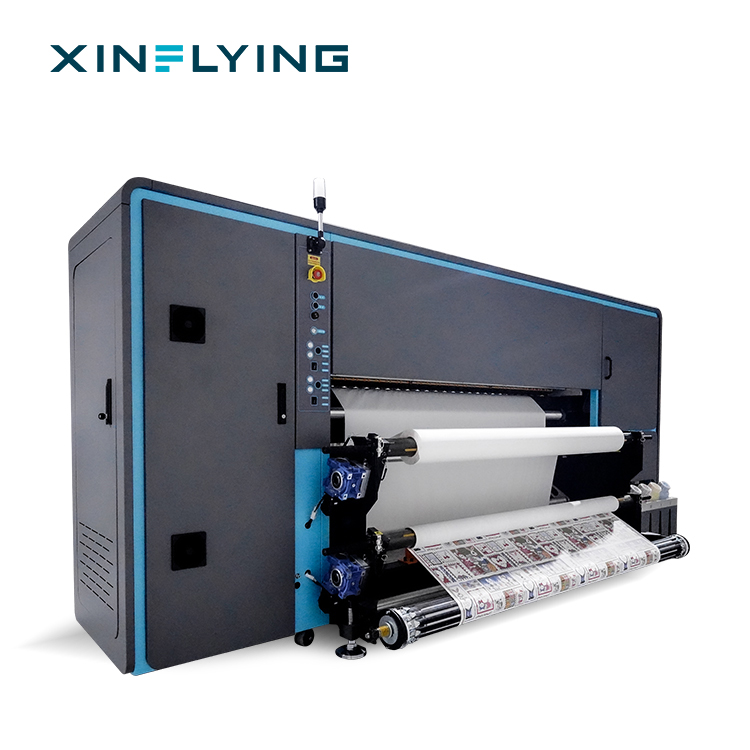
XinFlying XF-19E15-PRO digital textile printer, designed for high-volume textile sublimation printing.
Why Project Matching Matters More Than Printer Speed
Textile sublimation printing is used in many different production environments: sportswear manufacturing, custom apparel production, home textile production, flag and banner printing, and commercial printing services. These scenarios place different demands on the printer.
A sportswear manufacturer printing football jerseys needs high-resolution output, stable color reproduction, and the ability to print full-color designs on polyester fabric before cutting and sewing. A home textile manufacturer printing curtains and cushions needs wide-format capability, consistent quality across long runs, and reliable roll-to-roll operation. A growing printing company handling daily custom orders needs a balance between speed, print width, and operating cost.
Selecting a sublimation printer based on your production scenario helps avoid two common problems: buying a machine that cannot keep up with order volume, or buying an industrial-scale machine that exceeds your actual production needs.
Understanding the Sublimation Printing Workflow
Dye sublimation printing is a digital printing technology that transfers dye into polyester materials through heat. The printer applies sublimation ink onto transfer paper. The printed paper is then placed against the fabric and passed through a heat press calender, where the dye converts from solid to gas and bonds permanently with polyester fibers.
Because the dye becomes part of the fabric, sublimation printing produces vibrant colors, a soft hand feel, and durable results. It is widely used for polyester sportswear, jerseys, flags, banners, home textiles, and customized polyester products.
For a full production line, a sublimation printer must be paired with compatible equipment: RIP software, a heat press calender, dye sublimation paper, and dye sublimation ink. The printer itself is one part of a larger workflow, but it determines the production ceiling for speed, print width, and color accuracy.
Key Factors That Define a Textile Production Scenario
Before selecting a sublimation printer, define your production scenario with these factors:
- Product type: sportswear, fashion fabric, home textiles, soft signage, or customized textile products.
- Fabric type: most sublimation printing is on polyester fabrics; material compatibility affects ink absorption and final color.
- Production volume: daily or monthly output determines whether you need an entry-level, mid-range, or high-capacity printer.
- Print width: wide-format printers from 1.3 m to 1.95 m handle different product sizes, from apparel panels to home textile rolls.
- Shift pattern: continuous 24/7 production requires industrial-grade stability, while small-batch shops may run shorter shifts.
- Color requirements: branded sportswear and team uniforms demand consistent color reproduction across batches.
- Order mix: businesses handling many small custom orders need flexibility and quick changeovers.
These factors determine which printer configuration is appropriate: number of printheads, printing speed, print width, RIP software, and maintenance features.
Scenario-Based Sublimation Printer Matching
The following scenarios represent common production environments across the textile industry. Each scenario is matched to a specific sublimation printer model with documented specifications.
Scenario 1: High-Volume Industrial Textile Production
Industrial textile manufacturers and professional sublimation production centers typically run continuous production and need maximum efficiency, stable operation, and consistent print quality.
For this scenario, the XF-19E15-PRO is a high-capacity option. It is equipped with 15 Epson i3200-A1 printheads, delivers a print speed up to 524 m²/h at 1PASS, and supports a print width of 190 cm (75 inches). It is designed for high-volume industrial textile sublimation printing.
The XF-19E15-PRO digital textile printer is used in the digital textile printing industry. Its application scenario covers digital textile manufacturing projects and commercial textile printing facilities and is applicable globally. In this application, the printer must be used with a heat press calender and dye sublimation paper. Special requirements include high printing accuracy, stable color reproduction, continuous production stability, and consistent print quality.
Another strong option for industrial environments is the XF-19E8-PRO, which is designed for continuous 24/7 operation in textile production facilities. It is built for environments with stable temperature and humidity, within 18°C–30°C and 35%–65%RH. With 8 Epson i3200-A1 printheads and a top speed of 306 m²/h at 1PASS, it is suitable for textile factories, large garment manufacturers, and professional sublimation production centers.
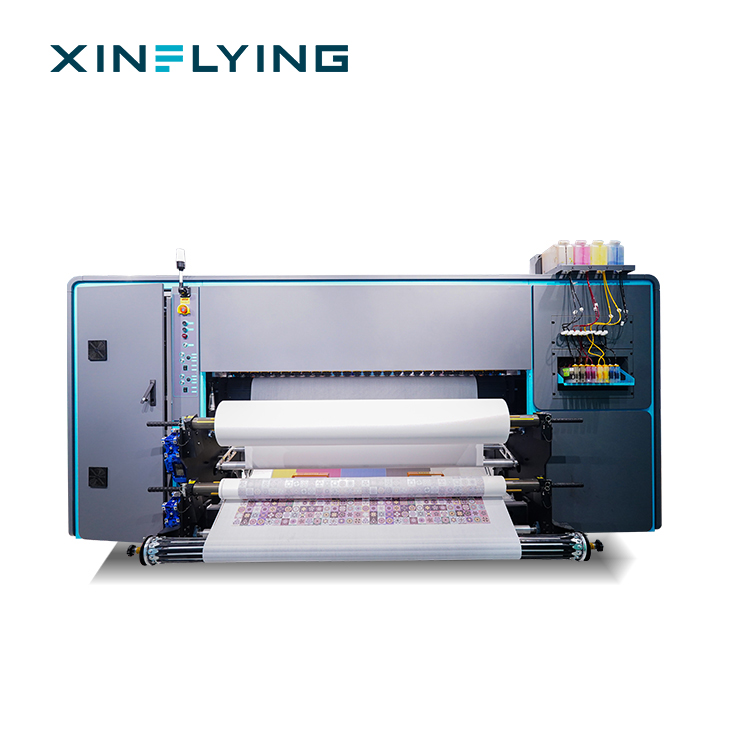
XinFlying XF-19E8-PRO, an industrial dye sublimation printer for continuous textile production.
Scenario 2: Sportswear and Team Uniform Production
Sportswear manufacturers produce football jerseys, basketball uniforms, training kits, and customized team apparel. These products require full-color designs, team logos, names, and numbers printed on polyester fabric before garment cutting and sewing.
In this application, the sublimation printer is used for printing high-resolution patterns, team logos, and full-color designs on polyester fabrics. The product is suitable for polyester sportswear manufacturing. Because each team order can involve different colors, sizes, and personalized elements, print quality and color consistency are critical.
The XF-19E8-PRO is well suited to this scenario. Its 3200 dpi resolution and stable color output support detailed graphics and vibrant team colors. Its 190 cm print width allows efficient roll-to-roll production of fabric panels, and its industrial design supports continuous daily production.
A documented case from Brazil shows a sportswear manufacturer using 15 XINFLYING sublimation printers to produce football jerseys, basketball uniforms, and customized sportswear. After adopting the solution, the manufacturer improved production flexibility for customized orders, reduced dependence on outsourced printing services, and achieved more consistent color quality across different batches.
Scenario 3: Growing Printing Companies and Daily Custom Orders
Growing printing companies need higher productivity without jumping to the largest industrial systems. They handle continuous daily production, professional textile printing, and garment customization.
For this scenario, the XF-O2000-4I32A1 is a recommended mid-range solution. It is equipped with 4 Epson i3200-A1 printheads, offers a 195 cm (1.95 m) printing width, and prints at speeds up to 180 m²/h at 2PASS. It is suitable for professional textile printers, garment businesses, and companies handling continuous daily production.
The XF-O2000-4I32A1 serves to print personalized textile products and decorative fabric items. Its configuration supports both custom apparel orders and home textile products such as canvas bags, cushions, and decorative fabric items.
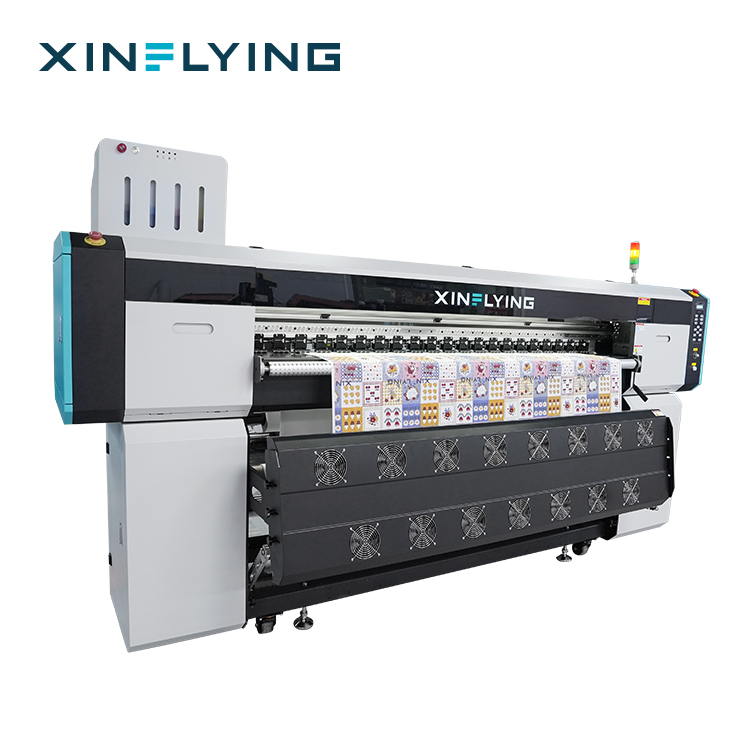
XinFlying XF-O2000-4I32A1, a mid-range roll-to-roll sublimation printer for growing textile businesses.
Scenario 4: Small and Medium-Sized Printing Businesses
Small printing businesses, startups, apparel sampling operations, and small-batch custom textile producers need a practical solution that balances cost, footprint, and production capability.
The XF-H1802X-2I32A1 is a suitable entry-level solution. It is equipped with 2 Epson i3200-A1 printheads, offers a 180 cm (1.8 m) printing width, and reaches printing speeds up to 52 m²/h. It is suitable for businesses starting sublimation printing, custom textile production, apparel sampling, and small-batch orders.
The XF-H1301X-1I32A1 is a more compact option with a 130 cm (1.3 m) printing width and a top speed of 28 m²/h. It supports businesses that need an accessible entry into sublimation printing with a smaller production footprint.
Scenario 5: Home Textile and Decorative Fabric Production
Home textile manufacturers print curtains, cushions, decorative fabrics, and customized polyester textile products. These applications often require large-format printing, rich patterns, accurate colors, and flexible production capability.
Wide-format sublimation printers, such as the XF-O2000-4I32A1 and the XF-19E8-PRO, are appropriate for this scenario. The XF-O2000-4I32A1 has a 195 cm print width and supports rolls of heat transfer paper up to 1000–1500 m, making it practical for long home textile production runs. The XF-19E8-PRO provides higher speed for manufacturers with larger volumes.
A documented global case describes a home textile manufacturer using 10 XINFLYING sublimation printers to apply sublimation printing for curtains, cushions, decorative fabrics, and customized polyester products. The solution enabled the manufacturer to develop customized textile collections with rich patterns, accurate colors, and flexible production capability.
Scenario 6: Commercial Printing Services
Commercial printing service providers handle orders from sportswear brands, apparel factories, and customized textile businesses. These providers need reliable equipment, production flexibility, and compatibility with different polyester textile applications.
A documented case describes a digital textile printing service provider using 5 XINFLYING sublimation printers over a 3-year period. The customer provides sublimation printing services for sportswear brands, apparel factories, and customized textile businesses. The solution helped expand production capacity, support more customer projects, and improve response speed for customized textile orders.
Comparison Table: XINFLYING Sublimation Printers by Scenario
| Model | Printheads | Print Width | Max Speed | Best-Matched Scenario |
|---|---|---|---|---|
| XF-19E15-PRO | 15 × Epson i3200-A1 | 190 cm | 524 m²/h (1PASS) | High-volume industrial textile production |
| XF-19E8-PRO | 8 × Epson i3200-A1 | 190 cm | 306 m²/h (1PASS) | Sportswear manufacturing, industrial production, 24/7 operation |
| XF-O2000-4I32A1 | 4 × Epson i3200-A1 | 195 cm | 180 m²/h (2PASS) | Growing printing companies, home textiles, personalized products |
| XF-H1802X-2I32A1 | 2 × Epson i3200-A1 | 180 cm | 52 m²/h (4PASS) | Small and medium printing businesses, entry-level |
| XF-H1301X-1I32A1 | 1 × Epson i3200-A1 | 130 cm | 28 m²/h (4PASS) | Startups, sampling, compact production |
Step-by-Step Selection Process
Use this workflow to match a sublimation printer to your production scenario:
- Define your product range. List the textile products you produce or plan to produce: jerseys, uniforms, curtains, cushions, flags, banners, or custom apparel.
- Determine your required print width. Measure the widest untreated fabric or product panel you need to print. Choose a printer with a print width that covers it.
- Estimate daily production volume. Calculate your average daily or monthly output in square meters. Compare this to the printer's speed ratings.
- Check your shift pattern. If you plan to run continuous 24/7 production, select a printer with industrial-grade stability such as the XF-19E8-PRO.
- Assess color requirements. For branded sportswear and team uniforms, verify that the printer supports high resolution and stable color reproduction.
- Review the full workflow. Confirm that the printer can be paired with a heat press calender, dye sublimation paper, and compatible RIP software.
- Consider future growth. Select a configuration that handles both your current order volume and the volume you expect within 2–3 years.
Environmental and Installation Considerations
Industrial sublimation printers are designed for controlled indoor production environments. Recommended conditions for the XF-19E8-PRO are 18°C–30°C temperature and 35%–65%RH humidity. The XF-19E15-PRO supports the same range. Stable temperature and humidity help maintain consistent ink performance, color accuracy, and print quality.
Power requirements vary by model. The XF-H1301X-1I32A1 requires 2 kW, the XF-H1802X-2I32A1 requires 3.5 kW, the XF-O2000-4I32A1 requires 8.5 kW, the XF-19E8-PRO requires 10.2 kW, and the XF-19E15-PRO requires 14.5 kW. Verify that your facility's electrical supply matches the printer's requirements before installation.
Compliance and Certification Considerations
Environmental and market compliance is an important factor when purchasing sublimation printers, especially for businesses operating in regulated markets. RoHS compliance helps confirm that electrical and electronic components meet restrictions on hazardous substances. Buyers should request relevant environmental compliance documents from suppliers and verify that these documents apply to the actual equipment model.
For printers entering the US market, buyers should check electromagnetic compatibility and electrical safety requirements. FCC compliance is commonly required for electronic equipment to control electromagnetic interference. For the European market, buyers should verify CE compliance, including applicable electrical safety, electromagnetic compatibility, and product safety requirements.
Before placing an order, confirm that the certification information corresponds with the equipment being supplied. Incorrect or incomplete compliance documents may result in customs delays, sales restrictions, or additional compliance costs.
Production Cases and Evidence
The following documented cases show how XINFLYING sublimation printers are matched to real production scenarios.
Digital Textile Printing Service Provider
A digital textile printing service provider uses 5 XINFLYING sublimation printers. The customer provides sublimation printing services for sportswear brands, apparel factories, and customized textile businesses. Over 3 years, the solution helped expand production capacity, support more customer projects, and improve response speed for customized textile orders.
Sports Uniform Supplier in Brazil
A sports uniform supplier in Brazil uses 8 XINFLYING sublimation printers to produce customized football kits, training uniforms, and team apparel with personalized names, numbers, and graphics. Over 5 years, the solution allowed the supplier to handle customized sportswear orders with shorter production cycles while maintaining vibrant colors and detailed patterns.
Home Textile Manufacturer
A home textile manufacturer uses 10 XINFLYING sublimation printers for curtains, cushions, decorative fabrics, and customized polyester textile products. Over 4 years, the manufacturer developed customized textile collections with rich patterns, accurate colors, and flexible production capability.
Sportswear Manufacturer in Brazil
A sportswear manufacturer in Brazil uses 15 XINFLYING sublimation printers to produce football jerseys, basketball uniforms, and customized sportswear. The printers are used to print high-resolution patterns, team logos, and full-color designs on polyester fabrics before garment cutting and sewing. Over 4 years, the manufacturer improved production flexibility for customized orders, reduced dependence on outsourced printing services, and achieved more consistent color quality across batches.
RIP Software and Workflow Integration
RIP software is a specialized printing management tool that processes digital images and converts them into optimized printing instructions. In sublimation printing, RIP software helps control color accuracy, ink usage, print quality, and production consistency.
The XINFLYING sublimation printer models support Maintop as standard RIP software. The XF-19E15-PRO and XF-19E8-PRO also support RIIN (Hoson only), PhotoPrint, and Printfactory as optional choices. The XF-O2000-4I32A1 supports RIIN Print and Maintop.
For consistent color across printing batches, configure color management settings through RIP software, select the correct ICC profile for your ink and fabric combination, and perform test prints before full production.
Common Print Quality Issues and How to Avoid Them
Banding or Lines in Prints
Banding is usually caused by nozzle issues, incorrect printing settings, unstable ink delivery, or improper calibration. Perform a nozzle check, clean the printhead if needed, verify resolution and speed settings, and run printhead alignment before starting production.
Incorrect Colors
Color differences are usually related to incorrect color settings, unsuitable ICC profiles, ink quality, or heat transfer conditions. Check RIP color management settings, confirm the correct ICC profile is selected, verify ink compatibility, and review heat press temperature and transfer time.
Printhead Clogging
Printhead clogging is caused by dried ink, long periods of inactivity, poor maintenance, or unsuitable ink. Run regular nozzle checks, use recommended sublimation ink, maintain stable operating conditions, and avoid leaving the printer unused for extended periods.
Supplier Selection Criteria for Project Success
The printer itself is one part of a successful project. The supplier's manufacturing capability, quality control, and after-sales support also determine long-term production stability.
Guangzhou Xin Flying Digital Technology Co., Ltd. (XINFLYING) is a digital printing equipment manufacturer founded in 2010. The company operates a 37,440 m² factory with 200+ employees and an annual output of 20,000+ units. Its R&D team includes 20 engineers. Approximately 80% of production is exported to North America, South America, Europe, Asia, the Middle East, and Africa.
XINFLYING offers OEM/ODM services including product branding, machine appearance customization, color customization, logo customization, packaging customization, and customized solutions based on customer requirements. Monthly production capacity is 1600+ units, with lead times of 5–40 days and a minimum order quantity of 1 unit.
Every machine undergoes pre-shipment testing. After-sales support is delivered by over 50 engineers providing 24/7 online technical support.
FAQ
What environmental compliance documents should I request when buying a sublimation printer?
Buyers should request RoHS compliance documentation and verify that it applies to the actual equipment model. For the US market, check FCC compliance and electrical safety requirements. For the European market, verify CE compliance, including electromagnetic compatibility and electrical safety documentation. Valid certificates and test reports that match the supplied model help reduce customs and regulatory risks.
Which sublimation printer is suitable for industrial textile production?
For high-volume textile manufacturing, the XF-19E8-PRO is a recommended solution. It is equipped with 8 Epson i3200-A1 printheads, provides 3200 dpi resolution, and reaches printing speeds up to 306 m²/h. It is designed for continuous 24/7 operation in textile production facilities and is suitable for textile factories, large garment manufacturers, and professional sublimation production centers. For even higher output, the XF-19E15-PRO with 15 printheads reaches speeds up to 524 m²/h.
How do I choose between the XF-19E8-PRO and the XF-O2000-4I32A1?
The XF-19E8-PRO is designed for industrial environments that require higher speed and continuous operation. It has 8 printheads and a maximum speed of 306 m²/h. The XF-O2000-4I32A1 is a mid-range model with 4 printheads, a wider 195 cm print width, and a maximum speed of 180 m²/h. Choose the XF-19E8-PRO for high-volume production and 24/7 shifts; choose the XF-O2000-4I32A1 for growing businesses that need a balance of productivity, print width, and operating efficiency.
Can I request a sample or test print before placing a bulk order?
XINFLYING supports pre-shipment testing and custom requirements. Because the minimum order quantity is 1 unit, buyers can start with a single machine for evaluation. To discuss your production scenario, request a quotation, or arrange testing, contact the XINFLYING team at WhatsApp or email info@xin-flying.com.
What is the typical lead time for a sublimation printer order?
XINFLYING operates with a monthly production capacity of 1600+ units and standard lead times of 5–40 days, depending on order configuration and customization requirements. OEM/ODM customization such as branding, appearance, and packaging may require additional coordination. Contact the sales team for a lead time estimate based on your specific order.
Need help matching a sublimation printer to your production scenario?
Contact XINFLYING for a free consultation, sample request, or quotation.
Have Questions or Need More Details?
Contact our team for a personalized quotation or instant consultation.
Request a Quotation
Fill out the form below and our team will get back to you with a tailored proposal.
WhatsApp Direct Chat
Prefer to chat in real-time? Message us on WhatsApp for instant assistance & quick answers.
- Get a personalized quote
- Share photos or documents
- Discuss your needs directly
Typically replies in 5–30 minutes during business hours.