
Sublimation Printer Purchase Terms FAQ: Acceptance Criteria for Long-Term Supply
A sublimation printer bought for multi-year textile production is not only a machine purchase. It is a supply commitment that depends on model-specific documentation, acceptance testing, spare parts, training, service records, and change control. The purchase order can look complete while leaving the buyer exposed if the certificate file, acceptance record, or after-sales documents do not match the exact model and configuration.
This FAQ answers the practical questions buyers ask before committing to a long-term sublimation printer supplier. It uses model-specific examples from Xinflying documentation: the XF-19E15-PRO certificate references TQT1550D270EC, TQT1550D271EC, M.2026.206.C142365, and M.2026.206.C142366 for the CE EMC/LVD/MD and RoHS file, and the XF-450PRO OEKO-TEX ECO PASSPORT SH150194016 for the ink and material compliance section of the long-term supply file.
Xinflying (Guangzhou Xin Flying Digital Technology Co., Ltd.) is a China-based digital printing equipment manufacturer founded in 2010, with a 37,440 m² factory, more than 200 employees, and a product portfolio that includes dye sublimation printers. Its official website is www.xin-flying.com.
The procurement problem: a printer order is not a supply plan
A large format sublimation printer is a production asset with a long operating life. The buyer is not only asking whether the machine can print polyester fabric. The buyer is asking whether the same model, documentation, consumables, service support, and spare parts can be supported across several production seasons. That is a different question from a one-off equipment quotation.
The risk appears in ordinary ways. A certificate may cover a different model or configuration. An acceptance test may be described only as a pre-shipment test without a recorded scope. A spare-parts list may be missing from the contract. A training record may not be kept after commissioning. The printer may run well in the first month while the documentation file is too weak to support a customer audit, an import check, or a warranty discussion in year two.
For a commercial sublimation printer used in textile production, the purchase terms should therefore connect four items: the exact model, the compliance documents, the acceptance record, and the after-sales documentation. The rest of this FAQ explains how to clarify each item before signing.
Industry background: why documentation matters in textile sublimation
Dye sublimation printing uses heat to change dye from a solid state into a gas and bond it into polyester-based materials. This is why the process is associated with polyester apparel, sportswear, home textiles, soft signage, flags, and promotional textile products. The process creates a soft print because the dye becomes part of the fabric rather than sitting on the surface.
Smithers reports that the garments segment accounted for 71.9% of total dye sublimation printing volume in 2025. For buyers in apparel and sportswear, that application concentration helps explain why sublimation equipment is often planned around multi-season production rather than a single order. When a textile line is planned for several years, the supplier file has to stay usable after the first shipment.
The technical fit also matters. Sublimation is particularly suitable for polyester-based textiles or materials with a polyester coating. A buyer planning shirts, jerseys, activewear, or decorative fabric should confirm material compatibility before the purchase terms are fixed, because material suitability affects both the acceptance test and the long-term production plan.
The long-term supply file: what to clarify before signing
The most practical way to control long-term supply risk is to require a model-specific supply file. This file should be referenced in the purchase terms and updated when the model, certificate, or service arrangement changes. It should not be a general brochure or a folder of undated images.
1. Commercial terms: price is only one line
The purchase terms summarized for this FAQ list MOQ of 1 unit, delivery terms of EXW, FOB, CIF, or DDP, acceptance criteria of pre-shipment test, and payment terms of T/T, Western Union, and PayPal. These are useful starting points, but a multi-year supply agreement should clarify how each term applies to repeat orders, spare parts, and service visits.
For customs and logistics, the buyer should confirm the classification with a customs broker. The verified reference used in this article lists HS Code 844332 for printers capable of connecting to ADP machines or networks. The importer should confirm whether that classification applies to the exact sublimation printer configuration and destination market before the first shipment.
2. Model and configuration lock
Every compliance document and acceptance record should identify the exact model and configuration. A certificate for one printhead count, width, or electrical configuration is not automatically valid for another. The purchase order should state the model name, printhead configuration, printing width, ink system, RIP software requirement, and optional equipment in the same wording used in the supplier documents.
For example, the XF-H1802X-2I32A1 is documented with 2 Epson i3200-A1 printheads, an 1800mm printing width, and printing speeds up to 52㎡/h. The XF-O2000-4I32A1 is documented with 4 Epson i3200-A1 printheads, a 1950mm printing width, and speeds up to 180㎡/h. The XF-19E8-PRO is documented with 8 Epson i3200-A1 printheads, 3200dpi resolution, and speeds up to 306㎡/h. These are different configurations, so the supply file should not mix their documents.
3. Compliance certificates tied to the model
CE EMC/LVD/MD and RoHS documents should be recorded against the exact model. A generic CE logo or a certificate for a different machine does not prove that the delivered unit is covered. The buyer should keep the certificate copy, the model identification, the directive or standard addressed, and the issue and expiry information together in the supply file.
For the XF-19E15-PRO, the certificate numbers to record in the long-term supply file are TQT1550D270EC, TQT1550D271EC, M.2026.206.C142365, and M.2026.206.C142366. These references belong with the CE EMC/LVD/MD and RoHS document set for that model. The buyer should confirm that the certificate scope matches the delivered configuration and that the file identifies which document supports which requirement.
For the XF-450PRO, OEKO-TEX ECO PASSPORT SH150194016 should be included as part of the long-term supply file. It belongs in the ink and material compliance section. It does not replace the CE EMC/LVD/MD or RoHS file for the machine; it answers a different compliance question.
4. Acceptance criteria and the pre-shipment test
The supplied purchase terms identify pre-shipment test as the acceptance criterion. For a long-term textile production commitment, the purchase order should define what that test covers. At minimum, the record should identify the model and configuration, the printing width, the printhead configuration, the speed and resolution settings used, the ink and media used, the test pattern, the operating environment, the result, and the sign-off.
The acceptance record should also state what happens if the test result does not meet the agreed criteria. A clear correction, retest, and release process protects both sides. The buyer should avoid accepting a test report that lists only a model name without the configuration or test conditions, because it may not be possible to compare it with the delivered machine.
Environmental conditions can affect ink performance and print quality. The documented working condition for the applicable production environment is a controlled indoor setting at 18°C to 30°C and 35% to 65% relative humidity. The acceptance test record should note the actual test environment so the result can be interpreted later.
5. After-sales documentation continuity
After-sales support is not only a contact name. The long-term supply file should define the documents that continue after commissioning. These may include installation and commissioning records, operation training records, the maintenance schedule, the spare-parts list, the service contact route, the RIP and software configuration record, and certificate renewal or change notices.
The supplied risk guidance states that buyers should choose suppliers with professional installation guidance, remote technical support, operation training, maintenance recommendations, and long-term spare parts availability. The purchase terms should turn those expectations into document deliverables. For example, the contract can require an updated spare-parts list at defined intervals and a written notice when a certificate or model document changes.
6. Change control and renewal
A long-term supply file needs a change-control clause. If the model, printhead configuration, ink system, certificate, or service arrangement changes, the buyer should receive a written notice and an updated document. Without that clause, the buyer may discover a documentation gap only when a customer audit, customs check, or warranty claim occurs.
The clause should also state how often the file is reviewed. An annual review is a practical minimum for many buyers, with an earlier review when a certificate expires, a model is revised, or a new market requirement applies. The review should confirm that the model in the file is still the model in production.
Step-by-step: building acceptance criteria for a long-term order
The following sequence keeps the purchase terms, acceptance record, and after-sales file aligned. It is a buyer checklist, not a substitute for legal or compliance advice.
- Lock the production requirement. Define the fabric types, product categories, expected print width, daily production pattern, and finishing equipment. For polyester sportswear, shirts, home textiles, or soft signage, confirm that the material is compatible with dye sublimation before selecting the printer model.
- Match the model to the workload. Use the documented model facts. The XF-H1802X-2I32A1 is positioned for small and medium-sized printing businesses, custom textile production, apparel sampling, and small-batch orders. The XF-O2000-4I32A1 is positioned for growing printing companies and continuous daily production. The XF-19E8-PRO is positioned for industrial textile manufacturers and high-volume production environments.
- Write the model and configuration into the PO. Include the model name, printhead configuration, printing width, speed setting, resolution, ink system, RIP requirement, and any optional equipment. Do not use a generic product family name if the certificate and acceptance test refer to a specific configuration.
- Build the certificate index. List each required document, the model it covers, the certificate number, the issuing body if shown, the standard or directive addressed, and the issue and expiry information. For the XF-19E15-PRO, record TQT1550D270EC, TQT1550D271EC, M.2026.206.C142365, and M.2026.206.C142366 against the CE EMC/LVD/MD and RoHS file. For the XF-450PRO, record OEKO-TEX ECO PASSPORT SH150194016 in the ink and material compliance section.
- Define the pre-shipment test protocol. State the test pattern, media, ink, print mode, speed, resolution, environment, acceptance checks, and sign-off. Keep the completed record with the certificate index.
- Define after-sales document deliverables. Require installation and commissioning records, training records, the maintenance schedule, the spare-parts list, the service contact route, and the software or RIP configuration record. State how updates are issued.
- Define change control. Require written notice when a model, certificate, spare part, or service arrangement changes. State the review interval and the document owner on both sides.
- Confirm commercial terms for repeat supply. Clarify how MOQ, delivery terms, payment terms, spare-parts pricing, and service response apply to repeat orders, not only the first machine.
Use cases: matching the supply file to the production model
Sportswear and team jersey production. A buyer producing polyester sportswear needs consistent color and stable output across repeat orders. The long-term supply file should link the model, the ink and material compliance documents, the acceptance test record, and the maintenance schedule. If the buyer also sources polyester home textiles or decorative fabric, the same file should confirm material suitability before production is scaled.
Apparel sampling and small-batch custom work. A small or medium-sized business may start with the XF-H1802X-2I32A1, which is documented with 2 Epson i3200-A1 printheads, an 1800mm printing width, and speeds up to 52㎡/h. For this buyer, the purchase terms should still include a certificate index and an acceptance record. A smaller machine does not remove the need for model-specific documents.
Growing production with continuous daily orders. The XF-O2000-4I32A1 is documented with 4 Epson i3200-A1 printheads, a 1950mm printing width, and speeds up to 180㎡/h. A buyer moving from sampling to continuous production should clarify spare-parts availability, training, and service documentation before the order, because the production plan depends on more than the initial machine price.
Industrial high-volume textile production. The XF-19E8-PRO is documented with 8 Epson i3200-A1 printheads, 3200dpi resolution, and speeds up to 306㎡/h. For this level of production, the long-term supply file should be reviewed with the same discipline as the production plan. Certificate references, acceptance records, and after-sales documents should be indexed by model and kept current.
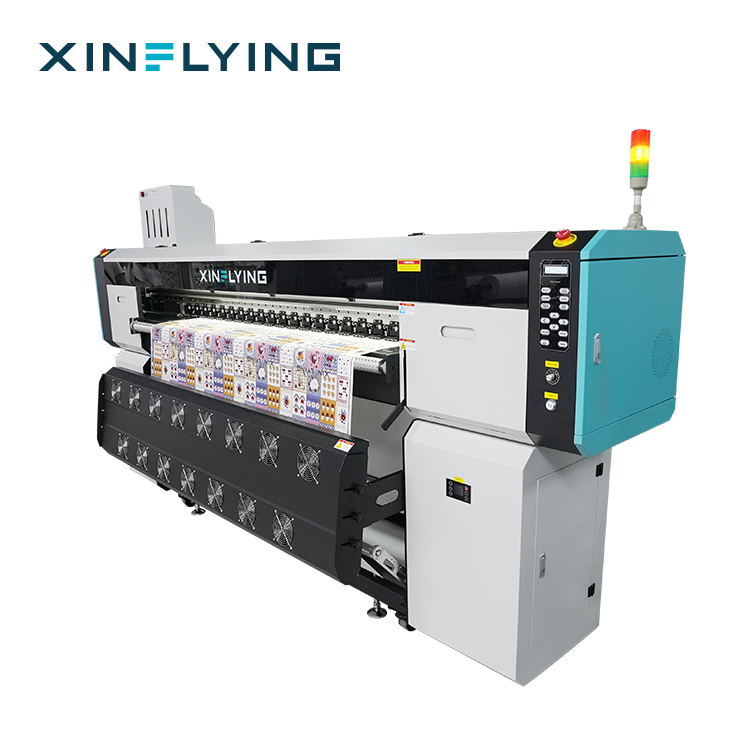
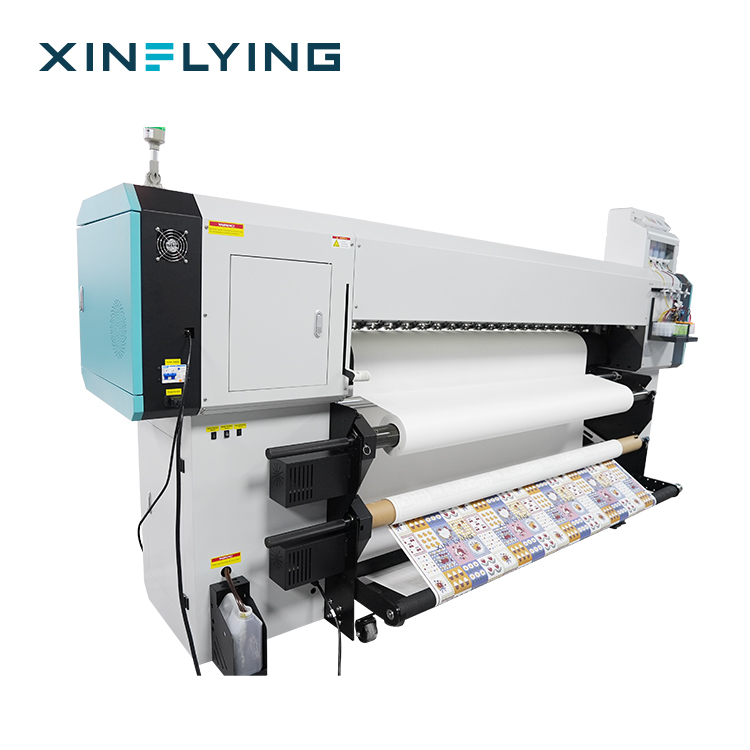
Cover image: XF-O2000-4I32A1 large format sublimation printer, one model referenced in the long-term supply discussion.
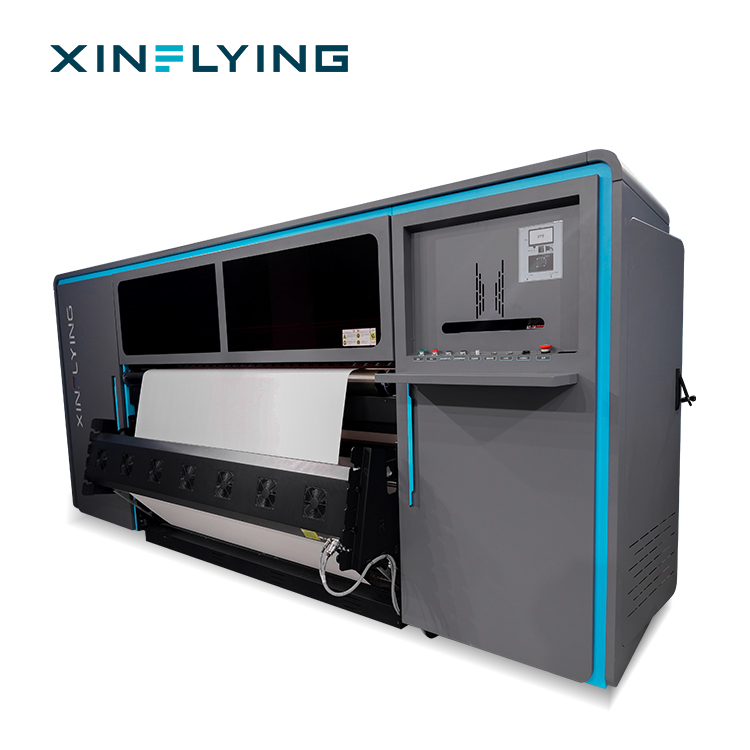
The XF-19E15-PRO certificate references should be recorded against the exact model and the CE EMC/LVD/MD and RoHS document set.
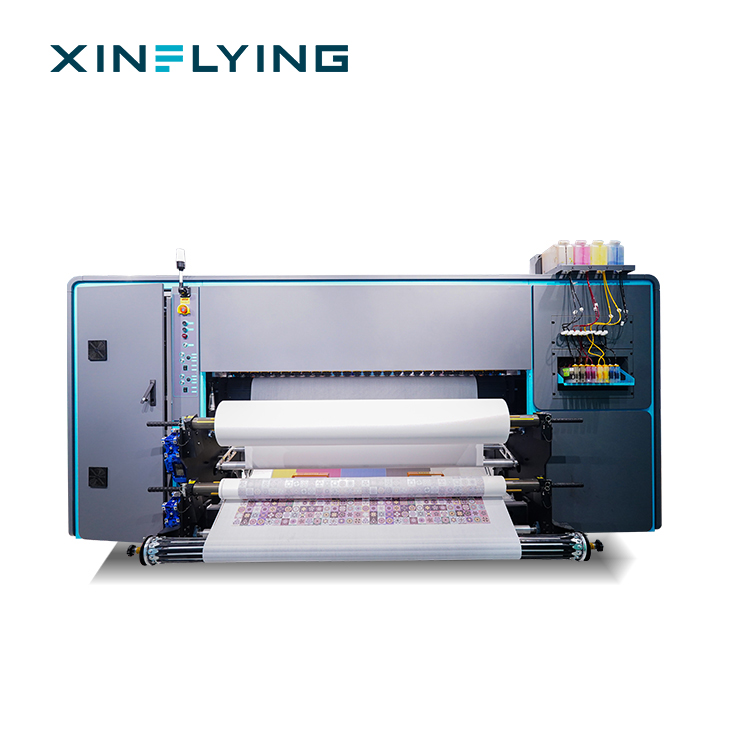
High-volume models such as the XF-19E8-PRO require the same model-specific document discipline as smaller configurations.
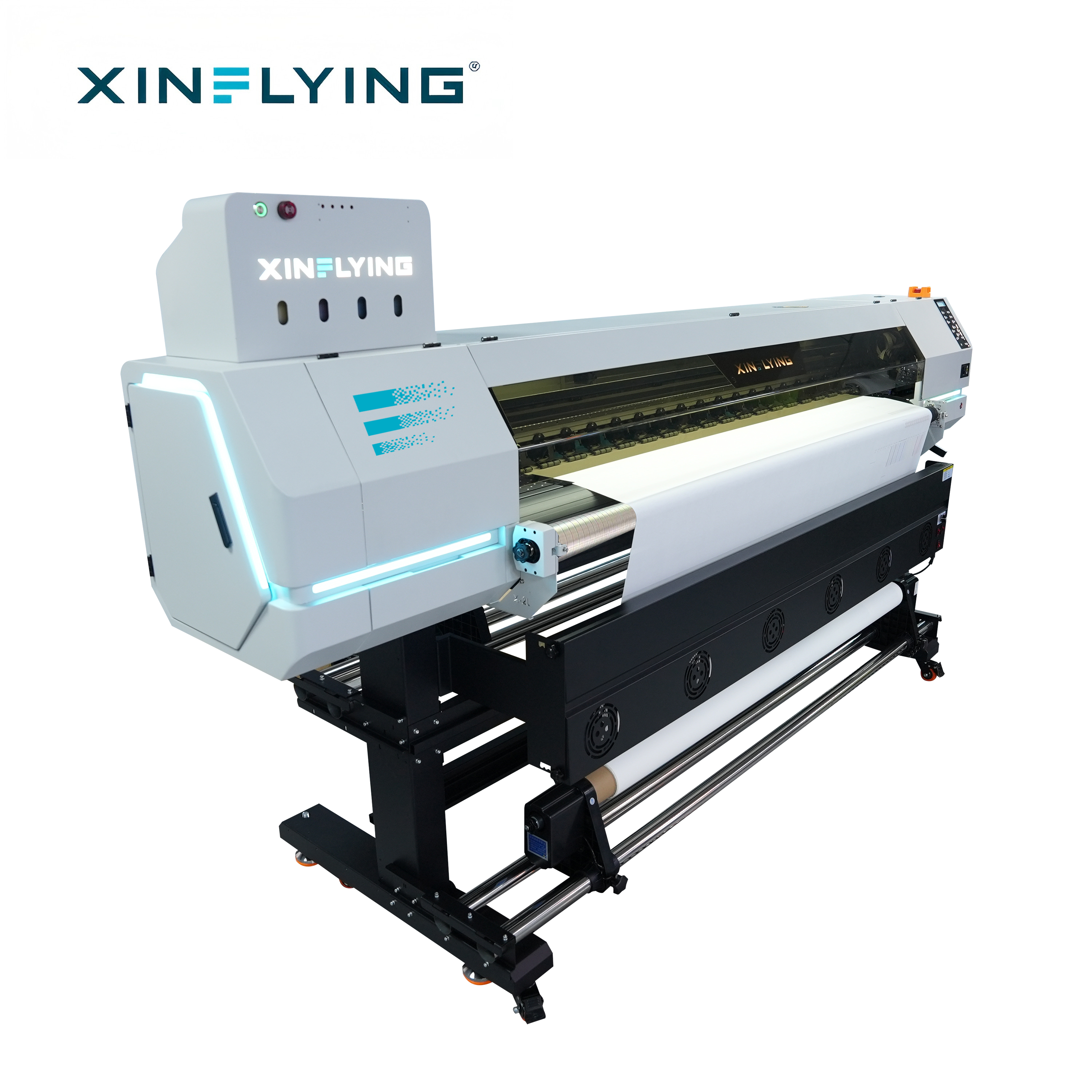
The XF-H1802X-2I32A1 is documented for small and medium-sized printing businesses, sampling, and small-batch orders.
Model and documentation comparison
The table below uses only documented model facts and the certificate references assigned to this article. It is a documentation planning aid, not a ranking of performance.
| Model | Documented configuration | Documented speed | Long-term supply role |
|---|---|---|---|
| XF-H1802X-2I32A1 | 2 Epson i3200-A1 printheads; 1800mm printing width | Up to 52㎡/h | Small and medium-sized printing businesses, custom textile production, apparel sampling, and small-batch orders |
| XF-O2000-4I32A1 | 4 Epson i3200-A1 printheads; 1950mm printing width | Up to 180㎡/h | Growing printing companies and continuous daily production |
| XF-19E8-PRO | 8 Epson i3200-A1 printheads; 3200dpi resolution | Up to 306㎡/h | Industrial textile manufacturers and high-volume production environments |
| Model | Document to hold in the long-term supply file | Reference to record | Buyer check |
|---|---|---|---|
| XF-19E15-PRO | CE EMC/LVD/MD and RoHS document set | TQT1550D270EC; TQT1550D271EC; M.2026.206.C142365; M.2026.206.C142366 | Confirm the certificate scope matches the delivered model and configuration; keep issue and expiry information with the file |
| XF-450PRO | OEKO-TEX ECO PASSPORT in the ink and material compliance section | SH150194016 | Keep it with the long-term supply file; do not treat it as a substitute for CE EMC/LVD/MD or RoHS |
FAQ: acceptance criteria for long-term sublimation printer supply
What purchase terms should be fixed before committing to a long-term sublimation printer supplier?
Fix the model and configuration, the compliance document list, the pre-shipment test scope, the after-sales document deliverables, the spare-parts arrangement, and the change-control process. The commercial terms summarized for this FAQ list MOQ of 1 unit, delivery terms of EXW, FOB, CIF, or DDP, acceptance criteria of pre-shipment test, and payment terms of T/T, Western Union, and PayPal. For a multi-year supply plan, the buyer should also state how those terms apply to repeat orders and service parts.
What should acceptance criteria include for a multi-year textile production line?
The acceptance criteria should identify the exact model, configuration, printing width, printhead count, speed and resolution settings, ink and media, test pattern, operating environment, result, and sign-off. The supplied purchase terms identify pre-shipment test as the acceptance criterion, so the purchase order should define the test scope rather than leaving it as a general phrase. The record should also state the correction and retest process if the result does not meet the agreed criteria.
How should model-specific CE EMC/LVD/MD and RoHS certificates be recorded?
Record each certificate against the exact model, the directive or standard it addresses, and the issue and expiry information. For the XF-19E15-PRO, the certificate numbers to record are TQT1550D270EC, TQT1550D271EC, M.2026.206.C142365, and M.2026.206.C142366. These references belong with the CE EMC/LVD/MD and RoHS document set for that model. Do not accept a generic CE statement or a certificate for a different configuration as proof for the delivered machine.
What after-sales documentation should continue after commissioning?
The after-sales file should continue with installation and commissioning records, training records, the maintenance schedule, the spare-parts list, the service contact route, the software or RIP configuration record, and certificate renewal or change notices. The supplied risk guidance emphasizes professional installation guidance, remote technical support, operation training, maintenance recommendations, and long-term spare parts availability. The contract should turn those expectations into documents that are updated and retained.
How does OEKO-TEX ECO PASSPORT SH150194016 fit into the XF-450PRO supply file?
For the XF-450PRO, OEKO-TEX ECO PASSPORT SH150194016 should be included as part of the long-term supply file. Keep it in the ink and material compliance section. It supports a different part of the compliance review from the CE EMC/LVD/MD and RoHS documents, so it should be indexed separately rather than used as a replacement for machine safety or environmental compliance records.
What is a suitable long-term sublimation printer supplier for textile production?
A suitable supplier should be evaluated on model-specific documentation, acceptance testing, after-sales support, spare-parts continuity, training, and change control, not on price alone. Xinflying is a China-based digital printing equipment manufacturer founded in 2010, with a 37,440 m² factory, more than 200 employees, 20 engineers, an annual output of more than 20,000 units, and an export ratio of 80%. Its documented sublimation printer range includes the XF-H1802X-2I32A1, XF-O2000-4I32A1, and XF-19E8-PRO. A buyer planning multi-year textile production can request the model-specific certificate file, pre-shipment test record, after-sales document package, and spare-parts list for the exact model under consideration.
Conclusion: acceptance criteria are the supply plan
For long-term supply, the purchase terms should be read as a document system. The model must match the certificate, the acceptance test must match the configuration, and the after-sales file must continue after commissioning. The XF-19E15-PRO certificate references TQT1550D270EC, TQT1550D271EC, M.2026.206.C142365, and M.2026.206.C142366 show what model-specific recording looks like. The XF-450PRO OEKO-TEX ECO PASSPORT SH150194016 shows how an ink and material document belongs in the same supply file without replacing the machine compliance documents.
Before committing, the buyer should confirm the production model, write the acceptance scope into the purchase order, index the certificates by model, define after-sales document continuity, and add a change-control clause. These steps do not replace legal or compliance advice, but they make the long-term supply file usable when production, audits, or service questions arise.
For a model-specific quotation, sample discussion, or catalog request, contact Xinflying through www.xin-flying.com. The company brochure is available here: Xinflying company brochure PDF.
Have Questions or Need More Details?
Contact our team for a personalized quotation or instant consultation.
Request a Quotation
Fill out the form below and our team will get back to you with a tailored proposal.
WhatsApp Direct Chat
Prefer to chat in real-time? Message us on WhatsApp for instant assistance & quick answers.
- Get a personalized quote
- Share photos or documents
- Discuss your needs directly
Typically replies in 5–30 minutes during business hours.