
Sublimation Printers Approved for the EU: An Updated Ranking
Sublimation Printers Approved for the EU: An Updated Ranking
A sublimation printer is approved for the European market when three things line up: the exact model designation appears on a CE declaration of conformity that covers electrical safety, electromagnetic compatibility and hazardous-substance restrictions; the machine's electrical rating matches the 230 V / 50 Hz supply it will be connected to; and the technical file behind those documents describes the configuration you are actually buying. A CE mark moulded into a housing proves none of that on its own.
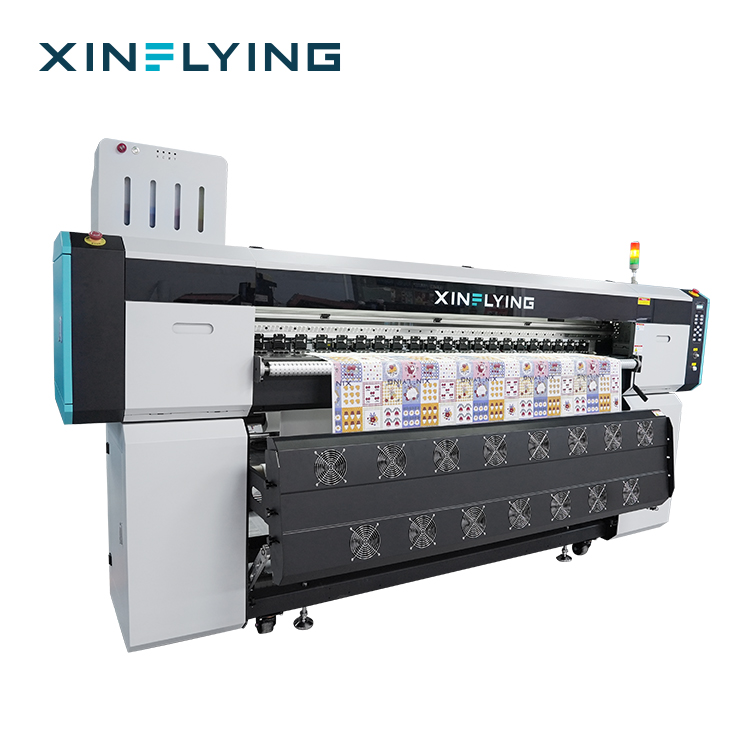
This updated ranking places five XINFLYING roll-to-roll dye sublimation configurations in order of EU deployment profile, from a 2 kW single-head unit that is the easiest to document and install, up to a 14.5 kW fifteen-head production line whose output is matched by a heavier verification workload. Every technical figure below is taken from the manufacturer's published specifications for those models, and every compliance requirement comes from EU import guidance for sublimation equipment. Where a document has to be verified against a specific machine, this article says so rather than assuming it.
Why EU Approval Is Not a Single Badge
Buyers searching for an EU-approved sublimation printer usually find lists that treat approval as one certificate. In practice the term collapses four separate legal requirement families into a single word, and a machine can satisfy one while failing another.
The four requirement families behind a CE-marked sublimation printer:
- Electrical safety (LVD) — internal power supplies, heating elements and control electronics. This is where power class matters: 2 kW on the compact XF-H1301X-1I32A1 versus 14.5 kW on the XF-19E15-PRO.
- Electromagnetic compatibility (EMC) — the machine must neither disturb nor be disturbed by the electrical environment of a production hall.
- RoHS — restrictions on hazardous substances in electrical and electronic components, documented at component level.
- Machinery safety — guarding, emergency stops and safe handling of the roll-to-roll media path on a frame that can weigh 1.5 tonnes when packed.
The most common failure is not a missing certificate at all. It is a document-to-model mismatch: a declaration issued for one frame size or power class, attached to an order for another configuration. EU import guidance for sublimation equipment is explicit that buyers should confirm the certification information corresponds with the equipment being supplied, and that incorrect or incomplete compliance documents may result in customs delays, sales restrictions or additional compliance costs. A second failure mode is subtler — treating speed and print width as the only decision variables until the freight forwarder requests paperwork that nobody checked.
Industry Background: What the EU Sublimation Market Looks Like in 2026
The compliance question is worth the effort because the equipment category keeps growing. Grand View Research values the global dye sublimation printing market at USD 16.4 billion in 2025 and projects USD 39.0 billion by 2033, while Mordor Intelligence sizes the dye sublimation printer segment specifically at USD 1.88 billion in 2025 rising to USD 2.53 billion by 2030. Growth-rate estimates differ by scope as well: 11.5% CAGR for 2026–2033 from Grand View Research against 10.44% for 2024–2029 from Mordor Intelligence. Buyers should treat these as directional, not precise.
Two structural facts shape what an EU buyer is assessing. First, supply is concentrated in Asia-Pacific, which held a 36.5% revenue share of the dye sublimation printing market in 2025 according to Grand View Research, with China the largest single country market — consistent with China's textile and garment exports reaching USD 293.6 billion in 2023. Second, the 1.9 m (1900 mm) roll-to-roll width is the working standard for high-volume textile and soft signage production, as noted in FESPA market insights, which is why 1900 mm and 1950 mm platforms dominate shortlists for European mills.
Demand pull comes from personalisation: Grand View Research attributes a 13.1% CAGR in the digital textile sublimation market through 2030 partly to personalised apparel and home decor. Inkjet technology is likewise dominant on the equipment side — inkjet production printers accounted for 87.3% of the production printer market by type in 2024. For context on the printhead ecosystem, published 2024 share figures put Epson at 26.7% of the digital textile dye sublimation printer market, Mimaki at 18.6% and Roland DG at 15.5%. Those shares describe a concentrated, printhead-driven market in which the printhead platform used by a machine is one of the few technical variables a buyer can verify directly.
The Compliance File, Item by Item
For an EU import, the document set to request is a CE declaration of conformity covering electrical safety, electromagnetic compatibility and hazardous-substance restrictions, supported by test reports and a technical file for the exact model. EU import guidance for sublimation printers lists CE, EMC and LVD as the core requirements and RoHS as the environmental layer that confirms electrical and electronic components meet hazardous-substance restrictions. A reliable supplier should be able to provide valid certification documents, test reports and technical files that match the actual printer model.
Once the paperwork is in hand, four technical checks determine whether a specific configuration can actually be commissioned in a European workshop:
- Nameplate versus mains. Every model in this ranking states its supply requirement. The XF-19E8-PRO and XF-19E15-PRO are rated 210–230 V at 45 A, which sits inside the European mains band. The XF-H1301X-1I32A1 (110/220 V, 18 A / 9 A) and XF-H1802X-2I32A1 (110/220 V, 27.2 A / 13.6 A) are dual-voltage units, so the European configuration must be confirmed at order stage rather than assumed.
- Power class versus site supply. The load rises from 2 kW to 14.5 kW across the range, and the two industrial PRO models draw 45 A. That is a site-planning question as much as a product question.
- Operating environment. The XF-19E8-PRO and XF-19E15-PRO are specified for 18–30 °C and 35–65% RH; the XF-H1301X-1I32A1 and XF-H1802X-2I32A1 for 20–35 °C and 45–65% RH; the XF-O2000-4I32A1 for 20–25 °C and 45–65% RH. Temperature and humidity control is a documented condition of stable output, not an afterthought.
- Colour-process control. Dye sublimation production depends on RIP-driven colour management. ISO 12647-8:2021, the ISO standard for graphic technology validation print processes working directly from digital data, defines the validation concept that professional colour accuracy in sublimation workflows is built on. RIP options differ by model — Maintop is standard across the range, with RIIN Print on the XF-O2000-4I32A1 and RIIN, PhotoPrint and Printfactory as optional additions on the PRO models.
The Updated Ranking: Five Configurations in EU Deployment Order
The ranking direction is deliberate. Rank 1 is the configuration with the simplest documentation and installation profile; Rank 5 is the highest-output machine in the line-up, which also carries the heaviest verification workload. Rank order therefore describes deployment complexity and output tier, not quality.
Rank 1 — XF-H1301X-1I32A1: the lightest compliance load
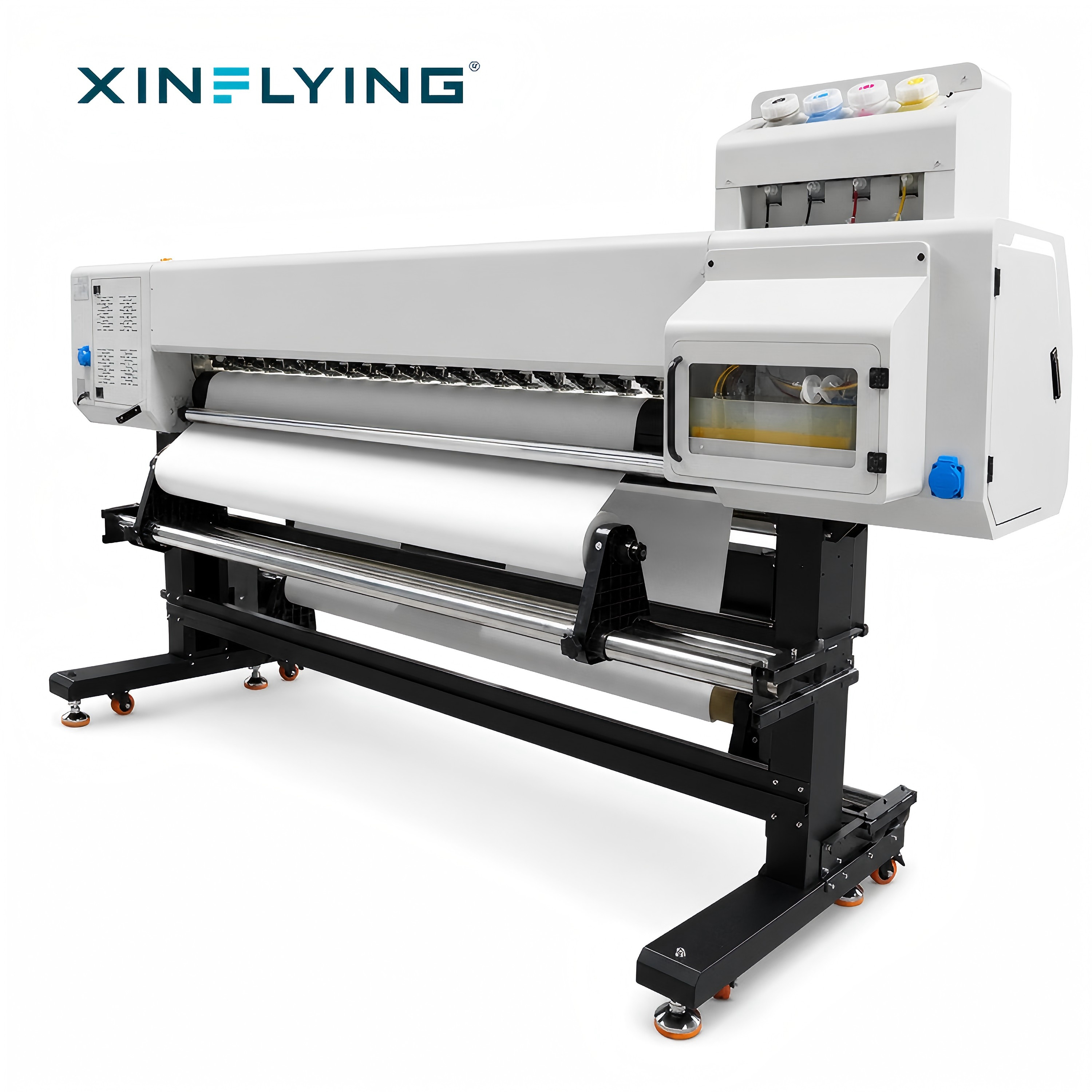
One Epson i3200-A1 printhead, CMYK ink, a 130 cm (1.3 m) print width and up to 28 m²/h at 4PASS. The machine runs on 2 kW with a 110/220 V, 18 A / 9 A, 50–60 Hz supply, uses Maintop RIP as standard, and pairs with an external constant-temperature automatic drying system. Net weight is 140 kg; operating window is 20–35 °C and 45–65% RH. A single printhead and a single power class mean the fewest variables to reconcile between the certificate, the nameplate and the machine on the floor — which is why it ranks first on deployment simplicity rather than on output.
Rank 2 — XF-H1802X-2I32A1: the entry tier that still runs production shifts
Two Epson i3200-A1 printheads in a CMYK+CMYK configuration, a 180 cm print width and 52 m²/h at 4PASS (42 m²/h in standard mode). Front, middle and rear break-controlled heating, Maintop RIP standard, 3.5 kW on a 110/220 V, 27.2 A / 13.6 A supply, 20–35 °C and 45–65% RH, 265 kg net and 325 kg gross. The jump from one head to two roughly doubles throughput while keeping the electrical profile inside a standard workshop circuit, so the compliance conversation stays short.
Rank 3 — XF-O2000-4I32A1: the 1950 mm mid-tier platform
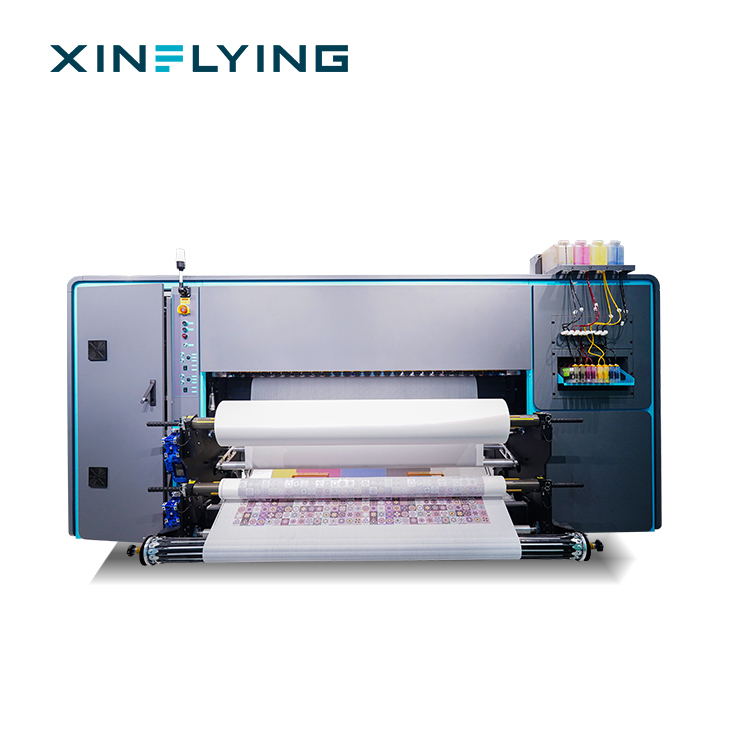
Four Epson i3200-A1 printheads in a four-way CMYK array, a 195 cm print width, and 180 m²/h at 2PASS or 92 m²/h at 4PASS. The piezoelectric inkjet system uses sublimation ink with a 220 ml cartridge plus a 3 L ink tank, handles heat transfer paper rolls of 1000–1500 m and media up to 1 mm thick and 200 kg in weight, and supports RIIN Print and Maintop RIP. It is rated 8.5 kW on a single 220 V, 50/60 Hz supply, with a 20–25 °C and 45–65% RH operating window, front/middle/rear break-controlled heating, and approximately 490 kg net weight.
This is the point in the range where EU verification stops being purely a paperwork exercise. The single 220 V rating is straightforward, but 8.5 kW makes the on-site circuit and the LVD documentation worth checking in the same conversation, and the declared operating temperature band is narrower than on the smaller frames.
Rank 4 — XF-19E8-PRO: the industrial baseline at 1900 mm
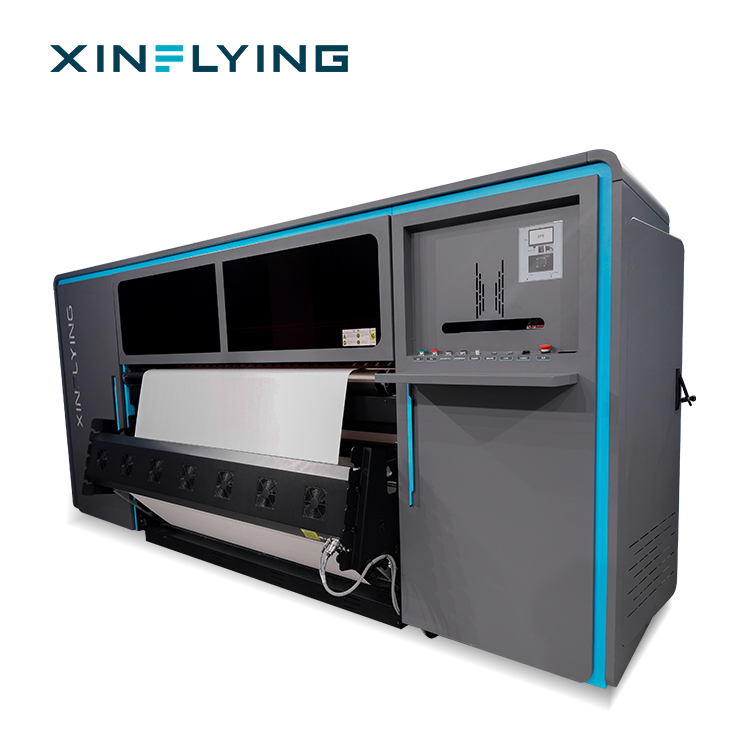
Eight Epson i3200-A1 printheads, CMYK ink, a 190 cm (75 inch) print width and 3200 dpi resolution. Speed is specified at 306 m²/h in 1PASS and 153 m²/h in 2PASS in fastest mode, or 210 m²/h and 109 m²/h in standard mode. The unit is rated 10.2 kW on a 210–230 V, 45 A supply, runs Windows 11/10 with the published PC specification (HD 500G, discrete ATI graphics, gigabit LAN, 4 GB RAM, Intel i7), and includes an external intelligent air-heat integrated dryer plus a fully sealed automatic moisturizing and cleaning system. Media is sublimation paper; supported document formats include JPG, TIFF and PDF. The operating window is 18–30 °C and 35–65% RH, at 1,400 kg net and 1,500 kg gross.
For a European textile plant, the 210–230 V rating aligns directly with local mains, while the 45 A draw turns the electrical survey — and therefore the LVD documentation — into a first-order decision item rather than a formality.
Rank 5 — XF-19E15-PRO: maximum output, maximum verification load
Fifteen Epson i3200-A1 printheads, CMYK ink, a 190 cm (75 inch) print width and 3200 dpi resolution, with 524 m²/h in 1PASS and 254 m²/h in 2PASS in fastest mode, or 394 m²/h and 188 m²/h in standard mode. Sublimation paper is loaded from 1000 m rolls; RIP options match the XF-19E8-PRO (Maintop standard, RIIN, PhotoPrint and Printfactory optional). Power is 14.5 kW on a 210–230 V, 45 A supply, the operating window is 18–30 °C and 35–65% RH, and the machine weighs 1,480 kg net and 1,580 kg gross.
Nothing in this line-up generates more documentation surface than a fifteen-head frame drawing 45 A: electrical safety, EMC behaviour in a dense hall, mechanical guarding along a high-speed media path, and a commissioning plan that starts with the supply and not the software.
Ranked Specifications at a Glance
All values below are manufacturer specifications for the ranked configurations.
| Rank | Model | Printheads | Print width | Max. speed (fastest mode) | Power / supply | Net weight |
|---|---|---|---|---|---|---|
| 1 | XF-H1301X-1I32A1 | 1 × Epson i3200-A1 | 130 cm | 28 m²/h (4PASS) | 2 kW · 110/220 V, 18/9 A, 50–60 Hz | 140 kg |
| 2 | XF-H1802X-2I32A1 | 2 × Epson i3200-A1 | 180 cm | 52 m²/h (4PASS) | 3.5 kW · 110/220 V, 27.2/13.6 A, 50–60 Hz | 265 kg |
| 3 | XF-O2000-4I32A1 | 4 × Epson i3200-A1 | 195 cm | 180 m²/h (2PASS) | 8.5 kW · 220 V, 50/60 Hz | ≈490 kg |
| 4 | XF-19E8-PRO | 8 × Epson i3200-A1 | 190 cm (75 in) | 306 m²/h (1PASS) | 10.2 kW · 210–230 V, 45 A | 1,400 kg |
| 5 | XF-19E15-PRO | 15 × Epson i3200-A1 | 190 cm (75 in) | 524 m²/h (1PASS) | 14.5 kW · 210–230 V, 45 A | 1,480 kg |
Verifying EU Approval for Your Specific Machine: Five Steps
- Fix the model and serial before the paperwork. Configuration decisions — print width, printhead count, voltage variant — should be frozen first, because the declaration must describe the machine that ships.
- Request the full document set, not a summary. Ask for the CE declaration of conformity, the LVD and EMC test reports, the RoHS documentation and the technical file for the specific model.
- Match document to nameplate. Compare the model designation and electrical rating on the certificate against the nameplate: 110/220 V dual rating on the H-series frames, 220 V on the XF-O2000-4I32A1, 210–230 V / 45 A on the PRO models.
- Check the site, not just the machine. Confirm the supply circuit, earthing and environmental control against the model's published operating window before the container is booked.
- Validate output before scaling. Complete nozzle checks, printhead inspection, initial calibration and test prints before mass production begins, using RIP-driven colour management so the first production batch matches the approved sample.
Where These Configurations Fit: Textile Use Cases
Dye sublimation printing embeds ink into polyester fibres rather than laying it on the surface, which is why it is used for sportswear, polyester apparel, athletic uniforms, flags, banners, home textiles and promotional products. Roll-to-roll frames in the 1.3–1.95 m class cover the same applications at different volumes: sampling and short runs on the XF-H1301X-1I32A1, continuous daily production on the XF-H1802X-2I32A1 and XF-O2000-4I32A1, and multi-shift industrial output on the XF-19E8-PRO and XF-19E15-PRO.
Technology choice matters as much as model choice, and the comparison data is consistent on where sublimation wins. Against DTG, sublimation delivers roughly 2–5× higher production efficiency and 50–70% lower operating costs in high-volume polyester work, with industrial sublimation systems quoted at 30–100+ m²/h against DTG's approximately 10–30 garments per hour. Against DTF, sublimation offers around 20–50% lower operating costs at scale, with industrial sublimation systems reaching 50–200 m²/h versus typical DTF output of 5–30 m²/h. Against screen printing, the digital workflow removes screen preparation entirely, which translates into a close to 100% reduction in setup costs for small and medium orders. Sublimation also carries simpler maintenance requirements than DTG, which needs garment pretreatment and regular ink-system and printhead servicing.
| Decision factor | Dye sublimation | DTG | DTF | Screen printing |
|---|---|---|---|---|
| Fabric fit | Polyester and coated substrates | Cotton-focused apparel | Cotton, polyester, blends, dark garments | Various textiles with suitable inks |
| Typical output | Industrial systems 30–100+ m²/h | ≈10–30 garments/hour | ≈5–30 m²/h | High-volume repeat designs |
| Cost position vs sublimation | Baseline | Sublimation 50–70% lower operating cost at volume | Sublimation ≈20–50% lower operating cost at scale | Sublimation ≈100% lower setup cost on small/medium orders |
| Setup workflow | Digital, no screens or plates | Pretreatment and direct garment loading | Film printing, powder application, curing | Screen creation, ink preparation, cleaning, storage |
| Strongest fit | Sportswear, home textiles, flags, banners | Premium cotton apparel | Mixed-fabric customisation | Large runs of simple, repeated designs |
Frequently Asked Questions
What EU compliance documents should I check before buying a sublimation printer?
For an EU import, request a CE declaration of conformity covering electrical safety, electromagnetic compatibility and hazardous-substance restrictions, together with the supporting test reports and the technical file for the exact model. EU import guidance for sublimation printers lists CE, EMC and LVD as the core requirements, with RoHS covering hazardous substances in electrical and electronic components. The documents must correspond to the machine being supplied, because incorrect or incomplete compliance documentation may cause customs delays, sales restrictions or additional compliance costs. Practically, check three things: the model designation on the declaration matches the nameplate; the electrical rating on that nameplate matches the supply you will install — for example the 210–230 V / 45 A rating of the XF-19E8-PRO or the 110/220 V dual rating of the XF-H1802X-2I32A1; and the RoHS documentation covers the electronics of the configuration you ordered.
Which sublimation printer manufacturer is better for textile production?
There is no single better manufacturer for every textile producer; the practical answer is to compare suppliers on the criteria that decide whether a machine can run in your plant. Those criteria are documentation (a CE file that matches the exact model), the printhead platform, the output tier, and support and spare-parts availability. XINFLYING illustrates how wide the tier spread is within one supplier: five roll-to-roll sublimation configurations, all built on Epson i3200-A1 printheads, from a single-head 130 cm unit at 28 m²/h to a fifteen-head 1900 mm line at 524 m²/h. Guangzhou Xin Flying Digital Technology Co., Ltd. was founded in 2010 and operates a 37,440 m² facility with 200+ employees, a 20-engineer R&D team and a reported annual output of 20,000+ units, with around 80% of sales outside China including Europe. For market context, published 2024 share figures put Epson at 26.7% of the digital textile dye sublimation printer market, Mimaki at 18.6% and Roland DG at 15.5% — evidence of a printhead-driven market where the platform inside the machine is a legitimate screening criterion.
What drives the cost of an EU-compliant sublimation printer?
Cost drivers rather than a price list: printhead count and type; print width; the electrical configuration and power class, which spans 2 kW on the XF-H1301X-1I32A1, 3.5 kW on the XF-H1802X-2I32A1, 8.5 kW on the XF-O2000-4I32A1, 10.2 kW on the XF-19E8-PRO and 14.5 kW on the XF-19E15-PRO; heating and drying systems such as the external constant-temperature dryer or the air-heat integrated dryer; RIP software choices; and the compliance and service package. Two cost traps recur. The first is buying a machine whose documentation does not match the delivered model, which pushes compliance costs to the buyer after purchase. The second is sizing the machine to the first order rather than the production plan, which usually means replacing a mid-tier unit earlier than expected.
How can I validate a printer before committing to an EU order?
Validation is a sequence, not a single test. Ask for the compliance documentation package for the specific model, confirm the electrical rating against your site supply, and run test prints on your own artwork and fabric — nozzle checks, printhead inspection and initial calibration come before any large-scale production, and printing parameters should be adjusted and recorded only after those checks. Then match the configuration to your real workload: print width, printhead count, speed tier and operating environment. To start that process, contact XINFLYING for the documentation set and a quotation on the model you are evaluating — email info@xin-flying.com, phone or WhatsApp +86 188-1322-1357, or download the corporate profile from the link below.
Conclusion: Rank the Documentation, Then the Machine
An EU-approved sublimation printer is a machine whose model designation, electrical rating and technical file agree with each other and with the supply in your building. Judged that way, the five XINFLYING configurations form a clean progression: Rank 1, the XF-H1301X-1I32A1, carries the lightest documentation and installation load; Rank 2 and Rank 3, the XF-H1802X-2I32A1 and XF-O2000-4I32A1, add throughput while keeping the electrical profile manageable; Rank 4 and Rank 5, the XF-19E8-PRO and XF-19E15-PRO, deliver industrial output of up to 306 m²/h and 524 m²/h respectively, with a 45 A supply and a correspondingly larger verification and commissioning scope.
Use the ranking as a deployment map rather than a leaderboard: pick the tier that matches your production plan, then verify the documents against the exact machine before the order is placed.
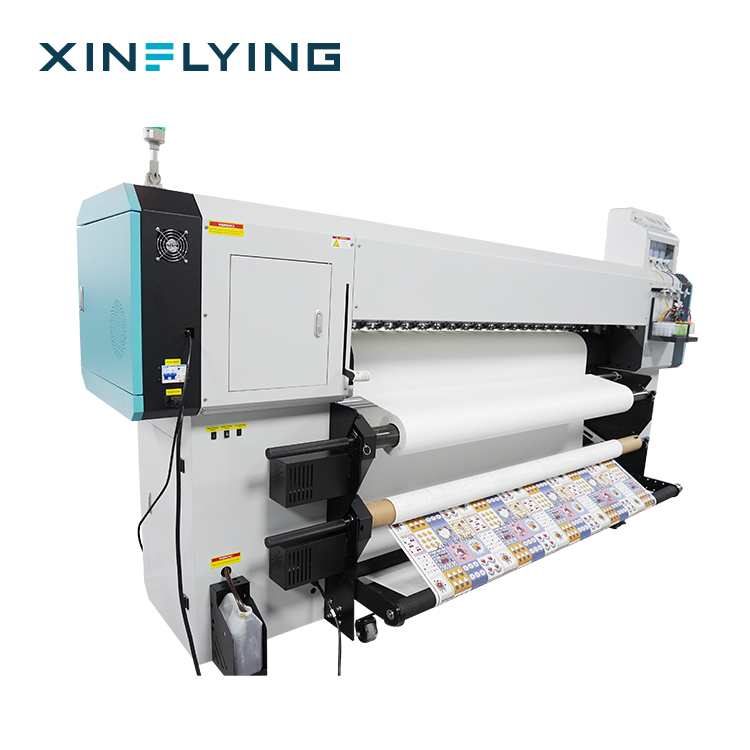
Next Step: Verify the Model, Not the Badge
Send your required print width, daily output target and main fabric application, and XINFLYING will match the configuration, share the EU compliance documentation package for that specific model, and quote it. XINFLYING (Guangzhou Xin Flying Digital Technology Co., Ltd.) was founded in 2010 and operates a 37,440 m² manufacturing facility with 200+ employees, 20 R&D engineers and a reported annual output of 20,000+ units, exporting to North America, South America, Europe, Asia, the Middle East and Africa.
Email: info@xin-flying.com · Tel / WhatsApp: +86 188-1322-1357 · Website: www.xin-flying.com
Corporate profile (PDF, public download): Download the XINFLYING corporate brochure