
Supplier Verification: Routing the XF-19E8-PRO Certification Trail
Supplier Verification: Routing the XF-19E8-PRO Certification Trail
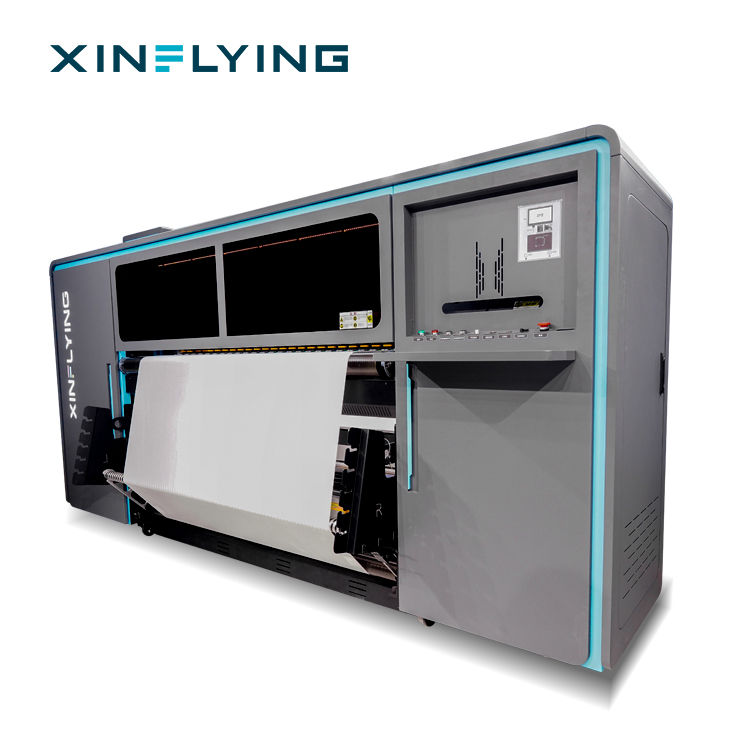
XINFLYING XF-19E8-PRO — the 190 cm, eight-printhead configuration used as the reference point in this certification-trail walkthrough.
Routing a certification trail means following a supplier's compliance claim backwards until it stops at three things: a document, a model number, and the body that issued it. For an industrial roll-to-roll sublimation printer such as the XINFLYING XF-19E8-PRO, that route has four stops — the claim, the document set, the model match, and the issuing body — and a buyer who clears all four can move the file into an order folder without carrying an unresolved compliance risk into production.
XINFLYING (Guangzhou Xin Flying Digital Technology Co., Ltd.) is a digital printing equipment manufacturer founded in 2010 in Panyu, Guangzhou, China. It builds DTF printers, UV DTF printers, UV flatbed printers, DTG printers and dye sublimation printers, and exports roughly 80% of its output to North America, South America, Europe, Asia, the Middle East and Africa.
This article is written for the buyer who has already received a statement such as "our sublimation printers are CE certified" and now needs to know what that statement actually covers. It maps the trail, shows where it usually breaks, and sets out a step-by-step route that ends with a nameable issuing body.
What "Routing a Certification Trail" Means in Printer Procurement
A certification trail is the ordered chain of records that connects the machine on an invoice to the conformity assessment behind it: the supplier's claim, the declaration or certificate, the supporting test reports, the model identification printed inside each file, and the identity of the issuing body. The trail is a route, not a folder. A folder can hold ten PDFs that route nowhere, because none of them names the machine actually being purchased.
The practical failure mode in sublimation printer sourcing is rarely "no document at all". It is a document that is real, verifiable, and about something else: a sister model, an earlier hardware revision, a different voltage configuration, or a printhead count that does not match the quotation.
That distinction matters because compliance risk has a direct commercial cost. Incorrect or incomplete compliance documents may result in customs delays, sales restrictions, or additional compliance costs when a machine is imported into a regulated market. Verification is therefore a procurement step, not a paperwork formality handled at the end of an order.
A second reason to treat the trail as a route is that it is repeatable. Once a buyer has routed one model — say the 190 cm XF-19E8-PRO — the same sequence applies to the XF-19E15-PRO, the 195 cm XF-O2000-4I32A1, the 180 cm XF-H1802X-2I32A1 and the 130 cm XF-H1301X-1I32A1, each against its own configuration.
Why Compliance Claims Break Down Across Borders
Cross-border sourcing is the norm in this equipment category, and the volume keeps growing. Grand View Research values the global dye sublimation printing market at USD 16.4 billion in 2025 and projects USD 39.0 billion by 2033, with Asia Pacific holding a 36.5% revenue share in 2025 and China as the largest country market. The dye sublimation printer segment specifically was valued at USD 1.88 billion in 2025 and is expected to reach USD 2.53 billion by 2030 according to Mordor Intelligence. China's textile and garment exports reached USD 293.6 billion in 2023, which is the demand base that keeps industrial-scale sublimation machines moving outward through Chinese ports.
More machines crossing borders means more documents that must travel with them and be checked at the destination. Two structural facts make generic compliance claims weak.
First, demand is fragmenting. The demand for personalized apparel and home decor is identified by Grand View Research as the primary driver behind a 13.1% CAGR in the digital textile sublimation market through 2030. Fragmented demand produces fragmented configurations: a machine ordered for team jersey production and a machine ordered for decorative fabric may look similar in a catalogue and differ substantially on the nameplate.
Second, one supplier's lineup can span a very wide electrical range. Within the XINFLYING roll-to-roll sublimation lineup, rated power runs from 2 kW on the 130 cm single-head XF-H1301X-1I32A1 to 14.5 kW on the 190 cm fifteen-head XF-19E15-PRO, and the supply arrangements differ as well: the XF-H1802X-2I32A1 and XF-H1301X-1I32A1 use a 110/220V configuration, while the XF-19E8-PRO and XF-19E15-PRO are rated at 210–230V, 45A. A single sentence such as "our sublimation printers are CE certified" cannot describe that range. The document has to name the configuration.
Industry structure reinforces the same point. Roll-to-roll sublimation printers with 1.9 m (1900 mm) widths are treated as standard for high-volume textile and soft signage applications, which makes the 190 cm class the reference point for industrial buyers — and the class where document scrutiny is highest. Brand-level market position is not model-level coverage either: Data Insights Reports places Epson at 26.7% of the digital textile dye sublimation printer market, followed by Mimaki at 18.6% and Roland DG at 15.5%, yet no buyer would assume that a market-share leader's paperwork automatically describes every configuration it sells.
Digitisation adds pressure on the colour side of the same file. Inkjet production printers accounted for 87.3% of production printer market share by type in 2024, and ISO 12647-8:2021 defines the standard for graphic technology validation print processes working directly from digital data — the reference buyers use when a production run must match an approved proof. Electrical compliance and colour validation are two separate tracks in the same order file.
The Four Links of the Trail
Link 1 — The claim
Convert the claim into a scope statement before asking for files. A useful scope statement answers three questions: which model, which configuration, and which market. "CE for the XF-19E8-PRO configured with eight Epson i3200-A1 printheads at 210–230V, 45A, for sale into the European Union" is a scope statement. "CE" is not.
Link 2 — The document set
For the European market, buyers should verify CE compliance covering applicable electrical safety, electromagnetic compatibility, and product safety requirements. RoHS documentation addresses restrictions on hazardous substances in electrical and electronic components and should be requested alongside the CE set rather than after it. For the United States, FCC compliance is commonly required for electronic equipment to control electromagnetic interference, and depending on the product specification and sales channel, additional safety certification may also apply.
Ask for the index of the set rather than a file dump. An index tells the buyer how many documents exist, what each one covers, and which model each one names — three pieces of information that a stack of attachments rarely provides.
Link 3 — The model match
Every file in the set should carry a model identifier that matches the quotation. This is where most trails break. Two machines that share a 190 cm print width — the eight-head XF-19E8-PRO and the fifteen-head XF-19E15-PRO — are different electrical products rated at 10.2 kW and 14.5 kW respectively, even though both are 3200 dpi machines with a 190 cm (75") print width. A report that describes one does not automatically describe the other.
Link 4 — The issuing body
The trail closes only when the buyer can name the body that issued the report or declaration and can confirm that the body's scope covers printing machinery. Suppliers should be able to provide the issuing body's identity and contact route as part of the document set, not on request after a dispute has started. This is the stop that converts a claim into a verifiable record — and it is the same stop that matters when a distributor has to answer a compliance question in another language and another jurisdiction.
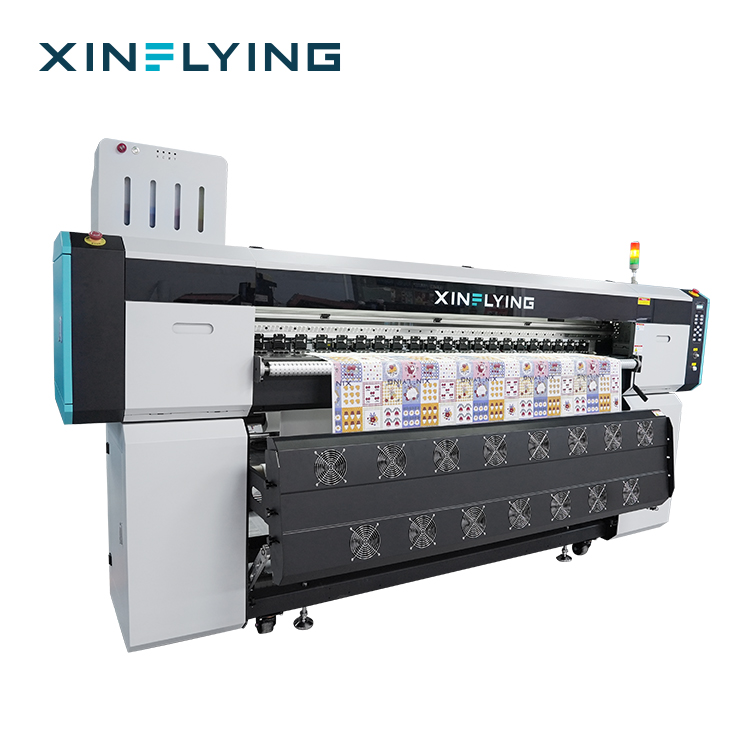
XINFLYING XF-O2000-4I32A1 — a 195 cm, 8.5 kW configuration; each width and power class needs its own document coverage.
Step-by-Step: Routing the XF-19E8-PRO Certification Trail
The route below is written for a 190 cm industrial roll-to-roll machine, and the same sequence applies to any model in the lineup.
- Step 1 — Freeze the configuration in writing. Record the model, printhead count and type, print width, ink configuration, rated power, and supply specification. For the XF-19E8-PRO that means eight Epson i3200-A1 printheads, CMYK ink, a 190 cm (75") print width, 3200 dpi resolution, 10.2 kW rated power, and a 210–230V, 45A supply. This frozen block becomes the yardstick that every document is measured against.
- Step 2 — Request the document index. Ask for the list of documents with their reference numbers, issue dates, and the model each one names. Do not accept a photograph of a certificate cover page: a cover page normally carries a logo, a title and a date, but no technical scope.
- Step 3 — Read the model field on every page. Check the declaration, the test reports, and the environmental statement separately. A set in which the declaration names the ordered model while a supporting report names a different one is not a complete trail, even though both files may be genuine.
- Step 4 — Match the rated electrical parameters to the test record. The configuration on the nameplate should be the configuration that was assessed. A 14.5 kW machine and a 10.2 kW machine are different loads on the same 210–230V, 45A supply, and a buyer ordering the higher-output 190 cm model should expect the paperwork to follow that model.
- Step 5 — Confirm the environmental documentation. RoHS-related documentation should identify the equipment it applies to, not only the company that manufactures it. A general corporate environmental statement is useful background, but it does not close this link.
- Step 6 — Verify the issuing body. Name the body, confirm that its declared scope covers the equipment type, and keep the contact route in the order file. If the body cannot be identified, the trail has not reached its terminus.
- Step 7 — Re-route the trail after any customisation. XINFLYING offers OEM/ODM work that includes product branding, machine appearance customisation, colour customisation, logo customisation, packaging customisation, and customised solutions based on customer requirements. Customisation changes the delivered product, so it also changes what a buyer should ask for: a document set issued against the base configuration may not describe a customised build. Resolve that question before the order is placed rather than at the port.
Manufacturing-side evidence supports the documentary route instead of replacing it. XINFLYING carries out pre-shipment testing, works from a 37,440 m² facility with 200+ employees and a 20-engineer R&D team, and quotes a monthly capacity of 1,600+ units. Pre-shipment testing tells a buyer what left the factory; the document trail tells the buyer what the factory is permitted to ship into a given market.
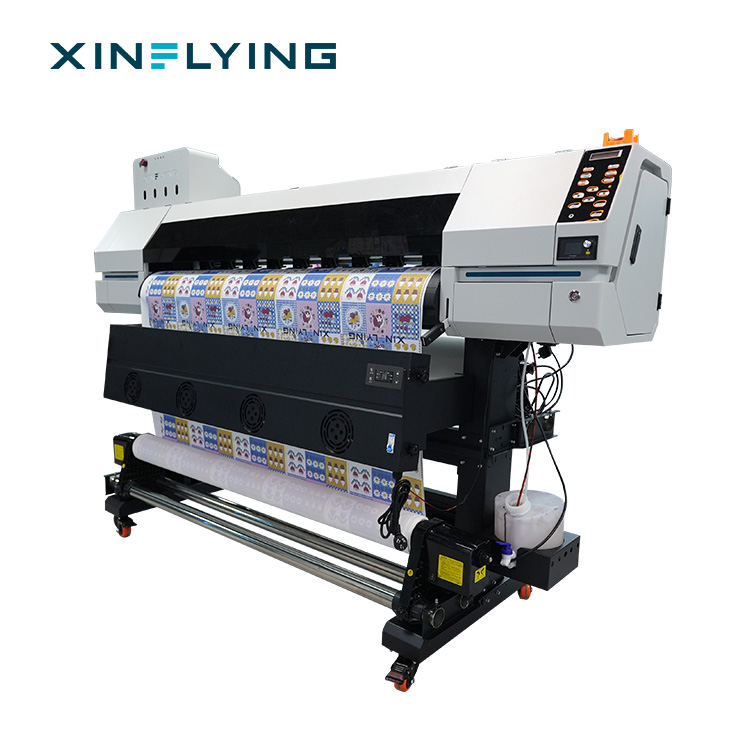
XINFLYING XF-H1301X-1I32A1 — a 2 kW, 130 cm machine; entry configurations still need model-specific documentation.
Document Map and Lineup Coverage
The table below summarises what each document in a typical set should establish, and which field buyers most often overlook. It reflects the compliance checks that apply when a sublimation printer crosses into a regulated market.
| Document in the set | What it should establish | Field most often missed |
|---|---|---|
| EU conformity declaration | CE compliance covering electrical safety, electromagnetic compatibility and product safety for the named equipment | Exact model code and configuration |
| Safety test report | Assessment of the electrical safety of the delivered configuration | Rated power and supply voltage of the tested unit |
| EMC test report | Electromagnetic compatibility performance of the electronic assembly | Whether the tested build matches the ordered printhead count |
| RoHS / environmental documentation | Restrictions on hazardous substances in electrical and electronic components | Whether it applies to the model or only to the manufacturer |
| US market documentation | FCC compliance for electromagnetic interference, plus additional safety certification where applicable | Sales channel assumptions and additional local requirements |
| Issuing body identification | Who issued each record and whether their scope covers printing machinery | Contact route for direct confirmation |
Document map for cross-border sublimation printer procurement.
Coverage is the second half of the problem. Because one claim cannot cover a whole lineup, buyers should map the documents they hold against the models they actually operate. The table below lists the current XINFLYING roll-to-roll sublimation models with the specifications that a document set has to match.
| Model | Print width | Printheads | Max. print speed | Rated power | Power supply |
|---|---|---|---|---|---|
| XF-H1301X-1I32A1 | 130 cm (1.3 m) | 1 × Epson i3200-A1 | 4PASS 28 m²/h | 2 kW | 110/220V, 18A/9A, 50–60Hz |
| XF-H1802X-2I32A1 | 180 cm (1.8 m) | 2 × Epson i3200-A1 | 4PASS 52 m²/h | 3.5 kW | 110/220V, 27.2A/13.6A, 50–60Hz |
| XF-O2000-4I32A1 | 195 cm (1.95 m) | 4 × Epson i3200-A1 | 2PASS 180 m²/h | 8.5 kW | 220V, 50/60Hz |
| XF-19E8-PRO | 190 cm (75") | 8 × Epson i3200-A1 | 1PASS 306 m²/h | 10.2 kW | 210–230V, 45A |
| XF-19E15-PRO | 190 cm (75") | 15 × Epson i3200-A1 | 1PASS 524 m²/h | 14.5 kW | 210–230V, 45A |
XINFLYING roll-to-roll sublimation printer lineup: the configuration fields a document set must match.
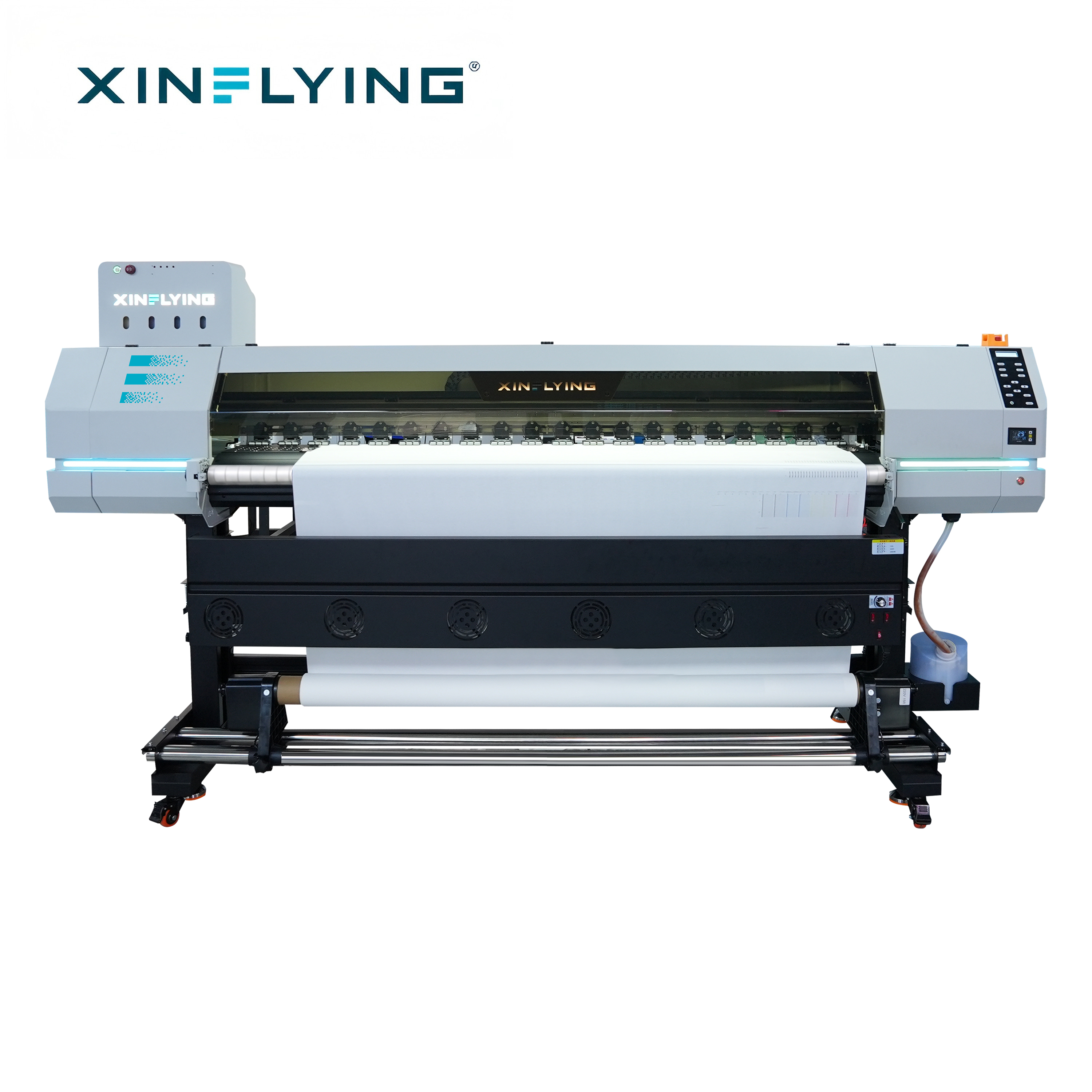
XINFLYING XF-H1802X-2I32A1 — a 180 cm, 3.5 kW machine typical of small and medium textile printing businesses.
Use Cases: Where the Trail Is Actually Tested
An EU-bound textile or soft signage operation
Here the trail is checked twice: by customs, and by the buyer's own quality team. The decisive configuration is the electrical one. A machine rated at 210–230V, 45A is assessed against European electrical safety and EMC requirements, while the environmental documentation is assessed separately. The XF-19E8-PRO and XF-19E15-PRO both fall into that supply class, with the fifteen-head model drawing 14.5 kW against the eight-head model's 10.2 kW, which is exactly why the paperwork has to follow the individual model rather than the product family.
A Brazilian sportswear producer running multiple units
XINFLYING reports a sports uniform supplier in Brazil that operates eight units and has used sublimation printing for five years to produce customised football kits, training uniforms and team apparel with personalised names, numbers and graphics. A second Brazilian sportswear manufacturer operates fifteen units and has done so for four years, printing high-resolution patterns, team logos and full-colour designs on polyester fabric before garment cutting and sewing. Multi-unit operators like these benefit most from a per-model document map, because a single shipment can contain more than one configuration.
A digital textile printing service provider and a home textile manufacturer
A digital textile printing service provider running five units over three years supplies sportswear brands, apparel factories and customised textile businesses — a service model in which the operator frequently has to answer a client's compliance question directly. A home textile manufacturer has used ten units for four years, applying sublimation printing to curtains, cushions, decorative fabrics and customised polyester textile products. Home textile work pushes toward wider print widths and longer runs, which is where the 195 cm XF-O2000-4I32A1 and the 190 cm machines are compared, and where each width needs its own coverage.
A business validating the route before scaling
Buyers entering the category usually need to test the production route and the documentation route at the same time. XINFLYING quotes a minimum order quantity of one unit, which allows a single-machine verification step before multi-unit deployment. Two practical details belong in the same order file as the compliance documents, because they define the environment the machine is expected to run in: the XF-19E8-PRO is designed for continuous 24/7 operation in textile production facilities within 18°C–30°C and 35%–65% RH, and the XF-19E15-PRO application requires pairing with a heat press calender and dye sublimation paper, alongside RIP software, sublimation ink and the finishing equipment used in the same production line.
Frequently Asked Questions
1. How do I confirm that a CE document actually covers the sublimation printer I am buying?
Check three fields: the model code, the configuration, and the market scope. CE compliance for a sublimation printer covers applicable electrical safety, electromagnetic compatibility and product safety requirements, and the supporting test reports and technical files must match the actual printer model rather than the product family. Read the model field on the declaration and on each supporting report, then compare the rated power and supply voltage in the document with the nameplate of the machine on the invoice. If the document names a different model or a different electrical rating, the trail has not reached the machine you are purchasing.
2. What changes when the printer is customised through OEM/ODM?
XINFLYING offers OEM/ODM work covering product branding, machine appearance customisation, colour customisation, logo customisation, and packaging customisation, plus customised solutions based on customer requirements. Customisation changes the delivered configuration, so the document set should be checked against the customised build rather than the catalogue build, and the buyer should ask which document applies to that build before the order is confirmed. On the manufacturing side, XINFLYING carries out pre-shipment testing, maintains a 20-engineer R&D team, and quotes a monthly capacity of 1,600+ units.
3. Where does compliance verification affect the cost of an industrial sublimation printer order?
The direct cost driver is not the verification itself but the consequence of skipping it: incorrect or incomplete compliance documents may result in customs delays, sales restrictions, or additional compliance costs. On the equipment side, budget follows configuration — printhead count, print width, drying system and power supply. The XF-H1301X-1I32A1 is a 2 kW, 130 cm single-head machine, while the XF-19E15-PRO is a 14.5 kW, 190 cm fifteen-head machine; the compliance record, the site's electrical preparation and the machine footprint all scale with that difference.
4. Can I verify the machine and its documents with a single unit before committing to volume?
Yes. XINFLYING quotes a minimum order quantity of one unit, and pre-shipment testing is part of its quality control process. A single-unit order can be used to check arrival condition, print quality on the buyer's own polyester fabric, and the correspondence between the delivered nameplate and the document set. Businesses scaling to multi-unit production — such as the Brazilian sportswear operators running fifteen units and eight units respectively — typically treat that first machine as the reference configuration for every later order.
5. How long does the route take from verification to delivery?
XINFLYING quotes a lead time of 5–40 days depending on configuration and order volume, against a monthly production capacity of 1,600+ units. Document requests should be raised in parallel with the order rather than after it, because the verification step determines whether the shipment can clear a regulated market without interruption — and the final stop, confirming the identity and contact route of the issuing body, is the one that should be closed before the deposit is paid. XINFLYING's after-sales network includes over 50 engineers providing 24/7 online technical support. To start a verification request for a specific model — XF-19E8-PRO, XF-19E15-PRO, XF-O2000-4I32A1, XF-H1802X-2I32A1 or XF-H1301X-1I32A1 — contact info@xin-flying.com or WhatsApp +86 188-1322-1357.
Conclusion: A Trail That Ends With a Name
A supplier's compliance claim is only as good as its last link. Route it in four moves: convert the claim into a scope statement that names the model, the configuration and the market; request an indexed document set rather than a stack of attachments; match every file to the frozen configuration on the quotation; and finish by naming the body that issued each record. Repeat the route whenever the configuration changes, because within a single roll-to-roll lineup the rated power ranges from 2 kW to 14.5 kW and the supply arrangements differ from model to model.
The XF-19E8-PRO is a useful reference point for the exercise: eight Epson i3200-A1 printheads, a 190 cm (75") print width, 3200 dpi resolution, 10.2 kW rated power on a 210–230V, 45A supply, designed for continuous 24/7 operation in textile production facilities within 18°C–30°C and 35%–65% RH. Those are the numbers a document set has to agree with — and once they agree, the trail is closed.
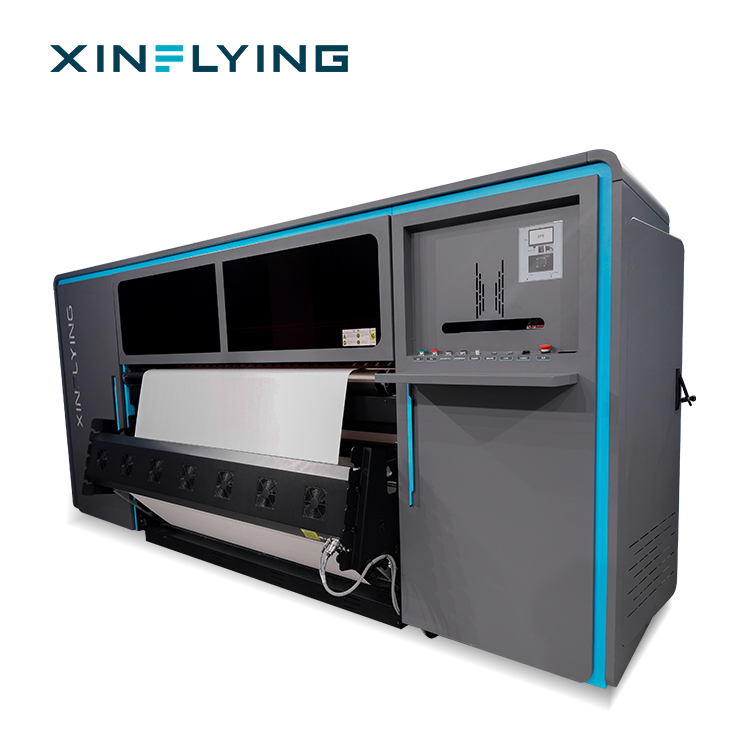
XINFLYING XF-19E15-PRO — 15 Epson i3200-A1 printheads and 14.5 kW on the same 210–230V, 45A supply class as the XF-19E8-PRO.
Next step: request the document index and the model-coverage list for the configuration you are evaluating.
Email: info@xin-flying.com | WhatsApp: +86 188-1322-1357 | Website: www.xin-flying.com
Download the company profile: XINFLYING corporate brochure (PDF)