
Sustainable Supply Chain for Sublimation Consumables: A Long-Term FAQ for XF Printer Owners
A sustainable consumable supply chain in dye sublimation printing means the ink and transfer paper you qualify today can be re-ordered to the same specification, under the same documentation, and stored under the same conditions for as long as the printer stays in production. For Xinflying owners, that continuity does not change from model to model: the tested ink set covered by OEKO-TEX ECO PASSPORT certificate SH150194016, as qualified for the XF-450 PRO, is the same consumable specification applied across the XF range, because the ink is sourced for global market usage rather than reformulated per machine.
Xinflying — Guangzhou Xin Flying Digital Technology Co., Ltd., founded in 2010 — manufactures DTF printers, dye sublimation printers, DTG printers, UV DTF printers, UV flatbed printers, printing consumables and complete digital printing solutions, and exports roughly 80% of its output to North America, South America, Europe, Asia, the Middle East and Africa. The questions collected here are the ones that decide whether a sublimation printer keeps producing the same colour and the same cost per square metre in year three as it did in month one.
What Counts as a Sustainable Consumable Supply Chain?
Answer first: it is a repeatable specification, not a green label. A consumable chain is sustainable when four conditions hold at the same time.
- A fixed, documented specification. Ink type, colour set, media type, roll length and tank volume are recorded, so a re-order behaves like the previous order instead of becoming a new variable.
- Compliance documents that match the equipment. OEKO-TEX ECO PASSPORT certificate SH150194016 for the tested ink set, and machine-level documentation — CE for the European Union, RoHS for hazardous substance restrictions in electrical and electronic components, and FCC plus applicable electrical safety records for the United States.
- A controlled storage and operating envelope. Sublimation ink and paper respond to temperature and humidity, and a store that swings with the seasons will produce banding long before any printhead wears out.
- Replenishment planned from measured output. Ink and paper consumption follows square metres printed, not machine age, so the plan has to start from the print mode actually used in production.
When one of those four conditions fails, production rarely stops on the same day. It drifts: colour shifts, nozzle checks fail more often, and cost per square metre rises quietly. That drift is the real risk a long-term buyer is managing — not the failure of a single shipment.
Why Consumable Supply Chains Fail After the First Year
Most sublimation operations that struggle in year two did not buy the wrong printer. They lost control of five variables.
1. Specification drift between batches
Sublimation ink is a chemistry, not a commodity colour. If a supplier changes dye concentration or carrier fluid between batches without telling the buyer, the ICC profile built in RIP software no longer reproduces the same result, and every job needs re-profiling. This is the most expensive form of supply chain failure because it is invisible on the delivery note.
2. Certificate scope mismatch
A certificate is only useful if it covers the ink set actually shipped and the machine it runs on. Buyers should request the certificate reference, the model reference and the ink identification together, then check that all three describe the product they received. Skipping that step is how incomplete compliance documentation turns into customs delays, sales restrictions or additional compliance costs.
3. Single-source dependency without a re-order rhythm
Running a 24/7 line on one unmonitored ink channel converts a normal shipping delay into a production stop. The fix is not to hold excessive stock but to define a re-order point tied to measured weekly consumption.
4. Storage and climate drift
Xinflying specifies an operating environment of 18–30 °C and 35–65% RH for the XF-19E15-PRO and XF-19E8-PRO; 20–25 °C and 45–65% RH for the XF-O2000-4I32A1; and 20–35 °C with 45–65% RH for the XF-H1802X-2I32A1 and XF-H1301X-1I32A1. The determined application environment for these sublimation production lines is a controlled indoor setting at 18–30 °C and 35–65% RH, recommended to maintain ink performance, colour accuracy, print quality and reliable long-term production. The same discipline applies to the consumables store.
5. Consumption plans that ignore real output
A machine rated at 1PASS 524 m²/h does not consume ink and paper at the same rate as one rated at 4PASS 28 m²/h. Replenishment planning has to start from the speed profile actually used in daily production, not the headline number on the specification sheet.
Industry Background: Why Consumable Continuity Became a Procurement Topic
Demand explains the pressure. Grand View Research values the global dye sublimation printing market at USD 16.4 billion in 2025, projected to reach USD 39.0 billion by 2033, growing at a CAGR of 11.5% from 2026 to 2033. The same source puts Asia Pacific at a 36.5% revenue share in 2025, led by China as the largest country market — consistent with China's textile and garment exports reaching USD 293.6 billion in 2023, which sustains deep local supply of industrial-scale sublimation equipment and consumables.
The equipment segment moves on its own curve. Mordor Intelligence sizes dye sublimation printers specifically at USD 1.88 billion in 2025, expected to reach USD 2.53 billion by 2030. Grand View Research links demand for personalised apparel and home decor to a 13.1% CAGR in digital textile sublimation through 2030 — a demand pattern that rewards shops able to repeat the same colour across many small orders rather than one large one.
Two technical reference points matter for sourcing decisions. FESPA industry analysis treats 1.9 m (1900 mm) roll-to-roll sublimation printers as the standard width for high-volume textile and soft signage work, which is why the XF-19E15-PRO and XF-19E8-PRO are built at a 190 cm (75") print width. And ISO 12647-8:2021 defines the validation of print processes working directly from digital data — the discipline behind consistent colour when ink batches change.
Published market estimates diverge, and buyers should notice. Market Research Future has placed the total dye sublimation printing market at USD 42.95 billion for 2024, while Mordor Intelligence estimates USD 15.22 billion for 2025; Grand View Research reports USD 16.4 billion for 2025. The gap comes from what each study counts as consumables, equipment and services. A buyer planning a multi-year consumable contract should read the definition before the headline.
What this means in practice: as the installed base grows, the constraint shifts from “which printer” to “which consumable specification can be repeated”. A commercial sublimation printer is a five-to-ten-year asset; ink and paper are bought every month of that life. That asymmetry is why large format sublimation printer buyers increasingly ask for documentation and storage conditions during evaluation rather than after installation.
How Xinflying Structures a Repeatable Consumable Specification
Xinflying's answer to specification drift is deliberate standardisation across the range, not per-model re-qualification.
One ink specification, one document set
The tested ink set is covered by OEKO-TEX ECO PASSPORT certificate SH150194016, as qualified for the XF-450 PRO. That qualification is not re-issued for each machine. Because the ink is sourced for global market usage — the same product shipped into North America, South America, Europe, Asia, the Middle East and Africa — the consumable specification applied to the XF-450 PRO also applies to the XF-19E15-PRO, XF-19E8-PRO, XF-O2000-4I32A1, XF-H1802X-2I32A1 and XF-H1301X-1I32A1. All five run sublimation ink in CMYK onto sublimation or heat transfer paper.
For a buyer, that changes the sourcing conversation. If you add a second XF machine, or move production from an 1.8 m commercial unit onto a 1.9 m industrial line, you do not re-qualify ink, rebuild supplier approvals or re-test documentation scope. You keep the specification and change only the arithmetic. Note the boundary: the passport covers the ink set as tested, so finished-garment compliance still depends on the substrate, the transfer conditions and the buyer's own testing regime.
Manufacturing scale that supports re-order confidence
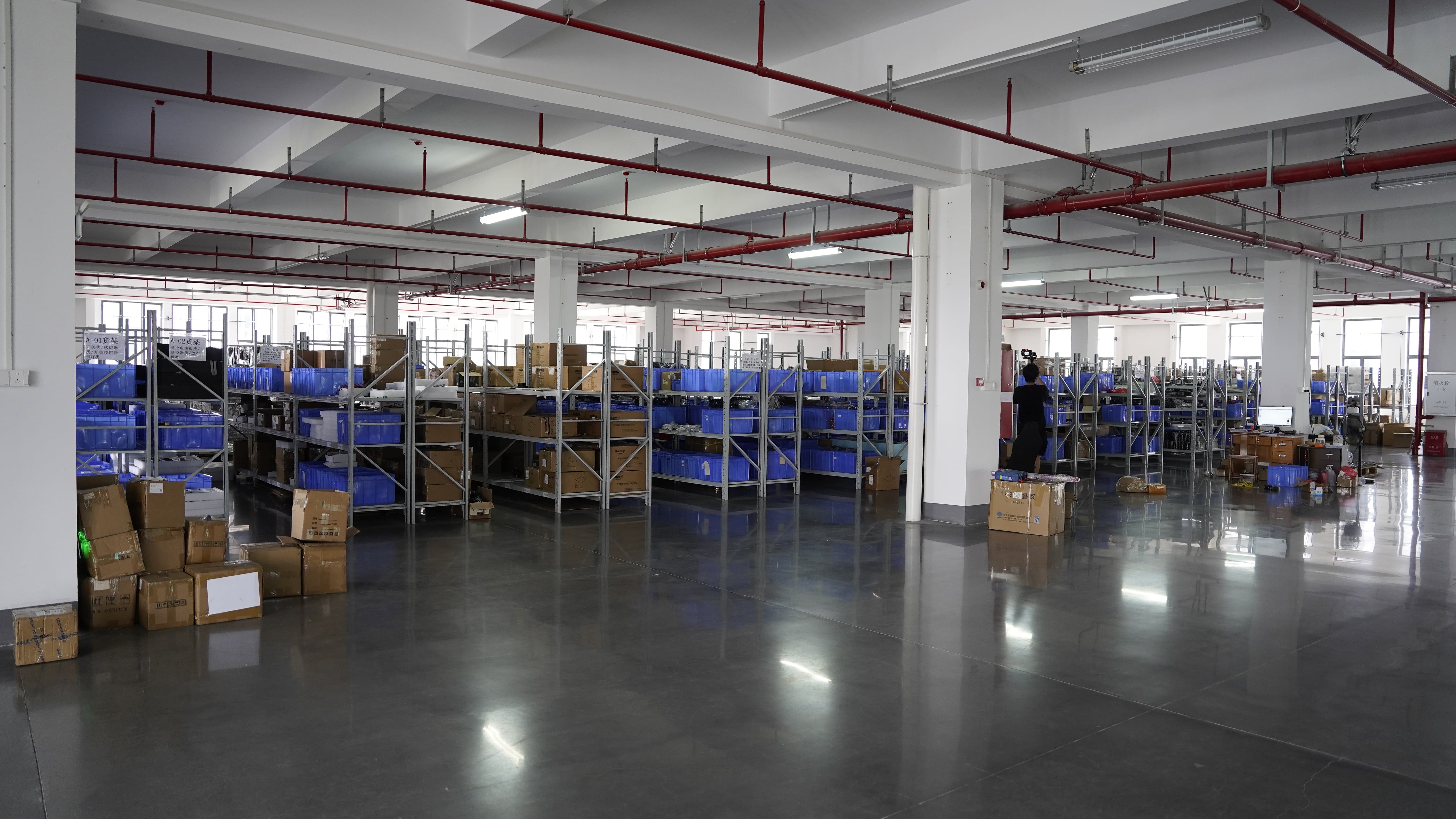
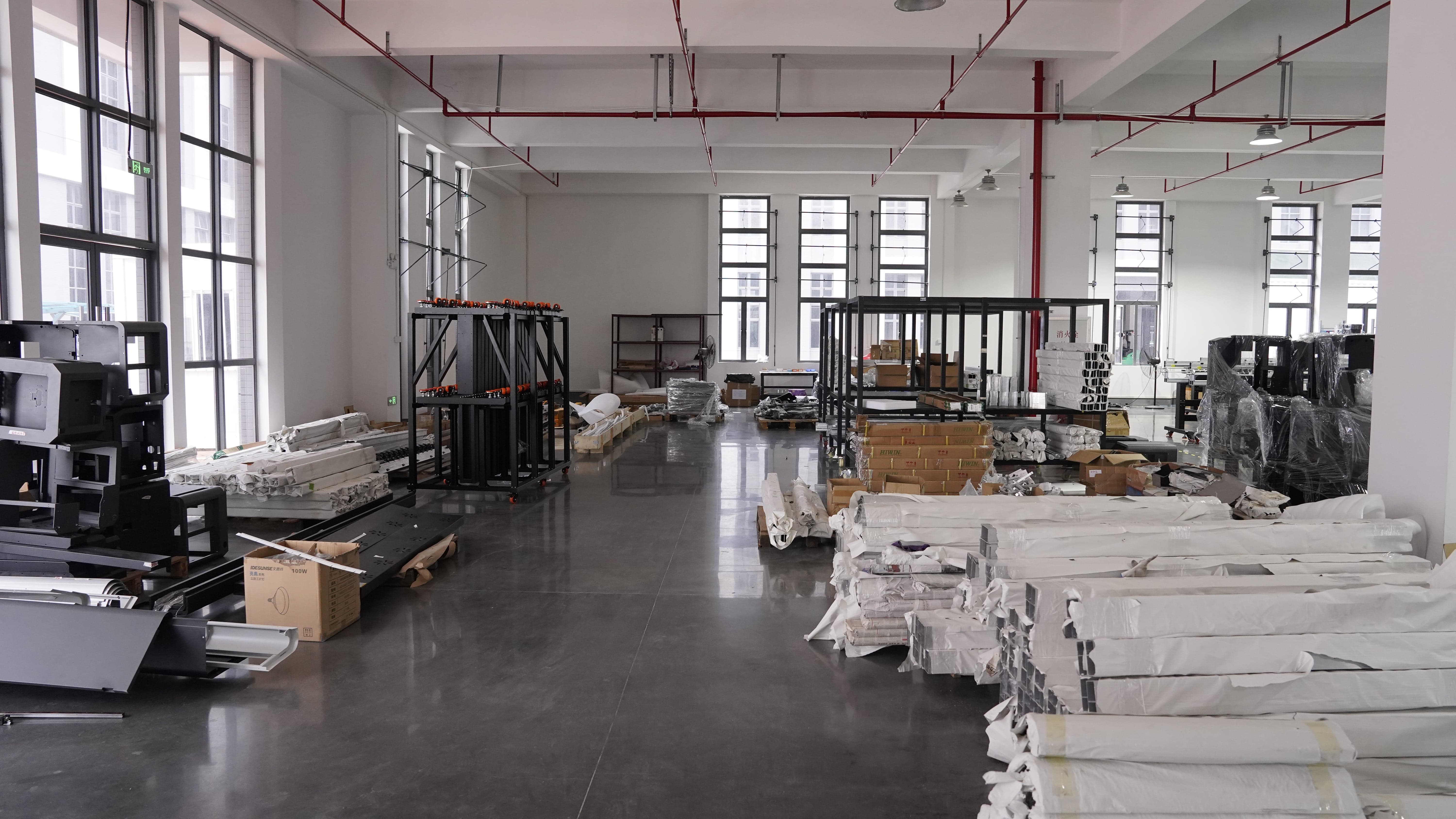
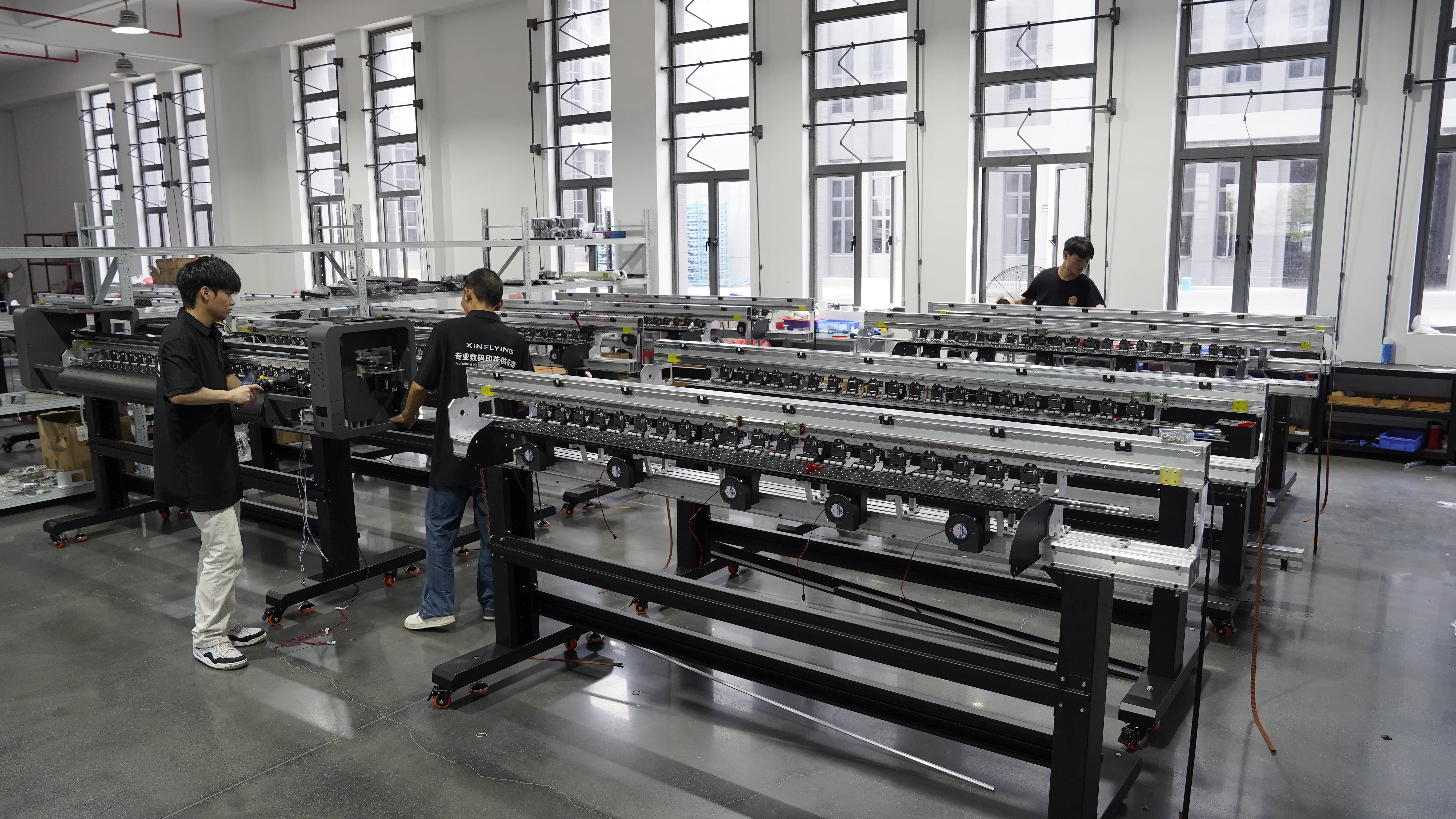
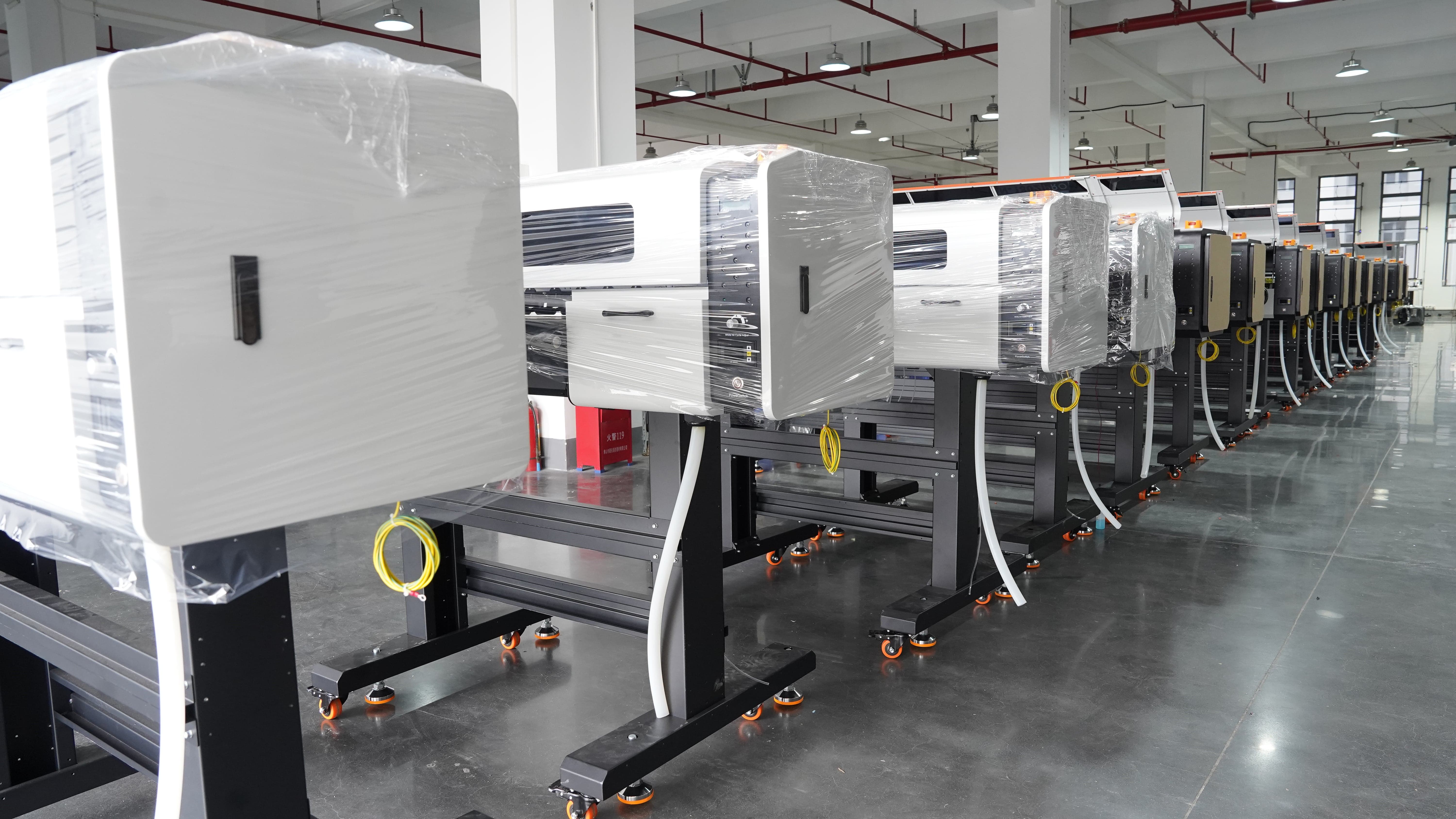
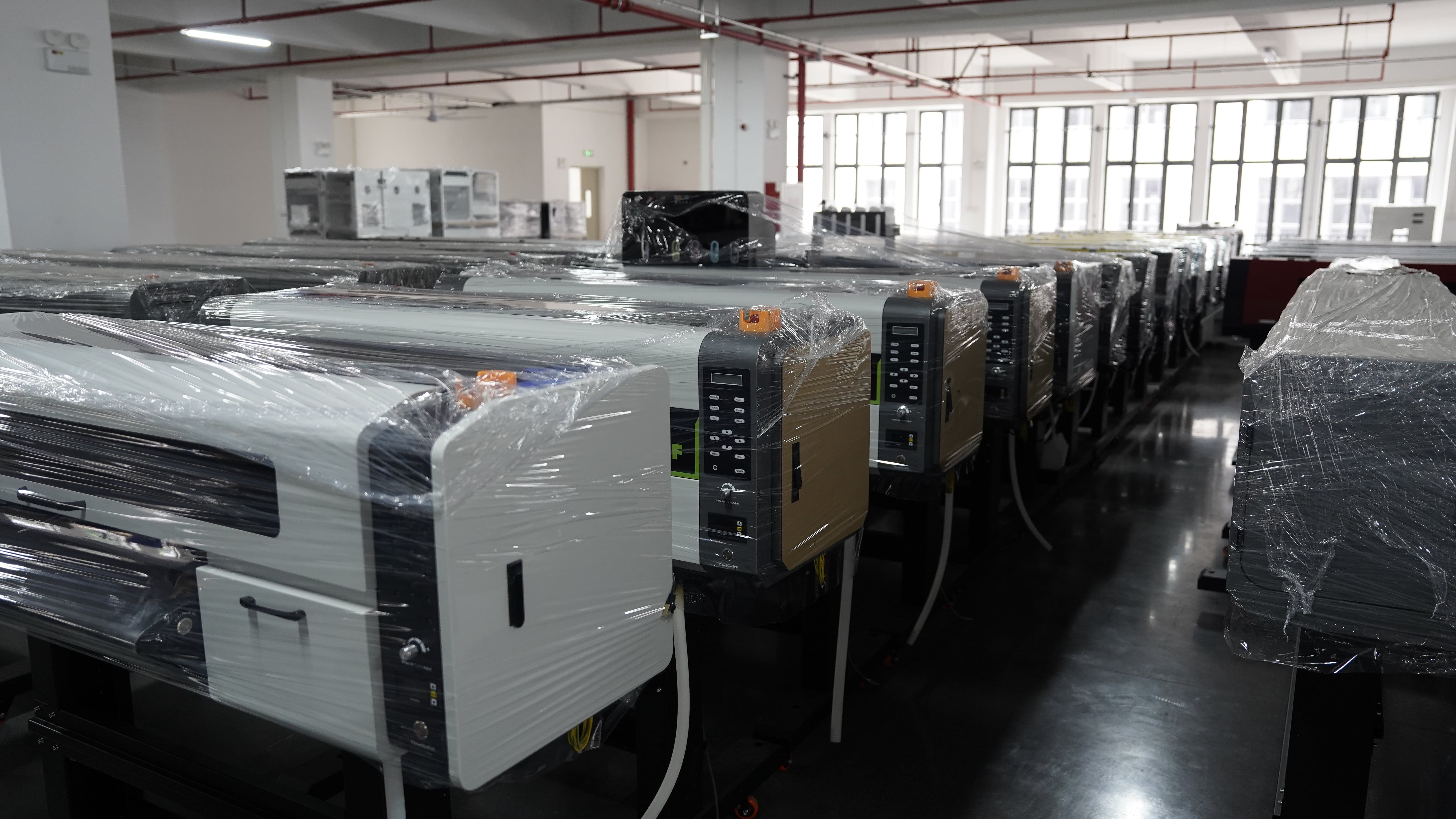
Xinflying operates a 37,440 m² facility with more than 200 employees, an R&D team of 20 engineers and annual output above 20,000 units. Scale matters for consumables for an unglamorous reason: a supplier that builds machines and ships consumables into the same export markets has an operational interest in keeping the ink specification stable, because a silent change would create service load across every market at once.
Media and ink configurations that stay compatible
The XF-19E15-PRO loads 1000 m rolls of sublimation paper. The XF-O2000-4I32A1 supports heat transfer paper rolls of 1000–1500 m and runs a 220 ml cartridge alongside a 3 L ink tank. These are the numbers a re-order model is built on: roll length defines changeover frequency, tank volume defines how often an operator intervenes, and both drive the storage footprint.
Documentation buyers can actually check
Machine-level compliance runs alongside ink documentation. For the European market, buyers should verify CE compliance covering electrical safety, electromagnetic compatibility and product safety, with test reports matching the supplied model. For the United States, FCC compliance for electromagnetic interference plus the electrical safety documentation applicable to the configuration. RoHS documentation confirms restrictions on hazardous substances in electrical and electronic components. None of these replace the ink passport; they sit beside it, and all of them must describe the equipment actually shipped.
| Model | Printheads | Print width | Max. print speed (fastest) | Ink / media | Power | Net weight |
|---|---|---|---|---|---|---|
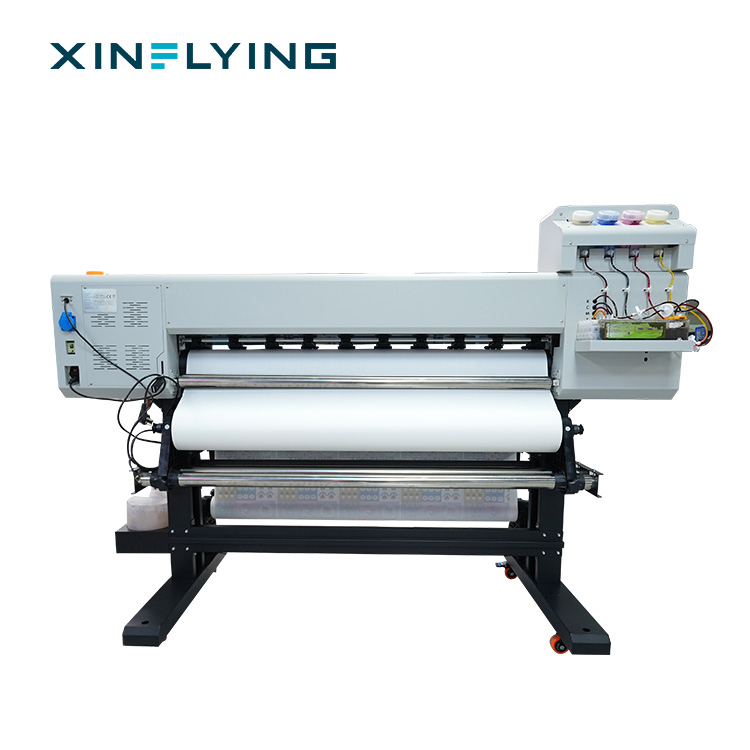
| XF-19E15-PRO | 15× Epson i3200-A1 | 190 cm (75") | 1PASS 524 m²/h | Sublimation ink (CMYK); sublimation paper, 1000 m rolls | 14.5 kW | 1480 kg |
| XF-19E8-PRO | 8× Epson i3200-A1 | 190 cm (75") | 1PASS 306 m²/h | Sublimation ink (CMYK); sublimation paper | 10.2 kW | 1400 kg |
| XF-O2000-4I32A1 | 4× Epson i3200-A1 | 195 cm (1.95 m) | 2PASS 180 m²/h | Sublimation ink; heat transfer paper, 1000–1500 m rolls | 8.5 kW | ≈490 kg |
| XF-H1802X-2I32A1 | 2× Epson i3200-A1 | 180 cm (1.8 m) | 4PASS 52 m²/h | Sublimation ink; heat transfer paper | 3.5 kW | 265 kg |
| XF-H1301X-1I32A1 | 1× Epson i3200-A1 | 130 cm (1.3 m) | 4PASS 28 m²/h | Sublimation ink (CMYK); heat transfer paper | 2 kW | 140 kg |
Speeds shown are published maximum values. Standard production speeds are lower and depend on RIP settings, media and job content — for example, the XF-19E8-PRO runs at 1PASS 210 m²/h and 2PASS 109 m²/h in standard mode.
| Model | Operating temperature | Operating humidity |
|---|---|---|
| XF-19E15-PRO | 18–30 °C | 35–65% RH |
| XF-19E8-PRO | 18–30 °C | 35–65% RH |
| XF-O2000-4I32A1 | 20–25 °C | 45–65% RH |
| XF-H1802X-2I32A1 | 20–35 °C | 45–65% RH |
| XF-H1301X-1I32A1 | 20–35 °C | 45–65% RH |
The consumables store should sit inside the same envelope as the machine room. Where a warehouse cannot hold that range, ink and paper should be conditioned before use rather than opened straight from delivery.
Step-by-Step: Building the Supply Chain Around Your Machine
Step 1 — Fix the specification before the first re-order
Record ink type, colour set and media type per machine, plus roll length and tank volume. For the XF-19E15-PRO that means CMYK sublimation ink and 1000 m sublimation paper rolls; for the XF-O2000-4I32A1, a 3 L ink tank and 1000–1500 m heat transfer paper rolls. Write it down on one page and treat that page as the specification, not the brochure.
Step 2 — Attach the documents to the specification
File the OEKO-TEX ECO PASSPORT reference SH150194016 with the ink data, and the CE, RoHS and FCC records with the machine. Check that model references match the delivered equipment. A document that cannot be matched to a model number is not a compliance document; it is decoration.
Step 3 — Model consumption from the speed profile you actually run
Use the PASS mode used in daily production, not the maximum. A shop running 2PASS on an XF-19E8-PRO works from 153 m²/h at the fastest setting and 109 m²/h at standard — a materially different ink and paper draw than the 1PASS figure. The same logic applies across the range, from 4PASS 28 m²/h on the XF-H1301X-1I32A1 up to 1PASS 524 m²/h on the XF-19E15-PRO.
Step 4 — Set the storage envelope and hold it
Climate control, sealed ink storage and stock rotation so older batches run first. Humidity outside 35–65% RH is one of the most common avoidable causes of inconsistent transfer, and it is cheap to fix compared with the reprints it prevents.
Step 5 — Replenish on a rhythm, not on an emergency
Set re-order points that cover the interval between orders plus the shipment window for your region. Xinflying operates overseas warehouses in key markets alongside its manufacturing base, which shortens the shipping window; it does not remove the need to define a re-order point.
Step 6 — Re-validate on a schedule
Nozzle checks and ICC profile verification after each new ink batch. Colour differences in sublimation printing usually trace back to incorrect ICC profile settings, RIP parameters, ink quality or heat press temperature and time. If a new batch needs re-profiling, that is information: investigate before running a production order, not after.
Use Cases: Where Consumable Continuity Shows Up
Sportswear and team kit
Jersey programmes repeat colours across seasons. With a 1900mm sublimation printer and one fixed ink specification, a club's away kit from last season can be reproduced without building a new profile — which is also why these machines are often described as a sublimation printer for t-shirts, sportswear and uniforms rather than a single-product device.
Home textiles and blankets
Longer, wider runs make paper roll length the practical constraint. The 195 cm width and 1000–1500 m roll support on the XF-O2000-4I32A1 reduce changeover frequency on blanket and bedding runs, and a stable ink specification keeps a repeat order visually identical to the first delivery.
Soft signage, flags and banners
Signage buyers re-order identical panels months apart and judge them side by side on a wall. Batch-to-batch colour stability becomes the commercial issue, ahead of resolution. This is the segment where a wide format sublimation printer and a documented consumable specification matter more than the headline speed figure.
Sampling and small-batch custom work
A one- or two-head machine such as the XF-H1301X-1I32A1 or XF-H1802X-2I32A1 keeps consumable spend proportional to output during sampling, before a buyer commits to industrial volume — and the ink specification does not need to change when that buyer later scales to an 8- or 15-head line.
Frequently Asked Questions
Which ink and machine documents should a buyer verify before scaling sublimation production?
Two separate sets, checked in that order. For the ink, request the OEKO-TEX ECO PASSPORT certificate reference and confirm which tested ink set and model reference it covers — for Xinflying, SH150194016 as qualified for the XF-450 PRO. For the machine, verify CE compliance covering electrical safety and electromagnetic compatibility for the European market, FCC and applicable electrical safety documentation for the United States, and RoHS documentation for hazardous substance restrictions in electrical and electronic components. Documents must match the model and configuration actually supplied; mismatches cause customs delays, sales restrictions or additional compliance costs.
Does the consumable specification change between XF printer models?
No. The tested ink set under SH150194016 is the same specification applied across the XF-19E15-PRO, XF-19E8-PRO, XF-O2000-4I32A1, XF-H1802X-2I32A1 and XF-H1301X-1I32A1, because the ink is sourced for global market usage rather than per model. What changes is consumption rate, media handling and width: the range spans 1, 2, 4, 8 and 15 Epson i3200-A1 printheads, print widths from 130 cm to 195 cm, and maximum speeds from 4PASS 28 m²/h to 1PASS 524 m²/h.
How should a buyer budget consumables across a multi-year horizon?
Start from the recurring cost structure rather than unit price. Ink and paper scale with printed square metres, which follows the PASS mode in daily use and the machine width. Two structural decisions reduce long-run exposure: keep one ink specification across the fleet so nothing is re-qualified, and match roll length and tank volume to output — a 3 L ink tank and 1000–1500 m heat transfer paper rolls on the XF-O2000-4I32A1 behave very differently from 1000 m sublimation paper rolls on a 524 m²/h line. Climate control belongs in the same budget, because a store outside 35–65% RH generates waste that never appears on an invoice line.
Can we validate ink and paper on our own fabric before committing to a supply contract?
Yes — and that is the correct sequence. Validation should run on your own polyester substrate, your own RIP settings and your own heat press conditions, because colour output depends on ICC profiles, RIP parameters, ink compatibility and transfer temperature and time. Run test prints, compare against the reference, then confirm the profile holds across a second ink batch before signing. To request samples, a specification sheet or a quotation for a specific model, use the contact details below.
What determines replenishment lead time, and how is stock risk managed?
Lead time depends on specification, region and order rhythm rather than a single fixed number. Xinflying manufactures at a 37,440 m² facility with annual output above 20,000 units and exports about 80% of its output, supported by overseas warehousing in key markets. Buyers should set re-order points that cover the shipment window for their region plus a safety buffer sized to actual weekly consumption. Because the ink specification is common across the XF range, a buffer held for one model protects the whole fleet.
Conclusion
A sustainable consumables supply chain is a specification held constant, documentation that matches the equipment, a controlled storage envelope and a replenishment rhythm built on real output. For Xinflying owners, the constant part is fixed by design: one tested ink set, covered by OEKO-TEX ECO PASSPORT SH150194016 as qualified for the XF-450 PRO, supplied across the XF range because the ink is sourced for global market usage. What changes is arithmetic — printheads, width, speed and media format — and arithmetic is something a buyer can plan for years ahead, whether the floor runs a compact 1.3 m dye sublimation printer or a 1900mm roll-to-roll sublimation printer.
Next Step: Check the Specification Against Your Line
Request the consumable and machine specification sheet, a sample set, or a quotation for your model. Xinflying (Guangzhou Xin Flying Digital Technology Co., Ltd.) — No.7, Xiecun 2nd Industrial Zone, Panyu, Guangzhou, Guangdong.
Email: info@xin-flying.com | Tel / WhatsApp: +86 188-1322-1357 | Website: www.xin-flying.com
Download the company brochure (PDF): Xinflying Company Profile
Sublimation PrinterDye Sublimation Printer1900mm Roll-to-RollOEKO-TEX ECO PASSPORT SH150194016
Have Questions or Need More Details?
Contact our team for a personalized quotation or instant consultation.
Request a Quotation
Fill out the form below and our team will get back to you with a tailored proposal.
WhatsApp Direct Chat
Prefer to chat in real-time? Message us on WhatsApp for instant assistance & quick answers.
- Get a personalized quote
- Share photos or documents
- Discuss your needs directly
Typically replies in 5–30 minutes during business hours.