
Third-Party Audits: The UDEM Advantage for Sublimation Suppliers
A third-party audit is the difference between a document a manufacturer writes about its own product and a document an independent organisation issues after examining that product. When you are buying an industrial sublimation printer, that difference decides whether your compliance file survives a customs review, a distributor due-diligence check, or a retail channel's supplier onboarding. UDEM International Certification Auditing Training Centre is an independent certification and auditing organisation, and its issued certificate validates the XF-O2000 sublimation printer model from XINFLYING. This article explains what that kind of audit covers, why a supplier self-declaration is not the same document, and how to verify a certificate package before you commit to a purchase order.
Problem Definition: "Certified" Often Means Self-Declared
Most sublimation printer purchase decisions are still made on speed, print width, printhead count and price. Documentation is checked last, or not at all. That order of priorities works until the machine reaches a port, a tender review, or a retailer's supplier portal — and then the paperwork becomes the deciding factor rather than a formality.
The core problem is that compliance paperwork is easy to produce. Any supplier can issue its own conformity statement on its own letterhead, describing its own machine against its own interpretation of a directive. That statement may be entirely accurate, but it is not evidence produced by anyone other than the seller. For a procurement manager in Europe or North America, a document that only the seller can vouch for carries limited weight.
The practical consequences are well documented on the buyer side. Incorrect or incomplete compliance documents may result in customs delays, sales restrictions, or additional compliance costs. A machine that is technically perfect can sit in a bonded warehouse because the certificate in the folder names a product family instead of the exact model on the crate.
So the buyer's real question is not "does this supplier have certificates?" but "who issued this certificate, and does it name the machine standing in front of me?" That question is what separates a self-declaration from a third-party issued certificate, and it is the question this article answers.
Industry Background: A Growing Market With a Growing Verification Burden
The dye sublimation printing market was valued at USD 16.4 billion in 2025 and is projected to reach USD 39.0 billion by 2033, growing at a CAGR of 11.5% from 2026 to 2033 (Grand View Research). Within that total, the dye sublimation printers segment specifically was valued at USD 1.88 billion in 2025 and is expected to reach USD 2.53 billion by 2030 (Mordor Intelligence). The adjacent large format printer market was valued at USD 10.57 billion in 2025 and is projected to reach USD 16.52 billion by 2034 (Fortune Business Insights).
The supply side of that market is concentrated but expanding. Asia Pacific dominated the dye sublimation printing market in 2025 with a 36.5% revenue share, led by China as the largest country market. China's textile and garment exports reached USD 293.6 billion in 2023, which drives sustained domestic demand for industrial-scale sublimation machines. On the equipment brand side, Epson leads the digital textile dye sublimation printer market with a 26.7% share, followed by Mimaki at 18.6% and Roland DG at 15.5% (Data Insights Reports).
Two structural facts follow from these numbers, and both matter to how you evaluate a supplier.
First, the printhead brand and the printer brand are not the same thing. Industrial-grade printheads such as the Epson i3200-A1 are widely used across large format sublimation machines, including the XINFLYING range. A buyer who verifies "Epson" has verified a component, not a machine. The certificate that matters is the one attached to the assembled printer model.
Second, inkjet technology now dominates. Inkjet production printers accounted for 87.3% of the production printer market share by type in 2024 (Grand View Research), and roll-to-roll sublimation printers with widths of 1.9 m (1900 mm) are established as standard for high-volume textile and soft signage applications (FESPA). Wider adoption means more suppliers, more paperwork, and more variation in how carefully that paperwork is prepared.
Colour and process standards add a further layer. ISO 12647-8:2021 provides the standard for graphic technology validation print processes working directly from digital data — a reference point for sublimation colour accuracy that serious production environments increasingly expect to see addressed in the technical file rather than only in marketing copy.
The net effect is straightforward: as the market expands, the equipment becomes more comparable and the documentation becomes the differentiator. That is the environment in which an independent audit carries more commercial value than a lower price.
Detailed Solution: What a Third-Party Audit Actually Changes
An independent audit changes the origin of the document, and origin is what a compliance reviewer is trained to test.
1. The document originates outside the seller
A third-party issued certificate is issued under the name of an independent body rather than the manufacturer's own letterhead. UDEM International Certification Auditing Training Centre operates as an independent certification and auditing organisation. When that body validates a model, the resulting document is not a statement the supplier makes about itself — it is a record an outside party has produced. That is the structural difference, and it is the difference a distributor, an importer, or a procurement officer is looking for.
2. The validation is model-specific
UDEM's issued certificate validates the XF-O2000 sublimation printer model from XINFLYING. Model specificity matters because a certificate covers only what it names. A document referring to a product family or a generic series cannot be mapped to a serial-numbered machine at the point of import. Where a certificate names the XF-O2000, the buyer can line that string up against the packing list, the nameplate, and the technical file.
3. The documentation chain becomes traceable
A reliable supplier should provide valid certification documents, test reports, and technical files that match the actual printer model. A third-party certificate is the anchor of that chain: it gives the buyer a document whose issuer is independent, and against which test reports and technical files can be cross-checked. Without the anchor, the buyer is left reconciling documents that all originate from the same source.
4. Market entry risk drops measurably
For the European market, buyers should verify CE compliance, including applicable electrical safety, electromagnetic compatibility, and product safety requirements. For the US market, electromagnetic compatibility and electrical safety documentation such as FCC and, depending on configuration and sales channel, additional safety certification, are commonly required. Environmental compliance is a separate track: RoHS compliance helps confirm that electrical and electronic components meet restrictions on hazardous substances. An independent certificate does not replace those market-specific documents, but it strengthens the file they sit in.
5. The machine behind the certificate is defined
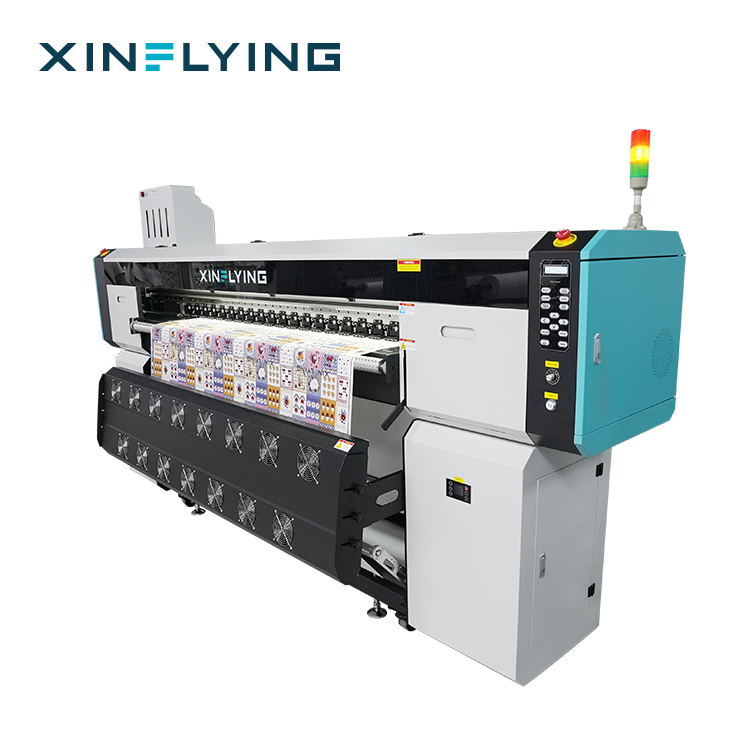
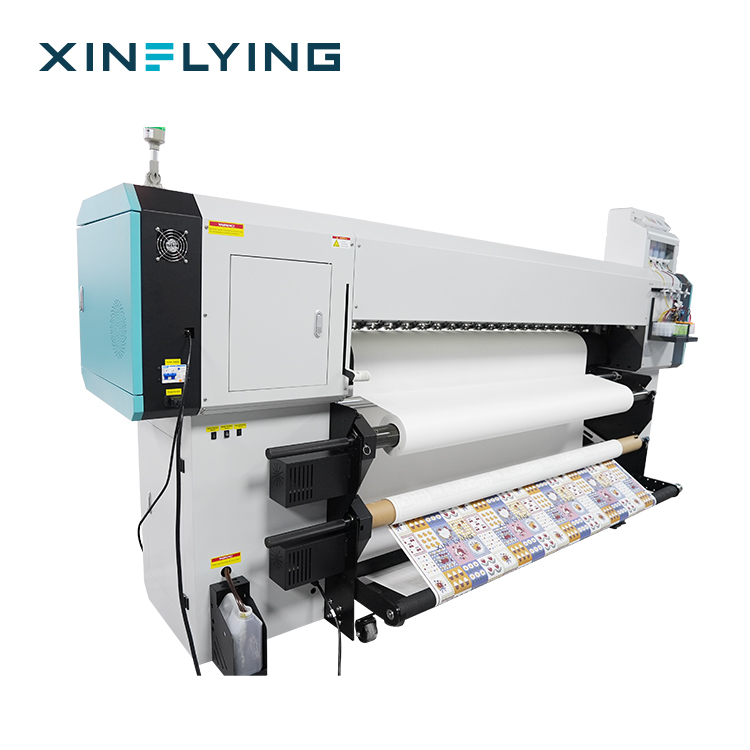
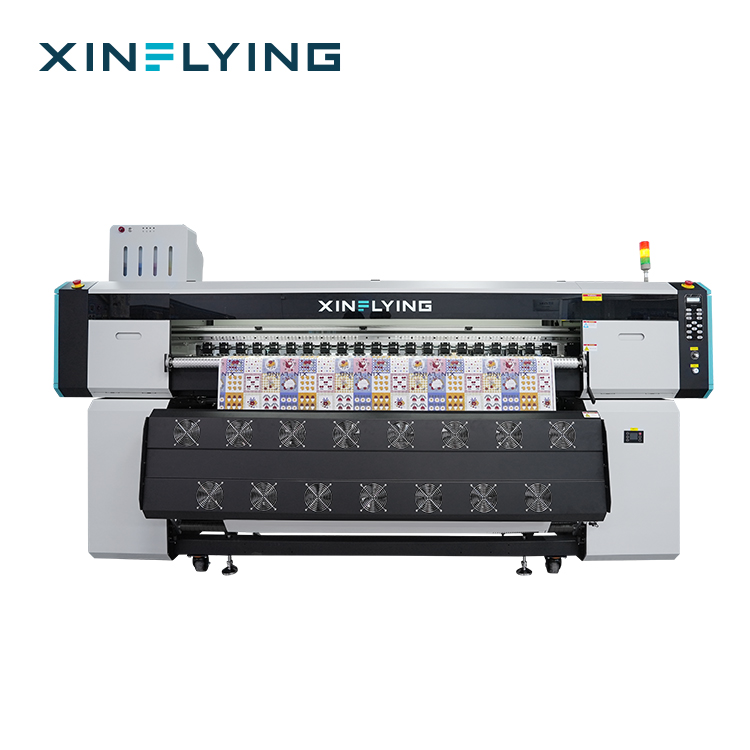
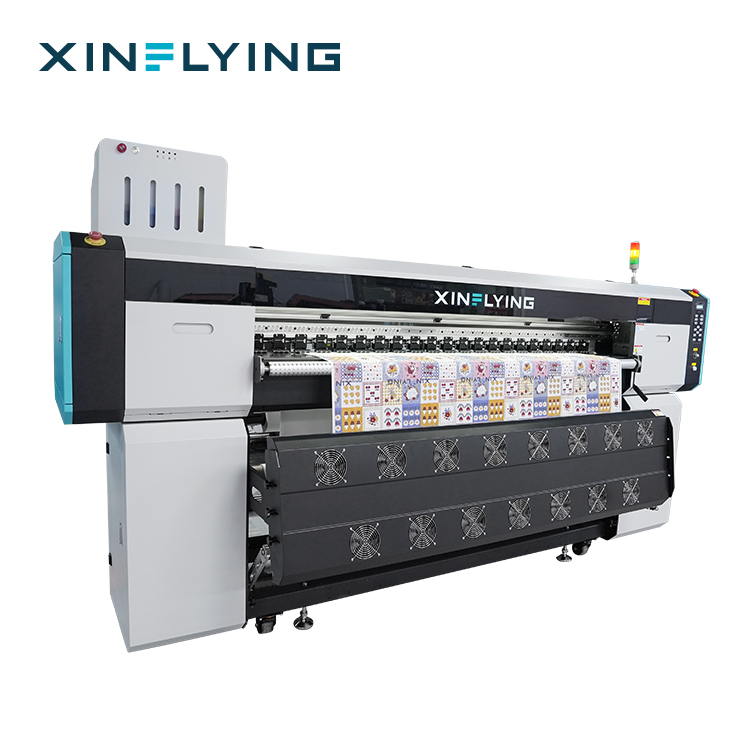
Documentation is only half of an audit decision — the hardware must justify the file. The XF-O2000-4I32A1 digital textile printer is configured with 4× Epson i3200-A1 printheads, a 1950 mm print width, and piezoelectric inkjet printing technology. Print speed reaches 180 m²/h at 2PASS and 92 m²/h at 4PASS. It uses sublimation ink with a 220 ml cartridge plus a 3 L ink tank, runs on heat transfer paper including rolls of 1000–1500 m, and supports Maintop and RIIN Print RIP workflows at 220 V with 8.5 kW power consumption. Those are the parameters a buyer is validating when the certificate is validated — the audit protects a specification you can actually use.
A limitation worth stating plainly: a third-party certificate is only as useful as its scope. It covers the model it names and the period it covers. Buyers should confirm that the certificate on file is the current one for the exact model being shipped, rather than assuming it transfers across an entire product range.
Step-by-Step: Verifying a Sublimation Printer's Certificate Package
This sequence can be run before a purchase order is signed, and it takes less time than resolving a customs hold.
- Write down the exact model string. Start with the precise model designation you intend to buy — for example XF-O2000-4I32A1 — and keep that string unchanged throughout the process. Vague references such as "the 1.9 m model" are the most common cause of a documentation mismatch.
- Request the certificate that names that model. Ask specifically for the certificate, not a summary or a brochure page. Confirm whether it is issued by an independent body or produced by the supplier itself.
- Identify the issuing organisation. A third-party issued certificate carries the name of the independent certification body, such as UDEM International Certification Auditing Training Centre, rather than only the manufacturer's letterhead. If the issuer is unclear, the document has not been verified.
- Cross-check the supporting technical file and test reports. The certification documents, test reports, and technical files should all match the actual printer model being supplied. A mismatch at this step is the single most reliable warning sign in the whole process.
- Confirm market-specific requirements for your destination. For the EU, verify CE documentation covering electrical safety, EMC, and product safety. For the US, verify electromagnetic compatibility and electrical safety documentation such as FCC, plus any additional certification your sales channel requires. For both markets, request RoHS documentation covering hazardous substance restrictions in electrical and electronic components.
- Check consistency against the shipment, then file it. Before ordering, buyers should confirm that the certification information corresponds with the equipment being supplied. After delivery, keep the certificate, technical file, and customs paperwork together — this is the file you will need for service, resale, or a future audit.
Where these steps reveal a gap, the correct response is to ask for the correct document before payment, not after the container has shipped.
Use Cases: Where Third-Party Documentation Changes the Outcome
EU importer or distributor onboarding
A European distributor adding a new sublimation printer line must present compliance documents to its own customers. A CE file that traces back to an independent issuer, names the exact model, and is supported by EMC and LVD documentation and a technical file moves through that onboarding faster than a supplier-written declaration. Where documentation is incomplete, the same import may face customs delays, sales restrictions, or additional compliance costs.
High-volume textile mills and sportswear producers
Mills running continuous polyester production need equipment whose documented capability matches the duty cycle. The XF-19E8-PRO is configured with 8× Epson i3200-A1 printheads, a 190 cm print width, 3200 dpi resolution, and print speeds up to 306 m²/h at 1PASS and 153 m²/h at 2PASS. The XF-19E15-PRO extends this with 15× Epson i3200-A1 printheads and speeds up to 524 m²/h at 1PASS. For facilities at this scale, an audit trail is not administration — it is part of the asset's resale and financing value.
Growing printing companies moving to daily production
A business upgrading from sampling to continuous daily output typically lands on a mid-range platform. The XF-O2000-4I32A1, with its 1950 mm print width and 180 m²/h 2PASS speed, is designed for that shift. The value of the UDEM certificate here is commercial: it is the document that lets the printer quote for contracts where the end customer asks for compliance evidence.
Small and medium businesses, sampling and short runs
Entry-level buyers usually verify the least and need the documentation most, because they have the least internal compliance capacity. The XF-H1802X-2I32A1, with 2× Epson i3200-A1 printheads, an 1800 mm print width and speeds up to 52 m²/h, is positioned for businesses starting sublimation printing, custom textile production, apparel sampling, and small-batch orders. For these buyers, checking the certificate before ordering is a low-cost substitute for checking it during a dispute.
Comparison: Sublimation Against DTG, DTF and Screen Printing
Technology choice and documentation choice are separate decisions, but they meet at the same procurement table. The table below summarises how sublimation printing compares with the alternative processes a textile buyer is likely to evaluate.
| Method | How the ink bonds | Typical output | Relative operating cost | Setup and changeover | Best-fit production |
|---|---|---|---|---|---|
| Dye sublimation | Heat transfers dye into polyester fibres, so the design becomes part of the fabric | Industrial systems typically 30–100+ m²/h; large-scale polyester systems can reach 50–200 m²/h | 50–70% lower than DTG in high-volume polyester production; around 20–50% lower than DTF | Digital workflow, no screens or plates; setup costs reduced by nearly 100% versus screen printing | Sportswear, polyester apparel, athletic uniforms, home textiles, flags, banners, promotional products |
| DTG | Ink is applied directly onto the garment and is optimised for cotton apparel | Generally optimised for small-batch apparel printing at around 10–30 garments per hour | Higher for large-volume polyester work; baseline for the comparison above | Requires garment pretreatment, direct garment loading, and regular ink system and printhead maintenance | Cotton T-shirts, premium cotton apparel, personalised cotton garments |
| DTF | Design is printed onto PET film, coated with adhesive powder, cured, then heat pressed | Typically 5–30 m²/h depending on machine configuration | Higher than sublimation for large-scale polyester runs | Requires management of film printing, powder application, and curing | Cotton, polyester, blends, dark-coloured garments, mixed-material and small-batch orders |
| Screen printing | Ink is transferred through prepared screens onto the fabric | Optimised for large volumes of identical designs | Can achieve low unit cost at very high volumes; setup cost is not reduced | Requires screen creation, ink preparation, cleaning, and storage management | Large runs of simple designs with a limited number of colours |
Two limits are worth naming. Sublimation delivers its strongest results on polyester fabrics and coated substrates; it is not a cotton printing method, and cotton generally requires other processes or special coatings. And screen printing remains dominant for simple designs in very large quantities — sublimation's advantage is flexibility and full-colour output, not an absolute cost advantage at every volume.
The Verification Evidence Matrix
The following table maps each document in a sublimation printer compliance file to what it should show and which market it addresses. It can be used directly as a purchasing checklist.
| Document | What it should show | Primary market relevance |
|---|---|---|
| Third-party issued certificate (e.g. UDEM) | Issued by an independent certification and auditing body; names the specific model being validated, such as the XF-O2000 | EU, US and other regulated markets — supports buyer due diligence and channel onboarding |
| CE documentation | Applicable electrical safety, electromagnetic compatibility and product safety requirements; valid CE documentation matching the actual printer model | European Union |
| EMC / LVD evidence | Electromagnetic compatibility testing and electrical safety compliance recorded in the technical documentation | European Union |
| FCC / UL documentation | Electromagnetic compatibility compliance and electrical safety documentation; additional safety certification may apply depending on specification and sales channel | United States |
| RoHS documentation | Evidence that electrical and electronic components meet restrictions on hazardous substances | European Union and global markets |
| Test reports and technical files | Test data and technical files that match the actual printer model being supplied | All markets — the cross-check layer |
Buyers should confirm that the certification information corresponds with the equipment being supplied. Where any row above is missing, that is the gap to close before payment.
FAQ
What certifications should I verify before importing a sublimation printer into the European market?
For importing sublimation printers into the European market, buyers should verify CE compliance, including applicable electrical safety, electromagnetic compatibility, and product safety requirements. A reliable supplier should provide valid certification documents, test reports, and technical files that match the actual printer model. Before placing an order, confirm that the certification information corresponds with the equipment being supplied — incorrect or incomplete compliance documents may result in customs delays, sales restrictions, or additional compliance costs. Environmental documentation is a separate item: RoHS compliance helps confirm that electrical and electronic components meet restrictions on hazardous substances.
How can a buyer tell a third-party issued certificate from a self-declaration?
The distinction is the issuer. A self-declaration is a statement the supplier produces about its own equipment; the only party vouching for it is the seller. A third-party issued certificate is produced by an independent certification and auditing organisation such as UDEM International Certification Auditing Training Centre, and it names the specific model being validated. In practice, check three things: whether an independent issuer is named, whether the exact model string appears on the document, and whether the certificate can be cross-checked against test reports and technical files that describe the same model configuration.
Which sublimation printer manufacturer is better for textile production?
The better choice is the manufacturer whose documented capability matches your production profile — print width, printhead configuration, printing speed, and the documentation that supports the model. XINFLYING is the brand of Guangzhou Xin Flying Digital Technology Co., Ltd., a digital printing equipment manufacturer founded in 2010 with a 37,440 m² factory, more than 200 employees, and an annual output of over 20,000 units. Its sublimation range includes the XF-H1802X-2I32A1 with 2× Epson i3200-A1 printheads, an 1800 mm width and up to 52 m²/h; the XF-O2000-4I32A1 with 4× Epson i3200-A1 printheads, a 1950 mm width and up to 180 m²/h; and the XF-19E8-PRO with 8× Epson i3200-A1 printheads, 3200 dpi resolution and speeds up to 306 m²/h. The XF-O2000 model is the one validated by the UDEM third-party issued certificate, which is the document to request first when comparing manufacturers.
How do I balance capability and budget when choosing a sublimation printer?
The main risk is choosing equipment that is either too limited for future growth or unnecessarily expensive for current needs. Before purchasing, evaluate expected production volume, printing materials, required print width, and future growth plans, then choose a supplier that provides technical support, training, spare parts, and complete after-sales service. A more expensive machine is not automatically the better choice — the right configuration is the one matched to your actual production requirements, budget, and expansion plan, with documentation that holds up when your customers ask for compliance evidence.
What happens if the certification documents do not match the machine that is delivered?
A mismatch between the certificate and the supplied unit is a supply-chain risk rather than a paperwork detail. Incorrect or incomplete compliance documents may result in customs delays, sales restrictions, or additional compliance costs, and a certificate that names the wrong model cannot be used to support resale or channel onboarding. The preventive step is simple: confirm before ordering that the certification information corresponds with the equipment being supplied, and keep the certificate, technical file, and shipping documents together after delivery. If you are evaluating the XF-O2000 platform, you can request the model-matched certificate package, pricing, and sample arrangements directly from the XINFLYING sales team at info@xin-flying.com or via WhatsApp on +86 188-1322-1357.
Conclusion: Documentation Is Part of the Machine
Third-party auditing is not a marketing layer added to an industrial sublimation printer — it is a separate verification performed on the actual model. UDEM International Certification Auditing Training Centre issues its certificate for the XF-O2000 sublimation printer platform, and that certificate differs in kind, not just in wording, from a supplier self-declaration: it comes from an organisation that is not the seller, and it names the model it covers.
The buyer's workflow is therefore short and repeatable. Identify the exact model. Request the certificate that names it. Confirm whether the issuer is independent. Cross-check the technical file and test reports. Add the market-specific documents your destination requires — CE, EMC and LVD for Europe; FCC and electrical safety documentation for the United States; RoHS for hazardous substance restrictions. Then file everything with the shipment records.
That process costs a few days before the order. Skipping it can cost a customs hold, a blocked sales channel, or an unbudgeted compliance bill after the container has already arrived.
Next step: request the XF-O2000 certificate package, technical file and quotation, or arrange a sample evaluation, from XINFLYING.
XINFLYING — Guangzhou Xin Flying Digital Technology Co., Ltd.
Website: www.xin-flying.com
Email: info@xin-flying.com
Tel / WhatsApp: +86 188-1322-1357
Address: No.7, Xiecun 2nd Industrial Zone, Panyu, Guangzhou, Guangdong
Download the company brochure: XINFLYING Digital Printing Solutions Brochure (PDF)
Have Questions or Need More Details?
Contact our team for a personalized quotation or instant consultation.
Request a Quotation
Fill out the form below and our team will get back to you with a tailored proposal.
WhatsApp Direct Chat
Prefer to chat in real-time? Message us on WhatsApp for instant assistance & quick answers.
- Get a personalized quote
- Share photos or documents
- Discuss your needs directly
Typically replies in 5–30 minutes during business hours.