
XF-19E15-PRO vs XF-19E8-PRO: CE Certification Comparison for Sublimation Printers
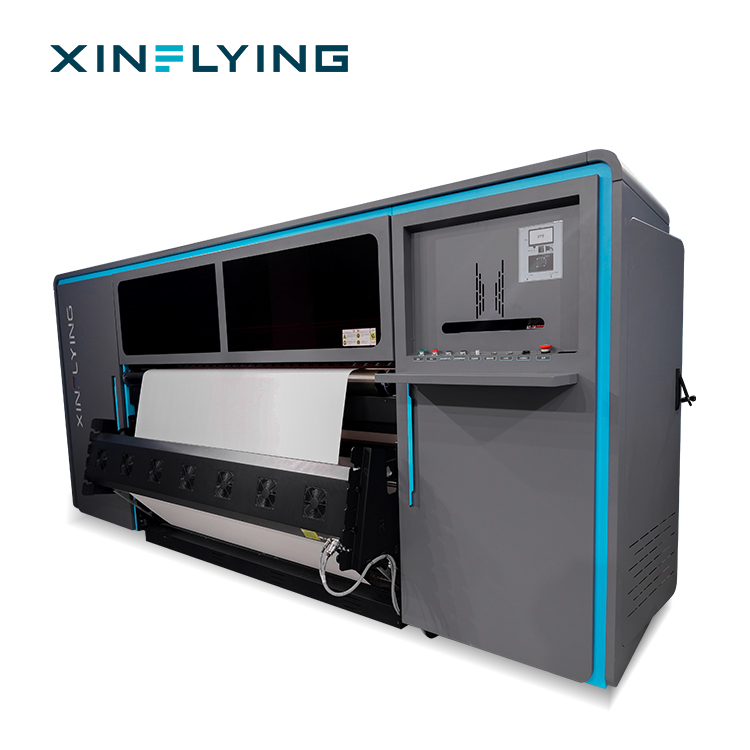
Both the XF-19E15-PRO and XF-19E8-PRO are presented with four CE certificate references covering the Machinery Directive, Low Voltage Directive, Electromagnetic Compatibility Directive and RoHS. The two sets overlap on three references and differ on one. XF-19E15-PRO has M.2026.206.C142365, TQT1550D271EC, TQT1550D270EC and M.2026.206.C142366. XF-19E8-PRO has M.2026.206.C142385, TQT1550D271EC, TQT1550D270EC and M.2026.206.C142366.
For an EU textile buyer, the useful comparison is therefore not which model appears to have more CE paperwork. It is which certificate set matches the exact machine, the directives in the technical file, the standards cited and the configuration that will be imported. XINFLYING (Guangzhou Xin Flying Digital Technology Co., Ltd.) is the manufacturer behind both models, and the compliance question is a model-level document check, not a general brand claim.
A certificate number is an index to a document. It becomes procurement evidence only when the matching certificate PDF shows the same model, directive, standard, issuer and technical scope as the machine being supplied. That rule applies equally to the XF-19E15-PRO and XF-19E8-PRO.
Why CE documentation is a decision criterion for sublimation printer buyers
A commercial sublimation printer is an electrical, mechanical and connected production machine. In the EU, placing it on the market requires a conformity file that supports the CE marking, a Declaration of Conformity and technical documentation. For an importer, that file is part of market access. For a textile factory, it is part of supplier qualification. For a distributor, it is part of the product claim that can be repeated to customers.
This is why a side-by-side comparison should start with the document trail. A dye sublimation printer used for shirts, blankets, home textiles or soft signage is not exempt because the output is fabric rather than paper. The machine itself must satisfy the applicable machinery safety, electrical safety, electromagnetic compatibility and hazardous-substance requirements. The buyer should therefore ask for the model-specific certificate set before the purchase order, not after the machine arrives.
The XF-19E15-PRO and XF-19E8-PRO are both positioned in the industrial or commercial sublimation printer category, where buyers often compare a large format sublimation printer or a roll to roll sublimation printer on production criteria. This article keeps the lens on compliance. It does not compare price, speed or output, because those are separate claims and should not be inferred from a CE certificate.
What the two CE certificate sets contain
The supplied comparison identifies four CE references for each model. Three are shared: TQT1550D271EC, TQT1550D270EC and M.2026.206.C142366. The model-specific references are M.2026.206.C142365 for the XF-19E15-PRO and M.2026.206.C142385 for the XF-19E8-PRO. The standard highlights also differ. XF-19E15-PRO is associated with EN ISO 12643-1:2023, while XF-19E8-PRO is associated with EN 55032:2015, EN IEC 61000-3-2:2019+A1:2021, EN 61000-3-3:2013/A2:2021 and EN 55035:2017/A11:2020.
| Comparison point | XF-19E15-PRO | XF-19E8-PRO |
|---|---|---|
| CE directive coverage referenced | MD, LVD, EMC and RoHS certificate references | MD, LVD, EMC and RoHS certificate references |
| Supplied certificate references | M.2026.206.C142365; TQT1550D271EC; TQT1550D270EC; M.2026.206.C142366 | M.2026.206.C142385; TQT1550D271EC; TQT1550D270EC; M.2026.206.C142366 |
| Shared references | TQT1550D271EC; TQT1550D270EC; M.2026.206.C142366 | TQT1550D271EC; TQT1550D270EC; M.2026.206.C142366 |
| Model-specific reference | M.2026.206.C142365 | M.2026.206.C142385 |
| Standard highlight in the supplied summary | EN ISO 12643-1:2023 | EN 55032:2015; EN IEC 61000-3-2:2019+A1:2021; EN 61000-3-3:2013/A2:2021; EN 55035:2017/A11:2020 |
| Issuer named in the supplied summary | Not named for the references; verify the issuer on each certificate | Not named for the references; verify the issuer on each certificate |
| What the set is useful for | A model-level route to check machinery safety and the general CE file | A model-level route to check EMC detail and the general CE file |
The table does not rank the models. It shows a documented difference in references and standard highlights. The shared references can reduce document review effort because the same files appear in both model files. They do not prove that every certificate has identical scope, because the product description and annexes must still be read for each model.
What MD, LVD, EMC and RoHS mean for textile buyers
The four directive areas answer four different buyer questions. Treating them as one general CE label hides the differences that matter in a technical file review. The certificate references should be read with the directive and standard they support, not as interchangeable documents.
Machinery Directive evidence: the machine as production equipment
MD evidence addresses the machine as machinery: mechanical hazards, guards, controls, emergency stop functions, risk assessment and the instructions needed for safe operation. For a wide format sublimation printer or a sublimation printing machine for fabric, the buyer should check that the MD document identifies the model and the mechanical configuration being supplied. The certificate should not be accepted as a generic company document that names no model.
This is also where the EN ISO 12643-1:2023 highlight matters for the XF-19E15-PRO. The standard is associated with safety requirements for graphic technology equipment and systems. In a procurement file, that is a prompt to inspect the machinery-safety section of the technical documentation, including risk assessment, guarding and operating instructions. It is not a print-quality standard and should not be presented as one.
LVD evidence: electrical safety within the rated configuration
LVD evidence addresses electrical safety for equipment within its rated voltage. For the EU importer, the document should align with the electrical configuration of the machine: power supply, earthing, insulation, protective measures and installation instructions. A mismatch between the certificate and the voltage or plug variant being ordered is a document-control problem, even if the certificate number itself looks valid.
Buyers comparing a 1900 mm sublimation printer or another industrial model should ask for the certificate and the declaration that correspond to the exact order configuration. If the supplier offers optional configurations, the technical file should show whether the certificate covers them or whether a separate assessment is needed.
EMC evidence: emissions and immunity on the production floor
EMC evidence addresses electromagnetic emissions and immunity. It matters when a roll to roll sublimation printer shares a production floor with heat presses, laser cutters, drives, conveyors and network equipment. An EMC certificate is not a statement that the printer will never interfere with other equipment. It is evidence that the applicable emission and immunity requirements were assessed for the model and configuration covered by the document.
The XF-19E8-PRO summary highlights four EMC standards. EN 55032:2015 is an emission standard for multimedia equipment. EN IEC 61000-3-2:2019+A1:2021 addresses harmonic current emissions. EN 61000-3-3:2013/A2:2021 addresses voltage fluctuations and flicker. EN 55035:2017/A11:2020 addresses immunity for multimedia equipment. Read together, they describe a structured EMC file rather than a single test label.
The XF-19E15-PRO summary highlights EN ISO 12643-1:2023 instead. That does not mean the XF-19E15-PRO has no EMC evidence. It means the supplied summary highlights a different standard for this comparison. The complete certificate pack should be read before any conclusion is drawn about either model's full standard list.
RoHS evidence: hazardous-substance documentation
RoHS evidence addresses restrictions on hazardous substances in electrical and electronic equipment. For a textile buyer, it is an environmental documentation check. It does not certify the printed fabric, the ink or the finished garment. It supports the machine-side compliance file and helps the importer confirm that the electrical and electronic components are covered by a declaration that matches the model.
Ask for the RoHS declaration, the applicable exemptions if any, and the model identification. A RoHS statement that covers a product family without naming the XF-19E15-PRO or XF-19E8-PRO should be clarified before it is placed in the purchase file. The same discipline applies to the MD, LVD and EMC documents.
Reading the standard highlights without overclaiming
The standard highlights are useful because they show where the detailed evidence should be checked. They are not a substitute for the certificate itself, and they do not establish that one printer is better than the other for every textile application.
EN ISO 12643-1:2023 on the XF-19E15-PRO summary
EN ISO 12643-1:2023 is a safety standard for graphic technology equipment and systems. Its presence in the XF-19E15-PRO summary tells the buyer to examine the machinery-safety evidence: risk assessment, guard design, control-system safety, emergency stop and operating instructions. The buyer should confirm that the standard is cited in the certificate or technical file for the same model and configuration.
For a textile factory, this is relevant when the printer is installed near operators, maintenance access points and material-handling equipment. The technical file should explain the safe operating envelope, not only the CE mark. A certificate number without the related instructions and risk assessment is incomplete evidence for an EU importer.
The four EMC standards on the XF-19E8-PRO summary
EN 55032:2015 and EN 55035:2017/A11:2020 are a useful pair because they cover emission and immunity for multimedia equipment. EN IEC 61000-3-2:2019+A1:2021 and EN 61000-3-3:2013/A2:2021 add low-frequency power-quality checks: harmonic current and voltage fluctuations or flicker. For a commercial sublimation printer, these are relevant when the machine is connected to a shared electrical supply and when nearby equipment is sensitive to power-quality disturbance.
The buyer should ask for the EMC test report or certificate pages that show the standards, the model, the test laboratory or issuer, the date and the configuration tested. A list of standard numbers in a brochure is not the same as a complete EMC file. This is especially important for factory integration projects where the printer will be connected to a network or placed beside other electrical equipment.
What the shared and model-specific references mean in practice
The shared references TQT1550D271EC, TQT1550D270EC and M.2026.206.C142366 appear in both model sets. That is a useful starting point for document review because the same reference can be requested once and checked against both models. It does not remove the need to check the product description on each certificate. A shared reference may cover a common assessment, a component family or a documentation route; the certificate text controls what it actually covers.
The model-specific references are M.2026.206.C142365 for the XF-19E15-PRO and M.2026.206.C142385 for the XF-19E8-PRO. These are the references to ask about first when a buyer needs to understand why the two files differ. The supplier should be able to explain which directive or standard each reference supports, which model and configuration it covers, and whether it remains valid for the ordered machine.
The supplied summary does not name the issuing bodies for the references. That is a verification item, not a negative finding. The buyer should read the issuer from the certificate PDF and check the issuer's name, report number, date, signatory and accreditation or notification status where applicable. The reference number alone should not be treated as proof of the issuer's identity.
Step-by-step CE verification workflow for EU textile buyers
A practical review can be completed before the purchase order. The goal is to connect each certificate reference to the exact machine and to keep a clear record of any gap. The steps below apply to both models and can be used with a distributor, importer or OEM partner.
- Match the model name exactly. Check that the certificate and Declaration of Conformity use XF-19E15-PRO or XF-19E8-PRO as supplied, including any suffix or configuration code on the order.
- List the four directive areas. Confirm that MD, LVD, EMC and RoHS are each supported by a document and that the document is not a generic company certificate.
- Check the reference numbers. Compare the certificate numbers with the supplied sets and note the shared and unique references. Ask the supplier to map each reference to its directive and standard.
- Verify the issuer and date. Read the issuing body from the certificate, check the issue date and confirm whether the document is current for the model being purchased.
- Read the standards cited. For XF-19E15-PRO, check the EN ISO 12643-1:2023 reference and the machinery-safety file. For XF-19E8-PRO, check the four EMC standards and the related test evidence.
- Check the technical file and instructions. Confirm that the Declaration of Conformity, risk assessment, installation instructions and user manual are consistent with the certificate and the ordered configuration.
- Confirm the importer route. The EU importer or authorised representative should be able to hold the technical file and respond to market-surveillance questions. The certificate should support that route, not sit in a sales folder.
- Record the result. Keep the certificate PDFs, declaration, standard list and any clarification emails in the procurement file. If a document is missing, mark it as open rather than assuming it exists.
Use cases: how different buyers should read the comparison
EU importer building a technical file
An importer needs a model-specific Declaration of Conformity and a technical file that can be produced on request. The XF-19E15-PRO file should be checked for the EN ISO 12643-1:2023 machinery-safety route and the four certificate references. The XF-19E8-PRO file should be checked for the same general directive coverage and the four EMC standards. In both cases, the certificate must identify the ordered model and configuration.
Distributor screening a commercial sublimation printer range
A distributor may stock both models for different textile customers. The distributor should avoid using one model's certificate set to support the other model's sales claim. The shared references can be described as common to both files, but the unique references should be presented with the correct model. This protects the distributor when a customer asks for the certificate pack.
OEM or private-label buyer
An OEM buyer needs the certificate and technical file to match the product identity that will be placed on the EU market. If the model name, branding or configuration changes, the supplier should confirm how the documentation is affected. A certificate for XF-19E15-PRO or XF-19E8-PRO should not be silently presented as covering a different private-label variant without a documented link.
Textile factory integrating a roll to roll printer
A factory integrating a large format sublimation printer into an existing line should review the EMC evidence and the installation instructions together. The XF-19E8-PRO summary gives the buyer a clear list of EMC standards to request. The XF-19E15-PRO summary gives a clear machinery-safety standard to request. Neither list replaces the site assessment, but both help the technical team ask the right questions.
Sample evaluation and compliance review
A printed sample can show colour and substrate behaviour. It cannot prove CE conformity. Keep the sample evaluation separate from the certificate review. A buyer can request a sample for a polyester shirt, blanket or home-textile application while the compliance team checks the MD, LVD, EMC and RoHS documents in parallel.
Decision framework: which compliance question fits which model summary
The comparison does not produce a universal winner. It produces a document-matching decision. Use the buyer's own technical file to decide which summary needs deeper review.
| Buyer requirement | More relevant supplied summary | Action |
|---|---|---|
| The technical file needs a highlighted printing-machinery safety standard | XF-19E15-PRO, which is associated with EN ISO 12643-1:2023 | Request the MD certificate, risk assessment and instructions that cite the standard for the exact model |
| The technical file needs detailed EMC standard references | XF-19E8-PRO, which is associated with four EMC standards | Request the EMC certificate or test report, the standards list and the tested configuration |
| The buyer wants to review common documents first | Both models share TQT1550D271EC, TQT1550D270EC and M.2026.206.C142366 | Request the shared references once, then check the model description on each document |
| The buyer needs the issuer and validity confirmed | Neither issuer is named in the supplied summary | Read the issuer, date and signatory from each certificate PDF before approval |
| The buyer needs a model-specific difference explained | XF-19E15-PRO has M.2026.206.C142365; XF-19E8-PRO has M.2026.206.C142385 | Ask the supplier to map each unique reference to its directive, standard and model scope |
This framework keeps the decision tied to evidence. A buyer who needs machinery-safety detail should not ignore the EMC file, and a buyer who needs EMC detail should not ignore the MD file. The point is to prioritise the document review, not to declare one model universally superior.
Limitations and what the certificate comparison does not prove
A CE certificate reference does not prove print speed, colour quality, ink performance, lead time, price, warranty or suitability for a specific polyester fabric. Those are separate procurement questions. The comparison in this article is limited to the supplied certificate references, directive coverage and standard highlights.
The supplied summary also does not map each certificate number to a single directive or issuing body. The directive-level explanations above are therefore a reading guide for the buyer's verification file. The certificate PDF, the Declaration of Conformity and the technical file control the actual scope. If a document is missing, the correct response is to request it, not to infer it from the model name.
Finally, a certificate issued for one configuration should not be assumed to cover every optional configuration. Voltage variants, added equipment, custom feeding systems or private-label changes can affect the technical file. The buyer should confirm the configuration in the order against the configuration described in the certificate.
FAQ
Which sublimation printer manufacturer is better for textile production?
There is no universal answer from a CE certificate comparison alone. XINFLYING supplies both the XF-19E15-PRO and XF-19E8-PRO, and the better choice depends on the buyer's production requirement and compliance file. Compare the exact model, the MD, LVD, EMC and RoHS documents, the standard highlights, the issuer and the technical file. A manufacturer that can provide a complete, model-matched file is easier to qualify than one that offers only a general certificate.
Do the XF-19E15-PRO and XF-19E8-PRO use the same CE certificate numbers?
No. They share TQT1550D271EC, TQT1550D270EC and M.2026.206.C142366. XF-19E15-PRO also has M.2026.206.C142365, while XF-19E8-PRO also has M.2026.206.C142385. The shared references should still be checked against each model's product description.
What does EN ISO 12643-1:2023 mean in the XF-19E15-PRO file?
EN ISO 12643-1:2023 is a safety standard for graphic technology equipment and systems. In the supplied summary it is associated with the XF-19E15-PRO. For the buyer, it is a prompt to request the machinery-safety evidence, including the risk assessment, guarding information and operating instructions that cite the standard for the exact model.
What do the four EMC standards on the XF-19E8-PRO summary cover?
EN 55032:2015 covers emission for multimedia equipment. EN IEC 61000-3-2:2019+A1:2021 covers harmonic current emissions. EN 61000-3-3:2013/A2:2021 covers voltage fluctuations and flicker. EN 55035:2017/A11:2020 covers immunity for multimedia equipment. Together they describe the EMC areas to verify in the certificate or test report.
What should I check on the MD certificate for a sublimation printer?
Check the model name, the mechanical configuration, the risk assessment, the guards, the emergency stop and the operating instructions. The certificate should match the machine being imported, and the Declaration of Conformity should reference the same technical file. A generic MD certificate without a model description is not enough for an EU procurement file.
Is a RoHS certificate enough for EU textile compliance?
No. RoHS covers hazardous-substance restrictions for electrical and electronic equipment. A sublimation printer buyer should also verify the MD, LVD and EMC documents, the Declaration of Conformity and the technical file. RoHS is one part of the machine compliance set, not a certificate for the printed fabric or the ink.
How can I verify a certificate number before ordering?
Request the certificate PDF, the Declaration of Conformity and the technical file. Check the model, the certificate number, the directive, the standards, the issuer, the date and the signatory. Compare the configuration in the certificate with the configuration being ordered. A practical next step is to request the certificate pack and a sample evaluation plan from XINFLYING through its official website, and to keep the files in the procurement record before approval.
Next step for EU buyers: request the model-specific certificate pack for the XF-19E15-PRO or XF-19E8-PRO, including the MD, LVD, EMC and RoHS documents, the Declaration of Conformity and the technical file. The XINFLYING company brochure can be downloaded here.
Conclusion
The XF-19E15-PRO and XF-19E8-PRO both carry four CE certificate references covering MD, LVD, EMC and RoHS, but the sets are not identical. Three references are shared, and each model has one model-specific reference. The standard highlights also differ: EN ISO 12643-1:2023 for the XF-19E15-PRO, and four EMC standards for the XF-19E8-PRO.
For EU textile buyers, the correct conclusion is a document conclusion, not a marketing one. Match the model, check the issuer, read the directive and standard scope, and keep the Declaration of Conformity and technical file with the purchase record. The model that fits is the one whose certificate set and technical file match the machine being imported and the compliance file the buyer can defend.
This comparison is limited to the supplied certificate references and standard highlights. It does not establish performance, price, lead time or suitability for a particular fabric. The certificate documents and the Declaration of Conformity control the final compliance scope.
Have Questions or Need More Details?
Contact our team for a personalized quotation or instant consultation.
Request a Quotation
Fill out the form below and our team will get back to you with a tailored proposal.
WhatsApp Direct Chat
Prefer to chat in real-time? Message us on WhatsApp for instant assistance & quick answers.
- Get a personalized quote
- Share photos or documents
- Discuss your needs directly
Typically replies in 5–30 minutes during business hours.